


Search results
Search for "substrate" in Full Text gives 1410 result(s) in Beilstein Journal of Nanotechnology. Showing first 200.
Structure-dependent thermochromism of PAZO thin films: theory and experiment
Beilstein J. Nanotechnol. 2026, 17, 186–199, doi:10.3762/bjnano.17.12
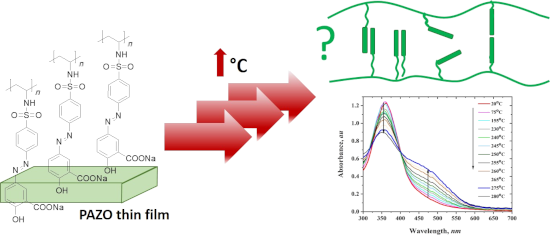
- 1200–4000 nm on a glass substrate. Thicker films were prepared because many potential applications – such as the inscription of polarization-selective holographic optical elements – require greater film thickness for optimal performance. The samples were heated in an oven and the measurement of ∆n
- based on PAZO polymer. Preparation of thin-film samples All thin films used in this work were fabricated using spin-coating technique. Methanol was used as solvent for all samples, and a magnetic stirrer ensured complete dissolution. The solution was then poured onto the substrate (quartz or glass) and
- spun at 1000 rpm to achieve thin film thicknesses ranging from 200 to 4000 nm. For spectral measurements, quartz substrates were used due to their lack of absorbance in the PAZO absorption region; thin film thickness was about 200 nm. A glass substrate was used for the measurement of birefringence (∆n


Capabilities of the 3D-MLSI software tool in superconducting neuron design
Beilstein J. Nanotechnol. 2026, 17, 122–138, doi:10.3762/bjnano.17.8
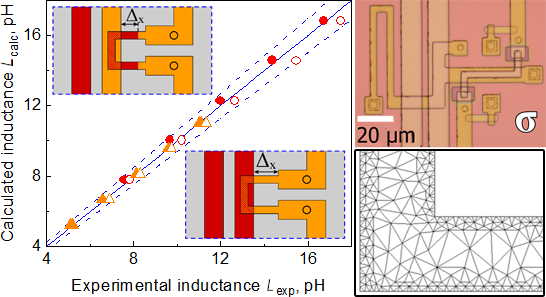
- is not an impassable barrier on the way to implementation of superconducting neurons. Increasing the neuron integration density in practical devices can be achieved by expanding the screen to cover the entire substrate area. In this case, the actual size of each neuron will be determined by the outer
- parameter here is the London penetration depth [5], which was taken as 85 nm according to manufacturer data. Details of 3D-MLSI numerical technique can be found in [49][50]. An input data file, specified in text format, must contain the geometry of the device in the plane of the substrate, the parameters of



Development and in vitro evaluation of liposomes and immunoliposomes containing 5-fluorouracil and R-phycoerythrin as a potential phototheranostic system for colorectal cancer
Beilstein J. Nanotechnol. 2026, 17, 97–121, doi:10.3762/bjnano.17.7
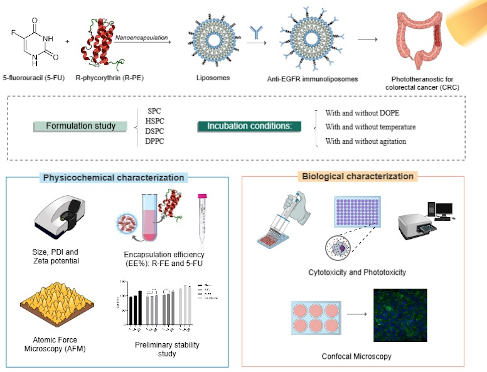
- and immunoliposomes were first stabilized by adding 5% glutaraldehyde for 2 h [25]. After fixation, the formulations were diluted at a ratio of 1:750 in deionized distilled water (ddH2O). A 3.0 µL aliquot of the diluted sample was deposited onto a freshly cleaved mica substrate, followed by vacuum
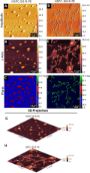
- dehydration process and adhesion forces onto the substrate [57][58]. On the other hand, the z-axis and 3D projections for HSPC-IM-R-PE (Figure 3E and Figure 3H, respectively) demonstrated a more irregular nanoparticle surface, with visibly rougher and more heterogeneous topography, a result consistent with



Functional surface engineering for cultural heritage protection: the role of superhydrophobic and superoleophobic coatings – a comprehensive review
Beilstein J. Nanotechnol. 2026, 17, 63–96, doi:10.3762/bjnano.17.6

- , pollutants, and oily substances. These functional surfaces, often based on coatings consisting of polymeric, ceramic, and composite materials, can provide durable, non-invasive protection tailored to specific substrate weaknesses and exposure environments (indoor and outdoor). Objective of this review
- article is to critically examine the most recent studies and materials innovations relevant to cultural heritage site preservation. First the assessment of substrate vulnerabilities and environmental threats is presented, followed by a detailed analysis of coating types and compositions. It concludes with
- protective materials; nanocomposite; substrate vulnerability; superhydrophobic coatings; sustainability; Introduction The conservation of cultural heritage is not only an endeavor to preserve the physical integrity of artifacts but also to maintain the cultural identity of societies [1]. With the growing




Subdigital integumentary microstructure in Cyrtodactylus (Squamata: Gekkota): do those lineages with incipiently expressed toepads exclusively exhibit adhesive setae?
Beilstein J. Nanotechnol. 2026, 17, 38–56, doi:10.3762/bjnano.17.4
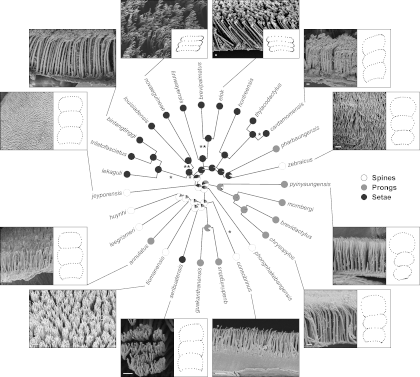
- habitats, in contrast, can vary considerably in roughness and stability of the substrate (e.g., sandstone outcrops are generally less stable and rougher than granite boulders) [31][33][34]. However, some plant surfaces can be even rougher than saxicoline ones [30]. The questions of how a fully functional
- 1), yet shows adhesive competency [7][13][50]. Once this occurs, the filament–substrate interaction can be seen as the “trigger” that promotes further elaboration of spines and prongs into setae (enhancing adhesive interactions) and the modification of the scales to support more filaments (promoting
- among microstructure types Spines, prongs, and setae most likely evolved from spinules in association with the adoption of a more scansorial lifestyle [3][22], with accompanying selective demands for increasingly stronger adherence to the substrate. Spines, which resemble the simplest microstructure



Quantitative estimation of nanoparticle/substrate adhesion by atomic force microscopy
Beilstein J. Nanotechnol. 2026, 17, 1–14, doi:10.3762/bjnano.17.1

- particles between 6 and 12 nm. In addition, an applied positive substrate bias voltage led to more energetic landing conditions and thus to increased adhesion forces. This study underscores the suitability of atomic force microscopy in characterizing adhesion on the nanoscale and offers insights into future
- strategies for tailoring nanoparticle/substrate interactions. Keywords: adhesion; atomic force microscopy; magnetron sputtering; nanomanipulation; nanoparticles; Introduction Nanoparticles (NPs) are at the forefront of basic research and technological innovation, captivating researchers and engineers from
- [5] and physicochemical properties [6]. Among these properties, particle adhesion (which is determined by the interaction between the NP and the substrate) and the interface formed between NPs and substrate [7][8] play a decisive role. Particularly when the contact area between NPs and the substrate



Terahertz-range on-chip local oscillator based on Josephson junction arrays for superconducting quantum-limited receivers
Beilstein J. Nanotechnol. 2025, 16, 2296–2305, doi:10.3762/bjnano.16.158
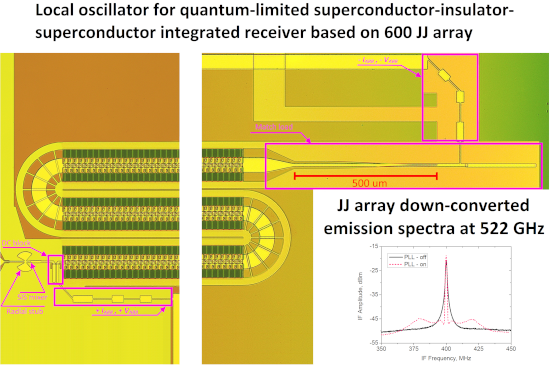
- those in the sample arrays. The S21 parameter for the coplanar line is shown by the cyan dotted line in Figure 6a and Figure 6b. The values are indicated on the right axis. The decrease is caused by the leak of the JJ array radiation into the substrate. Moreover, the parameters of the films that form


Chiral plasmonic nanostructures fabricated with circularly polarized light
Beilstein J. Nanotechnol. 2025, 16, 2245–2264, doi:10.3762/bjnano.16.154
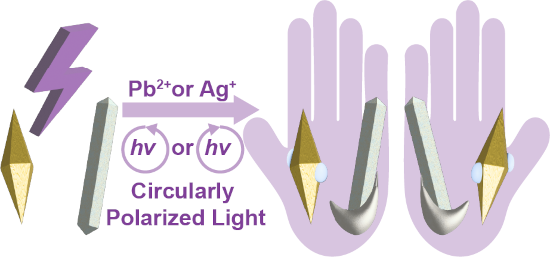
- chemical reactions by modulating the phase of plasmonic modes. Several parameters must be carefully considered when preparing chiral PNSs with CPL. The first consideration is whether to immobilize the achiral starting PNSs on a substrate. The reactions can be easily scaled up if PNSs are dispersed in a
- to PNSs immobilized on a substrate under unidirectional CPL [75][76][77][78]. Therefore, in most cases, PNSs are immobilized on a substrate. The second parameter to consider is the energy of the excitation CPL, as it affects the EM distribution and defines the energetics of hot carriers to modulate
- electron sink, and the hot holes oxidize Pb2+ in solution to form PbO2. The TiO2 substrate is very efficient in removing the unwanted hot electrons to suppress carrier recombination. Ag+ in the reaction mixture eventually consumes these hot electrons. Previous studies have shown that the oxidation of Pb(II





Optical bio/chemical sensors for vitamin B12 analysis in food and pharmaceuticals: state of the art, challenges, and future outlooks
Beilstein J. Nanotechnol. 2025, 16, 2207–2244, doi:10.3762/bjnano.16.153
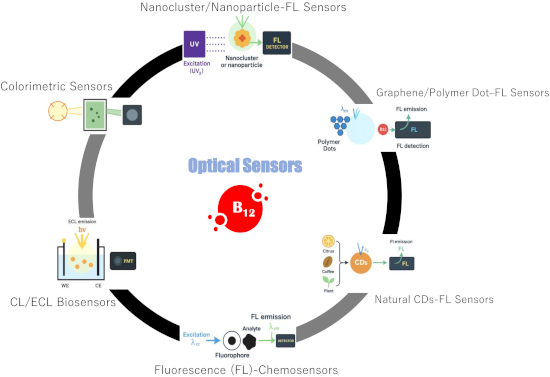
- provided the recognition event, the chemiluminescent substrate (CDP-Star) acted as the indicator, and the sensing signal was the measured photon emission. In this competitive assay, VB12 antibodies were fixed onto a nitrocellulose membrane, then exposed to both VB12 and its enzyme-bound form for


Electromagnetic study of a split-ring resonator metamaterial with cold-electron bolometers
Beilstein J. Nanotechnol. 2025, 16, 2199–2206, doi:10.3762/bjnano.16.152
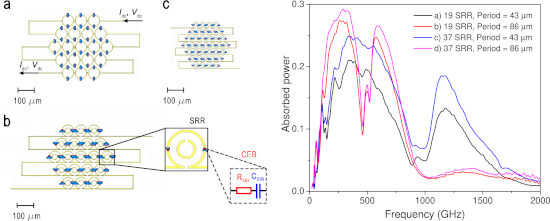
- solver of CST MWS in 3D mode. The simulated receiving structure is placed on a 500 μm thick silicon substrate. A 4 mm-diameter silicon hyperhemispherical lens is placed on the rear side of the substrate to efficiently couple the incident radiation into the planar structure. The external signal is
- parameters of the structure. Specifically, increasing the substrate thickness to 700 μm enables an increase in absorbed power up to 0.3 a.u. across an ultrabroad frequency range of 200–1200 GHz (Figure 5e). Such a thick substrate can be realized by using commercially available substrates with greater


Ultrathin water layers on mannosylated gold nanoparticles
Beilstein J. Nanotechnol. 2025, 16, 2183–2198, doi:10.3762/bjnano.16.151
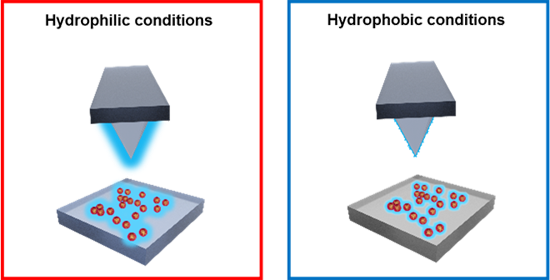
- dominant driver of particle motion, and strong particle–substrate interactions may lead to particle attachment before they are transported to the contact line, thereby preventing the formation of a “coffee ring” [34]. Detailed height measurements of adsorbed particles in water vapor AFM under variable RH



Electron transport through nanoscale multilayer graphene and hexagonal boron nitride junctions
Beilstein J. Nanotechnol. 2025, 16, 2132–2143, doi:10.3762/bjnano.16.147
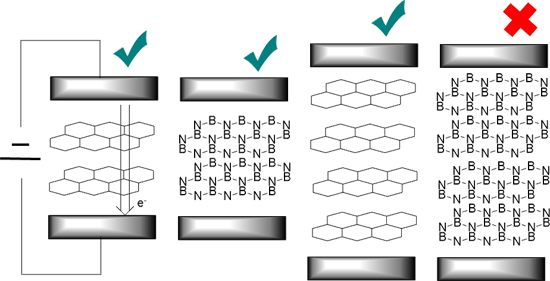
- composed of polar bonds with N acting as electron donor and B acting as electron acceptor. Unlike graphene and graphite, h-BN shows high resistivity and is a large-bandgap semiconductor [17]. h-BN has a wide range of applications due to its unique properties [18]. It is used as a substrate material for


Multifrequency AFM integrating PeakForce tapping and higher eigenmodes for heterogeneous surface characterization
Beilstein J. Nanotechnol. 2025, 16, 2077–2085, doi:10.3762/bjnano.16.142
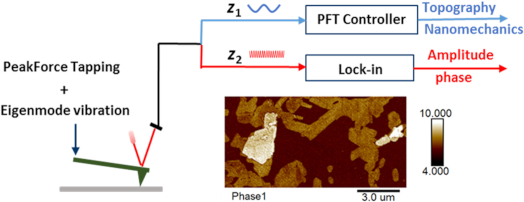
- aliquot was drop-cast onto a clean SiO2/Si substrate and allowed to dry under ambient conditions. Imaging parameters All critical imaging parameters for the data presented in the figures are summarized in Table 2. The free oscillation amplitudes for the higher eigenmodes were selected independently under
- vibrations are shown in Figure 3g,h and Figure 3i,j, respectively. Both signals effectively differentiated MMT nanosheets from the substrate, with phase images exhibiting superior contrast. Histograms (Figure 3k–m), derived from selected regions in Figure 3c,h,j, further highlight the enhanced contrast in
- . Histograms in Figure 4k–n demonstrate that second eigenmode phase maps offered superior contrast compared to modulus, adhesion, and tapping mode images, enabling clear differentiation between the substrate, thinner and thicker regions of the nanosheets. Comparative imaging with a soft probe (ScanAsyst-air


Molecular and mechanical insights into gecko seta adhesion: multiscale simulations combining molecular dynamics and the finite element method
Beilstein J. Nanotechnol. 2025, 16, 2055–2076, doi:10.3762/bjnano.16.141
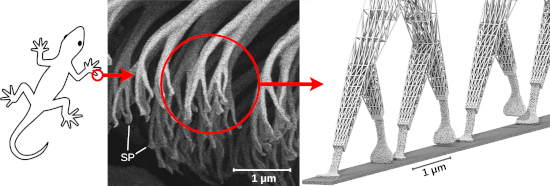
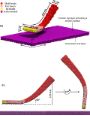
- dynamics to capture molecular interactions at the spatula–substrate interface and finite element method to simulate the mechanical behavior of the larger setal shaft. This hybrid approach enables synchronized simulations that resolve both fine-scale interfacial dynamics and overall structural deformation
- . The model reproduces key aspects of spatula behavior during adhesion and detachment, showing that spatula–substrate contact evolves through a combination of bending, sliding, and peeling, depending on the spatula’s initial orientation. Our results further demonstrate that lateral sliding can delay
- scales involved. In previous research, we used molecular dynamics simulations to explore various aspects of gecko adhesion [10][11][12][13]. We found that humidity increases the force required to pull a spatula off from a substrate [10][12], a phenomenon also observed in high-humidity atomic force






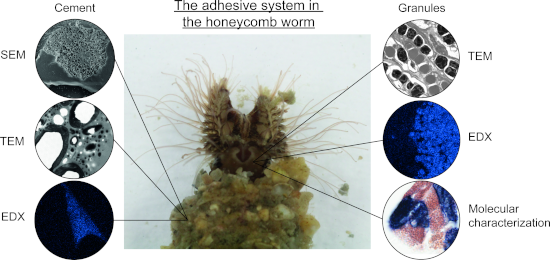
The cement of the tube-dwelling polychaete Sabellaria alveolata: a complex composite adhesive material
Beilstein J. Nanotechnol. 2025, 16, 1998–2014, doi:10.3762/bjnano.16.138
- ng·µL−1 on dewaxed sections of S. alveolata and detected with anti digoxigenin-AP Fab fragments (Roche) at a dilution of 1:2000. The signal was developed using the NBT/BCIP substrate (Roche) at 37 °C. The sections were observed using a Zeiss Axio Scope A1 light microscope with a 100× objective to



Laser ablation in liquids for shape-tailored synthesis of nanomaterials: status and challenges
Beilstein J. Nanotechnol. 2025, 16, 1963–1997, doi:10.3762/bjnano.16.137
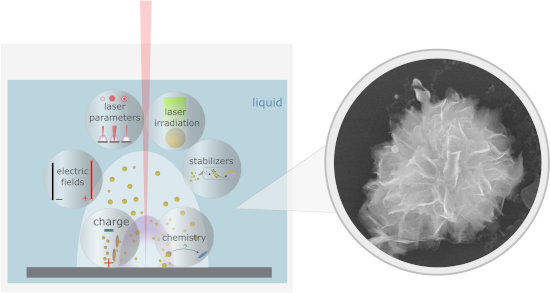
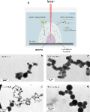
- way to the NPs discussed above [79]. This concept was introduced in the works of the A. Manshina group, who developed a remarkably different method of NP production at the target/liquid interface, where the continuous wave laser reduces the precursors at the substrate surface, resulting in the


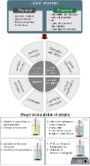


Mechanical property measurements enabled by short-term Fourier-transform of atomic force microscopy thermal deflection analysis
Beilstein J. Nanotechnol. 2025, 16, 1952–1962, doi:10.3762/bjnano.16.136
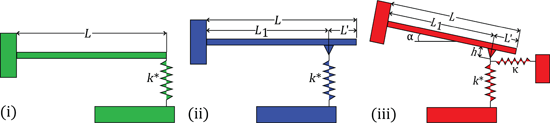
- their polymerization/deposition. The topography of the surface was measured before acquiring a force-versus-distance measurement to ensure that these measurements were acquired on clean and flat regions of the substrate. To observe how the resonant frequency of the AFM cantilever changes as the attached
- tip is pressed against a substrate, force-versus-distance measurements were conducted. In these measurements, the sample was moved up and down at a rate of approximately 100 nm·s−1 while recording the cantilever deflection over the course of the measurement. In addition to the AFM’s own control
- with the high-sample rate acquisition system for a soft silicon cantilever on a HOPG substrate. Both the normal force and the cantilever displacement values are shown as most AFM studies report normal force values, but the power spectrum calculation requires the cantilever displacement values. Figure




Evaluating metal-organic precursors for focused ion beam-induced deposition through solid-layer decomposition analysis
Beilstein J. Nanotechnol. 2025, 16, 1942–1951, doi:10.3762/bjnano.16.135
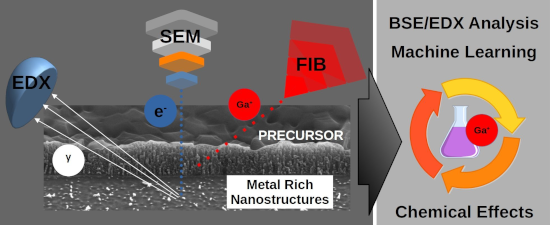
- duration of the electron or ion beam pulses. In FEBID and FIBID, volatile precursor molecules are delivered to the substrate surface via a gas injection system (GIS), where they adsorb and are subsequently decomposed by a focused electron or ion beam with energies in the kiloelectronvolt range. While
- masks, and resistance, with the flexibility of depositing materials on non-planar surfaces [4][5][14]. The FIBID method has several advantages compared to the FEBID technique in depositing thin films on substrates. First, ions generate more secondary electrons on the substrate surface than electrons
- significant beam-induced substrate defects (e.g., Ga atom implantation). Additionally, material growth is required to compete with the FIB milling process [4][9]. The use of ions instead of electrons, like in FEBID, offers several benefits, including enhanced film quality and adhesion, better control over the


Quantum circuits with SINIS structures
Beilstein J. Nanotechnol. 2025, 16, 1931–1941, doi:10.3762/bjnano.16.134
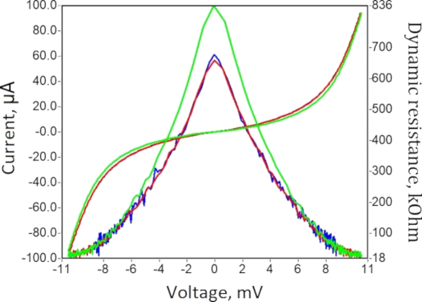
- with selective etching of superconducting and normal metal electrodes. Improvement in ultimate sensitivity is achieved by suspending the absorber above the substrate. Best responsivity of up to 30 electrons per photon at a frequency of 350 GHz, or 72000 A/W, and voltage responsivity up to 3.9 × 10⁹ V/W
- not very high reproducibility and stability. Another fabrication method is the Manhattan technology [28] with deep orthogonal groves in the resist, see Figure 1b,c. Both methods are based on thermal evaporation at different angles and rotation of substrate, requiring rather sophisticated and expensive
- is used before making of the insulator and sputtering of the normal metal (for details see [29]). An example of such a method is presented in Figure 1d,e. Besides SINIS structures with N-absorber on the substrate, we also developed devices with the absorber suspended above the substrate (Figure 1f


Low-temperature AFM with a microwave cavity optomechanical transducer
Beilstein J. Nanotechnol. 2025, 16, 1873–1882, doi:10.3762/bjnano.16.130
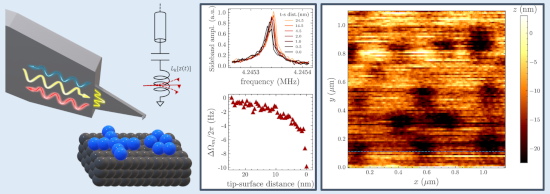
- Si–N plate released from a Si substrate. The microwave superconducting lumped-element resonant circuit consists of an interdigital capacitor in series with a meandering nanowire inductor, both fabricated from a single layer of Nb–Ti–N deposited on the Si–N. The nanowire meanders across the clamping
- on a silicon substrate. Each unit cell in the pattern contains different shapes as shown in the SEM image in Figure 6a. The tapered arms of crosses and ribbons shrink to reach a nominal minimum feature size of 20 nm. Figure 6b shows a FM-AFM image of the 1 µm × 1 µm scan area corresponding to the
- KIMEC detection principle allows for AFM imaging with increased pixel acquisition rate (measurement bandwidth) without degrading force sensitivity. (a–c) Scanning electron micrograph of the probe, featuring a Si–N triangular cantilever released from the Si substrate, hosting an integrated lumped-element


Self-assembly and adhesive properties of Pollicipes pollicipes barnacle cement protein cp19k: influence of pH and ionic strength
Beilstein J. Nanotechnol. 2025, 16, 1863–1872, doi:10.3762/bjnano.16.129
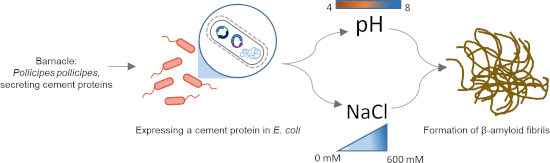
- has emerged as a key contributor to underwater adhesion [16][32]. We previously described recombinant production of the 19 kDa P. pollicipes cement protein (rPpolcp19k) and its adhesion on various substrate chemistries [21]. The protein self-assembled into intertwined amyloid fibres [22] and has the


Ambient pressure XPS at MAX IV
Beilstein J. Nanotechnol. 2025, 16, 1677–1694, doi:10.3762/bjnano.16.118

- reaction cell was designed to replicate commercial ALD conditions, including independent pulsing of precursor gases, laminar flow across the sample, and substrate heating. The setup allows for independent control of precursor and co-reactant exposure and supports a variety of chemistries [60]. ALD is a key





Venom-loaded cationic-functionalized poly(lactic acid) nanoparticles for serum production against Tityus serrulatus scorpion
Beilstein J. Nanotechnol. 2025, 16, 1633–1643, doi:10.3762/bjnano.16.115
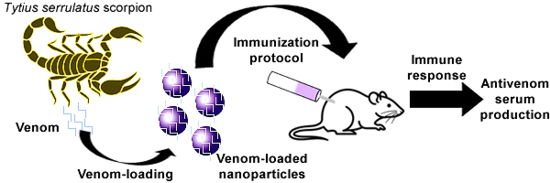
- the plate was incubated at 37 °C for 1 hour. The plate was washed and 50 µL/well of diluted detection antibodies was added and incubated for 3 h. The plate was then washed again, the substrate was added, and the plate was incubated at room temperature for 15 min. The reaction was stopped (H2SO4 4 M



Photocatalytic degradation of ofloxacin in water assisted by TiO2 nanowires on carbon cloth: contributions of H2O2 addition and substrate absorbability
Beilstein J. Nanotechnol. 2025, 16, 1567–1579, doi:10.3762/bjnano.16.111
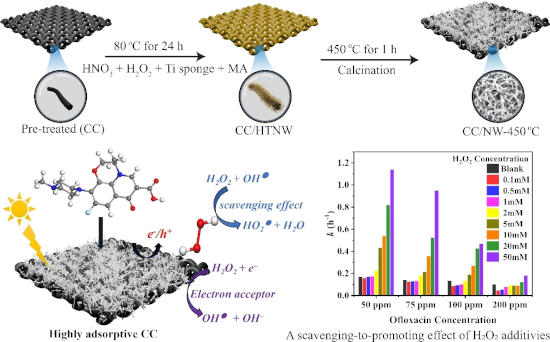
- amount, below which a negative effect is noted. This investigation demonstrates the potential of improving the photoactivity of one-dimensional TiO2 nanostructures by utilizing a highly adsorptive substrate, which can help mitigate the effects of hazardous materials in water. Keywords: carbon cloth
- controlled film thickness of 1.5–4.5 μm, on concurrently activated carbon cloth substrates. The composite film exhibited a high efficiency towards removal of rhodamine B and sulfosalicylic acid in water under UV light illumination, mainly thanks to the highly adsorptive substrate [16]. In the current
- than that of 10–20 ppm adopted by most studies, highlighting the advantages of the one-dimensional TiO2 material on an adsorptive substrate as a photocatalyst. Experimental Materials and reagents Carbon cloth with a purity of 99.8% was provided by Shanghai Hesen Industry Company Limited, China


Transient electronics for sustainability: Emerging technologies and future directions
Beilstein J. Nanotechnol. 2025, 16, 1545–1556, doi:10.3762/bjnano.16.109
- bioresorption in vivo [14]. Zinc has been proposed for use in bioabsorbable vascular stents, demonstrating ideal degradation behavior and mechanical integrity in animal models [51]. AZ31B, along with molybdenum and tungsten, have been investigated as a substrate and conductive layer in transient electronics due
- ) [63][73]. In this process, PI is first coated onto PMMA, followed by photolithographic patterning of the inorganic electronic materials. The PMMA layer is then dissolved, allowing the patterned structure, protected by the thin PI layer, to be transferred onto a desired target substrate. Since the
- electronic devices on a large-area substrate, such as a silicon wafer, followed by backside etching to remove the handle or box layers, thereby isolating the functional thin film for transfer onto a biodegradable substrate. This wafer-level technique offers a promising route to large-area, high-resolution





