

Search results
Search for "sustainable energy" in Full Text gives 28 result(s) in Beilstein Journal of Nanotechnology.
Nanostructure sensitization of transition metal oxides for visible-light photocatalysis
Beilstein J. Nanotechnol. 2014, 5, 696–710, doi:10.3762/bjnano.5.82
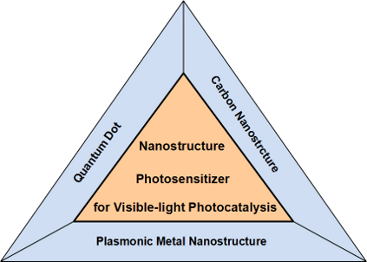
- dots; transition metal oxides; visible-light photocatalysis; Introduction In response to the decreasing supply of fossil fuels and the environmental problems caused by their exploitation, the search for a renewable and sustainable energy supply has been intensified in the past decades. Solar energy is




Mesoporous cerium oxide nanospheres for the visible-light driven photocatalytic degradation of dyes
Beilstein J. Nanotechnol. 2014, 5, 517–523, doi:10.3762/bjnano.5.60

- , Singapore 138632 Energy Research Institute @ NTU (ERI@N), 1 CleanTech Loop, Singapore 637141 Singapore-Berkeley Research Initiative for Sustainable Energy (SinBeRISE), 1 Create Way, Singapore 138602 10.3762/bjnano.5.60 Abstract A facile, solvothermal synthesis of mesoporous cerium oxide nanospheres is
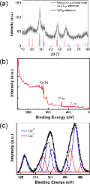
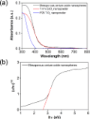
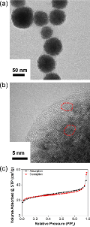
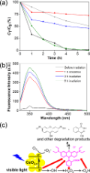
- reported for the purpose of the photocatalytic degradation of organic dyes and future applications in sustainable energy research. The earth-abundant, relatively affordable, mixed valence cerium oxide sample, which consists of predominantly Ce7O12, has been characterized by powder X-ray diffraction, X-ray
- semiconductors have been explored for the visible-light driven photocatalytic degradation of pollutants and microbes, such as bismuth oxides [5][6] and cerium oxides [12][13]. CeO2 specifically has been applied in a number of sustainable energy applications lately, including oxidative catalysis, hydrogen storage

The role of oxygen and water on molybdenum nanoclusters for electro catalytic ammonia production
Beilstein J. Nanotechnol. 2014, 5, 111–120, doi:10.3762/bjnano.5.11

- for Scientific Computing, the Catalysis for Sustainable Energy (CASE) initiative, the Center of Atomic-Scale Materials Design (CAMD) and the National Danish Advanced Technology Foundation. CASE is funded by the Danish Ministry of Science, Technology and Innovation, and CAMD is funded by the Lundbeck


Other Beilstein-Institut Open Science Activities