
Search results
Search for "Raman spectroscopy" in Full Text gives 358 result(s) in Beilstein Journal of Nanotechnology. Showing first 200.
Exfoliation of titanium nitride using a non-thermal plasma process
Beilstein J. Nanotechnol. 2024, 15, 631–637, doi:10.3762/bjnano.15.53
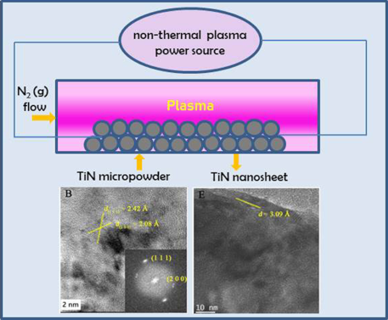
- temperature to generate ionized particles. These ionized species interact with the ceramic crystal of TiN, resulting in a pronounced structural expansion. The exfoliated TiN products were comprehensively characterized using transmission electron microscopy, X-ray diffraction, and Raman spectroscopy



Heat-induced morphological changes in silver nanowires deposited on a patterned silicon substrate
Beilstein J. Nanotechnol. 2024, 15, 435–446, doi:10.3762/bjnano.15.39
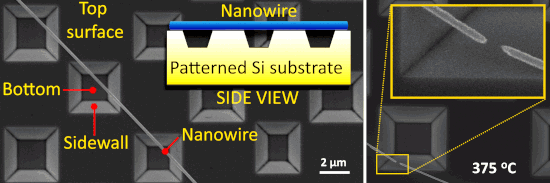
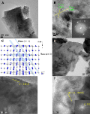
- for various novel applications where arrays of metal nanostructures are used, such as surface-enhanced Raman spectroscopy substrates [36][37][38]. In this work, we deposited Ag NWs on specially patterned silicon (Si) substrates, so large fractions of NWs are partially suspended over the holes. Samples


On the mechanism of piezoresistance in nanocrystalline graphite
Beilstein J. Nanotechnol. 2024, 15, 376–384, doi:10.3762/bjnano.15.34
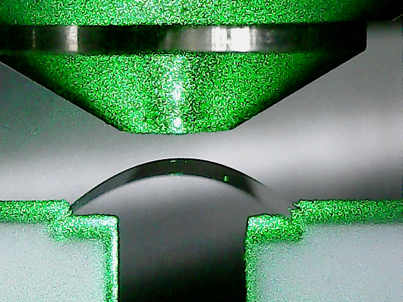
- , which was constructed in-house and automated using Python. Then, sheet resistance measurements under externally applied strain are discussed. Raman spectroscopy of the NCG under strain is studied, which gives insights into the distribution of strain in the film. Utilizing electrical and optical
- measurements and Raman spectroscopy, is shown in Figure 1a. Two instances of zero and non-zero strain are also depicted. The setup has two stepper motors acquired from Standa Inc. The contacts on the NCG were made by gold-coated spring pressure contacts, which were then connected to a BNC connector and a
- transfer is required on glass in an aqueous medium [26]. Third, NCG fills the cracks present at the edges during spin coating the polymer and inhibits their propagation during the bending of the substrate. Raman spectroscopy is a powerful method to detect strain in graphene, which can be determined from


Determining by Raman spectroscopy the average thickness and N-layer-specific surface coverages of MoS2 thin films with domains much smaller than the laser spot size
Beilstein J. Nanotechnol. 2024, 15, 279–296, doi:10.3762/bjnano.15.26
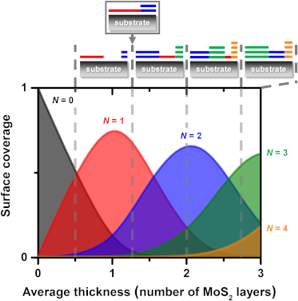
- Raman spectroscopy is a widely used technique to characterize nanomaterials because of its convenience, non-destructiveness, and sensitivity to materials change. The primary purpose of this work is to determine via Raman spectroscopy the average thickness of MoS2 thin films synthesized by direct liquid
- modes is proposed to evaluate the surface coverage for each N (i.e., the ratio between the surface covered by exactly N layers and the total surface) in DLI-PP-CVD MoS2 samples. Keywords: molybdenum disulfide; number of layers; Raman spectroscopy; thin film; transition metal dichalcogenides
- of MoS2 flakes produced by different methods. Among these techniques, Raman spectroscopy is widely used thanks to its convenience, non-destructiveness, and sensitivity to materials change, including strain, temperature, doping, and defects [26]. Concerning the characterization of MoS2 flakes


Graphene removal by water-assisted focused electron-beam-induced etching – unveiling the dose and dwell time impact on the etch profile and topographical changes in SiO2 substrates
Beilstein J. Nanotechnol. 2024, 15, 190–198, doi:10.3762/bjnano.15.18
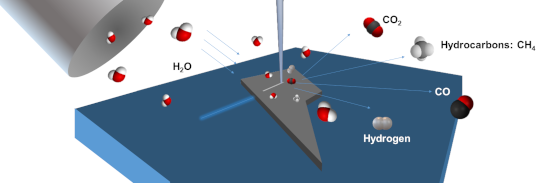
- 50 nm (20 nm in the best case). However, due to the long residual time of the water molecules inside the SEM chamber, the collection of an image can further destroy the investigated material. Therefore, we performed a second series of experiments for a detailed analysis with Raman spectroscopy and
- estimated beam size equal to 10 nm (FWHM), are summarized in Table 1. The results of Raman spectroscopy measurements are shown in Figure 2C and Figure 2D. This technique is not only sensitive to the number of graphitic layers in graphene but, more importantly, also to the number of defects, which can be
- that with certain precautions water-assisted FEBIE can be applied for such a nanopatterning process. The experimental data obtained with scanning Raman spectroscopy, correlative probe and electron microscopy, and in situ AFM measurements provide a comprehensive image of FEBIE etch profiles. In addition


CdSe/ZnS quantum dots as a booster in the active layer of distributed ternary organic photovoltaics
Beilstein J. Nanotechnol. 2024, 15, 144–156, doi:10.3762/bjnano.15.14
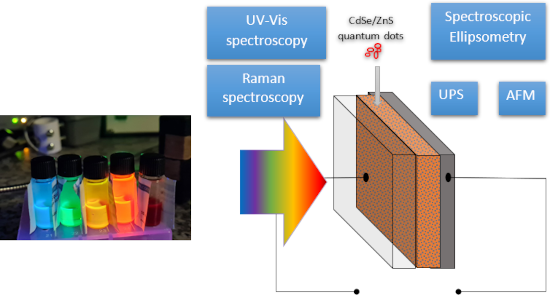
- relations of refractive indices and extinction coefficient were investigated. The morphologies of the thin films were studied with atomic force microscopy. The chemical boundaries of the ternary layers were determined by Raman spectroscopy. Based on UPS studies, the energy diagram of the potential devices
- results due to dot doping align with the results presented in the work of Cha et al. [46], Lewińska et al. [47], and Ohring [48]. By design, quantum dots are supposed to play a different role as transport enhancers with their properties. Raman spectroscopy Raman measurements for P3HT and PCBM were




Experimental investigation of usage of POE lubricants with Al2O3, graphene or CNT nanoparticles in a refrigeration compressor
Beilstein J. Nanotechnol. 2023, 14, 1041–1058, doi:10.3762/bjnano.14.86
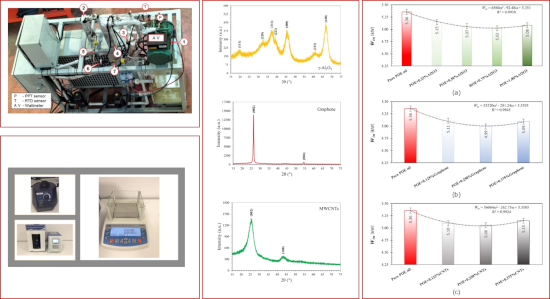
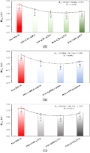
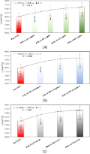
- . Thus, the Raman spectroscopy of graphene nanoplatelets which yield optimal enhancement in required compressor electrical power are presented in Figure 15. Figure 15 shows that the graphene used in this study has characteristic G (1564 cm−1) and 2D (2680 cm−1) bands. A low intensity D band (1343 cm−1
- compressor electrical power for the usage of nanolubricants with a) Al2O3, b) graphene, and c) CNTs. Required compressor electrical power for nanolubricants with optimum mass fraction of nanoparticles. Raman spectroscopy of the graphene nanoplatelets. XPS of the graphene nanoplatelets. Kinematic viscosity of





Nanoarchitectonics of photothermal materials to enhance the sensitivity of lateral flow assays
Beilstein J. Nanotechnol. 2023, 14, 988–1003, doi:10.3762/bjnano.14.82
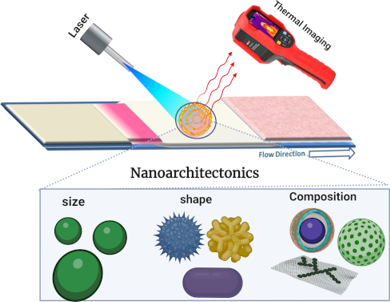
- ]. However, even with these modifications, it relied on the colorimetric principle and was not applicable for the quantitative determination of analytes. In recent years, to address these challenges, various signal amplification strategies, such as DNA amplification, nanozyme activity, surface-enhanced Raman
- spectroscopy (SERS), fluorescence, ultrasound, and photothermal methods, have been tried in LFAs [4][13][14]. For example, fluorescence-based LFAs exhibited a 100- to 1000-fold higher sensitivity than conventional LFAs [15]. However, working with fluorescence-based LFAs is complex because of photoinstability


Isolation of cubic Si3P4 in the form of nanocrystals
Beilstein J. Nanotechnol. 2023, 14, 971–979, doi:10.3762/bjnano.14.80

- nanoparticles with a defective zinc blende structure under mild conditions through thermal annealing of hydrogenated silicon nanoparticles with red phosphorus. The synthesized Si3P4 nanoparticles were analyzed using FTIR, XRD, electron diffraction, EDX, TEM, Raman spectroscopy, X-ray fluorescence spectrometry
- control over the width of the bandgap through selection of the composition. Conclusion A synthesis of freestanding Si3P4 NPs with cubic crystal structure was successfully carried out and corroborated by XRD, TEM, EDX, electron diffraction, and Raman spectroscopy. The cell parameter of the experimentally


N-Heterocyclic carbene-based gold etchants
Beilstein J. Nanotechnol. 2023, 14, 865–871, doi:10.3762/bjnano.14.71
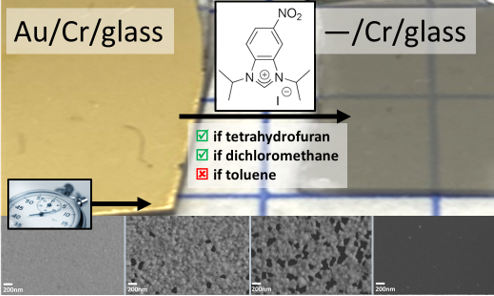
- attachment of NHCs to gold and the properties of the corresponding monolayers have been studied using conventional surface science techniques under ultrahigh-vacuum conditions [13][14]. NHC monolayers have also been used in applications such as surface-enhanced Raman spectroscopy and surface plasmon



Silver-based SERS substrates fabricated using a 3D printed microfluidic device
Beilstein J. Nanotechnol. 2023, 14, 793–803, doi:10.3762/bjnano.14.65
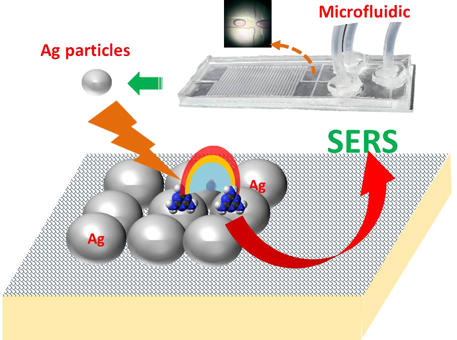
- detection of harmful chemicals in the environment and for food safety is a crucial requirement. While traditional techniques such as GC–MS and HPLC provide high sensitivity, they are expensive, time-consuming, and require skilled labor. Surface-enhanced Raman spectroscopy (SERS) is a powerful analytical
- the potential to be a valuable analytical tool for monitoring environmental contaminants. Keywords: 3D printing; microfluidic droplet; SERS substrate; silver nanoparticle; smartphone detection; Introduction Surface-enhanced Raman spectroscopy (SERS) has emerged as a powerful optical trace detection



Control of morphology and crystallinity of CNTs in flame synthesis with one-dimensional reaction zone
Beilstein J. Nanotechnol. 2023, 14, 741–750, doi:10.3762/bjnano.14.61
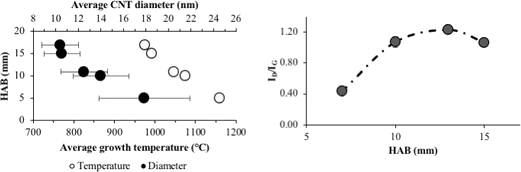
- morphology of the MWCNTs similar to that of MWCNTs obtained from CVD. Raman spectroscopy showed constant IG/ID ratios after all runs, and thermogravimetric analysis (TGA) results showed almost equal CNT oxidation temperatures, indicating similar purity. The constant crystallinity determined from the ID/IG
- by field-emission scanning electron microscopy (FESEM, Zeiss Crossbeam 340) coupled with energy-dispersive X-ray analysis (EDX) for morphology and elemental analysis. Raman spectroscopy (HORIBA XploRA PLUS, 532 nm) was done to analyze the signature spectra of the grown CNTs. Line-of-sight images of


A graphene quantum dots–glassy carbon electrode-based electrochemical sensor for monitoring malathion
Beilstein J. Nanotechnol. 2023, 14, 701–710, doi:10.3762/bjnano.14.56
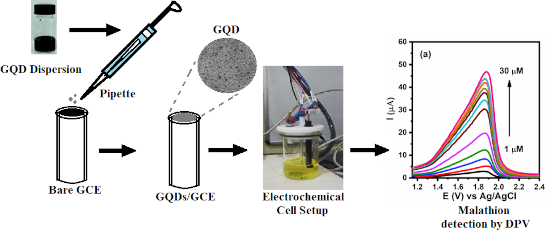
- hydrothermal process with glucose as a precursor undergoing carbonization. Different spectroscopic techniques were used to analyze the optical characteristics of GQDs, including UV–visible, photoluminescence, FTIR, and Raman spectroscopy. Atomic force microscopy, transmission electron microscopy, and X-ray


Metal-organic framework-based nanomaterials as opto-electrochemical sensors for the detection of antibiotics and hormones: A review
Beilstein J. Nanotechnol. 2023, 14, 631–673, doi:10.3762/bjnano.14.52
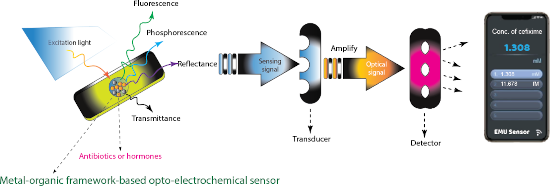
- (ELISA), radioimmunoassay (RIA), surface-enhanced Raman spectroscopy (SERS), and capillary electrophoresis are common analytical techniques used to qualitatively or quantitatively determine pharmaceuticals in various matrices because they are sensitive (Figure 2), have a significant tolerable limit of
- ). Biorecognition elements and signal transducers (chemiluminescence, interferometry, surface plasmon resonance, luminescence, colourimetry, or surface-enhanced Raman spectroscopy), are the key components of an optical sensor. Analyte concentration, existence, and other relevant physical attributes are determined


SERS performance of GaN/Ag substrates fabricated by Ag coating of GaN platforms
Beilstein J. Nanotechnol. 2023, 14, 552–564, doi:10.3762/bjnano.14.46

- substrates using pulsed laser deposition (PLD) and magnetron sputtering (MS) and their evaluation as potential substrates for surface-enhanced Raman spectroscopy (SERS) are reported. Ag layers of comparable thicknesses were deposited using PLD and MS on nanostructured GaN platforms. All fabricated SERS
- : GaN/Ag; magnetron sputtering; nanofabrication; pulsed laser deposition; SERS substrates; surface-enhanced Raman spectroscopy (SERS); Introduction Surface-enhanced Raman spectroscopy (SERS) is a highly sensitive and specific technique with multiplexing capabilities [1][2][3][4]. It is considered for


On the use of Raman spectroscopy to characterize mass-produced graphene nanoplatelets
Beilstein J. Nanotechnol. 2023, 14, 509–521, doi:10.3762/bjnano.14.42
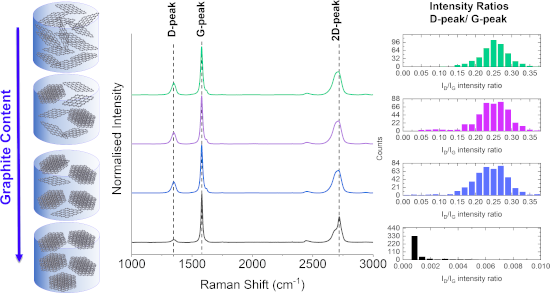
- .14.42 Abstract Raman spectroscopy is one of the most common methods to characterize graphene-related 2D materials, providing information on a wide range of physical and chemical properties. Because of typical sample inhomogeneity, Raman spectra are acquired from several locations across a sample, and
- , although quantification of the amount remains approximate. We therefore recommend this approach as a robust methodology for reliable characterization of mass-produced graphene-related 2D materials using confocal Raman spectroscopy. Keywords: few-layer graphene; graphene; metrology; quality control; Raman
- validated against those methods. What is more important is repeatability and reproducibility, to allow for product monitoring over time. They also need to be able to provide results quickly, in a form that is easy to interpret, providing simple pass/fail outcomes. Raman spectroscopy is one of the most


Mixed oxides with corundum-type structure obtained from recycling can seals as paint pigments: color stability
Beilstein J. Nanotechnol. 2023, 14, 467–477, doi:10.3762/bjnano.14.37
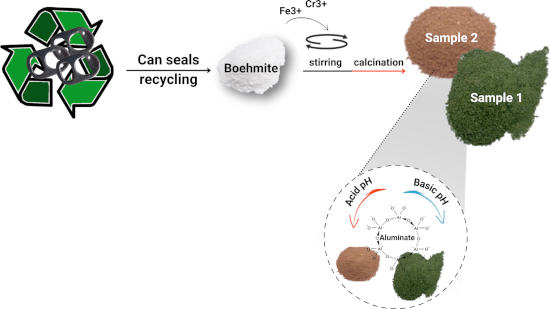
- structure. The pigments are obtained via the addition of coloring ions to boehmite from recycled metallic aluminium. X-ray diffractometry (XRD) and Raman spectroscopy confirmed the crystallographic phase. Additionally, the oxidation state 3+ responsible for the greenish (chromium) and reddish (iron
- from 57.3% (alumina) to 63.9% (sample 2) (Table 1). The crystallinity of the synthesized oxides is superior to the ones obtained via coprecipitation [1]. Raman spectroscopy The Raman spectrum observed for sample 1 (Figure 2a) is characteristic of chromium oxide (Cr2O3), in agreement with what was
- differences varying between weak and very weak. It is possible that the choice of the synthetic route influences the color stability since formation and stability of the structure affect this parameter. Conclusion X-ray diffractometry and Raman spectroscopy indicate the formation of corundum-type mixed oxides




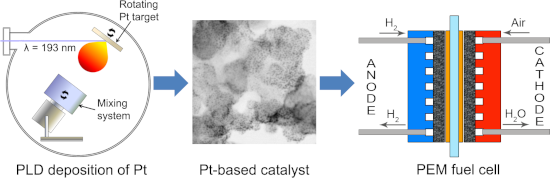
A novel approach to pulsed laser deposition of platinum catalyst on carbon particles for use in polymer electrolyte membrane fuel cells
Beilstein J. Nanotechnol. 2023, 14, 190–204, doi:10.3762/bjnano.14.19
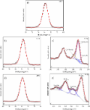
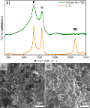
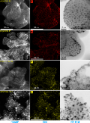
- , morphology, and chemical composition of the fabricated catalysts were investigated using TEM, SEM, EDX, XPS, and Raman spectroscopy. Electrochemical measurements determined the performance of the fabricated catalysts. Results and Discussion Synthesis of a highly graphitized carbon material The synthesis of

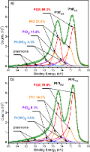


Characterisation of a micrometer-scale active plasmonic element by means of complementary computational and experimental methods
Beilstein J. Nanotechnol. 2023, 14, 110–122, doi:10.3762/bjnano.14.12
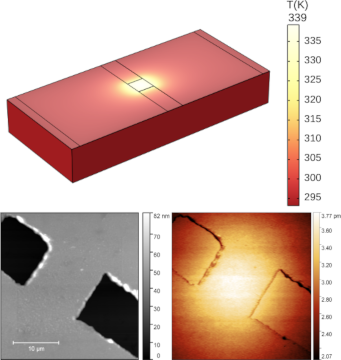
- fundamental physical phenomena at the nano- and mesoscales [9][10][11][12][13][14][15], as well as more practical applications in Raman spectroscopy in the form of surface-enhanced Raman spectroscopy (SERS) [16] and other spectroscopic techniques [17][18]. SPPs also find uses in fields such as ultrasensitive


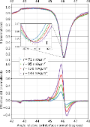


A TiO2@MWCNTs nanocomposite photoanode for solar-driven water splitting
Beilstein J. Nanotechnol. 2022, 13, 1520–1530, doi:10.3762/bjnano.13.125

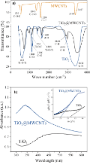
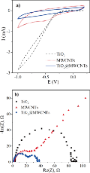
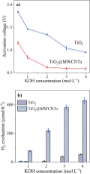
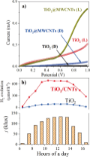
- MWCNTs and TiO2@MWCNTs, which could result from the catalyzed synthesis of MWCNTs [14]. Raman spectroscopy is applied for phase characterization of MWCNTs and TiO2@MWCNTS, as shown in Figure 5. The peaks at 178, 424, and 609 cm−1 are characteristic of the TiO2 phase in the TiO2@MWCNTs catalyst [21]. In



Studies of probe tip materials by atomic force microscopy: a review
Beilstein J. Nanotechnol. 2022, 13, 1256–1267, doi:10.3762/bjnano.13.104
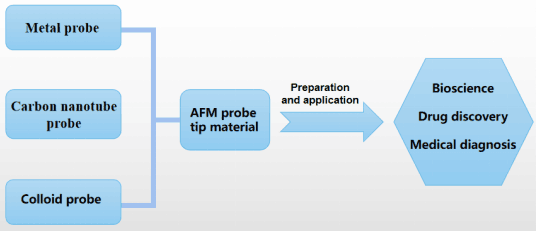
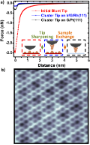
- -enhanced Raman spectroscopy and fluorescence microscopy. They can open new avenues for characterizing nano-objects and make it possible to study chemical and physical phenomena occurring at the nanoscale. Following the preparation and application of monometallic nanowire probes, Fang et al. [36] proposed a
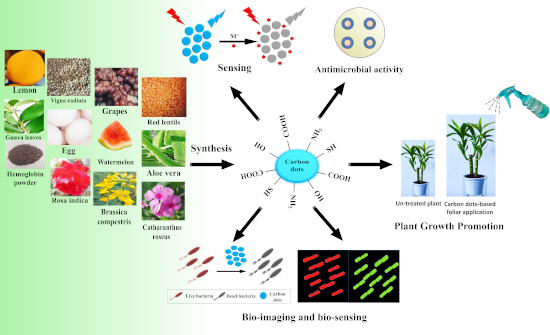
Recent advances in green carbon dots (2015–2022): synthesis, metal ion sensing, and biological applications
Beilstein J. Nanotechnol. 2022, 13, 1068–1107, doi:10.3762/bjnano.13.93




Optimizing PMMA solutions to suppress contamination in the transfer of CVD graphene for batch production
Beilstein J. Nanotechnol. 2022, 13, 796–806, doi:10.3762/bjnano.13.70
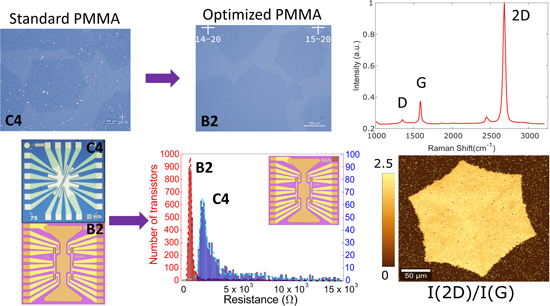
- average molecular weight (AMW) and weight concentration in anisole, to be deposited by spin coating. Optical microscopy and Raman spectroscopy showed that the amount of PMMA residues on transferred graphene is proportional to the AMW and concentration in the solvent. At the same time, the mechanical
- that the PMMA mixture features good mechanical strength and cleanness (i.e., the acetone bath can thoroughly remove it). The transferred graphene samples were investigated via Raman spectroscopy to evaluate crystallinity, layer number, and structural defect level [23]. The relative intensities of the G
- crystals were transferred using PMMA with different AMWs and weight percentages in anisole. Repeated transfer cycles among water baths revealed, as expected, that PMMA with higher AMW and weight percentage allowed for a better mechanical support to graphene. Optical microscopy, Raman spectroscopy, and XPS




A nonenzymatic reduced graphene oxide-based nanosensor for parathion
Beilstein J. Nanotechnol. 2022, 13, 730–744, doi:10.3762/bjnano.13.65
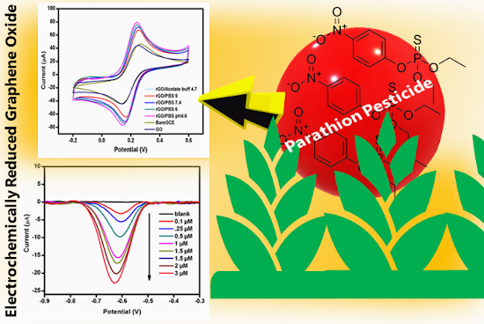
- develop better functioning electrodes. Raman spectroscopy has been frequently used as a reliable technique to optimize the electrochemical parameters for the synthesis of ERGO in terms of the intensity ratio of D- (disordered band) to G-band (graphitic band) (ID/IG). It measures the change in size of the


Nanoarchitectonics of the cathode to improve the reversibility of Li–O2 batteries
Beilstein J. Nanotechnol. 2022, 13, 689–698, doi:10.3762/bjnano.13.61
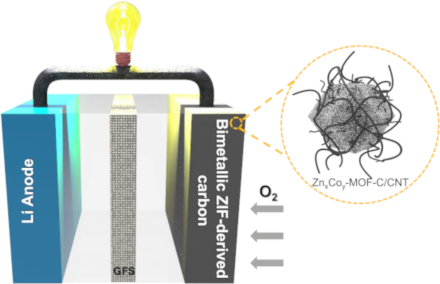
- microstructures of the materials. Powder XRD (PANalytical, Empyrean) and Raman spectroscopy (inVia Raman microscopes, Ar ion laser, 514 nm) were employed to analyze the structures. Their surface chemistry was investigated by XPS (Thermo Scientific, Sigma Probe), while their surface area and porosity were