

Search results
Search for "chemistry" in Full Text gives 1180 result(s) in Beilstein Journal of Nanotechnology. Showing first 200.
PEGylated lipids in lipid nanoparticle delivery dynamics and therapeutic innovation
Beilstein J. Nanotechnol. 2025, 16, 1914–1930, doi:10.3762/bjnano.16.133
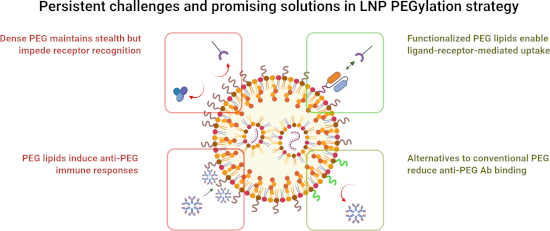
- chains arrange on the nanoparticle surface and the potential impacts on LNPs’ physicochemical properties by varying surface PEG density or PEG chemistry. Subsequently, PEG conformations are discussed in terms of their modulation of protein corona formation, cellular uptake, and immunogenic responses
- conjugation to cysteine residues on antibodies or peptides, enabling site-specific and stable coupling [35]. PEG lipids modified with dibenzocyclooctyne (DBCO) or azide groups can undergo strain-promoted azide-alkyne cycloaddition. This click chemistry is advantageous when conjugating sensitive targeting
- including RVG29, T7, AP2, and mApoE through thiol-maleimide click chemistry [38][39][40]. The functionalized PEG lipid was incorporated by substituting 10%, 30%, or 50% of the total 1.5 mol % PEG lipid content with DSPE-PEG-maleimide in the LNP formulation. Peptides containing a terminal cysteine residue



On the road to sustainability – application of metallic nanoparticles obtained by green synthesis in dentistry: a scoping review
Beilstein J. Nanotechnol. 2025, 16, 1851–1862, doi:10.3762/bjnano.16.128
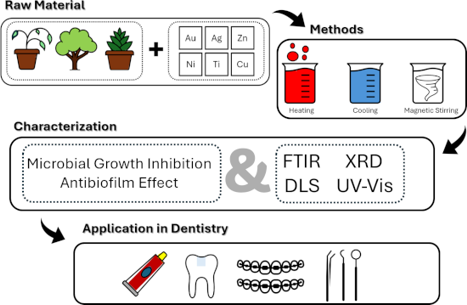
- , merging technological advancement with ecological responsibility. Future work should prioritize clinical trials, long-term safety evaluations, and standardized protocols to fully realize their therapeutic benefits. Keywords: dentistry; green chemistry technology; metal nanoparticles; nanotechnology
- nanoparticles synthesized through green chemistry compared to those obtained via conventional methods. This enhanced activity is frequently attributed to the presence of plant-derived bioactive compounds, such as flavonoids, polyphenols, and terpenoids, that act as both reducing and capping agents [13]. These
- nanoparticles synthesized via green chemistry in dentistry. Search strategy and information sources This review was guided by the PCC framework, that is, population (P): metallic nanoparticles (e.g., silver, gold, copper, zinc oxide); concept (C): green synthesis using plant-based extracts or eco-friendly


Piezoelectricity of layered double hydroxides: perspectives regarding piezocatalysis and nanogenerators
Beilstein J. Nanotechnol. 2025, 16, 1812–1817, doi:10.3762/bjnano.16.124
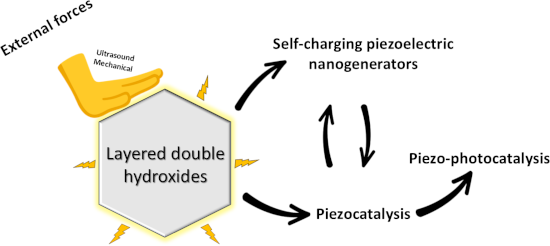
- Evgeniy S. Seliverstov Evgeniya A. Tarasenko Olga E. Lebedeva Department of General Chemistry, Belgorod State National Research University, Pobedy 85, 308015 Belgorod, Russian Federation 10.3762/bjnano.16.124 Abstract Recent research in alternate sources of energy such as piezoelectric energy
- the topics of piezoelectricity and layered double hydroxides in bibliographic systems and publishers such as ScienceDirect, Google Scholar, Royal Society of Chemistry, American Society of Chemistry, and MDPI. Our review is limited to articles published up to and including January 2025. Review Key
- , calibrated PFM mapping, and macroscopic tests) alongside application metrics (rate constants and degradation efficiency); (2) systematically including control experiments to isolate different contributions; (3) evaluating phase purity and interlayer chemistry, given their influence on charge mobility and

Electrical, photocatalytic, and sensory properties of graphene oxide and polyimide implanted with low- and medium-energy silver ions
Beilstein J. Nanotechnol. 2025, 16, 1794–1811, doi:10.3762/bjnano.16.123
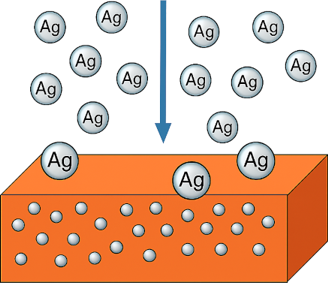
- Department of Inorganic Chemistry, University of Chemistry and Technology, Prague 6, 166 28, Czech Republic Ion Beam Center, Helmholtz-Zentrum Dresden Rossendorf, 01328 Dresden, Germany 10.3762/bjnano.16.123 Abstract Precise control of electrical conductivity, humidity sensitivity, and photocatalytic


Ambient pressure XPS at MAX IV
Beilstein J. Nanotechnol. 2025, 16, 1677–1694, doi:10.3762/bjnano.16.118

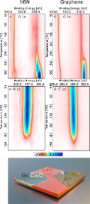
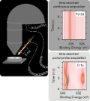
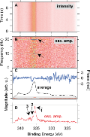
- , Lund University, Box 118, SE-221 00, Lund, Sweden 10.3762/bjnano.16.118 Abstract Ambient pressure X-ray photoelectron spectroscopy (APXPS) has emerged as an important technique for investigating surface and interface chemistry under realistic conditions, overcoming the limitations of conventional XPS
- revealed that H2 promotes the formation of a dense OH–H2O phase below the graphene. In contrast, CO alone showed minimal intercalation and instead scavenged oxygen. When CO and H2 were pulsed together, hydrogen modified the undercover chemistry: the formation of the OH-H2O phase lifts the graphene flake
- , we must ensure a well-controlled environment that is relevant to catalytic conditions. This includes enhancing the temporal resolution of APXPS measurements. Ultimately, the goal is to understand the heterogeneity of a catalytic system with greater specificity regarding site, time, chemistry, and





Nanotechnology-based approaches for the removal of microplastics from wastewater: a comprehensive review
Beilstein J. Nanotechnol. 2025, 16, 1607–1632, doi:10.3762/bjnano.16.114
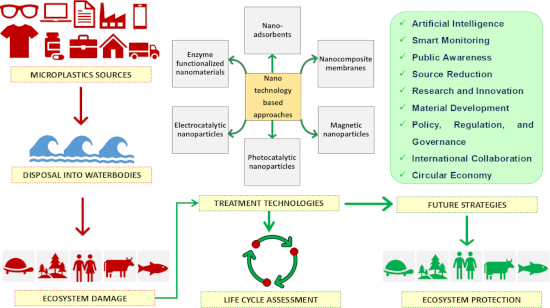
- , and advanced membrane materials, exhibit unique properties such as high surface area, enhanced reactivity, and tunable surface chemistry, which offer promising avenues for the selective and efficient removal of MPs from water. This paper also explores the mechanism, performance and limitations of
- thermal, acidic, and saline conditions. Its self-adhesive nature, biocompatibility, and durability make it a promising preventive strategy at the source. Similarly, nanocellulose, derived from renewable biomass, exhibits a high surface area and tunable surface chemistry, making it effective for adsorbing


Dendrimer-modified carbon nanotubes for the removal and recovery of heavy metal ions from water
Beilstein J. Nanotechnol. 2025, 16, 1522–1532, doi:10.3762/bjnano.16.107
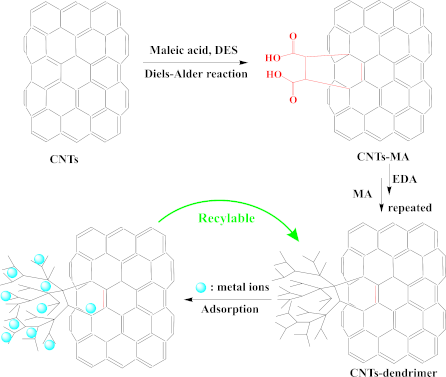
- Thao Quynh Ngan Tran Huu Trung Nguyen Subodh Kumar Xuan Thang Cao Faculty of Chemical Engineering, Industrial University of Ho Chi Minh City, Vietnam Department of Inorganic Chemistry, Faculty of Science, Palacký University, 17 Listopadu 12, CZ-77146 Olomouc, Czech Republic 10.3762/bjnano.16.107
- . Funding This research was funded by the Industrial University of Ho Chi Minh City. S.K. acknowledges financial support from institutional sources of the Department of Inorganic Chemistry, Palacký University Olomouc, Czech Republic. Conflict of Interest The authors confirm that there is no conflict of


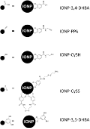
Cross-reactivities in conjugation reactions involving iron oxide nanoparticles
Beilstein J. Nanotechnol. 2025, 16, 1504–1521, doi:10.3762/bjnano.16.106
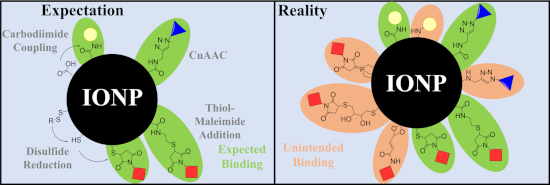
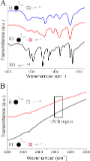
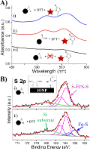
- Shoronia N. Cross Katalin V. Korpany Hanine Zakaria Amy Szuchmacher Blum Department of Chemistry, McGill University, 801 Sherbrooke Street West, Montreal, QC H3A 0B8, Canada 10.3762/bjnano.16.106 Abstract The preparation of multimodal nanoparticles by capping magnetic iron oxide nanoparticles
- (IONPs) with functional organic molecules is a major area of research for biomedical applications. Conjugation reactions, such as carbodiimide coupling and the highly selective class of reactions known as “click chemistry”, have been instrumental in tailoring the ligand layers of IONPs to produce
- erroneous conclusions about the efficacy of conjugation reactions, which can have detrimental impacts on the functionality and safety of IONPs in biomedical applications. Keywords: click chemistry; copper-catalyzed azide–alkyne cycloaddition; disulfide reduction; iron oxide nanoparticles; thiol–maleimide







Nanomaterials for biomedical applications
Beilstein J. Nanotechnol. 2025, 16, 1499–1503, doi:10.3762/bjnano.16.105
- . Nanomaterials have gained popularity in medicine because they can be altered according to the need [1]. Researchers can tailor the shape, surface chemistry, and other specific properties of materials to deliver desirable traits. In particular, some nanoparticles can be used to deliver drugs to a tumor, reducing
- that nanomaterials have many uses in medicine, from targeted drug delivery to improved imaging, promoting tissue regeneration, and enhancing the functions of implants and prosthetic devices. Their adaptability makes them so powerful as scientists can change the structure, chemistry, or properties of a
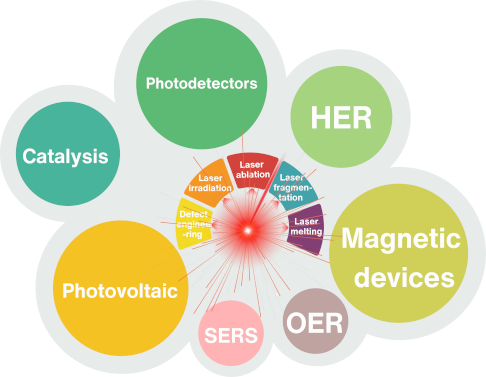
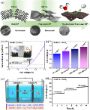
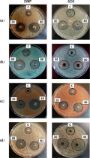
Laser processing in liquids: insights into nanocolloid generation and thin film integration for energy, photonic, and sensing applications
Beilstein J. Nanotechnol. 2025, 16, 1428–1498, doi:10.3762/bjnano.16.104






The role of biochar in combating microplastic pollution: a bibliometric analysis in environmental contexts
Beilstein J. Nanotechnol. 2025, 16, 1401–1416, doi:10.3762/bjnano.16.102
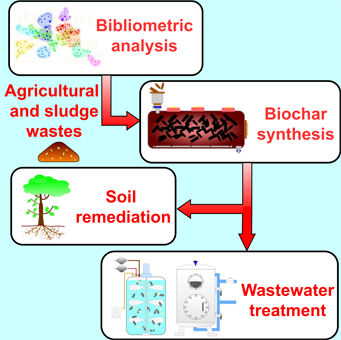
- , and disrupt microbial diversity and nutrient cycling. Biochar, a stable and eco-friendly material, has demonstrated effectiveness in mitigating these effects by restoring soil chemistry, enhancing microbial diversity and improving crop productivity. Recent studies report that biochar increases crop
- interactions in soil [31]. Biochar properties The physical and chemical properties of biochar depend significantly on the composition of its feedstock [46]. Molecular model calculations and quantum chemistry analyses suggest that biochar derived from wood exhibits superior physical properties, such as porosity



Enhancing the therapeutical potential of metalloantibiotics using nano-based delivery systems
Beilstein J. Nanotechnol. 2025, 16, 1350–1366, doi:10.3762/bjnano.16.98
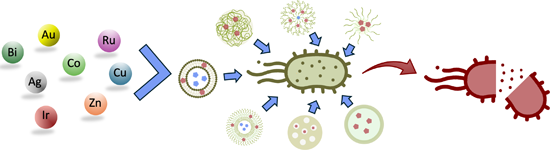
- ]. Dendrimers, with their hyperbranched structures, can be precisely controlled for size, shape, and surface chemistry, allowing for highly targeted delivery of anti-biofilms drugs or nucleic acids [81][82]. Polymeric NPs offer several advantages, including biodegradability, biocompatibility, and stability
- metalloantibiotics and advanced drug delivery technologies opens new avenues for combating drug-resistant infections. In this regard, a multidisciplinary approach, bridging chemistry, nanotechnology, microbiology, and pharmacology will be pivotal in advancing this emerging field toward clinical application. The role


Enhancing the photoelectrochemical performance of BiOI-derived BiVO4 films by controlled-intensity current electrodeposition
Beilstein J. Nanotechnol. 2025, 16, 1289–1301, doi:10.3762/bjnano.16.94
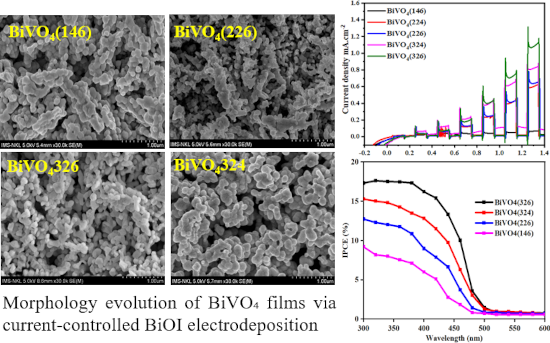
- . Larger grains typically result in fewer grain boundaries, reducing phonon scattering and enhancing vibrational coherence. Raman spectra also provide insights into the influence of fabrication conditions on surface chemistry. The relative intensities of the peaks suggest that higher deposition currents



Mechanical stability of individual bacterial cells under different osmotic pressure conditions: a nanoindentation study of Pseudomonas aeruginosa
Beilstein J. Nanotechnol. 2025, 16, 1171–1183, doi:10.3762/bjnano.16.86
- Luis potosí, SLP, México Facultad de Ciencias, Universidad Autónoma de San Luis Potosí, Parque Chapultepec 1570, Privadas del Pedregal 78295, San Luis Potosí, S.L.P. México Department of Chemistry, Faculty of Science and Engineering, Swansea University, Singleton Campus, Swansea SA2 8PP, United Kingdom
- the Deutsche Forschungsgemeinschaft (DFG) – Project ID: 458564133, and the Royal Society of Chemistry (RSC) RG\R1\241050. The corresponding author would like to thank the National postdoctoral Fellowship program SECIHTI (CONACYT) Mexico, for the financial support.


Crystalline and amorphous structure selectivity of ignoble high-entropy alloy nanoparticles during laser ablation in organic liquids is set by pulse duration
Beilstein J. Nanotechnol. 2025, 16, 1141–1159, doi:10.3762/bjnano.16.84
- Robert Stuckert Felix Pohl Oleg Prymak Ulrich Schurmann Christoph Rehbock Lorenz Kienle Stephan Barcikowski Technical Chemistry I and Center for Nanointegration Duisburg-Essen (CENIDE), University of Duisburg-Essen, Universitaetsstr. 7, 45141 Essen, Germany Institute for Material Science
- , Synthesis and Real Structure, Faculty of Engineering, Christian-Albrechts University of Kiel, Kaiserstraße 2, 24143 Kiel, Germany Inorganic Chemistry and Center for Nanointegration Duisburg-Essen (CENIDE), University of Duisburg-Essen, Universitaetsstr. 7, 45141 Essen, Germany Kiel Nano, Surface and




Towards a quantitative theory for transmission X-ray microscopy
Beilstein J. Nanotechnol. 2025, 16, 1113–1128, doi:10.3762/bjnano.16.82
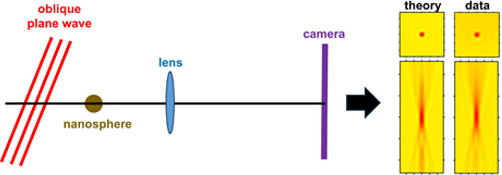
- , University College London, London, UK Department of Inorganic Chemistry, Fritz-Haber-Institut der Max-Planck Gesellschaft, Berlin, Germany Humboldt Universität zu Berlin, Mathematisch-Naturwissenschaftliche Fakultät, Institut für Physik, Newtonstraße 15, 12489 Berlin, Germany 10.3762/bjnano.16.82 Abstract

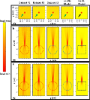


Piezoelectricity of hexagonal boron nitrides improves bone tissue generation as tested on osteoblasts
Beilstein J. Nanotechnol. 2025, 16, 1068–1081, doi:10.3762/bjnano.16.78
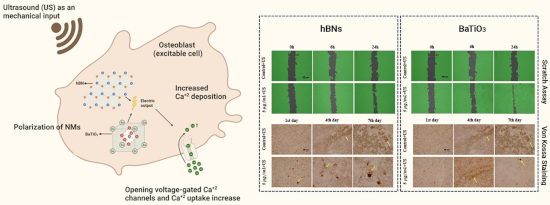
- Sevin Adiguzel Nilay Cicek Zehra Cobandede Feray B. Misirlioglu Hulya Yilmaz Mustafa Culha Sabanci University Nanotechnology Research and Application Center (SUNUM), Istanbul, Turkey Chemistry and Biochemistry Department, College of Science and Mathematics, Augusta University, Augusta, GA, USA


Soft materials nanoarchitectonics: liquid crystals, polymers, gels, biomaterials, and others
Beilstein J. Nanotechnol. 2025, 16, 1025–1067, doi:10.3762/bjnano.16.77
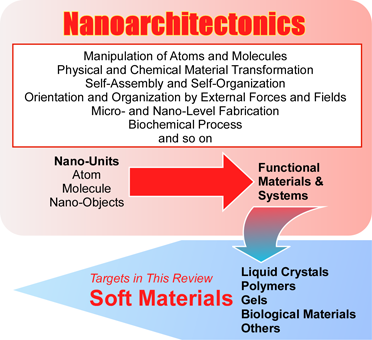
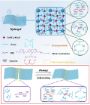
- exhibit diverse responses to external stimuli is on the rise [6][7][8][9][10]. The field of materials chemistry is undergoing a transition from a focus on hard, robust materials to a greater emphasis on softer, more mouldable substances. This shift is actually reasonable as observed in the evolution of
- disciplines such as organic chemistry [31][32][33][34][35], polymer chemistry [36][37][38][39][40], and materials chemistry [41][42][43][44]. Consequently, soft materials, including polymers [45][46][47][48][49], liquid crystals [50][51][52][53][54] and gels [55][56][57][58][59], have been developed
- . Technologies that facilitate the conversion of these materials, not limited to typical soft materials, into more advanced assemblies include self-assembly via supramolecular chemistry [60][61][62][63][64], the creation of metal-organic frameworks (MOFs) through coordination chemistry [65][66][67][68][69], and






Time-resolved probing of laser-induced nanostructuring processes in liquids
Beilstein J. Nanotechnol. 2025, 16, 968–1002, doi:10.3762/bjnano.16.74
- Maximilian Spellauge David Redka Mianzhen Mo Changyong Song Heinz Paul Huber Anton Plech Laser Center Hochschule Munich, Munich University of Applied Sciences, Lothstr. 34, 80335 Munich, Germany Technical Chemistry I and Center for Nanointegration Duisburg-Essen (CENIDE), University of Duisburg


Synthesis of biowaste-derived carbon-dot-mediated silver nanoparticles and the evaluation of electrochemical properties for supercapacitor electrodes
Beilstein J. Nanotechnol. 2025, 16, 933–943, doi:10.3762/bjnano.16.71
- Navya Kumari Tenkayala Chandan Kumar Maity Md Moniruzzaman Subramani Devaraju Department of Chemistry, Vignan Foundation for Science, Technology and Research (Deemed to be University), Guntur, 522213, India Department of Chemistry, Mallareddy college of Engineering and Technology, Maisammaguda
- , Dhulapally, Secundrabad, Telangana, 500100, India Department of Chemistry, Gachon University, 1342 Seongnam‑daero, Sujeong‑gu, Seongnam‑si, Gyeonggi‑do 13120, Republic of Korea Department of Chemical and Biological Engineering, Gachon University, 1342 Seongnam-daero, Seongnam-si, Gyeonggi-do 13120, Republic
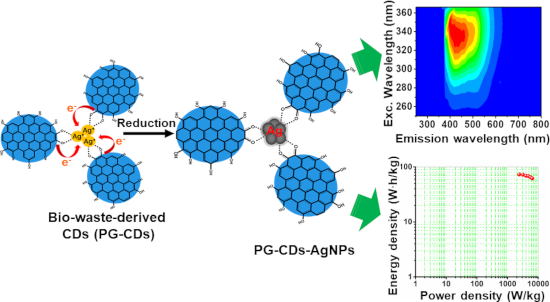
- reduction of Ag is extremely hazardous and can be dangerous to humans and the environment [17]. Hence, safer nontoxic methods for the production of AgNPs are in high demand. Green chemistry emphasizes the use of nontoxic chemicals and production pathways for environmental safety. Motivated by these


Characterization of ion track-etched conical nanopores in thermal and PECVD SiO2 using small angle X-ray scattering
Beilstein J. Nanotechnol. 2025, 16, 899–909, doi:10.3762/bjnano.16.68
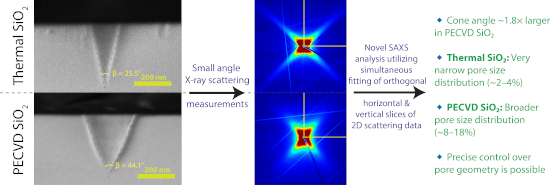
- dioxide [29][40][30]. Amorphous silicon dioxide (SiO2) has excellent chemical stability, well-understood surface chemistry, and compatibility with semiconductor processing, opening up new applications for track-etched nanopores in this material [30]. In this study, we report the characterization of track


Heat-induced transformation of nickel-coated polycrystalline diamond film studied in situ by XPS and NEXAFS
Beilstein J. Nanotechnol. 2025, 16, 887–898, doi:10.3762/bjnano.16.67
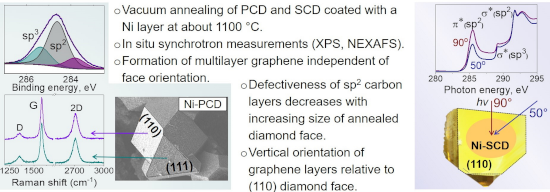
- Olga V. Sedelnikova Yuliya V. Fedoseeva Dmitriy V. Gorodetskiy Yuri N. Palyanov Elena V. Shlyakhova Eugene A. Maksimovskiy Anna A. Makarova Lyubov G. Bulusheva Aleksandr V. Okotrub Nikolaev Institute of Inorganic Chemistry, SB RAS, 630090 Novosibirsk, Russia Sobolev Institute of Geology and
- Mineralogy, SB RAS, 630090 Novosibirsk, Russia Physical Chemistry, Institute of Chemistry and Biochemistry, Free University of Berlin, 14195 Berlin, Germany Helmholtz-Zentrum Berlin für Materialien und Energie, 14109 Berlin, Germany 10.3762/bjnano.16.67 Abstract Controlling high-temperature graphitization


Insights into the electronic and atomic structures of cerium oxide-based ultrathin films and nanostructures using high-brilliance light sources
Beilstein J. Nanotechnol. 2025, 16, 860–871, doi:10.3762/bjnano.16.65
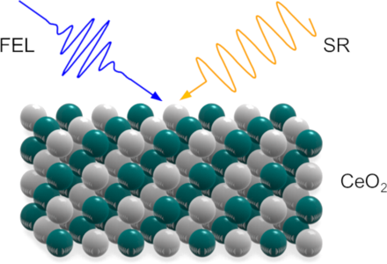
- under UHV conditions. Such instruments, installed at synchrotron radiation facilities and applied to ceria-based model systems have given an important contribution to understanding the surface chemistry of specific reactions. Coexisting Pt and ceria nanoparticles supported on TiO2(110) were found to
- shown as dashed lines. Reprinted from [49] with permission of the Royal Society of Chemistry (“Electronic properties of epitaxial cerium oxide films during controlled reduction and oxidation studied by resonant inelastic X-ray scattering” by G. Gasperi et al., Phys. Chem. Chem. Phys. vol. 18, issue 30


Synchrotron X-ray photoelectron spectroscopy study of sodium adsorption on vertically arranged MoS2 layers coated with pyrolytic carbon
Beilstein J. Nanotechnol. 2025, 16, 847–859, doi:10.3762/bjnano.16.64
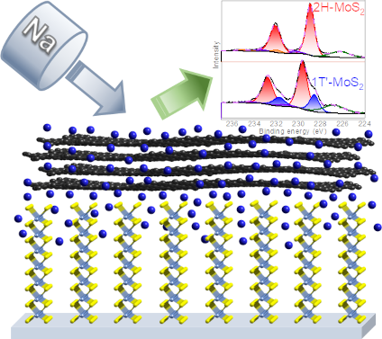
- Alexander V. Okotrub Anastasiya D. Fedorenko Anna A. Makarova Veronica S. Sulyaeva Yuliya V. Fedoseeva Lyubov G. Bulusheva Nikolaev Institute of Inorganic Chemistry, SB RAS, 630090 Novosibirsk, Russia Physical Chemistry, Institute of Chemistry and Biochemistry, Free University of Berlin, 14195


Synthesis and magnetic transitions of rare-earth-free Fe–Mn–Ni–Si-based compositionally complex alloys at bulk and nanoscale
Beilstein J. Nanotechnol. 2025, 16, 823–836, doi:10.3762/bjnano.16.62
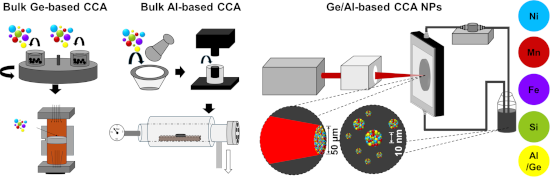
- applications such as magnetic hyperthermia, where NPs are used in cancer therapy to induce localized heating when exposed to an alternating magnetic field [34]. However, producing CCAs at the nanoscale presents significant challenges. Traditional wet chemistry approaches often fail because of elemental