Search results
Search for "electron-transfer" in Full Text gives 249 result(s) in Beilstein Journal of Nanotechnology. Showing first 200.
Structural, optical, and bioimaging characterization of carbon quantum dots solvothermally synthesized from o-phenylenediamine
Beilstein J. Nanotechnol. 2023, 14, 165–174, doi:10.3762/bjnano.14.17
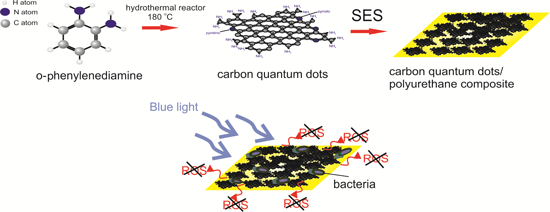
- through energy transfer to molecular oxygen [21]. Chong et al. claimed that superoxide anions are involved in the generation of singlet oxygen, implying that electron transfer is an intermediate step for the generation of singlet oxygen by photoexcited graphene quantum dots [20]. In nitrogen-doped
- −polyoxypropylene−polyoxyethylene Pluronic 68 generate singlet oxygen through energy transfer to molecular oxygen [21]. But CQDs prepared from o-phenylenediamine do not generate singlet oxygen or OH radicals through energy or electron transfer, because the condensation process of these dots includes NH2 groups in


Cooper pair splitting controlled by a temperature gradient
Beilstein J. Nanotechnol. 2023, 14, 61–67, doi:10.3762/bjnano.14.7

- projection α at a point x, m is the electron mass, and μ is the chemical potential, is the Hamiltonian of a superconducting electrode with the order parameter Δ and the terms account for electron transfer through the junctions between the superconductor and the normal leads. In Equation 4, the surface


Non-stoichiometric magnetite as catalyst for the photocatalytic degradation of phenol and 2,6-dibromo-4-methylphenol – a new approach in water treatment
Beilstein J. Nanotechnol. 2022, 13, 1531–1540, doi:10.3762/bjnano.13.126

- by Chelkowska et al. [36]. The TFG model includes the following reactions: The reaction in Equation 6 shows that the ozone decomposition process is initiated by hydroxy anions. Two-electron transfer of the oxygen atom produces the –OOH anion, which is necessary for the generation of hydroxyl radicals
- higher than the bandgap energy generates holes and electrons, which, after moving to the catalyst surface, may participate in redox processes. In a basic medium, the photocatalytic process may proceed by oxygen reduction at the surface of the particles (electron transfer only) [37]. A similar electron
- transfer can occur during the adsorption of organic compounds on magnetite. In the presence of adsorbed aryl halogenated compounds on the catalyst surface, the accumulated electrons are available to activate carbon–halogen bonds via dissociative electron transfer [38][39]. The electron from the catalyst


A TiO2@MWCNTs nanocomposite photoanode for solar-driven water splitting
Beilstein J. Nanotechnol. 2022, 13, 1520–1530, doi:10.3762/bjnano.13.125
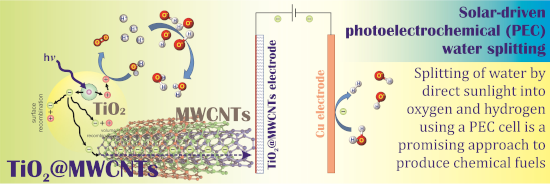
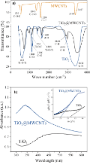
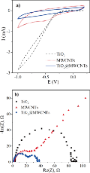
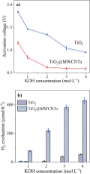
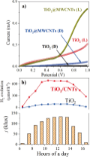
- cyclic voltammograms show that incorporating TiO2 with the MWCNTs leads to a decrease in the electrical double layer, thereby facilitating the electron transfer rate in the TiO2@MWCNTs electrode. Moreover, the current density of the photoelectrochemical electrode formed by TiO2@MWCNTs under solar
- thick electrical double layer (EDL) [33]. However, incorporating TiO2 onto the MWCNTs leads to a decrease of the EDL, increasing the electron transfer rate in the TiO2@MWCNTs electrode [34]. Puthirath et al. proved that the EDL has a significant influence on the hydrogen evolution reaction of the
- electrode [35]. Based on the cyclic voltammetry results, it could be suggested that the TiO2@MWCNTs electrode is superior regarding photoelectrochemical application compared to TiO2 and MWCNTs electrodes. Electrochemical impedance spectroscopy (EIS) is applied to characterize the electron-transfer property



Rapid and sensitive detection of box turtles using an electrochemical DNA biosensor based on a gold/graphene nanocomposite
Beilstein J. Nanotechnol. 2022, 13, 1458–1472, doi:10.3762/bjnano.13.120

- large surface area, high electrical conductivity and electron transfer rate, and it can immobilise diverse molecules, which is ideal for biosensor design [37][38][42]. On the other hand, AuNPs offer outstanding characteristics such as biocompatibility, conductivity, catalytic efficiency, density, and
- which accelerated the electron transfer rate of [Fe(CN)6]4−/3−. The DPV of SPCE modified with the AuNPs/Gr nanocomposite exhibited the highest peak current in 2.0 mM K4[Fe(CN)6] compared to that of the bare surface of SPCE (Figure 3c). The DPV peak current values for AuNPs/Gr, AuNPs, and Gr electrode
- surfaces were 31.55, 26.36, and 26.21 mA, respectively. This finding proves that the AuNPs/Gr nanocomposite is suitable for electrochemical analysis and enhances the electrocatalytic activity by facilitating electron transfer in the redox process [54]. Bare SPCE and modified SPCE surfaces were examined



LED-light-activated photocatalytic performance of metal-free carbon-modified hexagonal boron nitride towards degradation of methylene blue and phenol
Beilstein J. Nanotechnol. 2022, 13, 1380–1392, doi:10.3762/bjnano.13.114
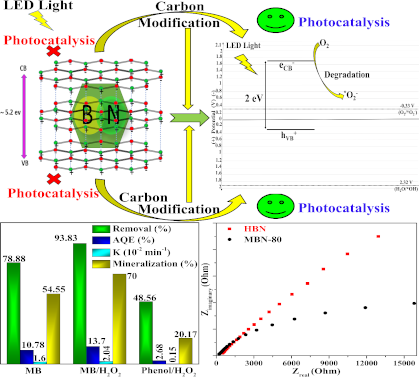
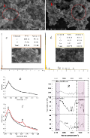
- MBN-80 thus demonstrates the enhanced electrochemical performance and lower charge transfer resistance. This mainly means an enhanced electron transfer from MBN-80 for a favourable visible light photocatalysis. Additionally, the capacitance of the electrical double layer generated at the semiconductor



Near-infrared photoactive Ag-Zn-Ga-S-Se quantum dots for high-performance quantum dot-sensitized solar cells
Beilstein J. Nanotechnol. 2022, 13, 1337–1344, doi:10.3762/bjnano.13.110
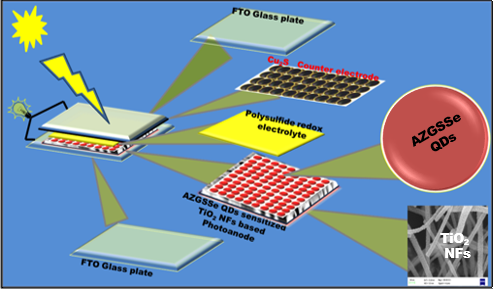
- is shown in Figure 6b. From this, the average lifetime (τs) of AZGSSe/TiO2 was found to be 18.92 ns. Then the rate constant (Keff) of the electron transfer is calculated to be 2.9 × 10⁷ s−1 from the equation: where τ(AZGSSe/TiO2) is the average electron lifetime of AZGSSe/TiO2 and τ(AZGSSe QDs) is
- the average electron lifetime of AZGSSe QDs [34]. Figure 6c shows the PL emission spectra of the AZGSSe/TiO2 NF-based photoanode in comparison with TiO2 NFs. It reveals that the PL intensity of AZGSSe/TiO2 NFs is quenched. This is due to the enhanced electron transfer from the conduction band of
- AZGSSe QDs to TiO2 NFs with minimized charge recombination rate [35][36][37]. PV cell studies The electron transfer mechanism of the fabricated QDSC was examined by using impedance analysis. The impedance spectrum plotted in the form of a Nyquist plot (Figure 7) was fitted with the equivalent circuit


Recent trends in Bi-based nanomaterials: challenges, fabrication, enhancement techniques, and environmental applications
Beilstein J. Nanotechnol. 2022, 13, 1316–1336, doi:10.3762/bjnano.13.109
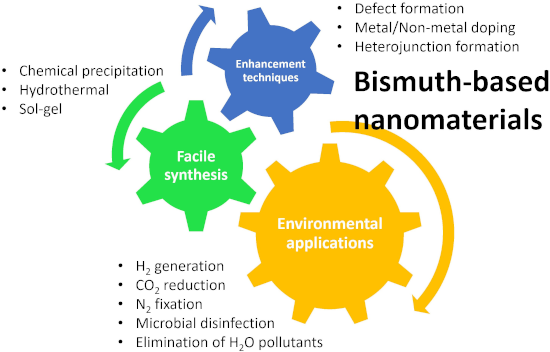
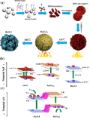
- carriers, and SPRs enhanced the ability to absorb visible light. The photocatalytic activity of Bi(M) was further enhanced by the exposure of (010) facets (Figure 4a). Bi5+ reduced the bandgap of BiOBr, which led to an increase in the density of carriers. Examining electron transfer channels and




Design of surface nanostructures for chirality sensing based on quartz crystal microbalance
Beilstein J. Nanotechnol. 2022, 13, 1201–1219, doi:10.3762/bjnano.13.100
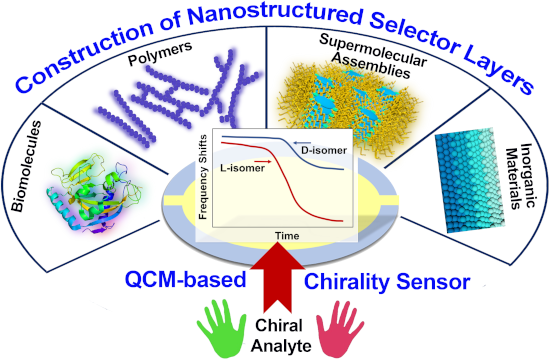
- typical hydrogen bonds with the amino acid residues of SA molecules. Based on the QCM responses of naproxen (Nap) recognition on the BSA selector layer, Guo et al. studied the chiral adsorption forces by cyclic voltammograms (CVs) [33]. The result showed the formation of a larger electron transfer


Application of nanoarchitectonics in moist-electric generation
Beilstein J. Nanotechnol. 2022, 13, 1185–1200, doi:10.3762/bjnano.13.99
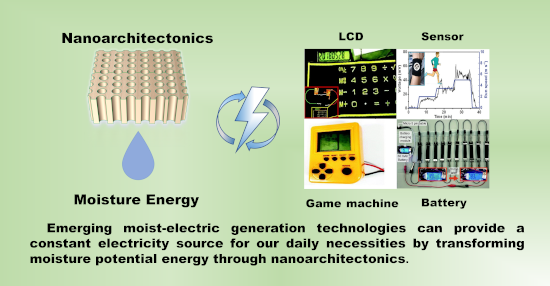
- Wang et al. also provides a valuable explanation and deeper understanding of solid–liquid interactions. Compared to the traditional model, Wang’s model suggests that electron transfer between liquid molecules and solid surface atoms is the initial step and is followed by ion transfer due to electronic
- have superior electrical conductivity and provide better electron transfer properties. Organic nanomaterials are complementary to inorganic nanomaterials in terms of physical properties. Although organic nanomaterials are usually poor in electrical conductivity, they have better properties in terms of


Recent advances in green carbon dots (2015–2022): synthesis, metal ion sensing, and biological applications
Beilstein J. Nanotechnol. 2022, 13, 1068–1107, doi:10.3762/bjnano.13.93
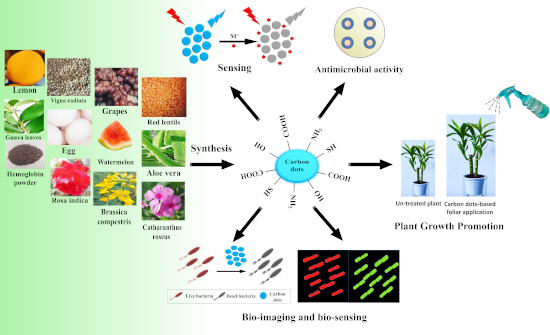




Spindle-like MIL101(Fe) decorated with Bi2O3 nanoparticles for enhanced degradation of chlortetracycline under visible-light irradiation
Beilstein J. Nanotechnol. 2022, 13, 1038–1050, doi:10.3762/bjnano.13.91
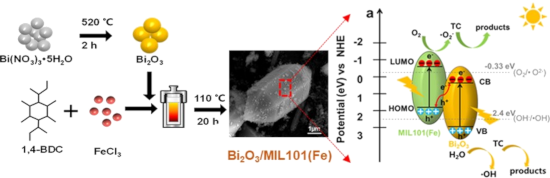
- experiment and electron spin resonance (ESR) experiment suggest that the electron transfer path between Bi2O3 and MIL101(Fe) accords with the Z-type transfer mechanism. The possible photocatalytic degradation pathways were investigated via the analysis of the intermediate products in the degradation process
- /MIL101(Fe) heterojunctions can result in more effective electron–hole pair separation, higher interfacial electron transfer rate, and thus weakened charge transfer resistance, which may facilitate the improvement of Bi2O3/MIL101(Fe) photocatalytic activity. Photocatalytic degradation of chlortetracycline


Electrocatalytic oxygen reduction activity of AgCoCu oxides on reduced graphene oxide in alkaline media
Beilstein J. Nanotechnol. 2022, 13, 1020–1029, doi:10.3762/bjnano.13.89

- slow reaction rates of the electrode processes impede the efficiency and, thus, require innovative catalyst designs. The ORR is an irreversible, complex (involving multiple steps and intermediates O, OH−, O2−, HO2− and H2O2) and kinetically slow process (via two- or four-electron transfer) dominating
- attributes include high electrical conductivity, cost-effectiveness (50 times lower than Pt), and the ability to execute the ORR via a single step (four-electron transfer). Thus, Ag and its bi- and trimetallic alloys, with and without supporting matrices, have been extensively researched as potential ORR
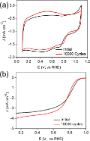
- electrodeposition. Among the combinations, the Ag–Cu (3:1) alloy showed the better electrode catalytic activity and the highest onset (0.85 V vs RHE) and half-wave potential (0.76 V vs RHE) with a limiting current density of 4.19 mA·cm−2, along with an electron transfer value of 3.86 in 0.1 M KOH [21]. Linic and co


DNA aptamer selection and construction of an aptasensor based on graphene FETs for Zika virus NS1 protein detection
Beilstein J. Nanotechnol. 2022, 13, 873–881, doi:10.3762/bjnano.13.78
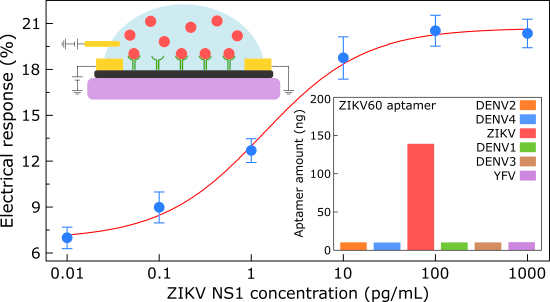
- support this electron transfer from pyrene-modified molecules to graphene as the binding mechanism in π–π interactions between such compounds [35][36][37]. The association of pyrene-modified ZIKV60 aptamers with graphene may also be mediated by charge transfer that assists the interaction between the
- pyrene moiety of ZIKV60 and the π orbitals of graphene [38][39]. Consequently, the electron transfer to graphene after functionalization reveals a factual immobilization of ZIKV60 aptamers on its surface. Similar results were obtained for four additional graphene devices. See Figure S4 (Supporting
- protein-rich environments. From 0.01 to 100 pg/mL, the graphene transfer curve left-shifts successively as a result of progressive additions of five specific protein dilutions. This denotes a cumulative electron transfer to graphene as NS1 binds to ZIKV60. However, this trend is interrupted at the cutoff



Self-assembly of C60 on a ZnTPP/Fe(001)–p(1 × 1)O substrate: observation of a quasi-freestanding C60 monolayer
Beilstein J. Nanotechnol. 2022, 13, 857–864, doi:10.3762/bjnano.13.76
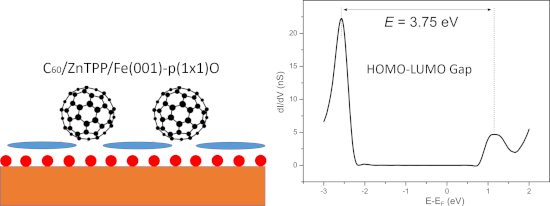
- electronic gap equal to 3.75 eV. Finally, work function measurements have been performed to evaluate the charge transfer between the different layers constituting the heterostructure. Generally, electron transfer from the substrate (overlayer) to the overlayer (substrate) induces an increase (decrease) of




Efficient liquid exfoliation of KP15 nanowires aided by Hansen's empirical theory
Beilstein J. Nanotechnol. 2022, 13, 788–795, doi:10.3762/bjnano.13.69
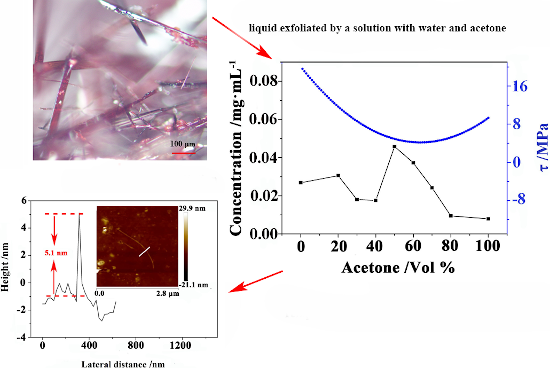
- nanoparticles as anode materials to promote the rapid diffusion and electron transfer of lithium, and Rongjun Zhao prepared n-butanol gas sensors with one-dimensional In2O3 nanorods [1][2]. Different from 2D materials, 1D materials generally have a chain-like crystal structure and are easily exfoliated due to a




Recent advances in nanoarchitectures of monocrystalline coordination polymers through confined assembly
Beilstein J. Nanotechnol. 2022, 13, 763–777, doi:10.3762/bjnano.13.67

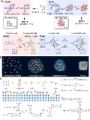
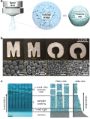
- to form monocrystalline coordination polymers embedding a fast electron transfer route [110]. The mixed ion-electron of Prussian blue crystals could be significantly enhanced under low temperature (i.e., −20 °C), which is important for the use of batteries in cold regions. To encapsulate conductive




A nonenzymatic reduced graphene oxide-based nanosensor for parathion
Beilstein J. Nanotechnol. 2022, 13, 730–744, doi:10.3762/bjnano.13.65
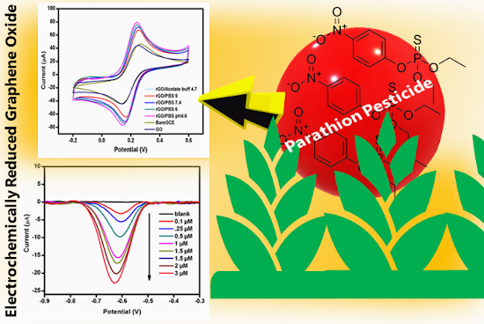
- , enhanced electron transport facility, excellent mechanical, thermal, and electrical stability [11][25][26][27]. The electronic structure and surface physicochemistry of graphene are beneficial for electron transfer. Several graphene-based nanocomposites based on complex synthesis processes are reported as
- indicates that the effective electroactive surface area of ERGO has been improved by ≈71.14% due to exfoliation of graphene sheets. Electrochemical impedance spectroscopy was performed to investigate the electron transfer capability of ERGO (Figure 4B). Supporting Information File 1, Table S3 depicts the
- microstructures of ERGO, which makes the graphene sheets more accessible to the electrolyte. It also facilitates electron transfer and diffusion of ions during the electrochemical process [28][34]. Electrochemical behavior of parathion at modified nanosensors Figure 5A depicts the CVs (first cycle) of bare GCE


Zinc oxide nanostructures for fluorescence and Raman signal enhancement: a review
Beilstein J. Nanotechnol. 2022, 13, 472–490, doi:10.3762/bjnano.13.40
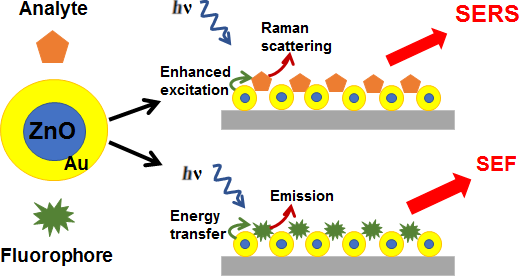
- electron transfer and creating sites for the binding of electrons from surface-state energy levels, followed by further transfer of the electrons to the LUMO of the adsorbed molecules. However, it should be noted that too high doping/defect concentrations are not desirable, as they can cause electron–hole
- , due to the energy and electron transfer from plasmon-resonant metal surfaces to the adjacent semiconductor. Such hybrid materials have been proposed for medical and pharmaceutical applications, catalysis, and electronics [88]. The photoluminescence emission of ZnO nanoparticles has been exploited in
- nanoislands. The enhancement is considered to be attributed to a hot carrier transfer from Au to ZnO. Contradictory, Brewster et al. observed a 32% decrease in UV emission intensity after Au NP decoration of ZnO [93]. This quenching effect was assigned to electron transfer from the ZnO conduction band to the




A non-enzymatic electrochemical hydrogen peroxide sensor based on copper oxide nanostructures
Beilstein J. Nanotechnol. 2022, 13, 424–436, doi:10.3762/bjnano.13.35

- increasing concentration of added peroxide (from 0 to 5 mM). The mechanism of electron transfer in the modified electrode can be explained as follows: In this catalytic process, during the reduction of H2O2 on the CuO surface, Cu2+ is electrochemically reduced to Cu+ and H2O2 to O2. Then, Cu+ on the
- high-speed paths for analyte molecule transfer due to the high porosity of the surface, as well as more efficient mass diffusion and electron transfer processes compared to the less developed film. The sensitivity of pure CuO wire is significantly inferior to samples containing CuO. Figure 3c,d




The effect of metal surface nanomorphology on the output performance of a TENG
Beilstein J. Nanotechnol. 2022, 13, 298–312, doi:10.3762/bjnano.13.25
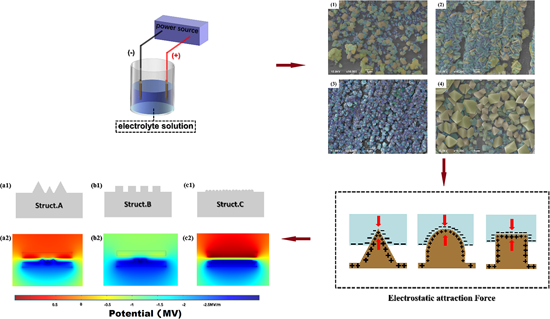
- barrier of electron transfer, thus, enabling electron flow from insulator to metal (vice versa) or from an insulator to another insulator. TENGs are miniaturized and portable. They generate current by collecting tiny amounts of energy and supply power for microelectronic devices and sensors. Wind energy


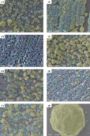
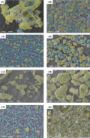
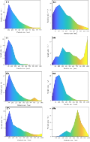


Tin dioxide nanomaterial-based photocatalysts for nitrogen oxide oxidation: a review
Beilstein J. Nanotechnol. 2022, 13, 96–113, doi:10.3762/bjnano.13.7

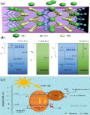
- and acetone [75]. The presence of graphene induces the formation of SnO2 and introduces Sn vacancies, which supports the electron transfer from the CB of Zn2SnO4 to oxygen under visible light irradiation (Figure 12). The authors only used a visible light LED with low power (3 W) and obtained a high


Morphology-driven gas sensing by fabricated fractals: A review
Beilstein J. Nanotechnol. 2021, 12, 1187–1208, doi:10.3762/bjnano.12.88
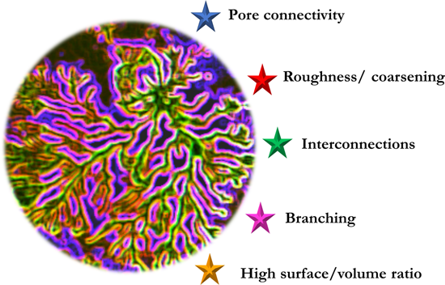
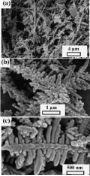
- branches. The dendritic nanostructure allowed the network passage for electron transfer after ammonia molecules interact with the sensing surface. It showed an about 5–8 times enhanced response and an improvement in recovery time by about 30–50 times compared to a pristine NiO sensor. The sensor also










Nanoporous and nonporous conjugated donor–acceptor polymer semiconductors for photocatalytic hydrogen production
Beilstein J. Nanotechnol. 2021, 12, 607–623, doi:10.3762/bjnano.12.50

- investigate the influence of fluorine substitution at BT on the charge carrier mobility and catalytic activity [66]. The mechanism of proton-coupled electron transfer (PCET) (Figure 6) was offered. It suggests for both linear and 3D polymers that single meta-F substitution renders a higher photocatalytic




Simulation of gas sensing with a triboelectric nanogenerator
Beilstein J. Nanotechnol. 2021, 12, 507–516, doi:10.3762/bjnano.12.41
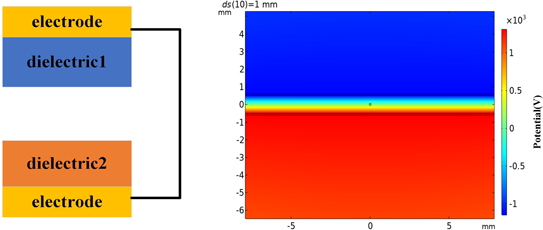
- electrification and electrostatic induction. Contact electrification refers to the electron transfer between two different materials in contact because the atoms are so close together. An electric field is generated after friction electrification, and electrostatic induction is caused by the electric field. The