Search results
Search for "evolution" in Full Text gives 705 result(s) in Beilstein Journal of Nanotechnology. Showing first 200.
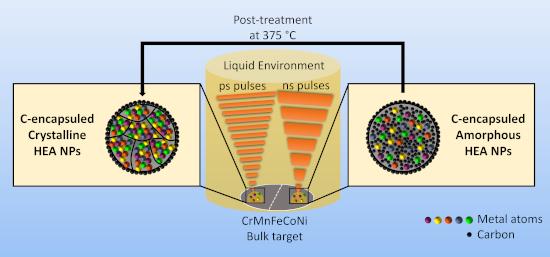
Crystalline and amorphous structure selectivity of ignoble high-entropy alloy nanoparticles during laser ablation in organic liquids is set by pulse duration
Beilstein J. Nanotechnol. 2025, 16, 1141–1159, doi:10.3762/bjnano.16.84
- decomposition [4], oxygen evolution reactions (OER) [14], oxygen reduction reactions (ORR) [15], in CO oxidation [16], and in CO2 and CO reduction [17]. This high activity in catalysis has been attributed to adsorption energy distribution patterns (AEDP) during catalytic reactions [18], which may be tuned based




Soft materials nanoarchitectonics: liquid crystals, polymers, gels, biomaterials, and others
Beilstein J. Nanotechnol. 2025, 16, 1025–1067, doi:10.3762/bjnano.16.77
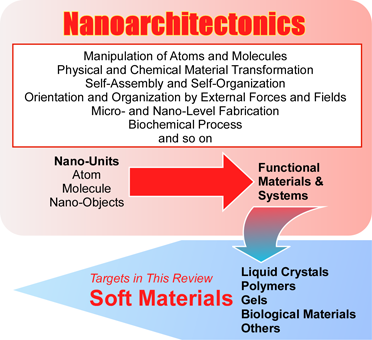
- exhibit diverse responses to external stimuli is on the rise [6][7][8][9][10]. The field of materials chemistry is undergoing a transition from a focus on hard, robust materials to a greater emphasis on softer, more mouldable substances. This shift is actually reasonable as observed in the evolution of
- . Additionally, they can be employed as precursors to produce CaFe2O4 thin films upon calcination. The resulting transparent solution is coated and subjected to calcination/annealing to form mesoporous thin films. The mesoporous films display excellent performance in the oxygen evolution reaction. It would be






A calix[4]arene-based supramolecular nanoassembly targeting cancer cells and triggering the release of nitric oxide with green light
Beilstein J. Nanotechnol. 2025, 16, 1003–1013, doi:10.3762/bjnano.16.75
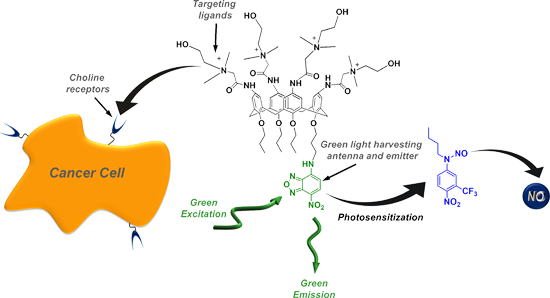
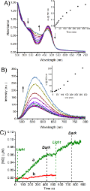
- supramolecular complex 1·2 in water at λexc = 532 nm for time intervals from 0 to 300 min; [1] = 50 µM; [2] = 40 µM. The arrows indicate the course of the spectral profile with the illumination time. The inset shows the difference absorbance changes at λ = 390 nm. (B) Evolution of the fluorescence emission


Time-resolved probing of laser-induced nanostructuring processes in liquids
Beilstein J. Nanotechnol. 2025, 16, 968–1002, doi:10.3762/bjnano.16.74
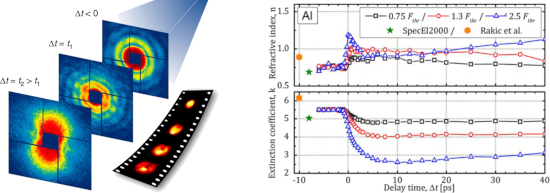
- because of their capability of visualizing atomic-scale structure evolution. In this section, we focus on the time-resolved electron scattering technique, also known as ultrafast electron diffraction (UED). We review the fundamental principles of this technique and present an example of its application in
- , the temperature difference between the hot NPs and the surrounding liquid drives heat transfer from the NPs to the liquid environment. This heat transfer process impacts the thermal equilibrium within the NPs, thereby shaping their phase evolution pathway. Furthermore, the non-thermal effects that


Shape, membrane morphology, and morphodynamic response of metabolically active human mitochondria revealed by scanning ion conductance microscopy
Beilstein J. Nanotechnol. 2025, 16, 951–967, doi:10.3762/bjnano.16.73
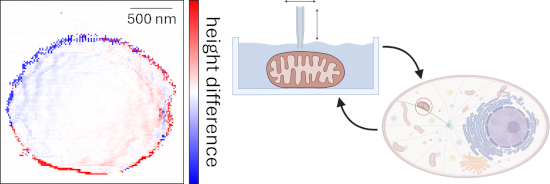
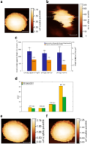
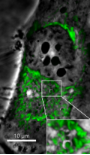
- , corresponding to . Since the bottom surface is inaccessible, only the evolution of the MCI* over time is considered. If the MCI* approaches as time progresses, the mitochondrion tends toward a more spherical shape. Figure 3d presents a bar graph of the MCI* for the four data sets. The time elapsed between the



Tendency in tip polarity changes in non-contact atomic force microscopy imaging on a fluorite surface
Beilstein J. Nanotechnol. 2025, 16, 944–950, doi:10.3762/bjnano.16.72
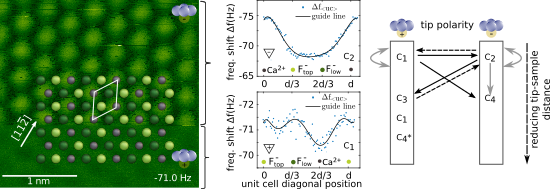
- a change of the tip-terminating cluster (i.e., a tip change) and a distance-dependent contrast evolution for a stable tip. Tip changes are inevitable in NC-AFM experiments with non-functionalized tips, especially as commonly used silicon tips are very reactive and readily pick up various entities
- * for a positively terminated tip and C2 and C4 for a negatively terminated tip. The distance-dependent contrast evolution [10] is summarized along the vertical columns in Figure 1. This figure additionally includes markers for tip changes as demonstrated in this work: Black solid arrows mark contrast
- reduced tip–sample distance. While the evolution of contrast mode C2 to C4 is readily explained by the distance-dependence of imaging CaF2(111) with a negative tip [10], this series clearly shows the change from a previously positively terminated tip to a negatively terminated tip finally attaining a


Characterization of ion track-etched conical nanopores in thermal and PECVD SiO2 using small angle X-ray scattering
Beilstein J. Nanotechnol. 2025, 16, 899–909, doi:10.3762/bjnano.16.68
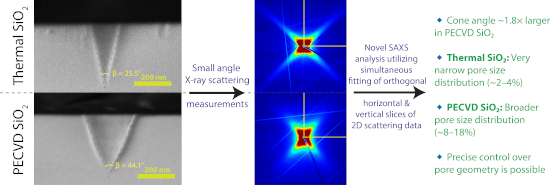
- PECVD SiO2 corroborates the broader size distribution obtained from our fitting analysis. The reduced number of oscillations in PECVD SiO2 1D scattering intensity corresponds to the absence of secondary scattering features in the 2D scattering image as described above. Figure 5 presents the evolution of


Heat-induced transformation of nickel-coated polycrystalline diamond film studied in situ by XPS and NEXAFS
Beilstein J. Nanotechnol. 2025, 16, 887–898, doi:10.3762/bjnano.16.67
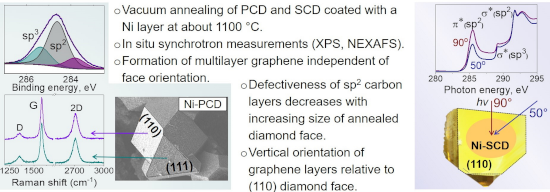
- software. Raman analysis was conducted using a LabRAM HR Evolution spectrometer (Horiba Ltd., Kyoto, Japan). The spectra were excited with a 514 nm laser at a power of 1.9 mW. The laser beam was focused to a diameter of about 1 μm using an LMPlan FL 50×/0.50 Olympus objective. All measurements were carried


Ar+ implantation-induced tailoring of RF-sputtered ZnO films: structural, morphological, and optical properties
Beilstein J. Nanotechnol. 2025, 16, 872–886, doi:10.3762/bjnano.16.66
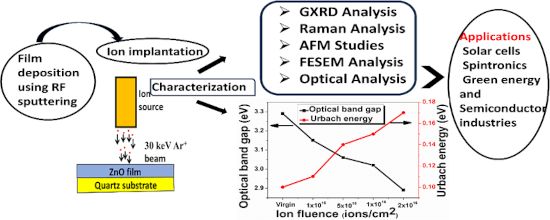
- optoelectronic devices [11]. Thus, a detailed study of the evolution of phonon modes is needed to utilize implanted ZnO films effectively in such devices. The activation of Raman modes in implanted films depends on various implantation parameters, namely, ion energy, mass, and fluence. The origin of these
- optical phonon modes is ascribed to the formation of oxygen vacancies, which are supposed to be electron carriers in ZnO. Therefore, the evolution of the A1 (LO) mode acts as indirect evidence of a rise in carrier concentration, which can in turn alter the optical bandgap. Moreover, the presence of
- . [12] observed the evolution of symmetry-forbidden and A1 (LO) modes in 120 MeV Au9+ ion-irradiated ZnO films. Ying et al. [13] described an A1 (LO) mode in the Raman spectra of energy-dependent and dose-dependent krypton ion-implanted ZnO film after varying the fluence in the range from 5 × 10¹³ to






Insights into the electronic and atomic structures of cerium oxide-based ultrathin films and nanostructures using high-brilliance light sources
Beilstein J. Nanotechnol. 2025, 16, 860–871, doi:10.3762/bjnano.16.65
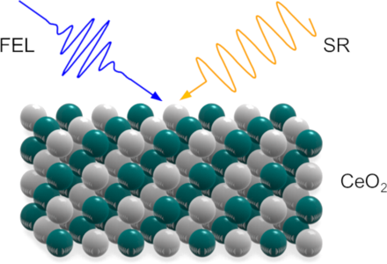
- ), the intensity of the Ce3+-related feature at ≈2 eV decreases with photon exposure, while when oxygen is reintroduced (red spectrum Figure 3b), its intensity re-increases. The comparison of the time evolution of the Zr4+-related 3d5/2 μ-XPS intensity acquired on a Ce0.4Zr0.6O2−x and on a ZrO2 film is
- progressively higher intensity of the Ce3+-related features (Figure 6b,c). This evidence, combined with the evolution of the Cu oxidation state and with gas chromatography, suggested that at moderate temperatures, H2 dissociation is favored by the presence of Cu1+ sites, and at higher temperatures, water is
- ) Evolution of the Zr4+ 3d5/2 intensity as a function of photon exposure time for a Ce0.4Zr0.6O2−x and a ZrO2 film. Adapted from [39], Surface Science, vol. 682, by M. Allan; D. Grinter; S. Dhaliwal; C. Muryn; T. Forrest; F. Maccherozzi; S.S. Dhesi; G. Thornton, “Redox behaviour of a ceria–zirconia inverse


Synchrotron X-ray photoelectron spectroscopy study of sodium adsorption on vertically arranged MoS2 layers coated with pyrolytic carbon
Beilstein J. Nanotechnol. 2025, 16, 847–859, doi:10.3762/bjnano.16.64
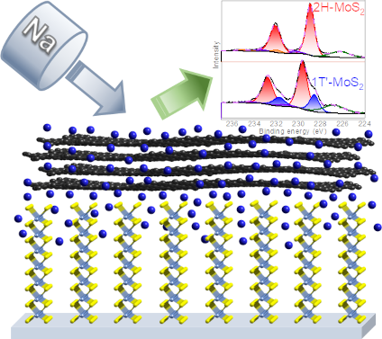
- an ion current of 250 pA to obtain a smooth surface. The image was acquired using a TESCAN AMBER (TESCAN Ltd., Brno, Czech Republic) microscope at an accelerating voltage of 5 kV in secondary electron mode. Raman spectra were recorded using a LabRAM HR Evolution spectrometer (Horiba, Kyoto, Japan


Facile one-step radio frequency magnetron sputtering of Ni/NiO on stainless steel for an efficient electrode for hydrogen evolution reaction
Beilstein J. Nanotechnol. 2025, 16, 837–846, doi:10.3762/bjnano.16.63
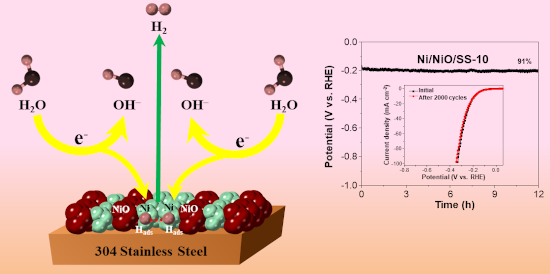
- 700000, Vietnam 10.3762/bjnano.16.63 Abstract The advancement of affordable, ultrastable, and efficient electrode materials for basic hydrogen evolution reaction (HER) plays a crucial role in industrial hydrogen manufacture, resolving problems caused by carbon dioxide emissions. Ni-based
- catalysts were recognized as the best material for electrochemical hydrogen evolution reaction (HER) [11][12][13]. However, it is challenging to use Pt-based nanomaterials for industrial applications because of their non-abundance and high cost. As a result, many studies have explored Pt-free catalysts
- distribution in materials were studied using EDX. The Raman spectra were studied using a LabRAM-HR Evolution Raman microscope with a laser wavelength of 532 nm. The composition of the thin films was investigated using XPS on a Thermo Scientific K-Alpha XPS system. Electrochemical measurements The HER catalytic


Changes of structural, magnetic and spectroscopic properties of microencapsulated iron sucrose nanoparticles in saline
Beilstein J. Nanotechnol. 2025, 16, 762–784, doi:10.3762/bjnano.16.59
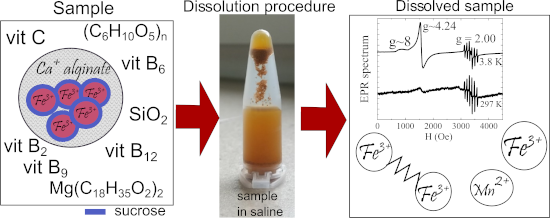
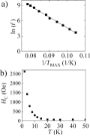
- be presented later in the FTIR and Raman results and analysis and XPS results and analysis sections. Dissolved samples The evolution of the magnetic properties of FS0 with the dissolution time is shown in Figure 8. Figure 8a depicts ZFC–FC relations measured at 50 Oe for all our samples. It can be





Thickness dependent oxidation in CrCl3: a scanning X-ray photoemission and Kelvin probe microscopies study
Beilstein J. Nanotechnol. 2025, 16, 749–761, doi:10.3762/bjnano.16.58
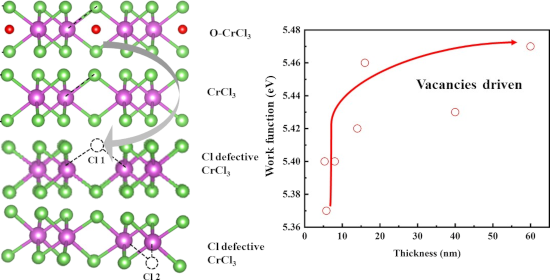
- point T is higher than that of point L. The difference between the work functions of these points in the KPFM results is about 0.06 V, which is consistent with the VBM results. Conclusion Our work aimed at providing control of the surface evolution of thin specimens of CrCl3, contributing to





Nanostructured materials characterized by scanning photoelectron spectromicroscopy
Beilstein J. Nanotechnol. 2025, 16, 700–710, doi:10.3762/bjnano.16.54
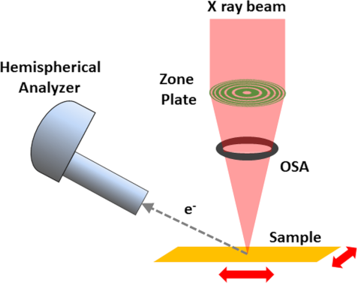
- capabilities in the characterization of nanostructured materials, it is worth spending a few sentences about the future of this technique in the light of the very fast evolution of synchrotron sources towards diffraction-limited performance. Two main parameters that characterize the SPEM technique are its


High-temperature epitaxial growth of tantalum nitride thin films on MgO: structural evolution and potential for SQUID applications
Beilstein J. Nanotechnol. 2025, 16, 690–699, doi:10.3762/bjnano.16.53
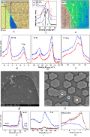
- superconducting films. Keywords: epitaxial growth; SQUID; structural evolution; superconductivity; TaN thin films; Introduction Superconductivity is a quantum mechanical phenomenon characterized by the complete absence of electrical resistance in certain materials when cooled below a critical superconducting
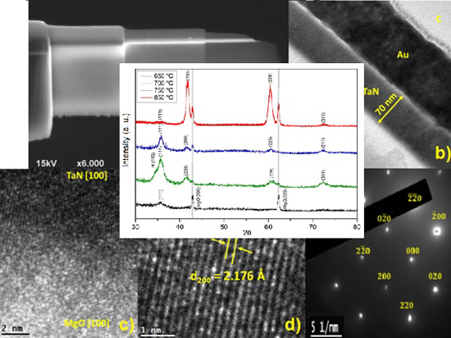
- temperature on the structural evolution of TaN thin films deposited on MgO(100) substrates was investigated using XRD and TEM. Figure 3 shows the XRD patterns of TaN films deposited at various temperatures, revealing critical insights into phase development, crystallinity, and epitaxial growth as the
- intermediate stage of structural evolution, where the cubic δ-TaN phase begins to dominate the overall microstructure. At 750 °C, the XRD patterns show a further increase in the dominance of the cubic δ-TaN phase, indicating a structural transition towards a more stable phase at higher temperatures. The β-TaN


A formulation containing Cymbopogon flexuosus essential oil: improvement of biochemical parameters and oxidative stress in diabetic rats
Beilstein J. Nanotechnol. 2025, 16, 617–636, doi:10.3762/bjnano.16.48
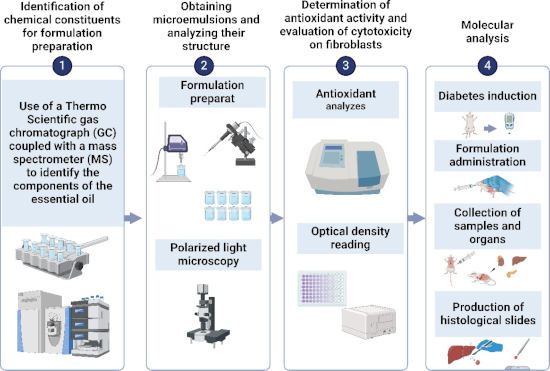
- investigated using a polarized light microscope (Olympus model BX51) equipped with a digital camera (Evolution LC Color). For analysis, a drop of the sample, undiluted, was placed on a glass slide, covered with a coverslip and analyzed under polarized light at 20,000× magnification [24]. The rheological




Retrieval of B1 phase from high-pressure B2 phase for CdO nanoparticles by electronic excitations in CdxZn1−xO composite thin films
Beilstein J. Nanotechnol. 2025, 16, 551–560, doi:10.3762/bjnano.16.43
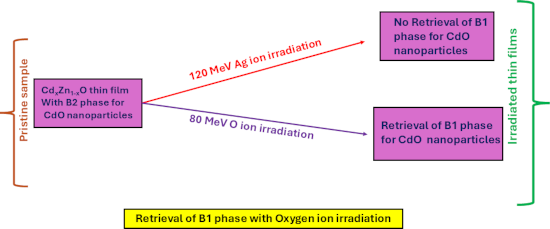
- Zn2SiO4 phase facilitates the re-emergence of the B1 phase under higher fluence. For the CZ900_113Ag sample subjected to Ag irradiation, both the B2 phase and the Zn2SiO4 phase exhibit complete amorphization due to irradiation-induced damage, precluding any observable evolution of the B1 phase


Water in nanoporous hexagonal boron nitride nanosheets: a first-principles study
Beilstein J. Nanotechnol. 2025, 16, 510–519, doi:10.3762/bjnano.16.39
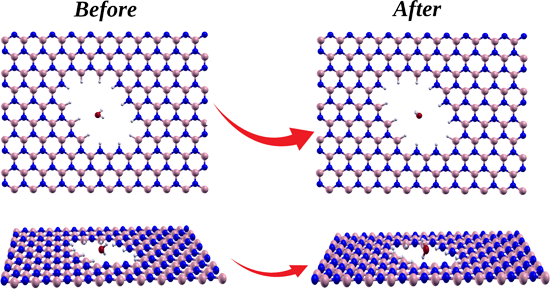
- deformations. Surprisingly, the stability of triangular pores with N–H termination is significantly increased by the addition of B–H pairs, whereas the stability of triangular pores with B–H termination is decreased by the addition of N–H pairs, indicating a distinct evolution of the pore shape based on the




N2+-implantation-induced tailoring of structural, morphological, optical, and electrical characteristics of sputtered molybdenum thin films
Beilstein J. Nanotechnol. 2025, 16, 495–509, doi:10.3762/bjnano.16.38
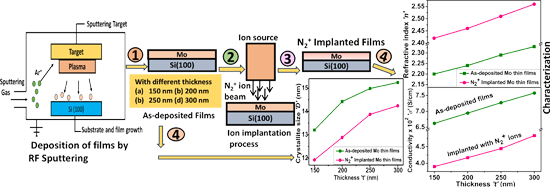
- significant influence of nitrogen inclusion on the stress evolution of Mo thin films. The crystalline orientation of the Mo films along a particular (hkl) plane can be quantified by determining the texture coefficient (TChkl), which is determined by the following equation [39][40]: where hkl represents the


Performance optimization of a microwave-coupled plasma-based ultralow-energy ECR ion source for silicon nanostructuring
Beilstein J. Nanotechnol. 2025, 16, 484–494, doi:10.3762/bjnano.16.37
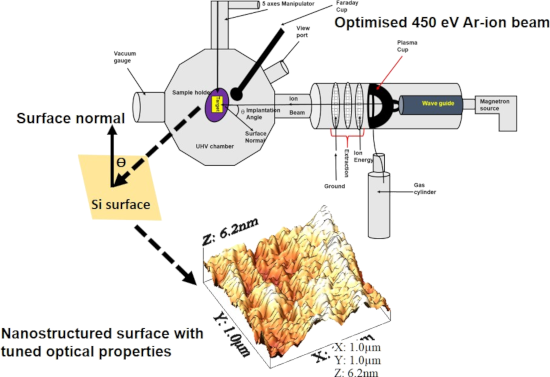
- current with the target position, known as the beam profile, is also presented in Figure 4e. The beam profile is Gaussian for concave grid beam extraction optics. Nanostructuring on Si surface by 450 eV Ar-ion bombardment The morphological evolution of Si after the off-normal bombardment with 450 eV Ar
- energies. Variation of (a–c) beam current with ion extraction voltage at different ion energy; (d) beam current as function of the ion energy; (e) beam current as function of the target position. AFM image (2D and 3D) of the evolution of surface morphology after 450 eV Ar-ion bombardment at different
- silicon surface in (g) parallel and (h) perpendicular direction. (f) Variation of autocorrelation length with irradiation time. (i) Variation of the autocorrelation function with distance. AFM images (2D and 3D) of the evolution of nanostructures on the Si surface with irradiation time at an angle of 72.5


Impact of adsorbate–substrate interaction on nanostructured thin films growth during low-pressure condensation
Beilstein J. Nanotechnol. 2025, 16, 473–483, doi:10.3762/bjnano.16.36
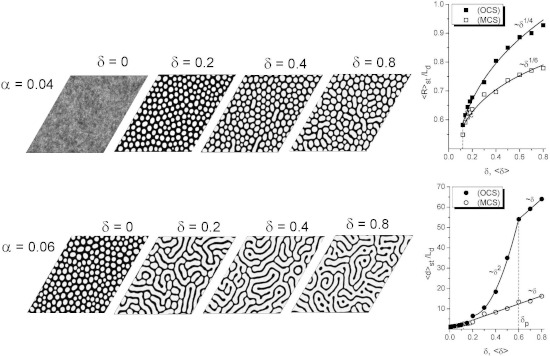
- , even for monoatomic layers [34]. The patterns may serve as templates for the later evolution of film textures. Relevant examples of such systems are Al or Cu layers deposited on Si substrates, or SiO2 and TiN layers deposited on Ti or Al substrates [31]. In this article, we perform a computational
- study of the evolution of a monoatomic layer deposited on a substrate during low-pressure condensation in the framework of a continuous dynamical model of the reaction–diffusion type. This approach allows one to model deposition techniques such as low-pressure CVD (LPCVD) at sub-atmospheric pressures
- manner. In the section “Model”, we derive the one-layer model of reaction–diffusion type for the spatio-temporal evolution of adsorbate concentration on the substrate. In the section “Results and Discussion”, we initially discuss first-order transitions induced by the strength of adsorbate–substrate


Size control of nanoparticles synthesized by pulsed laser ablation in liquids using donut-shaped beams
Beilstein J. Nanotechnol. 2025, 16, 407–417, doi:10.3762/bjnano.16.31
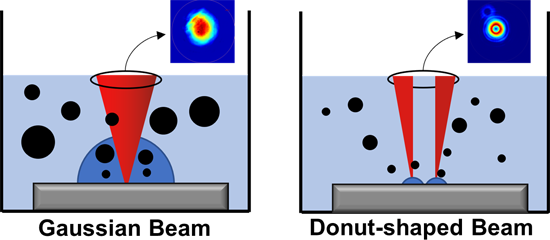
- the spatial distribution of the laser intensity and, thus, the radiation absorption by the target, influencing plasma plume and cavitation bubble formation, evolution, cooling, and the temperature and pressure conditions that determine nanoparticle formation. In the case of a donut-shaped beam, the
- medicine for gold [9][29], strengthened ceramics and steels for high-temperature applications for Y2O3 [45][46][47], and catalysis and energy storage for HEAs [48][49]. The produced NPs are compared with those obtained with Gaussian beams. The evolution of the PLAL-generated cavitation bubble dynamics was
- top-view setup was applied to observe the bubble morphology evolution on a transparent yttrium aluminum garnet (YAG) target. The YAG crystal has a low thermal conductivity and a high laser-ablation threshold, minimizing the influence of the ablation products on cavitation bubble dynamics and, thus


Pulsed laser in liquid grafting of gold nanoparticle–carbon support composites
Beilstein J. Nanotechnol. 2025, 16, 349–361, doi:10.3762/bjnano.16.26
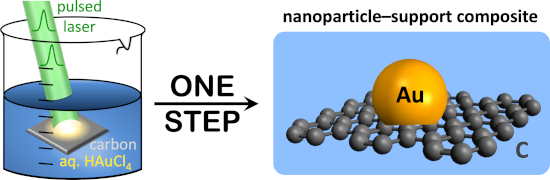
- electrocatalytic hydrogen evolution in aqueous bicarbonate reduction. Keywords: catalysis; composite; electroreduction; gold nanoparticles; impedance; Introduction The main challenge in the manufacturing of nanocatalyst-containing electrodes is the attachment of nanoparticles on electrode supports. Nanoparticles
- circuit potential, where no faradaic current flows [2], did not show product generation. This demonstrates that the gold nanoparticle–carbon fiber paper composite cathode electrocatalyzed hydrogen evolution in aqueous bicarbonate reduction (Figure 6C,D). Hydrogen can arise from the reduction of water


Tailoring of physical properties of RF-sputtered ZnTe films: role of substrate temperature
Beilstein J. Nanotechnol. 2025, 16, 333–348, doi:10.3762/bjnano.16.25
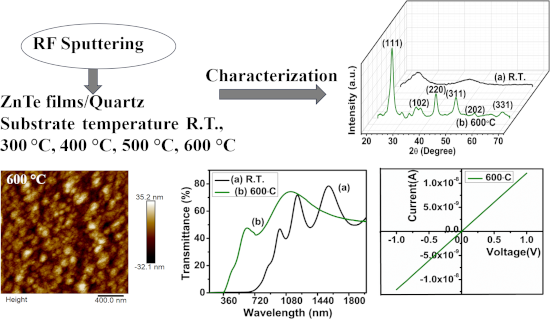
- form on the substrate surface. With the increase in substrate temperature, mobility and diffusion rate of atoms increase, which results in the evolution of grains that further recrystallize at higher substrate temperatures [28]. The observed variation in the crystallite size is due to changes in
- Equation 4, and it decreases with increasing substrate temperature. The high value of crystallinity and low value of microstrain and dislocation density at 600 °C shows that good quality films can be fabricated at this temperature. Morphological investigation AFM was utilized to study the evolution of
- is divided into various spatial wavelengths, and a comparative study of roughness is done over different frequency ranges. Figure 3 depicts the log–log plot for the evolution of PSD with spatial frequency (q) for ZnTe/QZ films deposited at different substrate temperatures. The information about