


Search results
Search for "films" in Full Text gives 996 result(s) in Beilstein Journal of Nanotechnology. Showing first 200.
Characterization of ion track-etched conical nanopores in thermal and PECVD SiO2 using small angle X-ray scattering
Beilstein J. Nanotechnol. 2025, 16, 899–909, doi:10.3762/bjnano.16.68
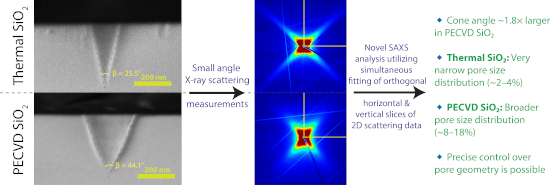
- Helmholtzzentrum für Schwerionenforschung, Planckstr. 1, 64291 Darmstadt, Germany Technische Universtät Darmstadt, 64289 Darmtadt, Germany 10.3762/bjnano.16.68 Abstract Conical nanopores in amorphous SiO2 thin films fabricated using the ion track etching technique show promising potential for filtration, sensing
- SiO2 (≈26°). As described in our track etching model [13], the cone angle depends only on the ratio of the track-etch rate to the bulk-etch rate. Hence, the different angles indicate different etch-rate ratios for PECVD and thermal SiO2. This discrepancy is not unexpected because PECVD-deposited films
- calculations for PECVD SiO2 thin films used values for the density and composition from our previous study [47]. In both layers, the projected ranges when irradiated with 185 and 89 MeV Au ions were ≈20 μm and ≈14 μm, respectively, whereas the projected ranges for thermal and PECVD SiO2 irradiated with 1.6 GeV


Heat-induced transformation of nickel-coated polycrystalline diamond film studied in situ by XPS and NEXAFS
Beilstein J. Nanotechnol. 2025, 16, 887–898, doi:10.3762/bjnano.16.67
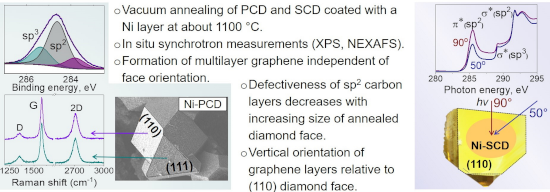
- SCD surface into graphene requires annealing at temperatures above 800 °C [21]. The annealing of nanocrystalline diamond (NCD) films in the presence of a Ni catalyst has been recently explored [22][23][24]. It was shown that graphitization of Ni-coated NCD films begins at a relatively lower
- better properties but high cost, or on more affordable NCD films, whose properties are notably inferior to their monocrystalline counterparts. In this regard, microcrystalline diamond (MCD) films could serve as a more suitable alternative to SCDs. Therefore, the Ni-assisted graphitization of MCD films
- spectra provides information about the spatial orientation of π and σ orbitals relative to the photon incidence. In the present work, we focused on the changes in the surface state of Ni-coated polycrystalline diamond (PCD) films composed of micron-sized grains with (110) and (111) faces during high


Ar+ implantation-induced tailoring of RF-sputtered ZnO films: structural, morphological, and optical properties
Beilstein J. Nanotechnol. 2025, 16, 872–886, doi:10.3762/bjnano.16.66
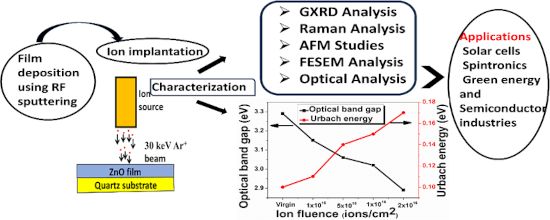
- Manu Bura Divya Gupta Arun Kumar Sanjeev Aggarwal Department of Physics, Kurukshetra University, Kurukshetra, 136119, India 10.3762/bjnano.16.66 Abstract Radio frequency-sputtered zinc oxide films are implanted with 30 keV Ar+ ions at various fluences ranging from 1 × 10¹⁵ to 2 × 10¹⁶ ions·cm−2
- . Raman spectra reveal the presence of the E2 (low), E2 (high), and A1 (LO) Raman modes in pristine and implanted ZnO films. A gradual fall and rise in peak intensity of, respectively, the E2 (high) and A1 (LO) Raman modes is observed with increases in ion fluence. However, the E2 (low) mode broadens and
- merges completely with disorder-induced broad band at higher fluences. Moreover, the deconvolution of the A1 (LO) Raman peak affirms the presence of defect-related Raman modes in the implanted samples. A gradual reduction in crystallinity of the implanted ZnO films with increasing ion fluence is observed






Insights into the electronic and atomic structures of cerium oxide-based ultrathin films and nanostructures using high-brilliance light sources
Beilstein J. Nanotechnol. 2025, 16, 860–871, doi:10.3762/bjnano.16.65
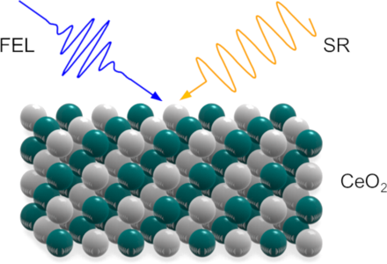
- applications, examining the application of high-brilliance light sources on model systems such as supported thin films and epitaxial nanostructures. We review selected studies exploiting the high energy resolution and sensitivity of synchrotron radiation-based X-ray photoelectron spectroscopy and X-ray
- perspectives offered by the ultrahigh brilliance and ultrashort free-electron laser pulses for dynamic studies of the processes that take place upon photoexcitation are discussed. Keywords: cerium oxide; free-electron lasers; thin films; X-ray absorption spectroscopy; X-ray photoelectron spectroscopy
- ; Introduction Transition metal oxides in the form of thin films or nanostructures find extensive use in sustainable energy technologies [1][2]. They serve as active materials or supports for catalysts for various chemical reactions, essential to energy conversion, sensing, and environmental remediation [3][4


Synchrotron X-ray photoelectron spectroscopy study of sodium adsorption on vertically arranged MoS2 layers coated with pyrolytic carbon
Beilstein J. Nanotechnol. 2025, 16, 847–859, doi:10.3762/bjnano.16.64
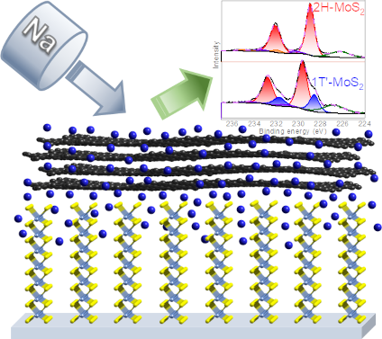
- resulting hybrid and individual films of MoS2 and PyC were placed on the same sample holder to study the interaction with sodium vapor in the ultrahigh vacuum (UHV) chamber of the experimental station of the Russian–German beamline at the BESSY-II synchrotron radiation facility. Such model experiments make
- high. The weak second-order band between 2700 and 2900 cm‒1 is due to the three-dimensional ordering along the c axes of the graphitic film. The NEXAFS spectra measured at the C K-edge of PyC and PyC-MoS2 films pre-annealed in UHV at 673 K for 10 min exhibit two main resonances located at 285.4 and
- associated with the substrate. The absence of the Si 2p line in the spectra of MoS2 and PyC-MoS2 films indicates the formation of a continuous MoS2 film with a thickness of more than 3 nm [46]. The atomic concentrations of Mo and S in the MoS2 film are about 9 and 28 atom %, respectively, and decrease to


Facile one-step radio frequency magnetron sputtering of Ni/NiO on stainless steel for an efficient electrode for hydrogen evolution reaction
Beilstein J. Nanotechnol. 2025, 16, 837–846, doi:10.3762/bjnano.16.63
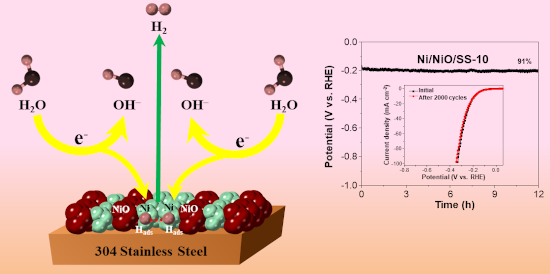
- synthesizing electrode materials in recent years because they offer a cleaner pathway than solution-based synthetic processes [20][21][22]. Among vacuum deposition methods, magnetron sputtering has been widely applied in industrial applications for fabricating thin films because of its advantages, such as good
- with a thickness of 1 mm was used as a substrate for catalyst growth. Fabrication of the Ni/NiO/SS samples Grade 304 SS was cut into pieces of 60 mm × 25 mm, washed with soap, and then sonicated in a mixture of acetone and ethanol to remove the impurities left on the SS template. After that, thin films
- distribution in materials were studied using EDX. The Raman spectra were studied using a LabRAM-HR Evolution Raman microscope with a laser wavelength of 532 nm. The composition of the thin films was investigated using XPS on a Thermo Scientific K-Alpha XPS system. Electrochemical measurements The HER catalytic


Supramolecular hydration structure of graphene-based hydrogels: density functional theory, green chemistry and interface application
Beilstein J. Nanotechnol. 2025, 16, 806–822, doi:10.3762/bjnano.16.61
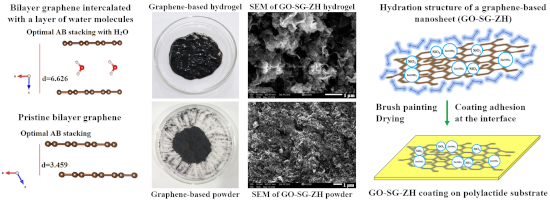
- coating on polymer substrates, typically polylactide films. Interfacial adhesion of graphene-based nanosheets on polylactide substrates made the antibacterial coating stable for several application purposes. In general, supramolecular graphene-based hydrogels are bioinspired hydration structures to
- , leading to facile brush coating on plastic films of polylactide (PLA). Dehydrated GO-SG-ZH coating is adhered to the PLA substrate through interfacial interactions. Furthermore, antibacterial activities, coating stability, and mechanical properties of the nanocomposite materials were investigated and
- compression at 190 °C. As a result, thin and transparent PLA films were made with the average thickness of 0.2 mm. In the next stage, the GO-SG-ZH nanocomposite in hydrogel form (≈95% water) was used as an aqueous paint for brush coating on PLA thin films. After brush coating, the coated films were left to


Morphology and properties of pyrite nanoparticles obtained by pulsed laser ablation in liquid and thin films for photodetection
Beilstein J. Nanotechnol. 2025, 16, 785–805, doi:10.3762/bjnano.16.60
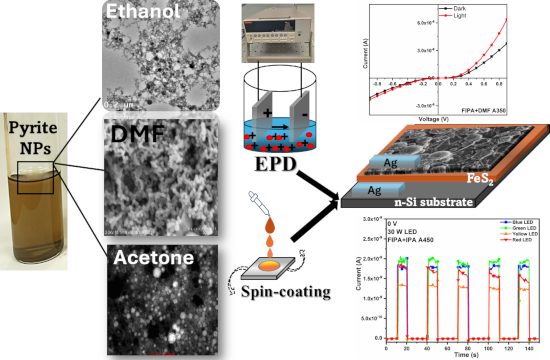
- nanocolloids. The structural, morphological and electrical characterizations of the films are also presented. By sulfurization of the films, phase-pure pyrite thin films are obtained. The photodetection range was up to 785 nm photocurrent in the order of 10−6 to 10−4 A for different annealing conditions and a
- films. The conventional methods reported for the synthesis of pyrite NPs include chemical methods using stabilizing agents [4], high-energy mechanical ball milling [6][7], colloidal pyrite by wet solution/phased chemical approaches [8][9], and hot injection [10][11]. In this study, PLAL was employed to
- performance by first fabricating amorphous iron oxide films on normal glass substrates by spray pyrolysis followed by heating in sulfur atmosphere at 350 and 400 °C [20]. For pyrite film fabrication, solvothermal or hydrothermal and chemical synthetic routes are generally adopted [21][22][23]. Henríquez et al


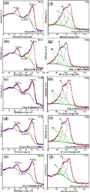


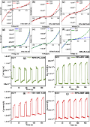


Thickness dependent oxidation in CrCl3: a scanning X-ray photoemission and Kelvin probe microscopies study
Beilstein J. Nanotechnol. 2025, 16, 749–761, doi:10.3762/bjnano.16.58
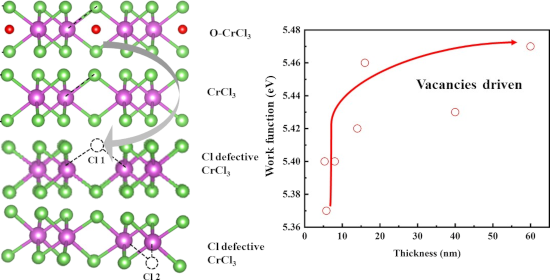
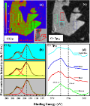
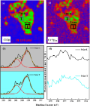
- known that 270 nm SiO2/Si substrates provide the highest optical contrast (O.C.) value for a single layer or few layers of CrCl3 [2][11]. Because of the insulating behavior of 270 nm SiO2 and to avoid surface charging, we utilized Si(001) wafers with a 1 nm layer of SiO2 and ITO films (190 nm) on glass

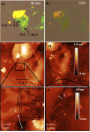




High-temperature epitaxial growth of tantalum nitride thin films on MgO: structural evolution and potential for SQUID applications
Beilstein J. Nanotechnol. 2025, 16, 690–699, doi:10.3762/bjnano.16.53
- Física, Centro de Investigación y de Estudios Avanzados del Instituto Politécnico Nacional (CINVESTAV-IPN), Apdo. Postal 14-740, México D.F. 07360, México 10.3762/bjnano.16.53 Abstract The growth of superconducting tantalum nitride (TaN) thin films on magnesium oxide (MgO) substrates has been studied
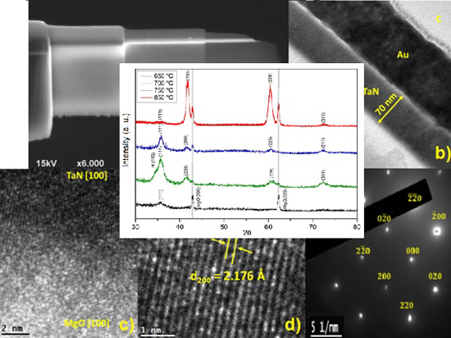
- using pulsed laser deposition (PLD). This research investigates the influence of varying deposition parameters, including substrate temperature and ambient gas composition, on the structural, morphological, and superconducting properties of the films. X-ray photoelectron spectroscopy, X-ray diffraction
- , atomic force microscopy, and transmission electron microscopy analyses revealed that the TaN films exhibit excellent crystallinity and smooth surface morphology, when deposited at optimal temperatures of 750 and 850 °C. The films exhibit superconducting transition temperatures (Tc) ranging from 5.0 to


The impact of tris(pentafluorophenyl)borane hole transport layer doping on interfacial charge extraction and recombination
Beilstein J. Nanotechnol. 2025, 16, 678–689, doi:10.3762/bjnano.16.52
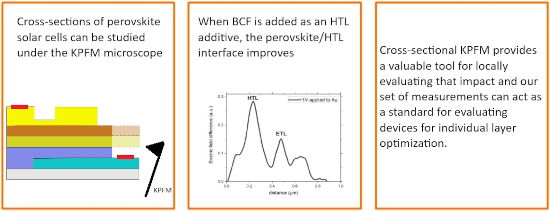
- 0.14 mbar and 280 W). Consequently, we deposited a compact layer of TiO2 via an aqueous 0.75 M TiCl4 solution (Sigma-Aldrich, 99.99% trace metal basis). A volume of 80 μL of the solution was spin-coated at 5000 rpm for 30 s, and the resulting films were annealed at 500 °C for 30 min. Afterwards, we
- deposited a mesoporous TiO2 layer from a (transparent) titania paste solution (Aldrich, 16.67 wt % in ethanol) via spin coating and annealed it (same parameters as in the previous step). After each of these titania deposition steps, we subjected the films to a UV-ozone cleaning step (FHR UVO 150) for 30 min


Colloidal few layered graphene–tannic acid preserves the biocompatibility of periodontal ligament cells
Beilstein J. Nanotechnol. 2025, 16, 664–677, doi:10.3762/bjnano.16.51
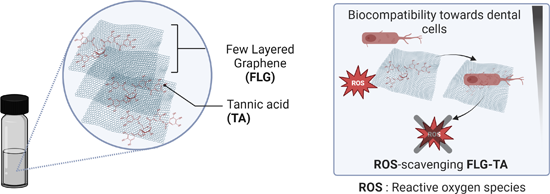
- amount of 100 µg) in the filtrate (Figure S3B, Supporting Information File 1). The DPPH scavenging assay reveals differences in TA antioxidant behavior. Free TA molecules in FLG suspension eliminated approximately 90% of free radicals, while FLG–TA films deposited on gold scavenged only 15% of the




Polyurethane/silk fibroin-based electrospun membranes for wound healing and skin substitute applications
Beilstein J. Nanotechnol. 2025, 16, 591–612, doi:10.3762/bjnano.16.46
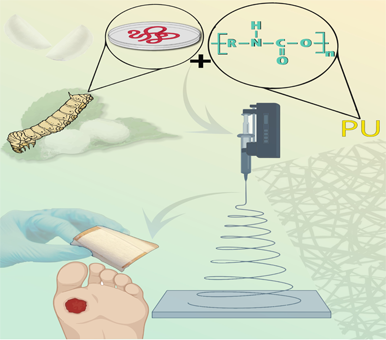
- dermal matrix [85]. In vitro studies showed that the use of electrospun silk nanofibers favors the attachment of human fibroblasts, keratinocytes, and deposition of collagen type I [86]. Silk can be processed into hydrogels, scaffolds, and films with the incorporation of bioactive factors such as growth
- functionalization of SF facilitate its usage in optics as a biosensor and implantable device [92]. Malinowski et al. showed that conventional transparent films often lack adequate haze, but SF films exhibit ultrahigh optical transparency (>93%) and transmission haze (>65%). In this study, soft lithography was used
- to create and analyze SF films with various nanostructures that exhibit tunable optical properties depending on the structure. When combined with silicon photodiodes, the power conversion efficiency increased by 6.96% with flat SF films and 14.9% with nanopatterned SF films. This demonstrates the



Retrieval of B1 phase from high-pressure B2 phase for CdO nanoparticles by electronic excitations in CdxZn1−xO composite thin films
Beilstein J. Nanotechnol. 2025, 16, 551–560, doi:10.3762/bjnano.16.43
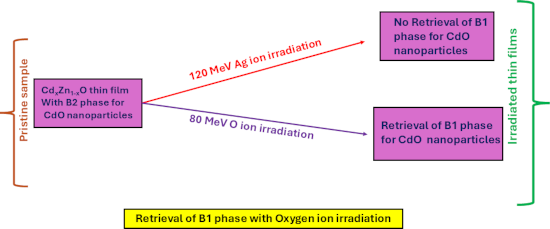
- Abstract This study investigates the recovery of the B1 phase from the high-pressure B2 phase, at atmospheric pressure, in cadmium oxide (CdO) nanoparticles incorporated within sol–gel synthesized CdxZn1−xO (x = 0.40) composite thin films. The recovery process is investigated using electronic excitations
- ; Introduction Zinc oxide (ZnO)-based thin films are of significant interest due to their wide bandgap value (3.37 eV at room temperature), transparent electrical conduction, and large excitonic binding energy (60 meV) [1]. In contrast, cadmium oxide (CdO) exhibits a lower bandgap of 2.2 eV, along with high
- electron mobility (>100 cm2/V/s) and high electrical conductivity (>1014 S/cm), demonstrating its potential for optoelectronic applications [2][3][4]. The incorporation of cadmium into ZnO effectively reduces the bandgap, rendering the thin films suitable for applications in the visible region of the


N2+-implantation-induced tailoring of structural, morphological, optical, and electrical characteristics of sputtered molybdenum thin films
Beilstein J. Nanotechnol. 2025, 16, 495–509, doi:10.3762/bjnano.16.38
- Usha Rani Kafi Devi Divya Gupta Sanjeev Aggarwal Ion Beam Centre, Department of Physics, Kurukshetra University, Kurukshetra-136119, India 10.3762/bjnano.16.38 Abstract Molybdenum (Mo) thin films have extensive applications in energy storage devices and photovoltaic solar cells because of their
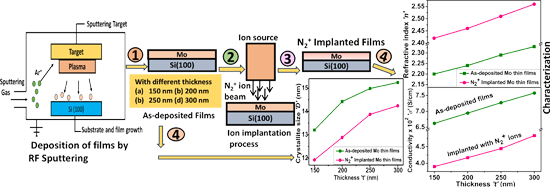
- remarkable thermal stability, high melting point, and chemical inertness. In the present study, Mo thin films of different thicknesses (150, 200, 250, and 300 nm) have been deposited on Si(100) substrates via radio frequency sputtering in an argon atmosphere at room temperature. Some of these films have been
- implanted with 1 × 10¹⁷ N2+·cm−2 at 30 keV using a current density of 4 µA·cm−2. Surface morphology and structural, optical, and electrical properties of the as-deposited and implanted Mo thin films have been systematically investigated. The crystallinity of Mo thin films is enhanced with increasing


Impact of adsorbate–substrate interaction on nanostructured thin films growth during low-pressure condensation
Beilstein J. Nanotechnol. 2025, 16, 473–483, doi:10.3762/bjnano.16.36
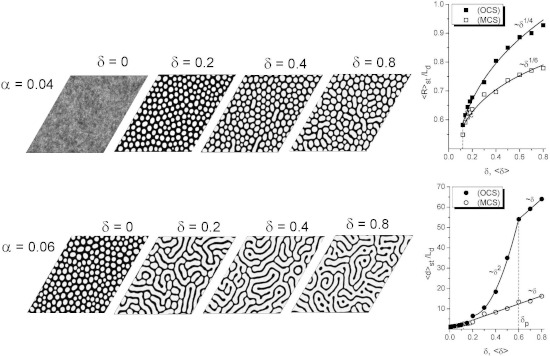
- elastic adsorbate–substrate interactions in processes of nanostructuring of thin films during low-pressure condensation in the framework of theoretical approaches and numerical simulations. It will be shown that an increase in the elastic interaction strength induces first-order transitions and pattern
- multicomponent substrates leads to the formation of a stationary surface morphology with an elevated number of adsorbate islands of smaller size, compared to one-component substrates. This study provides a deep insight into the peculiarities of nanostructured thin films’ growth in low-pressure systems with
- different adsorbate–substrate bonding. Keywords: adsorbate–substrate interaction; adsorptive systems; numerical simulations; pattern formation; Introduction Innovative nanostructured thin films are widely exploited in ground-breaking developments regarding transistors [1][2], energy harvesting [3][4


Synthetic-polymer-assisted antisense oligonucleotide delivery: targeted approaches for precision disease treatment
Beilstein J. Nanotechnol. 2025, 16, 435–463, doi:10.3762/bjnano.16.34


Size control of nanoparticles synthesized by pulsed laser ablation in liquids using donut-shaped beams
Beilstein J. Nanotechnol. 2025, 16, 407–417, doi:10.3762/bjnano.16.31
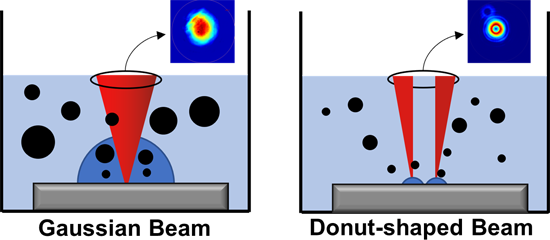
- . In contrast, ablation with a Gaussian beam results in the ejection of molten droplets from the overheated central region and the formation of a crater rim. For instance, it has been demonstrated that during vortex-beam ultrashort laser ablation of thin metal films [55] and tungsten targets in air [56


Tailoring of physical properties of RF-sputtered ZnTe films: role of substrate temperature
Beilstein J. Nanotechnol. 2025, 16, 333–348, doi:10.3762/bjnano.16.25
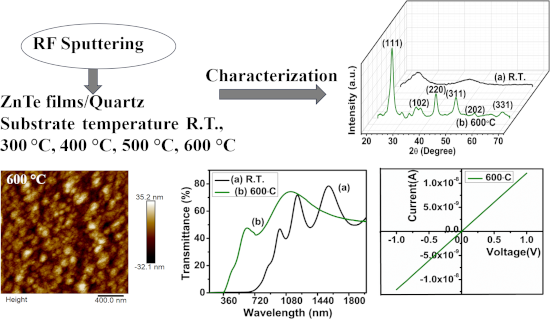
- Kafi Devi Usha Rani Arun Kumar Divya Gupta Sanjeev Aggarwal Ion Beam Centre, Department of Physics, Kurukshetra University, Kurukshetra-136119, India 10.3762/bjnano.16.25 Abstract In this study, zinc telluride (ZnTe) films were grown on quartz substrates at room temperature, 300 °C, 400 °C, 500
- °C, and 600 °C using RF sputtering. The thickness of the films has been found to decrease from 940 nm at room temperature to 200 nm at 600 °C with increasing substrate temperature. The structural investigation using grazing incidence angle X-ray diffraction revealed that films deposited at room
- leads to a reduction in microstrain and dislocation density. The optical studies using UV–vis–NIR spectroscopy reveal that the transmittance of films increases with substrate temperature. Further, the shift in transmittance threshold towards lower wavelengths with substrate temperature indicates that




Enhancing mechanical properties of chitosan/PVA electrospun nanofibers: a comprehensive review
Beilstein J. Nanotechnol. 2025, 16, 286–307, doi:10.3762/bjnano.16.22
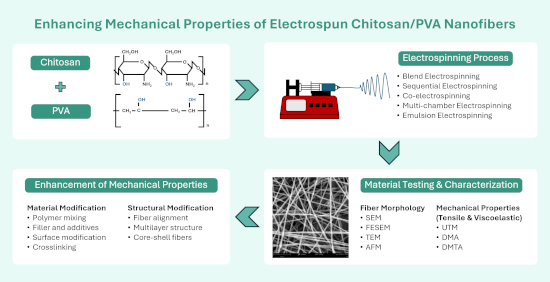
- , following appropriate testing standards such as EN ISO 13934-1:1999 for the strip method [131]. A UTM applies a controlled force to a nanofiber sample and measures the force and the corresponding deformation. Nanofibers are typically collected in the form of mats or films, which are cut into small strips
- layers. Rafieian et al. [109] incorporated PVA nanofibers onto chitosan/aloe vera films to improve the mechanical, physical, and biological properties of the films for wound dressing applications. Kim et al. [159] compared the mechanical properties of pure PVA, blended chitosan/PVA, and PVA core–chitosan


Correction: AFM-IR investigation of thin PECVD SiOx films on a polypropylene substrate in the surface-sensitive mode
Beilstein J. Nanotechnol. 2025, 16, 252–253, doi:10.3762/bjnano.16.19
- /bjnano.16.19 Keywords: AFM-IR; polypropylene; surface-sensitive mode; silicon oxide; thin films; XPS; The authors regret that the acknowledgement in the publication is unfortunately not complete. The following sentence in the Funding section is missing: This work was supported by the German Research
Recent advances in photothermal nanomaterials for ophthalmic applications
Beilstein J. Nanotechnol. 2025, 16, 195–215, doi:10.3762/bjnano.16.16
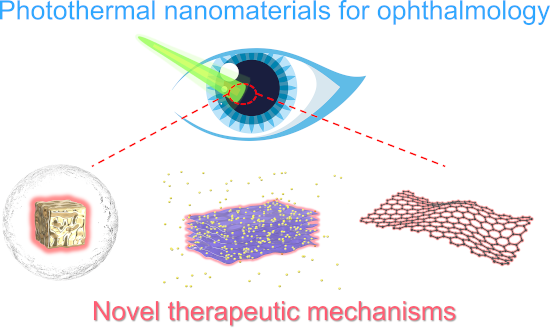
- damage to surrounding tissues due to inadequate control over the heat distribution [100][101][102][103][104][105]. Innovations in this field have led to the development of transparent polylactic acid (PLA) thin films with embedded iron oxide nanoclusters prepared via spin coating [51]. The efficient
- photothermal conversion of iron oxide minimizes the necessary laser energy. The mechanical force generated by laser-induced VNBs enables the selective destruction of single corneal cells. The PLA films aid in precisely positioning the photothermal therapy, restrain the dispersion of iron oxide nanoclusters
- , and can be easily removed post-laser treatment. The spatially selective single-cell killing capability of iron oxide PLA bubble films has great potential for ocular tumor therapy. However, clinical treatment of tumors requires the application of films on surfaces with “odd” tissues. Using a


Comparison of organic and inorganic hole transport layers in double perovskite material-based solar cell
Beilstein J. Nanotechnol. 2025, 16, 119–127, doi:10.3762/bjnano.16.11
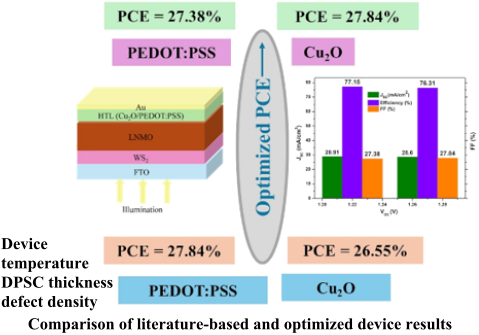
- transported to ETL and HTL, respectively, without recombining [7]. Ozturk et al. [8] addressed the role of a passivation agent at grain boundaries and the surface of perovskite films, namely, quinary kesterite nanocrystals Cu2NiSn(S,Se)4 (CNTSSe) obtained through a facile hot-casting method. Through


Advanced atomic force microscopy techniques V
Beilstein J. Nanotechnol. 2025, 16, 54–56, doi:10.3762/bjnano.16.6
- al. present the application of AFM-based infrared nanospectroscopy to coated polymer surfaces [11]. The authors prepare thin films of SiOx on polypropylene surfaces by plasma-enhanced chemical vapor deposition (PE-CVD), which is commonly done to improve gas barrier properties of polypropylene. They
- characterize SiOx films as thin as 5 nm by the so-called surface-sensitive mode, in contrast to the established contact mode, which provides much less surface sensitivity. A particular strength for the study of materials is the combination of different measurement modes. Rothe et al. extend the
Bioinspired nanofilament coatings for scale reduction on steel
Beilstein J. Nanotechnol. 2025, 16, 25–34, doi:10.3762/bjnano.16.3
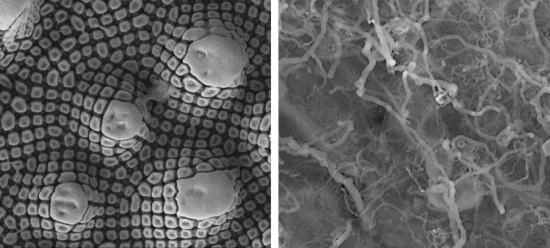
- only 4.0 ± 1.5 mg. This corresponds to a scale reduction of 75.5% by the SNF coating. Ostensibly, the non-wetting properties of the SNF films prevent attachment and growth of scale. Calcium carbonate scale formation starts with crystallization nuclei, small clusters of ions which can homogeneously form





