


Search results
Search for "matrix" in Full Text gives 847 result(s) in Beilstein Journal of Nanotechnology. Showing first 200.
Transient electronics for sustainability: Emerging technologies and future directions
Beilstein J. Nanotechnol. 2025, 16, 1545–1556, doi:10.3762/bjnano.16.109
- the water diffusion pathway [92][93]. For instance, blending high-aspect-ratio inorganic flakes (e.g., SiO2) with a biodegradable poly(caprolactone) matrix has been shown to create tortuous diffusion paths that hinder direct water penetration, thereby improving moisture resistance and achieving a


Influence of laser beam profile on morphology and optical properties of silicon nanoparticles formed by laser ablation in liquid
Beilstein J. Nanotechnol. 2025, 16, 1533–1544, doi:10.3762/bjnano.16.108
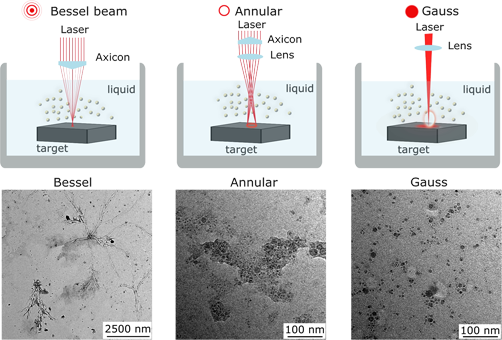
- profile. The average size of the Si NPs was calculated using ImageJ software. A more detailed analysis of the TEM images showed the tendency of the particles prepared using an annular beam to gather into aggregates surrounded by a non-uniform matrix or shell, while in the case of a Gaussian beam, the


Nanomaterials for biomedical applications
Beilstein J. Nanotechnol. 2025, 16, 1499–1503, doi:10.3762/bjnano.16.105
- tissue engineering, scaffolds are the main element that assists cells to grow, organize, and create new tissue [25]. Nanofibers are ideal in creating scaffolds because they have a large surface area and resemble the natural extracellular matrix (ECM). Moreover, nanofibers offer a proper place for cells
Laser processing in liquids: insights into nanocolloid generation and thin film integration for energy, photonic, and sensing applications
Beilstein J. Nanotechnol. 2025, 16, 1428–1498, doi:10.3762/bjnano.16.104




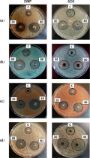


Synthesis and antibacterial properties of nanosilver-modified cellulose triacetate membranes for seawater desalination
Beilstein J. Nanotechnol. 2025, 16, 1380–1391, doi:10.3762/bjnano.16.100
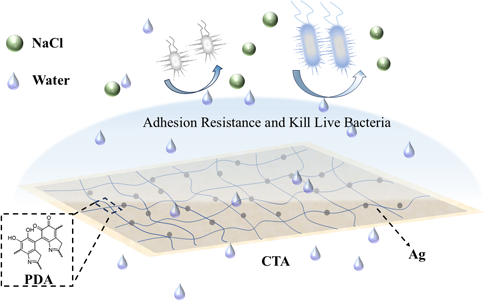
- and Ag) are present in extremely low quantities relative to the CTA matrix. (For specific details on the content of the modifying layers, please refer to Supporting Information File 1.) The sensitivity of FTIR spectroscopy depends on the concentration of the absorbed species and the path length of the
- the low content of the modifying agents (PDA and Ag) relative to the CTA matrix. This low concentration results in negligible changes in the overall thermal behavior of the composite materials, as detected by TGA. This observation also suggests that the interaction between Ag and CTA or between PDA
- close to the theoretical value of PDA, which proves the successful modification of PDA on the surface of CTA. At the same time, it indicates that the thickness of PDA layer exceeds the maximum thickness detectable by XPS which has a detectable thickness of organic matrix of about 7.5 nm [30]. In the


Enhancing the therapeutical potential of metalloantibiotics using nano-based delivery systems
Beilstein J. Nanotechnol. 2025, 16, 1350–1366, doi:10.3762/bjnano.16.98
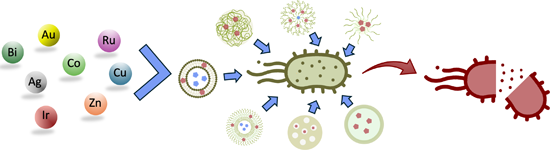
- . These nanoparticles consist of a solid lipid core matrix stabilized by emulsifiers in an aqueous dispersion [70][71][72]. SLNs were developed as an alternative nanocarrier system to emulsions, liposomes, and polymeric nanoparticles, combining the advantages of traditional liposomal and polymeric systems
- and bioavailability [71]. They are formulated from lipids that are generally recognized as safe, making them highly biocompatible and low in toxicity [72]. Moreover, the solid lipid matrix slows down drug diffusion and lipid degradation, enabling a controlled, long-lasting release of the encapsulated
- encapsulation in SLNs include high-pressure homogenization and microemulsion techniques. In these processes, drugs are incorporated in the melted lipid before nanoparticle formation, leading to high entrapment efficiency within the solidified lipid matrix, whereas hydrophilic drugs may be partitioned at the


Ferroptosis induction by engineered liposomes for enhanced tumor therapy
Beilstein J. Nanotechnol. 2025, 16, 1325–1349, doi:10.3762/bjnano.16.97
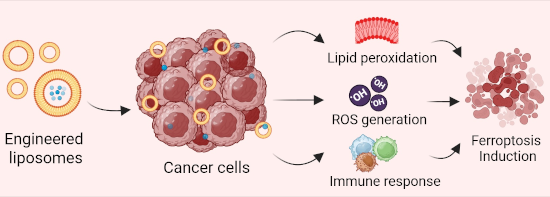
- cells. Therefore, specific transporters are often overexpressed to meet these nutrient requirements (such as the amino acid transporter B0,+ (ATB0,+), and the cystine/glutamate transporter (xCT)) [152][174]. Also, matrix metalloproteinase 2 (MMP2) is an enzyme located outside cells that contributes to


Better together: biomimetic nanomedicines for high performance tumor therapy
Beilstein J. Nanotechnol. 2025, 16, 1246–1276, doi:10.3762/bjnano.16.92
- tumor models, 231M-ARS@PLGA reduced the SWE stiffness and tumor hypoxia, which potently enhanced the antitumor effects of OTX and PD1 inhibitor. Importantly, single-cell sequencing demonstrated two main CAFs (extracellular matrix and wound-healing CAFs) that produce extracellular matrix could influence








Functional bio-packaging enhanced with nanocellulose from rice straw and cinnamon essential oil Pickering emulsion for fruit preservation
Beilstein J. Nanotechnol. 2025, 16, 1234–1245, doi:10.3762/bjnano.16.91
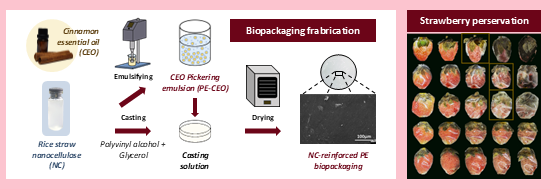
- matrix properties, including tensile strength, elasticity, and thermal stability, due to its high surface area, hydroxy groups forming hydrogen bonds, and excellent dispersion within the matrix [20][21]. This improvement is attributed to interaction between hydroxy groups in NC and PVA, effectively
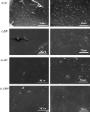
- the trapping effect of the polymer matrix on CEO [31]. XRD analysis (Figure 1c) shows that all biopackaging samples exhibit only large peaks at around 22° and 26°, which correspond to the (101) and (200) planes of the PVA structure [40]. It is to note that a slight peak shift to higher angles can be
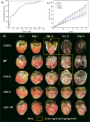
- reinforcing effect of nanocellulose within the polymer matrix [41]. The presence of PE-CEO slightly decreases tensile strength and elongation at break to 24.82 MPa and 190%, respectively [43]. FTIR spectra of the biopackaging films containing different concentrations of CEO are shown in Figure 2a. The



Hydrogels and nanogels: effectiveness in dermal applications
Beilstein J. Nanotechnol. 2025, 16, 1216–1233, doi:10.3762/bjnano.16.90
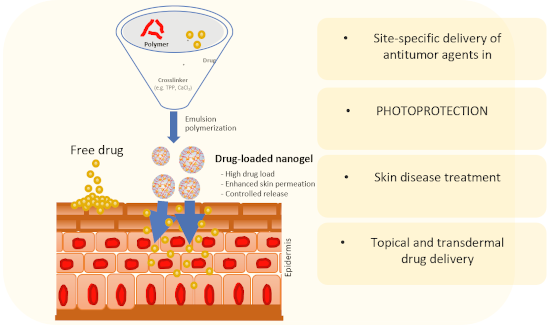
- structural organization of the intercellular lipid matrix of the SC [171][172][173]. The poor cutaneous permeability leads to low efficacy [170] and low selectivity [174] of drugs on the skin. Nonetheless, the development of topical delivery systems, such as nanostructured systems, has been qualified as the
- ., they promote the disruption of the SC intercellular matrix [175] and/or extraction of the SC lipids [180]). Moreover, some penetration enhancers may operate by more than one permeation mechanism, which involves modifying either the diffusion of the drug in the SC or the solubility of the drug in the
- the drug due to its higher availability at the site of action [37][215]. The pH difference observed in the intracellular environment (pH ≈ 4.8) when compared with the epidermal extracellular matrix (pH ≈ 5.5) is another characteristic evaluated to increase the efficiency of tumor-targeted drug


Investigation of the solubility of protoporphyrin IX in aqueous and hydroalcoholic solvent systems
Beilstein J. Nanotechnol. 2025, 16, 1209–1215, doi:10.3762/bjnano.16.89
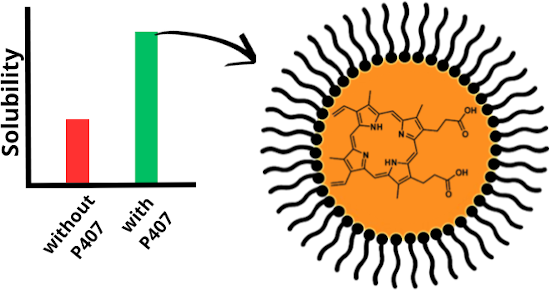
- dissolution mechanism is mainly governed by simple diffusion, without significant swelling or erosion of the polymeric matrix [8], which is commonly observed in hydrophilic polymeric systems, as those produced by P407 [24]. In this context, the drug molecules diffuse through the micellar network driven by


Chitosan nanocomposite containing rotenoids: an alternative bioinsecticidal approach for the management of Aedes aegypti
Beilstein J. Nanotechnol. 2025, 16, 1197–1208, doi:10.3762/bjnano.16.88
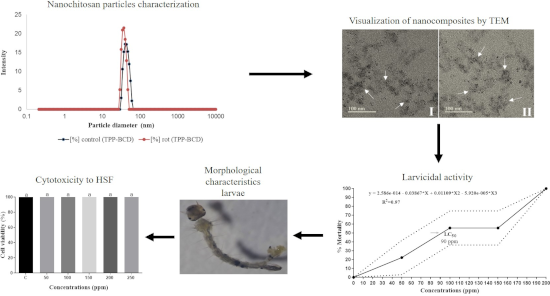
- that the nanocomposite achieved an LC50 of 91.7 ppm, representing a 23.6% increase in larvicidal efficacy compared to the rotenoids in their natural form. The nanocomposite also induced dose-dependent morphological and physiological alterations in the larvae, including damage to the peritrophic matrix
- encapsulation efficiency is estimated to be ≥99% within the detection limits of high-performance liquid chromatography (HPLC) and thin-layer chromatography (TLC) methods applied, indicating a highly effective incorporation of the rotenoids into the nanochitosan matrix. In addition to the high encapsulation
- between the rotenoids and the nanocomposite matrix was obtained through Fourier-transform infrared (FTIR) spectroscopy. Figure 3A shows the FTIR spectra of CS/TPP-β-CD, CS/TPP-β-CD loaded with rotenoids (CS/TPP-β-CD-rot), and pure rotenoids. All three spectra display a broad absorption band in the 3600



Crystalline and amorphous structure selectivity of ignoble high-entropy alloy nanoparticles during laser ablation in organic liquids is set by pulse duration
Beilstein J. Nanotechnol. 2025, 16, 1141–1159, doi:10.3762/bjnano.16.84
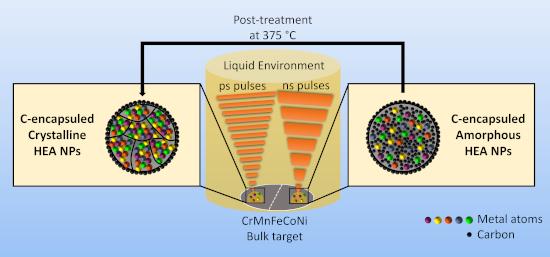
- matrix has been reported for monometallic systems [95][97][98] and alloys [76][77], stabilizing amorphous structures and enhancing glass formation ability (GFA). In general, Si, B, P, and carbon have been reported to diffuse into metallic matrices and thus enhance the GFA, whereas carbon seems to have
- metallic matrix of the forming HEA NPs, being the reason behind the stabilized amorphous structure. Figure 5 illustrates the hypothesized differences during ps- and ns-LAL. In ps-LAL, the time when the temperature is high enough for the plume and particles to stay in a liquid state (TL) is short and can be




Deep learning for enhancement of low-resolution and noisy scanning probe microscopy images
Beilstein J. Nanotechnol. 2025, 16, 1129–1140, doi:10.3762/bjnano.16.83
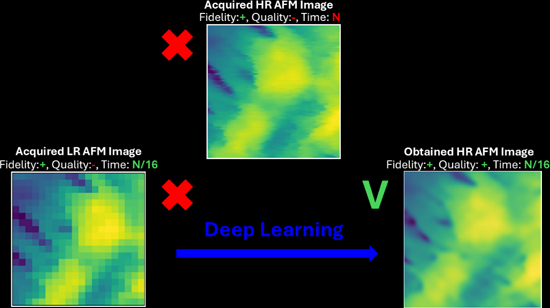
- compared to the GT. There was no statistically significant difference between the performance of deep learning models compared to the traditional methods, as shown by the p-value Tukey’s range test matrix comparisons in Figure 3 (all p-values are bigger than 0.98, except for that of the bilinear method
- invariance to scale and rotation [43]. These features were then matched across images using a brute force matching algorithm, followed by k-nearest neighbors to refine the matching process based on Euclidean distance [44]. The best corresponding pixel matches were used to compute the homography matrix
- 0.23 μm on full image and detail, respectively. p-Values for six different metrics (PSNR, SSIM, Fourier Sharpness, PI, Ma, and NIQE) for the two data sets, (a) Celgard® 2400 membrane and (b) titanium film, generated using Tukey’s range test. For clarity, only the lower triangular matrix values are


Piezoelectricity of hexagonal boron nitrides improves bone tissue generation as tested on osteoblasts
Beilstein J. Nanotechnol. 2025, 16, 1068–1081, doi:10.3762/bjnano.16.78
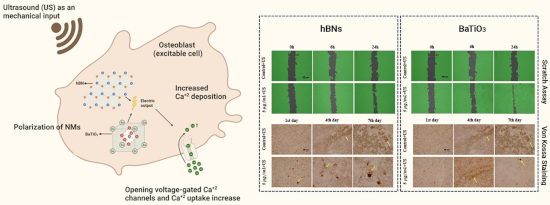
- 10.3762/bjnano.16.78 Abstract Bone tissue, also known as bone, is a hard and specialized connective tissue consisting of various bone cells. Internally, it has a honeycomb-like matrix providing rigidity to the bone and a piezoelectric feature contributing to bone remodeling. Bone remodeling is a crucial
- nucleation of calcium and phosphate ions, imparting stiffness and resistance to bone. Additionally, collagen and noncollagenous matrix proteins contribute to bone formation by offering a scaffold for hydroxyapatite deposition [2][3]. Bone tissue consists of four main cell types: bone lining cells
- ]. Osteocytes, the longest-lived bone cells, arise from osteoblast differentiation and regulate bone maintenance [7]. Osteoblasts, found on bone surfaces, drive bone formation through two key steps: matrix deposition and mineralization. During matrix deposition, collagen and noncollagenous proteins are secreted


Soft materials nanoarchitectonics: liquid crystals, polymers, gels, biomaterials, and others
Beilstein J. Nanotechnol. 2025, 16, 1025–1067, doi:10.3762/bjnano.16.77
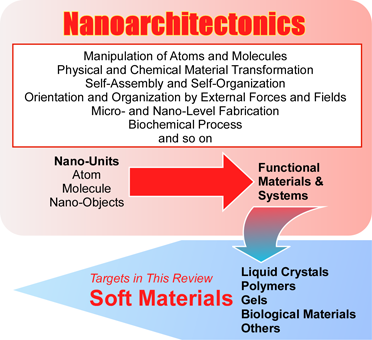
- within the MOF microporous matrix, which serves as an oxygen reservoir linked to the polymer electrocatalytic material, enhances the overall ORR activity. This exemplary work demonstrated the potential for a new method of fabricating MOF-based electrocatalytic surfaces. Further enhancements in






Multifunctional properties of bio-poly(butylene succinate) reinforced with multiwalled carbon nanotubes
Beilstein J. Nanotechnol. 2025, 16, 1014–1024, doi:10.3762/bjnano.16.76
- morphology and properties of the polymer matrix by altering its structure, crystallinity, thermal stability, and mechanical behavior [9][10][11]. CNTs can be classified into two basic types, namely, single-walled carbon nanotubes (SWCNTs) and multiwalled carbon nanotubes (MWCNTs). SWCNTs exhibit slightly
- , 2, and 3 wt % of MWCNTs functionalized with carboxyl groups with PBS in a batch mixer resulted in a uniform distribution of agglomerated MWCNTs within the polymer matrix, an increase in the storage modulus, and enhanced electrical conductivity of PBS. Moreover, MWCNTs had a significant effect on the
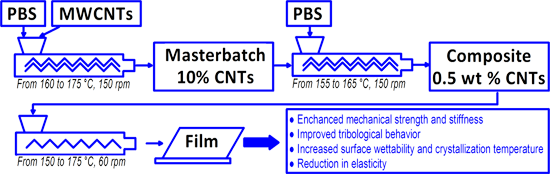
- thermal properties of BioPBS (hereafter PBS). To improve the distribution of MWCNTs (hereafter CNTs) within the polymer matrix and precisely control the CNT content, a nanocomposite preparation method utilizing a polymer masterbatch was employed, involving double mixing stages in a twin-screw extruder



Time-resolved probing of laser-induced nanostructuring processes in liquids
Beilstein J. Nanotechnol. 2025, 16, 968–1002, doi:10.3762/bjnano.16.74


Shape, membrane morphology, and morphodynamic response of metabolically active human mitochondria revealed by scanning ion conductance microscopy
Beilstein J. Nanotechnol. 2025, 16, 951–967, doi:10.3762/bjnano.16.73
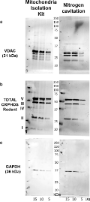
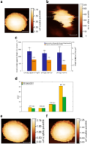
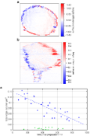
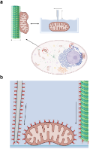
- to mitochondria, which possess a double membrane, dividing the organelle into four compartments, namely, the outer membrane, the intermembrane space, the inner membrane (which is invaginated and forms the so-called cristae), and the matrix. In addition to hosting catabolic metabolic pathways and the



Focused ion beam-induced platinum deposition with a low-temperature cesium ion source
Beilstein J. Nanotechnol. 2025, 16, 910–920, doi:10.3762/bjnano.16.69
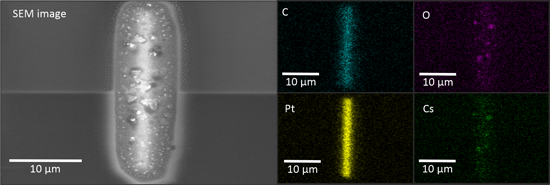
- Rb+ FIBID-Pt in Pt% and C%, is an outlier compared to the FIBID under higher beam energies. The cause for the higher C% in Cs+ FIBID-Pt remains unclear to the authors at this stage, however. As with Rb+ and Ga+, Cs+ FIBID-Pt also contains crystalline Pt grains embedded in a C-rich matrix, as shown in
- processing software ImageJ [26]. The Pt grains appear darker than the C matrix in the TEM images, thus allowing the grains to be counted by ImageJ. This software also provides the area of each grain counted, which we convert to an effective diameter by equating the area to that of a circular disk. Figure 7


Ar+ implantation-induced tailoring of RF-sputtered ZnO films: structural, morphological, and optical properties
Beilstein J. Nanotechnol. 2025, 16, 872–886, doi:10.3762/bjnano.16.66
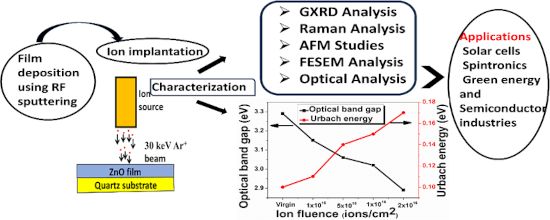
- control material properties by inducing damage and introducing defects in the host matrix in a controlled manner [8]. It offers the advantage of controlling the amount of energy transferred to the host system by selecting the desired ion energy, mass, and fluence [9]. Different types of lattice vacancies
- fluence of implanted ions and displacements produced per atom (dpa) in the host matrix through implantation [28]. The value of dpa can be calculated via TRIM simulations using the following relation [14]: The above equation depicts the number of vacancies created per ion per angstrom, which can be






Supramolecular hydration structure of graphene-based hydrogels: density functional theory, green chemistry and interface application
Beilstein J. Nanotechnol. 2025, 16, 806–822, doi:10.3762/bjnano.16.61
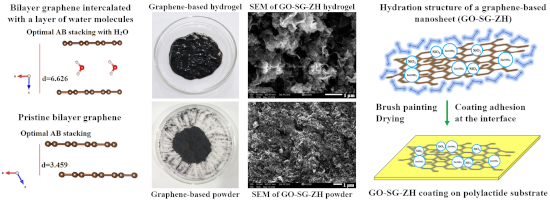
- attraction. In the molecular dynamics simulations by Hasheminejad et al., the interfacial interaction energy between graphene oxide nanosheet and polylactide matrix is assigned to van der Waals forces and hydrogen bonds [62]. The bonding network of GO-SG-ZH nanosheets in the coating is another reason for the


Changes of structural, magnetic and spectroscopic properties of microencapsulated iron sucrose nanoparticles in saline
Beilstein J. Nanotechnol. 2025, 16, 762–784, doi:10.3762/bjnano.16.59
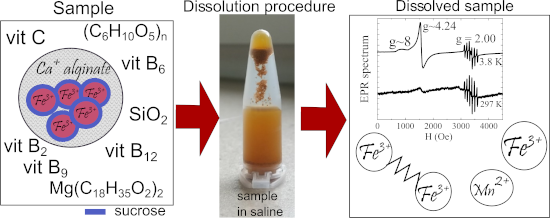
- crystalline structure, and the presence of a nonmagnetic coating or matrix, as all this structural features have a strong impact on the magnetic properties of the nanoparticle system [40][42][44]. The analysis carried out confirms the presence of noninteracting magnetic nanoparticles in the FS0 sample and
- investigated compound, we assumed that the calcium alginate microcapsules are embedded in the additive matrix; however, it does not interact with the matrix. Therefore, the additives do not disturb in any way the microcapsule dissolution process, and the interaction between saline and microcapsules happens
- + ions and magnetite with mixed Fe2+ and Fe3+ valency creates a polysaccharide-stabilized colloid with polysaccharide chains, preventing the aggregation of colloidal species and keeping the nanoparticles within the hydrogel matrix [80][81][82][83][84][85][86]. Raman studies provided information





Serum heat inactivation diminishes ApoE-mediated uptake of D-Lin-MC3-DMA lipid nanoparticles
Beilstein J. Nanotechnol. 2025, 16, 740–748, doi:10.3762/bjnano.16.57
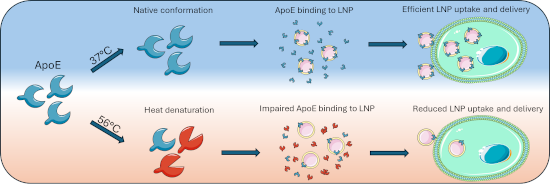
- and efficacy [1]. It is becoming increasingly clear that the biological fate and overall performance of nanoparticles are influenced by their interaction with the bioenvironment. As a nanoparticle interacts with a biological matrix upon administration, a layer of biomolecules, primarily composed of


Synthesis of a multicomponent cellulose-based adsorbent for tetracycline removal from aquaculture water
Beilstein J. Nanotechnol. 2025, 16, 728–739, doi:10.3762/bjnano.16.56
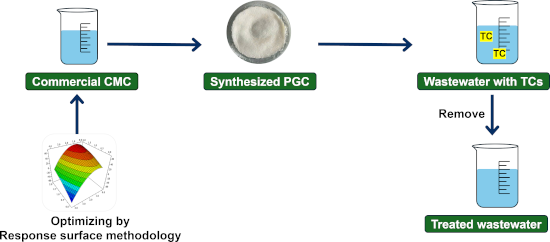
- spectrum, the sample matrix, and the radiation intensity. Activated carbon is a conventional approach [10][11], however, a major drawback of activated carbon is its incomplete recovery after adsorption. Because adsorption primarily relies on physical interactions such as hydrogen bonding interactions
- characteristics and morphology of the synthesized adsorbent. Additionally, the study examines the adsorption mechanism of TC on the material’s surface and evaluates the effects of pH value, adsorbent dosage, and matrix composition. As a biodegradable and easily recoverable material derived from natural cellulose
- the TC structure undergo protonation before ionic bonding with Ca2+ in the PGC matrix. Among the four ionizable functional groups in TC, the primary site remains predominantly protonated (86%) at pH 6.8 [26][28][29]. However, Ca2+ coordination at this site is expected to shift the ionization





