


Search results
Search for "penetration" in Full Text gives 377 result(s) in Beilstein Journal of Nanotechnology. Showing first 200.
Time-resolved probing of laser-induced nanostructuring processes in liquids
Beilstein J. Nanotechnol. 2025, 16, 968–1002, doi:10.3762/bjnano.16.74
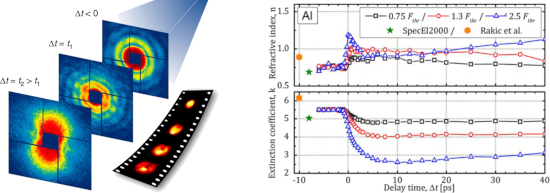
- scattering studies with the use of electrons have been hindered by their shallow penetration depth (<1 μm) compared to that of hard X-rays (>100 μm). Recently, the development of free-flowing liquid sheet jets has overcome this limitation by providing flat liquid sheets with thicknesses down to tens of
- to liquid) should lead to restructuring. In a simple model, the laser energy is converted into heat that will be localized in the absorbing part within the laser penetration depth. Absorption is linear as expressed by the (known) absorption cross section. In the model by Takami et al. [46], which is


Focused ion beam-induced platinum deposition with a low-temperature cesium ion source
Beilstein J. Nanotechnol. 2025, 16, 910–920, doi:10.3762/bjnano.16.69
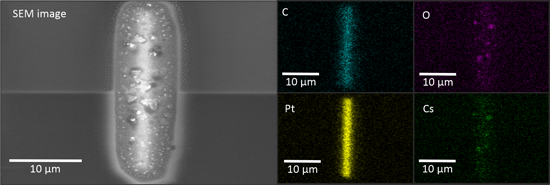
- and O. While the highest concentration of Pt and C can be found within the actual shape, the Cs and O distribution correspond to the bubble area in the SEM image. SRIM simulation showing the penetration of Ga+ and Cs+ ions into a Si substrate at different acceleration voltages. Cs+ ions at a voltage


Insights into the electronic and atomic structures of cerium oxide-based ultrathin films and nanostructures using high-brilliance light sources
Beilstein J. Nanotechnol. 2025, 16, 860–871, doi:10.3762/bjnano.16.65
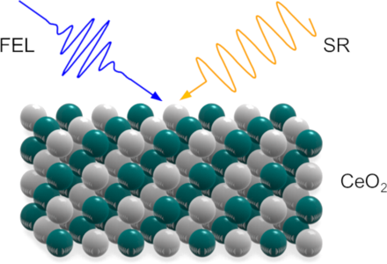
- addition of water facilitating the production of ethanol [57]. Given the high penetration depth of hard X-rays in materials, XAS in the hard X-ray range is much easier than XPS to be carried out under ambient pressure conditions; it provided valuable insight into the working principles of ceria-based


Synchrotron X-ray photoelectron spectroscopy study of sodium adsorption on vertically arranged MoS2 layers coated with pyrolytic carbon
Beilstein J. Nanotechnol. 2025, 16, 847–859, doi:10.3762/bjnano.16.64
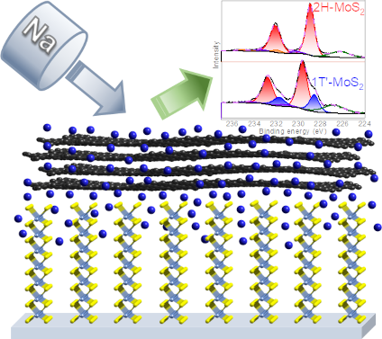
- amount of sodium on the MoS2 film gives a Na/Mo ratio of 2.4. Half of the sodium is located on the film surface. The high Na/Mo ratio can be explained by the easy penetration of sodium into the vertically oriented layers of the MoS2 film. The XPS Mo 3d spectra reveal that the intercalation of sodium


Efficiency of single-pulse laser fragmentation of organic nutraceutical dispersions in a circular jet flow-through reactor
Beilstein J. Nanotechnol. 2025, 16, 711–727, doi:10.3762/bjnano.16.55
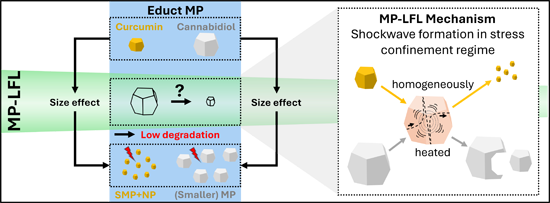
- pulse duration of 10 ps (as the acoustic relaxation time is higher, tac, 1 µm ≥ 500 ps, Equations S11 and S12, Supporting Information File 1). Depending on the optical penetration depth, the particle size influences whether homogeneous or inhomogeneous heating takes place. The heated volume leads to the
- formation of thermoelastic stress and finally to the formation of shock waves, promoting mechanical fragmentation. For curcumin, the mean optical penetration depth is 32 µm (dopt, 1 µm = 39 µm, dopt, 10 µm = 27 µm), and for CBD, the mean optical penetration depth is 170 µm. The mean absorption coefficients
- sphere. For both material systems, the mean optical penetration depth is well above the average educt particle size and therefore leads to homogeneous heating of the educt by the laser. Overall, the nutraceutical particles are homogeneously heated during picosecond-LFL, and the criterion for


Polyurethane/silk fibroin-based electrospun membranes for wound healing and skin substitute applications
Beilstein J. Nanotechnol. 2025, 16, 591–612, doi:10.3762/bjnano.16.46
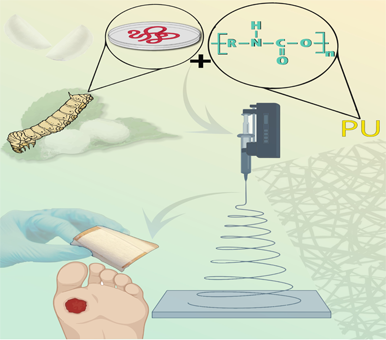
- . Although electrospun SF nanofibers are highly biocompatible, their tiny pore size inhibits cell penetration. To solve this, sodium chloride crystals of various sizes were incorporated into the nanofibers during fabrication, resulting in increased pore size. The wound healing properties of the 3D SF



Retrieval of B1 phase from high-pressure B2 phase for CdO nanoparticles by electronic excitations in CdxZn1−xO composite thin films
Beilstein J. Nanotechnol. 2025, 16, 551–560, doi:10.3762/bjnano.16.43
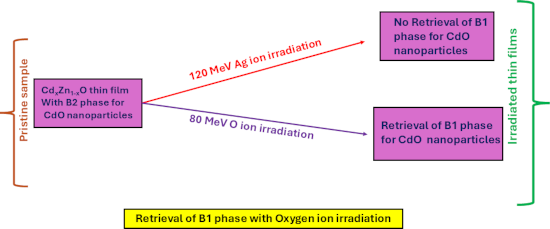
- supported in the literature. Upon penetration in a solid, energetic ions lose energy through two mechanisms: direct energy transfer to target nuclei via elastic collisions (nuclear energy loss (Sn)) and ionization of the target atoms through inelastic collisions (electronic energy loss (Se)). In the present


N2+-implantation-induced tailoring of structural, morphological, optical, and electrical characteristics of sputtered molybdenum thin films
Beilstein J. Nanotechnol. 2025, 16, 495–509, doi:10.3762/bjnano.16.38
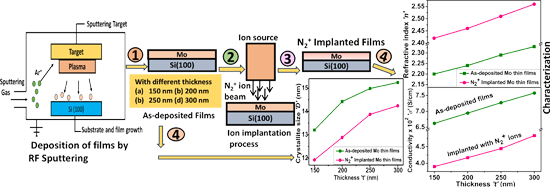
- Mo films increased with increasing thickness. This trend of intensity with thickness remains in the nitrogen-implanted films. At lower thicknesses (150 and 200 nm), crystallinity is significantly reduced because of the extensive penetration of nitrogen ions, resulting in considerable distortion of


Performance optimization of a microwave-coupled plasma-based ultralow-energy ECR ion source for silicon nanostructuring
Beilstein J. Nanotechnol. 2025, 16, 484–494, doi:10.3762/bjnano.16.37
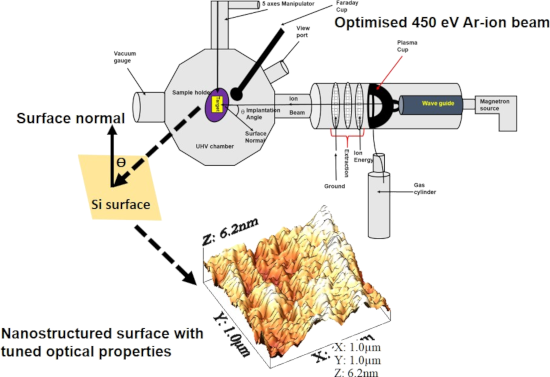
- of the Ar-ion bombardment. The thickness of the amorphous layer is around 1.5 nm, which is consistent with the penetration depth of the Ar ions (1.2 nm) estimated by Monte Carlo simulations (Figure 5f) [31]. Therefore, the topographical image is consistent with the cross-sectional image, indicating a
- , rendering it valuable for both implantation and deposition processes. Our meticulous investigation of the ECR ion source lays the groundwork for ion beam-induced nanostructuring and layer-wise material modification, affording precise control over ion penetration depth and fluence. The manuscript emphasizes


Synthetic-polymer-assisted antisense oligonucleotide delivery: targeted approaches for precision disease treatment
Beilstein J. Nanotechnol. 2025, 16, 435–463, doi:10.3762/bjnano.16.34
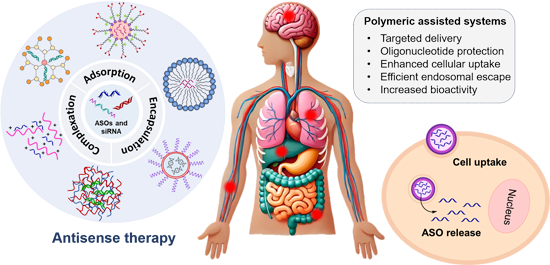
- endocytosis. Additionally, PLR has been studied for its ability to enhance cell penetration and promote endosomal escape, which are crucial steps for the intracellular delivery of therapeutic agents [92][93]. However, like other cationic poly(amino acids), its use is sometimes limited by potential
- oligonucleotides [150]. In vitro experiments revealed that anodal iontophoresis of ASO–dendrimer complexes considerably improved ASO skin penetration and cellular uptake, leading to a 46% inhibition of Bcl-2 expression compared to just 20% with passive delivery of free ASOs. Additionally, in vivo studies showed a


Development of a mucoadhesive drug delivery system and its interaction with gastric cells
Beilstein J. Nanotechnol. 2025, 16, 371–384, doi:10.3762/bjnano.16.28
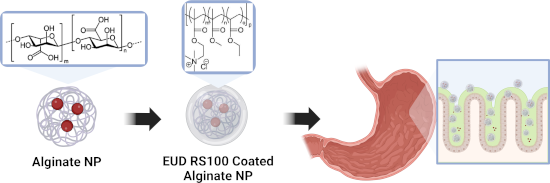
- surface area for adhesion. Also, mucus penetration would be hindered because of the mesh-like structure of mucin. For therapeutics that have gastric mucosa as target, this might limit the efficiency and decrease the drug absorption at the site. A smaller particle size, however, is advantageous because of
- the larger surface-area-to-volume ratio, which may result in more contact points with the tissue and increased mucoadhesion [27]. In addition, a nanoscale size leads to improved penetration through the pores of the mucin network, which have a size of approximately 500 nm [9][28], enhanced retention
- important parameters to be considered when developing mucus-interactive drug delivery systems. To study the possible penetration of the designed nanoparticles through the mucus layer, artificial mucus was prepared using gastric mucin, which was placed on a hardened gelatin layer. The penetration of


Vortex lattices of layered HTSCs at different vortex–vortex interaction potentials
Beilstein J. Nanotechnol. 2025, 16, 362–370, doi:10.3762/bjnano.16.27
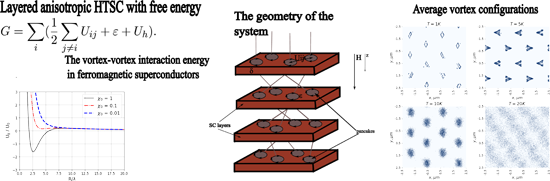
- length λJ = γs, where s is the distance between the superconducting planes, γ is the anisotropy parameter, and λ is the London penetration depth of the magnetic field. When the ratio λ/λJ < 0.46, crossed lattices of Abrikosov and Josephson vortices (vortex chains) are observed; at λ/λJ > 0.46, the
- artificial pinning centers, or in samples with columnar defects perpendicular to the superconducting planes, the average deviation of pancakes from the axis of the vortex filament due to thermal motion is much less than λ, that is, the London penetration depth of the magnetic field into the superconductor
- magnetic field penetration depth and the coherence length [28]. In this paper, the following forms of this dependence are used: and These relations fairly accurately reflect the temperature dependence of the characteristic lengths in bismuth HTSC [29]. In this work, in addition to the classical potential


Radiosensitizing properties of dual-functionalized carbon nanostructures loaded with temozolomide
Beilstein J. Nanotechnol. 2025, 16, 229–251, doi:10.3762/bjnano.16.18
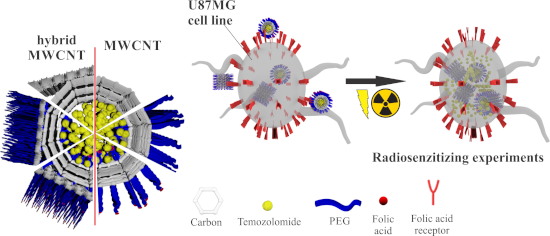
- ) (Table 1). Generally, the particle size was smaller compared to the size of the corresponding non-irradiated formulations, which can be attributed to the penetration power and destructive effect of the gamma rays and the dissociation of certain molecules from the nanocarriers into the surrounding medium
- be explained by the different effects on cell membranes during internalization. While the tubular shape of the CNTs provides membrane penetration whithout significantly affecting the integrity of the cell membrane, the flat surface of GO leads to more intense contact and rupture of the cell membranes




Recent advances in photothermal nanomaterials for ophthalmic applications
Beilstein J. Nanotechnol. 2025, 16, 195–215, doi:10.3762/bjnano.16.16
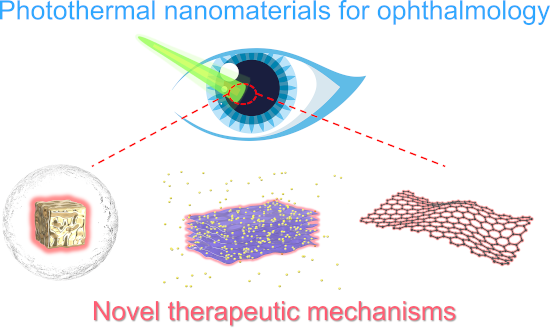
- light can be divided into ultraviolet (UV; 190–400 nm), visible light (400–780 nm) and near-infrared light (NIR; 780–2500 nm) [28][29]. UV light has shorter wavelengths and higher photon energies that can be absorbed by most body tissues. Hence, its penetration is limited, and it may trigger a number of
- endogenous chromophores (i.e., blood, water, and melanin) and biomolecules in the human body have a low absorption rate of NIR light. Hence, NIR has a high tissue penetration depth, which can avoid photothermal damage to healthy tissues [35][36][37]. Activation of photothermal nanomaterials with NIR light
- penetration and deposition [163]. Moreover, common ocular drug delivery methods have disadvantages such as short intraocular retention time, low drug accumulation, and low bioavailability [164]. Because of the transparency of the cornea and crystalline lens, the eye allows various wavelengths of light to


A review of metal-organic frameworks and polymers in mixed matrix membranes for CO2 capture
Beilstein J. Nanotechnol. 2025, 16, 155–186, doi:10.3762/bjnano.16.14
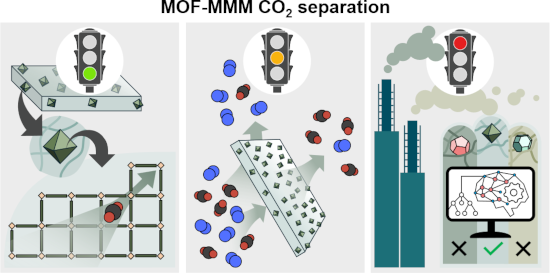
- , the penetration of different molecules is no longer determined by the selectivity of the MOF, but rather by the size of the void. The voids arise from poor adhesion between the MOF and the polymer, emphasizing the importance of utilizing compatible components for MMMs [76][78][87][89][92][113




Clays enhanced with niobium: potential in wastewater treatment and reuse as pigment with antibacterial activity
Beilstein J. Nanotechnol. 2025, 16, 141–154, doi:10.3762/bjnano.16.13
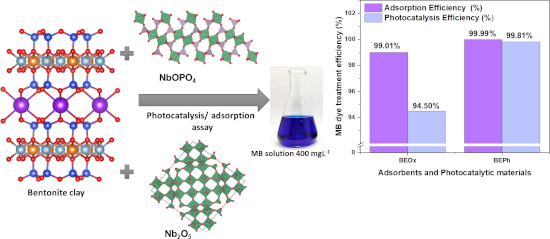
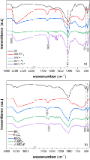
- color of MB in wastewater reduces light penetration into aquatic organisms, disturbing the balance of the ecosystem and harming various forms of life [3]. Effluents and water bodies containing MB require prioritized treatment due to its adverse effect on water quality. Therefore, it is crucial to



Nanocarriers and macrophage interaction: from a potential hurdle to an alternative therapeutic strategy
Beilstein J. Nanotechnol. 2025, 16, 97–118, doi:10.3762/bjnano.16.10
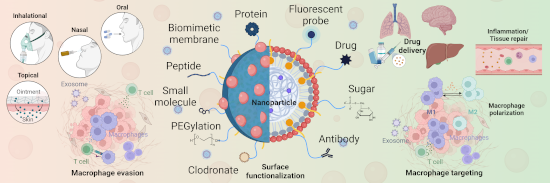
- limited by low drug penetration. NCs can overcome this hurdle by offering new avenues for drug delivery that enhance effectiveness and reduce side effects. AMs play a critical role in asthma by maintaining inflammation and tissue damage. Holotomography was used to analyze the morphological and


Mechanistic insights into endosomal escape by sodium oleate-modified liposomes
Beilstein J. Nanotechnol. 2024, 15, 1667–1685, doi:10.3762/bjnano.15.131
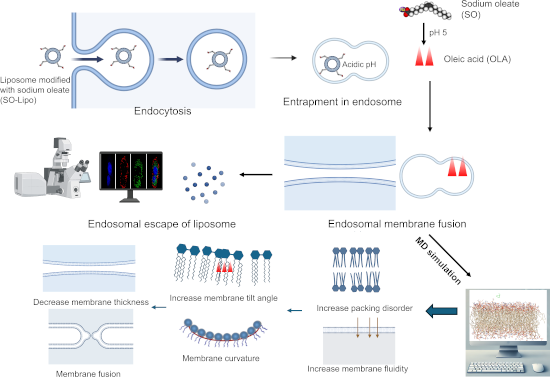
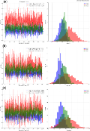
- core. This extensive penetration aligns with OLA’s hydrophobic nature, indicating strong interactions with the lipid tails. The overlap between OLA’s density and the membrane’s density profile suggests that OLA is well embedded within the membrane, potentially leading to significant perturbations in
- rather than deep penetration into the hydrophobic core. The MSD analysis (Figure 8f) reveals that OLA significantly enhances the lateral mobility of lipids within the bilayer, indicative of a fluidizing effect. This increased mobility likely results from OLA’s ability to disrupt lipid packing through its




Biomimetic nanocarriers: integrating natural functions for advanced therapeutic applications
Beilstein J. Nanotechnol. 2024, 15, 1619–1626, doi:10.3762/bjnano.15.127
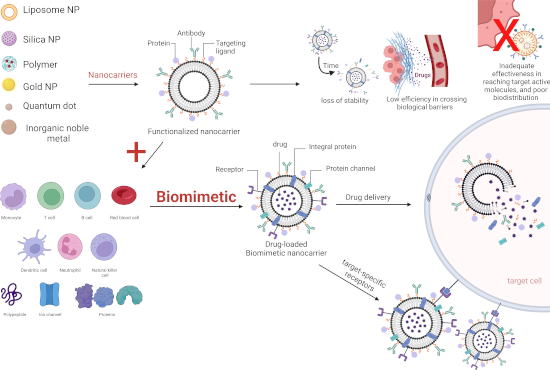
- enhance BBB penetration. Studies have shown that polymeric biomimetic nanoparticles carrying proteins can penetrate the brain parenchyma and release active agents, demonstrated by the increased accumulation of 3D6-Fab antibody fragments in the brains of mouse models, and reducing Aβ1-42 aggregation, which


Polymer lipid hybrid nanoparticles for phytochemical delivery: challenges, progress, and future prospects
Beilstein J. Nanotechnol. 2024, 15, 1473–1497, doi:10.3762/bjnano.15.118
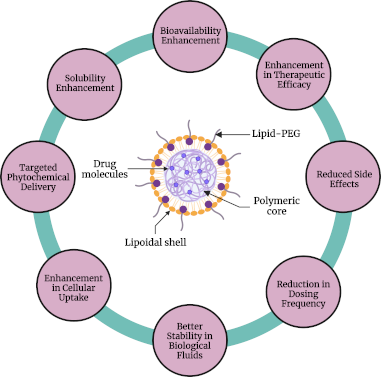
- therapeutic effects [30][31]. Poor permeability and penetration are additional obstacles. Phytochemicals may have difficulties crossing biological membranes, such as the intestinal epithelium or the blood–brain barrier, because of their molecular size, polarity, or lipophilicity. Poor permeability limits the


Ion-induced surface reactions and deposition from Pt(CO)2Cl2 and Pt(CO)2Br2
Beilstein J. Nanotechnol. 2024, 15, 1427–1439, doi:10.3762/bjnano.15.115
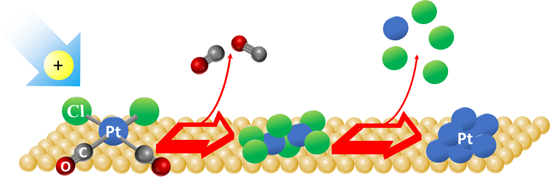
- -energy electrons produced by ion–substrate interactions. In this respect, the increased importance of this reaction pathway is a consequence of the extremely inefficient momentum transfer for H2+/Pt(CO)2X2 collisions, coupled with the greater penetration depth of the lighter ions within the tantalum



Nanotechnological approaches for efficient N2B delivery: from small-molecule drugs to biopharmaceuticals
Beilstein J. Nanotechnol. 2024, 15, 1400–1414, doi:10.3762/bjnano.15.113
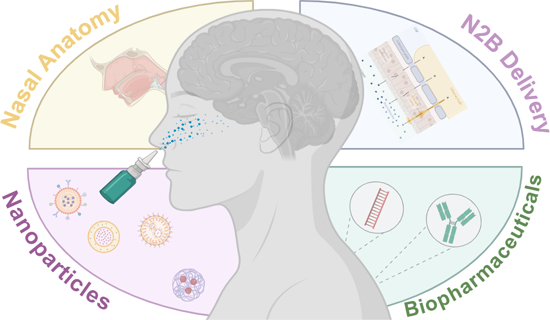
- , most systemically administered drugs cannot reach the brain as a site of action. The BBB is reported to limit the passage of 98% of small-molecule drugs and almost all large-molecule therapeutics to the brain [15]. The high density of the intact barrier prevents an easy penetration of the barrier. The
- limited insights as some factors, such as injection position and the effect of the mucus layer, were not considered [84]. The study also highlighted that the chitosan coating favored the penetration in the mucosa. This was attributed to the swelling of chitosan at the pH value of the healthy nose and the


Hymenoptera and biomimetic surfaces: insights and innovations
Beilstein J. Nanotechnol. 2024, 15, 1333–1352, doi:10.3762/bjnano.15.107
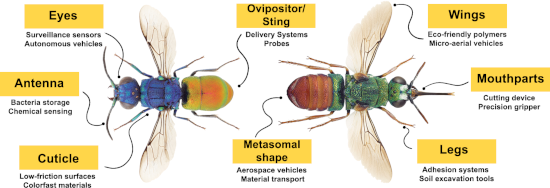
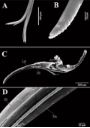
- facilitating attachment, penetration of substrates, production of sound, perception of volatiles, and delivery of venoms, among others. These morphological features offer valuable insights for biomimetic and bioinspired technological advancements. Here, we explore the biomimetic potential of hymenopteran body





Realizing active targeting in cancer nanomedicine with ultrasmall nanoparticles
Beilstein J. Nanotechnol. 2024, 15, 1208–1226, doi:10.3762/bjnano.15.98
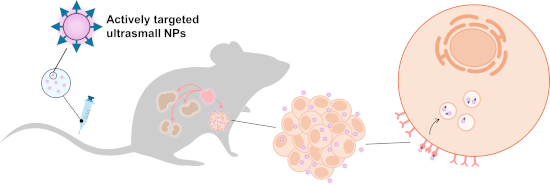
- demonstrate favorable tumor penetration and intratumoral diffusion. Active targeting strategies, incorporating ligands for specific tumor receptor binding, serve to further enhance usNP tumor selectivity and therapeutic performance. Numerous preclinical studies have already demonstrated the potential of
- % ID/g, while PEG-coated AuNCs displayed even higher passive tumor uptake efficiency of ≈8% ID/g owing to their longer blood retention time [77]. Besides achieving decent tumor uptake levels in some cases, usNPs exhibit easier penetration and diffusion through the dense tumor microenvironment relative
- 90% saturation), but challenges with insufficient NP tumor penetration and diffusion make this unlikely. Even if delivering a high local concentration of targeted usNPs were possible, the contribution of active targeting would not be distinguishable from the nonspecific background in this case. To


Synthesis, characterization and anticancer effect of doxorubicin-loaded dual stimuli-responsive smart nanopolymers
Beilstein J. Nanotechnol. 2024, 15, 1189–1196, doi:10.3762/bjnano.15.96
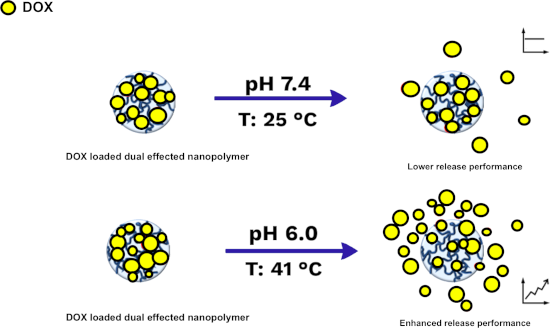
- are spherical. It was also observed that a low proportion of SNPs were around 200–300 nm, and the majority were around 150 nm. SNPs may provide a larger specific surface area, resulting in a high loading capacity for DOX. Also, this property is an advantage regarding the penetration of SNPs into cells





