


Search results
Search for "substrate" in Full Text gives 1410 result(s) in Beilstein Journal of Nanotechnology. Showing first 200.
Cross-reactivities in conjugation reactions involving iron oxide nanoparticles
Beilstein J. Nanotechnol. 2025, 16, 1504–1521, doi:10.3762/bjnano.16.106
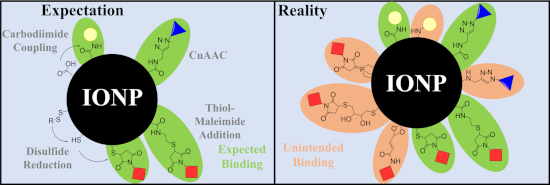
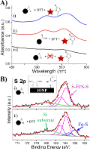
- majority of the bound CySH is either coordinated to surface Fe through the amine, or possibly bound to 3,4-DHBA quinones through its thiol. The presence of a higher binding energy feature in the S 2p spectra at >166 eV is attributed to a Si 2s plasmon loss peak, derived from the Si substrate (Supporting







Laser processing in liquids: insights into nanocolloid generation and thin film integration for energy, photonic, and sensing applications
Beilstein J. Nanotechnol. 2025, 16, 1428–1498, doi:10.3762/bjnano.16.104
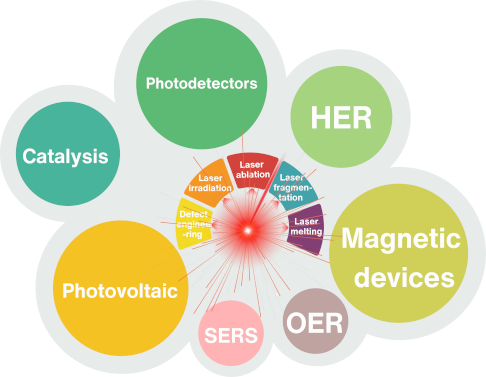
- comprehensive understanding of the process flow, from the laser-induced ejection of material into the gas phase, through its processing and movement in the plume, to its eventual deposition onto a substrate. Figure 1 shows key developments in thin film synthesis and laser-based processing from 1909 to 2025
- fabrication using nanocolloids synthesized by LPL is given in Figure 9. 2.1 Spin coating The pioneering analysis of spin coating dates back over fifty years to Emslie et al., who first studied the spreading of a thin axisymmetric film of Newtonian fluid on a rotating substrate [100]. In 1989, the method was
- ]. Figure 10a shows a photograph of a typical spin-coating setup, along with high-speed images capturing the dynamics of and film formation on a rotating substrate. Mono and bi-metallic Pt, Pd, and Pt80Pd20 NPs were synthesized using a Nd:YAG laser operating at λ = 1064 nm, a fluence of 5 J/cm2, and a






Photochemical synthesis of silver nanoprisms via green LED irradiation and evaluation of SERS activity
Beilstein J. Nanotechnol. 2025, 16, 1417–1427, doi:10.3762/bjnano.16.103
- cm−1 peak (Figure 9b) was found to be linear, following the equation y = −2216.3x + 20719, R2 = 0.9943. This linear correlation indicates that the lowest 4-MBA concentration detectable with this AgNPr-based SERS substrate was 10−9 M, confirming its potential for ultrasensitive SERS-based sensing
- SERS substrate enabled detection at concentrations as low as 10−9 M with a strong linear response. These results highlight the potential of LED-synthesized AgNPrs as high-performance, low-cost, and environmentally benign substrates for sensitive SERS applications in chemical and biosensing fields
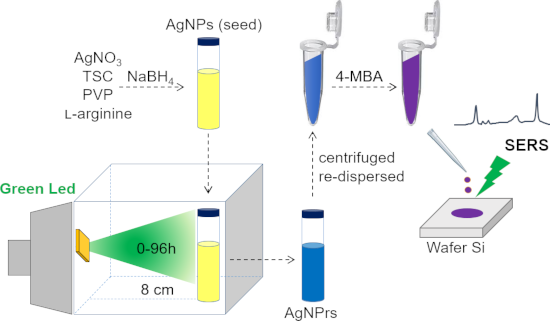
- residue was re-dispersed in 1 mL of distilled water. 50 µL of 10−4 M 4-MBA solution was added to 450 µL of the re-dispersed sample and left for 1 h at room temperature. 20 µL of the resulting mixture was placed on the Si wafer substrate, allowed to dry at room temperature, and Raman measurements were


Synthesis and antibacterial properties of nanosilver-modified cellulose triacetate membranes for seawater desalination
Beilstein J. Nanotechnol. 2025, 16, 1380–1391, doi:10.3762/bjnano.16.100
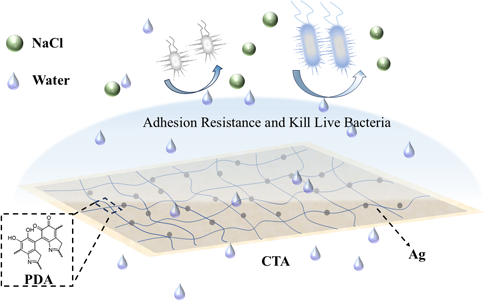
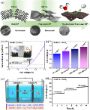
- , which can manifest as a metallic sheen when they are present on a substrate [47]. Surface alterations of the membranes are documented using scanning electron microscopy (SEM) (Figure 4). The CTA membrane’s surface appears smooth and uniform, devoid of visible defects (Figure 4a). Cross-sectional SEM
- the Ag@PCTA membrane illustrate a well-defined PDA layer that maintains its uniformity and adhesion to the underlying CTA substrate (Figure 4f). Notably, Ag nanoparticles are not discernible in the cross-sectional view, indicating their confinement within the PDA layer. The underlying CTA layer


Automated collection and categorisation of STM images and STS spectra with and without machine learning
Beilstein J. Nanotechnol. 2025, 16, 1367–1379, doi:10.3762/bjnano.16.99
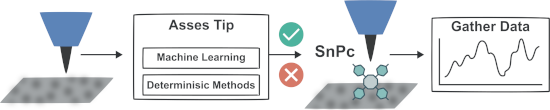
- automation of this process could result in a more rapid and reproducible method for performing spectroscopy measurements. To classify the state of the probe for STS experiments, spectra are usually taken over bare areas of a metallic substrate. On coinage metal surfaces, these spectra typically exhibit a
- addition to the lack of data, ML models require careful labelling and a high level of knowledge from the labeller to be able to train such a model. Switching to a new substrate system is likely to require retraining of the model, and furthermore, even after a successful training, it is still often unclear
- that a tip change did not occur during the scan. The obtained topograph is then analysed to find both a large area of clean metal substrate, over which I(V) spectra can be obtained, and to find the location of the molecules in various configurations, over which additional I(V) spectra are taken. After






Deep-learning recognition and tracking of individual nanotubes in low-contrast microscopy videos
Beilstein J. Nanotechnol. 2025, 16, 1316–1324, doi:10.3762/bjnano.16.96
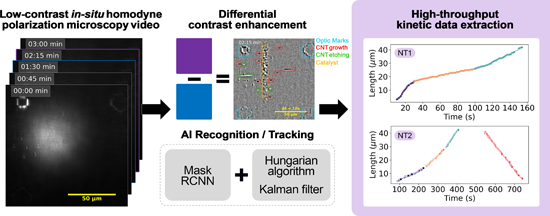
- , horizontally aligned carbon nanotubes (HA-CNTs) were synthesized inside a miniature chemical vapor deposition (CVD) cell with an optical window (Linkam TS1500). ST-cut quartz and iron nanoparticles served as substrate and catalyst, respectively. Ethanol and argon were, respectively, used as carbon precursor
- 400–2000 nm) provided white light excitation across the visible spectrum. Two crossed polarizers were employed, with a polarizer and analyzer used to enhance the scattered field from the nanotubes relative to the stronger reflected field from the substrate. A low-pass optical filter with a cutoff
- cut (ST) quartz substrate and from the fully processed video using (b) fixed-frame and (c) differential shading correction (with a 10 s delay). The thick vertical line in each image indicates the catalyst line. Optical markers (i.e., squares, crosses, and L-shapes) are visible in the corners. CNTs


Wavelength-dependent correlation of LIPSS periodicity and laser penetration depth in stainless steel
Beilstein J. Nanotechnol. 2025, 16, 1302–1315, doi:10.3762/bjnano.16.95
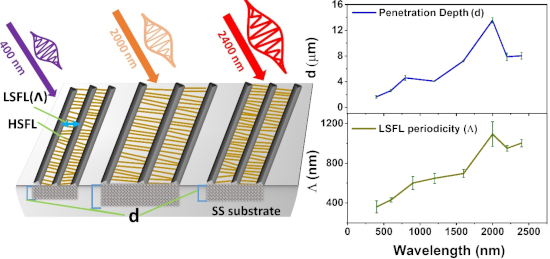
- wavelength and decreases with increasing metal conductivity [53]. In the literature, most researchers used high-intensity pulse lasers for works on laser welding and substrate melting [57][58][61][63][64][65][66][67]. However, we could not find any experimental works dedicated to unraveling the penetration
- this. Depth of the patterned substrate at different powers In this section, we investigated the penetration depth of irradiated stainless steel samples across different laser power values, employing a single wavelength of 800 nm. As the power is increased, it is well known that more material from the
- incident power at a wavelength of 800 nm. (a) 20 mW, (b) 150 mW, and (c) 300 mW. Showing the EDS elemental analysis for laser-treated and untreated stainless steel surface. (a) SEM image of laser-treated SS substrate, we picked three areas whose EDS spectra are shown in b, c, and d. (e) SEM image of bare




Enhancing the photoelectrochemical performance of BiOI-derived BiVO4 films by controlled-intensity current electrodeposition
Beilstein J. Nanotechnol. 2025, 16, 1289–1301, doi:10.3762/bjnano.16.94
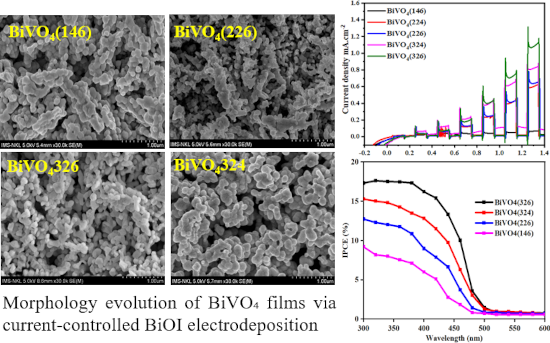
- of ethanol via ultrasonication for 30 min and added to the solution. The FTO glass substrates were cleaned with ethanol and distilled water via sequential ultrasonication. The BiOI film was electrochemically deposited onto the FTO substrate at various current deposition intensities (14, 22, and 32 mA
- of monoclinic BiVO4 (JCPDS PDF #14-0688) and fluorine-doped tin oxide (FTO) substrate (JCPDS PDF #46-1088) [21][22][23]. The peaks at approximately 28.9°, 30.6°, 34.6°, and 35.2° were assigned to the (110), (121), (040), (200), and (002) planes of monoclinic BiVO4, respectively. Notably, the (121



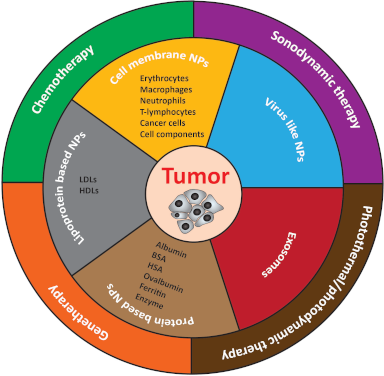
Better together: biomimetic nanomedicines for high performance tumor therapy
Beilstein J. Nanotechnol. 2025, 16, 1246–1276, doi:10.3762/bjnano.16.92









Mechanical stability of individual bacterial cells under different osmotic pressure conditions: a nanoindentation study of Pseudomonas aeruginosa
Beilstein J. Nanotechnol. 2025, 16, 1171–1183, doi:10.3762/bjnano.16.86
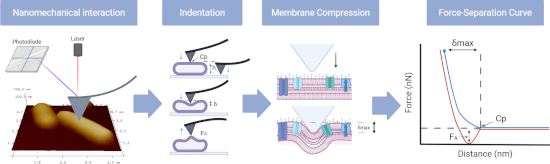
- . Sample preparation for atomic force microscopy For AFM, the sample was initially firmly adhered to a substrate for subsequent scanning, with the tip first used to identify the objects of study on the surface. In this case, PA in suspension was adhered to a solid mica substrate, previously cleaved with
- bacterial adhesion through short-range electrostatic and hydrophobic interactions. Before deposition on the PLL-coated substrate, the bacterial suspension was centrifuged at 2500 rpm for 3 min, and the resulting supernatant was removed. The bacteria were then resuspended in 150 μL of PBS to increase their
- concentration and before the previous deposition of 5 μL on the PLL-coated substrate. A liquid cell was assembled to measure changes in bacterial membrane rigidity response when transitioning between different solutions. Once inside the fluid cell chamber, bacteria were imaged and tested in PBS solution and


Crystalline and amorphous structure selectivity of ignoble high-entropy alloy nanoparticles during laser ablation in organic liquids is set by pulse duration
Beilstein J. Nanotechnol. 2025, 16, 1141–1159, doi:10.3762/bjnano.16.84




Influence of ion beam current on the structural, optical, and mechanical properties of TiO2 coatings: ion beam-assisted vs conventional electron beam evaporation
Beilstein J. Nanotechnol. 2025, 16, 1097–1112, doi:10.3762/bjnano.16.81
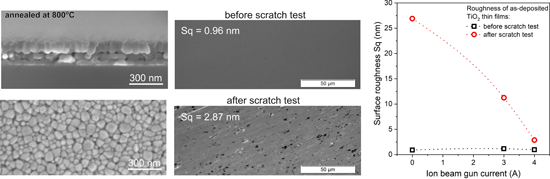
- are very high. The electron beam evaporation process uses the high kinetic energy of an electron beam to generate the thermal energy required to melt and then evaporate the source material to deposit it on the substrate [4]. Evaporation is an attractive deposition technique because of its many
- practice, additional heating of the substrates, reducing the pressure in the working chamber, applying additional electrical bias to the substrates, or using ion beam assistance are used. All of these methods lead to an increase in the total energy of the nucleating particles on the substrate. Ion beam
- migration. This can result in much better adhesion of the films to the substrate [11]. In addition, the advantage of using additional ion beam assistance in the EBE processes is an increased packing density of the coatings, making them more resistant to moisture [8][12]. Moreover, the IBAD technique has




Single-layer graphene oxide film grown on α-Al2O3(0001) for use as an adsorbent
Beilstein J. Nanotechnol. 2025, 16, 1082–1087, doi:10.3762/bjnano.16.79
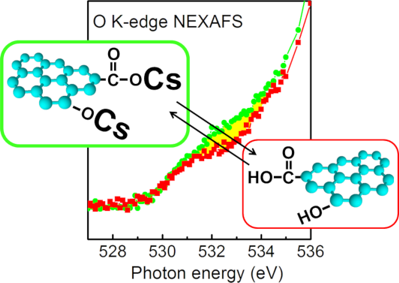
- drop-casting technique, wherein GO flakes dispersed in a solvent are cast onto a substrate [16][17]. This technique does not allow for the control of number of layers. Consequently, studies have been conducted to synthesize large-area and single-layer GO (SLGO) films. As mentioned above, GO films have
- typically been fabricated through casting small pieces of GO flakes onto a substrate. In this study, the SLGO film was synthesized by oxidizing single-layer graphene (SLG) grown by metal-free chemical vapor deposition (CVD) on a α-Al2O3(0001) substrate. The strong interface interaction between SLG and α
- -Al2O3(0001) can minimize peeling off of SLG from the α-Al2O3(0001) substrate following the oxidation process [18]. This allows us to obtain a large-area SLGO film, which can then be subjected to evaluation of the adsorption properties. Subsequent to the synthesis of SLGO/α-Al2O3(0001), further studies


Piezoelectricity of hexagonal boron nitrides improves bone tissue generation as tested on osteoblasts
Beilstein J. Nanotechnol. 2025, 16, 1068–1081, doi:10.3762/bjnano.16.78
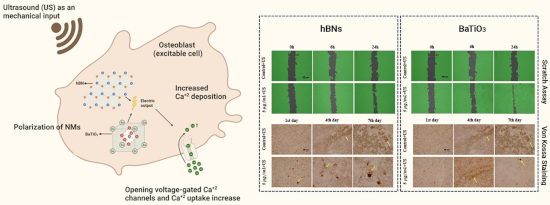
- such as low synthesis scalability, unavoidable defects, and inhomogeneity. Producing high-quality hBNs with controlled layer numbers depends heavily on precursor selection, ambient gas conditions, and substrate of choice [37]. Emerging solutions include both top-down (mechanical and chemical


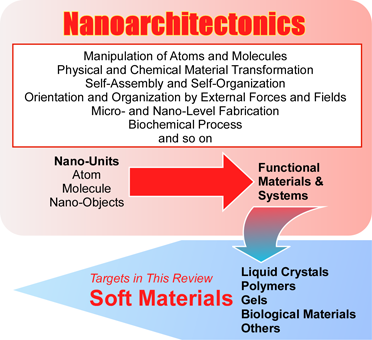
Soft materials nanoarchitectonics: liquid crystals, polymers, gels, biomaterials, and others
Beilstein J. Nanotechnol. 2025, 16, 1025–1067, doi:10.3762/bjnano.16.77
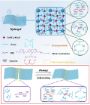
- photoisomerization of azobenzene monolayers can be amplified to the material level. Azobenzene molecules present at the molecular level on a substrate can alter the orientation of nematic liquid crystals over a micrometer-level thickness in the overlying liquid crystal cell (Figure 8B). As a consequence of this
- between the phosphate groups of the complexes and the positively charged ammonium groups of the polyelectrolyte. The alignment of lamellae in a parallel orientation to the substrate is significantly influenced by the percentage of surfactant present. An increase in surfactant concentration results in the
- substrate prepared by sulfonation (Figure 16). The material, which exhibits a bifunctional system of antioxidants and antibacterial properties on its surface, was employed as a model implant to effectively treat diabetic bone defects and restore the integration and remodeling of the implant and surrounding






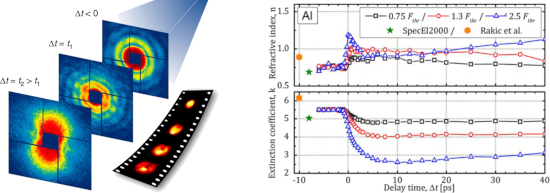
Time-resolved probing of laser-induced nanostructuring processes in liquids
Beilstein J. Nanotechnol. 2025, 16, 968–1002, doi:10.3762/bjnano.16.74


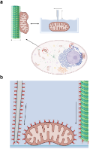
Shape, membrane morphology, and morphodynamic response of metabolically active human mitochondria revealed by scanning ion conductance microscopy
Beilstein J. Nanotechnol. 2025, 16, 951–967, doi:10.3762/bjnano.16.73
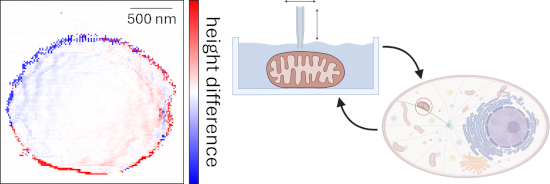
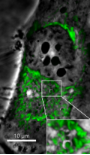
- , from zero (indicating the substrate level, corresponding to the temporary absence of the mitochondrion at that position) to the maximum height of the mitochondrion. Interestingly, this height intermittency also occurs at positions several hundred nanometers away from the mitochondrion’s edge (see
- to the substrate prevents movement. In contrast, mitochondria, due to their spherical shape, make only minimal contact with the immobilising substrate. As a result, they may “tilt” when the nanopipette approaches too quickly, then relax back to their original position when the pipette moves away
- field originating from the ζ-potential acting as the mediating stimulus. The intermittency effect: This phenomenon is attributed to the geometry of the mitochondria, which are only weakly in contact with the substrate due to their spherical or ellipsoidal shapes. Additionally, the lack of adhesion




Focused ion beam-induced platinum deposition with a low-temperature cesium ion source
Beilstein J. Nanotechnol. 2025, 16, 910–920, doi:10.3762/bjnano.16.69
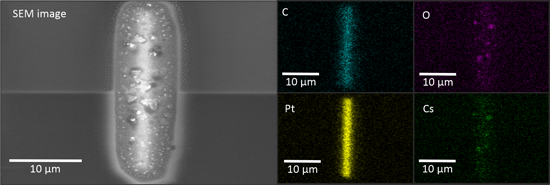
- time, and refresh time, precursor material and substrate have an influence on the effective deposition rate. Gallium (Ga+) and helium (He+) are the most often utilized ion species for FIBID [1][2][5]. Besides these standard FIB systems, new kinds of laser-cooled ion sources have been developed in the
- density of 6 pA·μm−2 . Before deposition, a small part of the Si substrate was gently milled with the Cs+ FIB at 16 kV, such that any native oxide and other contaminations were completely removed at this location. With that, the influence of oxygen molecules on the deposited layer can be excluded. The
- from the data provided by TEM-EDS analysis. An exemplary EDS map for 16 kV 54 pA Cs+ FIBID-Pt is shown in Figure 5. The Si-rich region shown as the red area in the upper-right corner of the Si map corresponds to the Si substrate. Before the TEM sample preparation process, a C layer was deposited on top


Characterization of ion track-etched conical nanopores in thermal and PECVD SiO2 using small angle X-ray scattering
Beilstein J. Nanotechnol. 2025, 16, 899–909, doi:10.3762/bjnano.16.68
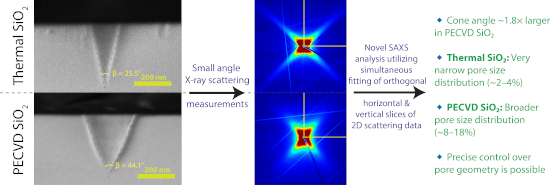
- the undamaged material, which can be exploited for the fabrication of nanopores with narrow size distribution [13][29][40]. The geometry of the resulting nanopores is determined by several factors, including the substrate material, the type and concentration of the etchant, the density of the material
- can only be grown on a Si substrate. PECVD, in contrast, allows for the deposition at much lower temperatures on many different substrates with control over the film properties, such as stoichiometry, density, refractive index, and residual stress. As these fabrication methods involve fundamentally
- as is, and the Si substrate was not removed before SAXS measurements. The sample-to-detector distances ranged between 7.2 and 7.6 m. Data collection was performed using Pilatus 1M and Pilatus 2M detectors during different measurement cycles. A silver behenate (AgBeh) standard was used to calibrate


Heat-induced transformation of nickel-coated polycrystalline diamond film studied in situ by XPS and NEXAFS
Beilstein J. Nanotechnol. 2025, 16, 887–898, doi:10.3762/bjnano.16.67
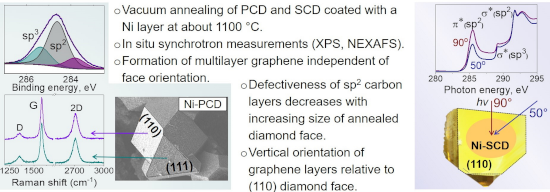
- %) could be associated with the heat-induced reorganization of the Ni layer into particles, which can penetrate into the diamond substrate due to the counter-diffusion of carbon and nickel [19]. The immersing of metal particles into diamond was discussed in detail in previous works [27][28]. The XPS C 1s
- 68.1 eV corresponds to the oxidized states of nickel (Ni–O). The appearance of these states may be due to the interaction of nickel with residual water in the vacuum chamber or with oxygen desorbed from the silicon substrate during annealing [47]. The low-energy doublet with the Ni 3p3/2 component at
- crystallinity of the sp2 carbon coating was observed in the case of the SCD substrate. Changing the angle between the synchrotron beam and the flat surface of Ni-SCD revealed a significant increase in the π*(sp2) peak intensity at normal incidence. This behavior indicates an anisotropic texture of sp2 carbon


Ar+ implantation-induced tailoring of RF-sputtered ZnO films: structural, morphological, and optical properties
Beilstein J. Nanotechnol. 2025, 16, 872–886, doi:10.3762/bjnano.16.66
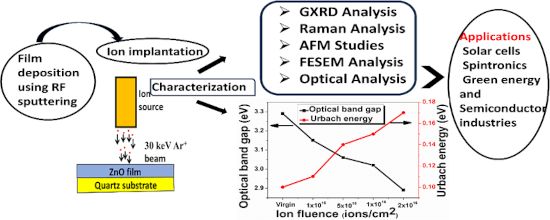
- are versatile in developing high-performance electro-optical and spintronic devices [18]. Experimental ZnO films are grown on a quartz substrate (1 × 1 cm2) using a ZnO (99.99%) target (2″ diameter and 3 mm thickness) in a radio frequency (RF) sputtering system. The quartz substrate is ultrasonically
- strain in the implanted layers; thus, the microstrain values increase with fluence [24]. Strain in implanted ZnO films arises primarily from lattice mismatch, which is due to the difference in thermal expansion coefficients between film and substrate. Also, when argon ions are implanted into the ZnO
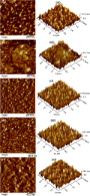
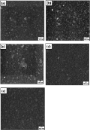
- the Si substrate, the oxygen content contains contributions from both SiO2 and ZnO. The variations in grain size and RMS roughness of ZnO films with increase in ion fluence follow the same trend in AFM and FESEM analyses, but with different magnitudes. This is because of the greater sensitivity of AFM






Insights into the electronic and atomic structures of cerium oxide-based ultrathin films and nanostructures using high-brilliance light sources
Beilstein J. Nanotechnol. 2025, 16, 860–871, doi:10.3762/bjnano.16.65
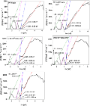
- of ultrathin epitaxial cerium oxide films on Pt(111) demonstrated the influence of the substrate in 2 monolayer (ML) films. Figure 4a shows the Ce–O in-plane and out-of-plane distances obtained from the analysis of EXAFS data acquired on a 2 ML and on a 10 ML ceria film. Figure 4a also reports the
- calculated assuming the bulk elastic constants. The 2 ML film adopts an epitaxial in-plane compression to match the substrate in a dominant 3aCeO2 = 4aPt (Figure 4a). The out-of-plane Ce–O bonds in the ultrathin film appear shorter than expected considering the bulk elastic constants, possibly because of the
- associated to the formation of a Ce–Pt alloyed interfacial phase exhibiting a (2 × 2) periodicity [47]. The influence of the substrate on the stability and reactivity of supported ceria nanoislands has also been investigated by Ce M5 XANES in the case of Au(111) [48]. A loss of redox activity accompanied by


Synchrotron X-ray photoelectron spectroscopy study of sodium adsorption on vertically arranged MoS2 layers coated with pyrolytic carbon
Beilstein J. Nanotechnol. 2025, 16, 847–859, doi:10.3762/bjnano.16.64
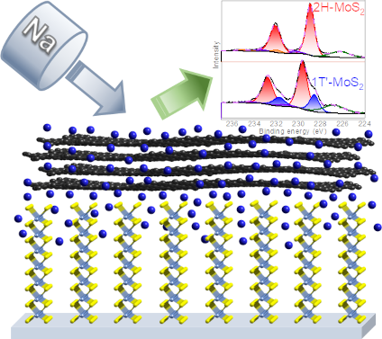
- . In this work, to reveal the effect of carbon coating on the interaction of sodium with the MoS2 layers located vertically relative to the substrate, model experiments were carried out using synchrotron-radiation-induced X-ray photoelectron spectroscopy (XPS). Sodium vapor obtained by heating a sodium
- decomposition residues. Results and Discussion Figure 1a shows the schematic diagram of the synthesis route of a hybrid film consisting of MoS2 coated with PyC. A molybdenum layer is deposited on a SiO2/Si substrate by magnetron sputtering for a short time of 10 s. This layer interacts with sulfur vapor at a
- wet transfer method (see the Experimental section for details). The resulting hybrid, designated PyC-MoS2, together with a surface-cleaned MoS2/SiO2/Si sample and a PyC film transferred onto a SiO2/Si substrate, were used to comparatively study the ability to adsorb and accumulate evaporated sodium


Facile one-step radio frequency magnetron sputtering of Ni/NiO on stainless steel for an efficient electrode for hydrogen evolution reaction
Beilstein J. Nanotechnol. 2025, 16, 837–846, doi:10.3762/bjnano.16.63
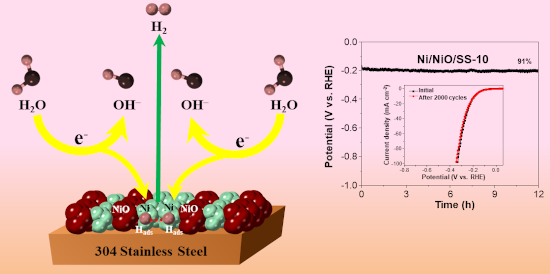
- preserved substrate are definite advantages. Although studies have recognized the effectiveness of magnetron sputtering, research has yet to systematically investigate the effect of the O2 flow rate on the HER efficiency of Ni/NiO catalysts. Commercial stainless steel (SS) costs less than other conductive
- carried out to analyze the morphology of the Ni/NiO thin film on the SS substrate. The as-synthesized Ni/NiO film at 5 sccm of O2 flow rate showed uniform and continuous appearance on the entire surface of the SS substrate (Figure 2a,e). However, at high O2 flow rates, the surface of Ni/NiO/SS-10, Ni/NiO
- with a thickness of 1 mm was used as a substrate for catalyst growth. Fabrication of the Ni/NiO/SS samples Grade 304 SS was cut into pieces of 60 mm × 25 mm, washed with soap, and then sonicated in a mixture of acetone and ethanol to remove the impurities left on the SS template. After that, thin films
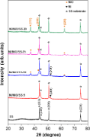


Synthesis and magnetic transitions of rare-earth-free Fe–Mn–Ni–Si-based compositionally complex alloys at bulk and nanoscale
Beilstein J. Nanotechnol. 2025, 16, 823–836, doi:10.3762/bjnano.16.62
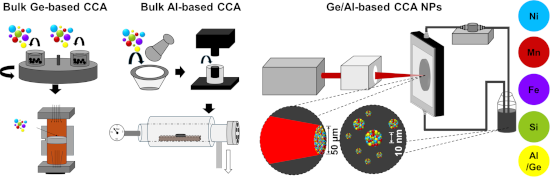
- successful in producing CCA NPs, they come with certain drawbacks. For instance, carbothermal synthesis requires an electrically conductive substrate, making it unsuitable for large-scale production [37]. Pyrolysis requires purification steps to eliminate polymer impurities and also result in phase





