


Search results
Search for "Raman spectroscopy" in Full Text gives 358 result(s) in Beilstein Journal of Nanotechnology. Showing first 200.
Revealing local structural properties of an atomically thin MoSe2 surface using optical microscopy
Beilstein J. Nanotechnol. 2022, 13, 572–581, doi:10.3762/bjnano.13.49

- molybdenum diselenide (MoSe2) flake as surface-enhanced Raman spectroscopy (SERS) platform, we demonstrate the dependency of the Raman enhancement on laser beam polarization and local structure using copper phthalocyanine (CuPc) as probe. Second harmonic generation (SHG) and photoluminescence spectroscopy
- dichalcogenide. Keywords: copper phthalocyanine; local structure; molybdenum diselenide; optical spectroscopy; surface-enhanced Raman spectroscopy; Introduction Two-dimensional (2D) materials have garnered interest for the next generation of optoelectronic and electrochemical devices, mainly owing to their
- slightly decrease the in-plane electrical conductivity, whereas mirror twin boundaries lead to photoluminescence quenching and increase the conductivity [17]. Tip-enhanced Raman spectroscopy has been successfully used to visualize the point defect-related Raman vibrational modes in monolayer WS2 and edge


Influence of thickness and morphology of MoS2 on the performance of counter electrodes in dye-sensitized solar cells
Beilstein J. Nanotechnol. 2022, 13, 528–537, doi:10.3762/bjnano.13.44
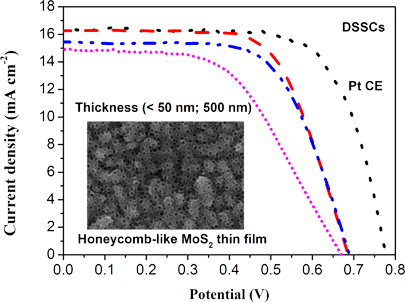
- characterized by Raman spectroscopy. The Raman spectrum of the MoS2/FTO sample showed the characteristic peaks of the 2H and 1T phases of MoS2 (Figure 4b). The appearance of the J1, J2, and J3 peaks around 150, 226, and 326 cm−1 confirmed the presence of the 1T metallic phase. Whereas the two Raman vibration
- , respectively. For comparison, DSSCs based on Pt/FTO CE (DSSCs-Pt) were also fabricated under the same conditions. Characterizations of MoS2 thin films X-ray diffraction (XRD) analysis was carried out using a D8 Advance (Bruker, Germany) with a copper anode (λKα = 1.54 Å). Raman spectroscopy measurements were


Zinc oxide nanostructures for fluorescence and Raman signal enhancement: a review
Beilstein J. Nanotechnol. 2022, 13, 472–490, doi:10.3762/bjnano.13.40
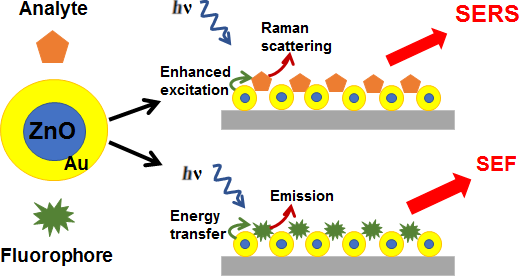
- , Romania RDI Laboratory of Applied Raman Spectroscopy, RDI Institute of Applied Natural Sciences (IRDI-ANS), Babeş-Bolyai University, Fântânele 42, 400293, Cluj-Napoca, Romania 10.3762/bjnano.13.40 Abstract Since the initial discovery of surface-enhanced Raman scattering (SERS) and surface-enhanced
- noble metal nanoparticles and the molecular fluorescence enhancement in the presence of ZnO alone and in combination with metal nanoparticles are also reviewed. Keywords: fluorescence; surface-enhanced Raman spectroscopy; ZnO–metal nanomaterials; ZnO nanostructures; Introduction Over the last decades




Investigation of electron-induced cross-linking of self-assembled monolayers by scanning tunneling microscopy
Beilstein J. Nanotechnol. 2022, 13, 462–471, doi:10.3762/bjnano.13.39
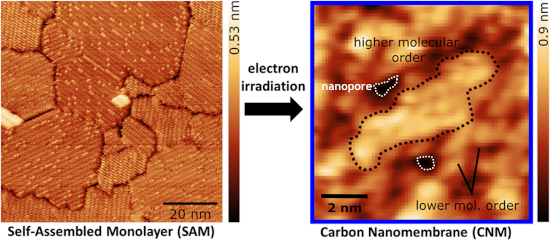
- electron energy loss spectroscopy (HREELS) [53][54], Raman spectroscopy [55], and low-energy electron microscopy (LEEM) [56] as well as by theoretical analysis [57][58][59]. It is now well established that electron irradiation leads to cleavage of C–H and S–H bonds, followed by the formation of C–C bonds


Tubular glassy carbon microneedles with fullerene-like tips for biomedical applications
Beilstein J. Nanotechnol. 2022, 13, 455–461, doi:10.3762/bjnano.13.38
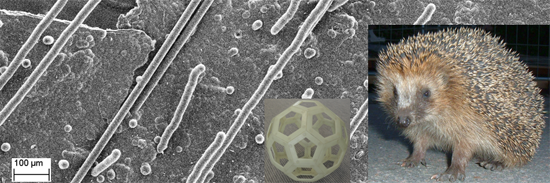
- of these glassy carbon tubules shows long-range order with a d-spacing of 4.89 Å, which is indicative of glassy carbon. Raman spectroscopy shows the material to be graphitic in nature, and SEM shows the fullerene-like structure of the material. This work provides new insights into the structure of
- work, we have shown that the pyrolysis of methane leads to the formation of glassy carbon microneedles. These were characterized and identified using a combination of SEM, Raman spectroscopy, and XRD. This simple method of preparation provides an easy and efficient alternative to previously used
- Raman spectroscopy (WiTec CRM200, laser excitation at 632.8 nm), scanning electron microscopy (SEM Leo 1530, with a spatial resolution of 1 nm at 20 kV and 3 nm at 1 kV, equipped with an energy-dispersive X-ray analysis system EDX INCA 400 from Oxford Instruments), and X-ray diffraction (STOE STADI-P


A chemiresistive sensor array based on polyaniline nanocomposites and machine learning classification
Beilstein J. Nanotechnol. 2022, 13, 411–423, doi:10.3762/bjnano.13.34
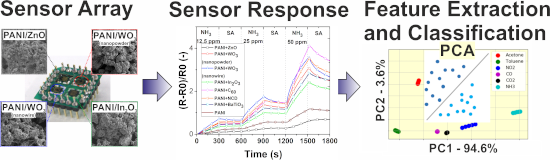
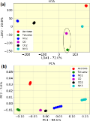
- been used for the classification of gas sensor data using a 10-fold cross-validation to reach the highest classification rate. Results and Discussion The sensors layers were investigated by scanning electron microcopy (SEM), Raman spectroscopy, current–voltage and temperature analysis, and gas sensing
- analysis. Further, statistical classification analysis was implemented for the evaluation of target gases. Scanning electron microscopy and Raman spectroscopy The surface morphology and uniformity of additives in PANI of the deposited active layers were examined by scanning electron microscopy (TESCAN
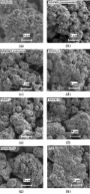
- flakes and WO3 nanowires homogeneously distributed in the layers. Pristine PANI was examined by SEM (Figure 1h) and Raman spectroscopy (Raman spectrometer Renishaw inVia Qontor) at room temperature with 633 nm excitation wavelength (Figure 2). The spectrum of pristine PANI is typical of the emeraldine




Impact of device design on the electronic and optoelectronic properties of integrated Ru-terpyridine complexes
Beilstein J. Nanotechnol. 2022, 13, 219–229, doi:10.3762/bjnano.13.16

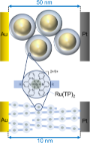
- was verified by infrared reflection absorption spectroscopy (IRRAS) and surface-enhanced Raman spectroscopy in combination with density functional theory calculations, as well as variable angle spectroscopic ellipsometry. Based on this wire formation protocol the on-chip preparation of Ru(TP)2-complex


Morphology-driven gas sensing by fabricated fractals: A review
Beilstein J. Nanotechnol. 2021, 12, 1187–1208, doi:10.3762/bjnano.12.88
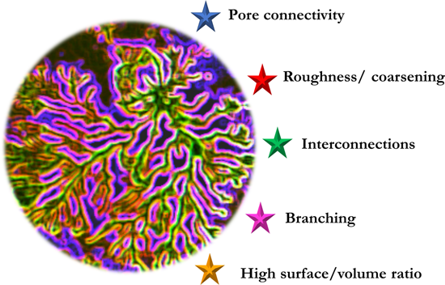
- experimental approaches. Here, lithography techniques can be implemented to write fractals of different fractal dimensions and their response under identical test conditions can be studied. Such structures can also be explored as substrates for surface-enhanced Raman spectroscopy, which finds applications in




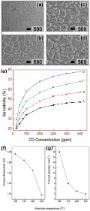
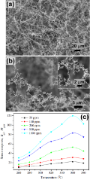


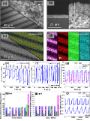

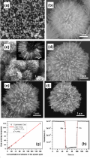



The effect of cobalt on morphology, structure, and ORR activity of electrospun carbon fibre mats in aqueous alkaline environments
Beilstein J. Nanotechnol. 2021, 12, 1173–1186, doi:10.3762/bjnano.12.87

- fibres. In this study, cobalt-decorated fibres are prepared, and the influence of carbonisation temperature on the resulting particle decoration, as well as on fibre structure and morphology is discussed. Scanning electron microscopy, Raman spectroscopy, X-ray diffraction, X-ray photoelectron
- electron microscopy (SEM), energy-dispersive X-ray spectroscopy (EDX), X-ray diffraction (XRD), X-ray photoelectron spectroscopy (XPS), Raman spectroscopy, elemental analysis, and inductively coupled plasma optical emission spectrometry (ICP-OES). In addition, the fibres were analysed in terms of their
- carbonisation temperatures, that is, the reflex becomes more intense and narrow. It also shifts towards slightly higher angles, which is related to the increasing carbon fraction [38]. The formation of graphitic carbon is also reflected in the spectra obtained from Raman spectroscopy of the fibres with and


Modification of a SERS-active Ag surface to promote adsorption of charged analytes: effect of Cu2+ ions
Beilstein J. Nanotechnol. 2021, 12, 902–912, doi:10.3762/bjnano.12.67
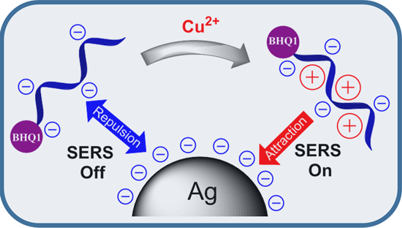
- ; oligonucleotides; porphyrin; silver nanoparticles; substrate modification; surface-enhanced Raman spectroscopy (SERS); Introduction Surface-enhanced Raman scattering (SERS) with its advantages of extreme sensitivity, high selectivity, and non-destructive nature has demonstrated great potential for the quick


A review of defect engineering, ion implantation, and nanofabrication using the helium ion microscope
Beilstein J. Nanotechnol. 2021, 12, 633–664, doi:10.3762/bjnano.12.52
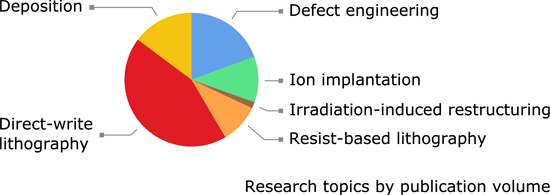
- Klein et al., the effects of ion dose on the optical and valleytronic properties of the material were investigated [36]. In this study, Raman spectroscopy was used to systematically probe the effect of increasing disorder for increasing irradiation dose, and the corresponding distance between the ion
- modify the mechanical, electronic, and magnetic properties of these materials [73]. In this work, the focus was on characterizing the accumulation of defects and structural changes for increasing dose, using correlative Raman spectroscopy and TEM. The effect of sample thinning due to sputtering on the


Properties of graphene deposited on GaN nanowires: influence of nanowire roughness, self-induced nanogating and defects
Beilstein J. Nanotechnol. 2021, 12, 566–577, doi:10.3762/bjnano.12.47
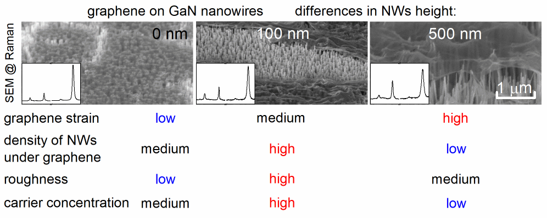
- engineering. Keywords: carrier concentration; gallium nitride; graphene; nanowires; Raman spectroscopy; scattering on defects; strain; Introduction The combination of excellent electrical and mechanical properties with interesting physical phenomena occurring in two-dimensional structures makes graphene an
- a deep understanding of the phenomena occurring on such interface. One of the most common experimental techniques for studying properties of graphene is Raman spectroscopy [10]. Non-invasive measurements of inelastic light scattering give an insight into the phonon structure of graphene. The
- influence of NWs supporting graphene and graphene strain, carrier concentration, and defects performed with higher resolution are essential. Conclusion We transferred graphene onto GaN NWs with 0, 100, and 500 nm variations in height and studied their properties by SEM and Raman spectroscopy. Graphene on




On the stability of microwave-fabricated SERS substrates – chemical and morphological considerations
Beilstein J. Nanotechnol. 2021, 12, 541–551, doi:10.3762/bjnano.12.44

- of different organic solvents and buffer solutions. Keywords: chemical stability; microwave synthesis; scanning electron microscopy; silver nanoparticles; surface-enhanced Raman spectroscopy; Introduction Surface-enhanced Raman spectroscopy (SERS) has been developed into a standard analytical tool
- substrates is studied via scanning electron microscopy (SEM) and their impact on the SERS enhancement capabilities of the substrates is evaluated by Raman spectroscopy (Figure 1b). For this purpose, all treated substrates are carefully rinsed after immersion into the solvents and buffers and are subsequently
- (methanol, ethanol, DMF, toluene, and DMSO) were used without further purification. 4-ATP was also utilized as purchased. Preparation of surface-enhanced Raman spectroscopy substrates A silver acetate precursor solution was used as a metal salt and ethanol was utilized as a reducing agent. Commercially


Surface-enhanced Raman scattering of water in aqueous dispersions of silver nanoparticles
Beilstein J. Nanotechnol. 2021, 12, 497–506, doi:10.3762/bjnano.12.40

- the world and a vital substance for every living organism. Despite being so abundant, water is still not an entirely known substance [2][3]. Raman spectroscopy is a very useful technique to study the water structure and molecular interactions in liquid water [4]. Analyses of Raman spectra of water in
- AgNPs were studied by UV–vis and Raman spectroscopy without any purification. Characterization of silver nanoparticles The absorption spectra of AgNP dispersions were obtained by using double-beam UV–vis–NIR spectrophotometer (Cary 5000 - Varian) in the 200–800 nm range in relation to pure water, used
- (received from Merck). Raman spectroscopy The Raman spectra were obtained by using a T64000 (Jobin Yvon) triple-grating spectrometer (Ar laser excitation line – 514.5 nm) with a spectral resolution of approx. 0.5 cm−1. The measurements were carried out in a macro chamber, in a spectrofluorometric QX quartz


Solution combustion synthesis of a nanometer-scale Co3O4 anode material for Li-ion batteries
Beilstein J. Nanotechnol. 2021, 12, 424–431, doi:10.3762/bjnano.12.34
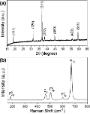
- Raman spectroscopy (RS) measurements. The experimental results from both techniques are shown in Figure 1 and they are complementary. The XRD pattern presented in Figure 1a reveals seven peaks located at 19°, 31.3°, 36.8°, 38.7°, 44.8°, 55.8°, and 59.4°, which correspond to the (111), (220), (311), (222
- Raman spectroscopy (RS). XRD data was acquired using a SIEMENS D500 diffractometer equipped with a Cu Kα (λXRD = 1.542 Å) radiation source. The room-temperature XRD pattern in the range of 15° ≤ 2θ ≤ 60° was collected with a step size of 0.002° and an acquisition time of 3 s per step. The RS experiments


Nickel nanoparticle-decorated reduced graphene oxide/WO3 nanocomposite – a promising candidate for gas sensing
Beilstein J. Nanotechnol. 2021, 12, 343–353, doi:10.3762/bjnano.12.28
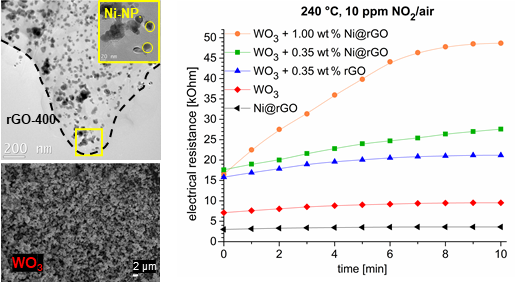
- using XPS and Raman spectroscopy. Such bonds can play an important role also in our case with regard to charge transfer. It has been established that adsorption of NO2 molecules will cause upward band bending by capturing free electrons from the conduction band and shift the Fermi level of WO3 away from


Scanning transmission helium ion microscopy on carbon nanomembranes
Beilstein J. Nanotechnol. 2021, 12, 222–231, doi:10.3762/bjnano.12.18
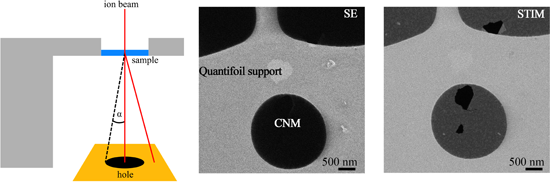
- , HIM and Raman spectroscopy were performed on the samples after the EFTEM experiments. The SE image in Figure 7b shows that membrane turned brighter in the areas previously imaged with EFTEM, which is indicative of a higher electric conductivity, as demonstrated in the following. In Figure 7c, a Raman


Paper-based triboelectric nanogenerators and their applications: a review
Beilstein J. Nanotechnol. 2021, 12, 151–171, doi:10.3762/bjnano.12.12






Bulk chemical composition contrast from attractive forces in AFM force spectroscopy
Beilstein J. Nanotechnol. 2021, 12, 58–71, doi:10.3762/bjnano.12.5

- measurements are easier to implement, since no additional sample preparation is necessary [20]. There is a number of AFM-based methods, such as tip-enhanced Raman spectroscopy (TERS) [21], AFM-based infrared spectroscopy (AFM-IR) [16][22], noncontact AFM (ncAFM ) [23][24], chemical AFM (cAFM) [25][26], and


ZnO and MXenes as electrode materials for supercapacitor devices
Beilstein J. Nanotechnol. 2021, 12, 49–57, doi:10.3762/bjnano.12.4
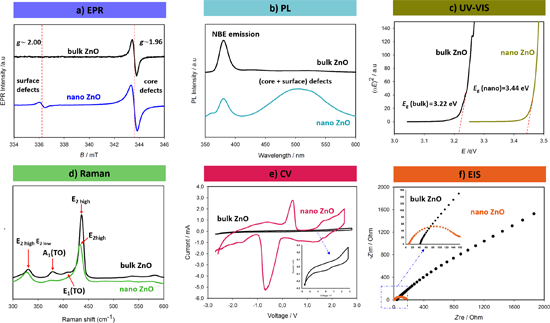
- , which is expected due to the quantum confinement effect [13]. Another crucially important optical characterization technique for the investigation of defects is Raman spectroscopy. The phonon vibration modes are highly sensitive to the existence of point defects, which are reflected in distinct spectral
- tantalum carbide MXene sheets was carried out using X-ray diffraction measurements (XRD), field-emission scanning electron microscopy (FE-SEM), transmission electron microscopy (TEM), and Raman spectroscopy. The results of XRD, FE-SEM, and Raman showed that tantalum carbide MXenes are layered solid
- . Nanometer-sized ZnO shows a significant increase in bandgap due to quantum confinement effects [7][8][9]. (d) Structural changes of ZnO during the size reduction from bulk to the nanoscale can be tracked via Raman spectroscopy. Nanoscale ZnO exhibits significant blueshift, broadening, and softening of the
Towards 3D self-assembled rolled multiwall carbon nanotube structures by spontaneous peel off
Beilstein J. Nanotechnol. 2020, 11, 1865–1872, doi:10.3762/bjnano.11.168

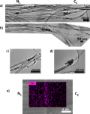
- . Characterization MWCNT structures were characterized by SEM (Jeol 840F operated at 5 kV and a Zeiss NVision FIB microscope equipped with an in-lens and a backscattered-electron detector, also operated at 5 kV) and by Raman spectroscopy (JY Horiba Labram Aramis imaging confocal Raman microscope equipped with a 532



Nanomechanics of few-layer materials: do individual layers slide upon folding?
Beilstein J. Nanotechnol. 2020, 11, 1801–1808, doi:10.3762/bjnano.11.162

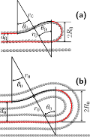
- thickness range. In contrast, tip-enhanced Raman spectroscopy measurements on edges in folded graphene flakes, 14 layers thick, show no significant strain. This indicates that layers in graphene flakes, up to 5 nm thick, can still slip to relieve stress, showing the richness of the effect in 2D systems. The
- methods; atomic force microscopy (AFM); molecular dynamics (MD); Raman spectroscopy; nanostructured materials; Introduction Layered materials such as graphite, talc, and transition metal dichalcogenides (TMDs), held together by strong covalent bonds within layers and relatively weak van der Waals
- any 2D material and not restricted to talc. This hypothesis was investigated employing a near-field tip-enhanced Raman spectroscopy (TERS) setup [36][37] that can probe strain variations across the edge of a folded graphene flake of 5 nm thickness (see Supporting Information File 1, section “Near
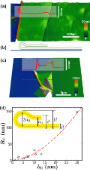

![[Graphic 5]](/bjnano/content/inline/2190-4286-11-162-i8.svg?max-width=637&scale=1.18182) =
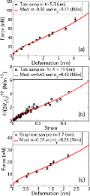
= ![[Graphic 6]](/bjnano/content/inline/2190-4286-11-162-i9.svg?max-width=637&scale=1.18182) as a function of 1/h for the nine measured talc samples. h is a directly measured ...
as a function of 1/h for the nine measured talc samples. h is a directly measured ...
The influence of an interfacial hBN layer on the fluorescence of an organic molecule
Beilstein J. Nanotechnol. 2020, 11, 1663–1684, doi:10.3762/bjnano.11.149
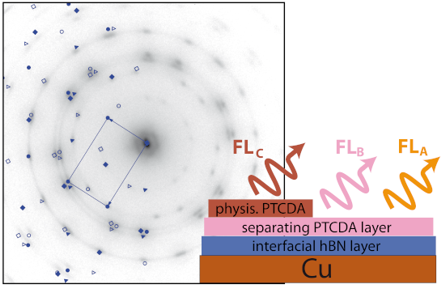
- -perylene tetracarboxylic dianhydride (PTCDA); Raman spectroscopy; Introduction In recent years, two-dimensional materials (2DMs) have been established as a highly interesting field of studies, both in regard to their fundamental physical properties as well as their potential for technical applications [1
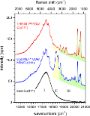
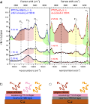
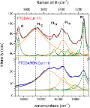
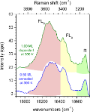
- cm−1 in Figure 2 exhibit Raman shifts that correspond to the energies of the vibrational modes of PTCDA adsorbed on surfaces observed before [41][42]. The vibronic modes of PTCDA that can be observed in Raman spectroscopy are Ag, B1g, B2g, and B3g modes, with the most prominent modes being Ag modes
- small quantity of molecules can be observed here at all is attributed to surface-enhanced Raman scattering (SERS) [45]. This effect is most commonly observed on rough surfaces of noble metals [45] or at metal nanostructures [46], and it is utilized in surface-enhanced Raman spectroscopy [47]. There are





High-responsivity hybrid α-Ag2S/Si photodetector prepared by pulsed laser ablation in liquid
Beilstein J. Nanotechnol. 2020, 11, 1596–1607, doi:10.3762/bjnano.11.142

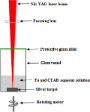
- , Shimadzu) was employed to estimate the chemical composition of the Ag2S NPs. The morphology and size of the nanocrystals were examined via transmission electron microscopy (TEM; EM208, Philips). Raman spectroscopy was performed on colloidal Ag2S and thiourea solution using a Raman spectrometer (Bruker




Fabrication of nano/microstructures for SERS substrates using an electrochemical method
Beilstein J. Nanotechnol. 2020, 11, 1568–1576, doi:10.3762/bjnano.11.139

- /nanopore; nano/microstructures; SERS substrate; Introduction Surface-enhanced Raman spectroscopy (SERS) can be used to detect biomolecules [1][2][3], explosives [4][5][6], and pesticide residues [7][8][9]. Plasmonic metal nanostructures are often used as SERS substrates to increase the molecule-specific
- Raman signal by several orders of magnitude. The functionality of SERS is due to a combination of surface electron movement in the substrate and charge transfer between substrate and the analyte molecules, in contrast to the typical signal intensity elicited during spontaneous Raman spectroscopy, which





