
Search results
Search for "activity" in Full Text gives 813 result(s) in Beilstein Journal of Nanotechnology. Showing first 200.
Facile one-step radio frequency magnetron sputtering of Ni/NiO on stainless steel for an efficient electrode for hydrogen evolution reaction
Beilstein J. Nanotechnol. 2025, 16, 837–846, doi:10.3762/bjnano.16.63
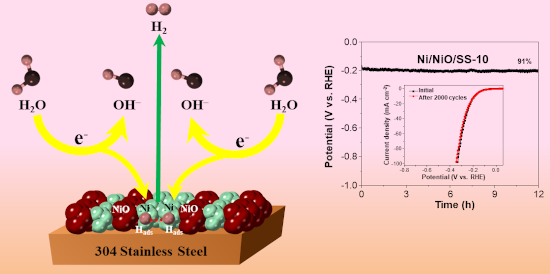
- , which could reduce the catalytic activity of metallic Ni phases [52]. Meanwhile, metallic Ni phases favor the recombination of Hads to produce H2 gas, implying a perfect pair of Ni/NiO for the HER catalytic process [53][54][55]. Therefore, the Ni/NiO/SS-10 electrode exhibits higher HER activity than SS
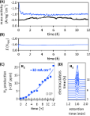
- catalytic activity than the other samples. Also, the turnover frequency (TOF) is a vital factor for investigating the intrinsic catalytic activities of electrodes for the HER [56]. Hence, we determined the TOF of different electrodes at an overpotential of 200 mV for comparison. The TOF of Ni/NiO/SS-10 is


Supramolecular hydration structure of graphene-based hydrogels: density functional theory, green chemistry and interface application
Beilstein J. Nanotechnol. 2025, 16, 806–822, doi:10.3762/bjnano.16.61
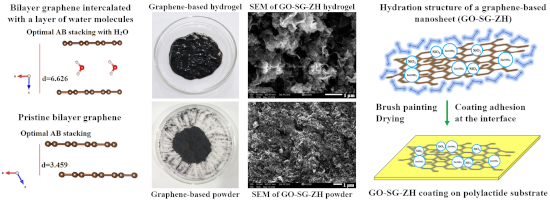
- antibacterial activity against E. coli and S. aureus (the positive control was the antibiotic penicillin). Inhibition zone assays were used to evaluate antibiofilm properties of uncoated and coated plastic films [14][25]. Coating stability of plastic films in an environment simulating aqueous food was tested
- GO sharp edges with bacterial membranes [57][58]. The crucial antibacterial activity of ZH nanostructures is the delivery of Zn2+ ions to disrupt bacterial membranes and intracellular processes [59][60]. Antibacterial activity of the GO-SG-ZH hydrogel was tested in agar well diffusion assays (Figure
- sustainability. The GO-SG-ZH hydrogel is a supramolecular hydration structure with the advantages of aqueous dispersibility, antibacterial activity, and hydration lubrication. Water evaporation analysis suggested that the last 4% of water in the GO-SG-ZH hydrogel are interfacial hydration shells on graphene


Serum heat inactivation diminishes ApoE-mediated uptake of D-Lin-MC3-DMA lipid nanoparticles
Beilstein J. Nanotechnol. 2025, 16, 740–748, doi:10.3762/bjnano.16.57
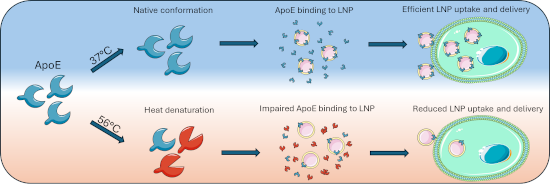
- total siRNA was added and incubated for 48 h. Lipofectamine RNAiMAX (ThermoFisher) was used as a positive control according to manufacturer’s protocol. Afterwards, luciferase activity was determined using the Dual-Luciferase reporter system kit (Promega) according to manufacturer’s instructions. In
- (Molecular Devices). Subsequently, the second reagent is added which quenches firefly luminescence and provides the Renilla substrate. After 10 min, Renilla luminescence is measured as an internal control to account for any non-specific luciferase activity knockdown such as treatment induced cell death. A
- results, MC3 LNPs knocked down ≈89% of U87 and ≈94% of MDA-MB-231 firefly luciferase activity in NHI FCS, while the same particles in HI FCS achieved 61% and ≈81% silencing, respectively. The addition of recombinant ApoE improved knockdown efficiency to ≈93% for U87 and >95% for MDA-MB-231 (Figure 5


Synthesis of a multicomponent cellulose-based adsorbent for tetracycline removal from aquaculture water
Beilstein J. Nanotechnol. 2025, 16, 728–739, doi:10.3762/bjnano.16.56
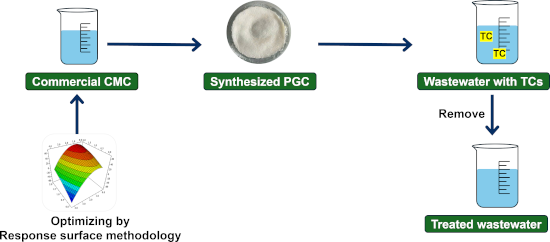
- studies indicate that oxytetracycline (OTC), a TC derivative, is the predominant antibiotic used in Vietnam’s white leg shrimp farming industry, particularly during the 10–30 day and 30–45 day rearing periods [5]. The extensive use of OTC is primarily attributed to its broad-spectrum activity, rendering


Efficiency of single-pulse laser fragmentation of organic nutraceutical dispersions in a circular jet flow-through reactor
Beilstein J. Nanotechnol. 2025, 16, 711–727, doi:10.3762/bjnano.16.55
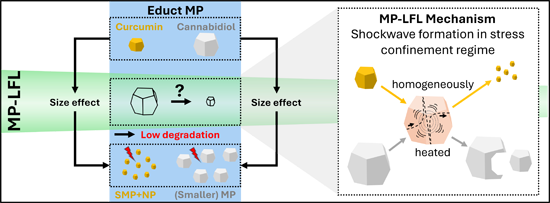
- greater intracellular uptake and increased cytotoxicity on rat C6 glioma cells [36]. Laser-generated nanoscale cinnamon was also synthesized and showed enhanced antibacterial activity against Gram-negative and Gram-positive bacteria after particle size reduction compared to the unirradiated educt [37


Nanostructured materials characterized by scanning photoelectron spectromicroscopy
Beilstein J. Nanotechnol. 2025, 16, 700–710, doi:10.3762/bjnano.16.54
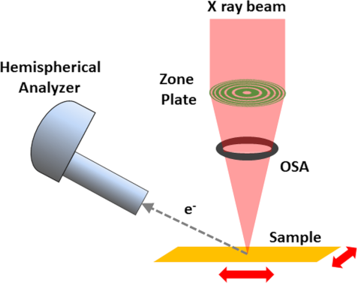
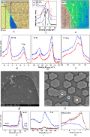
- (Italy) within the framework of the NFFA-Europe Transnational Access Activity.


Colloidal few layered graphene–tannic acid preserves the biocompatibility of periodontal ligament cells
Beilstein J. Nanotechnol. 2025, 16, 664–677, doi:10.3762/bjnano.16.51
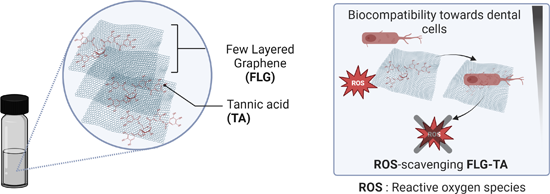
- TA molecules demonstrated antioxidant activity. We assume that the granules observed in TEM micrographs (Figure 1E) are probably TA aggregates that partially retain their antioxidant properties. These findings align with previous studies where TA was reported to form aggregates through intermolecular
- suspension could not be determined owing to uncontrolled heating of the cell during illumination of the black suspension with laser light. FLG–TA preserves the metabolic activity of PDL cells Previous findings demonstrated that TA adheres to the surface of graphene layers, with a portion of it retaining its
- the metabolic activity of PDL cells. TA’s cytotoxicity on PDL cells was first tested. Note that in each experiment the amount of free TA acid per unit volume (Figure 3A) was compared with a concentration of the FLG–TA composite incorporating the same amount of TA (Figure 3B) remembering that almost




A formulation containing Cymbopogon flexuosus essential oil: improvement of biochemical parameters and oxidative stress in diabetic rats
Beilstein J. Nanotechnol. 2025, 16, 617–636, doi:10.3762/bjnano.16.48
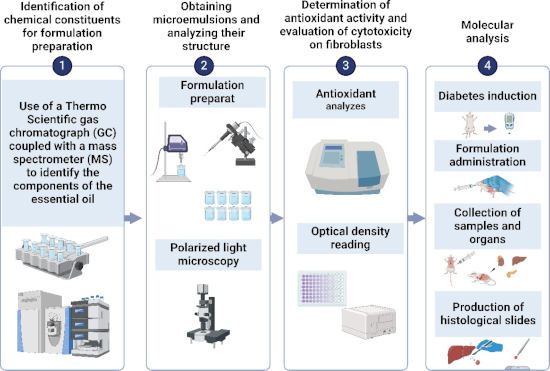
- bactericidal, antiviral, antifungal, antioxidant, and hypoglycemic effects. Therefore, this study aims to obtain a microemulsified formulation containing the essential oil of Cymbopogon flexuosus (EOCF) and to evaluate its antioxidant and antidiabetic activity in diabetic rats. The microemulsion (ME) was
- obtained after consulting the corresponding pseudoternary phase diagram and showed stability, isotropy, Newtonian behavior, nanometric size (15.2 nm), and pH 4.2. Both EOCF and the ME showed high antioxidant activity, but the ME resulted in greater antioxidant activity, potentiating the activity of
- activity and showing promising results for use in the treatment of DM via the oral route. Keywords: diabetes mellitus; essential oil; lemongrass; microemulsion; Introduction Diabetes mellitus (DM) is one of the main public health problems. It affects around 463 million people worldwide, and it could




Polyurethane/silk fibroin-based electrospun membranes for wound healing and skin substitute applications
Beilstein J. Nanotechnol. 2025, 16, 591–612, doi:10.3762/bjnano.16.46
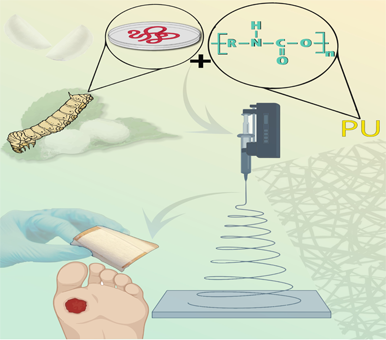
- functional similarities as both serve as supportive framework. Electrospun membranes are specifically designed to replicate the fibrous architecture and functional properties of the ECM, thereby promoting cellular activity and facilitating tissue regeneration in the same way the natural matrix does within
- applications without affecting the structure or bioactivity. The effective encapsulation of STZ was confirmed by FTIR, and the nanofibers showed high cytocompatibility in cell viability tests. STZ was released from nanofibers over 6 h, and its antibacterial activity was demonstrated through the formation of a



Feasibility analysis of carbon nanofiber synthesis and morphology control using a LPG premixed flame
Beilstein J. Nanotechnol. 2025, 16, 581–590, doi:10.3762/bjnano.16.45
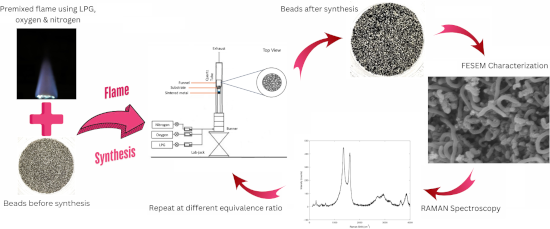
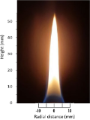
- higher-temperature environment, which accelerates the breakdown of hydrocarbon molecules into free carbon atoms. The carbon atoms, in the absence of efficient catalytic activity, aggregate to form amorphous carbon rather than ordered structures such as CNFs as shown in Figure 7a. In contrast, at an



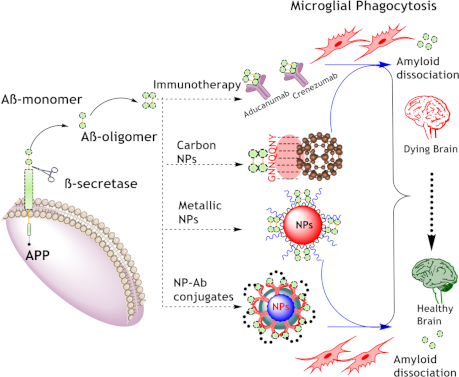
Nanomaterials in targeting amyloid-β oligomers: current advances and future directions for Alzheimer's disease diagnosis and therapy
Beilstein J. Nanotechnol. 2025, 16, 561–580, doi:10.3762/bjnano.16.44


Zeolite materials with Ni and Co: synthesis and catalytic potential in the selective hydrogenation of citral
Beilstein J. Nanotechnol. 2025, 16, 520–529, doi:10.3762/bjnano.16.40
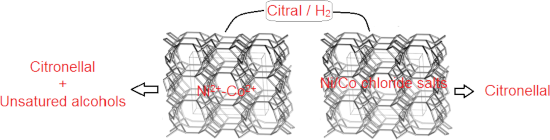
- Ni2+ isolated cations, attributed to synergistic interactions that weakened the cation–framework binding. Catalytic activity tests showed that nickel species were primarily responsible for citronellal formation. Among all materials, the bimetallic CoNiIE catalyst, prepared by IE, was the only one to
- the only one to show activity for the hydrogenation of citral to the unsaturated alcohols geraniol and nerol (Figure 5), albeit in small quantities. In contrast, the bimetallic CoNiZImp shows lower citral conversion, with no formation of unsaturated alcohols detected. This discrepancy between the
- be discussed later. The catalytic activity of the CoNiZIE catalyst in the selective hydrogenation of citral to unsaturated alcohols (geraniol and nerol) can be attributed to a synergistic interaction between cobalt and nickel species. These active species are likely associated with isolated cations


Synthetic-polymer-assisted antisense oligonucleotide delivery: targeted approaches for precision disease treatment
Beilstein J. Nanotechnol. 2025, 16, 435–463, doi:10.3762/bjnano.16.34
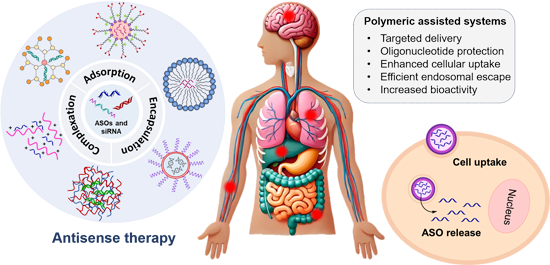
- activity and immune-related adverse effects, limiting their clinical application [12][13]. Antisense oligonucleotide-based therapies have garnered great attention as precision disease treatments because of their increased target specificity and resistance to nuclease degradation, as well as enhanced
- treat of homozygous familial hypercholesterolemia, hereditary transthyretin-mediated amyloidosis, and familial chylomicronemia syndrome, respectively [34]. Additionally, some modified ODNs have been designed to possess intrinsic enzymatic activity through the incorporation of ribozymes and DNAzymes
- intact after RNase treatment. In addition, the εPLL-modified GNPs exhibited high gene-silencing activity in HeLa-Luc cells, indicating efficient delivery of ASOs and other splice switching oligonucleotides, such as anti-microRNAs and DNAzymes, into the cells. The following year, Le Vay et al. designed a


Quantification of lead through rod-shaped silver-doped zinc oxide nanoparticles using an electrochemical approach
Beilstein J. Nanotechnol. 2025, 16, 422–434, doi:10.3762/bjnano.16.33
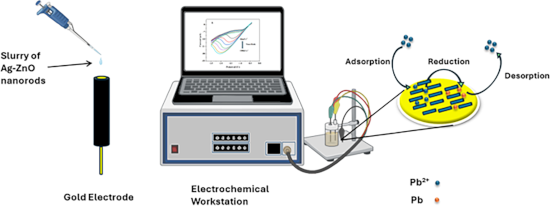
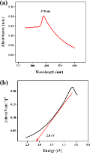
- , India Department of Physics, Punjab Engineering College (Deemed to be University), Chandigarh, 160012, India 10.3762/bjnano.16.33 Abstract Special features of zinc oxide nanoparticles have drawn a lot of interest due to their wide bandgap, high surface area, photocatalytic activity, antimicrobial
- activity, and semiconductor properties. By doping ZnO nanoparticles with transition metals, we can alter their electrical, optical, and magnetic properties by introducing new electronic states into the band structure. Herein, Ag is added to ZnO nanostructures to improve their optical properties to detect
- of oxygen on the surface by means of the formation of oxygen vacancies, leading to enhanced catalytic activity. Also, the small doping of Ag introduces more active sites on the catalyst surface, potentially improving the overall catalytic activity [12][13]. This study demonstrates an efficient and




ReactorAFM/STM – dynamic reactions on surfaces at elevated temperature and atmospheric pressure
Beilstein J. Nanotechnol. 2025, 16, 397–406, doi:10.3762/bjnano.16.30
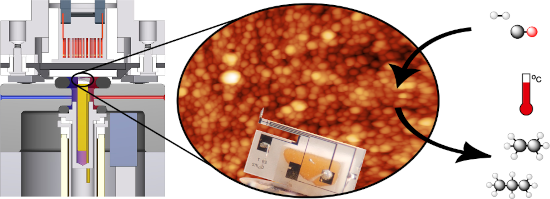
- AFM; model catalysts; nc-AFM; operando catalysis; qPlus tuning fork sensor; Introduction Operando catalysis is the field of research that monitors the structure, composition, and morphology of a catalyst while simultaneously investigating its activity, reactivity, and selectivity under industrially


Development of a mucoadhesive drug delivery system and its interaction with gastric cells
Beilstein J. Nanotechnol. 2025, 16, 371–384, doi:10.3762/bjnano.16.28
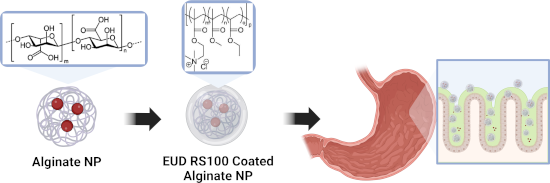
- the drugs within the mucus microenvironment of the stomach and, thus, may lead to elevated local activity or absorption of the therapeutic agents from the mucosa. Results and Discussion Morphology of nanoparticles After the synthesis of alginate (Alg) and Eudragit-coated alginate (EudAlg
- 595 nm with a microplate reader (BioTek Synergy H1). From these optical density values, percent reduction values (representing the metabolic activity) were calculated for each time point. Data is represented as percent viability, which was calculated by the formula below. The viability percentages of


Pulsed laser in liquid grafting of gold nanoparticle–carbon support composites
Beilstein J. Nanotechnol. 2025, 16, 349–361, doi:10.3762/bjnano.16.26
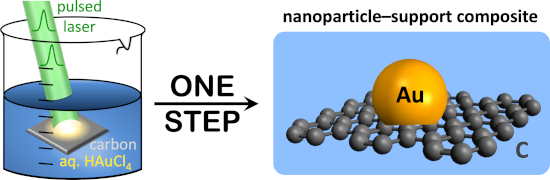
- pulses in liquids has been reported [43]. A generation of similar concave edges occurs in twinning. Twinned gold nanoparticles have been found to exhibit enhanced electrocatalytic activity in reductions because of an increased number of undercoordinated surface sites [44]. XPS data corroborate the
- pulsed laser-grafted over conventionally prepared cathodes. Chronoamperometry data, collected at a constant applied potential of −1.3 V vs RHE, showed enhanced stability and mass activity of the pulsed laser-grafted gold nanoparticle–carbon fiber paper composite, compared to an analogous conventionally
- evaluation of the bicarbonate mass activity because larger gold nanoparticles have been found to be inferior reduction catalysts [69], especially gold nanoparticles larger than 10 nm [70]. Hence, we err on the side of underestimating the benefits of pulsed laser grafting for gold nanoparticle–carbon fiber


Fabrication and evaluation of BerNPs regarding the growth and development of Streptococcus mutans
Beilstein J. Nanotechnol. 2025, 16, 308–315, doi:10.3762/bjnano.16.23
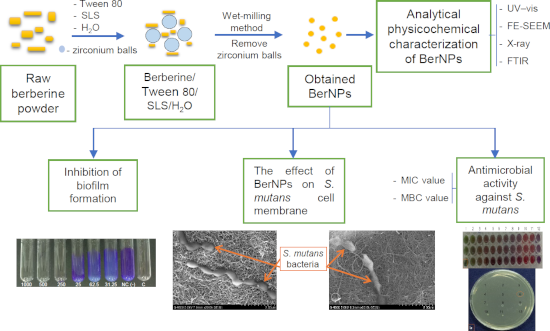
- -transform infrared spectroscopy. The broth dilution method was used to determine the antimicrobial activity of the BerNPs against Streptococcus mutans (S. mutans). The impact of the BerNPs on the cell surface of S. mutans was evaluated through FE-SEM analysis, focusing on its ability to inhibit biofilm
- plaque formation associated with caries damage. Therefore, one of the initial steps in preventing dental caries is to reduce and inhibit the activity of S. mutans in the oral cavity [8]. Tooth decay and oral infections are typically controlled with antibiotics. However, the proliferation of drug
- -inflammatory properties [9]. With its antibacterial activity, berberine can accumulate in bacterial cells and bind to single- and double-stranded DNA, causing DNA damage. According to evaluations, berberine has a stronger antibacterial effect against gram-positive bacteria than against gram-negative bacteria




Enhancing mechanical properties of chitosan/PVA electrospun nanofibers: a comprehensive review
Beilstein J. Nanotechnol. 2025, 16, 286–307, doi:10.3762/bjnano.16.22
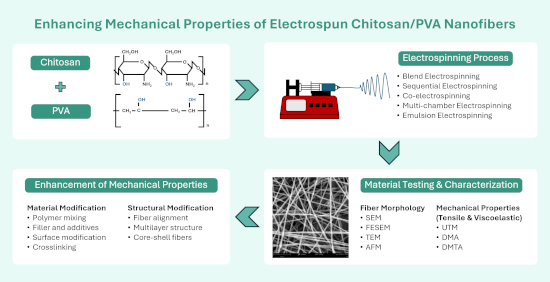
- improved the antimicrobial activity of the nanofibers against a wide range of bacteria [190]. In tissue engineering applications, aligned fibers are particularly effective as they better mimic the inductive environment, such as that of human tendon stem/progenitor cells, compared to random fibers [191
- unique properties such as biodegradability, biocompatibility, and antibacterial activity, which are considered effective in promoting wound healing. The presence of chemical structures like glycosaminoglycans in chitosan mimics the ECM and provides a hemostatic effect, thereby accelerating the healing


Emerging strategies in the sustainable removal of antibiotics using semiconductor-based photocatalysts
Beilstein J. Nanotechnol. 2025, 16, 264–285, doi:10.3762/bjnano.16.21
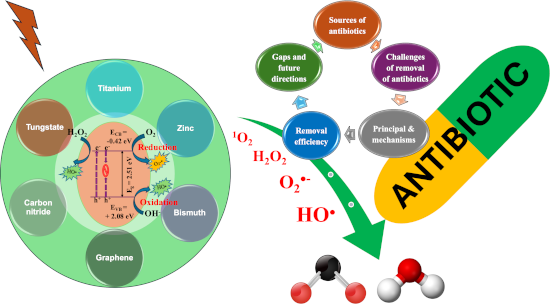
- advanced methods, including sol–gel, hydrothermal, solvothermal, precipitation and template-assisted techniques [53]. The synthesis method chosen often depends on factors such as the desired crystal structure, particle size, surface area, and photocatalytic activity required for the specific application
- effective segregation of light-induced charge carriers allows the CB of the second semiconductor and the VB of the first semiconductor to engage in reduction and oxidation processes, thus enhancing the photocatalytic activity. Although type-II heterojunctions can restrict photogenerated charge recombination
- applications where natural light is abundant. Although TiO2 has a high photocatalytic activity under UV light, its practical use is limited because of rapid electron–hole recombination and insufficient visible light absorption [65]. Hence, it is critical to develop effective strategies to enhance TiO2 activity



Preferential enrichment and extraction of laser-synthesized nanoparticles in organic phases
Beilstein J. Nanotechnol. 2025, 16, 254–263, doi:10.3762/bjnano.16.20
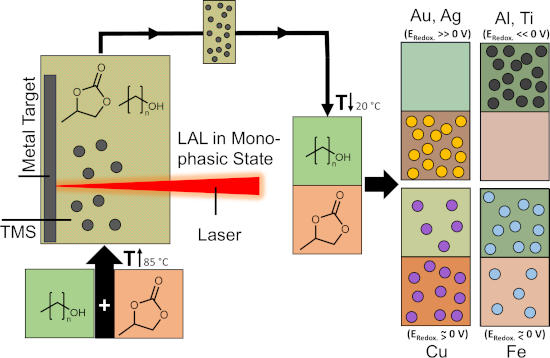
- of gold in acetone did not lead to carbon shells, whereas the formation of carbon shells during the LAL of copper in acetone has been reported [35]. This observation was discussed to be linked to the catalytic activity of copper for C–C bond formation [53][54]. Accordingly, a stronger carbon




Radiosensitizing properties of dual-functionalized carbon nanostructures loaded with temozolomide
Beilstein J. Nanotechnol. 2025, 16, 229–251, doi:10.3762/bjnano.16.18
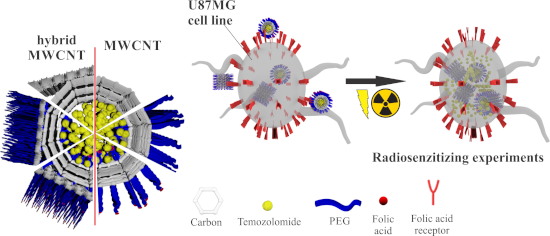
- photodynamic therapy can be obtained [1][2][3][4][5]. It has been shown that CNs have an anti-amyloid aggregation activity, and some of them (i.e., carbon nanotubes (CNTs) and graphene) are able to interface with neurons and neuronal circuits and play an important role in the modulation of neurobiological
- processes, including neuroregeneration, neuronal differentiation, and stimulation of neuronal electrical signalization and brain activity. Thus, they are promising materials for new products regarding tissue engineering and prosthetic neuronal devices [6][7][8]. There is also an evidence that CNs manifest
- enable transport and delivery to brain tumors. Inorganic nanostructures as TMZ carriers have shown several advantages compared to organic ones with respect to physicochemical stability and potency/cytotoxic activity, overcoming their main disadvantages, that is, hydrophobicity/fluidity and toxicity by




Synthesis and the impact of hydroxyapatite nanoparticles on the viability and activity of rhizobacteria
Beilstein J. Nanotechnol. 2025, 16, 216–228, doi:10.3762/bjnano.16.17
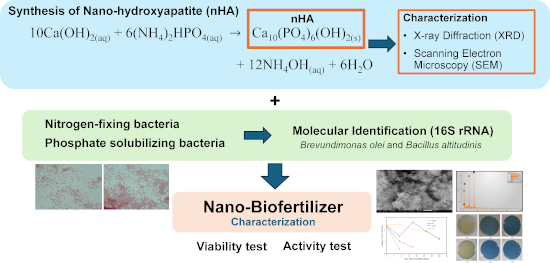
- as Fe, Al, and Ca. Thus, soluble phosphate forms that plants can absorb are formed. The organic acids generated by rhizobacteria facilitate the formation of phosphate complexes, producing H2PO4− and the subsequent appearance of clear zones within the medium [35][36]. Nitrogen-fixing activity of
- rhizobacteria-nHA The nitrogen-fixing activity of rhizobacteria after loading onto the nHA carrier was evaluated qualitatively by monitoring the color transition in nitrogen-free bromothymol (NFB) medium from yellow to blue. The results presented in Table 6 and Figure 7 indicate that all rhizobacteria loaded
- rhizobacteria, Pd and Tb rhizobacteria, decreased. nHA utilized as a carrier for rhizobacteria demonstrated good compatibility, as the loaded rhizobacteria retained their phosphate-solubilization activity, evident from the appearance of clear zones. Additionally, the nitrogen-fixing activity was maintained as


Recent advances in photothermal nanomaterials for ophthalmic applications
Beilstein J. Nanotechnol. 2025, 16, 195–215, doi:10.3762/bjnano.16.16
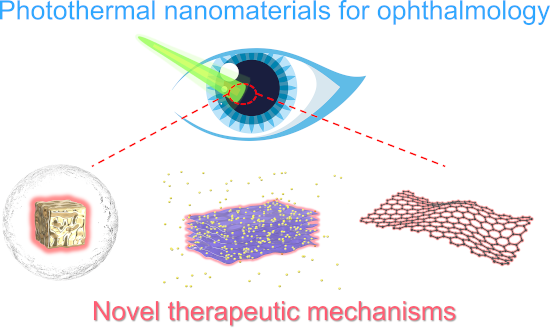
- boundaries of thermal therapy, achieving unparalleled therapeutic effects through their diverse composite structures and demonstrating enormous potential in promoting retinal drug delivery and photoacoustic imaging. This paper provides a comprehensive summary of the structure–activity relationship between
- nanomaterials for treating various ophthalmic diseases, including ocular tumors, glaucoma, cataracts, vitreous opacity, endophthalmitis, and decreased visual acuity. It also summarizes the structure–activity relationships between the photothermal properties of these materials and novel therapeutic mechanisms
- synthesis of AuNPs and served as a surface coating for AuNPs, promoting the coupling of DOX, enhancing anti-tumor activity, and improving the biocompatibility of AuNPs. The significant extinction coefficient of these nanoparticles enhances the contrast in photoacoustic imaging within the tumor region


Clays enhanced with niobium: potential in wastewater treatment and reuse as pigment with antibacterial activity
Beilstein J. Nanotechnol. 2025, 16, 141–154, doi:10.3762/bjnano.16.13
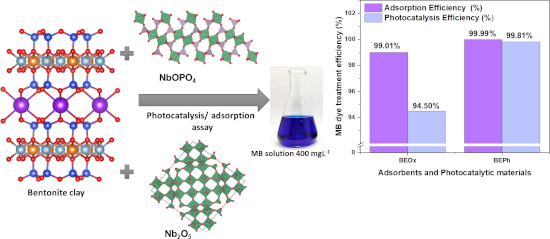
- cereus (ATCC 10876) and Proteus mirabilis (ATCC 35649). The analysis revealed remarkable antibacterial activity against Proteus mirabilis, suggesting a preferential selectivity for Gram-negative bacteria. Keywords: adsorption; bentonite; hybrid pigment; niobium; photocatalysis; water remediation
- characterized through colorimetric analysis (CIEL*a*b*) and UV–vis spectroscopy. Antimicrobial activity test The antimicrobial properties of the BEPh, BEOx, A-BEPh, A-BEOx, A-BEPhP, and A-BEOxP samples were investigated against the bacteria Bacillus cereus (ATCC 10876) (Gram-positive) and Proteus mirabilis
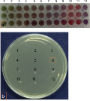
- of the TTC dye (0.125% w/v - 2,3,5-triphenyltetrazolium chloride 0.125%) (NEON®) was added to all wells, and the plate was kept in an oven for an additional two hours. The antibacterial activity was determined by MIC, observing the presence/absence of viable bacteria due to the reaction of the TTC