
Search results
Search for "chemistry" in Full Text gives 1165 result(s) in Beilstein Journal of Nanotechnology. Showing first 200.
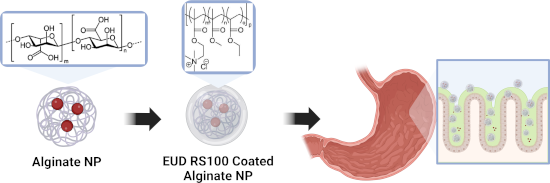
Development of a mucoadhesive drug delivery system and its interaction with gastric cells
Beilstein J. Nanotechnol. 2025, 16, 371–384, doi:10.3762/bjnano.16.28
- percentages ranging from 45% to 73% [62]. They concluded that this difference was not only due to the charge of the nanoparticles but also due to the different sizes of the formulations. In a recent study, the effects of surface charge and chemistry of the nanoparticles on their penetration abilities were


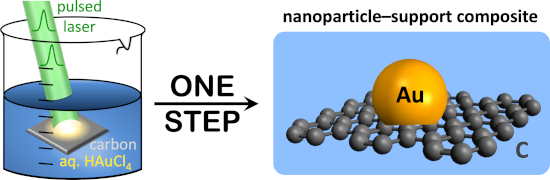
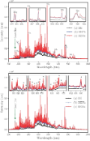
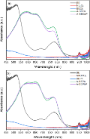
Pulsed laser in liquid grafting of gold nanoparticle–carbon support composites
Beilstein J. Nanotechnol. 2025, 16, 349–361, doi:10.3762/bjnano.16.26
- Madeleine K. Wilsey Teona Taseska Qishen Lyu Connor P. Cox Astrid M. Muller Material Science Program, University of Rochester, Rochester, New York 14627, United States Department of Chemical Engineering, University of Rochester, Rochester, New York 14627, United States Department of Chemistry
- reactive pulsed laser in liquid nanomaterial fabrication [1]. Reductive and oxidative solution chemistries are widely available and well investigated in wet chemistry contexts [17][77][78][79][80][81]. Our novel ability to utilize general solution chemistry toolkits to prepare tailored nanoparticles


Graphene oxide–chloroquine conjugate induces DNA damage in A549 lung cancer cells through autophagy modulation
Beilstein J. Nanotechnol. 2025, 16, 316–332, doi:10.3762/bjnano.16.24
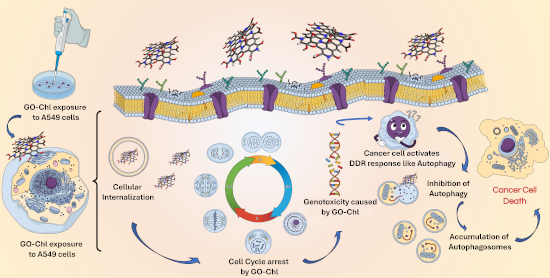
- , until a dark brownish precipitate appeared, followed by addition of 1.5 mL of H2O2 (30%) and 100 mL of ice-cold ultrapure water to stop the oxidation reaction and eliminate unreacted KMnO4. The chemistry involved in the chemical exfoliation of graphite is shown in Figure 1. The purified graphitic sheets



Emerging strategies in the sustainable removal of antibiotics using semiconductor-based photocatalysts
Beilstein J. Nanotechnol. 2025, 16, 264–285, doi:10.3762/bjnano.16.21
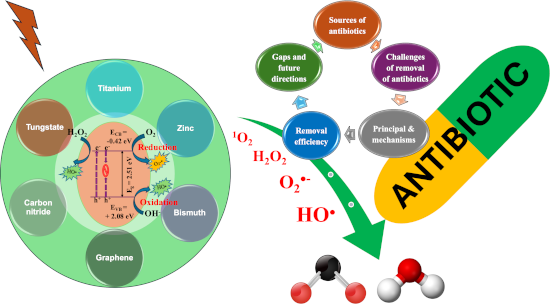
- Yunus Ahmed Keya Rani Dutta Parul Akhtar Md. Arif Hossen Md. Jahangir Alam Obaid A. Alharbi Hamad AlMohamadi Abdul Wahab Mohammad Department of Chemistry, Chittagong University of Engineering and Technology, Chattogram-4349, Bangladesh Institute of River, Harbor and Environmental Science
- sites, slow kinetics of surface reactions, and the reduced mobility of charges, resulting in electron delocalization [99][100]. The molecular rearrangement of g-C3N4 has been the subject of recent research because of its potential to alter the surface chemistry and textural structure [101]. This



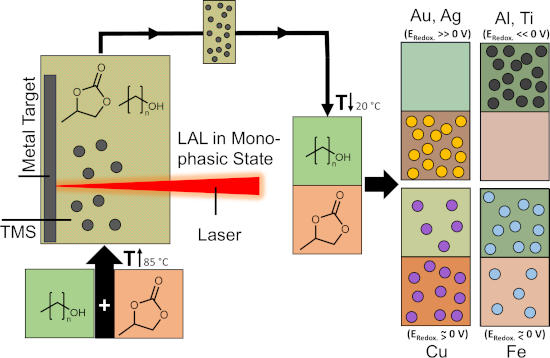
Preferential enrichment and extraction of laser-synthesized nanoparticles in organic phases
Beilstein J. Nanotechnol. 2025, 16, 254–263, doi:10.3762/bjnano.16.20
- Theo Fromme Maximilian L. Spiekermann Florian Lehmann Stephan Barcikowski Thomas Seidensticker Sven Reichenberger Technical Chemistry I and Center for Nanointegration Duisburg-Essen (CENIDE), University of Duisburg-Essen, Universitätsstrasse 7, 45141 Essen, Germany Department for Biochemical and
- Chemical Engineering, Laboratory for Industrial Chemistry, TU Dortmund University, Emil-Figge-Str. 66, 44227 Dortmund, Germany 10.3762/bjnano.16.20 Abstract Pulsed laser ablation in liquids (LAL) is an established preparation method of nanoparticles and catalysts, which additionally allows to chemically
- properties and surface chemistry of the gained colloids. The use of organic solvents as liquid may result in reactive LAL processes [1][10] that cause elements from the solvent molecules (and solutes) to be part of the final nanoparticle’s composition. The solvent decomposition induced by laser-based




Correction: AFM-IR investigation of thin PECVD SiOx films on a polypropylene substrate in the surface-sensitive mode
Beilstein J. Nanotechnol. 2025, 16, 252–253, doi:10.3762/bjnano.16.19
- Hendrik Muller Hartmut Stadler Teresa de los Arcos Adrian Keller Guido Grundmeier Technical and Macromolecular Chemistry, Paderborn University, Warburger Str. 100, 33098 Paderborn, Germany Bruker Nano Surfaces and Metrology Division, Östliche Rheinbrückenstr. 49, 76187 Karlsruhe, Germany 10.3762
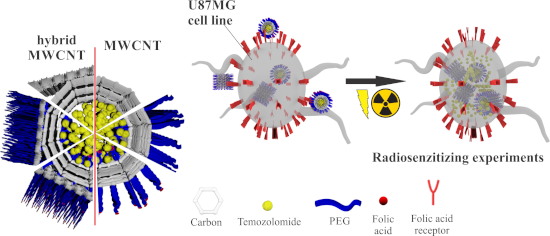
Radiosensitizing properties of dual-functionalized carbon nanostructures loaded with temozolomide
Beilstein J. Nanotechnol. 2025, 16, 229–251, doi:10.3762/bjnano.16.18
- . 45, 1000 Skopje, Republic of North Macedonia Institute of Chemistry, Faculty of Natural Sciences and Mathematics, Ss. Cyril and Methodius University in Skopje, Str. Arhimedova No. 5, 1000 Skopje, Republic of North Macedonia University Clinic of Radiotherapy and Oncology, Faculty of Medicine, Ss




Recent advances in photothermal nanomaterials for ophthalmic applications
Beilstein J. Nanotechnol. 2025, 16, 195–215, doi:10.3762/bjnano.16.16
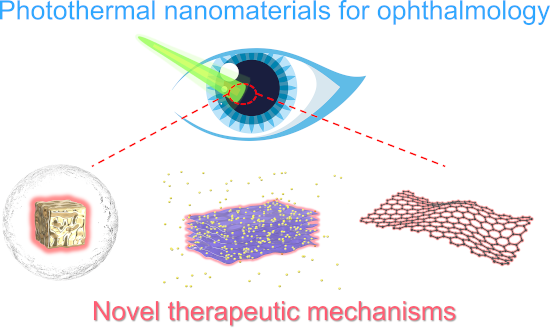
- therapeutic effects in humans [213]. The safety profile of photothermal nanomaterials is influenced by various factors, including their morphology, structure, concentration, photothermal stability, mechanical strength, and surface chemistry [214]. Enhancements in biocompatibility and stability can be achieved


Probing the potential of rare earth elements in the development of new anticancer drugs: single molecule studies
Beilstein J. Nanotechnol. 2025, 16, 187–194, doi:10.3762/bjnano.16.15

- -molecule force spectroscopy using optical tweezers (OT) on DNA complexes formed with the three rare earths at various concentrations. The mechanical properties of these complexes were then determined as a function of the element concentration. From these data, the physical chemistry of the interaction was
- a binding isotherm that captures the physical chemistry of such interaction via the parameter r. A well-known binding isotherm is the Hill model, which is the simplest isotherm that accounts for cooperativity in binding reactions [19], where Cf is the free (not bound to DNA) ligand concentration, K


A review of metal-organic frameworks and polymers in mixed matrix membranes for CO2 capture
Beilstein J. Nanotechnol. 2025, 16, 155–186, doi:10.3762/bjnano.16.14
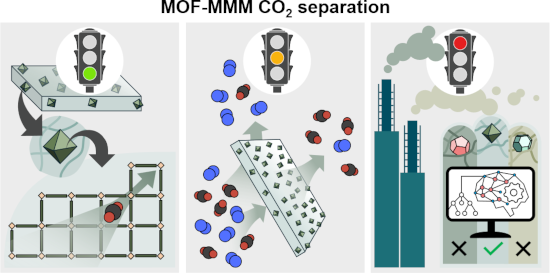
- exceptional gas adsorption capabilities. Furthermore, MOFs are inherently more compatible with the organic polymer matrix than regular inorganic fillers, as they have organic linkers as a fundamental structural component. Specifically, utilizing a linker with similar chemistry to the membrane polymer and its
- functional groups can drastically enhance MOF-membrane polymer compatibility [24]. Last, the rich MOF chemistry and tunability pave the way to advanced MMMs with specialized functionality for CO2 separation. For MOF-integrated MMM fabrication, the MOF–polymer matrix interface is crucial to its CO2 separation




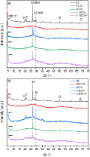
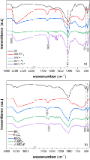
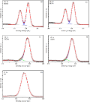
Clays enhanced with niobium: potential in wastewater treatment and reuse as pigment with antibacterial activity
Beilstein J. Nanotechnol. 2025, 16, 141–154, doi:10.3762/bjnano.16.13
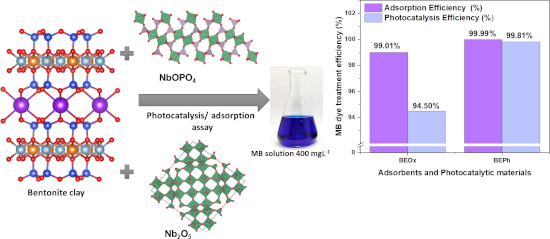
- Silvia Jaerger Patricia Appelt Mario Antonio Alves da Cunha Fabian Ccahuana Ayma Ricardo Schneider Carla Bittencourt Fauze Jaco Anaissi Federal University of Technology - Paraná - UTFPR, Campus Toledo, Rua Cristo Rei, 19. 85902-490, Toledo, Brazil Chemistry Department, Universidade Estadual do
- Centro-Oeste, Guarapuava 85040-167, PR, Brazil Department of Chemistry, Universidade Tecnológica Federal do Paraná, Pato Branco 85503-390, Brazil Chimie des Interactions PlaBEa-Surface (ChIPS), Research Institute for Materials Science and Engineering, University of Mons, 7000 Mons, Belgium 10.3762
- intense blue cationic dye important in medical sciences, chemistry, and biology, as well as widely used in the textile industry [2]. Prolonged exposure to MB can result in adverse health effects, including abdominal disorders, respiratory distress, skin sensitization, and blindness [3]. The dark blue



Nanocarriers and macrophage interaction: from a potential hurdle to an alternative therapeutic strategy
Beilstein J. Nanotechnol. 2025, 16, 97–118, doi:10.3762/bjnano.16.10
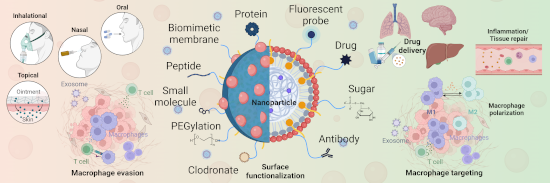
- influence PC formation and NC clearance, including NP size, surface charge, hydrophobicity, surface chemistry, and the encountered biological fluid [37][38][39]. NPs larger than 200 nm in size tend to accumulate in the liver and spleen, while those with a diameter of less than 10 nm are rapidly eliminated


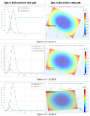
Modeling and simulation of carbon-nanocomposite-based gas sensors
Beilstein J. Nanotechnol. 2025, 16, 90–96, doi:10.3762/bjnano.16.9
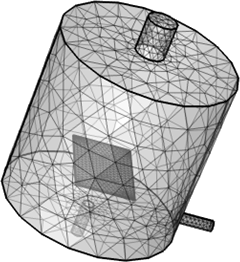
- (reaction engineering, transport of diluted species, laminar flow, and chemistry interface), create the geometry of the sensor within a gas chamber, and select the materials. We then set up the physics with boundary conditions, mesh the geometry using tetrahedral and triangular elements, and define study



Instance maps as an organising concept for complex experimental workflows as demonstrated for (nano)material safety research
Beilstein J. Nanotechnol. 2025, 16, 57–77, doi:10.3762/bjnano.16.7
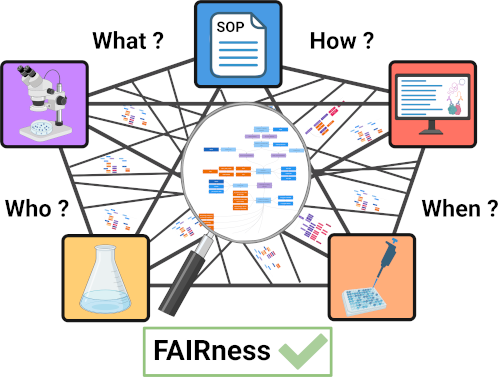
- properties can be tailored by changing their size, shape, surface chemistry, and functionality, have led to the designation of nanomaterials as a key enabling technology and to their subsequent inclusion in the broader categorisation of advanced materials [1][2]. Applications of nanomaterials derive in many



Advanced atomic force microscopy techniques V
Beilstein J. Nanotechnol. 2025, 16, 54–56, doi:10.3762/bjnano.16.6
- Philipp Rahe Ilko Bald Nadine Hauptmann Regina Hoffmann-Vogel Harry Monig Michael Reichling Institut für Physik, Universität Osnabrück, Barbarastraße 7, 49076 Osnabrück, Germany Institute of Chemistry, Hybrid Nanostructures, University of Potsdam, Karl-Liebknecht-Straße 24–25, 14476 Potsdam
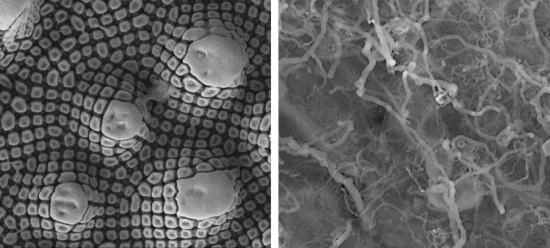
Bioinspired nanofilament coatings for scale reduction on steel
Beilstein J. Nanotechnol. 2025, 16, 25–34, doi:10.3762/bjnano.16.3
- Siad Dahir Ali Mette Heidemann Rasmussen Jacopo Catalano Christian Husum Frederiksen Tobias Weidner Department of Chemistry, Aarhus University, 8000 Aarhus C, Denmark Department of Biological and Chemical Engineering, Aarhus University, 8000 Aarhus C, Denmark Danish Offshore Technology Centre
- moisture control and water interaction [1][2]. The structure and chemistry of insect skin are finely tuned to navigate these challenges, showcasing a sophisticated natural adaptation to efficiently repel water [3]. Springtails have mastered this capability using micro- and nanostructured skin surfaces
- polymerization of a polysiloxane on the material surface [18]. The polysiloxane methyl groups lower the surface energy and render the surface hydrophobic. Clearly, the surface chemistry of steel surfaces is very different from the previously used materials such as glass [11][12][13][18], polymers [10][11][12


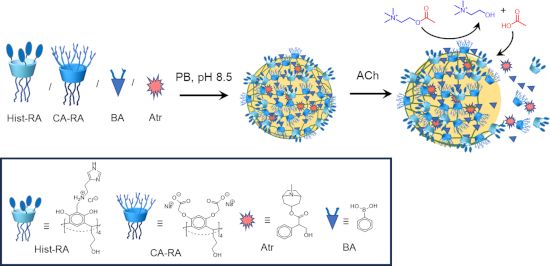
A nanocarrier containing carboxylic and histamine groups with dual action: acetylcholine hydrolysis and antidote atropine delivery
Beilstein J. Nanotechnol. 2025, 16, 11–24, doi:10.3762/bjnano.16.2
- Elina E. Mansurova Andrey A. Maslennikov Anna P. Lyubina Alexandra D. Voloshina Irek R. Nizameev Marsil K. Kadirov Anzhela A. Mikhailova Polina V. Mikshina Albina Y. Ziganshina Igor S. Antipin A.E. Arbuzov Institute of Organic and Physical Chemistry, FRC Kazan Scientific Centre, Russian Academy of
- Sciences, Arbuzov str. 8, Kazan 420088, Russia Alexander Butlerov Institute of Chemistry, Kazan Federal University, Lobachevsky str. 1/29, Kazan 420008, Russia Kazan National Research Technical University named after A.N. Tupolev - KAI, 10, K. Marx str., Kazan 420111, Russia Kazan National Research
- directly in the growth medium. Нemocompatibility Human erythrocytes were obtained at the medical office of the A.E. Arbuzov Institute of Organic and Physical Chemistry from two Caucasian volunteers (52 years old, blood group II and 24 years old, blood group IV), after receiving informed consent. The study


Orientation-dependent photonic bandgaps in gold-dust weevil scales and their titania bioreplicates
Beilstein J. Nanotechnol. 2025, 16, 1–10, doi:10.3762/bjnano.16.1
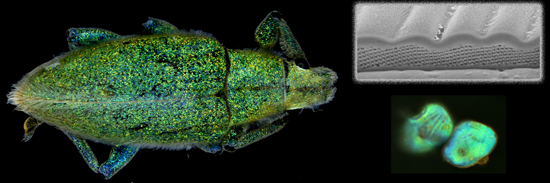
- Norma Salvadores Farran Limin Wang Primoz Pirih Bodo D. Wilts Department for Chemistry and Physics of Materials, University of Salzburg, Jakob-Haringer-Str. 2a, 5020 Salzburg, Austria Current address: Institute of Materials Science and Technology, Vienna Technical University, 1060 Vienna, Austria
- }-oriented domains exhibits polarization conversion, rotating the angle of linearly polarized light. The overall coloration, resulting from the reflections from many scales, is close to uniformly diffuse because of the random orientation of the domains. Using titania sol–gel chemistry, we produced negative
- exposed photonic crystals using a sol–gel chemistry approach [14][24]. The increased refractive index contrast and the increased fill fraction of the replicas resulted in a redshift, which was confirmed with full-wave modeling. Full-wave modeling further suggested that the titania replicated from a 3D


Attempts to preserve and visualize protein corona on the surface of biological nanoparticles in blood serum using photomodification
Beilstein J. Nanotechnol. 2024, 15, 1654–1666, doi:10.3762/bjnano.15.130
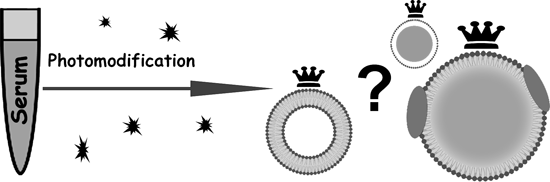
- photomodification to obtain NPs bearing a full protein corona on the lipid surface, the proteins of which could be identified by mass analysis [23]. Hossein Mohammad-Beigi and colleagues published another approach in 2020 [7]. They used methods of click chemistry to fix proteins on the surface of silica and
- polystyrene NPs and thereby obtained the full corona. In principle, the effect of click chemistry and photomodification is the same. Both fix the full corona; however, the methods differ in details. When click chemistry is performed, soft corona proteins bind only to pre-modified hard corona proteins, whereas



Fabrication of hafnium-based nanoparticles and nanostructures using picosecond laser ablation
Beilstein J. Nanotechnol. 2024, 15, 1639–1653, doi:10.3762/bjnano.15.129
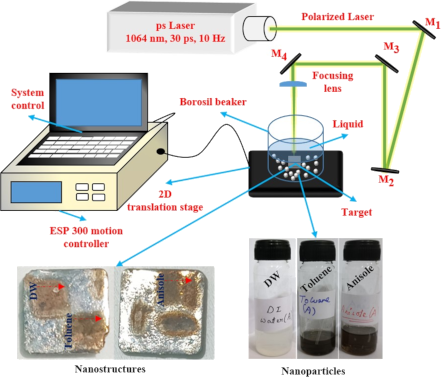
- ; now DIA-CoE, University of Hyderabad), and the School of Chemistry for providing access to the necessary instruments. Funding Funding is provided by IOE, UoH, and ACRHEM/DRDO. Mangababu acknowledges financial support from CSIR India (for SRF) and IOE BHU (for RJP PDF). S.V.S Nageswara Rao DST PURSE


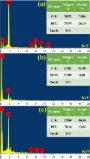


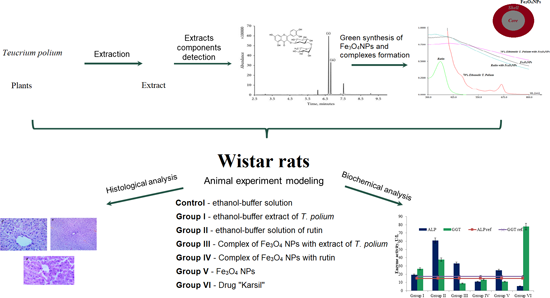
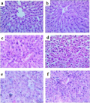
Liver-targeting iron oxide nanoparticles and their complexes with plant extracts for biocompatibility
Beilstein J. Nanotechnol. 2024, 15, 1593–1602, doi:10.3762/bjnano.15.125
- and toxicity effects; as of May 2024, the website clinicaltrials.gov listed data on the development of 51 clinical protocols involving iron oxides NPs [25][26][27]. Surface chemistry and delivery route of MNPs affect their biodistribution patterns and circulation time in the body [28]. It is known


Facile synthesis of size-tunable L-carnosine-capped silver nanoparticles and their role in metal ion sensing and catalytic degradation of p-nitrophenol
Beilstein J. Nanotechnol. 2024, 15, 1576–1592, doi:10.3762/bjnano.15.124
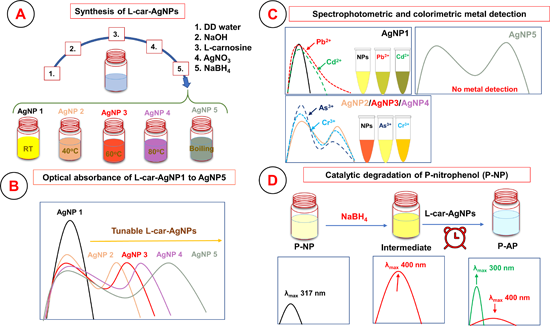
- sustainability and public health. Silver nanoparticles (AgNPs) have attracted the interest of researchers worldwide in recent years because of their promising use in environmental chemistry. The unique optochemical properties of AgNPs, including high surface area to volume ratio, optical absorbance, excellent
- through surface chemistry and other parameters such as size and shape [13]. Kästner and Thünemann described the catalytic degradation of P-NP using silver nanoparticles with the activity depending on the capping agents [14]. To design a dual-functional system for environmental applications, a potential




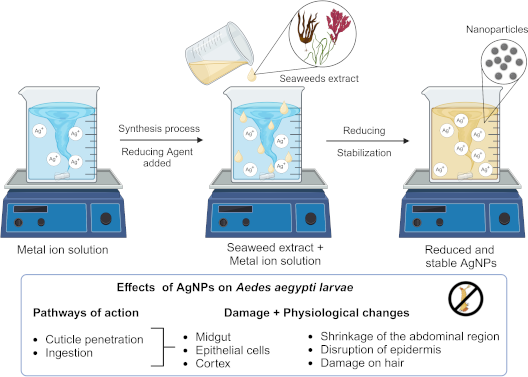
Green synthesis of silver nanoparticles derived from algae and their larvicidal properties to control Aedes aegypti
Beilstein J. Nanotechnol. 2024, 15, 1566–1575, doi:10.3762/bjnano.15.123
- (FIOCRUZ), 50670-420, Recife, PE, Brazil Chemical Process Engineering and Forest Products Research Centre (CIEPQPF), Department of Chemical Engineering, University of Coimbra, 3030-790, Coimbra, Portugal Department of Fundamental Chemistry (DQF), Federal University of Pernambuco (UFPE), 50740-560, Recife


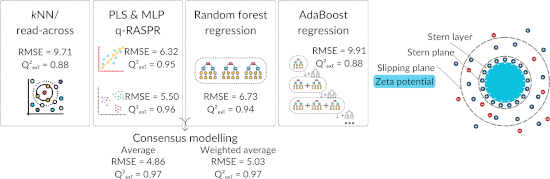
The round-robin approach applied to nanoinformatics: consensus prediction of nanomaterials zeta potential
Beilstein J. Nanotechnol. 2024, 15, 1536–1553, doi:10.3762/bjnano.15.121
- Chemistry, Laboratory of Environmental Chemoinformatics, Wita Stwosza 63, 80-308 Gdańsk, Poland Division of Physical Sciences and Applications, Hellenic Military Academy, Vari 16672, Greece School of Geography, Earth and Environmental Sciences, University of Birmingham, Edgbaston, B15 2TT Birmingham, United
- [36], the following four were included in this study because of the completeness of the data (absence of data gaps): the NMs’ core chemistry, coating, morphology, and hydrodynamic diameter measured using dynamic light scattering (DLS). The ZP of the NMs was measured in water (pH 6.5–8.5). To enrich


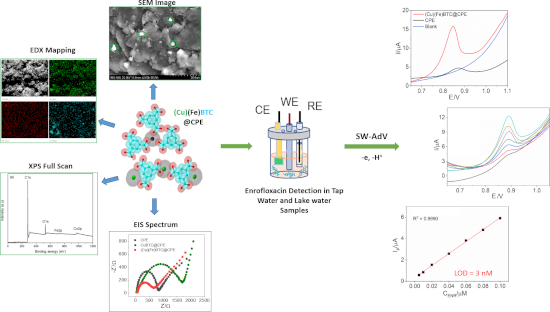
Electrochemical nanostructured CuBTC/FeBTC MOF composite sensor for enrofloxacin detection
Beilstein J. Nanotechnol. 2024, 15, 1522–1535, doi:10.3762/bjnano.15.120
- Thi Kim Ngan Nguyen Tien Dat Doan Huy Hieu Luu Hoang Anh Nguyen Thi Thu Ha Vu Quang Hai Tran Ha Tran Nguyen Thanh Binh Dang Thi Hai Yen Pham Mai Ha Hoang Graduate University of Science and Technology, Viet Nam Academy of Science and Technology, Ha Noi, Vietnam Faculty of Chemistry, TNU-University
- of Sciences, Tan Thinh Ward, Thai Nguyen City, Vietnam Institute of Chemistry, Vietnam Academy of Science and Technology, 18 Hoang Quoc Viet Street, Cau Giay District, Ha Noi, Vietnam Hanoi University of Industry, 298 Cau Dien Street, Bac Tu Liem District, Ha Noi, Vietnam National Key Laboratory of
- Informatics in Chemistry, Institute of Chemistry, Vietnam Academy of Science and Technology). Electrochemical impedance spectroscopy (EIS) was performed by using an Autolab PGSTAT 302 in a frequency range of 100 kHz to 0.01 Hz. A three-electrode electrochemical setup was used including a platinum wire counter