


Search results
Search for "electronics" in Full Text gives 546 result(s) in Beilstein Journal of Nanotechnology. Showing first 200.
Investigating ripple pattern formation and damage profiles in Si and Ge induced by 100 keV Ar+ ion beam: a comparative study
Beilstein J. Nanotechnol. 2024, 15, 367–375, doi:10.3762/bjnano.15.33
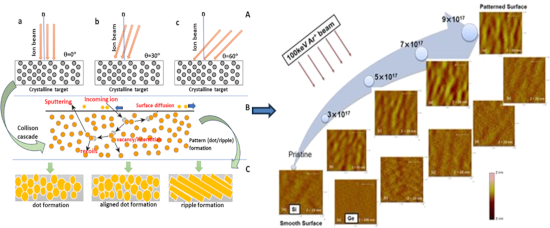
- electron microscopy; Introduction Scientific research varying from electronics to photonics, homeland security, high-resolution parallel patterning of magnetic media, biotechnology, and medicine are based upon nanotechnology. These applications require nanopatterning techniques to fabricate devices or


Ultrasensitive and ultrastretchable metal crack strain sensor based on helical polydimethylsiloxane
Beilstein J. Nanotechnol. 2024, 15, 270–278, doi:10.3762/bjnano.15.25
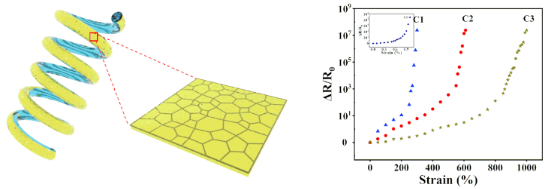
- platform for constructing strain sensors with both high sensitivity and stretchability, showing a far-reaching significance and influence for developing next-generation practically applicable soft electronics. Keywords: crack sensors; helical structure; polydimethylsiloxane (PDMS); ultrahigh sensitivity
- stretchability, thereby demonstrating significant implications and potential for the advancement of practical soft electronics in the next generation. Experimental Materials Polydimethylsiloxane (PDMS, Sylgard 184) was provided by Dow Corning Co. Ltd. (Michigan, USA). The screws and hollow tubes were acquired


CdSe/ZnS quantum dots as a booster in the active layer of distributed ternary organic photovoltaics
Beilstein J. Nanotechnol. 2024, 15, 144–156, doi:10.3762/bjnano.15.14
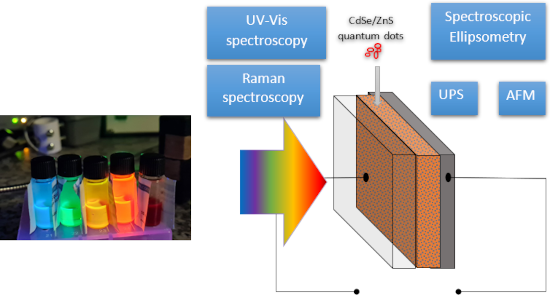
- Gabriela Lewinska Piotr Jelen Zofia Kucia Maciej Sitarz Lukasz Walczak Bartlomiej Szafraniak Jerzy Sanetra Konstanty W. Marszalek AGH University of Krakow, Institute of Electronics, 30 Mickiewicza Ave, 30-059 Krakow, Poland AGH University of Krakow, Faculty of Materials Science and Ceramics




Enhanced feedback performance in off-resonance AFM modes through pulse train sampling
Beilstein J. Nanotechnol. 2024, 15, 134–143, doi:10.3762/bjnano.15.13

- cycle, the sample and the tip are separated by an offset distance, and the controller electronics generate a displacement on the Z axis to establish tip–sample contact (Figure 1A). The displacement is often obtained by actuating the Z piezo with a sinusoidal waveform to avoid exciting the actuator’s


In situ optical sub-wavelength thickness control of porous anodic aluminum oxide
Beilstein J. Nanotechnol. 2024, 15, 126–133, doi:10.3762/bjnano.15.12
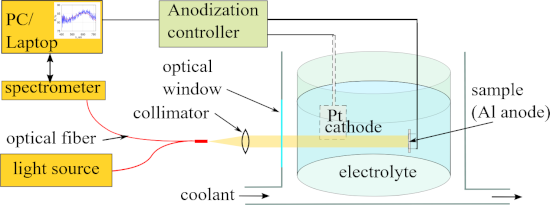
- “Results and Discussion” section. The software source code is available on GitHub [42]. The anodization electronics (marked green in Figure 5) was galvanically isolated from the rest of the system and controlled using the wireless interface of the microcontroller (ESP8266, Espressif Systems). Voltage from
- ) converter and digitized using an analog-to-digital converter (ADS1115, Texas Instruments). The electronics design files (KiCAD) and microcontroller software source code are accessible on GitHub [43]. The two-step anodization procedure in 0.3 M oxalic acid electrolyte at 40 V potential has been described in


Influence of conductive carbon and MnCo2O4 on morphological and electrical properties of hydrogels for electrochemical energy conversion
Beilstein J. Nanotechnol. 2024, 15, 57–70, doi:10.3762/bjnano.15.6
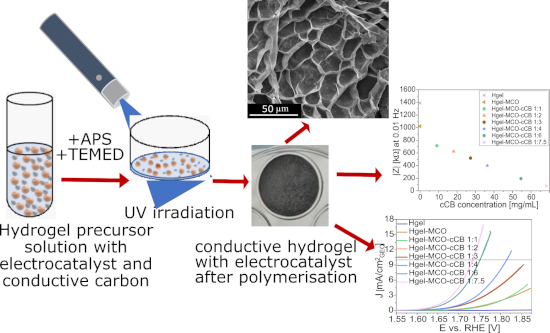
- Sylwia Pawlowska Karolina Cysewska Yasamin Ziai Jakub Karczewski Piotr Jasinski Sebastian Molin Faculty of Electronics, Telecommunications and Informatics, and Advanced Materials Center, Gdańsk University of Technology, G. Narutowicza St. 11/12, 80-233 Gdańsk, Poland Institute of Fundamental
- , drugs, metal nanoparticles, metal oxide nanoparticles, carbon nanotubes, or biomolecules. This is a very important advantage that opens ways of designing composite hydrogels with various properties and applications such as biomedical [8][9][10], biosensors [11][12][13], wearable electronics [14][15][16
- , such as environmental engineering [32], renewable energy [22][33][34][35], electronics [36][37][38], medical devices [39][40][41], and drug delivery systems [42][43][44][45]. They combine the properties of a hydrophilic matrix with conductive properties obtained thanks to the use of an appropriate


Spatial variations of conductivity of self-assembled monolayers of dodecanethiol on Au/mica and Au/Si substrates
Beilstein J. Nanotechnol. 2023, 14, 1169–1177, doi:10.3762/bjnano.14.97

- electronics. A common test bed for fundamental investigations on how to acquire this conductivity are alkanethiol layers on gold substrates. A widely used approach in measuring the conductivity of a molecular layer is conductive atomic force microscopy. Using this method, we investigate the influence of a
- /Si; conductive atomic force microscopy; dodecanethiol; self-assembled monolayers; Introduction For decades, the need for miniaturization of electronics has pushed the research field into the direction of bottom-up, rather than top-down, approaches. In this research field, molecular electronics [1][2
- ][3] has always held a central role, as the flexibility and control over the structure of molecules is unmatched. One of the fundamental parts of devices employing a bottom-up approach combined with molecular electronics is comprised of metal electrodes and molecular layers deposited onto them. For


A multi-resistance wide-range calibration sample for conductive probe atomic force microscopy measurements
Beilstein J. Nanotechnol. 2023, 14, 1141–1148, doi:10.3762/bjnano.14.94

- resistances at the nanoscale has attracted recent attention for developing microelectronic components, memory devices, molecular electronics, and two-dimensional materials. Despite the decisive contribution of scanning probe microscopy in imaging resistance and current variations, measurements have remained
- electronics [24][25][26][27][28][29], organic and biological systems [30][31][32][33][34], and quantum devices [35][36][37]. Various technical methods have been developed in C-AFM to cope with the diversity of its applications, including advanced sensors and low-noise preamplifiers [2][38][39][40


A bifunctional superconducting cell as flux qubit and neuron
Beilstein J. Nanotechnol. 2023, 14, 1116–1126, doi:10.3762/bjnano.14.92

- on the principle of quantum annealing and contains a superconducting chip with 128,472 Josephson junctions, 75 percent of which were dedicated to superconducting digital electronics for controlling the processor and reading out the result. The rest was used either for qubit junctions or for
- scientific community to be a good flux qubit. We were also surprised by the possibility of controlling the qubit state using unipolar current pulses, which greatly simplifies all control electronics [51][52]. But won’t such a deliberately non-resonant (broadband) impact lead to a parasitic leakage of the



Density functional theory study of Au-fcc/Ge and Au-hcp/Ge interfaces
Beilstein J. Nanotechnol. 2023, 14, 1093–1105, doi:10.3762/bjnano.14.90

- structure; hexagonal gold; interface energy; Introduction Heterophase interfaces are responsible for unique properties of many advanced devices designed for electronics and other applications [1]. Understanding the formation and energetics of interfaces is highly important for the nucleation of new


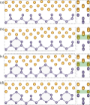


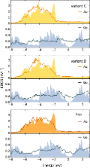
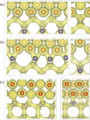

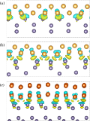
A visible-light photodetector based on heterojunctions between CuO nanoparticles and ZnO nanorods
Beilstein J. Nanotechnol. 2023, 14, 1018–1027, doi:10.3762/bjnano.14.84
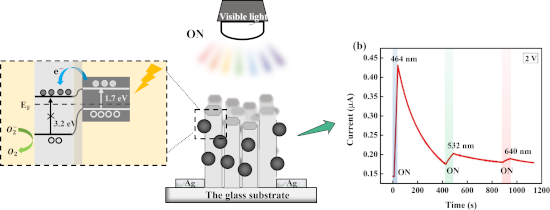
- ., temperature, concentrations of chemicals, and annealing time). ZnO nanorods and nanowires have attracted great interest in photodetectors because their chemical and physical properties are exceptional for electronics applications, and their fabrication strategies are more facile than those of other structures


Isolation of cubic Si3P4 in the form of nanocrystals
Beilstein J. Nanotechnol. 2023, 14, 971–979, doi:10.3762/bjnano.14.80

- calculations; semiconductor nanocrystals; silicon phosphide; Introduction Advancements in electronics and related fields are calling for new ways of synthesizing compounds. Subsequently, recognizing and utilizing the special properties of nanoparticles (NPs) of new materials using emerging methods offers a


Industrial perspectives for personalized microneedles
Beilstein J. Nanotechnol. 2023, 14, 857–864, doi:10.3762/bjnano.14.70

- (400,000+ USD) for a single device (Figure 4). Custom-built 2PP systems are also an option; these are custom systems either retrofitted onto an existing microscope [44] or developed on optical tables [45][46] in the lab to keep the cost low. Commercial retrofits (e.g., positioning stages or electronics


A wearable nanoscale heart sound sensor based on P(VDF-TrFE)/ZnO/GR and its application in cardiac disease detection
Beilstein J. Nanotechnol. 2023, 14, 819–833, doi:10.3762/bjnano.14.67

- Yi Luo Jian Liu Jiachang Zhang Yu Xiao Ying Wu Zhidong Zhao School of Electronics and Information Engineering, Hangzhou DIANZI University, Hangzhou 310018, China School of Communication Engineering, Hangzhou DIANZI University, Hangzhou 310018, China Academic Affairs Office, Hangzhou DIANZI


Investigations on the optical forces from three mainstream optical resonances in all-dielectric nanostructure arrays
Beilstein J. Nanotechnol. 2023, 14, 674–682, doi:10.3762/bjnano.14.53

- Guangdong Wang Zhanghua Han Shandong Provincial Key Laboratory of Optics and Photonic Devices, Center of Light Manipulation and Applications, School of Physics and Electronics, Shandong Normal University, Jinan 250358, China 10.3762/bjnano.14.53 Abstract Light can exert radiation pressure on any


Transferability of interatomic potentials for silicene
Beilstein J. Nanotechnol. 2023, 14, 574–585, doi:10.3762/bjnano.14.48

- the “silicon age” because of the great importance of elemental silicon to the modern global economy, mainly concerning electronics. Silicon is one of the most extensively investigated materials, and the quality of its production is impressive. However, this applies to bulk silicon. The success of
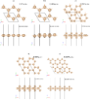
![[Graphic 3]](/bjnano/content/inline/2190-4286-14-48-i7.svg?max-width=637&scale=1.18182)

Carbon nanotube-cellulose ink for rapid solvent identification
Beilstein J. Nanotechnol. 2023, 14, 535–543, doi:10.3762/bjnano.14.44
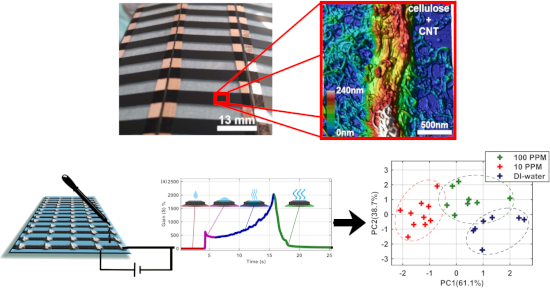
- and other 1D/2D materials have been employed as ink components with great potential for a broad range of applications, for example, in flexible electronics, photoconductors, transparent conductors, and gas sensors [44][45][46][47]. Carbon nanotube ink films have been reported as field-effect


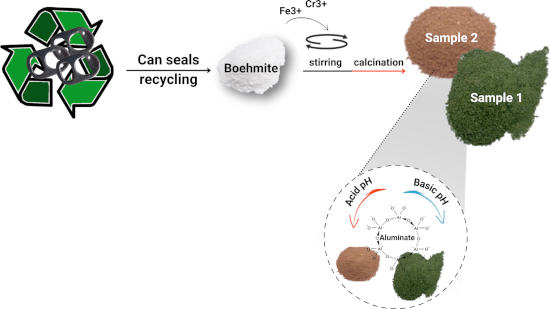
Mixed oxides with corundum-type structure obtained from recycling can seals as paint pigments: color stability
Beilstein J. Nanotechnol. 2023, 14, 467–477, doi:10.3762/bjnano.14.37
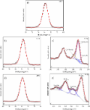
- , Physical Electronics, Chanhassen, MN, USA), equipped with a monochromatic Al Kα X-ray source. The spectra were analyzed using the CASA-XPS software. The binding energy of the XPS spectra was calibrated using the C 1s peak at 284.6 eV [32]. Multipack version 9.8 software (ULVAC-PHI, 2017, Chigasaki, Japan




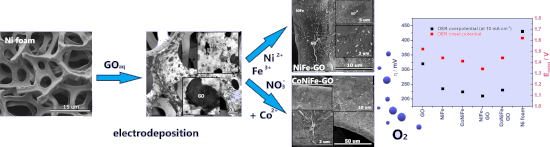
Evaluation of electrosynthesized reduced graphene oxide–Ni/Fe/Co-based (oxy)hydroxide catalysts towards the oxygen evolution reaction
Beilstein J. Nanotechnol. 2023, 14, 420–433, doi:10.3762/bjnano.14.34
- Karolina Cysewska Marcin Lapinski Marcin Zajac Jakub Karczewski Piotr Jasinski Sebastian Molin Laboratory of Functional Materials, Faculty of Electronics, Telecommunications and Informatics, and Advance Materials Centre, Gdańsk University of Technology, ul. Narutowicza 11/12, 80-233 Gdańsk, Poland




Plasmonic nanotechnology for photothermal applications – an evaluation
Beilstein J. Nanotechnol. 2023, 14, 380–419, doi:10.3762/bjnano.14.33
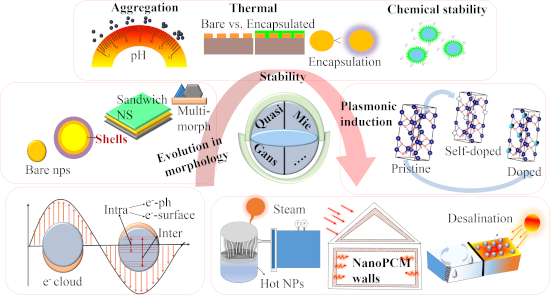
- , homogeneity, dimer formation, and placement, make them very interesting for multiple applications such as communication, hot-carrier enhanced catalysis, high-temperature sensing [61], and electronics applications such as transistors. Their extinction coefficient is often calculated using Gans theory for




Quasi-guided modes resulting from the band folding effect in a photonic crystal slab for enhanced interactions of matters with free-space radiations
Beilstein J. Nanotechnol. 2023, 14, 322–328, doi:10.3762/bjnano.14.27
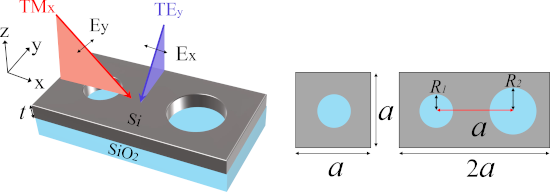
- Kaili Sun Yangjian Cai Uriel Levy Zhanghua Han Shandong Provincial Key Laboratory of Optics and Photonic Devices, Center of Light Manipulation and Applications, School of Physics and Electronics, Shandong Normal University, Jinan 250358, China Department of Applied Physics, The Hebrew University


Biocatalytic synthesis and ordered self-assembly of silica nanoparticles via a silica-binding peptide
Beilstein J. Nanotechnol. 2023, 14, 280–290, doi:10.3762/bjnano.14.25

- methods for manufacturing ordered structures of nanoparticles is an ongoing challenge. Ordered structures of SiO2 nanoparticles have gained increased attention due to the great potential they offer in filtering, separation, drug delivery, optics, electronics, and catalysis. Biomolecules, such as peptides
- gained increased attention due to the great potential they offer in filtering, separation, drug delivery, optics, electronics, and catalysis [1][2][3][4][5]. Nanoparticles with ordered 3D structures, such as supra-particles or super lattices, can possess properties that are not observed in the bulk




A novel approach to pulsed laser deposition of platinum catalyst on carbon particles for use in polymer electrolyte membrane fuel cells
Beilstein J. Nanotechnol. 2023, 14, 190–204, doi:10.3762/bjnano.14.19
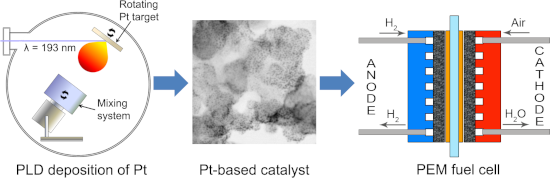
- and an electrochemical catalyst for electrochemical reactions under low temperatures, are typically used in automobiles and portable electronics [4][5]. The primary application potential is related to their compact size, lightweight, high power density, and low operating temperature. However, they

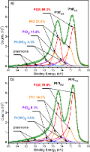


Formation of nanoflowers: Au and Ni silicide cores surrounded by SiOx branches
Beilstein J. Nanotechnol. 2023, 14, 133–140, doi:10.3762/bjnano.14.14

- Feitao Li Siyao Wan Dong Wang Peter Schaaf Chair Materials for Electrical Engineering and Electronics, Institute of Materials Science and Engineering and Institute of Micro- and Nanotechnologies MacroNano, TU Ilmenau, Gustav-Kirchhoff-Straße 5, 98693 Ilmenau, Germany 10.3762/bjnano.14.14 Abstract


Frontiers of nanoelectronics: intrinsic Josephson effect and prospects of superconducting spintronics
Beilstein J. Nanotechnol. 2023, 14, 79–82, doi:10.3762/bjnano.14.9
- energy for cryogenic cooling of superconducting circuits is considered [9][10][11][12]. Important and promising applications of the Josephson effect are its implementation in superconducting high-frequency electronics, spintronics, and nanostructures for supercomputers. In the last decade, a very rapid
- (ANN) is a recent important development. The main goal of this thematic issue is to highlight new research done in the field of hybrid nanostructures, including various elements using the Josephson effect and their applications in quantum electronics, spintronics, and high-frequency electronics. The
- nanostructures for superconducting spintronics, quantum electronics, and novel base elements for superconducting supercomputers became the core of this volume. The editors are convinced that this thematic issue will attract the attention of scientists, technologists, engineers, and IT experts, and will be useful



