


Search results
Search for "plasma" in Full Text gives 632 result(s) in Beilstein Journal of Nanotechnology. Showing first 200.
Entry of nanoparticles into cells and tissues: status and challenges
Beilstein J. Nanotechnol. 2024, 15, 1017–1029, doi:10.3762/bjnano.15.83
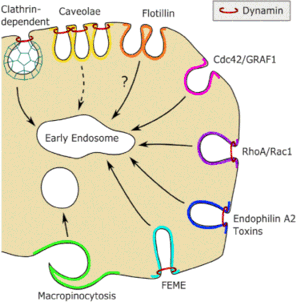
- types of molecules. It is now common to include vesicles originating from cells as being NPs. During the last decade there has been an amazing increase in studies of exosomes, small vesicles secreted by fusion of multivesicular bodies (late endosomes) with the plasma membrane of cells. Also, release of
- other types of vesicles, for instance from the plasma membrane, may play a role in the transfer of information between cells. For a list of various types of extracellular vesicles (EVs), see [5]. For therapeutic purposes, EVs may not only be loaded with drugs after the release from cells, but incubation
- phagocytes [7][8][9][10]). Endophilin is a player when it comes to both clathrin-mediated endocytosis (CME) and FEME, which is an endocytic mechanism induced by growth factors [7][8]. It should be noted that FEME is dependent on the formation of endophilin-positive assemblies on the plasma membrane, and this


Recent progress on field-effect transistor-based biosensors: device perspective
Beilstein J. Nanotechnol. 2024, 15, 977–994, doi:10.3762/bjnano.15.80
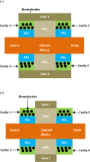
- , forming a plasma layer of holes. An abrupt junction at the channel/source was created to facilitate the entry of biomolecules into the cavity. Thus, significant variations in electrostatic properties were observed due to the distinct characteristics of the biomolecules, leading to improved sensitivity
- FET-based biosensors. A Schottky barrier (SE SB) FET-based biosensor, engineered with a charge plasma source, has been proposed and simulated by Hafiz et al. [93], targeting biosensing applications. Figure 10 shows the innovative structure of SE SB FET-based biosensor which utilizes a hafnium material
- biosensor and after the immobilization of biomolecules in the cavity. 2.2.5 Charge plasma four-gated MOSFET-based biosensors. Chanda et al. [97] designed a charge plasma four-gated (CP FG) MOSFET-based biosensor structure to enhance the detection of various types of biomolecules. The concept of charge




Beyond biomimicry – next generation applications of bioinspired adhesives from microfluidics to composites
Beilstein J. Nanotechnol. 2024, 15, 965–976, doi:10.3762/bjnano.15.79
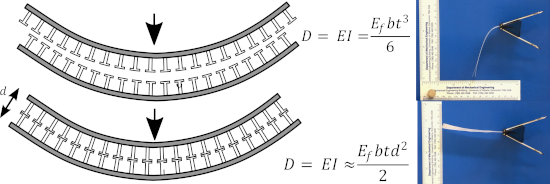
- was initially applied as an adhesion mechanism for microfluidics, a distinct project I was working on in 2012, that required a reversible adhesion system offering high strength, low contamination, no damage to mating surfaces, and no need for separate glues, plasma treatments, or magnets. A simple


Effects of cutting tool geometry on material removal of a gradient nanograined CoCrNi medium entropy alloy
Beilstein J. Nanotechnol. 2024, 15, 925–940, doi:10.3762/bjnano.15.76
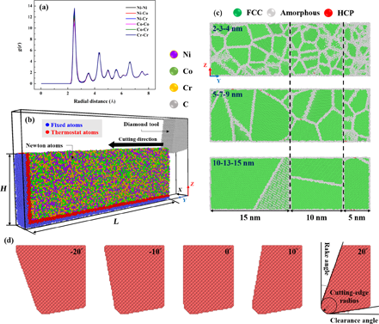
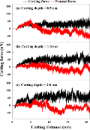
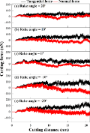
- through grain refinement can increase the strength further without adjusting the composition. Wei et al. used a mechanical surface abrasion treatment to prepare a CoCrNi MEA with a grain-size-gradient structure with excellent strain hardening potential compared with spark plasma sintering fine-grained









Water-assisted purification during electron beam-induced deposition of platinum and gold
Beilstein J. Nanotechnol. 2024, 15, 884–896, doi:10.3762/bjnano.15.73
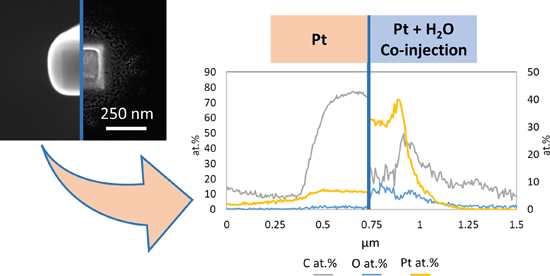
- [26][27], and ammonia [28][29], as a mixture of argon and oxygen [30][31], or in an oxygen plasma [32][33]. The success of these purification attempts varies considerably depending on the chemical nature of the precursor and the reactant gas. When using an oxidant gas reactant, such as water or oxygen
- after loading the sample, the chamber was plasma-cleaned with an XEI Scientific Evactron decontaminator for 30 min, at 0.4 Torr (air leak) and a forward radio frequency power of 12 W. Silicon substrates were obtained from a 525 ± 25 µm p-type silicon wafer (resistivity of 1–5 Ω·cm, (100) crystal


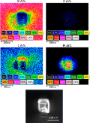

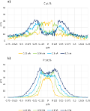
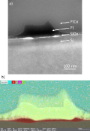


Synthesis of silver–palladium Janus nanoparticles using co-sputtering of independent sources: experimental and theorical study
Beilstein J. Nanotechnol. 2024, 15, 808–816, doi:10.3762/bjnano.15.67
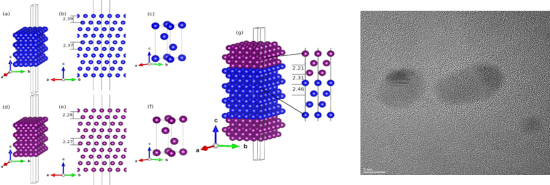
- with reference code 00-004-0783, whereas the interplanar distance of 0.230 nm, according to crystallographic chart 01-072-5157, corresponds to the (111) plane of a cubic system of an AgPd compound. Forming the plasma in different chambers favors this type of growth. An elemental analysis (EDS) of the




Laser synthesis of nanoparticles in organic solvents – products, reactions, and perspectives
Beilstein J. Nanotechnol. 2024, 15, 638–663, doi:10.3762/bjnano.15.54
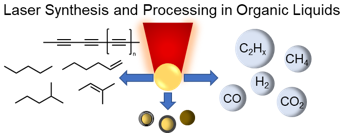
- synthesis of HCN [79]. The oxidation and phase change of the target surface during LAL was initially published by Ogale et al. [80] in 1987, and nanoparticle oxidation has been addressed in the literature frequently afterwards [53][54][68][69][70]. During the plasma and cavitation bubble phase, reactive
- oxygen species (ROS), for example, hydrogen peroxide, hydroxyl radicals, or dissolved oxygen, react with the particles leading to their surface oxidation. During irradiation of water with intense laser pulses, a weakly ionized plasma forms because of optical breakdown, supercontinuum emission, or both
- . Optical breakdown occurs when the free-electron density surpasses a critical value, resulting in a high-density plasma, and the optical breakdown threshold is significantly reduced in the presence of metal nanoparticles [49][81][82]. Supercontinuum emission can occur at low fluences, when pulses shorter





Exfoliation of titanium nitride using a non-thermal plasma process
Beilstein J. Nanotechnol. 2024, 15, 631–637, doi:10.3762/bjnano.15.53
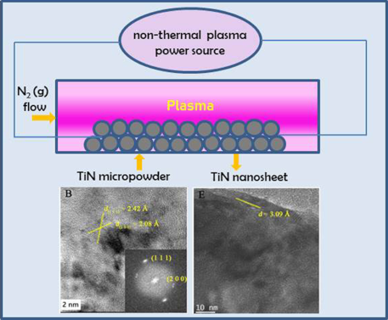
- , Brazil 10.3762/bjnano.15.53 Abstract In this study, we present a novel approach for the exfoliation of titanium nitride (TiN) powders utilizing a rapid, facile, and environmentally friendly non-thermal plasma method. This method involves the use of an electric arc and nitrogen as the ambient gas at room
- successful exfoliation of TiN structures using our innovative non-thermal plasma method, opening up exciting possibilities for advanced material applications. Keywords: exfoliation; nanosheets; non-plasma method; titanium nitride; Introduction Since the groundbreaking discovery of graphene by Andre Geim
- exfoliation methods, offering promising prospects for applications in photoacoustic imaging and photothermal therapy of tumors because of their satisfactory absorption characteristics in the second near-infrared (NIR-II) region [5]. The non-thermal plasma (NTP) synthesis method enables the fabrication of 2D



AFM-IR investigation of thin PECVD SiOx films on a polypropylene substrate in the surface-sensitive mode
Beilstein J. Nanotechnol. 2024, 15, 603–611, doi:10.3762/bjnano.15.51
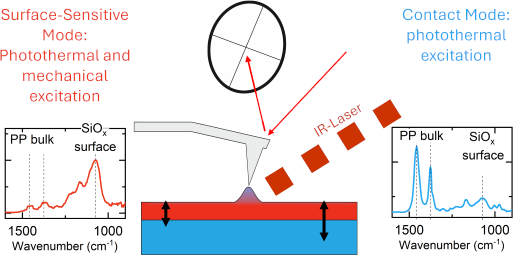
- /bjnano.15.51 Abstract Thin silicon oxide films deposited on a polypropylene substrate by plasma-enhanced chemical vapor deposition were investigated using atomic force microscopy-based infrared (AFM-IR) nanospectroscopy in contact and surface-sensitive mode. The focus of this work is the comparison of
- ]. In this study thin coatings of SiOx were deposited by plasma-enhanced chemical vapor deposition (PECVD) in an oxygen-rich plasma process with hexamethyldisiloxane (HMDSO) used as monomer. With this process, the thickness of the coating can be controlled and homogeneous films can be produced [15
- between 0.2 and 0.5 mbar. As the gas mixture, argon, oxygen, and HMDSO (98.5% purity, Sigma-Aldrich) were used in different ratios. First, the surface was pretreated for five seconds with an oxygen-rich plasma. For this step, the argon-to-oxygen ratio was set to 1:2. For the deposition of silicon oxide


Radiofrequency enhances drug release from responsive nanoflowers for hepatocellular carcinoma therapy
Beilstein J. Nanotechnol. 2024, 15, 569–579, doi:10.3762/bjnano.15.49
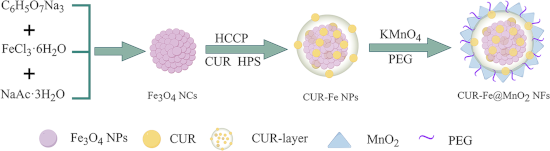
- ]. Radiofrequency-induced hyperthermia has been confirmed to augment the permeability of the plasma membrane, facilitating the entry of drugs into tumor cells to kill them [28][29]. In this study, we present the synthesis of an intelligent TME-responsive nanomaterial, superparamagnetic ferric oxide nanoclusters
- Scientific, USA) in the range of 400–4000 cm−1. The X-ray diffractometer patterns were characterized by the X-ray diffractometer (D8 ADVANCE, Bruker, Karlsruhe, Germany). The iron and manganese concentrations were determined using an inductively coupled plasma mass spectrometry (ICP‒MS) (7800, Agilent, Santa


On the additive artificial intelligence-based discovery of nanoparticle neurodegenerative disease drug delivery systems
Beilstein J. Nanotechnol. 2024, 15, 535–555, doi:10.3762/bjnano.15.47
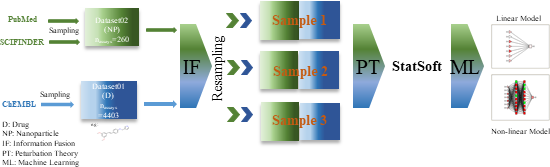
- physicochemical properties for drugs in order to cross the BBB [89]. High lipophilicity can contribute to excessive distribution volumes, increased metabolic liability, and lower unbound drug concentration in the plasma and/or brain; it may also negatively affect pharmaceutical properties, in particular



Cholesterol nanoarchaeosomes for alendronate targeted delivery as an anti-endothelial dysfunction agent
Beilstein J. Nanotechnol. 2024, 15, 517–534, doi:10.3762/bjnano.15.46
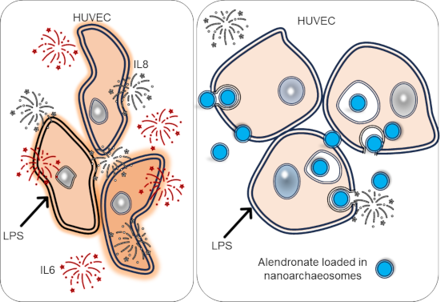
- ][16]. After a single oral dose of ALN (70 mg tablet), a peak plasma concentration of 33.10 ± 14.32 ng/mL (≈0.15 μM) of ALN is attained after 1.00 ± 0.16 h [17]. This plasma concentration is about 170 times lower than the average of 1–50 μM ALN reported for the in vitro anti-inflammatory activity of
- following effects were induced in HUVECs after the endocytosis of ALN-loaded nanovesicles: (i) nanoARC and nanoARC(ALN) disordered the plasma membrane of HUVECs, whereas nanoARC-Chol did not (Figure 6A). The results were consistent with membrane disorganization observed in halophilic archaeolipids [37][38
- ] and the organizing role of cholesterol in archaeolipid bilayers [39]. The alteration in membrane order suggests that, after endocytosis, archaeolipids integrate into the plasma membrane of HUVECs. The endocytosis of ALN did not perturb the membrane organization. (ii) All formulations containing ALN





Fabrication of nanocrystal forms of ᴅ-cycloserine and their application for transdermal and enteric drug delivery systems
Beilstein J. Nanotechnol. 2024, 15, 465–474, doi:10.3762/bjnano.15.42
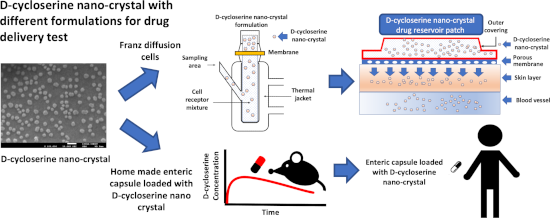
- , respectively) were orally administrated in rats. A volume of 300 µL of rat blood was collected at each of the nine timepoints, and a total of 2.7 mL of blood was collected from each rat within 24 h. Blood samples were processed to obtain plasma (more than 150 µL) for subsequent analysis. Plasma samples were


Potential of a deep eutectic solvent in silver nanoparticle fabrication for antibiotic residue detection
Beilstein J. Nanotechnol. 2024, 15, 426–434, doi:10.3762/bjnano.15.38
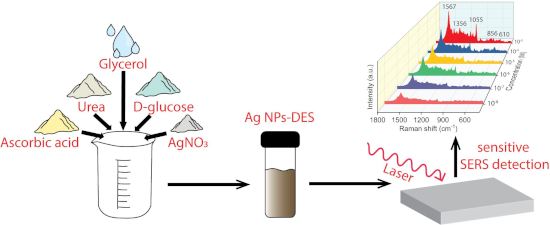
- stirring, the obtained Ag NPs-DES were washed with DI water several times, and the pellets were re-dispersed in DI water for further use. The Ag NPs-DES thin film was prepared following the procedure for self-assembly monolayer construction. A clean glass substrate was treated with oxygen plasma to form


Classification and application of metal-based nanoantioxidants in medicine and healthcare
Beilstein J. Nanotechnol. 2024, 15, 396–415, doi:10.3762/bjnano.15.36
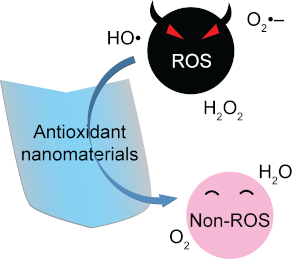
- antioxidant appearing in low-density lipoprotein and human blood plasma contributing to the decrease of oxidative stress. Its mechanism of action relies on the ability to transfer the phenolic H atom to a peroxyl radical (ROO•) much more rapidly than the propagation reactions [50][51][52][53]. Despite the
- to biological systems can cause detrimental effects on human health. Sobolewski et al. confirmed the Fe2O3 nanoparticles with sizes between 11.2 and 13.6 nm can lead to oxidative damage and neurotoxicity in the mouse brain [189]. Meanwhile, the rapid clearance of SiNPs from blood depletes plasma


Modulated critical currents of spin-transfer torque-induced resistance changes in NiCu/Cu multilayered nanowires
Beilstein J. Nanotechnol. 2024, 15, 360–366, doi:10.3762/bjnano.15.32
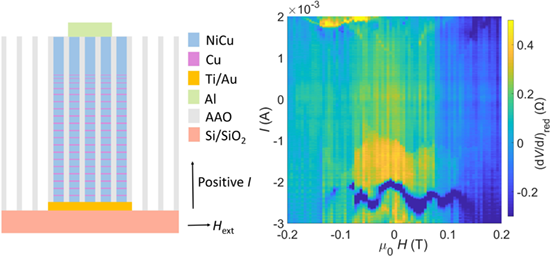
- the surface area of the AAO template (or Si substrate) is isolated from the bottom electrodes and the magnetic nanowires, thereby largely improving the flexibility for the design of the top electrodes. After removing the overgrowth by a thin blade or milling in argon plasma, a thick Al film of 180 nm


Nanomedicines against Chagas disease: a critical review
Beilstein J. Nanotechnol. 2024, 15, 333–349, doi:10.3762/bjnano.15.30

- ]. The dosage of BNZ has been reported to be inadequate [21]. In children, markedly lower plasma BNZ concentrations than those previously reported in adults treated with comparable BNZ milligram per kilogram doses (possibly due to a higher clearance/bioavailability), but still retaining a high
- simulations showed that reducing the cumulative dose from 2.5 mg/kg/12 h to 2.5 mg/kg/24 h rendered BNZ plasma concentrations within the accepted therapeutic range of 3 to 6 mg/L [22]. This is an important point: When BNZ toxicity is attributed to overdosing, it could be simply reduced by reducing its dose
- . The implementation of shorter treatments has also been proposed [23][24]. Other reports suggest, nonetheless, that the overdosage of BNZ as the origin of ADRs is debatable. Studies implemented with adult patients not only failed to connect the manifestation of ADRs with the BNZ plasma levels but also

Comparative electron microscopy particle sizing of TiO2 pigments: sample preparation and measurement
Beilstein J. Nanotechnol. 2024, 15, 317–332, doi:10.3762/bjnano.15.29

- log-normal assumption. The probability p that the particle size distribution is not log-normal is given in Table 2 together with the results of the fits. Indirect particle size measurements and optical properties Single-particle inductively coupled plasma mass spectrometry (spICP-MS) measurements are


Ultrasensitive and ultrastretchable metal crack strain sensor based on helical polydimethylsiloxane
Beilstein J. Nanotechnol. 2024, 15, 270–278, doi:10.3762/bjnano.15.25
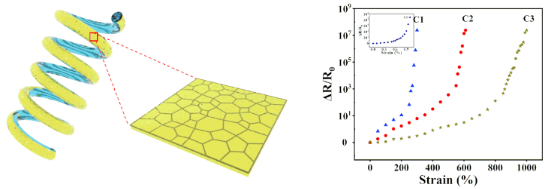
- structured PDMS was initially cleansed through a 5 min Ar plasma sputtering and, subsequently, coated with a 10 nm thick Ti adhesion layer. After that, ion beam sputtering was utilized to deposit a 50 nm thick Au thin film onto the outer surface of the helically shaped PDMS. Then, a controlled pre-stretch


Ion beam processing of DNA origami nanostructures
Beilstein J. Nanotechnol. 2024, 15, 207–214, doi:10.3762/bjnano.15.20
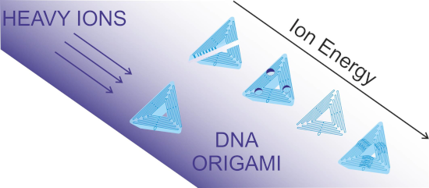
- . Preparation of dry samples and AFM imaging Silicon wafers were cut into ∼7 × 7 mm2 chips and were then plasma-cleaned in air using a Roplass RPS40+ plasma cleaner, which generates a thin layer of plasma by diffuse coplanar surface barrier discharge [35]. The Si surface is exposed to the thin plasma layer for
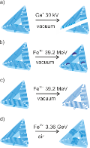
- the generation of plasma from air affecting the nanostructures and DNA–substrate interactions. Despite the underlying mechanism, which is worth of further exploration, this behavior should be emphasized in the present content. Random irradiation of the origami-deposited nanostructures results in a


Graphene removal by water-assisted focused electron-beam-induced etching – unveiling the dose and dwell time impact on the etch profile and topographical changes in SiO2 substrates
Beilstein J. Nanotechnol. 2024, 15, 190–198, doi:10.3762/bjnano.15.18
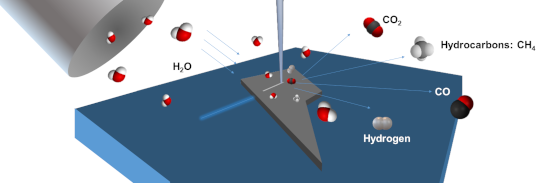
- induced in the SiO2 upper layer were cleaned for ten minutes in an ultrasonic bath with acetone, isopropanol, and O2 plasma before being placed in the microscope chamber. Graphene and SiO2/Si etching The samples were placed inside the SEM-Versa 3D (FEI), which also operates at LV mode. The chamber was


Nanocarrier systems loaded with IR780, iron oxide nanoparticles and chlorambucil for cancer theragnostics
Beilstein J. Nanotechnol. 2024, 15, 180–189, doi:10.3762/bjnano.15.17
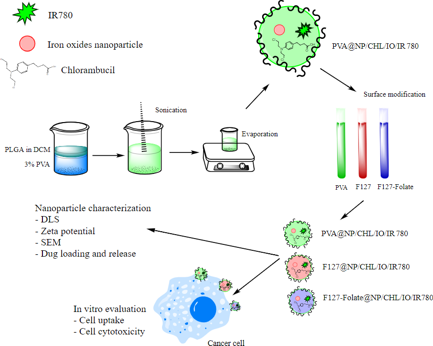
- -life. When NPs are administered, they come into contact with blood cells and plasma proteins, which may cause adsorption or opsonization by serum proteins [35]. However, these proteins will have a reduced probability of interacting with our negatively charged nanoparticles, as most proteins are


Curcumin-loaded nanostructured systems for treatment of leishmaniasis: a review
Beilstein J. Nanotechnol. 2024, 15, 37–50, doi:10.3762/bjnano.15.4

- leishmaniasis. Additionally, this molecule produces reactive oxygen species (ROS) and elevates cytosolic calcium. These occur in the exposure of phosphatidylserine to the outer plasma membrane leaflet and DNA fragmentation, causing the death of the leishmaniasis parasite [47][52]. Despite its promising


Nanotechnological approaches in the treatment of schistosomiasis: an overview
Beilstein J. Nanotechnol. 2024, 15, 13–25, doi:10.3762/bjnano.15.2

- encapsulating PZQ. They observed that the drug took more than one week in vitro to be released. A pharmacokinetic study in vivo also showed that the PZQ concentration in the plasma was sustained for longer times when the nanoformulation was studied in mice. Thus, the results show that solid lipid nanoparticles


TEM sample preparation of lithographically patterned permalloy nanostructures on silicon nitride membranes
Beilstein J. Nanotechnol. 2024, 15, 1–12, doi:10.3762/bjnano.15.1

- or volatile particles, which can be pumped out. RIE of nickel–iron alloys has been carried out using inductively coupled plasma RIE with argon and chlorine [34] or with NH3 and CO [35]. Stencil lithography requires further optimization although possible applications are attractive because of the
- of different sizes. Ion beam etching process. Comparison between normal patterned resist (top) and reflowed resist (bottom). From left to right: patterned resist, nanodisk after IBE, and nanodisk after plasma cleaning. (a) SEM image of a Py disk (1 µm diameter, 80 nm thickness) at a tilt angle. (b





