


Search results
Search for "silver nitrate" in Full Text gives 80 result(s) in Beilstein Journal of Nanotechnology.
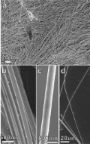
Self-organization of mesoscopic silver wires by electrochemical deposition
Beilstein J. Nanotechnol. 2014, 5, 1285–1290, doi:10.3762/bjnano.5.142

- electrochemical environments as well as for the fabrication of highly-ordered, single-crystalline metal nanowires. Keywords: crystal growth; electrochemistry; electrodeposition; mesowires; nanoelectrochemistry; nanowires; self-organization; silver nanowires; silver nitrate; stability; Introduction Nanoscale and
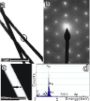
- measurements presented in this article). STEM micrographs were acquired using an HAADF (High-Angle Annular Dark-Field) detector. Schematic diagrams of the experimental procedure. (a) By slowly freezing the silver nitrate electrolyte a thin aqueous layer of electrolyte forms between the glass slide and the ice



Injection of ligand-free gold and silver nanoparticles into murine embryos does not impact pre-implantation development
Beilstein J. Nanotechnol. 2014, 5, 677–688, doi:10.3762/bjnano.5.80
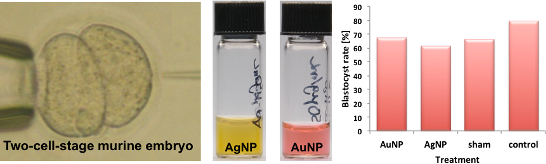
- were cultured in M16 medium (Sigma-Aldrich) at 37 °C in a humidified incubator with 5% CO2 in air for 3 days. In order to distinguish whether possible effects are caused by the nanoparticles as such or by Ag+-ions released from the nanoparticles, additional embryos were co-incubated with 25 µM silver
- nitrate. To exclude the influence of the NO3−-ions on the embryo development 25 µM potassium nitrate controls were also run. Embryo development was assessed on a daily basis and documented by using a stereo-microscope (Olympus SZX16, Olympus, Hamburg, Germany) equipped with a camera (Olympus DP72, Olympus




Enhanced photocatalytic activity of Ag–ZnO hybrid plasmonic nanostructures prepared by a facile wet chemical method
Beilstein J. Nanotechnol. 2014, 5, 639–650, doi:10.3762/bjnano.5.75
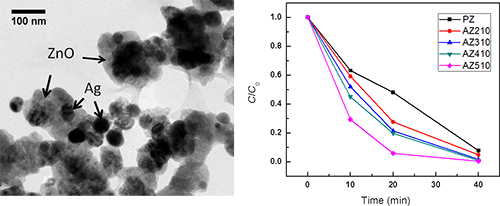
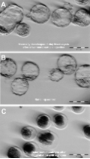
- ) were used as the starting materials for the synthesis of ZnO nanostructures. Silver nitrate (AgNO3, Spectrochem, India) and trisodium citrate (Na3C6H5O7, CDH, India) were used for the photodeposition of Ag nanoparticles onto ZnO nanostructures. Methylene blue (MB, SRL India) was used as dye for
- continuously stirred overnight. Silver nitrate of concentrations varying from 0.1 to 2 mM was added into these solutions under stirring for 30 min in the dark. The [Ag+]/[citrate] concentration ratios in these solutions were chosen to be 1:1 and 1:10 for different AgNO3 concentrations. Photoreduction of Ag


In vitro toxicity and bioimaging studies of gold nanorods formulations coated with biofunctional thiol-PEG molecules and Pluronic block copolymers
Beilstein J. Nanotechnol. 2014, 5, 546–553, doi:10.3762/bjnano.5.64
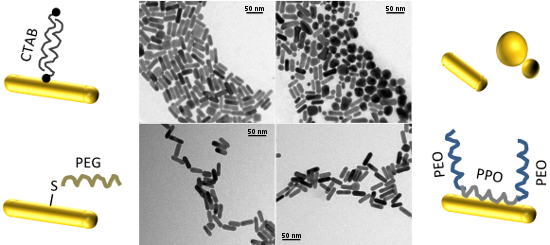
- have minimal cytotoxicity and they can be used for long term in vitro and in vivo imaging study. Experimental Materials: Hydrogen tetrachloroaurate(III) trihyrate (HAuCl4·3H2O), cetylmethylammonium bromide (CTAB), sodium borohydride (NaBH4), silver nitrate (AgNO3), L-ascorbic acid, trisodium citrate


One pot synthesis of silver nanoparticles using a cyclodextrin containing polymer as reductant and stabilizer
Beilstein J. Nanotechnol. 2014, 5, 380–385, doi:10.3762/bjnano.5.44
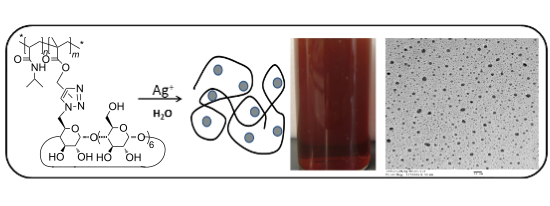
- using silver nitrate and a copolymer 1 from N-isopropylacrylamide (NIPAM) and mono-(1H-triazolylmethyl)-2-methylacryl-β-cyclodextrin acting as reductant and stabilizer without using any additional reducing agent is reported. The reduction was carried out in aqueous solution under pH neutral conditions
- at room temperature. The results of dynamic light scattering analysis and transmission electron microscopy show adjustable particle sizes from 30–100 nm, due to variation of silver nitrate concentration, the polymeric reducing and stabilisation agent concentration or reaction time. The spherical
- -β-cyclodextrin [20] as reduction and steric stabilization agent without any additional reduction agent or energy source. Silver nitrate has been reduced under pH neutral conditions at room temperature. In this green one pot synthesis neither commonly used toxic reduction agent nor additional energy


Other Beilstein-Institut Open Science Activities



