
Search results
Search for "stress" in Full Text gives 570 result(s) in Beilstein Journal of Nanotechnology. Showing first 200.
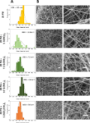
Natural nanofibers embedded in the seed mucilage envelope: composite hydrogels with specific adhesive and frictional properties
Beilstein J. Nanotechnol. 2024, 15, 1603–1618, doi:10.3762/bjnano.15.126
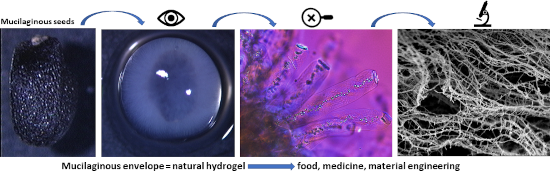
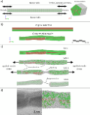
- osmotic stress [4][5][6][10][24][25]. Depending on the hydration level, mucilage exhibits distinct physical properties, which are also connected with its biological functions. In a fully hydrated state, it demonstrates very low friction, important for example, in endozoochoric diaspore dispersal [26][27


Nanotechnological approaches for efficient N2B delivery: from small-molecule drugs to biopharmaceuticals
Beilstein J. Nanotechnol. 2024, 15, 1400–1414, doi:10.3762/bjnano.15.113
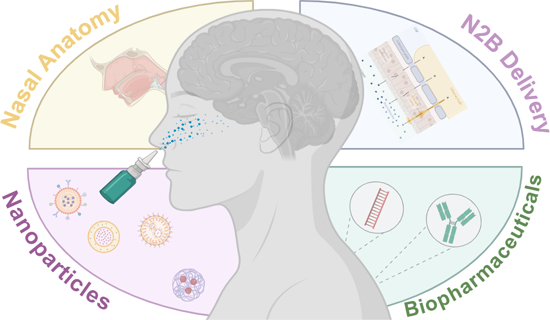
- different drug delivery systems suitable for the applications. In addition, we emphasize the importance of the effective delivery of monoclonal antibodies and RNA and stress the recent literature tackling this challenge. While giving examples of nanotechnological approaches for the effective delivery of
- stabilized with tocopherol polyethylene glycol succinate (TPGS) were proposed against Alzheimer’s disease. TPGS, a water-soluble precursor of vitamin E, was used in the formulation to reduce the amyloid-beta-induced oxidative stress [114]. In vivo tests on Wistar rats highlighted that the mucoadhesive


Hymenoptera and biomimetic surfaces: insights and innovations
Beilstein J. Nanotechnol. 2024, 15, 1333–1352, doi:10.3762/bjnano.15.107
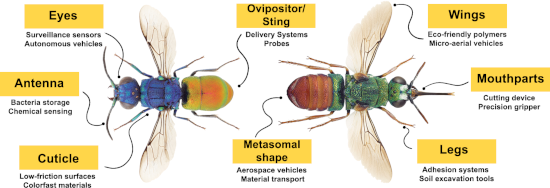
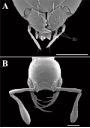
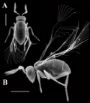
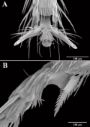
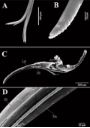
- combined with resilient fibrous helical structures enhance energy absorption and improve stress redistribution, providing additional protection against damage caused by impact loads [68]. Such adaptations not only facilitate efficient prey capture but contribute to the overall durability of the mandibles




Interaction of graphene oxide with tannic acid: computational modeling and toxicity mitigation in C. elegans
Beilstein J. Nanotechnol. 2024, 15, 1297–1311, doi:10.3762/bjnano.15.105
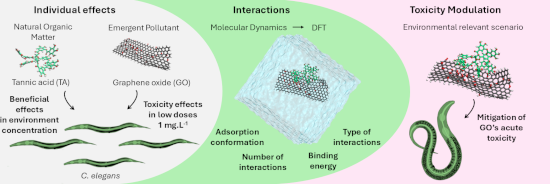
- C. elegans [35][54]. Oxidative stress is one of the central mechanisms and, in fact, the main cause of the toxicity outcomes discussed above. It is associated to changes in the function or expression of superoxide dismutase, “Rieske” iron-sulfur protein, mitochondrial complex I, and the ubiquinone
- translocation to other organs or oxidative stress. Similarly, Rive et al. [58] did not detect any detrimental effects in C. elegans exposed to amino-functionalized GO. Moreover, biomolecules interacting with the GO surface also have an effect on its toxicity, Côa et al. [14] observed that a bovine serum albumin
- . [63] showed that different polyphenols have life-prolonging and stress-reducing properties to C. elegans. Up to 300 μM (≈500 mg·L−1) TA promotes longevity in C. elegans, which is called hormesis effect; at higher concentrations, TA is actually toxic [64]. TA exposure induces different resistance


New design of operational MEMS bridges for measurements of properties of FEBID-based nanostructures
Beilstein J. Nanotechnol. 2024, 15, 1273–1282, doi:10.3762/bjnano.15.103
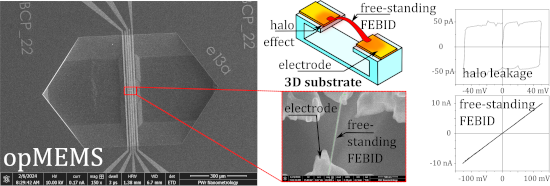
- point, the precision of distance control is limited by the opMEMS eigenstrain, which can be effectively mitigated by stress engineering and FIB modifications. These methods are efficient for experimental work, but there is also an opportunity to improve opMEMS by modifying the geometry that leads to
- stress relief. For the more complex opMEMS, FEM simulation should be used to solve the design problems. The experiment we conducted proves that it is possible to eliminate structurally induced eigenstrains in the RoI. Successful modification was achieved using an iterative approach. Only a single ion


The role of a tantalum interlayer in enhancing the properties of Fe3O4 thin films
Beilstein J. Nanotechnol. 2024, 15, 1253–1259, doi:10.3762/bjnano.15.101
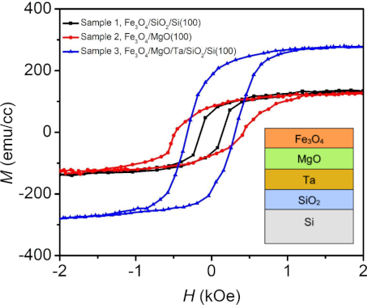
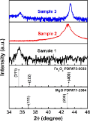
- %, corresponding to the Fe3O4(311) and Fe3O4(004) peaks, respectively, than samples 1 and 2 with values of −0.19% and −0.01%, respectively. Sample 3 exhibits a decrease in d-spacing for both the (311) and (400) peaks, in comparison to sample 1 and sample 2. The presence of compressive stress in the crystallites of


Introducing third-generation periodic table descriptors for nano-qRASTR modeling of zebrafish toxicity of metal oxide nanoparticles
Beilstein J. Nanotechnol. 2024, 15, 1142–1152, doi:10.3762/bjnano.15.93
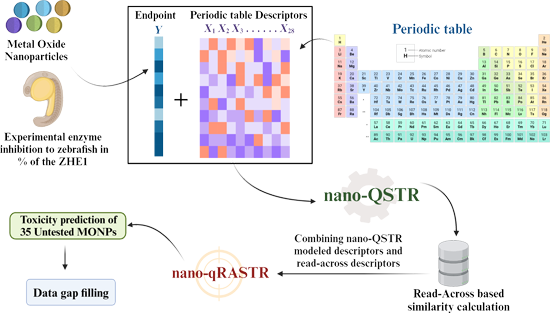
- of their unique properties. However, their size, surface area, and reactivity can cause toxicity, potentially leading to oxidative stress, inflammation, and cellular or DNA damage. In this study, a nano-quantitative structure–toxicity relationship (nano-QSTR) model was initially developed to assess
- , it was reported that MONPs have been found in human tissues such as brain, heart, and liver [11] and that occupational exposure to metal oxide nanomaterials increased oxidative stress biomarkers, suggesting potential DNA oxidative damage and lipid peroxidation [12]. Given the limited data available
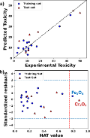
- of the nano-qRASTR model. MONPs with higher metal electronegativity may interfere more strongly with cellular functions of zebrafish, but this does not invariably heighten toxicity; in some instances, it may mitigate oxidative stress and membrane disruption, thereby diminishing toxic effects


Recent updates in applications of nanomedicine for the treatment of hepatic fibrosis
Beilstein J. Nanotechnol. 2024, 15, 1105–1116, doi:10.3762/bjnano.15.89
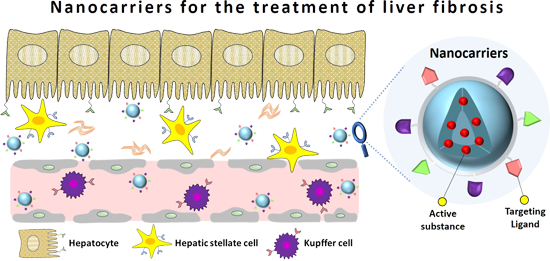
- parenchymal tissue injury and attenuating parenchymal stress and inflammation. In this approach, anti-inflammatory substances are used, such as corticosteroids, colchicine, and ursodeoxycholic acid [14][15]. As the activation of HSCs is a hallmark of liver fibrosis, targeting signaling molecules involved in
- permeability in primary human HSECs during liver fibrosis and occlusion [66]. The exposure of TiO2 NPs in vitro resulted in the formation of large gaps between the cells without significant effects on cell viability and no significant release of oxidative stress. This strategy may be exploited for co


Unveiling the potential of alginate-based nanomaterials in sensing technology and smart delivery applications
Beilstein J. Nanotechnol. 2024, 15, 1077–1104, doi:10.3762/bjnano.15.88


Interface properties of nanostructured carbon-coated biological implants: an overview
Beilstein J. Nanotechnol. 2024, 15, 1041–1053, doi:10.3762/bjnano.15.85
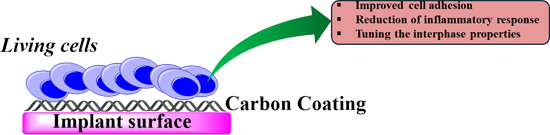
- substances secreted and the effectiveness of CNT action. Carbon material coatings for improved mechanical, tribological, and electrical properties Performance and longevity of implants are closely related to their mechanical properties. A mismatch with tissues can potentially lead to stress shielding
- with peculiar chemical reactivity and resistance to oxidative stress. Summary and Future Perspectives The results herein discuss the complex scenario of the interaction between implants and living tissues, which is still far from being fully understood. The engineering of implant surfaces with



Entry of nanoparticles into cells and tissues: status and challenges
Beilstein J. Nanotechnol. 2024, 15, 1017–1029, doi:10.3762/bjnano.15.83
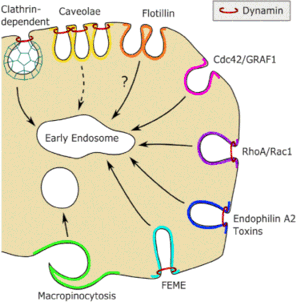
- -/cavin-coated structures, which are often reported to be involved in endocytosis of NPs. Caveolae are known to have different functions, one being to provide membrane upon mechanical stress [32]. They can thereby prevent membrane disruption, and reform in an ATP-dependent manner [32]. However, they can


Atomistic insights into the morphological dynamics of gold and platinum nanoparticles: MD simulations in vacuum and aqueous media
Beilstein J. Nanotechnol. 2024, 15, 995–1009, doi:10.3762/bjnano.15.81
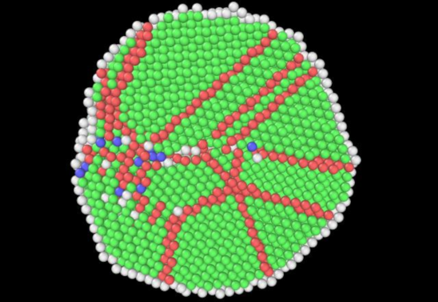
- stresses at the NP surface are crucial in phase transitions below a certain critical NP size [26]. Although it is understood that, qualitatively, the surface stress generates an effect comparable to an externally applied compressive pressure on the NP, a quantitative description is missing. While there


Therapeutic effect of F127-folate@PLGA/CHL/IR780 nanoparticles on folate receptor-expressing cancer cells
Beilstein J. Nanotechnol. 2024, 15, 954–964, doi:10.3762/bjnano.15.78
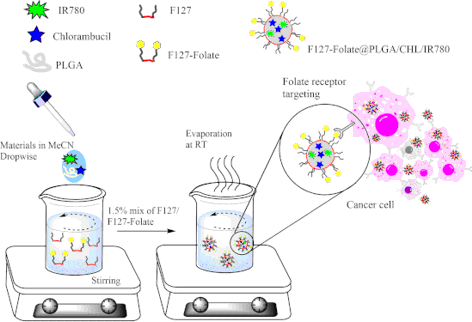
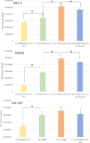
- the cells. Folic acid plays an important role in cancer cells; it takes part in cell proliferation, methylation for gene expression, DNA replication, oxidative stress, and DNA mutation. Many studies and cancer drugs, therefore, have used folic acid as a targeting ligand for the folate receptor, which



Electrospun nanofibers: building blocks for the repair of bone tissue
Beilstein J. Nanotechnol. 2024, 15, 941–953, doi:10.3762/bjnano.15.77
- stress in mammals [20]. Tropocollagen, the most basic unit of collagen, is formed by the combination of three polypeptide chains, and each chain contains about 1000 amino acids. Type-I collagen forms well-organized fibers and fibrils. Collagen molecules in a triple helix structure self-assemble to form
- osteoblasts that have completed their task in bone formation. They are embedded in the organic matrix and they are designed to communicate directly with each other [23]. A mature osteocyte is surrounded by mineralized bone. The main function of an osteocyte is to sense mechanical stress and to convert it to a
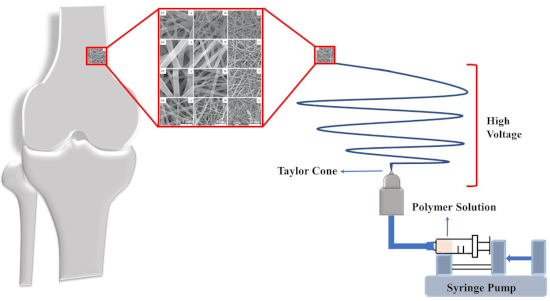
- electrospinning process because a stable Taylor cone can only form when the electric potential is high enough to overcome the surface tension of the solution [51][68][69][70]. The surface tension of the polymer liquid directly affects the critical stress; with increasing surface tension, the critical voltage


Effects of cutting tool geometry on material removal of a gradient nanograined CoCrNi medium entropy alloy
Beilstein J. Nanotechnol. 2024, 15, 925–940, doi:10.3762/bjnano.15.76
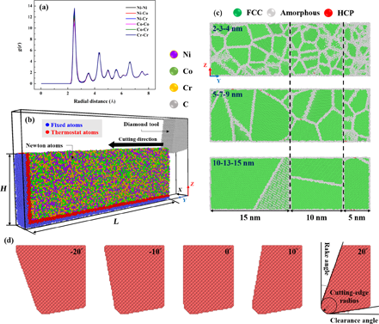
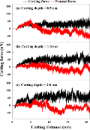
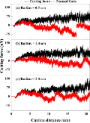
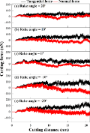
- behavior shows that grain boundaries are crucial in inhibiting the propagation of strain and stress. As the average grain size of the GNG sample increases, the range of shear strain distribution and average von Mises stress decreases. Moreover, the cutting chips become thinner and longer. The subsurface
- and partial dislocation motions in crystalline materials were examined by common neighbor analysis (CNA) of the modules in OVITO. Cutting force, shear strain distribution, von Mises stress analysis, crystal structure evolution, temperature distribution, and calculation of material wear rate were
- , this study analyzed the influence of the cutting tool on the local stress and strain distribution in the CoCrNi MEA substrates [25]. Figure 4 shows the shear strain distribution in CoCrNi MEA samples with various grain size gradients during the cutting process. The results reveal that shear strain








Identification of structural features of surface modifiers in engineered nanostructured metal oxides regarding cell uptake through ML-based classification
Beilstein J. Nanotechnol. 2024, 15, 909–924, doi:10.3762/bjnano.15.75
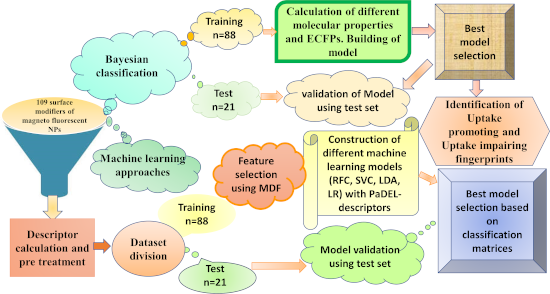
- or passive transport across the cell membrane [12]. Excessive absorption by normal cells enables metal oxide nanoparticles to engage with various subcellular organelles, initiating diverse signaling pathways to generate a stress response within cells. This results in the production of free radicals


The effect of age on the attachment ability of stick insects (Phasmatodea)
Beilstein J. Nanotechnol. 2024, 15, 867–883, doi:10.3762/bjnano.15.72
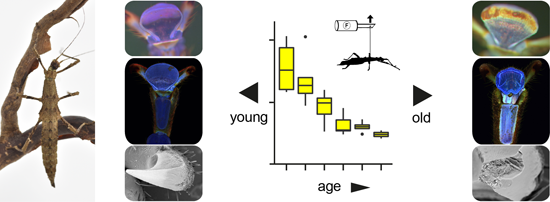
- claws consequently rather indicates whether a particular individual claw experienced sufficient stress to be damaged than informs about the age, besides the fact that the longer life time potentially leads to the higher probability of such events. Claws are therefore unsuitable to determine the age of S


Investigation on drag reduction on rotating blade surfaces with microtextures
Beilstein J. Nanotechnol. 2024, 15, 833–853, doi:10.3762/bjnano.15.70
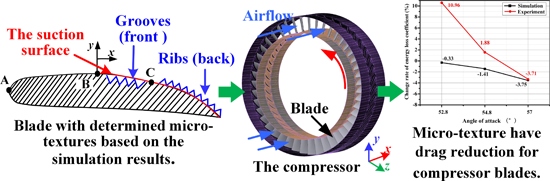
- boundary layer theory as shown in Figure 6. The dimensionless size calculation formula of microtextures with drag reduction performance are as follows [32]: where μ is the dynamic viscosity, v is the kinematic viscosity, u is the average flow velocity, uτ is the wall stress shear rate, τw is the wall shear
- stress, and ρ is the density. where δ is the thickness of the boundary layer. The flow condition around the flat plate wall can be determined by the dimensionless local Reynolds number. where x is the distance from the inlet along the fluid flow direction. For Rex < 3 × 10⁵, the flow in the boundary
- at the back end of the blade, thereby reducing energy losses. Figure 16b compares the eddy viscosity ratio, representing the stress generated by turbulent motion. The microtexture significantly reduces the stress generated by turbulent motion. As a result, the energy loss in the entire flow channel


Electrospun polysuccinimide scaffolds containing different salts as potential wound dressing material
Beilstein J. Nanotechnol. 2024, 15, 781–796, doi:10.3762/bjnano.15.65
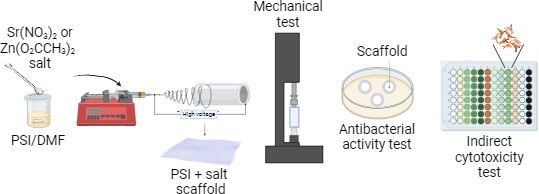
- capacity confidence intervals of the scaffolds. The elongation at breakpoint values were determined from the elongation and load values. For statistical tests, a nonparametric one-way ANOVA analysis (Welch’s correction) was performed (GraphPad Inc., USA). The stress–strain curves were also calculated from
- the linear part of the stress–strain curve [45]. The slope of the linear function gives the Young’s modulus. Antibacterial activity The Kirby–Bauer disc diffusion method was applied to test the antibacterial activity of the scaffolds containing different salts [46][47]. The experiment was performed
- concentration but at a higher average fiber diameter (590 ± 124 nm) [34]. These results are in good agreement with the literature; the thinner the fiber, the higher the tensile strength [61][62]. The Young’s modulus of the scaffolds was calculated from the slopes of the linear parts of the stress–strain curves



Exfoliation of titanium nitride using a non-thermal plasma process
Beilstein J. Nanotechnol. 2024, 15, 631–637, doi:10.3762/bjnano.15.53
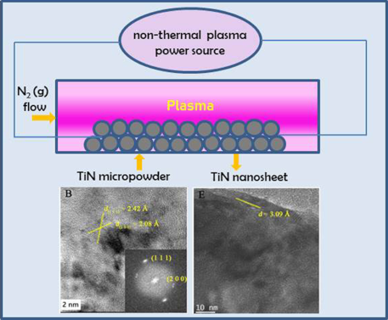
- width at half maximum (FWHM) of the Raman spectra and a decrease in peak intensity, all indicative of reduced crystallinity and the presence of internal stress (as detailed in Table 1) [25]. The Raman spectra are shown only up to 800 cm−1 because no other bands were observed at higher wavenumbers. This
- results, collectively reinforcing that the non-thermal plasma method was effective in preserving the bulk chemical composition and structure, albeit with slight alterations in the crystallinity and the extent of internal stress. Conclusion We have successfully produced titanium nitride nanosheets by a non



Comparative analysis of the ultrastructure and adhesive secretion pathways of different smooth attachment pads of the stick insect Medauroidea extradentata (Phasmatodea)
Beilstein J. Nanotechnol. 2024, 15, 612–630, doi:10.3762/bjnano.15.52
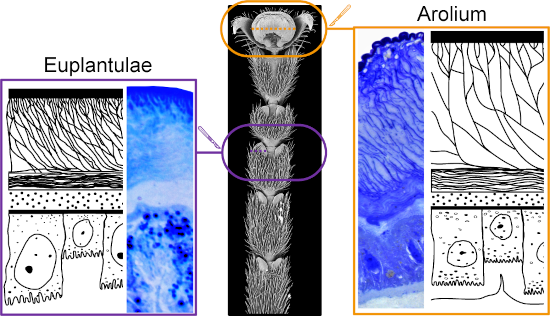
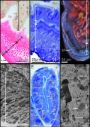
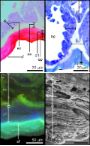
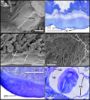
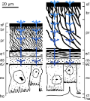
- tensile stress [74][75]. The more spaced fibres of the arolium consequently would bend more efficiently under pressure and easily adapt to surface irregularities increasing adhesion [44]. The euplantulae feature relatively thinner and with more densely distributed fibres enhances protection against




Stiffness calibration of qPlus sensors at low temperature through thermal noise measurements
Beilstein J. Nanotechnol. 2024, 15, 580–602, doi:10.3762/bjnano.15.50
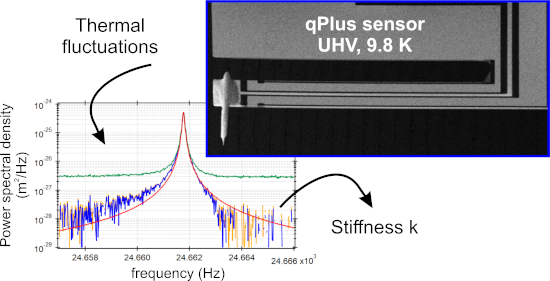
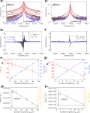
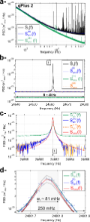
- want to stress that although this work treats the particular case of qPlus sensors, the framework can be adapted to any other kind of nc-AFM probes used in LT UHV, including other types of QTFs, silicon cantilevers, and LERs, with the KolibriSensor among the latter. The paper is organized as follows
- quantitative agreement with the beam formula (Equation 2) if the beam origin is shifted to the position of zero stress onset inside the tuning fork base; however, there was a systematic overestimation of the experimental stiffness due to the tip gluing geometry. In the 2000s, Rychen et al. proposed an approach

Cholesterol nanoarchaeosomes for alendronate targeted delivery as an anti-endothelial dysfunction agent
Beilstein J. Nanotechnol. 2024, 15, 517–534, doi:10.3762/bjnano.15.46
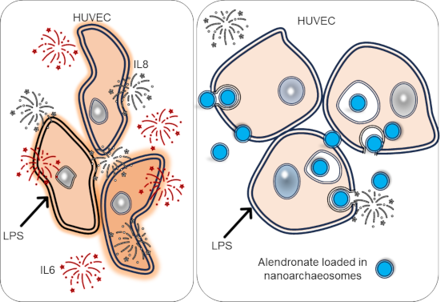
- stress manifests as changes in vascular tone, increased permeability, thrombotic events, and exposure to circulating leukocyte receptors. Different pharmacological agents can reduce endothelial dysfunction [1], but they have no effect on acute inflammations or edema such as those occurring in sepsis, a
- simplicity and resistance to mechanical stress. Recently, we have reported the structural characterization and effect on J774A.1 murine macrophages of ALN loaded in nanoarchaeosomes, that is, nanoARC(ALN) and nanoARC-Chol(ALN). Remarkably, these formulations do not seek to modify the solubility of ALN, but
- -fraction V were obtained from Sigma-Aldrich (MO, USA). Lissamine™ rhodamine B 1,2-dihexadecanoyl-sn-glycero-3-phosphoethanolamine triethylammonium salt (RhPE), Hoechst 33342, Pierce™ BCA Protein Assay Kit, and CM-H2DCFDA (general oxidative stress indicator) were purchased from Thermo Fisher Scientific (MA





Fabrication of nanocrystal forms of ᴅ-cycloserine and their application for transdermal and enteric drug delivery systems
Beilstein J. Nanotechnol. 2024, 15, 465–474, doi:10.3762/bjnano.15.42
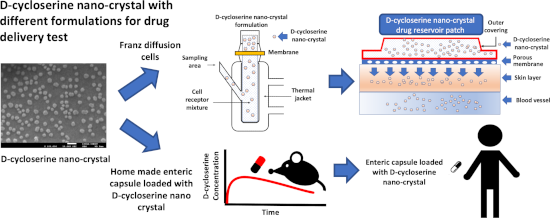
- has shown significant treatment efficacy for central nervous system (CNS) disorders including depression, schizophrenia, Alzheimer’s disease, and post-traumatic stress disorder. The physicochemical properties of DCS, however, limit the options of formulation and medicinal applications of DCS, and
- disease, and post-traumatic stress disorder [13][14][15][16]. In general, solid dosage forms for oral administration are preferable for therapies against CNS disorders. Nevertheless, challenges persist with oral solid dosage forms, including issues of bioavailability and clinical efficacy [17]. On the


Heat-induced morphological changes in silver nanowires deposited on a patterned silicon substrate
Beilstein J. Nanotechnol. 2024, 15, 435–446, doi:10.3762/bjnano.15.39
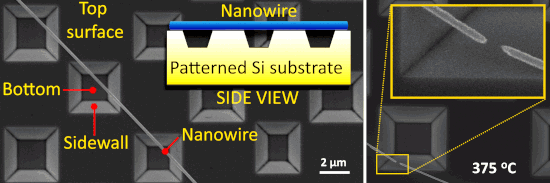
- leading to heat-induced fragmentation of Ag NWs as the mechanism of stress release, and could potentially involve recrystallization into single crystals. To test this hypothesis, we repeated experiments on TEM grids with subsequent observation of the crystal structure via TEM. It was found that the
- a driving force for the redistribution of Ag atoms and splitting of the adhered part of a NW into shorter fragments as a mechanism for stress mitigation. For the suspended parts, the thermal expansion should result in deformation. To estimate the extent and distribution of the heat-induced
- occur in the real system as a mechanism of stress mitigation. The model is completely elastic, and the simulated processes are fully reversible. Therefore, the results of FEM simulations should only be treated as a simplified qualitative illustration of the thermomechanical processes that may occur in