Search results
Search for "colloidal stability" in Full Text gives 117 result(s) in Beilstein Journal of Nanotechnology.
The effect of surface charge on nonspecific uptake and cytotoxicity of CdSe/ZnS core/shell quantum dots
Beilstein J. Nanotechnol. 2015, 6, 281–292, doi:10.3762/bjnano.6.26

- DPA–QDs show minimal aggregation due to the low pKa value (4.73) of the DHLA carboxylic group [32] and the colloidal stability over a wide pH range of the zwitterionic coating, respectively [33]. In order to clarify whether the CA–QDs and DHLA–QDs affect the cells differently due to their surface
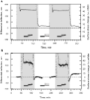
- immediate toxicity caused by QDs. For negatively charged DHLA–QDs and zwitterionic DPA–QDs, the decrease in the cellular impedance was the most pronounced, reduced to 50% of the initial value. 50 nM solutions of CA–QDs and MPA–QDs (for which limited colloidal stability was expected) both had the smallest





Mammalian cell growth on gold nanoparticle-decorated substrates is influenced by the nanoparticle coating
Beilstein J. Nanotechnol. 2014, 5, 2479–2488, doi:10.3762/bjnano.5.257

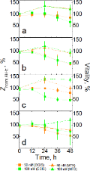
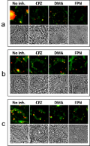
- with the negatively charged membrane [21][22], and to the sedimentation behavior of the particles which is related to their colloidal stability under physiological conditions [33]. The uptake was likely caused by non-specific endocytosis or macropinocytosis. Therefore, we expected an even stronger


Intake of silica nanoparticles by giant lipid vesicles: influence of particle size and thermodynamic membrane state
Beilstein J. Nanotechnol. 2014, 5, 2468–2478, doi:10.3762/bjnano.5.256
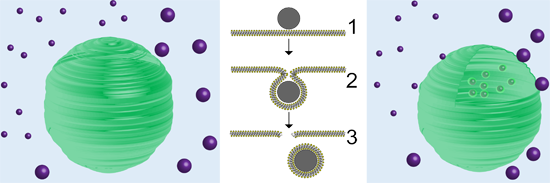
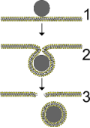
- . This is to prevent osmotic tension of the vesicle membrane at the beginning of an experiment. The colloidal stability of the particles under these conditions was confirmed by dynamic light scattering (DLS). Figure 9 describes the easy experimental procedure. Due to the slight density difference between


Inorganic Janus particles for biomedical applications
Beilstein J. Nanotechnol. 2014, 5, 2346–2362, doi:10.3762/bjnano.5.244
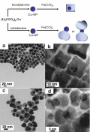
- synthesis of monodisperse, well-defined hetero-nanostructures requires non-hydrolytic reaction conditions, as established for the isotropic analogues. Therefore, it is necessary to exchange the hydrophobic surface functionalization of the nanoparticles by hydrophilic ligands to secure colloidal stability in






Effects of surface functionalization on the adsorption of human serum albumin onto nanoparticles – a fluorescence correlation spectroscopy study
Beilstein J. Nanotechnol. 2014, 5, 2036–2047, doi:10.3762/bjnano.5.212

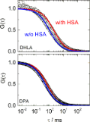
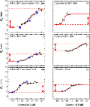
- potential and the excellent colloidal stability of the DHLA-coated NPs. Zwitterionic surfaces, however, are famous for their hydrophobicity, protein adsorption resistance and anti-fouling properties, which strongly argues against a destabilizing effect of DPA-QDs [51]. Of note is that our measured ΔRH value



The surface properties of nanoparticles determine the agglomeration state and the size of the particles under physiological conditions
Beilstein J. Nanotechnol. 2014, 5, 1774–1786, doi:10.3762/bjnano.5.188
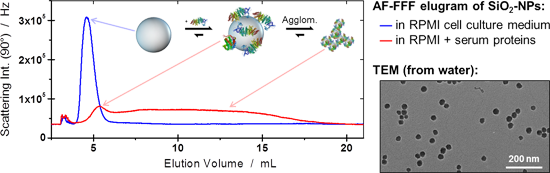
- responsible for the colloidal stability of the dispersion. Generally, the absolute value of the zeta potential decreases under conditions of high salinity, which are predominant in cell culture medium. For example, for NexSil20, a zeta potential value of −20 mV is found. However, under conditions of
- reveal a decrease in colloidal stability of the samples after quaternization. Zeta potential measurements show a rather constant value of approximately +30 mV in 5 mM NaBr for all three samples indicating that, at least under low salt conditions, the degree of quaternization does not influence the charge
- of the particles. PEG@POS-NH2: With the introduction of PEG, the mechanism of colloidal stabilization is changed towards steric stabilization and colloidal stability is expected to increase. However, the DLS measurement of the resulting sample PEG@POS-NH2 revealed a hydrodynamic radius of 41.5 nm and


Influence of surface-modified maghemite nanoparticles on in vitro survival of human stem cells
Beilstein J. Nanotechnol. 2014, 5, 1732–1737, doi:10.3762/bjnano.5.183

- ][25]. In particular, PDMAAm-coated γ-Fe2O3 nanoparticles exhibited a long-term colloidal stability even after more than six months of storage. All types of γ-Fe2O3 nanoparticles displayed superparamagnetic behavior [29], which is characterized by a strong response to a magnetic field and zero remanent
- magnetization. This is proven by the quick separation of such particles in a magnetic field and the easy redispersion by Brownian motion into a liquid medium after removing the magnet. It is obvious that the colloidal stability of the particles is a prerequisite to their biomedical applications. Thanks to the


Current state of laser synthesis of metal and alloy nanoparticles as ligand-free reference materials for nano-toxicological assays
Beilstein J. Nanotechnol. 2014, 5, 1523–1541, doi:10.3762/bjnano.5.165
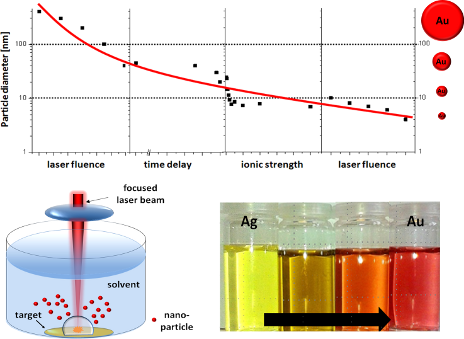
- anionic surface moieties [42]. The most probable explanation is that positively charged gold surfaces attract water molecules, oxygen and carbon dioxide, forming a pH-dependent equilibrium of Au–OH/Au–O− and Au–CO3− groups [44][45]. Generally, these surface charges lead to a good colloidal stability due
- interfere with toxicity assays. Even though the addition of ions is generally believed to compromise colloidal stability due to a reduction of the Debye length, previous studies reported an anion specific stabilization and destabilization of laser generated gold nanoparticles [44]. Furthermore, size control
- , reference nanoparticles may be considered ideal hard spheres whose colloidal stability is entirely driven by electrostatic effects, which may be well characterized by their electrophoretic mobility (zeta-potential) [103]. Under these conditions, colloidal stability is basically influenced by three


In vitro interaction of colloidal nanoparticles with mammalian cells: What have we learned thus far?
Beilstein J. Nanotechnol. 2014, 5, 1477–1490, doi:10.3762/bjnano.5.161
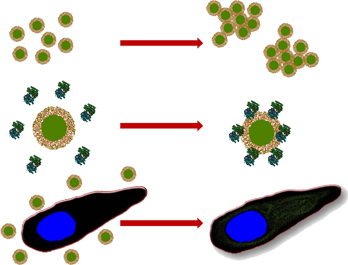
- number of fundamental principles exist, which are outlined in this review. Keywords: colloidal stability; intracellular particle distribution; nanoparticles; protein corona; toxicity of nanoparticles; Introduction There is a multitude of reports about the interaction of colloidal nanoparticles (NPs
- physicochemical properties of the NPs can be found. One, however, has to be aware that many physicochemical properties of NPs, such as size, shape, charge, and colloidal stability are highly entangled [14]. The physicochemical properties are not intrinsically associated with the NPs, but result from the
- interaction of the NPs with the surrounding particular medium [87]. The colloidal stability is presumably the most influential parameter. NPs with low colloidal stability will agglomerate and thus, originally "small" NPs will transform into agglomerates, resulting in large particles presented to the cells (cf


The protein corona protects against size- and dose-dependent toxicity of amorphous silica nanoparticles
Beilstein J. Nanotechnol. 2014, 5, 1380–1392, doi:10.3762/bjnano.5.151
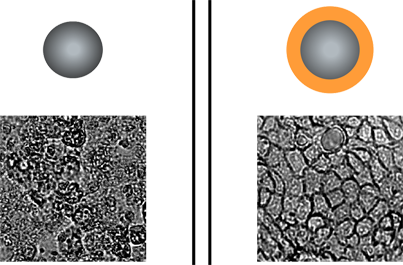
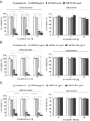
- were measured in water, the colloidal stability is expected to be best when the surface-charge-stabilized silica particles are dispersed in water containing low concentrations of salt. Nevertheless, all presented particles show hydrodynamic diameters in the range of the primary particle size also in
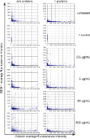
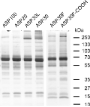
- to link individual or multiple particle parameters, such as geometry, pore size or surface functionalization to the observed nanobiological effects. The negative zeta potential, hydrodynamic diameter and colloidal stability of the ASP dispersions were obtained in water, salt-containing buffer, and




Characterization and photocatalytic study of tantalum oxide nanoparticles prepared by the hydrolysis of tantalum oxo-ethoxide Ta8(μ3-O)2(μ-O)8(μ-OEt)6(OEt)14
Beilstein J. Nanotechnol. 2014, 5, 1082–1090, doi:10.3762/bjnano.5.121

- manner that their hydrophobic surfaces point toward the solvent and render colloidal stability and uniformity of the particles in organic solvents [23]. The TOPO coated particles suspended in chloroform were precipitated by adding excess methanol followed by centrifuging at 2000 rpm and re-dispersed in


Nanodiamond-DGEA peptide conjugates for enhanced delivery of doxorubicin to prostate cancer
Beilstein J. Nanotechnol. 2014, 5, 937–945, doi:10.3762/bjnano.5.107
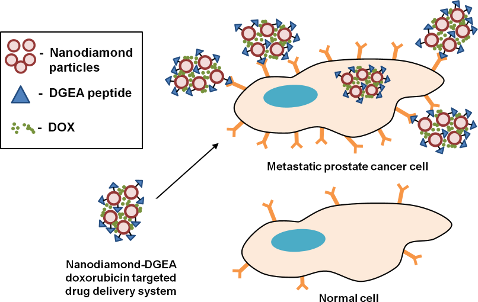
- size and zeta potential are particularly important for drug delivery applications as they give representations of size limitations and potential colloidal stability issues of a system. NDs permeate the cell membrane by endocytosis [20][36][37]. Through this pathway, NDs can effectively deliver drugs
- measurements, but the size of the ND-DGEA+DOX system was within the optimal range for drug delivery (<100 nm). The zeta potential indicated that the colloidal stability decreased with each modification of the NDs. At a prepared concentration of 200 µg/mL, the zeta potentials for pure NDs, ND-DGEA, and ND-DGEA


Optimizing the synthesis of CdS/ZnS core/shell semiconductor nanocrystals for bioimaging applications
Beilstein J. Nanotechnol. 2014, 5, 919–926, doi:10.3762/bjnano.5.105

- this equation, we determined that the dispersion in water and the pH value can affect their stability. We used DLS as an accurate approach to monitor the colloidal stability of F127-CdS/ZnS micelles. The DLS samples were diluted in HPLC water (1:30). Then, we investigated the formulation of the micelle


Injection of ligand-free gold and silver nanoparticles into murine embryos does not impact pre-implantation development
Beilstein J. Nanotechnol. 2014, 5, 677–688, doi:10.3762/bjnano.5.80
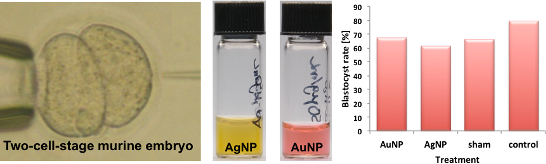
- potential has been reported to influence cytotoxicity [74][75] as well as colloidal stability [76], which in turn has also been noted to impact the toxicity of nanoparticles [40][41]. In general, it can be said, that a high positive zeta potential as well as a high colloidal stability are connected to an
- increase in toxicity. However, in how far these aspects changed in the nanoparticles used in the study presented here after exposure to proteins can only be speculated about, since neither zeta potential nor colloidal stability can be unbiasedly determined after an injection into the embryo. An indication




In vitro toxicity and bioimaging studies of gold nanorods formulations coated with biofunctional thiol-PEG molecules and Pluronic block copolymers
Beilstein J. Nanotechnol. 2014, 5, 546–553, doi:10.3762/bjnano.5.64
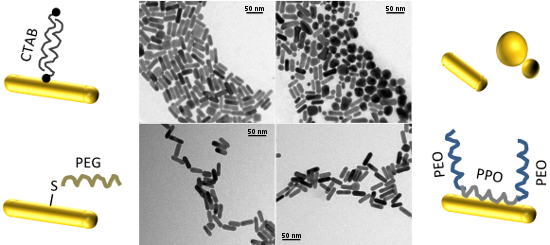
- Singapore School of Physics, National University of Ireland, Galway, Ireland 10.3762/bjnano.5.64 Abstract In this work, we investigated the cytotoxicity, colloidal stability and optical property of gold nanorods before and after functionalizing them with thiolated PEG and Pluronic triblock copolymer (PEO
- hydrophilic and positively charge [18][19]. Therefore, a surface functionalization platform is needed to furnish a AuNR surface with a biocompatible polymer-coating for reducing their cytotoxicity while maintaining colloidal stability and allowing them to be conjugated for biomedical applications. Bio
- corresponding impact on biological systems. In this work, we systematically study the cytotoxicity, colloidal stability, and optical property of AuNRs before and after functionalizing them with PEG-SH and PEO–PPO–PEO molecules. These AuNRs formulations were characterized by using UV–vis spectroscopy


Characterization of protein adsorption onto FePt nanoparticles using dual-focus fluorescence correlation spectroscopy
Beilstein J. Nanotechnol. 2011, 2, 374–383, doi:10.3762/bjnano.2.43

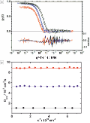
- endowing the NPs with an overall negative charge and excellent colloidal stability [30]. To determine the affinity of the proteins to the NPs as well as the increase in RH, we took 2fFCS data on NPs freely diffusing in solutions, which contained the proteins at concentrations varying over several orders of


Sensing surface PEGylation with microcantilevers
Beilstein J. Nanotechnol. 2010, 1, 3–13, doi:10.3762/bjnano.1.2
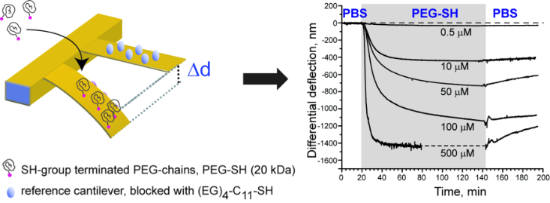
- interfacial processes. Their sensitivity to solvent conditions and ability to undergo conformational transitions makes polymers attractive in tailoring surface properties with specific functionalities leading to applications in diverse areas ranging from tribology to colloidal stability and medicine. A key