Search results
Search for "image" in Full Text gives 1512 result(s) in Beilstein Journal of Nanotechnology. Showing first 200.
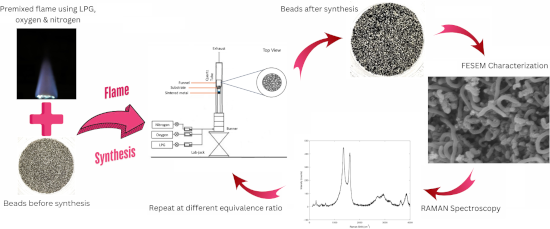
Feasibility analysis of carbon nanofiber synthesis and morphology control using a LPG premixed flame
Beilstein J. Nanotechnol. 2025, 16, 581–590, doi:10.3762/bjnano.16.45
- aluminum foil covered drum was placed 18 cm from the needle to collect the nanofibers. The flow rate of the solution was 0.5 mL/h. The as-prepared nanofibers underwent thermal treatments, and it was found that the nanofibers exhibited optimal properties after treatment at 850 °C. The SEM and TEM image
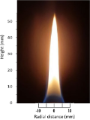
- temperature distribution at the center of the flame. Figure 2 shows a line-of-sight image of the stable diffusion flame, burning at lean combustion with Φ = 0.77, where the equivalence ratio was calculated based on the inlet conditions. The diffusion flame has a bright yellow color, due to soot formation, and
- additional oxygen that mixes with the excess fuel. This process allows for continuous combustion further from the source, producing a secondary diffusion flame as shown in the image in Figure 4a. The flame height based on the tip of the secondary diffusion flame is about 25 mm. A diffusion flame forms at the



Electron beam-based direct writing of nanostructures using a palladium β-ketoesterate complex
Beilstein J. Nanotechnol. 2025, 16, 530–539, doi:10.3762/bjnano.16.41
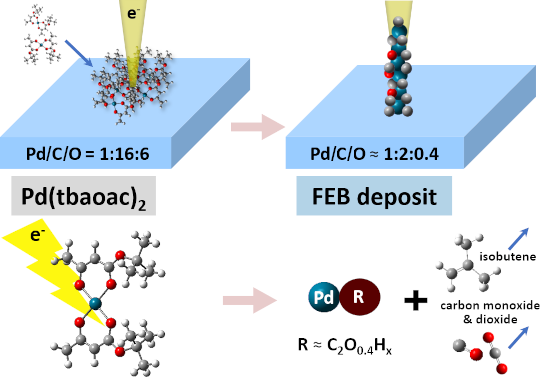
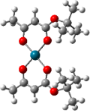
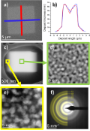
- )palladium(II) precursor. The atom color labeling is white: H, grey: C, red: O, and bluish green: Pd [42]. Characteristics of FEB nanoprinted square deposits with [Pd(tbaoac)2]. (a) Secondary electron SEM image of the FEB deposit on a native-oxide Si substrate with indicated AFM scan lines. (b) AFM thickness
- profiles along vertical and horizontal directions. (c) STEM image of the FEB deposit on a carbon membrane. (d) High-resolution STEM image from the center of the deposit. (e) High-resolution STEM image from the edge of the deposit. (f) SAED pattern from the edge of the deposit. Enlarged version of the
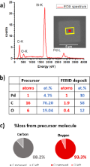
- images in panels (e) and (f) can be found in Supporting Information File 1, section S1 along with an additional STEM image. (a) EDX spectrum taken at the center of the deposit (red area) shown in inset. The BSE exit area is indicated with a yellow border. (b) Composition of the pristine [Pd(tbaoac)2


Zeolite materials with Ni and Co: synthesis and catalytic potential in the selective hydrogenation of citral
Beilstein J. Nanotechnol. 2025, 16, 520–529, doi:10.3762/bjnano.16.40
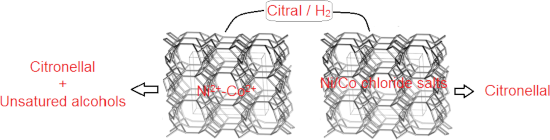
- -type zeolites through their main diffraction peaks indicated on the ZSA graph. Other minor phases such as quartz are also present. The SEM image shows a variety of crisscross crystals, which have the morphology expected for the zeolite types evidenced by XRD [16][17]. Very elongated crystals with
- acicular to fibrous characteristics, associated with mordenite, can be observed. Additionally, clinoptilolite–heulandite crystals with slats and tabular morphology are present. The amounts of clinoptilolite–heulandite and mordenite crystals displayed in the SEM image correspond to the intensity order of
- SEM image (Figure 2). To remove excess solution, water washes are typically applied. The materials obtained via IE underwent extensive washing with distilled water, while those obtained via Imp were only lightly washed, leading to the observed differences in chloride content. According to this, there


Performance optimization of a microwave-coupled plasma-based ultralow-energy ECR ion source for silicon nanostructuring
Beilstein J. Nanotechnol. 2025, 16, 484–494, doi:10.3762/bjnano.16.37
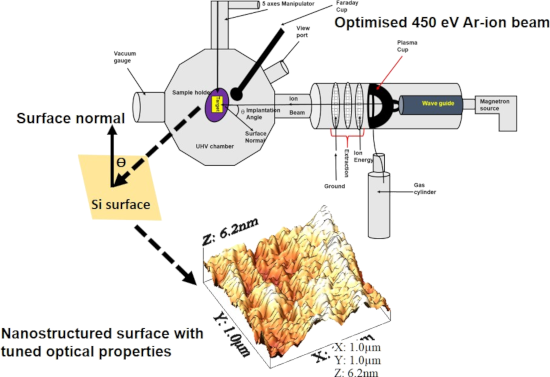
- increases with bombardment time. Fast Fourier transform (FFT) images of the nanopatterned surface are inset in the lower right corner of each image. In the present case, the fluence is represented by irradiation time. The quality and the growth of the nanostructures are quantitatively discussed in Figure 6
- , where variations of ripple wavelength, rms roughness, and power spectral density are discussed. Figure 5g shows the cross-sectional TEM image after 450 eV Ar-ion bombardment of the Si surface at an angle of 60° for a time of 3 h. The presence of Ar-ion-induced surface corrugation in terms of ripple-like
- nanostructures is evidenced in Figure 5g. Although the amplitude of the ripples is not large, the observed ripple wavelength of around 31 nm from the TEM image is consistent with that of AFM data (Figure 6e). However, in addition to the ripple-like nanostructures, an ultrathin amorphous layer is formed because


Effect of additives on the synthesis efficiency of nanoparticles by laser-induced reduction
Beilstein J. Nanotechnol. 2025, 16, 464–472, doi:10.3762/bjnano.16.35
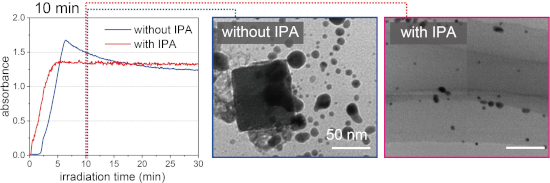
- ) images of the samples extracted from solutions with and without and IPA after 10 and 30 min of laser irradiation. In the case of the sample without IPA, in the TEM image of the sample after 10 min of laser irradiation, which is the initial stage of laser fragmentation, in addition to spherical particles
- % IPA, even in the TEM image of the sample after 10 min of laser irradiation, nanoparticles with a narrow particle size distribution of less than 10 nm in diameter were observed. This suggests that the nanoparticle synthesis reaction finished after 10 min of irradiation. This is due to the fact that the
- Au–Pt alloy (atomic ratio, Au/Pt = 1:1) that has an immiscible gap in the binary phase diagram and is difficult to form a solid–solution alloy in a bulk form. Figure 6 shows a a) TEM image and b) STEM-EDS mappings of the particles produced after laser irradiation. The TEM results (Figure 6a


Synthetic-polymer-assisted antisense oligonucleotide delivery: targeted approaches for precision disease treatment
Beilstein J. Nanotechnol. 2025, 16, 435–463, doi:10.3762/bjnano.16.34


Quantification of lead through rod-shaped silver-doped zinc oxide nanoparticles using an electrochemical approach
Beilstein J. Nanotechnol. 2025, 16, 422–434, doi:10.3762/bjnano.16.33
- electron microscopy (FESEM) image of the as-obtained nanomaterials. The produced nanomaterials had rod-shaped morphologies and were grown at extremely high densities, as seen by the SEM image. Figure 2b represents the average diameter of Ag@ZnO NRs which was calculated using the Image J software. The




Size control of nanoparticles synthesized by pulsed laser ablation in liquids using donut-shaped beams
Beilstein J. Nanotechnol. 2025, 16, 407–417, doi:10.3762/bjnano.16.31
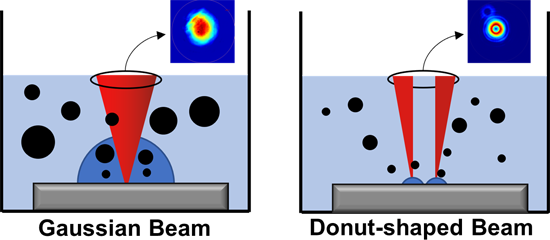
- -shaped beam, w = 0.34, than for the Gaussian beam, w = 0.53. Furthermore, PLAL with donut-shaped pulses improves the shape of Y2O3 NPs, which are more regular (Figure 3a) than the rather elongated and aggregated NPs produced with the Gaussian pulses (Figure 3b). Figure 4c shows an SEM image and the size
- with Gaussian and donut-shaped laser beams at a pulse energy of 100 µJ. (a, b) SEM micrographs of NPs obtained with the Gaussian beam at fluences of 6 and 2 J·cm−2, respectively. (c) SEM image of NPs obtained with the donut-shaped beam at a fluence of 2 J·cm−2. (d) NP size distributions showing the


ReactorAFM/STM – dynamic reactions on surfaces at elevated temperature and atmospheric pressure
Beilstein J. Nanotechnol. 2025, 16, 397–406, doi:10.3762/bjnano.16.30
- these techniques are photon-based [4][5][6][7][8][9]. Even though they provide valuable insights, the development of surface-sensitive techniques that can image the catalyst at the atomic scale under high-pressure and high-temperature conditions remains crucial. In attempting to close the pressure gap
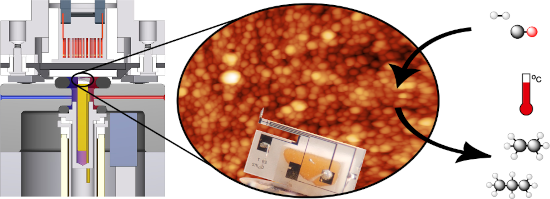
- detection method with a laser diode, which is not compatible with the design limitations of a reactor volume of 95 μL. Figure 3a shows a zoomed-in image of a third-generation M5B qPlus sensor (purchased from Nanosurf). The sensor has four gold electrodes of which three are used for AFM drive and readout
- tunneling current simultaneously (Figure 5c,d). Consequently, the tip–sample distance will be maintained throughout the image while the current signal will be a direct indication of the conductivity of the surface. The Pd(100) surface has been prepared using the standard recipe of repeated cycles of Ar-ion


Development of a mucoadhesive drug delivery system and its interaction with gastric cells
Beilstein J. Nanotechnol. 2025, 16, 371–384, doi:10.3762/bjnano.16.28
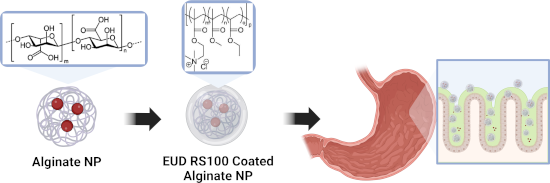
- was characterized by STEM, where transmitted electrons are used to create the image [30]. In STEM micrographs, alginate nanoparticles appeared with sharp edges; however, the edges of the EudAlg nanoparticles revealed secondary projections (Figure 1C,D). Similar micrographs in which the edge of the


Graphene oxide–chloroquine conjugate induces DNA damage in A549 lung cancer cells through autophagy modulation
Beilstein J. Nanotechnol. 2025, 16, 316–332, doi:10.3762/bjnano.16.24
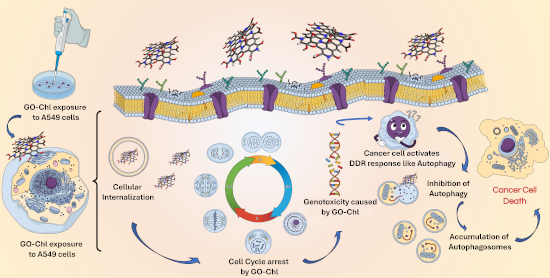
- and an image analysis system (Andor Technology, Belfast, UK) and a software (KOMET 5.0, Kinetic Imaging, UK) at 400× magnification. Three independent experiments were performed for each group. The mean value of three Comet parameters, tail DNA (%), tail length (μm), and Olive tail moment (OTM) were
- fluorescent microscope equipped with a Nikon Digital slight Ds-Ri1 CCD camera and a NIS element BR imaging software (Nikon, Minato Tokyo, Japan). Three independent experiments were performed for each group and a representative image is shown in the results. Transfection of the GFP-LC3 plasmid The GFP-LC3
- S1d, the FESEM image reveals a well-defined interlocked 3D network of GO nanosheets, with the transparency observed attributed to the formation of single or few layered GO nanosheets [25][50]. In Supporting Information File 1, Figure S1e, the HRTEM micrograph reveals highly transparent GO nanosheets



Radiosensitizing properties of dual-functionalized carbon nanostructures loaded with temozolomide
Beilstein J. Nanotechnol. 2025, 16, 229–251, doi:10.3762/bjnano.16.18
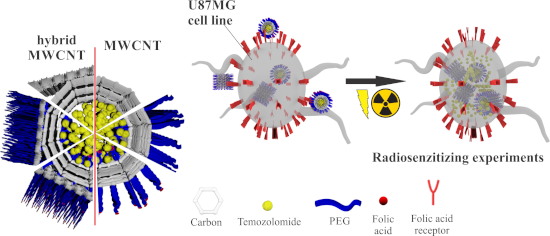
- [48][49][50][51][52][53]. Morphology In the SEM images of the MWCNTs-COOH (presented in our previous study [43]), a dense structure of randomly aggregated, convoluted, and highly tangled tubes was observed. The image of MWCNTs-G shows a hybrid structure of multiwalled nanotubes dispersed within the




Synthesis and the impact of hydroxyapatite nanoparticles on the viability and activity of rhizobacteria
Beilstein J. Nanotechnol. 2025, 16, 216–228, doi:10.3762/bjnano.16.17
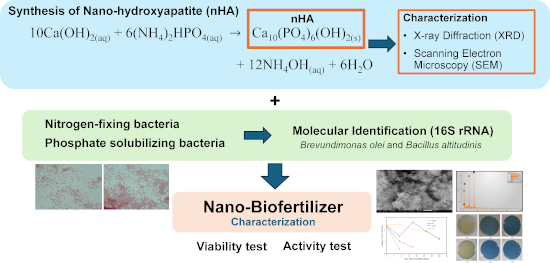
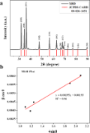
- the synthesized nHA is given in Figure 2. Figure 2 shows that the XRD pattern of nHA aligns with the ICSD #157481 standard (Figure 1) and the P63/m space group. This alignment confirms the successful synthesis of hydroxyapatite. Notably, the image highlights the characteristic (211) peak of HA at 2θ
- results reveal an average particle size of 68.08 nm, as displayed in Figure 3b. Moreover, a more comprehensive examination of the SEM image using OriginLab software yields a sample porosity of 54.78%, as illustrated in Figure 3d. In this representation, the blue regions correspond to the solid volume of


Recent advances in photothermal nanomaterials for ophthalmic applications
Beilstein J. Nanotechnol. 2025, 16, 195–215, doi:10.3762/bjnano.16.16
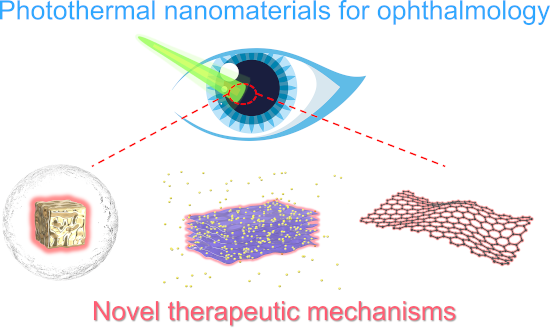
- penetration depth is only a few millimeters, which does not provide clear imaging of deeper ocular structures [177][178]. Fluorescence imaging is hindered by contrast agent photobleaching and phototoxicity, resulting in low image quality and biological side effects [179][180]. Photoacoustic imaging has deep
- [189][192]. Photothermal nanomaterials with high extinction coefficients that enhance photothermal-acoustic conversion are particularly suitable for PAI, helping to improve image resolution, enhance signal strength, and increase contrast [193][194]. AuNPs with excellent photostabilization are common


Probing the potential of rare earth elements in the development of new anticancer drugs: single molecule studies
Beilstein J. Nanotechnol. 2025, 16, 187–194, doi:10.3762/bjnano.16.15

- agreement with the OT results since the concentration used in the sample to obtain this image was 1 μM of neodymium. Finally, for erbium (Figure 3c) the complexes also appears compacted/condensed for 1 μM of the rare earth, also in agreement with the OT results. We stress that the intent of the AFM


TiO2 immobilized on 2D mordenite: effect of hydrolysis conditions on structural, textural, and optical characteristics of the nanocomposites
Beilstein J. Nanotechnol. 2025, 16, 128–140, doi:10.3762/bjnano.16.12
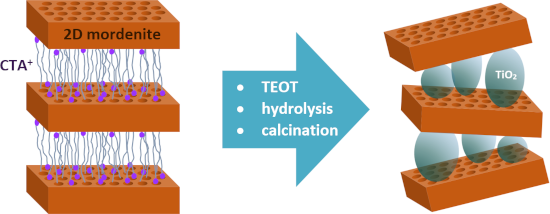
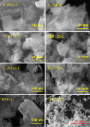
- studied composites. The scanning electron microscopy (SEM) image of the initial lamellar mordenite sample MOR-L is also shown for comparison. As can be seen, MOR-L exhibits elongated plates up to 1 μm long and 0.1 μm wide, combined into stacks. After introduction of TEOT followed by hydrolysis and
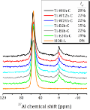
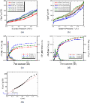
- associated with extra-framework Al species, which according to 27Al NMR amount to a total of about 20% (Figure 2). For Ti-E24h-C, a low intensity peak appears at 72.7 eV. This peak can be related to framework Al in the 3D mordenite fibers, which are clearly seen in the SEM image (Figure 3). It should be
- extra-framework Al species Ief is shown in the legend. SEM images of the parent lamellar mordenite MOR-L (bottom left) and TiO2-loaded samples. The bottom-right image shows the formation of mordenite crystals in the Ti-E24h-C sample. (a) Al 2p, (b) Ti 2p, and (c) decomposed O 1s XPS spectra of the Ti



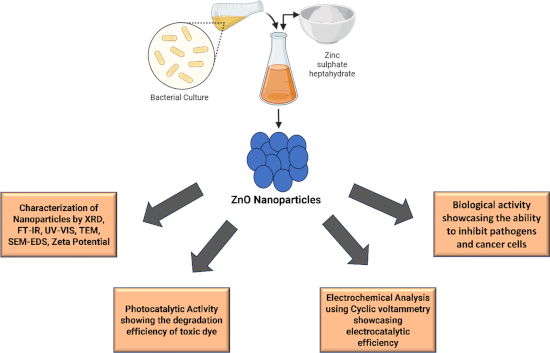
Characterization of ZnO nanoparticles synthesized using probiotic Lactiplantibacillus plantarum GP258
Beilstein J. Nanotechnol. 2025, 16, 78–89, doi:10.3762/bjnano.16.8
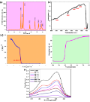
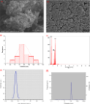
- produce hydroxyl radicals (•OH−). These radicals degrade the dye molecules into harmless substances; the degradation is shown in Figure 2d. TEM analysis The size of the ZnO NPs, which was determined from TEM using Image J software, varied from 7 to 98 nm, with an average size of 10 nm. The SAED pattern of
- ZnO NPs confirms the XRD results, that is, the hexagonal wurtzite structure (Figure 3). SEM and EDX analysis SEM was used to analyze the surface morphology of a modified nanocomposite film, and the image displays a consistent coverage of a web-like structure. Close-up views revealed a crumpled and



Instance maps as an organising concept for complex experimental workflows as demonstrated for (nano)material safety research
Beilstein J. Nanotechnol. 2025, 16, 57–77, doi:10.3762/bjnano.16.7
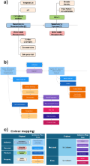
- , instance, material, medium, property, and supplementary; a property can describe either a medium (e.g., environmental, biological, or experimental) or material, a supplementary provides a way to include visual information about a property (e.g., image or diagram), and the instance itself is the point in


Advanced atomic force microscopy techniques V
Beilstein J. Nanotechnol. 2025, 16, 54–56, doi:10.3762/bjnano.16.6
- precision of scanning probe microscopy experiments by introducing a software for lateral drift correction [1]. Post-data acquisition drift correction for longer series of consecutively recorded image sets can be cumbersome and extremely time consuming. Here, the authors develop an easy-to-use and robust
Bioinspired nanofilament coatings for scale reduction on steel
Beilstein J. Nanotechnol. 2025, 16, 25–34, doi:10.3762/bjnano.16.3
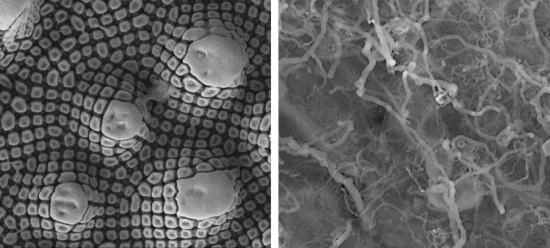
- shear stress at the plate is reported in Figure 2D for different angular velocities and corresponding volumetric flow rates. Super-hydrophobicity of SNF coatings on steel Figure 3A shows a scanning electron microscopy (SEM) image of a stainless-steel surface coated with SNFs. The wire-type structures
- – we can conclude that nanofilaments can be deposited on steel surfaces and that the grown structures render the steel surface super-hydrophobic [24]. The morphology and function of the SNF steel coatings remain intact during the shear stress test. The SEM image of the SNF coating after shear exposure
- plate for different rotational speeds and respective values of volumetric flows for a 4-inch pipe. The circled area represents the region of constant-sheer stress. (A) SEM image of the coated surface. A network of SNFs with different width and diameters is visible. (B,C) Water contact angle measurements


Orientation-dependent photonic bandgaps in gold-dust weevil scales and their titania bioreplicates
Beilstein J. Nanotechnol. 2025, 16, 1–10, doi:10.3762/bjnano.16.1
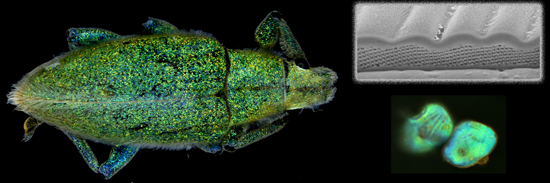
- visible hexagons (Figure 3b I,III,VIII). The domains close to the {100} orientation exhibited a square-shaped blue zone in the center of the reciprocal space image, corresponding to the X-symmetry point (Figure 3b V). Overall, the domains in the scales seem to be oriented randomly. Additional measurements
- spectrum measured in the image center, close to the X-symmetry point, has a peak around 440 nm, whereas the spectra measured at the diagonals close to the rim, approaching L-symmetry points, have peaks around 500 nm (Figure 3e). The reflectance peak from the L-symmetry point, measured from a {111}-oriented
- higher refractive index contrast, or (iii) materials with non-linear optical properties [48][49][50] would be an interesting future research direction. Experimental Light microscopy The image of the whole animal was taken with a stereomicroscope (Stereo Discovery V20, Zeiss, Oberkochen, Germany). For


Attempts to preserve and visualize protein corona on the surface of biological nanoparticles in blood serum using photomodification
Beilstein J. Nanotechnol. 2024, 15, 1654–1666, doi:10.3762/bjnano.15.130
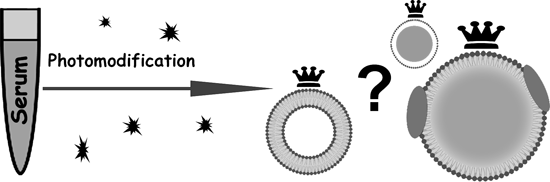
- somewhat less definite. These changes were not measurable, but they were visually noticeable (compare Figures 3–5), especially when directly viewing the samples in TEM. The bio-NPs exhibited less features, and many of the smallest dots that form the three-dimensional image had disappeared. We were unable



Fabrication of hafnium-based nanoparticles and nanostructures using picosecond laser ablation
Beilstein J. Nanotechnol. 2024, 15, 1639–1653, doi:10.3762/bjnano.15.129
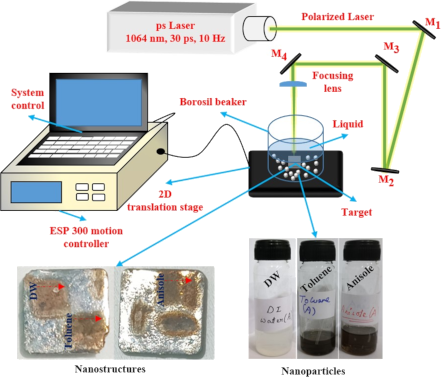
- Horiba LabRAM HR Evolution (Excitation: 325 nm, Lens: 40×, spot size: 1 μm) was used. Image J software was used to extract spatial periodicities and to generate 2D fast Fourier transform images (2D FFT) of the Hf surface structures. Results and Discussion Nanoparticles Figure 3 shows TEM images, the
- corresponding particle size distributions, and the SAED patterns of NPs obtained in DW (Figure 3a–c), toluene (Figure 3d–f), and anisole (Figure 3g–i). The TEM image corresponding to HfNPs in DW shows the formation of nanofibres of diameters ranging from 5 to 65 nm along with spherical NPs (marked with red
- , and (c) anisole. Schematic of the NS fabrication by raster scanning the sample, resulting in LSFL and HSFL formation. FESEM image and inverse FFTs of LSFL with spatial periodicity on laser-ablated NSs in (a, b) DW, (c, d) toluene, and (e, f) anisole. FESEM image and HSFL size distribution of NSs laser




Natural nanofibers embedded in the seed mucilage envelope: composite hydrogels with specific adhesive and frictional properties
Beilstein J. Nanotechnol. 2024, 15, 1603–1618, doi:10.3762/bjnano.15.126
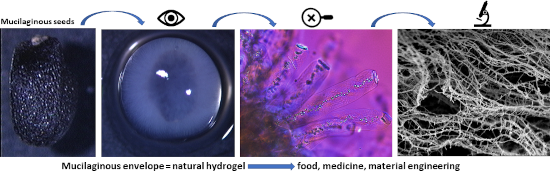
- complete expansion of the envelope, the mucilaginous polysaccharides (pectins, hemicelluloses, and cellulose fibrils) form a netlike 3D structure. (h) High-magnification image showing cellulose fibril bundles (cfb), which form the main (unbranched) skeleton, while pectins and hemicelluloses (csp – cross
- . Delicate cellulose fibrils, stretching from the seed surface, are imbedded in the mass of pectins. (e) Lepidium sativum – polarisation microscopy image of cellulose fibrils demonstrating the presence of crystalline cellulose shining white. (f) Ocimum basilicum – fluorescence microscopy image of the


Ultrablack color in velvet ant cuticle
Beilstein J. Nanotechnol. 2024, 15, 1554–1565, doi:10.3762/bjnano.15.122
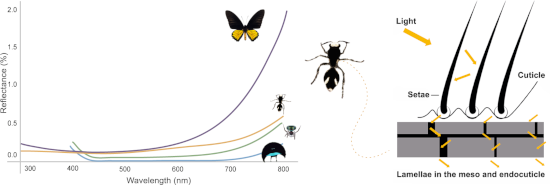
- butterfly was obtained from [12]. The spectra of T. bifurca are derived from our study. The illustrations of velvet ant and bird-of-paradise were created using Adobe Photoshop. Butterfly image is from Insectpedia - stock.adobe.com. This content is not subject to CC BY 4.0. The image of the peacock spider
- female Traumatomutilla bifurca (Hymenoptera: Mutillidae). (A) Visible spectrum image, (B) thermal image of the animal before heating, (C) thermal image after 1 min of heating, and (D) thermal image after 2 min of heating. Supporting Information Supporting Information File 28: Spectrum obtained from