Search results
Search for "synthesis methods" in Full Text gives 112 result(s) in Beilstein Journal of Nanotechnology.
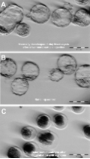
Influence of size, shape and core–shell interface on surface plasmon resonance in Ag and Ag@MgO nanoparticle films deposited on Si/SiOx
Beilstein J. Nanotechnol. 2015, 6, 404–413, doi:10.3762/bjnano.6.40

- nanoparticles (NPs) with a diameter of d = 3–10 nm were obtained by physical synthesis methods and deposited on Si with its native ultrathin oxide layer SiOx (Si/SiOx). Scanning electron microscopy and transmission electron microscopy (TEM) images of bare Ag NPs revealed the presence of small NP aggregates



Synthesis of boron nitride nanotubes and their applications
Beilstein J. Nanotechnol. 2015, 6, 84–102, doi:10.3762/bjnano.6.9
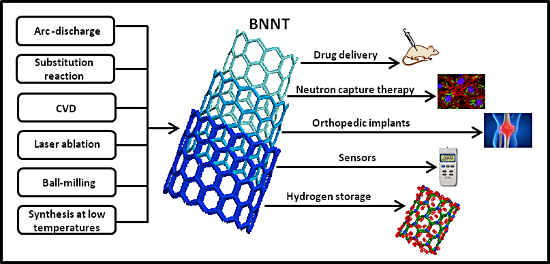
- neutron capture therapy. In this review, BNNT synthesis methods and the surface modification strategies are first discussed, and then their toxicity and application studies are summarized. Finally, a perspective for the future use of these novel materials is discussed. Keywords: boron nitride nanotubes
- ; chemical modifications; medical applications; synthesis methods; toxicity; Review Introduction Boron nitride nanotubes (BNNTs) are known as structural analogs of carbon nanotubes (CNTs) but with superior properties [1][2][3]. Although they have structural similarities, they significantly differ in their
- ][29], ball milling [30][31][32][33][34][35], laser ablation [36][37][38], and low temperature methods [39][40][41] were reported. The CVD and ball milling methods are currently the two most widely used methods for the synthesis of BNNTs. In this review, the most important BNNT synthesis methods are




Hybrid spin-crossover nanostructures
Beilstein J. Nanotechnol. 2014, 5, 2230–2239, doi:10.3762/bjnano.5.232

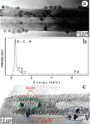
- probe lies in the fact that the speed and temperature range (where the spin transition takes place) can be tuned by well-known chemical synthesis methods and without necessarily modifying the luminescent agent. This can be translated into a flexible design when it comes to sensitivity and working range



Silica nanoparticles are less toxic to human lung cells when deposited at the air–liquid interface compared to conventional submerged exposure
Beilstein J. Nanotechnol. 2014, 5, 1590–1602, doi:10.3762/bjnano.5.171
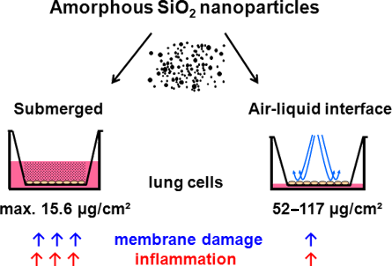
- specific surface area is well known and has already been shown for many types of particles including amorphous silica particles [36]. Conclusion In this study two silica NPs produced by different synthesis methods were intensively characterized with regard to their properties in aerosols, deposition from


Current state of laser synthesis of metal and alloy nanoparticles as ligand-free reference materials for nano-toxicological assays
Beilstein J. Nanotechnol. 2014, 5, 1523–1541, doi:10.3762/bjnano.5.165
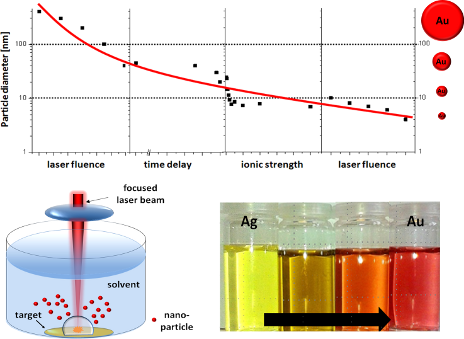
- controlled independently while their uniquely high purity is retained. Hence, this article will highlight totally surfactant-free size control strategies for laser-fabricated nanoparticles and will comment on the stability of these particles in biological fluids. Additionally, laser-based synthesis methods
- . This often favors element segregation and the formation of core shell structures in the resulting nanoparticles [137][138]. Laser-based synthesis methods have proven to be a veritable alternative to generate AuAg alloy nanoparticles with homogeneous elemental distributions even on a single particle


Nanoporous composites prepared by a combination of SBA-15 with Mg–Al mixed oxides. Water vapor sorption properties
Beilstein J. Nanotechnol. 2014, 5, 1226–1234, doi:10.3762/bjnano.5.136

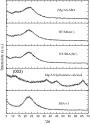
- 2.03 (Table 1). This value is in agreement with its nominal composition (Mg/Al = 2). The composites prepared in post-synthesis methods showed a molar ratio of Mg/Al = 1.85 and 1.95, respectively. Such ratios are very close to the nominal composition of the calcined composites. Still, the (Mg–Al)/SBA



Growth and characterization of CNT–TiO2 heterostructures
Beilstein J. Nanotechnol. 2014, 5, 946–955, doi:10.3762/bjnano.5.108
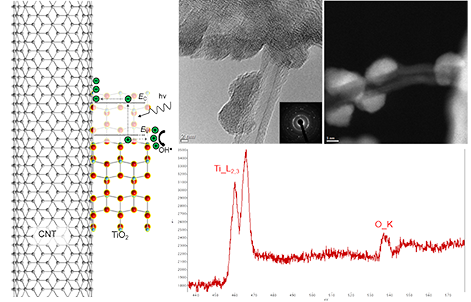
- the recent progress achieved in these areas is reviewed here. ALD growth of CNT–TiO2 Many methods have been developed to fabricate CNT–metal/metal oxide nanocomposites. For CNT–TiO2, the methods that are mostly adopted are sol–gel and hydrothermal deposition. A good summary of the synthesis methods


Injection of ligand-free gold and silver nanoparticles into murine embryos does not impact pre-implantation development
Beilstein J. Nanotechnol. 2014, 5, 677–688, doi:10.3762/bjnano.5.80
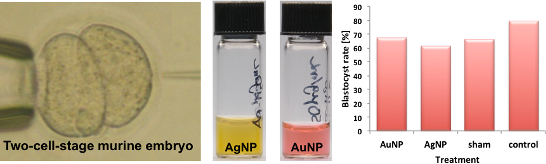
- ions, which imply that their toxicity can be reduced by either adapting surface properties or choosing alternative synthesis methods, so that their use could be rendered more safely in a plethora of applications. Experimental Nanoparticle production and characterization The applied laser-based approach




Encapsulation of nanoparticles into single-crystal ZnO nanorods and microrods
Beilstein J. Nanotechnol. 2014, 5, 485–493, doi:10.3762/bjnano.5.56

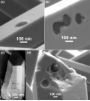
- synthesis methods and applications. ZnO is a multifunctional material with semiconducting, photonic, and piezoelectric properties. Potential applications of ZnO 1D nanostructures include gas sensor [1], transistor [2], light-emitting device [3], optical waveguide [4], nanolaser [5], and piezoelectric power




Extracellular biosynthesis of gadolinium oxide (Gd2O3) nanoparticles, their biodistribution and bioconjugation with the chemically modified anticancer drug taxol
Beilstein J. Nanotechnol. 2014, 5, 249–257, doi:10.3762/bjnano.5.27

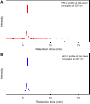
- responsible for the tumor killing efficiency of Gd-NCT [8]. Gd-157 not only requires shorter neutron irradiation time but also has a large neutron capture cross section area than boron-10, so that it is an ideal substitute for boron-10. As far as synthesis methods for Gd2O3 nanoparticles are concerned, the


Synthesis and catalytic applications of combined zeolitic/mesoporous materials
Beilstein J. Nanotechnol. 2011, 2, 785–801, doi:10.3762/bjnano.2.87

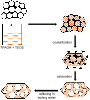
- section, the synthesis methods and formation mechanisms of the combined zeolitic/mesoporous materials are described. In addition, a thorough evaluation of the different synthesis strategies leading towards combined zeolitic/mesoporous materials is carried out, in which their advantages and disadvantages
- , such as nuclear track imprinting [63], but since their use is not very widespread, they will not be dealt with here. The synthesis methods can be roughly divided into three different classes, namely postsynthetic, templating and nontemplating approaches. In the postsynthetic approach, a zeolite or
- with organosilane surfactants and postsynthetic routes). All synthesis methods have their advantages and disadvantages, meaning that there is no obviously superior synthesis strategy. Therefore, the applied synthesis approach should depend on the final application, the desired properties of the




Review and outlook: from single nanoparticles to self-assembled monolayers and granular GMR sensors
Beilstein J. Nanotechnol. 2010, 1, 75–93, doi:10.3762/bjnano.1.10

- mentioned in the preliminary section, bottom-up synthesis methods are well suited for these requirements. In addition, particle size distributions can be further refined via sedimentation or by magnetic separation subsequent to chemical synthesis [15]. 2.1 Driving forces to self-assemblies The organization