


Search results
Search for "visualization" in Full Text gives 216 result(s) in Beilstein Journal of Nanotechnology. Showing first 200.
High-throughput micro-nanostructuring by microdroplet inkjet printing
Beilstein J. Nanotechnol. 2018, 9, 2372–2380, doi:10.3762/bjnano.9.222

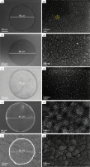
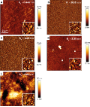
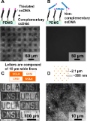
- Ar/H2 plasma etching at 300 W for 1 h. An exemplary quasi-hexagon pattern is drawn (yellow) for visualization. (B) Inkjet-printed 4 × 4 droplet pattern after drying and Ar/H2 plasma treatment at 300 W for 1 h. Both images were recorded with SEM. SEM images of size and droplet shape on the five




Surface energy of nanoparticles – influence of particle size and structure
Beilstein J. Nanotechnol. 2018, 9, 2265–2276, doi:10.3762/bjnano.9.211

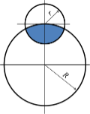
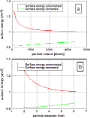
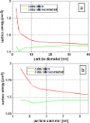
- (shaded area) results of Castro et al., the result of Cluskey et al., obtained on Au55 clusters, is also located. Visualization of the setting for the estimation the number of next neighbors (coordination number) of an atom at the surface of a spherical particle with diameter d = 2R. The volume of the





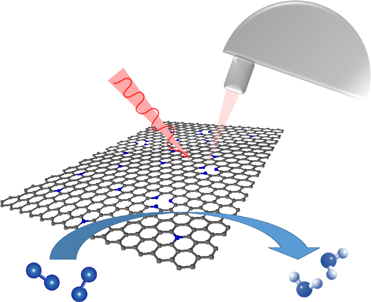
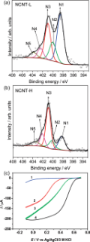
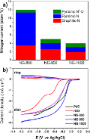
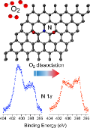
Metal-free catalysis based on nitrogen-doped carbon nanomaterials: a photoelectron spectroscopy point of view
Beilstein J. Nanotechnol. 2018, 9, 2015–2031, doi:10.3762/bjnano.9.191
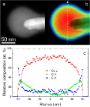
- ) energies. A quarter of the target was cut out for a better visualization. (b) Impact of an ion onto a carbon nanotube, a quasi-1D system. The excess energy is dissipated in only two directions, which may affect the temperature profile and give rise to additional defects. (c) The sketch of the electronic





Direct AFM-based nanoscale mapping and tomography of open-circuit voltages for photovoltaics
Beilstein J. Nanotechnol. 2018, 9, 1802–1808, doi:10.3762/bjnano.9.171
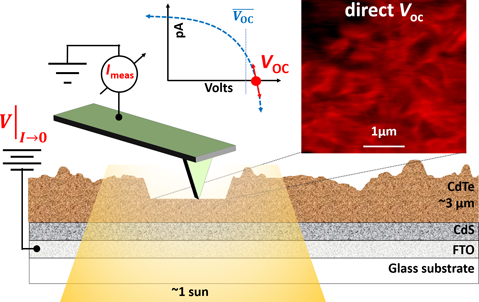
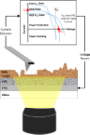
- current (Figure 2a) and open-circuit voltage (Figure 2b) images. These signals are uniquely colored for simultaneous visualization when superimposed (Figure 2c), based on a simple 1:1 overlay of the two distinct color images using conventional image processing software (FIJI). Viewed in this manner, most


The electrical conductivity of CNT/graphene composites: a new method for accelerating transmission function calculations
Beilstein J. Nanotechnol. 2018, 9, 1254–1262, doi:10.3762/bjnano.9.117
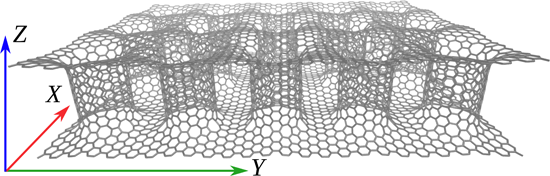
- are semi-infinite along X. The central cell is also translated to infinity over Y. Thus, the wave number ky varies within (−π/ay; π/ay), where ay is the unit cell size along the Y-direction (as shown in Figure 1a, the software VMD [17] was used for visualization). The calculated functions T(E) from


Magnetic characterization of cobalt nanowires and square nanorings fabricated by focused electron beam induced deposition
Beilstein J. Nanotechnol. 2018, 9, 1040–1049, doi:10.3762/bjnano.9.97

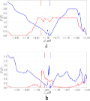
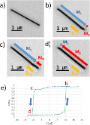
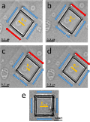
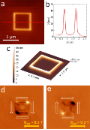
- , at the bottom left, which is aligned in the opposite way, in response to the direction of the applied magnetic field. In the following, the ability of L-TEM to provide a direct visualization of the switching process of the horseshoe state in a square nanoring is demonstrated. Just as for nanowires
Electro-optical interfacial effects on a graphene/π-conjugated organic semiconductor hybrid system
Beilstein J. Nanotechnol. 2018, 9, 963–974, doi:10.3762/bjnano.9.90

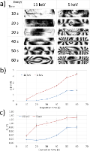
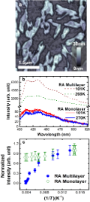
- of RA molecules. For a better visualization, the inset at the top left shows the superposition of the G band obtained for both cases. The Raman mode at ≈1570 cm−1 originates from C=C RA molecule bond. Fitting parameters of Equation 2 for the experimental data in Figure 4c–e. The error values from the




Synthesis and characterization of two new TiO2-containing benzothiazole-based imine composites for organic device applications
Beilstein J. Nanotechnol. 2018, 9, 721–739, doi:10.3762/bjnano.9.67
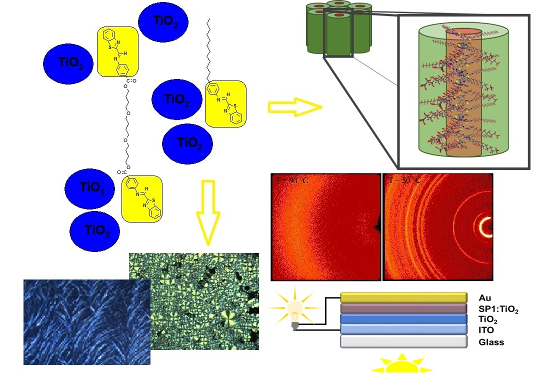
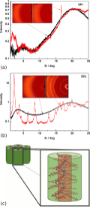
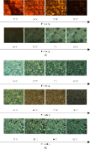
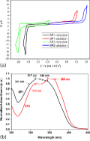
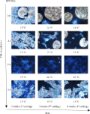
- °C), (b) SP2 imine (at 50 and 90 °C) and (c) visualization of hexagonal packing of SP2 columns. Polarizing optical microscopy (POM) images for: (a) SP1 taken during 1st heating (at 27, 58, 72, 75 °C) and 1st cooling (at 44, 32, 13 and −20 °C), respectively and (b) SP2 taken during 1st cooling (at 36







Electron interaction with copper(II) carboxylate compounds
Beilstein J. Nanotechnol. 2018, 9, 384–398, doi:10.3762/bjnano.9.38
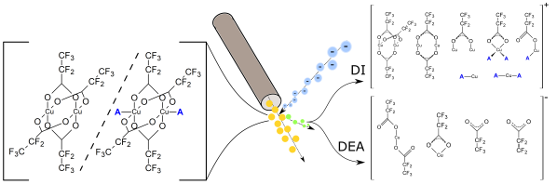
- function of electron energy. Each row represents the negative ion shown on the right. The energy scale was calibrated with respect to the formation of SF6− by electron attachment to SF6 that occurs at an electron energy ≈0 eV. Summary and visualization of the most important ion formation pathways for DI


Wafer-scale bioactive substrate patterning by chemical lift-off lithography
Beilstein J. Nanotechnol. 2018, 9, 311–320, doi:10.3762/bjnano.9.31
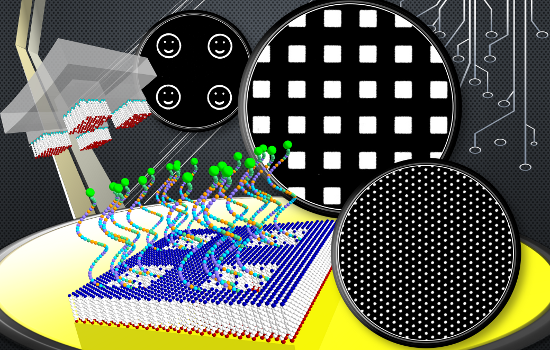
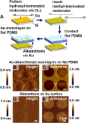
- operation when a PDMS stamp with a protruding square pattern is used. This depression region represents a freshly exposed Au area, which provides a position for subsequent biological probe insertion. For visualization, thiolated molecules of longer molecular length are used and give an inversed protruding


Review: Electrostatically actuated nanobeam-based nanoelectromechanical switches – materials solutions and operational conditions
Beilstein J. Nanotechnol. 2018, 9, 271–300, doi:10.3762/bjnano.9.29
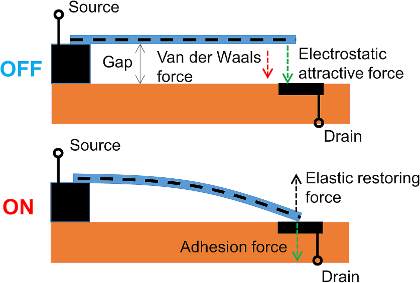
- device, avoiding the need for individual device fabrication of each control parameter. This approach is favourable for fundamental research on specific parts and simulation of processes in a NEM switch, where the assembly of the whole device is not required. Real-time visualization helps to evaluate the


Co-reductive fabrication of carbon nanodots with high quantum yield for bioimaging of bacteria
Beilstein J. Nanotechnol. 2018, 9, 137–145, doi:10.3762/bjnano.9.16
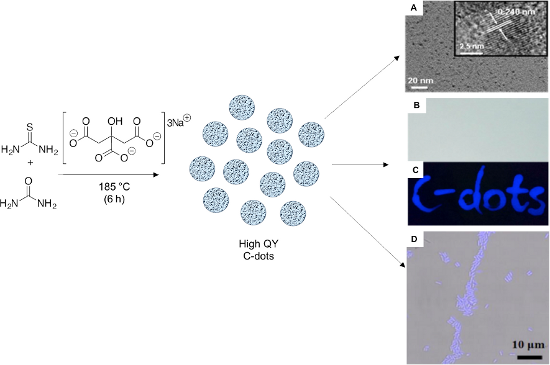
- water, low photobleaching and low cytotoxicity. They show great potential for bioimaging, photocatalysis, energy conversion, fluorescent ink and sensing applications [1][2][3]. In a bioimaging application perspective, the detection of bacteria by microscopic visualization is an essential benchmark


Patterning of supported gold monolayers via chemical lift-off lithography
Beilstein J. Nanotechnol. 2017, 8, 2648–2661, doi:10.3762/bjnano.8.265

- functionality of the Au–alkanethiolate monolayers (Figure 2). Complementary DNA was hybridized to thiolated single-stranded DNA self-assembled on lifted-off Au-containing regions on PDMS samples. Complementary sequences were fluorescently labeled, enabling indirect visualization of patterned Au monolayers. Only
- regions containing Au–alkanethiolates appeared bright in fluorescence microscopy images (Figure 2). Using this straightforward functionalization and visualization method, we investigated patterns of lifted-off Au monolayers on PDMS as substrates for DNA recognition. Upon hybridization of dye-labeled
- improve the fidelity of the patterns of Au–alkanethiols lifted-off on PDMS, and thus, presumably more complete and closely packed supported Au monolayers on PDMS. The computation, fabrication, and visualization strategies established herein form a basic toolbox for interrogating the influence of these



Nanoprofilometry study of focal conic domain structures in a liquid crystalline free surface
Beilstein J. Nanotechnol. 2017, 8, 2544–2551, doi:10.3762/bjnano.8.254

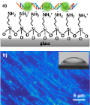
- Academy of Sciences, 53 Leninskiy Prospekt, Moscow, 119991, Russia 10.3762/bjnano.8.254 Abstract This work presents the first high-resolution nanoprofilometry study consisting of nanoscale resolution surface profile measurements and high-quality visualization of a the free surface of a liquid crystal–air




Photobleaching of YOYO-1 in super-resolution single DNA fluorescence imaging
Beilstein J. Nanotechnol. 2017, 8, 2296–2306, doi:10.3762/bjnano.8.229

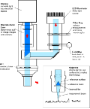
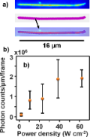
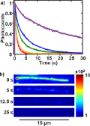
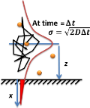
- YOYO-1 molecules intercalate into DNA and remain there during imaging, and most of them have to be temporarily or permanently fluorescently bleached, often stochastically, to allow for the visualization of a few fluorescent events per DNA per frame of the video. Thus, controlling the fluorescence on




Magnetic properties of optimized cobalt nanospheres grown by focused electron beam induced deposition (FEBID) on cantilever tips
Beilstein J. Nanotechnol. 2017, 8, 2106–2115, doi:10.3762/bjnano.8.210

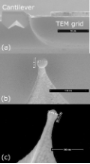
- reduced Planck’s constant, e is the electron charge and t is the thickness of the sample. Visualization of the magnetic state of the Co nanospheres is performed by calculating the cosine of a multiple of the magnetic phase shift, cos(n·φM), which produces sets of fringes parallel to the magnetic induction




Optical techniques for cervical neoplasia detection
Beilstein J. Nanotechnol. 2017, 8, 1844–1862, doi:10.3762/bjnano.8.186
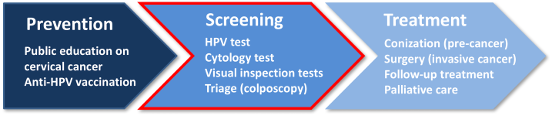
- by Bae and co-workers [54]. Using an optical imaging system they detected the enhancement of protoporphyrin IX (PpIX) autofluorescence in tumor regions. This endogenous protein tends to accumulate in tumor tissue, and may help in effective localization and visualization of tumor lesions by PpIX
- microendoscope (HRME) was developed and used for the direct visualization of neoplastic biomarkers (increase in nucleus-to-cytoplasm ratio and nuclear density, pleomorphic nuclei) during colposcopy [77][78][79]. Grant et al. [79] performed HRME imaging by placing a fiber-optic probe tip in contact with



Fluorination of vertically aligned carbon nanotubes: from CF4 plasma chemistry to surface functionalization
Beilstein J. Nanotechnol. 2017, 8, 1723–1733, doi:10.3762/bjnano.8.173
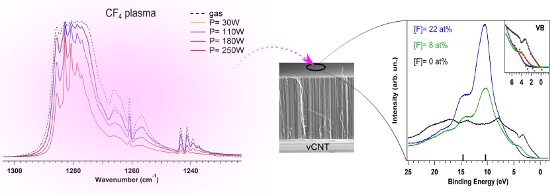
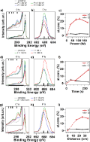
- phase (dotted line) and during CF4 plasma ignited at different power (from 10 to 250 W). The two frames in the figure detail the peaks located at 1286 and 1261 cm−1 for better visualization of the intensity variation. c) Intensities of the FTIR peaks related to CF4 (at 1539 cm−1), CF2 (at 667.4 cm−1




Low uptake of silica nanoparticles in Caco-2 intestinal epithelial barriers
Beilstein J. Nanotechnol. 2017, 8, 1396–1406, doi:10.3762/bjnano.8.141
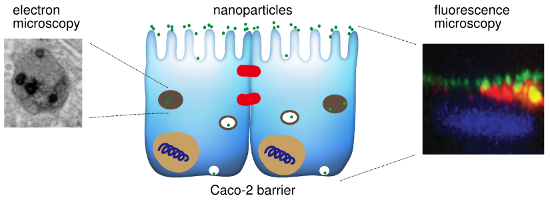
- ’,6-diamidino-2-phenylindole (DAPI) for 5 min. The slides were then sealed by addition of Mowiol mounting medium (Calbiochem) and stored at 4 °C overnight. For image acquisition, tricolour visualization of cell organelles, nanoparticles and nuclei, was performed on a confocal microscope equipped with



Nano-engineered skin mesenchymal stem cells: potential vehicles for tumour-targeted quantum-dot delivery
Beilstein J. Nanotechnol. 2017, 8, 1218–1230, doi:10.3762/bjnano.8.123
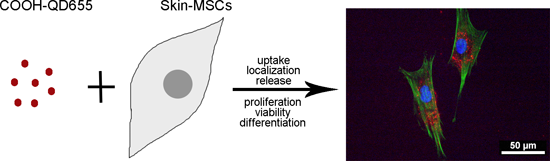
- ]. Altogether, we propose several reasons why QD-labelled skin MSCs could serve as a promising NP delivery vector. First, QD labelling would enable MSC tracking and visualization of the tumour microenvironment. Next, the cells in the tumour would take up the released QDs and then the formation of ROS could be





Optical response of heterogeneous polymer layers containing silver nanostructures
Beilstein J. Nanotechnol. 2017, 8, 1065–1072, doi:10.3762/bjnano.8.108

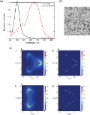
- information about the reflection, transmission, absorption of the material as well as the complex optical indices, n and k. Finite difference time domain simulations of nanoparticles in thin film layers allow the visualization of the nanoparticle interactions or the electric field enhancement on and around
- ) TEM image of the synthetized nanoprisms before centrifugation and c) visualization of the electric field enhancement normalized to the incident electric field in the nanoprism for wavelength of peak 1 under z-oriented (i) p-polarized light and (ii) s-polarized light, and for the wavelength of peak 2


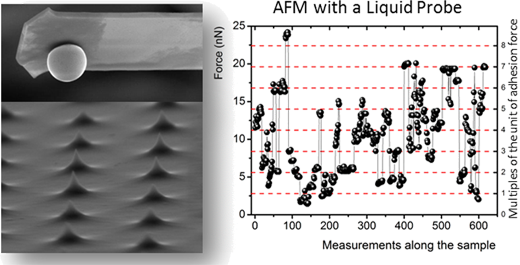
Measuring adhesion on rough surfaces using atomic force microscopy with a liquid probe
Beilstein J. Nanotechnol. 2017, 8, 813–825, doi:10.3762/bjnano.8.84
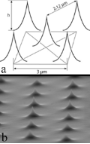
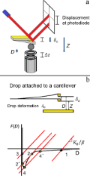
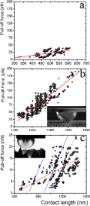
- ., Russia) intended for 3D visualization of scanning tips (Figure 1). The grating with the sharp peaks was inspected with standard Si3N4 SPM cantilevers in contact mode. The scans were obtained with a scanning probe microscope in vacuum (1 × 10⁻⁴ Pa). The inverted images of the tip (not presented in this

Selective detection of Mg2+ ions via enhanced fluorescence emission using Au–DNA nanocomposites
Beilstein J. Nanotechnol. 2017, 8, 762–771, doi:10.3762/bjnano.8.79

- clustering of gold nanorods around the DNA. As shown in Figure 5, the height of the sample from the surface was estimated to be around 20.3 nm. The brighter areas on the image had a maximum height of 20.3 nm. Figure 5d shows the amplitude of DNA–AuNR to be 38.2 mV. Figure 6 shows the 3D visualization of the




Phospholipid arrays on porous polymer coatings generated by micro-contact spotting
Beilstein J. Nanotechnol. 2017, 8, 715–722, doi:10.3762/bjnano.8.75

- an optical reference DOPC doped with rhodamine was patterned in-between DNP-lipid structures (Figure 3a). After blocking with 10% BSA and subsequent washing, samples were incubated with anti-DNP IgE antibody labelled with Alexa 488 dye for direct visualization. Plotting of the mean fluorescence
- lipid into DOPC carrier. Next, after blocking with 10% BSA and binding of fluorescently labeled STV-Cy3, arrays were washed with PBS and blocked again with 10% BSA to prepare membranes for ARbiot binding. The coating of arrays with labeled STV allowed for direct visualization of the biotin arrays. In


Silicon microgrooves for contact guidance of human aortic endothelial cells
Beilstein J. Nanotechnol. 2017, 8, 675–681, doi:10.3762/bjnano.8.72

- microscope, equipped with a C1 laser confocal system (EZ-C1 software, Nikon). A 633 nm and 488 nm argon laser light was used as excitation sources for Phalloidin and NucGreen, respectively. Actin filaments and nuclei stain visualization using confocal microscopy was used to assess cellular morphology and





