

Search results
Search for "adhesive" in Full Text gives 246 result(s) in Beilstein Journal of Nanotechnology. Showing first 200.
Wafer-scale bioactive substrate patterning by chemical lift-off lithography
Beilstein J. Nanotechnol. 2018, 9, 311–320, doi:10.3762/bjnano.9.31
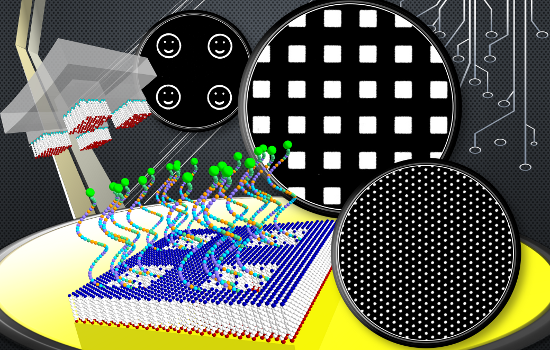
- . Silicon substrates (Mustec Corp., Hsinchu, Taiwan) with 100 nm thick Au and 5 nm chromium adhesive layers were prepared by thermal evaporation. The Au substrates were immersed in 0.5 mM MCU or TEG ethanolic solution for >6 h to form self-assembled monolayers. After SAM formation, the substrates were


Review: Electrostatically actuated nanobeam-based nanoelectromechanical switches – materials solutions and operational conditions
Beilstein J. Nanotechnol. 2018, 9, 271–300, doi:10.3762/bjnano.9.29
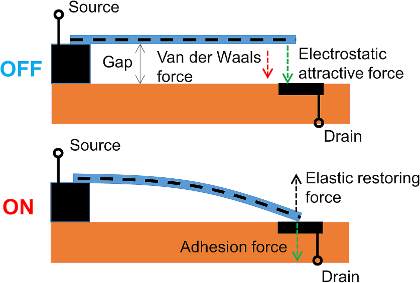
- performed by Mo et al. [77] for multiasperity contacts showed an excellent fit of this model with experimental data and the widely used Maugis–Dugdale single asperity adhesive theory model [78]. Despite the fact that such a good fit may be a result of the flexibility of the Maugis–Dugdale model, which masks


Humidity-dependent wound sealing in succulent leaves of Delosperma cooperi – An adaptation to seasonal drought stress
Beilstein J. Nanotechnol. 2018, 9, 175–186, doi:10.3762/bjnano.9.20

- the reading of data were performed by a measurement amplifier (Spider 8, Hottinger Baldwin Messtechnik GmbH). The ends of the samples were stuck to the sample holders with a rapid cyanoacrylate adhesive (Uhu Sekundenkleber blitzschnell Pipette, UHU GmbH and Co. KG Bühl, Germany). The samples were
- carefully arranged parallel to the tension forces to ensure an even strain field over the diameter of the sample. During hardening the adhesive glued samples were stored in a humidity chamber (>95% relative air humidity) in order to prevent or slow down dehydration (storage time for leaves: 2–4 h, storage


A robust AFM-based method for locally measuring the elasticity of samples
Beilstein J. Nanotechnol. 2018, 9, 1–10, doi:10.3762/bjnano.9.1

- reconstruction in UHV by contact force microscopy. They observed adhesive forces of up to 103 nN between the Si tip and the Si(111) surface. By coating the tip with PTFE (Teflon), they could reduce the sticking forces to 10 nN. A short scan on a PTFE sample led to a reliable coating of the tip for the subsequent


Dry adhesives from carbon nanofibers grown in an open ethanol flame
Beilstein J. Nanotechnol. 2017, 8, 2719–2728, doi:10.3762/bjnano.8.271

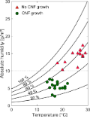
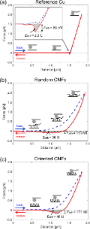
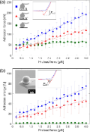
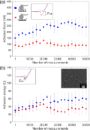
- fabricated arrays of carbon nanofibers with different degrees of orientation. Inspired by the dry adhesive system of geckos we investigated the adhesive properties of such carbon nanofiber arrays with ordered and random orientation. AFM-based force spectroscopy revealed that adhesion force and energy rise
- applications, for instance, for the number of steps a climbing robot can execute before the adhesive layer needs to be replaced. Endurance tests, however, are time-consuming, which is the reason why most studies of CNF adhesives limit their adhesion measurement to a few cycles [11]. Here, we analyze the


Fabrication of CeO2–MOx (M = Cu, Co, Ni) composite yolk–shell nanospheres with enhanced catalytic properties for CO oxidation
Beilstein J. Nanotechnol. 2017, 8, 2425–2437, doi:10.3762/bjnano.8.241
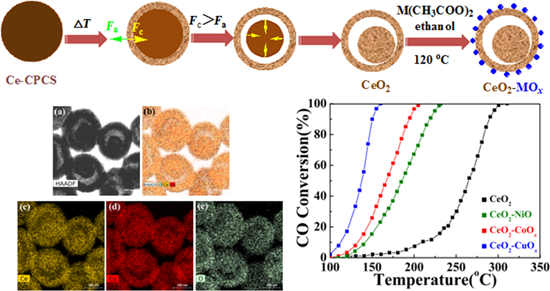
- treatment process, is regarded as a promising and effective approach to controllably design hollow structures with single and multilevel shells. The complexity of the shell structures is generally determined by the difference between the cohesive force (Fc) and the adhesive force (Fa) created by a proper





Involvement of two uptake mechanisms of gold and iron oxide nanoparticles in a co-exposure scenario using mouse macrophages
Beilstein J. Nanotechnol. 2017, 8, 2396–2409, doi:10.3762/bjnano.8.239

- ]. Therefore, the occurrence of NP diffusion through pores in the membrane as well as passive uptake by van der Waals or steric interactions (subsumed as adhesive interactions) [25] cannot be excluded. The majority of uptake studies were conducted with one defined NP type only. However, since humans are more




Surfactant-induced enhancement of droplet adhesion in superhydrophobic soybean (Glycine max L.) leaves
Beilstein J. Nanotechnol. 2017, 8, 2345–2356, doi:10.3762/bjnano.8.234
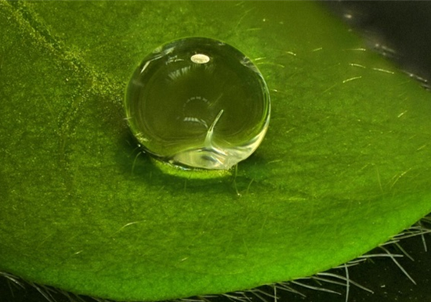
- of Glycine max L. were cut and fixed on a glass slide with double-sided adhesive tape (TESA, Beiersdorf, Germany). On the leaf samples, 20 µL of the aqueous surfactant solutions (at commonly used concentrations for ethoxylated seed oil adjuvants of 1 g/L [49][50]) were applied via a dispenser. The
- . Contact angle measurements For the contact angle measurements (before and after application of the surfactant solutions), leaf samples of approximately 1 cm2 were cut from the central area of the leaves and were fixed onto microscope glass slides with double-sided adhesive tape. Each value was obtained
- visualize the topography of the leaves, a 3D light microscope (Keyence VHX-600DSO, Keyence Deutschland GmbH, Germany) was used. Glycine max L. leaves were fixed on a flat glass slide with double-sided adhesive tape (Tesa, Germany) and images were taken from the side at magnifications between 10× and 30



Material property analytical relations for the case of an AFM probe tapping a viscoelastic surface containing multiple characteristic times
Beilstein J. Nanotechnol. 2017, 8, 2230–2244, doi:10.3762/bjnano.8.223

- excitation suddenly imposed during the impact. The third term is the relaxation modulus, and the fourth term is the adhesive portion of the van der Waals (vdW) interaction, in which HA is the Hamaker constant, R is the radius of the cylindrical punch, and a0 is the interatomic distance (ca. 0.2 nm) [39]. In
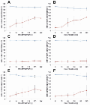
- (black star symbols) showing good agreement between the simulations and Equation 30 over the whole range of A/A0. Besides the main contributors, the adhesive component of the vdW interaction also adds to the total dissipated energy, because the tip–sample trajectory is not symmetric during the contact
- in Equation 31), and contributions proportional to the transients of the harmonic force (3rd term in Equation 31). All these contributions are plotted in Figure 5, following the same symbol scheme as for the case of dissipated energy in Figure 4. For clarity the contribution from the adhesive force


A systematic study of the controlled generation of crystalline iron oxide nanoparticles on graphene using a chemical etching process
Beilstein J. Nanotechnol. 2017, 8, 2017–2025, doi:10.3762/bjnano.8.202
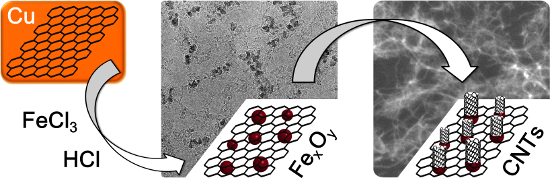
- adhesive tape (e.g., tesa tape from Tesa SE), which protects the exposed edges of the synthesized graphene layer on the copper substrate (see Supporting Information File 1, Figure S1). These are the sites where mechanical agitation by fluid flow of the etching liquid is strongest and often results in
- foil was etched with a gas flow of 12 mL/min oxygen (Air Liquide) at 30 °C and 0.8 mbar for 5 min using maximum power. Finally, a standard adhesive tape (Tesa tape) was attached to the edges of the copper foil (Figure S1, Supporting Information File 1). The etching chamber was constructed of two glued
- process by adhesive tape. The TEM was operated at an acceleration voltage of 200 keV (FEI, Tecnai G2F20@200keV, equipped with EDAX EDX detector). EDX and SAED spectra of the iron oxide nanoparticles were aquired simultaneously in the TEM. For high-resolution images, the TEM (FEI, Titan3 80-300 microscope


Application of visible-light photosensitization to form alkyl-radical-derived thin films on gold
Beilstein J. Nanotechnol. 2017, 8, 1863–1877, doi:10.3762/bjnano.8.187

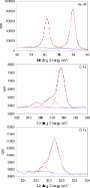
- ] or C=O bonds [65][67]. Taken together, the C 1s, O 1s, and Au 4f data indicate that the gold substrate is not oxidized. The data are also consistent with the AFM results indicating that [Ru(bpy)3]2+ is required for the formation of robust, adhesive Au–Me films. In the absence of [Ru(bpy)3]2+, the XPS



Evaluation of preparation methods for suspended nano-objects on substrates for dimensional measurements by atomic force microscopy
Beilstein J. Nanotechnol. 2017, 8, 1774–1785, doi:10.3762/bjnano.8.179
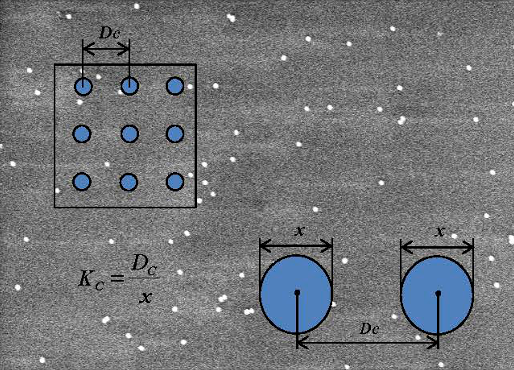
- of adhesive agents homogeneous deposition of nano-objects over the whole substrate clearly defined and retrievable preparation areas adequate surface-specific particle number well separated or low clustered particles/aggregates no deposition of stabilizers and additives on the substrates Today, there


Surface functionalization of 3D-printed plastics via initiated chemical vapor deposition
Beilstein J. Nanotechnol. 2017, 8, 1629–1636, doi:10.3762/bjnano.8.162

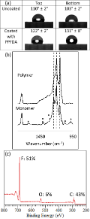
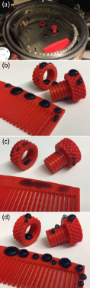
- . Hong et al. demonstrated that simply dipping polycaprolactone/poly(lactic-co-glycolic acid) 3D scaffolds in mussel adhesive proteins promoted cellular adhesion, proliferation and differentiation, showing that a facile surface modification improved the viability of using 3D-printed scaffolds for tissue



A biofunctionalizable ink platform composed of catechol-modified chitosan and reduced graphene oxide/platinum nanocomposite
Beilstein J. Nanotechnol. 2017, 8, 1508–1514, doi:10.3762/bjnano.8.151

- modified the chitosan with catechol groups, in order to obtain adhesive properties and improve solubility. Dispersions of rGO–Pt in ethylene glycol were admixed with an aqueous solution of modified chitosan to yield an ink that is suitable for non-contact piezoelectric printing using a commercial
- ]. However, we first chemically modify the chitosan to add catechol pendant groups to the chitosan polymer chains [9], in order to improve water solubility, as well as provide adhesive properties to a variety of substrates [10]. The ink is formed by admixing rGO–Pt dispersions in ethylene glycol with the
- ]. Additionally, we modified the chitosan with catechol groups, in order to gain the additional adhesive properties of these groups and improve water solubility [9]. Following the methodology of Kim et al. [9], we used carbodiimide chemistry to couple hydrocaffeic acid (HCA) to the amine groups of chitosan. Based

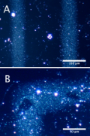


Miniemulsion copolymerization of (meth)acrylates in the presence of functionalized multiwalled carbon nanotubes for reinforced coating applications
Beilstein J. Nanotechnol. 2017, 8, 1328–1337, doi:10.3762/bjnano.8.134

- potential application of the dispersions prepared in the works discussed above [18][32][33][34] because high glass transition temperature (Tg) polymers that do not form films at ambient temperature were synthesized. From BA dispersions, the adhesive films might eventually be prepared; however, Capek and


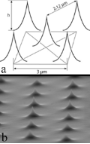
Measuring adhesion on rough surfaces using atomic force microscopy with a liquid probe
Beilstein J. Nanotechnol. 2017, 8, 813–825, doi:10.3762/bjnano.8.84
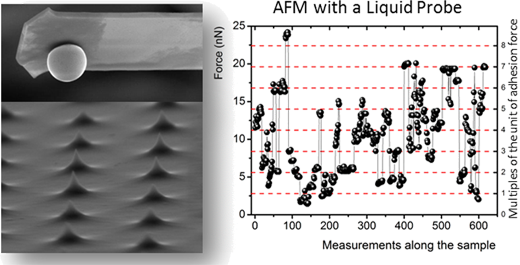
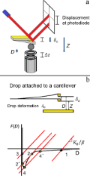
- ], in self-cleaning – because liquid-repellency is correlated with a low adhesion force –, drag reduction [14], fog harvesting [15], and to understand adhesive interactions between imaging materials, which are crucial in print-engine design, and print-process development in the printing industry [16
- previously covered with a sticky adhesive as explained below. Tip coating with a sticky adhesive: The sticky glue portion of a commercially available pressure-sensitive tape is manually scraped off and dissolved in chloroform. This solution is used to cover a small part of the lower surface of tipless

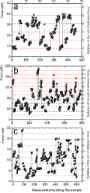
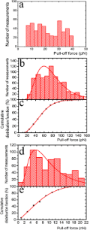
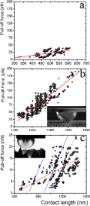
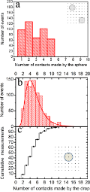
Biological and biomimetic materials and surfaces
Beilstein J. Nanotechnol. 2017, 8, 403–407, doi:10.3762/bjnano.8.42
- potential significance of the results for the development of branched and unbranched bio-inspired fibre-reinforced systems with enhanced properties is discussed. The hydrated mucilage of the Plantago lanceolata seed causes specific adhesive and frictional properties, playing an important role in seed
- systems [16]. The adhesive tongues of frogs are an efficient tool capable of capturing fast moving prey. It is plausible that the interaction between the tongue surface and the adhesive mucus coating is important for generating strong pull-off forces. The paper by Kleinteich and Gorb is a comparative
- study of tongue surfaces in nine frog species [17]. All examined species bear microscopical papillae, but different species have microstructure of different shape. The specific microstructure might presumably contribute to the particular adhesive performance of different frog species and may correlate
Structural and tribometric characterization of biomimetically inspired synthetic "insect adhesives"
Beilstein J. Nanotechnol. 2017, 8, 45–63, doi:10.3762/bjnano.8.6
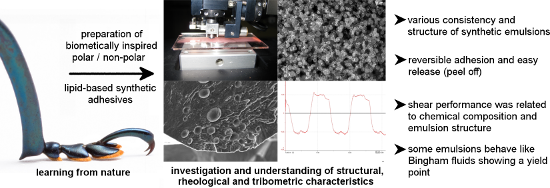
- Background: Based on previous chemical analyses of insect tarsal adhesives, we prepared 12 heterogeneous synthetic emulsions mimicking the polar/non-polar principle, analysed their microscopical structure and tested their adhesive, frictional, and rheological properties. Results: The prepared emulsions
- "second generation" (containing less viscous components), the "first generation" emulsions were much more adhesive (31–93 mN), a finding attributable to their highly viscous components, i.e., wax, petrolatum, gelatin and poly(vinyl alcohol). In the second generation emulsions, we attained much lower
- adhesivenesses, ranging between 1–18 mN. The adhesive performance was drastically reduced in the emulsions that contained albumin as the protein component or that lacked protein. Tribometric shear tests were performed at moderate normal loads. Our measured friction forces (4–93 mN in the first and 0.1–5.8 mN in


When the going gets rough – studying the effect of surface roughness on the adhesive abilities of tree frogs
Beilstein J. Nanotechnol. 2016, 7, 2116–2131, doi:10.3762/bjnano.7.201

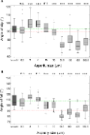
- abrasion of the pad epithelium. Here, we tested the effect of surface roughness on the attachment abilities of the tree frog Litoria caerulea. This was done by testing shear and adhesive forces on artificial surfaces with controlled roughness, both on single toe pads and whole animal scales. It was shown
- that frogs can stick 2–3 times better on small scale roughnesses (3–6 µm asperities), producing higher adhesive and frictional forces, but relatively poorly on the larger scale roughnesses tested (58.5–562.5 µm asperities). Our experiments suggested that, on such surfaces, the pads secrete insufficient
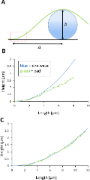
- fluid to fill the space under the pad, leaving air pockets that would significantly reduce the Laplace pressure component of capillarity. Therefore, we measured how well the adhesive toe pad would conform to spherical asperities of known sizes using interference reflection microscopy. Based on




Intercalation and structural aspects of macroRAFT agents into MgAl layered double hydroxides
Beilstein J. Nanotechnol. 2016, 7, 2000–2012, doi:10.3762/bjnano.7.191

- Electron Corporation) spectrometer equipped with a Smart Orbit accessory. Field Emission SEM characteristics of the samples were imaged by a Zeiss supra 55 FEG-VP operating at 3 keV. Specimens were mounted on conductive carbon adhesive tabs and imaged after gold sputter coating to make them conductive



“Sticky invasion” – the physical properties of Plantago lanceolata L. seed mucilage
Beilstein J. Nanotechnol. 2016, 7, 1918–1927, doi:10.3762/bjnano.7.183

- , D-24118 Kiel, Germany 10.3762/bjnano.7.183 Abstract The mucilage envelope of seeds has various functions including the provision of different ways for the dispersal of diaspores. Chemical composition and water content of the mucilage yield particular adhesive and frictional properties in the
- fibrils in the mucilage, which are responsible for a continuous and even distribution of the mucilaginous layer on the seed surface. The measured values of adhesive and frictional properties differed significantly in comparison to the previously studied pectic mucilage of Linum usitatissimum. Also, the
- the pectic mucilage of flax, which lacks cellulose. In spite of the fact that P. lanceolata mucilage revealed different adhesive and frictional properties than the pectic mucilage, it still demonstrates an effective system promoting zoochoric seed dispersal. Cellulose may additionally prevent the


Evolution of the graphite surface in phosphoric acid: an AFM and Raman study
Beilstein J. Nanotechnol. 2016, 7, 1878–1884, doi:10.3762/bjnano.7.180

- exfoliated by an adhesive tape along an edge of the sample. The 2 M H3PO4 solution has been purified by bubbling Ar gas (5.0 grade pure) inside a separator funnel for several days. A Pt wire is used both as counter electrode (CE) and reference electrode (RE). Further information on Pt electrodes is reported


Low temperature co-fired ceramic packaging of CMOS capacitive sensor chip towards cell viability monitoring
Beilstein J. Nanotechnol. 2016, 7, 1871–1877, doi:10.3762/bjnano.7.179

- had 40 Al/TiN/Cu contact pads with a size of 85 µm and a 120 µm spacing. Because oxidation of the Al in the pads at the rim of the chip prevented the bonding of the chip to the LTCC package with conductive adhesive, gold bumps were applied onto the pads with a gold wire (20 µm in diameter) bonder. The
- , was adapted for the microfluidic channels. The sensor chips were glued to the LTCC packages with isotropic conductive adhesive (ICA) (EPO-TEK, H20E-PFC). The adhesive consisted of conductive silver particles embedded in adhesive polymer resins. This two-component epoxy was chosen for its ability to
- adhesive stamping process, sensor chip mounting, and underfill application. (a) Bottom side of the LTCC package showing the rear side of the sensor chip. (b) The sensor chip in the LTCC package connected. The active side of the chip is inside the cell culture vial glued on the top of the LTCC package. (c


Chitosan-based nanoparticles for improved anticancer efficacy and bioavailability of mifepristone
Beilstein J. Nanotechnol. 2016, 7, 1861–1870, doi:10.3762/bjnano.7.178

- biodegradability [9]. It possesses various bioactivities such as anti-inflammatory, antibacterial, antifungal, muco-adhesive, and antitumor effects [10][11]. Therefore, chitosan has been widely used as a biomaterial or adjuvant in disease therapy [12], tissue engineering, and drug delivery [13]. Owning to the


3D printing of mineral–polymer bone substitutes based on sodium alginate and calcium phosphate
Beilstein J. Nanotechnol. 2016, 7, 1794–1799, doi:10.3762/bjnano.7.172

- printed samples can be adjusted further by chemical post-treatment. For instance, the hydrolysis of DCPD might lead to the development of an octacalcium phosphate phase and an adhesive effect between particles could take place [17]. Conclusion We propose a new “biomimetic + 3D printing” approach for