


Search results
Search for "bacteria" in Full Text gives 182 result(s) in Beilstein Journal of Nanotechnology.
Comparative study of antibacterial properties of polystyrene films with TiOx and Cu nanoparticles fabricated using cluster beam technique
Beilstein J. Nanotechnol. 2018, 9, 861–869, doi:10.3762/bjnano.9.80

- particles resistant against wash-out. The formed composite films with TiOx and Cu species are tested as bactericidal media using E.coli bacteria as model microorganisms. Conclusion: The obtained results show considerable efficiency in destroying the bacteria and a good possibility of multiple re-use of the
- ) interaction with bacterial surfaces, which can lead to blocking of membrane transport channels and disturbing of electrochemical gradients [4]. Ag NPs are the most popular and most extensively studied pure metal NPs. However, Cu NPs are found to demonstrate higher toxicity for certain types of bacteria [1
- technique and the material properties as well as on the comparison of bactericidal efficiency of the prepared composites with either TiOx or Cu NPs against E.coli bacteria as a model microorganism. Results and Discussion Morphology and composition of deposited clusters Copper cluster are deposited from the


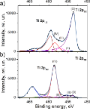


Noble metal-modified titania with visible-light activity for the decomposition of microorganisms
Beilstein J. Nanotechnol. 2018, 9, 829–841, doi:10.3762/bjnano.9.77

- ), could also decompose bacterial cells under visible-light irradiation, possibly due to an enhanced generation of reactive oxygen species and the intrinsic properties of silver. Gold-modified samples were almost inactive against bacteria in the dark, whereas significant bactericidal effect under visible
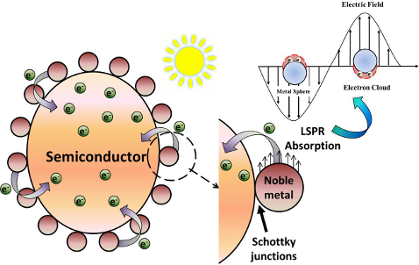
- -light irradiation suggested that the mechanism of bacteria inactivation was initiated by plasmonic excitation of titania by localized surface plasmon resonance of gold. The antifungal activity tests showed efficient suppression of mycelium growth by bare titania, and suppression of mycotoxin generation
- further clarify (1) the mechanism of antimicrobial action of plasmonic photocatalysts, (2) key factors of the high activity against various microorganisms, (3) the correlation between the inactivation and complete decomposition of bacteria, (4) the inhibition of filamentous fungal growth and sporulation


Mechanistic insights into plasmonic photocatalysts in utilizing visible light
Beilstein J. Nanotechnol. 2018, 9, 628–648, doi:10.3762/bjnano.9.59
- , algae, bacteria and yeasts [156][157][158][159][160][161]. Different types of biomolecules available in plants, for example, polysaccharides, phenolics, or flavonoids are capable of producing metal nanoparticles of different sizes and shapes [162]. This phytosynthesis is more favourable than that which





BN/Ag hybrid nanomaterials with petal-like surfaces as catalysts and antibacterial agents
Beilstein J. Nanotechnol. 2018, 9, 250–261, doi:10.3762/bjnano.9.27
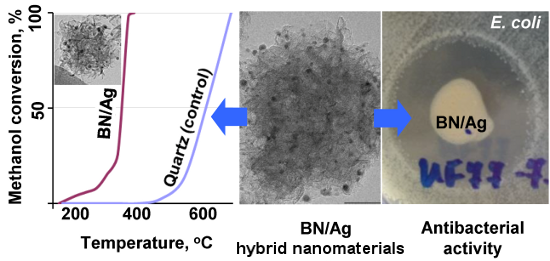
- the CVD method. The best catalytic characteristics (100% methanol conversion at 350 °C) were achieved using the UV BN/Ag HNMs without preliminary annealing at 600 °C in an oxidizing atmosphere. Both types of the BN/Ag HNMs possess a profound antibacterial effect against Escherichia coli K-261 bacteria
- samples was 11 mm. The pristine BN sample did not show any noticeable effect on the inhibition of E. coli colony growth (Figure 9a). In contrast, Ag ions leaching out of the samples demonstrated a significant inhibition effect on the growth of E. coli K-261 bacteria around BN/Ag HNMs (Figure 9b and 9c
- associated with the appearance of bacterial cell resistivity to low Ag+ ion concentration. Then, the antibacterial activity of the BN/Ag HNMs was evaluated against planktonic E. coli bacteria. After incubation for 3 h, the number of CFUs in the presence of both types of BN/Ag HNMs decreased to zero (Figure





Co-reductive fabrication of carbon nanodots with high quantum yield for bioimaging of bacteria
Beilstein J. Nanotechnol. 2018, 9, 137–145, doi:10.3762/bjnano.9.16
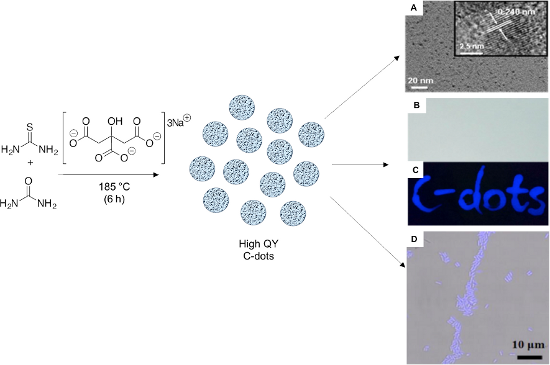
- and urea during the one-pot synthesis enhances the luminescence of the generated C-dots. Moreover, the prepared C-dots have a high distribution of functional groups on their surface. In this work, C-dots proved to be a suitable nanomaterial for imaging of bacteria and exhibit potential for application
- water, low photobleaching and low cytotoxicity. They show great potential for bioimaging, photocatalysis, energy conversion, fluorescent ink and sensing applications [1][2][3]. In a bioimaging application perspective, the detection of bacteria by microscopic visualization is an essential benchmark
- and high QY exhibit excellent potential for use as bacteria (Xanthomonas axonopodis pv. glycins, Xag) imaging agents. Results and Discussion Synthesis of carbon nanodots As shown in Table 1, the C-dots with different QYs were obtained as the amount of sodium citrate was kept constant and the molar


Evaluating the toxicity of TiO2-based nanoparticles to Chinese hamster ovary cells and Escherichia coli: a complementary experimental and computational approach
Beilstein J. Nanotechnol. 2017, 8, 2171–2180, doi:10.3762/bjnano.8.216

- nanoparticles, to model their quantitative nanostructure–toxicity relationships and to reveal the toxicity mechanism. In this context, toxicity tests for surface-modified TiO2-based nanoparticles were performed in vitro, using Gram-negative bacteria Escherichia coli and Chinese hamster ovary (CHO-K1) cells. The
- ]. Photocatalysis is an effective and environmentally friendly photooxidation process [2]. Development and application of photocatalysis techniques are reasonably economical endeavor. Photocatalysis could be a more reliable method than traditional methods for the inactivation of bacteria (i.e., UV disinfection and
- chlorination). Unmodified titania NPs are generally considered to be inert and non-toxic [3]. However, several studies have reported that TiO2 nanomaterials may elicit toxic effects towards bacteria under UV light [4], which makes it possible to use them as an antibacterial material [5][6]. In TiO2-based


Bi-layer sandwich film for antibacterial catheters
Beilstein J. Nanotechnol. 2017, 8, 1982–2001, doi:10.3762/bjnano.8.199

- antibacterial balloon catheters and ureteral stents. The antibacterial coating of these stents should not only prevent the ascend of bacteria into the renal pelvis, but also the formation of encrustations. Bacteria, especially proteus mirabilis, release urease, an enzyme that is capable to hydrolyze urea into
- of bacteria can be fought relatively easily. Once the invasion is permitted and the small islands have grown to a highly structured biofilm with a protecting polysaccharide, the prospects for an effective attack are severely diminished [7]. Because catheterization was a giant step towards a better
- bacteria have developed antibiotic resistance against several antibiotics, but not against silver, he also emphasized that silver is also known for its oligodynamic impact, because it can interact with a bacterium in a versatile way. In 2003, however, it was communicated by Silver et al. that they had


Luminescent supramolecular hydrogels from a tripeptide and nitrogen-doped carbon nanodots
Beilstein J. Nanotechnol. 2017, 8, 1553–1562, doi:10.3762/bjnano.8.157

- interesting method to control fluorescence quenching upon application of a specific trigger, and to introduce new physical and optical properties of interest [7][8]. Such systems can be useful in several applications, such as bacteria detection [9], sensing of reactive oxygen species (ROS) and screening for


Biological and biomimetic materials and surfaces
Beilstein J. Nanotechnol. 2017, 8, 403–407, doi:10.3762/bjnano.8.42
- (Nelumbo nucifera) and Tropaeolum (Tropaeolum majus). Interestingly, with the rolling off of water droplets, dirt particles as well as fungus spores and bacteria are also very efficiently removed from the leaf surfaces as they are more tightly attached to the water droplet than to the leaf surface. The
Impact of surface wettability on S-layer recrystallization: a real-time characterization by QCM-D
Beilstein J. Nanotechnol. 2017, 8, 91–98, doi:10.3762/bjnano.8.10

- terms of kinetics and film assembly steps, the recrystallization taking place on an underlying secondary cell-wall polymer (SCWP) as found in bacteria. Complementary atomic force microscopy (AFM) experiments corroborate these findings and reveal the impact on the final structure achieved. Keywords
- of atomic force microscopy for topographical analysis of the resulting crystal-like films. The results are compared with the biomimetic case found in bacteria represented by the interaction of SbpA with a secondary cell-wall polymer (SCWP), which specifically recognizes the N-terminal region of the S
- lack of resemblance to the natural case (in bacteria), these results were not considered for further comparison. However, similar results to those of the hydrophobic substrate in terms of frequency variation, as well as the presence of the structural transition peak in ΔD, have already been reported in


The cleaner, the greener? Product sustainability assessment of the biomimetic façade paint Lotusan® in comparison to the conventional façade paint Jumbosil®
Beilstein J. Nanotechnol. 2016, 7, 2100–2115, doi:10.3762/bjnano.7.200

- perception of high optical quality. The optical quality of the paint is best at the time of façade painting. Throughout the paintings service life, impurities, for instance through rain and wind or even fouling caused by bacteria or fungal infestation lead to a progressive loss of optical quality of


Surface-enhanced infrared absorption studies towards a new optical biosensor
Beilstein J. Nanotechnol. 2016, 7, 1736–1742, doi:10.3762/bjnano.7.166

- molecules. However, it may be appropriate for detection of larger structures up to bacteria. In this work emphasis is placed not on film thickness changes but on the accompanying absorption in the MIR, which in principle, can be used for identification of an analyte by its fingerprint. Measurements
- monitoring of film thickness growth by RIfS interference can be combined as a potential means to identify and quantify large molecules or even bacteria in an aqueous system. As already mentioned in the Introduction, other optical sensors that successfully operate in the visible region of the electromagnetic


Preparation of alginate–chitosan–cyclodextrin micro- and nanoparticles loaded with anti-tuberculosis compounds
Beilstein J. Nanotechnol. 2016, 7, 1208–1218, doi:10.3762/bjnano.7.112

- addition to this, ISN has an antibacterial effect against gram-positive bacteria (B. cereus, C. tuberculostearicum, S. aureus MR, S. haemolyticus, S. hominis, and S. salivarius) confirmed by numerous reports on its antibacterial activity [21][22][23][24][25]. The antibacterial activity of ISN has been
- 0.05% Tween 80 (Sigma), all taken in v/v concentrations. Cultures were incubated in 500 mL nephelometer culture flasks on a rotary shaker at 150 rpm and 37 °C until they reached an optical density of 0.4–0.5 at 550 nm. The, the bacteria were washed and suspended in 20 mL PBS and passed through an 8 mm



Templated green synthesis of plasmonic silver nanoparticles in onion epidermal cells suitable for surface-enhanced Raman and hyper-Raman scattering
Beilstein J. Nanotechnol. 2016, 7, 834–840, doi:10.3762/bjnano.7.75
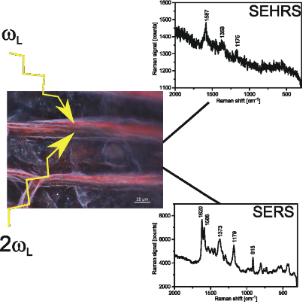
- bacteria provide chemicals suitable for the preparation of metal nanoparticles [13][14]. For example, different parts of plants contain polysaccharides, phenolics, or flavonoids, to mention only a few compounds, which could serve as reducing and also stabilizing agents. The preparation of silver and gold


Novel roles for well-known players: from tobacco mosaic virus pests to enzymatically active assemblies
Beilstein J. Nanotechnol. 2016, 7, 613–629, doi:10.3762/bjnano.7.54
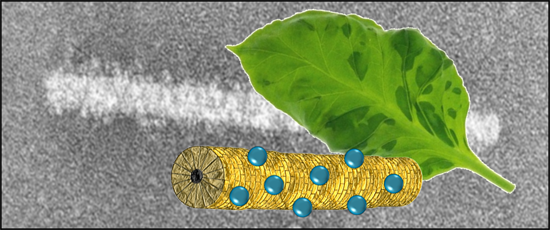
- research for more than a hundred years. During the late 19th century, their behavior in filtration tests applied to the agent causing the 'plant mosaic disease' eventually led to the discrimination of viruses from bacteria. Thereafter, they promoted the development of biophysical cornerstone techniques
- -programmed to produce many thousands of virus copies. Viruses have been discovered in virtually all types of organisms, with numerous well-characterized species adapted to animals, plants, fungi, or prokaryotic bacteria or archaea. As they may have an enormous impact on the physiological status and health of
- mosaic” [18]. A few years later, Dimitri Ivanowski revealed that the extracts of mosaic-affected leaves remained infective after passage through bacteria-excluding filters [19]. Martinus Beijerinck, while repeating Ivanowski´s experiments, recognized that he was dealing with a pathogen of a novel type


Antibacterial activity of silver nanoparticles obtained by pulsed laser ablation in pure water and in chloride solution
Beilstein J. Nanotechnol. 2016, 7, 465–473, doi:10.3762/bjnano.7.40

- Escherichia coli and Bacillus subtilis as references for Gram-negative and Gram-positive bacteria, respectively. In all cases, AgNPs with an average diameter less than 10 nm were obtained, which has been shown in previous works to be the most effective size for bactericidal activity. The measured zeta
- to isolate the effect of Ag on living cells (and, in particular, on bacteria) from that of other compounds. Most of the studies on the bactericidal effect of AgNPs concern NPs obtained by wet chemical methods. From studies using AgNPs with different sizes, it has been demonstrated that their
- antibacterial activity decreases with increasing particle size. The effect of 1–100 nm AgNPs on Gram-negative bacteria was studied by Morones et al. with HR-TEM analysis [13]. They concluded that only AgNPs with a diameter <10 nm are able to interact with the bacteria. Additionally, bacterial growth inhibition


Time-dependent growth of crystalline Au0-nanoparticles in cyanobacteria as self-reproducing bioreactors: 2. Anabaena cylindrica
Beilstein J. Nanotechnol. 2016, 7, 312–327, doi:10.3762/bjnano.7.30

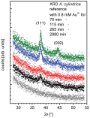
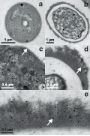
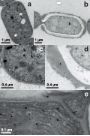
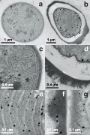
- pathways utilize for example plants [13][14], bacteria [15][16][17][18][19][20] and fungi [21][22]. In living organisms the biosynthesis of nanoparticles is often done by enzymatic processes which convert in the end a dissolved ion into a structurally stable state. Later they may be excreted from the cell



Molecular machines and devices
Beilstein J. Nanotechnol. 2016, 7, 310–311, doi:10.3762/bjnano.7.29
- in biology. Spiros Skourtis introduced the audience to the remarkable discovery of electron transport along micrometer long biomolecular wires, so-called pilli, growing as extracellular appendages from the surface of certain bacteria. The present understanding of the electron-conduction mechanism is
Surface coating affects behavior of metallic nanoparticles in a biological environment
Beilstein J. Nanotechnol. 2016, 7, 246–262, doi:10.3762/bjnano.7.23
- [68]. The most common process is the biomineralization of bones and shells [69]. It is interesting that the shape of these bionanomaterials is usually induced by an engulfing organic matrix [69]. Different microorganisms, such as magnetotactic bacteria or diatoms, are also able to produce nanocrystals




Sonochemical co-deposition of antibacterial nanoparticles and dyes on textiles
Beilstein J. Nanotechnol. 2016, 7, 1–8, doi:10.3762/bjnano.7.1

- cultures of the bacteria were transferred into a nutrient broth (NB) medium (“Difco” Detroit, MI) and grown at 37 °C with aeration. When the cell number reached 106 CFU, the cells were harvested by centrifugation and washed twice with a 0.85 % NaCl solution at pH 6.5 (saline). The fabric (2 × 2 cm2) was
- placed in a vial (d = 2.5 cm) containing 2 mL of bacteria in saline. The bacterial suspensions were incubated for up to 60 min at 37 °C with agitation (170 rpm). Aliquots (100 μL) were taken at different time intervals (0, 7, 15, 30 and 60 min) and plated on nutrient agar plates after 10-fold dilution in
- saline. The plates were allowed to grow overnight at 37 °C and the viable bacteria were counted thereafter. Results and Discussions Optimization of the co-deposition The deposition of the two compounds, the antibacterial ZnO or CuO, and the RO16 or RB5 dyes were carried out by dissolving the




Ultrastructural changes in methicillin-resistant Staphylococcus aureus induced by positively charged silver nanoparticles
Beilstein J. Nanotechnol. 2015, 6, 2396–2405, doi:10.3762/bjnano.6.246

- aureus and methicillin-resistant Staphylococcus aureus. We use aberration-corrected transmission electron microscopy to examine the bactericidal effects of silver nanoparticles and the ultrastructural changes in bacteria that are induced by silver nanoparticles. The study revealed that our 1 nm average
- polyanionic backbones of teichoic acids and the related cell wall glycopolymers of bacteria as a first target, consequently stressing the structure and permeability of the cell wall. This hypothesis provides a major mechanism to explain the antibacterial effects of silver nanoparticles on Staphylococcus
- species interacts with the bacterial cell [42]. The complex action mechanism of silver metals decreases the probability of bacteria developing a resistance against it, even though several resistance mechanisms to metals have been described [43], the most common of which is metal ion efflux. This was


Green and energy-efficient methods for the production of metallic nanoparticles
Beilstein J. Nanotechnol. 2015, 6, 2354–2376, doi:10.3762/bjnano.6.243
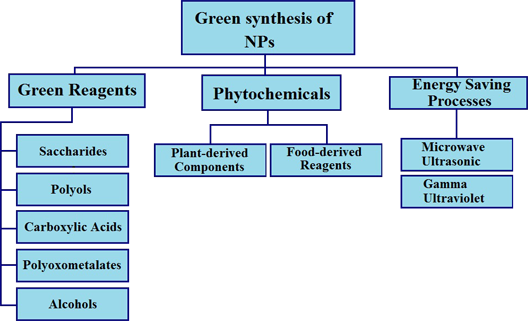
- , 6, 24 and 48 h, respectively. According to the measured zeta potential of 54.5 mV, they concluded that the synthesized Ag NPs had acceptable stability [4]. In another study, they studied the antibacterial activity of different sizes of Ag NPs against two different bacteria and observed that Ag NPs


Selective porous gates made from colloidal silica nanoparticles
Beilstein J. Nanotechnol. 2015, 6, 2105–2112, doi:10.3762/bjnano.6.215

- the dawn of membrane technology in the 1920s, mostly used for separation of bacteria from water [8]. In the following years, microfiltration devices have found application in several technological fields: water treatments, food industry, biotechnology, electronics and microfluidics [9][10][11][12][13
- nitride (Si3N4) inorganic microsieves are mainly used in the semiconductor industry [21], even though recently they are finding application in the clarification of milk, beers and juices as well as in biotechnology for the separation of bacteria and/or blood cells [7][22]. Silicon nitride microsieves with


Simulation of thermal stress and buckling instability in Si/Ge and Ge/Si core/shell nanowires
Beilstein J. Nanotechnol. 2015, 6, 1970–1977, doi:10.3762/bjnano.6.201

- -flagellated bacteria [36]. Given that a nanowire, fully clamped at both of its ends, experiences a compressive stress due to a rise in temperature, we can also associate it with buckling instability [15]. A rod of circular cross-section with diameter, D, length, l, and Young’s modulus, E, buckles when the


NanoE-Tox: New and in-depth database concerning ecotoxicity of nanomaterials
Beilstein J. Nanotechnol. 2015, 6, 1788–1804, doi:10.3762/bjnano.6.183

- uptake of ENMs in the organisms. 35% of the data in NanoE-Tox concerns ecotoxicity of Ag NPs, followed by TiO2 (22%), CeO2 (13%), and ZnO (10%). Most of the data originates from studies with crustaceans (26%), bacteria (17%), fish (13%), and algae (11%). Based on the median toxicity values of the most
- NPs (TiO2, ZnO, CuO, Ag, SWCNTs, MWCNTs and C60 fullerenes) and seven organism groups representing different trophic levels (bacteria, algae, crustaceans, ciliates, fish, yeasts and nematodes). Altogether 77 toxicity values were analysed [24]. In our recent review [4], we summarised the recent
- reported as a size range. According to Burello and Worth [38] ENMs with a diameter larger than 20–30 nm act often as bulk materials; thus, the “true nano-effects” are attributable to ENMs with smaller size. Indeed, in a recent paper on toxicity of different sizes of Ag NPs to bacteria, yeast, algae





