
Search results
Search for "crystallites" in Full Text gives 202 result(s) in Beilstein Journal of Nanotechnology. Showing first 200.
Facile synthesis of water-soluble carbon nano-onions under alkaline conditions
Beilstein J. Nanotechnol. 2016, 7, 758–766, doi:10.3762/bjnano.7.67
- half its maximum intensity (in radians), θ is the scattering angle and K is the Scherrer’s constant, which varies with the shape of the crystallites, from 0.89 for spherical to 0.94 for cubic particles [25]. Considering that this constant is set to 0.9 for particles of unknown size, the Lc was
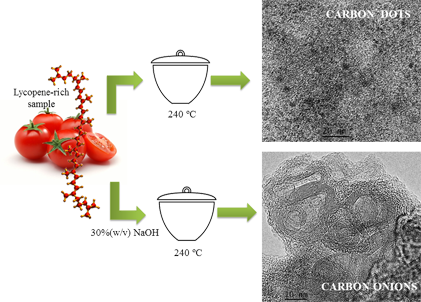
- concentrations of potassium in these vegetable samples [27]. The peak at 46° can be ascribed to a rhombohedral phase of graphite corresponding to a [101] reflection, probably due to the introduction of stacking faults in the crystallites with hexagonal stacking upon the NaOH treatment. The XRD for the C-NPs


Magnetic switching of nanoscale antidot lattices
Beilstein J. Nanotechnol. 2016, 7, 733–750, doi:10.3762/bjnano.7.65
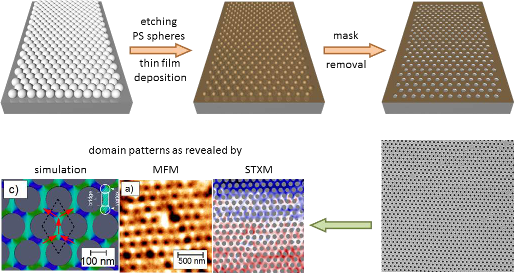
- order to create a local probe for the magnetic switching, this ratio should be as high as possible. The criterion for the crystallites’ orientation is that one of the outstanding antidot crystal axis, i.e., either nearest neighbour (nn) or next nearest neighbour (nnn) direction, is aligned parallel to



Microwave solvothermal synthesis and characterization of manganese-doped ZnO nanoparticles
Beilstein J. Nanotechnol. 2016, 7, 721–732, doi:10.3762/bjnano.7.64
- of crystallites was determined (Dhkl) using Scherrer’s formula (Equation 1), where Dhkl is the volume weighted crystallite size [nm]; β is the FWHM of the hkl diffraction peak [rad]; K is a constant shape factor (K ≈ 1), λ is the X-ray wave length [nm] and θhkl is the Bragg diffraction angle
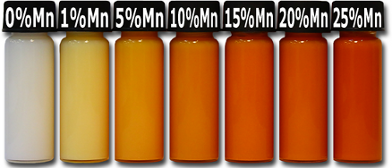
- increase of Mn2+-dopant content in ZnO leads to changes in proportions (asymmetry) of crystallite sizes. In line with the increase in Mn2+-dopant content, the size of the crystallites in the c-direction decreases (Figure 7). The dc/da ratio can be interpreted as a change in the shape of Zn1−xMnxO particles
- crystallites were determined for Zn1−xMnxO NPs (Figure 11). Zn1−xMnxO material was characterised by an average crystallite size from 19 to 26 nm (Table 5), with a narrow distribution, which ranged from 30–35 nm to 40–60 nm depending on the dopant content (Figure 11). When comparing the obtained results from


Orientation of FePt nanoparticles on top of a-SiO2/Si(001), MgO(001) and sapphire(0001): effect of thermal treatments and influence of substrate and particle size
Beilstein J. Nanotechnol. 2016, 7, 591–604, doi:10.3762/bjnano.7.52
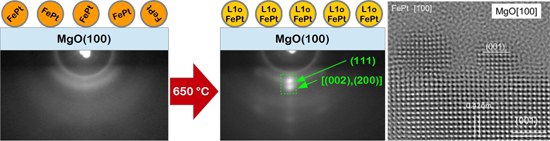
- delivers a pattern reflecting the in-plane symmetry of the surface. Sharp spots occur, arranged in the so-called Laue zones [34]. For thin, pseudomorphously grown films, the spots transform to vertical streaks, with their width being inversely proportional on the lateral dimensions of the crystallites


In situ observation of deformation processes in nanocrystalline face-centered cubic metals
Beilstein J. Nanotechnol. 2016, 7, 572–580, doi:10.3762/bjnano.7.50

- supported by a thin (≈20 nm) carbon film (Figure 1b). An additional experiment using an annealed NC AuPd (ncAuPda) thin film was also conducted and the results are compared with the ncPda results at the end of the paper. In this study, a distinction between crystallites and grains is made. Crystallites are
- defined as the smallest volume with one crystal orientation within a disorientation tolerance of 3° and grains are either single crystallites or multiple crystallites connected by twin boundaries. Results and Discussion All presented ACOM-STEM orientation maps (color coding according to the inverse pole
- additional local deviations from the sample bending, which appear as local, distinct rotations within the crystallites and in the vicinity of the grain boundaries (examples indicated by black boxes). A mismatch of the relative lattice rotation of neighboring grains needs to be accommodated as a shear


Time-dependent growth of crystalline Au0-nanoparticles in cyanobacteria as self-reproducing bioreactors: 2. Anabaena cylindrica
Beilstein J. Nanotechnol. 2016, 7, 312–327, doi:10.3762/bjnano.7.30

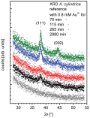
- . Smaller crystallites result in broader peaks, compare Scherrer-equation [62][63]. Since those broad peaks vanish in the noise of the background at some point, the lower limit of detection are some nanometers in one dimension. The instrumental setup used here was able to detect nanoparticles with an



Synthesis and applications of carbon nanomaterials for energy generation and storage
Beilstein J. Nanotechnol. 2016, 7, 149–196, doi:10.3762/bjnano.7.17
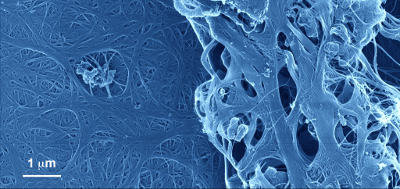
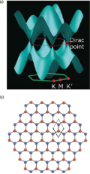
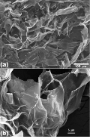
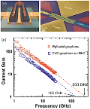
- , highly ordered pyrolytic graphite (HOPG) is chosen in order to guarantee a product of high quality graphene crystallites. The main advantages of this method are the ability to complete this process at room temperature and with inexpensive equipment. However, in terms of scalability, it performs the worst















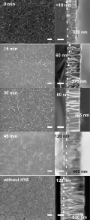
Chemical bath deposition of textured and compact zinc oxide thin films on vinyl-terminated polystyrene brushes
Beilstein J. Nanotechnol. 2016, 7, 102–110, doi:10.3762/bjnano.7.12
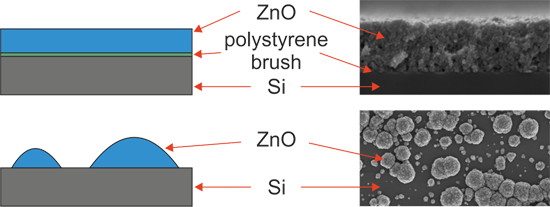
- stronger interaction between the then polar template and polar ZnO crystallites in solution. This may lead to oriented attachment of the crystallites so that the observed (002) texture arises. Characterization of the templates and the resulting ZnO films were performed with ζ-potential and contact angle
- ), (002), (101), (102) and (110) reflections of hexagonal ZnO are visible in the XRD patterns (cf. JCPDS no. 01-079-0206). For the PS brush sample (Figure 4b), a pronounced preferred orientation of the ZnO crystallites with the hexagonal c-axis perpendicular to the plane of the Si substrate is indicated
- complete ZnO film is formed. The methyl ester can coordinate the polar ZnO crystallites. This in turn can support an oriented attachment of the nanoparticles to the surface and an anisotropic orientation of the entire film, which was observed by XRD (Figure 4) [42][43]. Conclusion ZnO thin films were grown


Two step formation of metal aggregates by surface X-ray radiolysis under Langmuir monolayers: 2D followed by 3D growth
Beilstein J. Nanotechnol. 2015, 6, 2406–2411, doi:10.3762/bjnano.6.247
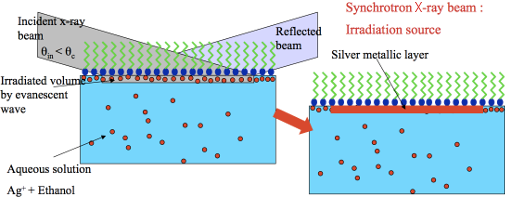
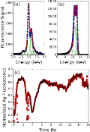
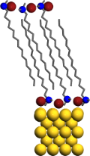
- spectra during the radiolysis process, we proved that the metal layer anchored to the organic monolayer consisted of silver atoms organized in thin crystallites oriented by the interface [4]. We also studied the kinetics of formation of this silver layer by total reflection X-ray fluorescence (TRXF) and
- peaks appears as is characteristic of a 2D powder, that is, the crystallites present the same lattice plane parallel to the surface but random in plane orientation. This result is identical to that previously observed [4]. However, in the q-range of the 3D silver structure, the appearance of weaker
- disoriented crystallites replace the previously oriented ones. We underline that the probed thickness is defined by the penetration depth of the X-ray evanescent wave, and thus, the silver film can be thicker for the latter case. This could be related to the observation of the evolving FWHM of the 2D peaks


Surfactant-controlled composition and crystal structure of manganese(II) sulfide nanocrystals prepared by solvothermal synthesis
Beilstein J. Nanotechnol. 2015, 6, 2319–2329, doi:10.3762/bjnano.6.238

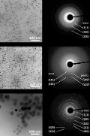
- of both). The rock salt structure of MnS NCs was confirmed by HRTEM: Figure 2a displays lattice fringes separated by 0.258 nm that correspond to the {200} planes of the α-MnS structure. The geometric phase analysis (GPA) [31] showed that the NCs are single crystallites, almost free from lattice


Silica-coated upconversion lanthanide nanoparticles: The effect of crystal design on morphology, structure and optical properties
Beilstein J. Nanotechnol. 2015, 6, 2290–2299, doi:10.3762/bjnano.6.235

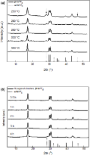
- the particles reached 67–77 wt % (Table 1). The amorphous halo originated from OM surrounding the NaYF4:Yb3+/Er3+ crystallites. Sizes of the cubic and hexagonal phases were estimated using the Scherrer equation from the [111] (2θ = 28.2) and [101] (2θ = 30.9) reflections, respectively [35]. XRD
- of an amorphous halo is indicative of a disorder-to-order type cubic-to-hexagonal phase transition [39]. The size of α crystallites ranged from 6 to 6.5 nm, and the size of β-phase crystals ranged between 18–21 nm. Interestingly, diffraction peaks corresponding to the cubic phase were hardly visible
- in the OM–NaYF4:Yb3+/Er3+ nanoparticles prepared for 3 h, and the size of the crystallites could not be determined. No structural changes were observed by XRD in the particles prepared at different reaction times, indicating that a 4 h reaction time was not sufficient for full conversion of the






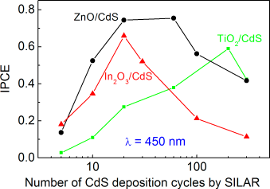
Influence of wide band gap oxide substrates on the photoelectrochemical properties and structural disorder of CdS nanoparticles grown by the successive ionic layer adsorption and reaction (SILAR) method
Beilstein J. Nanotechnol. 2015, 6, 2252–2262, doi:10.3762/bjnano.6.231
- microscopy (SEM) images of indium, zinc, and titanium oxide prepared films are shown in Figure 1. The In2O3 films (Figure 1a,d) have a uniform thickness and are characterized by a more dense packing of the grains as compared to the ZnO deposit, which consists of plate-like crystallites with approximately 100
- detected using a thermostated CCD matrix with a signal acquisition time typically equal to 120 s. Calibration was performed by means of a built-in gas discharge lamp to an accuracy of ≈1 cm−1. SEM images of In2O3 mesoporous films (a,d), ZnO platelet crystallites (b,e) and anodic TiO2 nanotubes (c,f


Effect of SiNx diffusion barrier thickness on the structural properties and photocatalytic activity of TiO2 films obtained by sol–gel dip coating and reactive magnetron sputtering
Beilstein J. Nanotechnol. 2015, 6, 2039–2045, doi:10.3762/bjnano.6.207

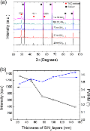
- on SiNx/glass was compared by measuring the FWHM of the (101) diffraction peaks. It was found that for MS-TiO2 samples, the presence of the diffusion barrier does not affect the crystallites size, which was about 24–30 nm in both cases. This result is in agreement with our previous study but for a
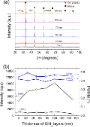
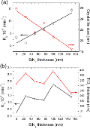
Paramagnetism of cobalt-doped ZnO nanoparticles obtained by microwave solvothermal synthesis
Beilstein J. Nanotechnol. 2015, 6, 1957–1969, doi:10.3762/bjnano.6.200
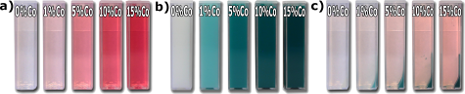
- morphology. They are composed of loosely agglomerated spherical particles with wurtzite-type crystal structure with crystallites of a mean size of 30 nm. Annealing to temperatures of up to 800 °C induced the growth of crystallites up to a maximum of 2 μm in diameter. For samples annealed in high purity


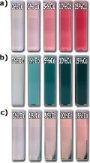


A facile method for the preparation of bifunctional Mn:ZnS/ZnS/Fe3O4 magnetic and fluorescent nanocrystals
Beilstein J. Nanotechnol. 2015, 6, 1743–1751, doi:10.3762/bjnano.6.178

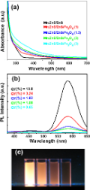
- hematite α-Fe2O3 (JCPDS record number 99-100-0140) can also be observed [26]. Since the surface of finely divided materials is highly reactive, partial oxidation of Fe3O4 into Fe2O3 may have taken place during the handling of the nanocrystals [28][29]. The crystallites sizes of the Mn:ZnS/ZnS/Fe3O4




Structural and magnetic properties of iron nanowires and iron nanoparticles fabricated through a reduction reaction
Beilstein J. Nanotechnol. 2015, 6, 1652–1660, doi:10.3762/bjnano.6.167

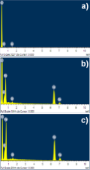
- studied nanostructures can be consisted of the small iron crystallites or they can contain a mixture of crystalline and amorphous iron phases [14]. Moreover, no signals originating from iron oxides are observed. This is in contrast to the results mentioned before. TEM and EDX measurements show clearly the



Thermal treatment of magnetite nanoparticles
Beilstein J. Nanotechnol. 2015, 6, 1385–1396, doi:10.3762/bjnano.6.143

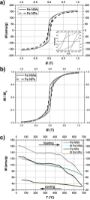
- of rather polycrystalline particles. This was especially clearly observed when larger particles were grown and can be expected from the synthesis. The existence of interfaces between separate crystallites inside each particle can be the reason for a faster oxidation process. Such a scenario is in




From lithium to sodium: cell chemistry of room temperature sodium–air and sodium–sulfur batteries
Beilstein J. Nanotechnol. 2015, 6, 1016–1055, doi:10.3762/bjnano.6.105
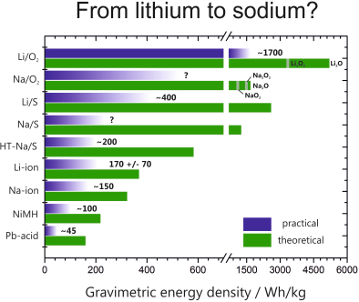
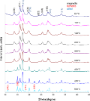
- crystallites (compare Figure 7 with Figure 11). The cells showed only very small combined overpotentials of about 200 mV during cycling which was attributed to the kinetically favored one-electron transfer. Shortly after, similar findings were reported for potassium–oxygen cells. Here, KO2 forms during


Characterization of nanostructured ZnO thin films deposited through vacuum evaporation
Beilstein J. Nanotechnol. 2015, 6, 971–975, doi:10.3762/bjnano.6.100
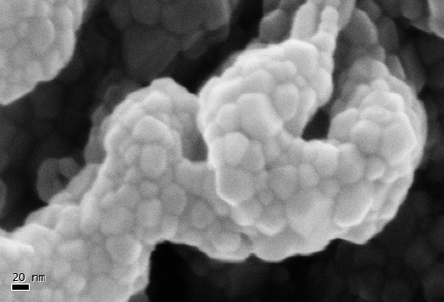
- 1000 °C for 1 h in air), in order to observe the evolution in the formation of these 2D nanostructures. Thin films were deposited using the vacuum metal evaporation system Jeol model JEE-420. The annealing process was done in a conventional oven to reorganize the crystallites and increase the adherence


Transformation of hydrogen titanate nanoribbons to TiO2 nanoribbons and the influence of the transformation strategies on the photocatalytic performance
Beilstein J. Nanotechnol. 2015, 6, 831–844, doi:10.3762/bjnano.6.86
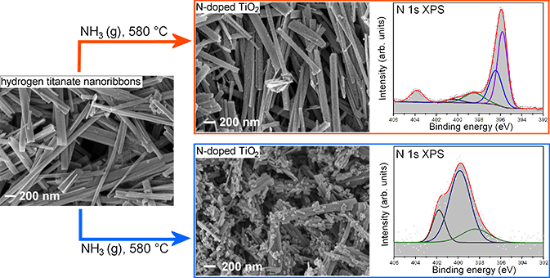
- hexagonal shapes (Figure 6A and 6B). When the transformation proceeded hydrothermally (CH-W, CH-N and MW-W), the morphology of the nanoribbons is preserved due to an in situ rearrangement of the structural TiO6 units while small crystallites that cover the nanoribbon surfaces (Figure 5 and Figure 6) are
- formed through a dissolution–recrystallization process, as suggested by Zhu et al. [14]. The shape of these crystallites strongly depends on the pH of the reaction medium since different ions act as capping agents [31]. Published results [14][20][21] suggest that the stability of HTiNRs in aqueous




Morphology control of zinc oxide films via polysaccharide-mediated, low temperature, chemical bath deposition
Beilstein J. Nanotechnol. 2015, 6, 799–808, doi:10.3762/bjnano.6.83

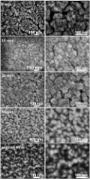
- , namely hyaluronic acid, is used to manipulate the morphology of the films. Previous experiments revealed a strong influence of this polysaccharide on the formation of zinc oxide crystallites. The present work aims to transfer this gained knowledge to the formation of zinc oxide films. The influence of
- the formation of crystalline ZnO [30]. Doping is carried out by the simple addition of the corresponding dopant salt to the deposition solution. In addition to doping, the microstructure of the resulting film, which involves the crystallite size as well as the morphology of the crystallites and the
- investigated the influence of two polysaccharides, hyaluronic acid (HYA) and chondroitin-6 sulfate (C6S), on the morphology of primary ZnO crystallites and on their aggregates, as they are formed in precipitation experiments [42]. Whereas C6S leads to a pronounced platelet-like morphoplogy of the primary




Novel ZnO:Ag nanocomposites induce significant oxidative stress in human fibroblast malignant melanoma (Ht144) cells
Beilstein J. Nanotechnol. 2015, 6, 570–582, doi:10.3762/bjnano.6.59
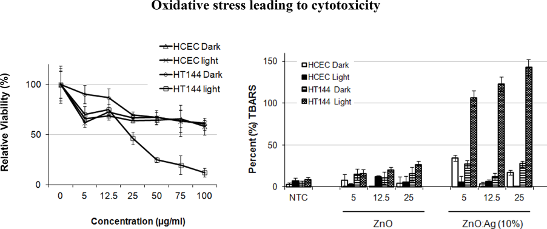
- Ag cubic structures took place through the adopted in situ doping procedure. The decrease in ZnO peak heights with the increase in Ag amount indicated that ZnO crystal structure deteriorated to smaller crystallites as silver started growing as a separate phase along the ZnO crystals. Rutherford




Nanoparticle shapes by using Wulff constructions and first-principles calculations
Beilstein J. Nanotechnol. 2015, 6, 361–368, doi:10.3762/bjnano.6.35

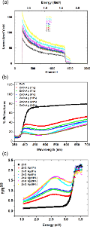
- indirect information about structural properties. Theoretical understanding of the nanocrystalline LiBH4 can provide an insight into structural and dynamical properties of crystallites confined in the smallest pores with dimension below 3 nm. The Wulff construction is the starting point for these studies



Nanoporous Ge thin film production combining Ge sputtering and dopant implantation
Beilstein J. Nanotechnol. 2015, 6, 336–342, doi:10.3762/bjnano.6.32
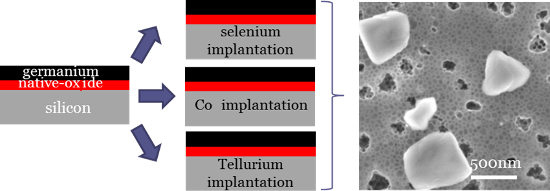
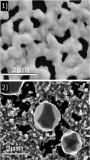
- size ≈50 nm). For the highest thermal budget (TB = 8.7 μm, Figure 3.4), the structure of the Ge film is greatly modified. One can observe the disappearance of both the holes and the nanoporous structure. Instead, the SEM plan-view analysis (Figure 3.4) reveals the growth of faceted crystallites, with
- an average lateral size of 700 nm for the Se-implanted sample and of 1600 nm for the co-implanted sample, and a complex surface structure between these crystallites. Indeed, some parts of the surface exhibit large roughness, while some others appear completely flat (black contrast in Figure 3.4
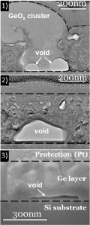
- ). This phenomenon can be explained considering that these crystallites result from the Ge dewetting mechanism occurring on the buried SiO2 layer already observed in Figure 3.3. The general dewetting phenomenon is due to surface/interface energy minimization between the film and the substrate, leading to


Manganese oxide phases and morphologies: A study on calcination temperature and atmospheric dependence
Beilstein J. Nanotechnol. 2015, 6, 47–59, doi:10.3762/bjnano.6.6

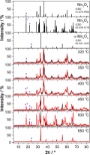
- , suggest a temperature dependence of the obtained α-Mn2O3 particle size in Ar atmosphere, which was not the case for the Mn3O4 particles. The Scherrer-derived size of the crystallites of the pure phase α-Mn2O3 obtained in an O2 atmosphere at 550 °C is one third larger than that calculated for particles
- obtained in Ar at the same temperature. Hence, similar to the Mn3O4 phases described above, the presence of O2 in the calcination atmosphere yields larger crystallites of the same product. No pure phase of monoclinic Mn5O8 (ICDD 00-039-1218, C2/m) could be obtained by calcination at temperatures between
- in Ar atmosphere, we propose that the presence of pores in the α-Mn2O3 particles reported here results from the analog growth, rearrangement and merging processes of the Mn3O4 nanoparticles. The considerably smaller size of the crystallites obtained from the broadening of the XRD reflections of α