
Search results
Search for "hydrophilicity" in Full Text gives 140 result(s) in Beilstein Journal of Nanotechnology.
Design criteria for stable Pt/C fuel cell catalysts
Beilstein J. Nanotechnol. 2014, 5, 44–67, doi:10.3762/bjnano.5.5
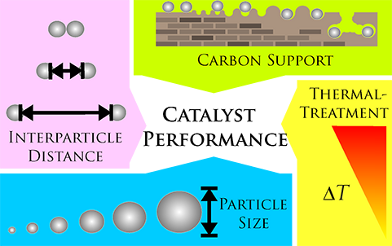
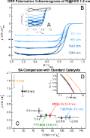
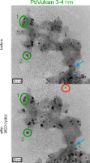
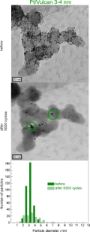
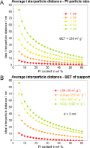
- above catalyst degradation pathways, in mass transport limitations for the reactants [54]. It is also assumed that the formation of excessive oxygenated functional groups at the carbon surface can increase the hydrophilicity of the support and thus enhance flooding effects that can hamper the transport






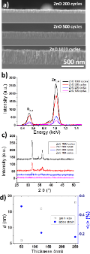
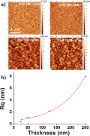
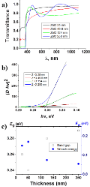
Evolution of microstructure and related optical properties of ZnO grown by atomic layer deposition
Beilstein J. Nanotechnol. 2013, 4, 690–698, doi:10.3762/bjnano.4.78
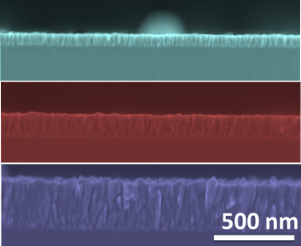
- interstitials and adsorbed molecular oxygen on the surface of grains. The ultra-thin ZnO ALD films are attractive for optical sensor/biosensor applications due to their high oxygen to zinc ratio and variable optical properties. In addition, the presence of hydroxyl terminals leads to the hydrophilicity of the

New hybrid materials based on poly(ethyleneoxide)-grafted polysilazane by hydrosilylation and their anti-fouling activities
Beilstein J. Nanotechnol. 2013, 4, 671–677, doi:10.3762/bjnano.4.75

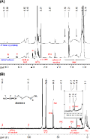
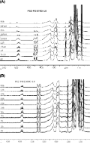
- hypothesized to explain the anti-fouling property of these surfaces. These include the hydrophilicity [7], the mobility, the large exclusion volume in water and the effect of steric repulsion [8][9][10][11]. The effect of the molecular weight and the grafting density of PEO on the anti-fouling capacity has





Porous polymer coatings as substrates for the formation of high-fidelity micropatterns by quill-like pens
Beilstein J. Nanotechnol. 2013, 4, 377–384, doi:10.3762/bjnano.4.44
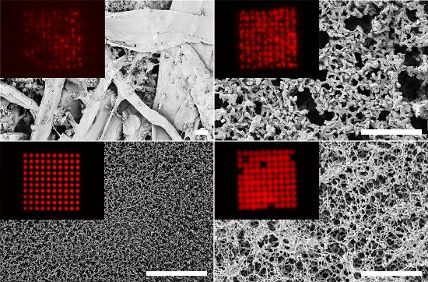
- possess very high hydrophilicity due to the combination of the porous structure with the hydrophilic nature of the 2-hydroxyethyl methacrylate used as a monomer [5]. The small size and narrow size distribution of both pores and polymer globules (about 20–200 nm) resulted in high transparency of the


Functionalization of vertically aligned carbon nanotubes
Beilstein J. Nanotechnol. 2013, 4, 129–152, doi:10.3762/bjnano.4.14








Friction and durability of virgin and damaged skin with and without skin cream treatment using atomic force microscopy
Beilstein J. Nanotechnol. 2012, 3, 731–746, doi:10.3762/bjnano.3.83

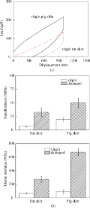
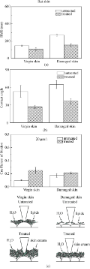
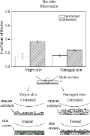
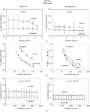
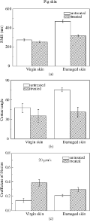
- responsible for an increase in contact angle of the damaged skin [39]. After treatment with skin cream, the contact angles of virgin and damaged skin decreased. The hydrophilic groups in skin cream, such as hydroxyl group, amines group, and carboxyl group in the humectants, increase the surface hydrophilicity
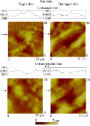
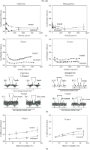
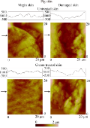
- decreases after treatment due to an increasing hydrophilicity. Skin cream increases the hydrophilic properties of the skin. For pig skin, the roughness shows a similar trend to that of rat skin, but the contact angle of damaged skin shows a significant increase as compared to virgin skin because of the





Magnetic-Fe/Fe3O4-nanoparticle-bound SN38 as carboxylesterase-cleavable prodrug for the delivery to tumors within monocytes/macrophages
Beilstein J. Nanotechnol. 2012, 3, 444–455, doi:10.3762/bjnano.3.51
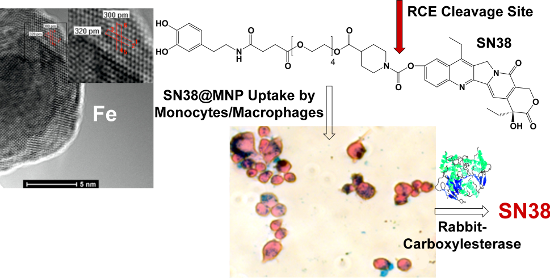
- the Tet-On Advanced system. It is noteworthy that the hydrophilicity of the SN38 prodrug (log P(13) = 0.55) is higher than that for the tetraethylene glycol stealth ligand (log P(7) = −0.51), which is the reason why we have selected the molar ratio of 1/10 for 13 and 7 at the surface of the Fe/Fe3O4


Variations in the structure and reactivity of thioester functionalized self-assembled monolayers and their use for controlled surface modification
Beilstein J. Nanotechnol. 2012, 3, 213–220, doi:10.3762/bjnano.3.24

- reaction based on the rate of disappearance of the carbonyl, but the high degree of hydrophilicity that is achieved with aqueous OXONE is not obtained in these longer chain systems. It seems that there is a buildup of longer chain byproducts that need organic solvents to effectively remove them. However
- , the exposure of the high-free-energy sulfonated surface to organic solvent leads to surface reorganization and loss of hydrophilicity. Thus, in order to take advantage of the enormous change in surface wetting achieved by the oxidation of a system such as 1g–i (from a water contact angle of over 100


Surface functionalization of aluminosilicate nanotubes with organic molecules
Beilstein J. Nanotechnol. 2012, 3, 82–100, doi:10.3762/bjnano.3.10

- to 93°. This result indicates that the hydrophilicity of the external surface of imogolite is changed upon absorption of DDPO4, which converts the hydrophilic surface of imogolite nanotubes to a hydrophobic one. Poly(methyl methacrylate) grafted imogolite nanotubes The above content demonstrated the


Self-assembled monolayers and titanium dioxide: From surface patterning to potential applications
Beilstein J. Nanotechnol. 2011, 2, 845–861, doi:10.3762/bjnano.2.94

- semiconductors (Si, GaN, InP, InGaAs) provide a unique way to alter the properties of a surface at will. This ability may be manifested through a variety of phenomena, among which are wetting phenomena (hydrophobicity, hydrophilicity and oleophobicity), electronic phenomena (from affecting band bending and work



Synthesis and catalytic applications of combined zeolitic/mesoporous materials
Beilstein J. Nanotechnol. 2011, 2, 785–801, doi:10.3762/bjnano.2.87

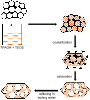
- dimensions of the nanoparticles often alter the properties of the materials as compared to the full-grown zeolite (e.g., hydrophilicity) [83][85][91]. Nevertheless, examples of beneficial materials obtained by the postsynthetic deposition approach also exist, namely the TS-1 coated MCF structure developed by
- suffer some major drawbacks: (i) They are less stable than TS-1, and especially the hydrothermal stability is significantly lower, and (ii) their hydrophilic nature, which is caused by their amorphous structure, leads to a lower catalytic activity [183][187]. This hydrophilicity will prevent efficient
- surface of mesoporous materials, resulting in a more hydrophobic structure, is also a solution in many cases [189]. However, this does not solve the stability problems. Combined zeolitic/mesoporous materials are expected to help to overcome these stability and hydrophilicity issues. Some successful




Fabrication of multi-parametric platforms based on nanocone arrays for determination of cellular response
Beilstein J. Nanotechnol. 2011, 2, 545–551, doi:10.3762/bjnano.2.58
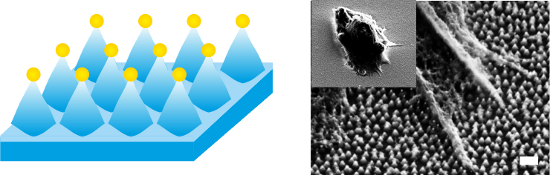
- °). Attaching biomolecules to the surfaces lowers the contact angle to values of approximately 20° proving that the hydrophobicity/hydrophilicity of the substrates is a constant parameter in the following cell experiments. The potential of the substrates to support neural cell adhesion was tested with SHSY5Y


The effect of surface anisotropy in the slippery zone of Nepenthes alata pitchers on beetle attachment
Beilstein J. Nanotechnol. 2011, 2, 302–310, doi:10.3762/bjnano.2.35

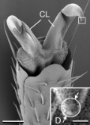
- rim, the peristome, for initial prey capture due to its specific microstructure combined with both surface hydrophilicity and secretion of hygroscopic nectar, was recently discovered [8][9][10][11]. In addition, the digestive fluid collected in the lower part of the pitcher was recently found to be



Capillary origami: superhydrophobic ribbon surfaces and liquid marbles
Beilstein J. Nanotechnol. 2011, 2, 145–151, doi:10.3762/bjnano.2.18
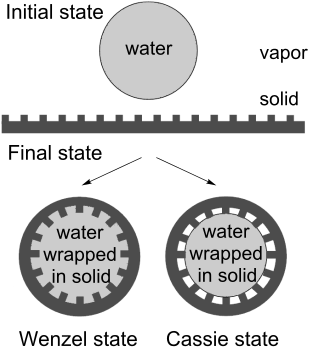
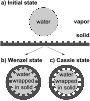
- , in an absolute sense, be considered hydrophilic [11]. That work also discussed why for a partially wetting droplet to be observed there is necessarily an assumption of some rigidity of the substrate, so that the usual definition of relative hydrophobicity (and relative hydrophilicity) through contact
- chemistry, will adhere to the water-air interface; a similar conclusion to that regarding the absolute hydrophilicity of solids when their curvature energy is zero. The effect of surface chemistry, characterised through the Young’s law contact angle, is to determine the strength of the adhesion to the air



Preparation and characterization of supported magnetic nanoparticles prepared by reverse micelles
Beilstein J. Nanotechnol. 2010, 1, 24–47, doi:10.3762/bjnano.1.5

- the PS- and hydrophilicity of PVP-block, the co-polymers form reverse spherical micelles in apolar solvents such as the solvent used here, i.e., toluene. Empirically, however, in order to obtain stable spherical micelles, the block length of PS, x, should be significantly larger than the PVP length y