Search results
Search for "kinetics" in Full Text gives 446 result(s) in Beilstein Journal of Nanotechnology. Showing first 200.
Investigation of electron-induced cross-linking of self-assembled monolayers by scanning tunneling microscopy
Beilstein J. Nanotechnol. 2022, 13, 462–471, doi:10.3762/bjnano.13.39
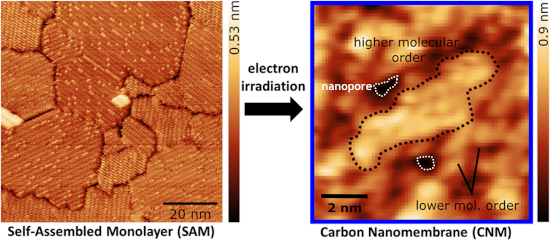
- density of the dark spots is estimated to be (2.0 ± 1.0) × 1012 cm−2 and the corresponding area fraction is approximately 3.2%. Analogous to the formation of 2D polymers on a surface or interface [6], the cross-linking could proceed either by step-growth or chain-growth kinetics. In the step-growth
- , consist of almost exclusively dimers and, to a much lesser extent, trimers. An area fraction of 30% results in areas with up to ten monomers. The comparison reveals inconsistencies between the STM data and the step-growth kinetics. Therefore, we look into the chain-growth scenario, in which a radical
- observed dark spots (in black) as a function of the molecular area (0.288 nm2) in the β-phase. Simulated size distributions of cross-linked molecules with an area fraction of 3% and 30%, respectively, based on step-growth kinetics. Structural evolution of TPT SAMs upon 50 eV electron exposure. (a) Low


Micro- and nanotechnology in biomedical engineering for cartilage tissue regeneration in osteoarthritis
Beilstein J. Nanotechnol. 2022, 13, 363–389, doi:10.3762/bjnano.13.31
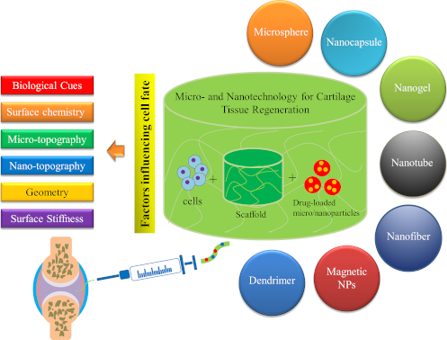
- using separate loading systems may provide desirable kinetics for the sequential controlled release of growth factors. In line with this, a two-growth-factor system consisting of TGF-β2-loaded NPs encapsulated in a BMP-7-loaded alginate hydrogel enabled a slower release of TGF-β2 and a faster release of


Systematic studies into uniform synthetic protein nanoparticles
Beilstein J. Nanotechnol. 2022, 13, 274–283, doi:10.3762/bjnano.13.22
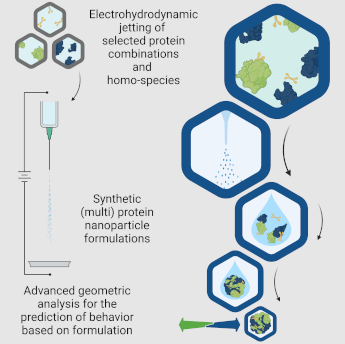
- ]. Electrohydrodynamic (EHD) co-jetting is a versatile technology that has been utilized to fabricate compartmentalized microparticles and nanoparticles [20][21][22]. Key properties of these drug delivery carriers include tunable payload delivery kinetics, the presence of multiple drug-loaded compartments, and


Engineered titania nanomaterials in advanced clinical applications
Beilstein J. Nanotechnol. 2022, 13, 201–218, doi:10.3762/bjnano.13.15
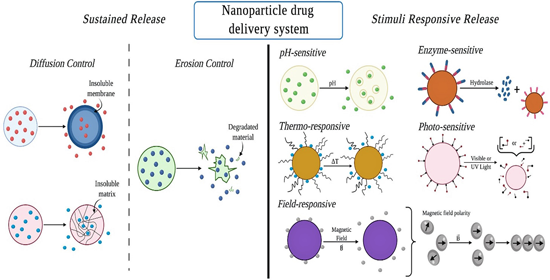
- demonstrated enhanced osseointegration [58]. Additionally, drug release kinetics and duration from titania nanotubes (TNTs) can be controlled by modifying nanotube dimensions, surface chemistry, or by a polymer coating on the TNT implant surface through dip coating or plasma polymerization. Losic and co
- , a positively charged molecule will have strong ionic interaction, and the release rate will be slower. This can be described mathematically using Fick’s law, compared to a negatively charged molecule that follows first-order kinetics [104]. Some recent studies indicated that nanostructured Ti wires


A photonic crystal material for the online detection of nonpolar hydrocarbon vapors
Beilstein J. Nanotechnol. 2022, 13, 127–136, doi:10.3762/bjnano.13.9

- sensors with a visual recording of analysis results. Kinetics of interaction between the sensor and solvent vapors Of interest is the use of a 3D PhC-based sensor for online measurements of the concentration of nonpolar solvents and their vapors. Exposure to saturated solvent vapors allows the analyte to
- SCI and SCE modes. The studies of kinetics have been carried out using a mini-spectrophotometer “eye-one Pro” (X-Rite, Inc., USA). The thickness of the stimuli-responsive layer (PDMS and CCA) has been measured by using a “Constant K5” thickness gauge (KONSTANTA LLC, Russia) with an ID2 induction


Influence of magnetic domain walls on all-optical magnetic toggle switching in a ferrimagnetic GdFe film
Beilstein J. Nanotechnol. 2022, 13, 74–81, doi:10.3762/bjnano.13.5

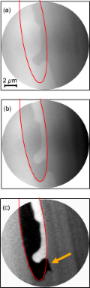
- 2), that is, well below and above the magnetization and angular momentum compensation temperatures. Their kinetics, however, may well depend on temperature. We mentioned already that the boundaries between switched and unswitched regions of the sample are expected to be smooth and follow a line of


Sputtering onto liquids: a critical review
Beilstein J. Nanotechnol. 2022, 13, 10–53, doi:10.3762/bjnano.13.2
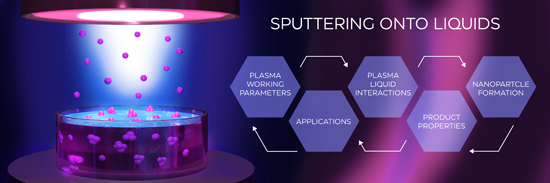
- misunderstanding of physicochemical basics of this technique. For this purpose, a presentation of the underlying processes leading to NP production is first provided. This part is constituted of a brief introduction to (i) sputtering and (ii) the kinetics of NP nucleation and growth in solutions. Then, the
- stabilizer [79]. The final amount of NPs in the solution and their final size depend on the kinetics of NP formation and, mainly, on the ratio between the rates of nucleation and growth steps [77]. The stability of obtained NPs depends on many factors but the affinity of the stabilizer reagent to the NP
- his work stayed almost unnoticed. There had been no sufficient progress regarding the kinetics of NP formation during the 35 years after Takiyama’s work. Studies of pulse radiolysis reduction of silver (Ag) ions showed the presence of small ionic Agрz+ clusters (p = 2–9, z = 1–2) that grow and become






Biocompatibility and cytotoxicity in vitro of surface-functionalized drug-loaded spinel ferrite nanoparticles
Beilstein J. Nanotechnol. 2021, 12, 1339–1364, doi:10.3762/bjnano.12.99
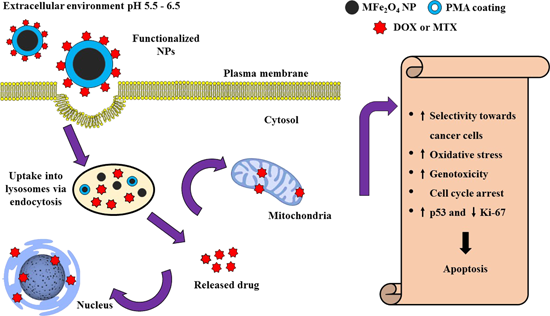
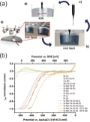
- applications [30]. All samples have lower PDI values (0.13–0.33) which indicates a uniform distribution of NPs in different dispersion media (Table 5). pH-dependent drug-loading and drug-release kinetics The UV–vis-based confirmation of drug (DOX and MTX) attachment to PMA-coated MFe2O4 (M = Fe, Co, Zn, Ni
- 0.5 mM of drugs for the loading on NPs. The encapsulated and loaded drug % for DOX and MTX are given in Table 6. For pH-dependent drug-release kinetics, drug-loaded NPs were dispersed in solutions with different pH values (1× PBS; pH 5.5, 6.5, and 7.4) at room temperature and the amount of release
- release kinetics Drug release kinetics of DOX- and MTX-loaded MFe2O4 (M = Fe, Co, Zn, Ni) NPs were studied at different pH values [68]. The nanoparticles were dispersed in PBS with pH values ranging from 5.5–7.4 and spectrophotometric data were measured at different time intervals (0, 1, 5, 10, 20, 40, 60




The effect of cobalt on morphology, structure, and ORR activity of electrospun carbon fibre mats in aqueous alkaline environments
Beilstein J. Nanotechnol. 2021, 12, 1173–1186, doi:10.3762/bjnano.12.87

- overall performance [3]. The lack of discharge performance is attributed to the sluggish kinetics of the oxygen reduction reaction (ORR) at the air cathode [4], which reduces the practical power density. Further improvements of the cathode are essential for the long-term success of metal–air batteries


Self-assembly of amino acids toward functional biomaterials
Beilstein J. Nanotechnol. 2021, 12, 1140–1150, doi:10.3762/bjnano.12.85
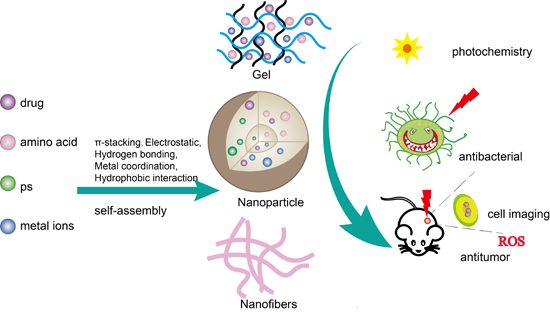
- -assembly with modified amino acids is of great interest, most of which focuses on 9-fluorenylmethoxycarbonyl (Fmoc)-terminated materials [40][41][42][43]. Due to the inherent hydrophobicity and aromaticity of Fmoc, many Fmoc-modified amino acids exhibit relatively fast self-assembly kinetics, excellent

pH-driven enhancement of anti-tubercular drug loading on iron oxide nanoparticles for drug delivery in macrophages
Beilstein J. Nanotechnol. 2021, 12, 1127–1139, doi:10.3762/bjnano.12.84
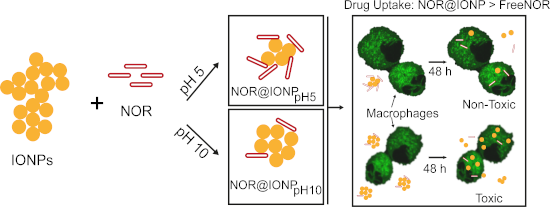
- the release kinetics and saturation amounts were identical in both the pH (5 or 7.4) of the release media, irrespective of whether NOR@IONPpH5 or NOR@IONPpH10 was used (Figure 5). Free drug is observed to have rapid release profile which saturates by 4 h. NOR@IONPpH5 displays an initial burst release
- profile from NOR@IONPpH10 resembled that of free NOR where the release was rapid over the first 4–6 h and saturated out there after (Figure 5b, inset). The release of NOR from metal oxides, NiO, is found to follow first order rate kinetics thus we too fitted out drug release plots to a first order model



Use of nanosystems to improve the anticancer effects of curcumin
Beilstein J. Nanotechnol. 2021, 12, 1047–1062, doi:10.3762/bjnano.12.78

- constituted by lipophilic and hydrophilic polymers which contribute to increase their systemic mobility and residence time [86]. The advantages of this hybrid system include high encapsulation efficiency, well-defined release kinetics, well-tolerated serum stability, and well-triggered tissue, cellular, and


Revealing the formation mechanism and band gap tuning of Sb2S3 nanoparticles
Beilstein J. Nanotechnol. 2021, 12, 1021–1033, doi:10.3762/bjnano.12.76
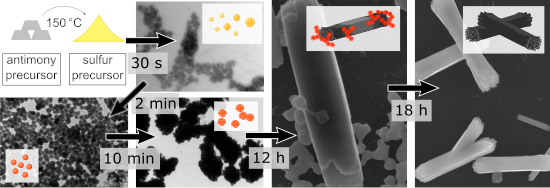
- prepared via the hot-injection approach. In contrast to earlier work, the reaction temperature was decreased to 150 °C so that the reaction was slowed down and could be stopped at defined reaction stages. Thereby, the formation mechanism of the nanomaterial and the associated kinetics could be revealed
- syntheses for Sb2S3 particles can be developed, allowing tuning of the particle properties in a broad range. In this way, the selective use of this material in a wide range of applications will become possible. Keywords: band gap; kinetics; nanoparticles; Sb2S3; solar cells; Introduction The search for
- mechanisms, and in particular the associated kinetics of Sb2S3 nanoparticles, is therefore still lacking. Nevertheless, it is necessary to understand the nanomaterial formation mechanism to achieve control over the morphological and optical properties of the particles, which is crucial for the further


Progress and innovation of nanostructured sulfur cathodes and metal-free anodes for room-temperature Na–S batteries
Beilstein J. Nanotechnol. 2021, 12, 995–1020, doi:10.3762/bjnano.12.75
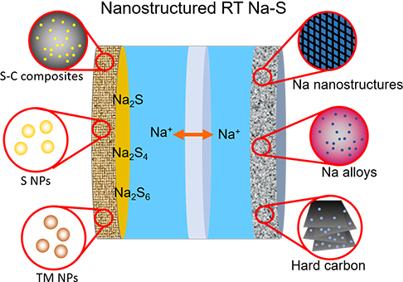
- , Na dendrite growth, and slow reaction kinetics by nanostructuring both the sulfur cathode and the Na anode. Moreover, a survey of recent patents on room temperature (RT) Na–S batteries revealed that nanostructured sulfur and sodium electrodes are still in the minority, which suggests that much
- ]. In order to overcome the consequences of the limited reactivity, a small amount of selenium can be added to the cathode and uniformly distributed through selenium–sulfur bonds. A significant improvement in redox reaction kinetics is achieved since selenium has a higher conductivity than sulfur and
- pyrolyzed PAN/SeS2 composite that results in a cathode with excellent reaction kinetics, high capacity, and extremely stable cycle life. The multichannel framework of the composite provides more surface area of PAN to react with SeS2, leading to an enhancement of the sulfur load on the cathode to about 63




Modification of a SERS-active Ag surface to promote adsorption of charged analytes: effect of Cu2+ ions
Beilstein J. Nanotechnol. 2021, 12, 902–912, doi:10.3762/bjnano.12.67
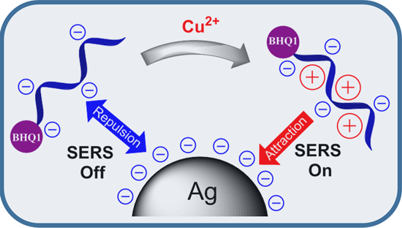
- DMSO at 80 °C for 5 h in the presence of catalytic quantities of sodium iodide. Finally, the substrates were repeatedly rinsed with hot distilled water and dried. Silver NPs adsorptive immobilization kinetics study PEI-modified glass substrates 5 × 10 mm in size were placed in 3 mL (great excess) of Ag
- deposited onto a PEI-modified silicon conductive support by adsorptive immobilization. Immobilization kinetics of Ag NPs on a glass substrate. Since the glass slides were modified on both sides, the spectra correspond to the absorption of two NPs layers. SEM image of Ag NPs immobilized on silicon surface by


The role of convolutional neural networks in scanning probe microscopy: a review
Beilstein J. Nanotechnol. 2021, 12, 878–901, doi:10.3762/bjnano.12.66







Comprehensive review on ultrasound-responsive theranostic nanomaterials: mechanisms, structures and medical applications
Beilstein J. Nanotechnol. 2021, 12, 808–862, doi:10.3762/bjnano.12.64


Stability and activity of platinum nanoparticles in the oxygen electroreduction reaction: is size or uniformity of primary importance?
Beilstein J. Nanotechnol. 2021, 12, 593–606, doi:10.3762/bjnano.12.49

- ), which is due to the difference in their structural characteristics described above (Table 1). The commercial catalyst JM40 has the minimal ESA value (Table 2). The study of the ORR kinetics, carried out by linear voltammetry using RDE (Figure 5), showed that the ORR proceeds according to the four


The preparation temperature influences the physicochemical nature and activity of nanoceria
Beilstein J. Nanotechnol. 2021, 12, 525–540, doi:10.3762/bjnano.12.43
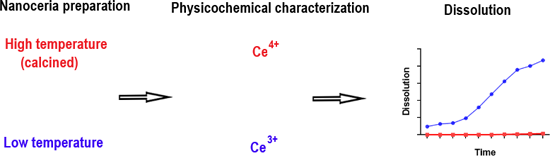
- the solvothermally synthesized nanoceria is less dramatic if the results are expressed as a dissolution rate in which the difference in specific surface area is factored out. Assuming first-order kinetics, as successfully fit to other, more soluble, ENMs [36], the half-lives of the solvothermally




Boosting of photocatalytic hydrogen evolution via chlorine doping of polymeric carbon nitride
Beilstein J. Nanotechnol. 2021, 12, 473–484, doi:10.3762/bjnano.12.38
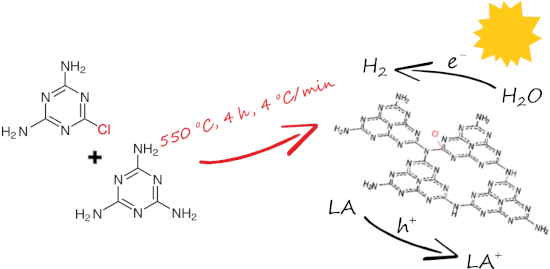
- the long-wavelength region, sluggish kinetics, and high recombination of photoexcited electron–hole pairs [19][20][21]. Tremendous efforts have been made in order to increase the photocatalytic activity of PCN materials by optimizing their nanostructure and improving their chemical surface texture


A review on nanostructured silver as a basic ingredient in medicine: physicochemical parameters and characterization
Beilstein J. Nanotechnol. 2021, 12, 440–461, doi:10.3762/bjnano.12.36

- -shaped AgNPs regarding their antibacterial activity against various Gram-positive and Gram-negative bacteria. Death kinetics confirmed that the mortality rate of Klebsiella pneumoniae was higher when exposed to spherical AgNPs with larger {111} facets in comparison to rod-shaped AgNPs. Therefore, the
- {111} facets were found to be responsible for the antibacterial activity of AgNPs, a fact that was confirmed by a death study whose kinetics were supported by the arrangement of Ag-resistant genes in the genome of the test organism [46]. Conversely, AgNPs with different sizes exhibit different
- be described by a first-order kinetic reaction, according to Equation 1 [56]. Experimental studies have shown that the decrease in pH generally increases the dissolution kinetics [51][55][57]. Liu and Hurt studied the dissolution of AgNPs in buffered solutions (acetate and borate buffer) in a pH


Characterization, bio-uptake and toxicity of polymer-coated silver nanoparticles and their interaction with human peripheral blood mononuclear cells
Beilstein J. Nanotechnol. 2021, 12, 282–294, doi:10.3762/bjnano.12.23

- the effect of cell type and the kinetics of cellular uptake or sorption [40]. Human PBMCs primarily consist of monocytes and lymphocytes (mostly T cells). Monocytes are known for their phagocytic properties and phagocytosis is suggested as one of the possible mechanisms for Ag uptake by cells [7]. As



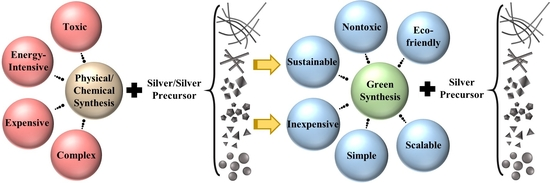
A review on the green and sustainable synthesis of silver nanoparticles and one-dimensional silver nanostructures
Beilstein J. Nanotechnol. 2021, 12, 102–136, doi:10.3762/bjnano.12.9


The role of gold atom concentration in the formation of Cu–Au nanoparticles from the gas phase
Beilstein J. Nanotechnol. 2021, 12, 72–81, doi:10.3762/bjnano.12.6
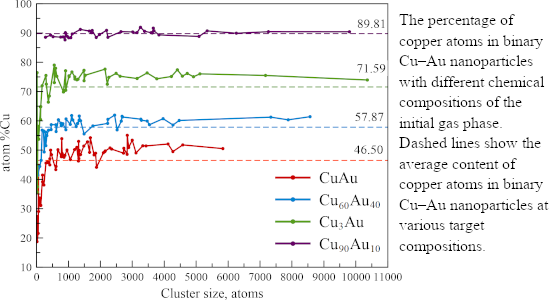
- only based on the kinetics of chemical reactions. Thus, according to the MD simulation results, several important conclusions can be drawn. First, an increase in the percentage of gold atoms in a binary vapor composed of Cu–Au leads to a decrease in the size of the synthesized nanoparticles. Second


ZnO and MXenes as electrode materials for supercapacitor devices
Beilstein J. Nanotechnol. 2021, 12, 49–57, doi:10.3762/bjnano.12.4
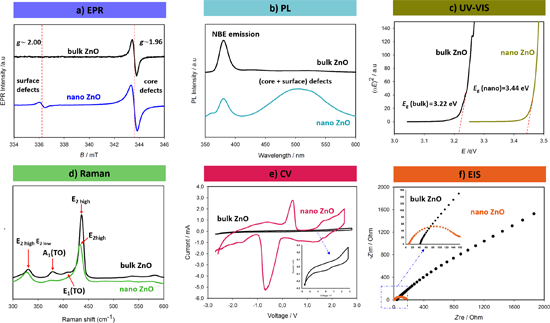
- play a vital role in the creation of the defect centers. Different routes may create different size distributions. The defects may have different thermodynamics and kinetics. Also, secondary phases may occur, and impurities and morphology may change. All these facts affect the creation of defects