Search results
Search for "matrix" in Full Text gives 847 result(s) in Beilstein Journal of Nanotechnology. Showing first 200.
Quantitative wear evaluation of tips based on sharp structures
Beilstein J. Nanotechnol. 2024, 15, 230–241, doi:10.3762/bjnano.15.22
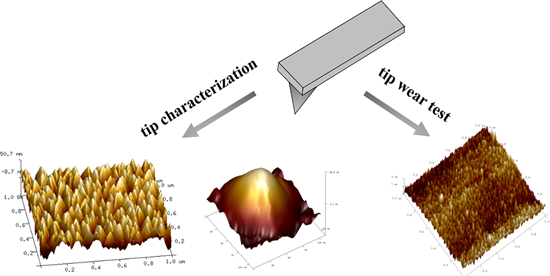
- between the sample and the tip was confirmed, and the potential of using sharp structures to describe the tip structure was examined. Distinct matrix arrays were created for the tip and the sample shapes. To produce an image of a sample matrix using a tip matrix, the tip matrix was positioned
- perpendicularly above the sample matrix. When the tip apex touched the sample, the difference between the tip and sample matrices was calculated to determine the position of the tip apex. The position of the tip apex was then recorded, and the tip apex was moved horizontally to contact the next pixel of the
- sample matrix. This process was repeated until all points on the sample matrix had been scanned. The resulting image comprised the recorded height information of the tip apex. Figure 4 illustrates the two tip shapes used in the simulation, a blunt tip with a tip diameter of 20 nm at a distance of 5 nm




Exploring disorder correlations in superconducting systems: spectroscopic insights and matrix element effects
Beilstein J. Nanotechnol. 2024, 15, 199–206, doi:10.3762/bjnano.15.19
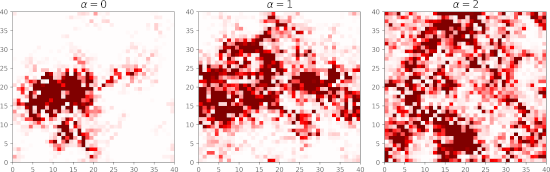
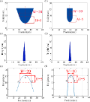
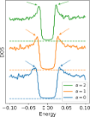
- superconducting systems, going beyond the traditional assumption of spatially uncorrelated disorder. In particular, we investigate the influence of disorder correlations on key spectroscopic superconductor properties, including the density of states, as well as on the matrix elements of the superconducting
- localization of Cooper pairs near the transition. In addition, in the presence of significant disorder, almost localized electronic wave functions show their fractal nature [50], which leads to an increase of the interaction matrix elements near the superconductor–insulator transition. This work elucidates how
- not so crucially important, we assume that the mean-field results for the 2D model can serve as at least a qualitative guidance for 3D superconductors. The mean-field HFB approximation for the model in Equation 1 gives rise to the Bogoliubov–de Gennes (BdG) equations which can be written as a matrix


Modification of graphene oxide and its effect on properties of natural rubber/graphene oxide nanocomposites
Beilstein J. Nanotechnol. 2024, 15, 168–179, doi:10.3762/bjnano.15.16
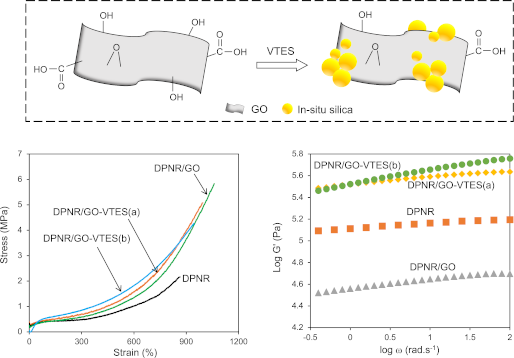
- , GO has quite poor compatibility with NR. It is necessary to modify GO to have a better interaction with the NR matrix. Various researchers have attempted to functionalize GO with silane coupling agents to prepare hybrid GO/silica fillers [25][26]. The concept is based on the hydrolysis and
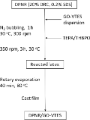
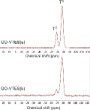
- -glycidyloxypropyltrimethoxysilane used in epoxy nanocomposites [27] or reduced GO/vinyltrimethoxy silane used in low-density polyethylene nanocomposites [28]. Additionally, Charoenchai et al. [29] prepared a hybrid silica/graphene oxide, GO/VTES, catalyzed under basic conditions. The hybrid filler was introduced into the NR matrix






CdSe/ZnS quantum dots as a booster in the active layer of distributed ternary organic photovoltaics
Beilstein J. Nanotechnol. 2024, 15, 144–156, doi:10.3762/bjnano.15.14
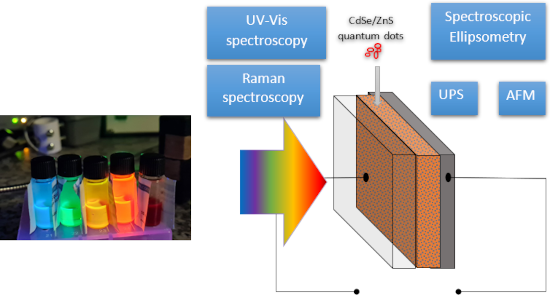
- studies on CdSe/ZnS nanodots as dopants in a polymer–fullerene matrix for application in organic solar cells. An assembly of poly(3-hexylthiophene-2,5-diyl) and 6,6-phenyl-C71-butyric acid methyl ester was used as the active reference layer. Absorption and luminescence spectra as well as the dispersion




In situ optical sub-wavelength thickness control of porous anodic aluminum oxide
Beilstein J. Nanotechnol. 2024, 15, 126–133, doi:10.3762/bjnano.15.12
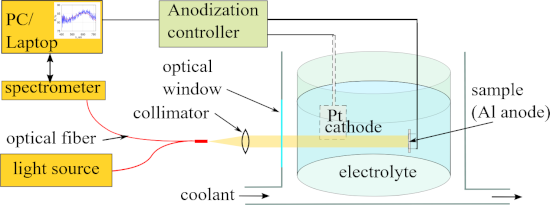
- consistently manufacturing PAAO with the targeted thickness. An electrochemical cell with an optical window was designed for reflectance spectroscopy of PAAO during anodization. Real-time fitting of spectra to a transfer-matrix model enabled continuous monitoring of the thickness growth of the PAAO layer
- the reflectance spectra to a multilayer model of a water–PAAO–aluminum system using the transfer-matrix method (TMM) [22]. Previously, TMM has been employed only for post-production thickness analysis of PAAO-based stratified systems [13][23]. In the present study, it allowed for continuous in situ
- consistent production of PAAO films with thicknesses of approximately 250–300 nm and above. The method relies on fitting the measured reflectance spectra to a transfer-matrix model that features a single alumina layer with a constant effective refractive index. The thickness values obtained in situ during


Berberine-loaded polylactic acid nanofiber scaffold as a drug delivery system: The relationship between chemical characteristics, drug-release behavior, and antibacterial efficiency
Beilstein J. Nanotechnol. 2024, 15, 71–82, doi:10.3762/bjnano.15.7

- researchers due to their unique characteristics. First, high porosity and large surface-to-volume ratio of nanofiber scaffolds give the material the potential to be exposed to the biological media for drug release. Besides, 3D nanofiber scaffolds resemble the natural extracellular matrix, promoting nutrients
- nanofiber compositions [11][12][13]. For a long-term drug release, hydrophobic polymers are chosen for the preparation of drug-loaded nanofiber scaffolds. This is because the hydrophobicity of the polymer could form air gaps, slowing matrix hydration and suppressing drug diffusion from the nanofibers [14
- worthwhile mentioning that the hybrid cross-linked nanofibers in this work were made of a mixture of a hydrophilic polymeric matrix (polyvinyl alcohol and carboxymethyl cellulose) and a hydrophobic polymer (polycaprolactone) [16]. Interestingly, the nature of the drug and the drug–polymer compatibility


Influence of conductive carbon and MnCo2O4 on morphological and electrical properties of hydrogels for electrochemical energy conversion
Beilstein J. Nanotechnol. 2024, 15, 57–70, doi:10.3762/bjnano.15.6
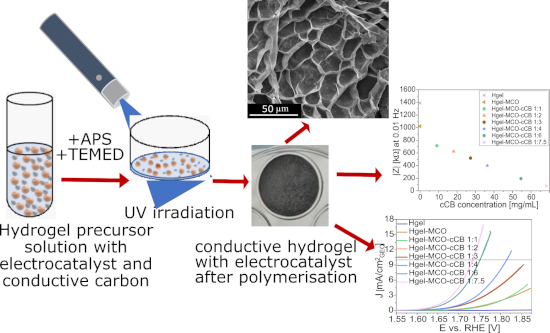
- composite acted as an electrocatalyst in the oxygen evolution reaction. Morphological studies confirmed that the added particles were incorporated and, in the case of a higher concentration of cCB particles, also bound to the surface of the structure of the hydrogel matrix. The produced composite materials
- catalytic activity of the electrode in the oxygen evolution reaction. The use of a hydrogel as a matrix to suspend the catalyst particles, and thus increase their availability through the electrolyte, seems to be an interesting and promising application approach. Keywords: electrical properties; energy
- the morphology also facilitates the penetration by the electrolyte, the diffusion of ions to electroactive sites, and the rapid release of the reaction, thus promoting the kinetics of the reaction and achieving higher efficiency of the catalyst built into the 3D structure [19]. The hydrogel matrix


Curcumin-loaded nanostructured systems for treatment of leishmaniasis: a review
Beilstein J. Nanotechnol. 2024, 15, 37–50, doi:10.3762/bjnano.15.4

- following the Ambisome® path. Nanostructured lipid carriers Nanostructured lipid carriers (NLCs) are lipid-based formulations with a solid matrix at room temperature that differ from solid lipid nanoparticles when it comes to their matrix organizational level. Nanostructured lipid carriers offer advantages


Measurements of dichroic bow-tie antenna arrays with integrated cold-electron bolometers using YBCO oscillators
Beilstein J. Nanotechnol. 2024, 15, 26–36, doi:10.3762/bjnano.15.3
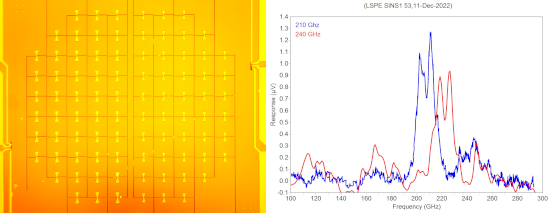
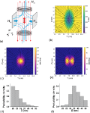
- receiving system as a prototype for the 210/240 GHz auxiliary channels of the LSPE mission. Results and Discussion Numerical modeling of the antenna matrix with CEBs As a receiving system prototype for LSPE, it is proposed to use a matrix of dipole antennas with integrated CEBs as sensitive elements [24
- ] (Figure 1a). The basic element of the receiving matrix is a dipole bow-tie antenna, in the gap of which the CEB is embedded (Figure 1b). This matrix is located on a silicon substrate, which is 260 µm thick. Since the operation of the CEB in the matrix is assumed to be in the voltage bias mode, the
- elements of the receiving matrix are connected to each other in parallel. The matrix of receiving elements will be located under the opening of the back-to-back horn, similar to the one used for the LSPE-SWIPE project, with a diameter of 4 mm. Accordingly, the receiving elements of the 210 and 240 GHz


Nanotechnological approaches in the treatment of schistosomiasis: an overview
Beilstein J. Nanotechnol. 2024, 15, 13–25, doi:10.3762/bjnano.15.2

- a zero-order kinetic, that means, it constantly releases the encapsulated drug [17]. In opposition, nanospheres are matrix systems formed by polymers without a central core. During the administration, the matrix erodes and the drug diffuses, resulting in a first-order kinetic drug release, that is


Hierarchically patterned polyurethane microgrooves featuring nanopillars or nanoholes for neurite elongation and alignment
Beilstein J. Nanotechnol. 2023, 14, 1157–1168, doi:10.3762/bjnano.14.96
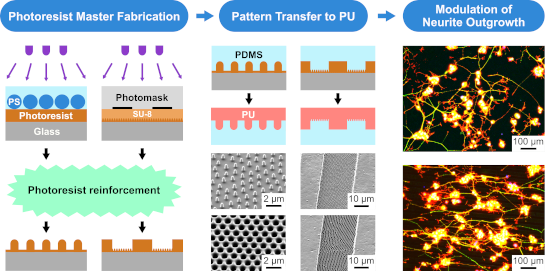
- had a rounded bottom. The space between the pillars and holes were around 860 nm and 330 nm, respectively. The wettability of a surface is a good predictor of protein adsorption and bioactivity [20]. For the extracellular matrix protein laminin, good adsorption and cell growth have been found on


A bifunctional superconducting cell as flux qubit and neuron
Beilstein J. Nanotechnol. 2023, 14, 1116–1126, doi:10.3762/bjnano.14.92

- adiabatic approximation, we can form the density matrix of the system in the instantaneous basis |ψn(t)⟩ as In the Born–Markov approximation, the dissipative dynamic of a quantum system is described by an adiabatic generalised equation for the density matrix [49]. In terms of the instantaneous basis in the
- states of the system, and Uid is the matrix of an ideal qubit gate. For the “NOT” operation shown in Figure 2a for l = 2.63 and D = 0.0044, taking into account the optimisation of the pulse parameters Δt, according to Figure 2g and Figure 5, we can get the fidelity of the operation F = 99.99%. We can



Dual-heterodyne Kelvin probe force microscopy
Beilstein J. Nanotechnol. 2023, 14, 1068–1084, doi:10.3762/bjnano.14.88

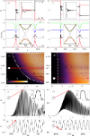
- with the application of a light pulse (i.e., a curve is recorded at each point of the surface along a 2D grid). Again, a differential SPV image can be reconstructed from the matrix of spectroscopic curves [5]. However, this approach is not free from artefacts, in particular the cantilever photothermal
- single spectroscopic curve, and tens of hours to several days are needed to map a 2D matrix of data. Last, G-mode KPFM requires analysis of large datasets acquired with high-speed data capture [12]. A few years ago, Borgani and Haviland presented an interesting alternative for time-resolved SPV
- of the post-data acquisition data treatment (automated adjustment of the matrix of spectroscopic curves by batch processing with OriginPro software) are presented in Figure 4, along with the topographic image recorded simultaneously pixel by pixel with the spectroscopic curves. Note that the




Spatial mapping of photovoltage and light-induced displacement of on-chip coupled piezo/photodiodes by Kelvin probe force microscopy under modulated illumination
Beilstein J. Nanotechnol. 2023, 14, 1059–1067, doi:10.3762/bjnano.14.87

- normalized to the corresponding voltage applied to each point. Properties of PZT [35][36] and LNO films [37]. Compliance matrix elements (elastic compliance constants, Sij) and coupling matrix elements (piezoelectric coefficients, dij) have the units of and , respectively. Supporting Information Supporting


Recognition mechanisms of hemoglobin particles by monocytes – CD163 may just be one
Beilstein J. Nanotechnol. 2023, 14, 1028–1040, doi:10.3762/bjnano.14.85

- h at room temperature under stirring. After another washing in aqua dest. the MnCO3 matrix was dissolved using 0.25 M EDTA. After 30 min incubation time, 0.2 mg/mL NaBH4 in 0.1 M NaOH was added to prevent oxidation of Hb to met-Hb. Incubation for another 30 min followed. After triplicate washing in




Metal-organic framework-based nanomaterials for CO2 storage: A review
Beilstein J. Nanotechnol. 2023, 14, 964–970, doi:10.3762/bjnano.14.79

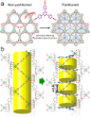
- ]. The authors used carboxylic acids to modify graphene nanolayers, and then performed in situ synthesis of different MOF-74 materials on the graphene matrix via a solvothermal method (Figure 5). Although the surface area of composites was only slightly increased compared to the initial materials, the




A wearable nanoscale heart sound sensor based on P(VDF-TrFE)/ZnO/GR and its application in cardiac disease detection
Beilstein J. Nanotechnol. 2023, 14, 819–833, doi:10.3762/bjnano.14.67

- improved the film-making process by adding fillers to P(VDF-TrFE), using secondary polarization, and applying other methods to enhance its piezoelectric performance. Kumar et al. prepared P(VDF-TrFE)/ZnO matrix composite nanogenerators using electrospinning. Voltage and current of these nanogenerators were
- flexible piezoelectric thin film heart sound sensor was developed, and a heart sound detection and classification system was built based on this sensor. Zinc oxide (ZnO) and graphene (GR) fillers were added to the P(VDF-TrFE) matrix, and P(VDF-TrFE)/ZnO/GR composite piezoelectric nanofilms were prepared
- used to classify normal and abnormal heart sound samples in the PhysioNet/CinC Challenge 2016 database, and the classification accuracy was 87%. Hence, the KNN heart sound classification model has a higher accuracy for the classification of normal and abnormal heart sound signals. The confusion matrix


Nanostructured lipid carriers containing benznidazole: physicochemical, biopharmaceutical and cellular in vitro studies
Beilstein J. Nanotechnol. 2023, 14, 804–818, doi:10.3762/bjnano.14.66
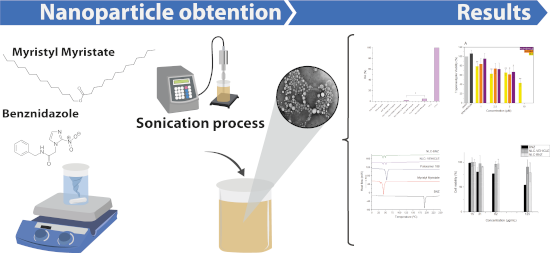
- observed by transmission electron microscopy. Fourier-transform infrared spectroscopy, differential scanning calorimetry, thermogravimetric analysis, and small-angle X-ray scattering analyses of the nanoparticles indicated that BNZ might be dispersed in the nanoparticle matrix in an amorphous state. The
- the nanoparticle thermogram, indicating that BNZ was dispersed within the lipid matrix [24]. Correlating with the lower enthalpy of fusion, the CI (%) value of the nanoparticles was lower than that of the bulk myristyl myristate. Lipid molecules could be less ordered in the nanoparticles than in the
- the 3000 cm−1 region – 2910 cm−1, 2883 cm−1, and 2854 cm−1 – due to the presence of the lipid and surfactant). In contrast, the spectra did not show peaks that could be linked to BNZ, suggesting that drug molecules were not on the nanoparticle surface but rather dispersed into the lipid matrix [24


Silver-based SERS substrates fabricated using a 3D printed microfluidic device
Beilstein J. Nanotechnol. 2023, 14, 793–803, doi:10.3762/bjnano.14.65
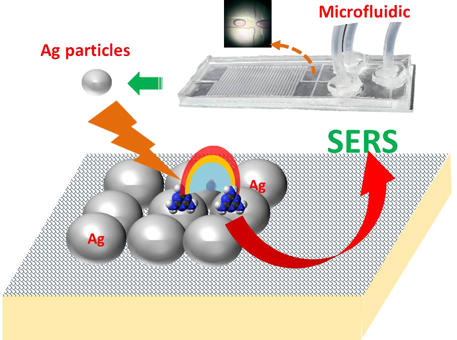
- formation of a charge-transfer complex between chemisorbed species and matrix material, which yields enhancement when the excitation frequency resonates with a charge-transfer transition [7]. Noble metal nanoparticles (NPs) have gained much popularity in various fields, such as analytical chemistry and



Silver nanoparticles loaded on lactose/alginate: in situ synthesis, catalytic degradation, and pH-dependent antibacterial activity
Beilstein J. Nanotechnol. 2023, 14, 781–792, doi:10.3762/bjnano.14.64
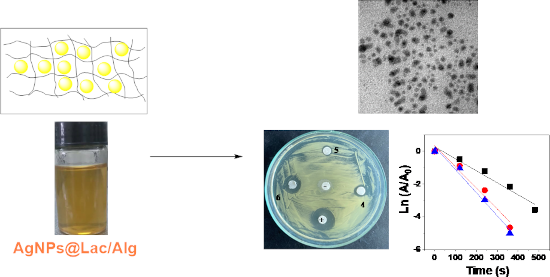
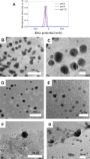
- nanocomposites using saccharides, such as alginate, cyclodextrin, and lactose. This method allows for the loading of metallic ions onto the nanocomposite, followed by their reduction to nanoparticles [36][37]. The nanocomposite matrix can release silver in appropriate environments, exhibiting pH-dependent


In situ magnesiothermic reduction synthesis of a Ge@C composite for high-performance lithium-ion batterie anodes
Beilstein J. Nanotechnol. 2023, 14, 751–761, doi:10.3762/bjnano.14.62

- performance of the electrode (432.3 mAh·g−1 at a specific current of 5000 mA·g−1) are attributed to the enhancement in distribution and chemical contact between Ge nanoparticles and the biomass-based carbon matrix. A comparison with other synthesis routes has been conducted to demonstrate the effectiveness of
- performance of Ge-based anodes, a carbon matrix is the most popular choice to disperse nanoparticles, avoiding their aggregation and reducing the internal stress induced by volume variation, because of its flexible structure and high conductivity [30][31][32]. In our recent study, the combination of Ge
- nanoparticles and a carbon matrix using a hydrothermal route has been reported, and the enhancement in the electrochemical performance of Ge@C electrodes was demonstrated [33]. In this work, a one-pot synthesis route has been followed to prepare a Ge@C composite using an in situ magnesiothermic reduction of


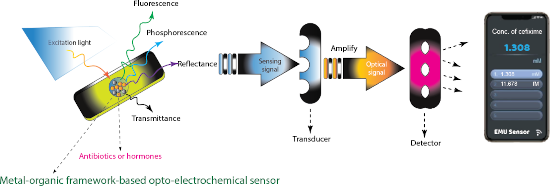
Metal-organic framework-based nanomaterials as opto-electrochemical sensors for the detection of antibiotics and hormones: A review
Beilstein J. Nanotechnol. 2023, 14, 631–673, doi:10.3762/bjnano.14.52


Carbon nanotube-cellulose ink for rapid solvent identification
Beilstein J. Nanotechnol. 2023, 14, 535–543, doi:10.3762/bjnano.14.44
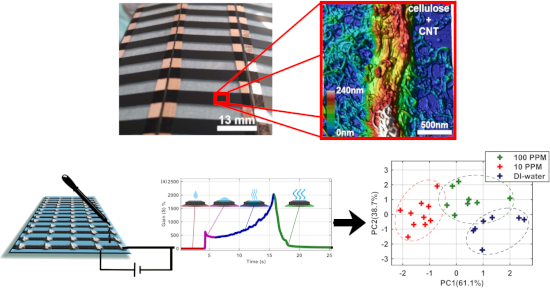
- of lightweight materials comprising a conductive ingredient (e.g., carbon nanotubes (CNTs), graphene, graphene oxide, and metal particles) embedded in a polymer matrix, have been extensively studied as liquid sensors [14][15][16][17][21][22]. The main idea is to combine the responsive electrical
- that the carbon nanotubes tend to twine around the MFC fiber when mixed. Thus, one can visualize that the composite ink is composed of an insulating matrix of MFC fibers intertwined by a conductive CNT network. To analyze the data, principal components analysis (PCA) was performed. PCA is a
- -per-million concentrations with the sensor temperature set to 95 °C. Since glycerin does not evaporate at 95 °C, it leaves residues in the sensor matrix, preventing the same sensor device to be used in successive measurements. Thus, in this case a single (drop) measurement was performed for each


Nanoarchitectonics to entrap living cells in silica-based systems: encapsulations with yolk–shell and sepiolite nanomaterials
Beilstein J. Nanotechnol. 2023, 14, 522–534, doi:10.3762/bjnano.14.43
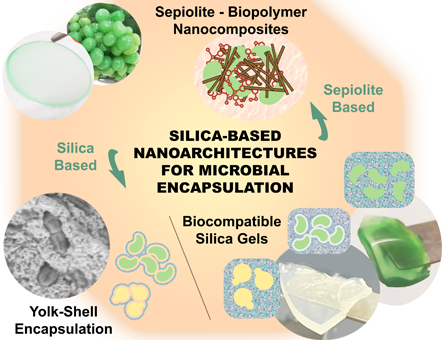
- sol–gel methods, as well as pre-synthesised yolk–shell bionanohybrids have been studied subsequently. Optical microscopy and SEM confirm that the silica shell microstructures provide a reduced contact between cells. The inorganic matrix increases the survival of the cells and maintains their
- bioactivity. Thus, the encapsulation efficiency is improved compared to the approach using a direct contact of cells in a silica matrix. Encapsulated yeast produced ethanol over a period of several days, pointing out the useful biocatalytic potential of the approach and suggesting further optimization of the
- hand, the use of yolk–silica shell (YS) microstructures formed by soft template synthesis was explored [30] to encapsulate living cells with a highly porous SiO2 network aiming to introduce a small interstitial space between the microorganisms and the silica matrix. The latter strategy intends to


Specific absorption rate of randomly oriented magnetic nanoparticles in a static magnetic field
Beilstein J. Nanotechnol. 2023, 14, 485–493, doi:10.3762/bjnano.14.39

- nanoparticles with uniaxial magnetic anisotropy randomly oriented in a solid matrix. The saturation magnetization of particles and the magnetic anisotropy constant are taken to be Ms = 350 emu/cm3 and K1 = 105 erg/cm3, respectively [27]. The range of nanoparticle diameters studied is D = 18–50 nm, the
- matrix on a dc magnetic field Hdc applied parallel to the ac field Hac. (b) Dynamic hysteresis loops for an assembly of nanoparticles with D = 20 nm at different Hdc values: (1) Hdc = 0, (2) Hdc = 100 Oe, (3) Hdc = 150 Oe, and (4) Hdc = 300 Oe. (a) Dependence of the SAR on the dc magnetic field applied