


Search results
Search for "aggregation" in Full Text gives 481 result(s) in Beilstein Journal of Nanotechnology. Showing first 200.
Fate and transformation of silver nanoparticles in different biological conditions
Beilstein J. Nanotechnol. 2021, 12, 665–679, doi:10.3762/bjnano.12.53

- vivo settings. Keywords: animal tissue; biological media; nanoparticle aggregation; nanoparticle dissolution; nanoparticle reformation; silver nanoparticles; Introduction The global consumption of silver nanoparticles (AgNPs) has been steadily increasing in the last decade and estimated to reach over
- will not be retained in biological media [9][10][11][12][13][14]. In biological media, AgNPs may be transformed into different forms by aggregation, agglomeration, dissolution, interaction with biomolecules, or generation of reactive oxygen species (ROS) that may lead to the coexistence of
- such conditions, the repulsive electrostatic forces between particles with the same surface charge are weakened, leading to aggregation upon collision [10]. The AgNPs with bulky coatings are less sensitive to this, since their stabilisation is steric and not electrostatic [14]. The dissolution of AgNPs




Rapid controlled synthesis of gold–platinum nanorods with excellent photothermal properties under 808 nm excitation
Beilstein J. Nanotechnol. 2021, 12, 462–472, doi:10.3762/bjnano.12.37

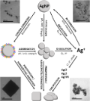
- coverage on the AuNRs [40]. The Au@Pt NRs dispersed well in water without notable aggregation, as shown in Figure 1e. In this paper, we do not conduct a detailed study on the action mechanism of Ag+ in the process of Au@Pt NRs synthesis, but rather focus on the practical consequences for the synthesized


A review on nanostructured silver as a basic ingredient in medicine: physicochemical parameters and characterization
Beilstein J. Nanotechnol. 2021, 12, 440–461, doi:10.3762/bjnano.12.36

- are very close to each other. In this regard, the electrons could be described as waves, as depicted in Figure 5 [64]. The type of metal, size, shape, the molecules attached to the surface, and the degree of aggregation of the particles determine the energy range (frequency) of the light that can
- aggregation, physicochemical or biological synthesis methods used, chemical nature of the coating, surface charge, and free Ag+ content. The quality control of AgNPs is necessary to guarantee their suitability for the intended use, reproducibility, efficacy, and low toxicity [146]. Another important point is
- complementary way, the size, distribution, shape heterogeneity, morphology, dispersion, and aggregation can be directly evaluated via TEM in which the high spatial resolution facilitates the investigation of the electronic structure and chemical composition [156]. However, the disadvantages other than the


Colloidal particle aggregation: mechanism of assembly studied via constructal theory modeling
Beilstein J. Nanotechnol. 2021, 12, 413–423, doi:10.3762/bjnano.12.33
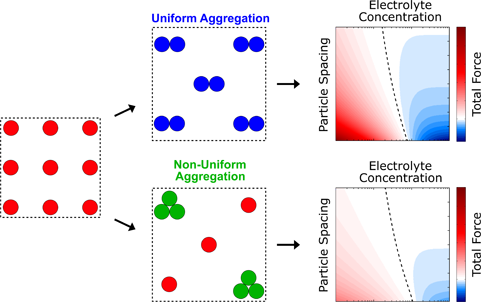
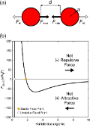
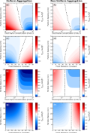
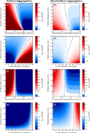
- with respect to van der Waals and double layer interactions. Preliminary results show that the particle aggregation behavior depends on the initial lattice configuration and solvent properties. Ultimately, our model provides the first constructal framework for predicting the self-assembly of particles
- -cleaning devices [12]. It was concluded that the maximum collection rate was achieved when the aerosol particles first formed into clusters and then dendrites in order to balance their electrostatic forces. The aggregation of colloidal particles (small particles or droplets typically between 10 nm and 10
- /implemented to describe the assembly of colloidal particles. In this article, we use said theory to predict the effect of varying system parameters on the magnitude of the total DLVO force for two scenarios, that is, uniform and non-uniform aggregation. The constructal approach presented here provides a


Characterization, bio-uptake and toxicity of polymer-coated silver nanoparticles and their interaction with human peripheral blood mononuclear cells
Beilstein J. Nanotechnol. 2021, 12, 282–294, doi:10.3762/bjnano.12.23

- aggregation of NPs was observed in the RPMI medium over the exposure time (24 h). A dose-dependent relationship between PBMC uptake and Ag concentration was detected for both AgNP and AgNO3 treatment. There was approximately a two-fold increase in cellular Ag uptake in the AgNO3 vs the NP treatment
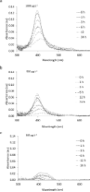
- images do not show any evidence of aggregation of NPs. Figure 1b and Figure 1d show a skewed distribution and a greater polydispersity of PVP-AgNPs in RPMI medium after 24 h of exposure. As a comparison, the extinction spectra of PVP-AgNPs at concentrations of 100, 500 and 1000 µg·L−1 in RPMI medium
- of NPs are related to Ostwald ripening of NPs [36], as evidenced in our STEM results. The subsequent reduction in size is explained as further transformations that are dominated by dissolution [36]. UV–vis spectroscopy data suggest some aggregation and possible shape changes after reprecipitation at



A review on the green and sustainable synthesis of silver nanoparticles and one-dimensional silver nanostructures
Beilstein J. Nanotechnol. 2021, 12, 102–136, doi:10.3762/bjnano.12.9
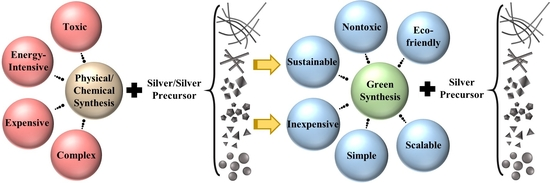
- ” synthesis method. These techniques are usually accompanied by the addition of stabilizers to provide stability, prevent aggregation, control morphology, and provide physiologically compatible properties [140][141][142]. Chemical methods were previously used to produce silver nanoparticles including sol–gel


Effect of different silica coatings on the toxicity of upconversion nanoparticles on RAW 264.7 macrophage cells
Beilstein J. Nanotechnol. 2021, 12, 35–48, doi:10.3762/bjnano.12.3

- -functionalized particles is small enough for the particles to be internalized via the endocytic uptake [51]. (3-Aminopropyl)trimethoxysilane (APS) was not chosen as the amine ligand due to the increased aggregation of APS-functionalized particles in the cell culture medium [51]. In addition, particles with a
- aggregation of silica nanoparticles that occurred after redispersion in buffered solution and in physiological medium [54]. They reported that various proteins in a medium containing FBS were adsorbed onto the surface of bare SiO2 and amine-functionalized SiO2 nanoparticles, forming a protein corona with a
- nanoparticles more negative; hence, it reduces the stability of positively charged particles [52][58][59]. Although the particles in this work showed increased aggregation in DMEM, they can still be taken up by macrophages, such as RAW 264.7 cells [45]. This is also indicated by the different cytotoxicity


Bio-imaging with the helium-ion microscope: A review
Beilstein J. Nanotechnol. 2021, 12, 1–23, doi:10.3762/bjnano.12.1

- that coating, as required for SEM, introduces artefacts such as a granular structure on the cell surfaces and a partial closing of pores, thus highlighting one of the benefits of HIM. Bazou et al. also studied tumour cell-induced platelet aggregation by fluorescence microscopy and HIM. In this study


Self-standing heterostructured NiCx-NiFe-NC/biochar as a highly efficient cathode for lithium–oxygen batteries
Beilstein J. Nanotechnol. 2020, 11, 1809–1821, doi:10.3762/bjnano.11.163
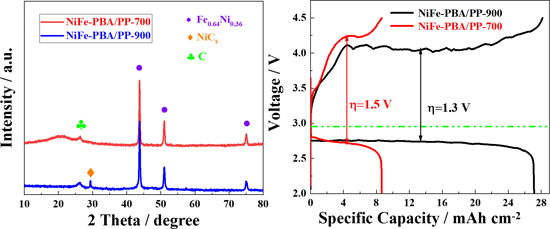
- aggregation during the electrochemical reactions, leading to a relatively high stability. The NiFe-PBA/PP-900 developed in this study suggests that inexpensive and economically viable ORR catalysts for Li–O2 cells are achieved by rationally designing the morphology and tuning the composition of the catalysts






PEG/PEI-functionalized single-walled carbon nanotubes as delivery carriers for doxorubicin: synthesis, characterization, and in vitro evaluation
Beilstein J. Nanotechnol. 2020, 11, 1728–1741, doi:10.3762/bjnano.11.155
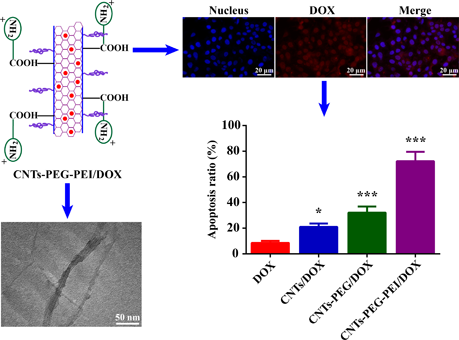
- efficaciously traverse biological barriers [11][12][13]. Despite a series of advantages, the practical application of CNTs has been restricted by a number of drawbacks, such as high hydrophobicity and rapid aggregation in aqueous media, which are associated with cytotoxicity and other harmful cellular effects
- [14][15][16][17][18]. Numerous attempts and efforts have been devoted to improve the dispersibility in water and to reduce the aggregation of CNTs [19][20][21]. The most commonly used approach is noncovalent coating with hydrophilic carboxylic acid groups by oxidizing acid treatment [22][23][24
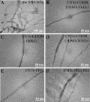
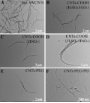
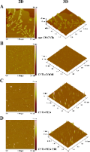
- PEG and PEI. The main intrinsic drawbacks of SWCNTs are the strong hydrophobicity and easy aggregation in aqueous media [9]. The raw SWCNTs are purified with concentrated acid to obtain carboxylated carbon nanotubes (CNTs-COOH), which significantly improves their water solubility [35][36]. NHS-PEG




Cardiomyocyte uptake mechanism of a hydroxyapatite nanoparticle mediated gene delivery system
Beilstein J. Nanotechnol. 2020, 11, 1685–1692, doi:10.3762/bjnano.11.150
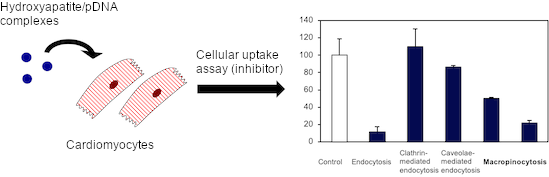
- advantages in using CaP for gene delivery, the transfection efficiency of CaP/DNA is relatively low according to various preparation parameters [10]. In particular, particle aggregation needs to be improved in order to reduce cellular uptake through the endocytic pathway. Hydroxyapatite (HAp, Ca10(PO4)6(OH)2
- are still many limitations, such as low transfection efficiency and reproducibility, that must be overcome for these methods to be successfully used in clinical applications. We were able to successfully produce HAp nanoparticles with less aggregation using the W/O emulsion method, as shown in a


High-responsivity hybrid α-Ag2S/Si photodetector prepared by pulsed laser ablation in liquid
Beilstein J. Nanotechnol. 2020, 11, 1596–1607, doi:10.3762/bjnano.11.142

- fabricated by a chemical method. They show that the Ag2S quantum dots (QDs) planted on the surface of Si create impurity states in the Si bandgap. In pulsed laser ablation, the interaction between laser and material particles leads to severe particle aggregation and broad particle size distributions via
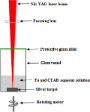
- taking into account the transmittance of the ablation liquid at 1064 nm. The ablation time for each sample was set to 20 min. Figure 1 shows a schematic of the pulsed laser ablation system used in this work. A rotating motor was used to help prevent the aggregation and agglomeration of particles during
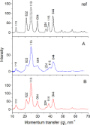
- intensity of peaks (surface-enhanced Raman scattering) due to the reduced agglomeration and aggregation of particles and the small size of the Ag2S particles prepared under the effect of the CTAB surfactant [29]. Inset of Figure 4 is the Raman spectrum of thiourea solution, in which three peaks were




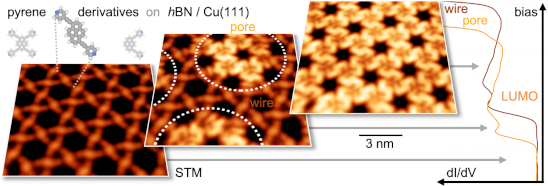
Self-assembly and spectroscopic fingerprints of photoactive pyrenyl tectons on hBN/Cu(111)
Beilstein J. Nanotechnol. 2020, 11, 1470–1483, doi:10.3762/bjnano.11.130
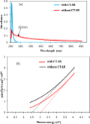
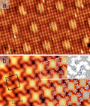
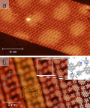
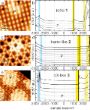
- , Supporting Information File 1). In contrast to recent reports on F16CoPc/hBN/Cu(111) [37] and PTCDA/NaCl/Ag(111) [83], an additional effect of the molecular aggregation and packing density, namely the screening by neighboring molecules, yielding a reduction of the STS-derived HOMO–LUMO gap, did not seem to




Antimicrobial metal-based nanoparticles: a review on their synthesis, types and antimicrobial action
Beilstein J. Nanotechnol. 2020, 11, 1450–1469, doi:10.3762/bjnano.11.129

- , eliminating an additional step to prevent particle aggregation [86]. In addition, cell culture procedures are not necessary in this case, which allows for the large-scale synthesis of nanoparticles in a non-aseptic environment [87]. Furthermore, plant-based processes are cost-effective and safe for humans and


Transient coating of γ-Fe2O3 nanoparticles with glutamate for its delivery to and removal from brain nerve terminals
Beilstein J. Nanotechnol. 2020, 11, 1381–1393, doi:10.3762/bjnano.11.122

- behavior in mice by activating ligand–receptor pairs [16]. Jia at al. used nanoparticles to modulate focal ischemia through controlling infarct size and occlusion duration by micromagnet-mediated aggregation [12]. Functionalization and vectorization of nanoparticles can be performed both by noncovalent
- ]. This results from the difference of fundamentals of both methods and the possible spontaneous aggregation of ferrimagnetic iron oxide particles. The nanoparticle distribution was also analyzed in the standard salt solution (synaptosomal incubation medium). After addition of the nanoparticles to the
- Protein Data Bank (PDB) service (see Supporting Information File 1) [28][29][30][31][32]. Discussion The conditions in biological systems can alter the properties of nanoparticles. Salts of biological fluids influence surface charges, which leads to destabilization and aggregation of nanoparticles [18


Magnetic-field-assisted synthesis of anisotropic iron oxide particles: Effect of pH
Beilstein J. Nanotechnol. 2020, 11, 1230–1241, doi:10.3762/bjnano.11.107
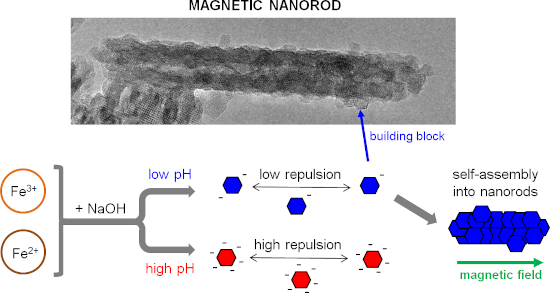
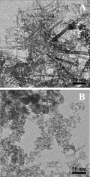
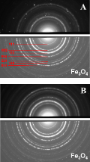
- ). Similar pictures depicting many primary nanoparticles attached to the surface of a larger magnetite particle were recently observed in spherical nanoparticles [9]. This was considered as evidence for magnetite nucleation and the growth mechanism, consisting of the aggregation of primary nanoparticles. As
- external magnetic field. Furthermore, the magnetic field can trigger the aggregation of chain-like structures into column-like structures (Figure 7C), thus contributing to the growth of the aggregates. Note that at comparable amounts of hydroxyl and iron ions (R = 2.1) the magnetite particles are only
- slightly charged, since the resulting pH of the solution (pH 6.1) is close to the isoelectric point of magnetite particles (6.0–6.7 [6][22][28]). As expected, the low charge of the nanoparticles favors their aggregation and contact crystallization. Hence, under a magnetic field the primary nanocrystals





Photothermally active nanoparticles as a promising tool for eliminating bacteria and biofilms
Beilstein J. Nanotechnol. 2020, 11, 1134–1146, doi:10.3762/bjnano.11.98

- gold nanoparticle aggregation was implemented [54]. According to this strategy, the spherical nanoparticles, with a typical localized surface plasmon resonance (LSPR) absorption at 520 nm, aggregated in situ at the surface of the bacterial membrane. The gold nanoparticle aggregation induced a change in


Straightforward synthesis of gold nanoparticles by adding water to an engineered small dendrimer
Beilstein J. Nanotechnol. 2020, 11, 1110–1118, doi:10.3762/bjnano.11.95

- for bio-imaging and cancer therapy [6][7]. In most cases, the synthesis of gold nanoparticles is carried out by the reaction between HAuCl4 and a reducing agent (in particular NaBH4) in the presence of a suitable compound to simultaneously prevent the aggregation of the nanoparticles and to stabilize
- general [18][19] but also specifically for gold nanoparticles [20][21][22]. Indeed, due to the well-defined three-dimensional structure of dendrimers they are suitable templates for the synthesis of nanoparticles in the presence of a reducing agent [23] and prevent nanoparticle aggregation and oxidation


Applications of superparamagnetic iron oxide nanoparticles in drug and therapeutic delivery, and biotechnological advancements
Beilstein J. Nanotechnol. 2020, 11, 1092–1109, doi:10.3762/bjnano.11.94
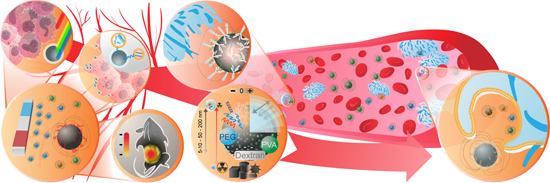
- hydrophobic surfaces that induce aggregation and/or the formation of large clusters. When in contact with biological structures, this mechanism provokes capillary clotting and reduces tissue and cellular absorption. To prevent this, nanoparticles are coated with stabilizers, which are added during preparation
- same nanoparticles are measured in a culture medium, phosphate buffer, or blood serum, the hydrodynamic diameter can vary from hundreds of nanometers to few micrometers, due to corona formation or aggregation [54]. Therefore, the hydrodynamic diameter is important for biological and medical
- vitro and in vivo [24]. Also, the synthesis of nanoparticles larger than 20 nm requires a certain surface coverage of the nanoparticles to obtain a monodisperse colloidal solution and to prevent the aggregation of nanoparticles. The substances used for the synthesis are either lipids or surfactants. In


A few-layer graphene/chlorin e6 hybrid nanomaterial and its application in photodynamic therapy against Candida albicans
Beilstein J. Nanotechnol. 2020, 11, 1054–1061, doi:10.3762/bjnano.11.90

- . Graphene sheets exfoliated from graphite are evidence of the interaction between FLG and Ce6 in pure water. Ce6 stabilizes graphene sheets, avoiding aggregation due to its high attraction through π–π stacking interactions, and the oxygenated moieties on Ce6 allow the stabilization of the hybrid


A 3D-polyphenylalanine network inside porous alumina: Synthesis and characterization of an inorganic–organic composite membrane
Beilstein J. Nanotechnol. 2020, 11, 938–951, doi:10.3762/bjnano.11.78
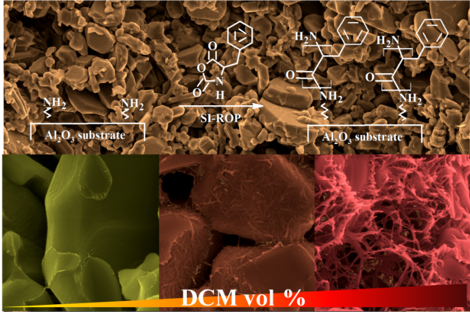
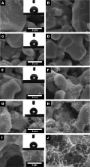
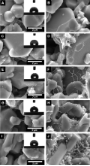
- obtained from hot toluene consisting of a stable fibrillar network. The aggregation of bundles of pBzG338-α-helices with a thickness of 1.5 nm and a length of 50.7 nm results in a three-dimensional network with much higher dimensions in the range of micrometers. It was proposed that additional




Nickel nanoparticles supported on a covalent triazine framework as electrocatalyst for oxygen evolution reaction and oxygen reduction reactions
Beilstein J. Nanotechnol. 2020, 11, 770–781, doi:10.3762/bjnano.11.62
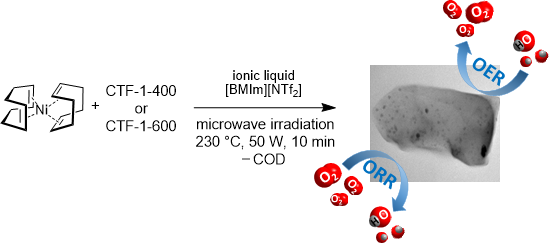
- crystallographic open database (CrOD) files. TEM images of Ni/CTF-1-600-22 showing (a) Ni nanoparticles supported on CTF, (b,c) the aggregation of the primary Ni nanoparticles and (d) the lattice planes of the Ni nanoparticles. SEM images and EDX elemental mappings of Ni for (a) Ni/CTF-1-400-20, (b) Ni/CTF1-400-35


Effect of Ag loading position on the photocatalytic performance of TiO2 nanocolumn arrays
Beilstein J. Nanotechnol. 2020, 11, 717–728, doi:10.3762/bjnano.11.59
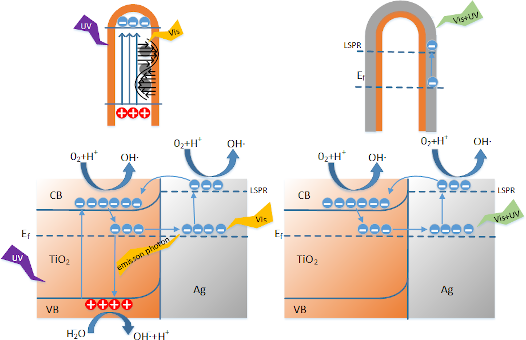
- deposition in AFT1, no obvious nanoparticles can be observed in the TNC array, and not much Ag aggregation is present around the nanopore marked with the red circle. This implies that Ag can still enter the nanocolumn easily. In contrast, Ag nanoparticles can be clearly seen on the inner wall of the TNC of


Silver-decorated gel-shell nanobeads: physicochemical characterization and evaluation of antibacterial properties
Beilstein J. Nanotechnol. 2020, 11, 620–630, doi:10.3762/bjnano.11.49

- [10][11][12][13][14][15][16][17]. The resulting composites exhibit a double function, they support the metal nanoparticles and prevent their aggregation. For example, polystyrene microspheres have been decorated with silver nanoparticles and were used as catalysts, Raman-enhancing materials
- reports indicating a profound resistance of bacteria grown in biofilms to antimicrobials. Bacterial biofilms are generally less susceptible to silver nanoparticles than planktonic cells, probably due to the extracellular matrix coating the cells in a biofilm, aggregation of the cells to reduce their
- exposed surface and the retardation of the nanoparticle diffusion caused by aggregation [48]. Some species develop less complicated biofilm structures or even are not capable to form biofilms. The S. epidermidis strain used in our experiments probably does not form complex biofilm structures, as the three


Soybean-derived blue photoluminescent carbon dots
Beilstein J. Nanotechnol. 2020, 11, 606–619, doi:10.3762/bjnano.11.48
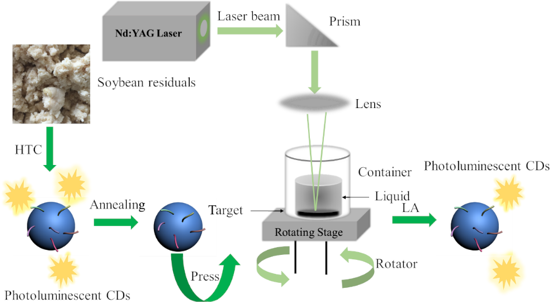
- the fluorescent quenching to the aggregation of CDs, which increased the particle size from 2.6 ± 0.2 nm to 4.4 ± 0.2 nm. However, there are few studies in the literature focusing on the comparison of the PL behavior of CDs made from the same biomass precursor with different synthetic or processing





