
Search results
Search for "anisotropy" in Full Text gives 247 result(s) in Beilstein Journal of Nanotechnology. Showing first 200.
Two-dimensional silicon and carbon monochalcogenides with the structure of phosphorene
Beilstein J. Nanotechnol. 2017, 8, 1338–1344, doi:10.3762/bjnano.8.135
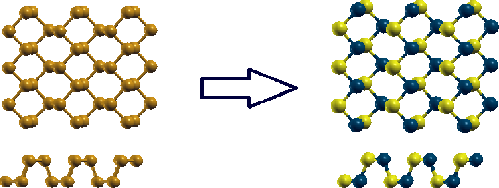
- these monolayers were determined using density functional theory. By using accurate hybrid functionals it was found that these materials are semiconductors and span a broad range of bandgap values and types. Similarly to phosphorene, the computed effective masses point to a strong in-plane anisotropy of
- phosphorene very promising for certain applications. Additionaly, phosphorene is characterized by a strong anisotropy in the carrier mobility [14] and ferroelasticity [16]. Recently, some parent compounds to phosphorene have been considered. For example, P–As compounds were studied theoretically and
- computing phonon dispersion curves, in this work we show that carbon and silicon monochalcogenides are dynamically stable in a puckered structure. Additionally, we compute band structures using the quantitatively accurate HSE06 hybrid functional [29] and we evaluate effective masses, whose anisotropy


Near-field surface plasmon field enhancement induced by rippled surfaces
Beilstein J. Nanotechnol. 2017, 8, 956–967, doi:10.3762/bjnano.8.97

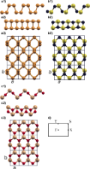
- role, in particular whenever the nanostructure morphology shows anisotropy at the local scale. Polarization can induce strong confinement of plasmons in the resonance region in close correlation with the local surface morphology, characterized by a pattern of hills and valleys. As a consequence, an
- considered here is composed of the interplay of patterns made of grooves, hills and valleys showing some degree of anisotropy. Alignment effects induced, for example, by the anisotropic ion bombardment can in fact take place, leading to the occurrence of one preferential direction. The surface plasmon
- ., it is ruled by the geometrical anisotropy. We can say that the applied polarization of the electric field drives the plasmon resonance to be a geometrical polarization. Since the hot spots are strongly dependent on the charge density fluctuations due to rippled surfaces, the effect of the incident


Dispersion of single-wall carbon nanotubes with supramolecular Congo red – properties of the complexes and mechanism of the interaction
Beilstein J. Nanotechnol. 2017, 8, 636–648, doi:10.3762/bjnano.8.68

- . Birefringence implies anisotropy and ordered arrangement of dye molecules bound to regular, beta-structured amyloid fibrils [29][30]. Congo red molecules self-assemble in water solutions producing supramolecular entities stabilized by π–π interactions between aromatic rings [31][32][33]. Supramolecular Congo


Formation and shape-control of hierarchical cobalt nanostructures using quaternary ammonium salts in aqueous media
Beilstein J. Nanotechnol. 2017, 8, 494–505, doi:10.3762/bjnano.8.53

- (monomers) in presence of quaternary ammonium salts. Hydroxide ions and a magnetic moment of the monomers are essential to induce shape anisotropy in the nanostructures. The cobalt nanoplates are studied in detail, and a growth mechanism based on collision, aggregation, and crystal consolidation is proposed
- of a nanoplate. The study explains, hereto unaddressed, the temporal evolution of complex magnetic nanostructures. These ferromagnetic nanostructures represent an interesting combination of shape anisotropy and magnetic characteristics. Keywords: Brownian motion; cobalt nanoplates; electron
- examined in detail. This observation is in agreement with previous studies that suggest that shape anisotropy is observed only above a certain concentration of hydroxide ions [23][24][29]. EDS measurements of well-formed nanoplates showing the presence of cobalt is are given in Figure S4 (Supporting


Methods for preparing polymer-decorated single exchange-biased magnetic nanoparticles for application in flexible polymer-based films
Beilstein J. Nanotechnol. 2017, 8, 408–417, doi:10.3762/bjnano.8.43

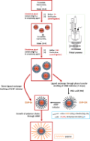
- coupling at the F–AF interface (see for instance [16][17][18]), leading to an enhanced effective magnetic anisotropy constant (Keff) and a higher temperature of transition from a magnetically blocked state to a superparamagnetic one (TB) [19][20]. Focusing on such particles, in this work, we propose


Cubic chemically ordered FeRh and FeCo nanomagnets prepared by mass-selected low-energy cluster-beam deposition: a comparative study
Beilstein J. Nanotechnol. 2016, 7, 1850–1860, doi:10.3762/bjnano.7.177
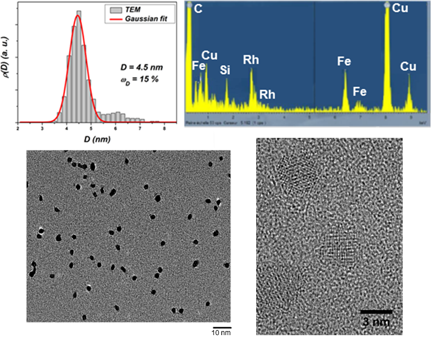
- drastically affects the intrinsic properties of this system by reducing the magnetization in comparison to the bulk. Keywords: bimetallic nanoparticles; magnetic moment and anisotropy; metamagnetic transition; Introduction Magnetic bimetallic nanoparticles (NPs) are very attractive systems not only from a
- -field-cooling (ZFC) and field-cooling (FC) susceptibility curves show a transition from the superparamagnetic to the blocked regime for the as-prepared NPs with a maximum ZFC temperature (Tmax). Tmax is connected to the energy barrier (ΔE = KeffV, with Keff the effective anisotropy constant and V the
- magnetic anisotropy constant. As demonstrated [21], only one set of parameters can fit the three curves at the same time. This “triple fit” method thus reduced the solution range of the different parameters and the uncertainty on their values. Alternating-current magnetic-susceptibility and ferromagnetic


A new approach to grain boundary engineering for nanocrystalline materials
Beilstein J. Nanotechnol. 2016, 7, 1829–1849, doi:10.3762/bjnano.7.176
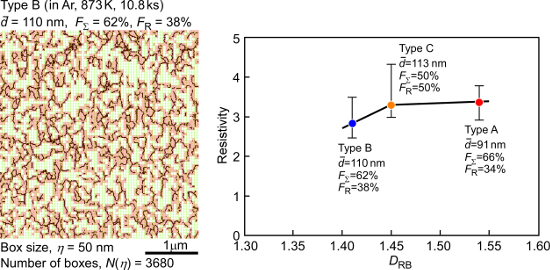
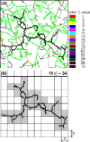
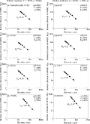
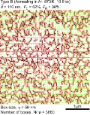
- Science and Technology, Kumamoto University, Kumamoto 860-8555, Japan, Key Laboratory for Anisotropy and Texture of Materials, Northeastern University, Shenyang 110004, China, Formerly, Tohoku University, Sendai, Japan 10.3762/bjnano.7.176 Abstract A new approach to grain boundary engineering (GBE) for







Precise in situ etch depth control of multilayered III−V semiconductor samples with reflectance anisotropy spectroscopy (RAS) equipment
Beilstein J. Nanotechnol. 2016, 7, 1783–1793, doi:10.3762/bjnano.7.171

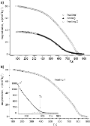
- Institut für Oberflächen- und Schichtanalytik (IFOS) GmbH, Trippstadter Str. 120, D-67663 Kaiserslautern, Germany 10.3762/bjnano.7.171 Abstract Reflectance anisotropy spectroscopy (RAS) equipment is applied to monitor dry-etch processes (here specifically reactive ion etching (RIE)) of monocrystalline
- sample in order to make RAS control possible. Keywords: broad area semiconductor lasers (BAL); dry-etch monitoring (RIE); precise etch depth control; reflectance anisotropy spectroscopy (RAS); III–V semiconductors; Introduction Reflectance anisotropy/difference spectroscopy (RAS/RDS) [1][2][3][4][5] is
- -known for different etch parameters.) Thus with this highly etch-depth sensitive process a real benefit of on-line control is illustrated. Conclusion Reflectance anisotropy spectroscopy (RAS) can be used to monitor monocrystalline III–V semiconductor sample surfaces in situ during reactive ion etching


Morphology of SiO2 films as a key factor in alignment of liquid crystals with negative dielectric anisotropy
Beilstein J. Nanotechnol. 2016, 7, 1743–1748, doi:10.3762/bjnano.7.167

- , we studied the optical anisotropy of thin SiO2 films by generalized ellipsometry as a function of deposition angle. The columnar SiO2 structure orientation measured by a noninvasive ellipsometry technique is reported for the first time, and its morphology influence on the LC alignment is demonstrated
- for large deposition angles. Keywords: anisotropy; ellipsometry; liquid crystal alignment; morphology; thin film; Introduction Thin films of SiO2 and SiOx obtained by oblique deposition are commonly used as alignment layers for liquid crystal (LC) displays [1][2][3][4][5][6][7]. Several alignments
- control of pretilt in VAN cells is essential in many applications, as it affects display contrast and response time [2][6][7]. Pretilt depends on a number of factors such as chemical interaction forces between LC molecules and an alignment film, dielectric anisotropy of the LC, and film morphology. Many


Surface-enhanced infrared absorption studies towards a new optical biosensor
Beilstein J. Nanotechnol. 2016, 7, 1736–1742, doi:10.3762/bjnano.7.166

- wavelength-dependent backscattering, part of which is directed to the detector. The spherical nanoparticles are responsible for a relatively weak water band. When anisotropy is added to a nanoparticle, the optical properties change dramatically [15]. Therefore, as a last step of the experiment anisotropy is
- . The increase of the water absorption band in the case of aggregated nanoparticles may have two explanations: first, the SEIRA effect is enhanced when nanoparticles aggregate (addition of anisotropy, see [15]); second, the backscattering cross section is increased. Peak shift A further interesting


Properties of Ni and Ni–Fe nanowires electrochemically deposited into a porous alumina template
Beilstein J. Nanotechnol. 2016, 7, 1709–1717, doi:10.3762/bjnano.7.163

- ; Introduction Arrays of vertically arranged metallic NWs have attracted a lot of attention due to their shape anisotropy and extremely large surface area. The combination of this unique structure with uncommon magnetic, optical and transport properties can be used to develop novel functional nanomaterials for
- electrochemical deposition of metals, alloys and multilayer compositions into PA templates [27][28][29]. Some unique magnetic phenomena, such as GMR effect, magnetic crystalline anisotropy, magneto-optical properties depend directly on morphological characteristics (primarily the aspect ratio) and the crystal


Analysis of self-heating of thermally assisted spin-transfer torque magnetic random access memory
Beilstein J. Nanotechnol. 2016, 7, 1676–1683, doi:10.3762/bjnano.7.160

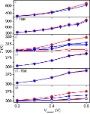
- magnetic random access memory (STT-MRAM). Proposed heating methods include modified material stack compositions that result in increased self-heating or external heat sources. In this work we analyze the self-heating process of a standard perpendicular magnetic anisotropy STT-MRAM device through numerical
- temperatures of 360 K to 523 K, through manipulation of the material stack [3]. However, changing the material stack compromises the desired anisotropy levels and external heat sources impact device density. Thus, these methods for thermal assistance can be considered limited in their potential. In this work
- we perform an electro-thermal analysis of the self-heating process for a standard perpendicular magnetic anisotropy STT-MRAM device (Figure 1) to understand the relative contributions of the different heat mechanisms involved and the effect of external device parameters such as passivation material




Biomechanics of selected arborescent and shrubby monocotyledons
Beilstein J. Nanotechnol. 2016, 7, 1602–1619, doi:10.3762/bjnano.7.154

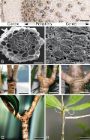
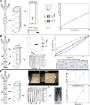
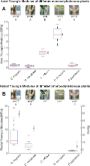
- investigations on the branching mechanics of “woody” monocots. In addition, these data can be incorporated in finite element models at cell and tissue level that mirror the anisotropy and the stress–strain behaviour of the investigated plants at stem level [6][7]. This allows for a deepened understanding of the



Antitumor magnetic hyperthermia induced by RGD-functionalized Fe3O4 nanoparticles, in an experimental model of colorectal liver metastases
Beilstein J. Nanotechnol. 2016, 7, 1532–1542, doi:10.3762/bjnano.7.147

- . Magnetite-based systems are an interesting alternative due to the relatively high saturation magnetization, magnetic anisotropy, and lack of toxicity, together with the possibility of tailoring the dimensions, parameters which strongly influence the specific adsorption rate (SAR) [15][16][17]. Additionally
- of the blocking temperature is in good accord with the relatively large mean size of the NPs (around 19 nm) taking into account that TB = K·V / 25·kB, where K is the effective magnetic anisotropy constant, V is the mean volume of the NPs, and kB is the Boltzmann constant [42]. Nevertheless, the broad


The effect of dry shear aligning of nanotube thin films on the photovoltaic performance of carbon nanotube–silicon solar cells
Beilstein J. Nanotechnol. 2016, 7, 1486–1491, doi:10.3762/bjnano.7.141

- transition between the two dominant conduction mechanisms of variable range hopping through denser films and percolation through sparse films. The measurements were taken with a linear four-point probe using a DC bias, however no anisotropy in the resistance was observed with rotation of the probe. The sheet


Microwave synthesis of high-quality and uniform 4 nm ZnFe2O4 nanocrystals for application in energy storage and nanomagnetics
Beilstein J. Nanotechnol. 2016, 7, 1350–1360, doi:10.3762/bjnano.7.126

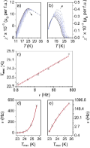
- -prepared ZFO nanoparticles at an applied field of 10 mT are shown in Figure 5. As seen, the magnetic moment continuously increases until a maximum, Tmax, is reached at about 22 K. The fact that this maximum is rather sharp supports the size uniformity of the particles with a similar magnetic anisotropy
- superparamagnetic particle ensembles, where K is the effective uniaxial magnetic anisotropy, V is the particle volume and kB is the Boltzmann’s constant [43]. As shown in Supporting Information File 1, Figure S7, the frequency dependence of the peak temperature does not follow Néel–Brown model, which is supported


Tunable longitudinal modes in extended silver nanoparticle assemblies
Beilstein J. Nanotechnol. 2016, 7, 1219–1228, doi:10.3762/bjnano.7.113

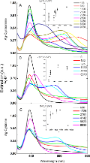
- these unprecedented anisotropic structures. Our results show a correlation between the chain nature of the assembly and the generation of spectral anisotropy. Deuterating the ligand further enhances the anisotropic signal by triggering more compact aggregates and reveals the importance of solvent
- -mediated assembly of AgNPs requires prolonged incubation times without generating intense anisotropy [25]. Herein, we report a “green & cheap” kit for the facile and quick assembly of AgNPs into highly anisotropic structures that reveal chain-like, branched networks as well as dense aggregates mediated by
- -defined, distinct longitudinal band implies that the silver nanoparticles are forming anisotropic aggregates. For cysteine and DTT, at very high ligand-to-nanoparticle ratios, the transverse and longitudinal collapse into a single very broad resonance, which indicates a loss of structural anisotropy in



Customized MFM probes with high lateral resolution
Beilstein J. Nanotechnol. 2016, 7, 1068–1074, doi:10.3762/bjnano.7.100

- ] to improve the detection of small domains. One can also find the use of nanomagnets with high anisotropy as MFM probes [13] and different approaches to control the final domain at the tip apex [14][15], seeking best sensitivity or resolution. However, the easiest interpretation of the results is
- influence of the dominating shape anisotropy (as deduced from the cross-tie domain walls [22] seen in Figure 1c), in agreement with the macroscopic hysteresis loops measured at room temperature by VSM (Figure 1d). A high remanent magnetization of 82% of the saturation value is found when an IP field is
- applied. This, together with the shape anisotropy induced by the pyramidal tip, forces the magnetic moments to remain mainly oriented along the pyramid surface. Nevertheless, the orientation of the spins at the apex will depend on the apex shape and on the way the cobalt layer covers it. Results and


Signal enhancement in cantilever magnetometry based on a co-resonantly coupled sensor
Beilstein J. Nanotechnol. 2016, 7, 1033–1043, doi:10.3762/bjnano.7.96

- the anisotropy field of the sample Ha, so Equation 2 reads: This equation can be used as a good approximation for the iron-filled carbon nanotube samples which are presented in this publication. However, please note that other samples might exhibit more complex magnetic configurations, as for example



![[Graphic 11]](/bjnano/content/inline/2190-4286-7-96-i21.png?max-width=637&scale=1.18182) on the interaction spring constant k3. Th...
on the interaction spring constant k3. Th...
Development of highly faceted reduced graphene oxide-coated copper oxide and copper nanoparticles on a copper foil surface
Beilstein J. Nanotechnol. 2016, 7, 1010–1017, doi:10.3762/bjnano.7.93

- , as explained by Meltzman et al. [40], the presence of carbon layers at the surface, modifies the anisotropy giving rise to the appearance of other facets. Conclusion We describe the formation of faceted core–shell Cu2O-rGO and Cu-rGO nanoparticles on the surface of a Cu foil by annealing foil




Phenalenyl-based mononuclear dysprosium complexes
Beilstein J. Nanotechnol. 2016, 7, 995–1009, doi:10.3762/bjnano.7.92
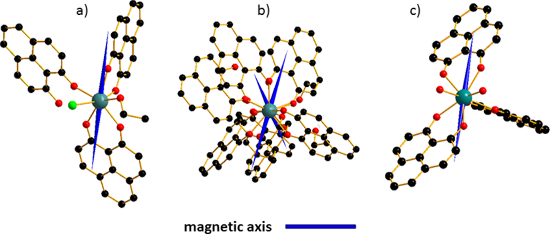
- individual spins through dipolar exchange in such a simple molecular unit. As highlighted recently in many work [8][9][10][11][12][13][14], the determining factor in the construction of SMMs and single-ion magnets (SIMs) and in the control of the single-axial anisotropy is related to the symmetry at the
- individual Ln sites along with the nature of the ligand field. Owing to a very strong Ising-type uniaxial anisotropy of the metal ion, dysprosium containing compounds are extensively studied and have been found to have the most promising slow-relaxation behavior. Typical examples are [Dy(acac)3(H2O)2] [8
- , respectively. However, due to the incomplete saturation of the magnetization, a residual slope is observed at high fields indicating the presence of magnetic anisotropy in the material [48][49]. Moreover, no hysteresis effect is observed in all three cases under these conditions. Dynamic magnetic properties As


Reorientation of single-wall carbon nanotubes in negative anisotropy liquid crystals by an electric field
Beilstein J. Nanotechnol. 2016, 7, 825–833, doi:10.3762/bjnano.7.74

- orientation of the liquid crystal molecules. Moreover, impedance spectroscopy suggests a nonnegligible anchoring force between the CNTs and the liquid crystal molecules. Keywords: Anchoring; carbon nanotubes; impedance; liquid crystal; negative anisotropy; Raman spectroscopy; reorientation; single-wall CNTs
- director lies in the plane of the cell surfaces, while in homeotropic alignment the director orients perpendicular to the plane of the cell surfaces. LCs feature, amongst others, electrical, magnetic, and optical (birefringence) anisotropy properties. In the absence of an external field, the LC orientation
- along the long axis (which roughly matches the director orientation) or perpendicular to the long axis. They are customarily classified as positive and negative LCs according to their dielectric anisotropy [6]. In a positive LC material, the dielectric constant along the director is larger than the


Microscopic characterization of Fe nanoparticles formed on SrTiO3(001) and SrTiO3(110) surfaces
Beilstein J. Nanotechnol. 2016, 7, 817–824, doi:10.3762/bjnano.7.73

- plane. This type of modified Wulff construction, which takes into account the particle–substrate interaction, is denominated as the Winterbottom construction [58]. The Winterbottom theory describes the dependence of the particle shape upon the anisotropy of the surface energy of the particle and upon


Magnetic switching of nanoscale antidot lattices
Beilstein J. Nanotechnol. 2016, 7, 733–750, doi:10.3762/bjnano.7.65
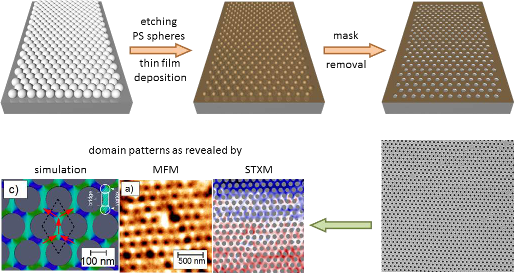
- spherical masks for the production of magnetic antidot lattices. In magnetic antidot films, the nanoscale periodic structure of holes introduces an in-plane shape anisotropy to the otherwise isotropic in-plane properties of polycrystalline or amorphous thin films. Additionally, the holes may act as
- magnetic properties of in-plane magnetized antidot films. Integral magnetometry averaging over all in-plane angles of the antidots with respect to the external field proves that the system is highly dominated by the local shape anisotropy introduced by the hole sites. We identify two distinct switching
- solve partial differential equations numerically [26]. Calculations are performed by minimizing the total magnetic energy of the system, containing contributions from the exchange energy, the anisotropy energy, the demagnetizing field, and the Zeeman energy [27]. We comprise the distributions of the



Cantilever bending based on humidity-actuated mesoporous silica/silicon bilayers
Beilstein J. Nanotechnol. 2016, 7, 637–644, doi:10.3762/bjnano.7.56
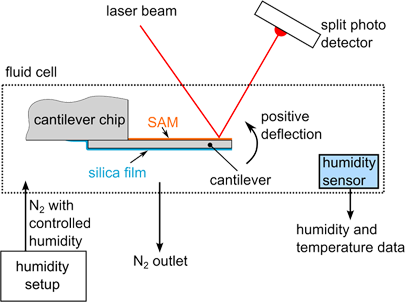
- directional movement by using swelling of polymers in combination with controllable anisotropy [10]. However, to our knowledge such concepts have not been used so far to create ceramic or metallic bilayer structures, which would have the advantage of their applicability at higher temperatures and in harsh