


Search results
Search for "bacteria" in Full Text gives 182 result(s) in Beilstein Journal of Nanotechnology.
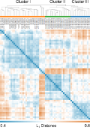
Analysis of soil bacteria susceptibility to manufactured nanoparticles via data visualization
Beilstein J. Nanotechnol. 2015, 6, 1635–1651, doi:10.3762/bjnano.6.166

- communities exposed to MNPs and thus evaluate the potential for environmental impacts. Keywords: environmental impact; manufactured nanoparticles; nanoinformatics; soil bacteria; visualization; Introduction Manufactured nanoparticles (MNPs) are now routinely used in numerous products and applications due to
- communities [18][19]; quantum dots (QDs) were linked to DNA damage of both freshwater mussels and gills [24]; and carbon nanotubes have been found to induce harmful effects to various organs (such as aquatic animals, bacteria, and plants) [25]. MNPs in soil can cause compositional changes to soil bacterial
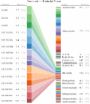
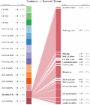
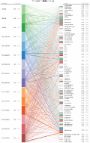
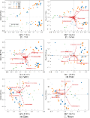
- MNPs of primary size in the range of about 15–20 nm and about 20–30 nm [42], respectively. The soil bacteria were exposed to the above MNPs for 15 and 60 days at three different doses (0.5, 1.0, and 2.0 mg/g (soil) for TiO2 MNPs and 0.05, 0.1, and 0.5 mg/g (soil) for ZnO MNPs) as well as 0, 15, and 60








Influence of surface chemical properties on the toxicity of engineered zinc oxide nanoparticles to embryonic zebrafish
Beilstein J. Nanotechnol. 2015, 6, 1568–1579, doi:10.3762/bjnano.6.160
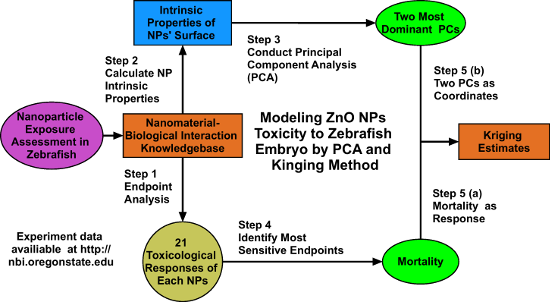
- possible that the agglomeration of the particles in the fishwater media could indirectly affect dissolution or interactions with the developing embryo. Previous studies have found that uncoated ZnO NPs form smaller aggregates on the surface of bacteria than are formed in suspension [47], and this type of




Peptide-equipped tobacco mosaic virus templates for selective and controllable biomineral deposition
Beilstein J. Nanotechnol. 2015, 6, 1399–1412, doi:10.3762/bjnano.6.145
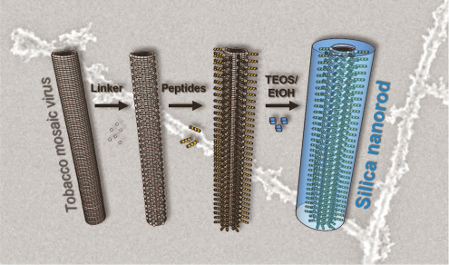
- scaffolds because of their biological safety for humans, animals, and their commensal bacteria. TMV is a widespread plant-infecting pathogen, which can be isolated in large amounts from susceptible plants [40]. TMV particles are highly ordered, supramolecular complexes, consisting of a single-stranded
- restricted upon TMV “farming” due to the required 10–14 days for TMV mutant accumulation. Bacterially expressed CP can be engineered to a much higher extent and integrated into TMV-like particles reconstituted in vitro in substantial amounts [51]. However, purification of such protein types from the bacteria




Synthesis, characterization and in vitro effects of 7 nm alloyed silver–gold nanoparticles
Beilstein J. Nanotechnol. 2015, 6, 1212–1220, doi:10.3762/bjnano.6.124
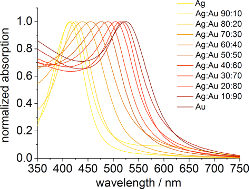
- bacteria [6][7][8]. As a result, they are often employed as antibacterial agents in biomedicine or in consumer products [9][10][11]. Unfortunately, the therapeutic window for silver nanoparticles is rather narrow as silver nanoparticles are also toxic towards eukaryotic cells [11][12]. In contrast, gold
- example, the optical properties of gold and the toxicity towards cells or bacteria of silver. In addition, very small nanoparticles (below about 2 nm) become autofluorescent [16][17]. There are several reports on different strategies to prepare alloyed silver–gold nanoparticles. Synthetic routes include


Nanobioarchitectures based on chlorophyll photopigment, artificial lipid bilayers and carbon nanotubes
Beilstein J. Nanotechnol. 2014, 5, 2316–2325, doi:10.3762/bjnano.5.240

- ingested and excreted from cells without any observable toxicity effects (e.g., as in case of Tetrahymena thermophila bacteria). Furthermore, Kagan et al. [21] pointed out that certain enzymes such as myeloperoxidases can degrade carbon nanotubes, breaking them down into water and carbon dioxide. CNTs are
- Sigma-Aldrich (Germany). The antimicrobial activity was tested against human pathogenic bacteria such as Staphylococcus aureus ATTC 25923, Escherichia coli ATCC 8738, and Enterococcus faecalis ATCC 29212. The bacterial strains were grown in Luria Bertani Agar (LBA) plates at 37 °C with the following
- -negative bacteria from the American Type Culture Collection (ATCC). In the present study three bacterial strains were used for the antibacterial assay: Staphylococcus aureus (ATCC 6538), Enterococcus faecalis (ATCC 29212) and Escherichia coli (ATCC 8738). The microorganisms used in this study were selected


Anticancer efficacy of a supramolecular complex of a 2-diethylaminoethyl–dextran–MMA graft copolymer and paclitaxel used as an artificial enzyme
Beilstein J. Nanotechnol. 2014, 5, 2293–2307, doi:10.3762/bjnano.5.238

- , and filamentous bacteria [54]. As a result, the medicinal action of the DDMC/PTX complex will suppress the tumor-associated action of M2 macrophages, and will go in the direction that controls the multiplication of cancer cells [51]. Artificial enzyme Supramolecular allosteric effect PTX is isolated


Nanomanipulation and environmental nanotechnology
Beilstein J. Nanotechnol. 2014, 5, 2079–2080, doi:10.3762/bjnano.5.216
- examples in which nanotechnologies are used to study or potentially solve environmental problems. For example, organic pollutants can be successfully removed from wastewater using the unique catalytic properties of pyrite nanoparticles. Adhesion of marine bacteria can be prevented by new coating materials
PVP-coated, negatively charged silver nanoparticles: A multi-center study of their physicochemical characteristics, cell culture and in vivo experiments
Beilstein J. Nanotechnol. 2014, 5, 1944–1965, doi:10.3762/bjnano.5.205

- undergo dissolution in water due to oxidation by dissolved oxygen [30][31][32][33]. This leads to the release of silver ions, which are the toxic agent towards cells and bacteria [20][29][33][34][35][36]. The dissolution of silver nanoparticles in water and other media has been studied by a number of




Imaging the intracellular degradation of biodegradable polymer nanoparticles
Beilstein J. Nanotechnol. 2014, 5, 1905–1917, doi:10.3762/bjnano.5.201
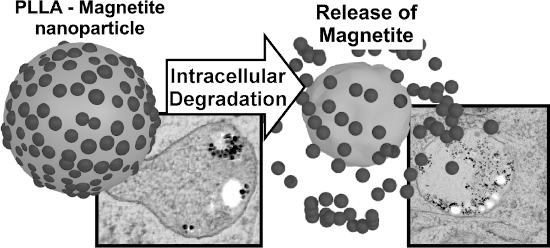
- can be enzymatically catalyzed [2]. The hydrolysis of the ester groups is an autocatalytic process by carboxylic acid end groups [3][4]. The decomposition of macroscopic PLLA implants has already been shown in vitro and in vivo [5][6][7][8] and can be accelerated by the presence of enzymes or bacteria
- micron-sized samples. These were applied to animal models and cell and bacteria cultures [1][12][13]. The number of studies demonstrating the intracellular degradation of polymeric material are, in contrast, outnumbered and accordingly few and far between. Akashi et al. incubated poly(γ-glutamic acid


Current state of laser synthesis of metal and alloy nanoparticles as ligand-free reference materials for nano-toxicological assays
Beilstein J. Nanotechnol. 2014, 5, 1523–1541, doi:10.3762/bjnano.5.165
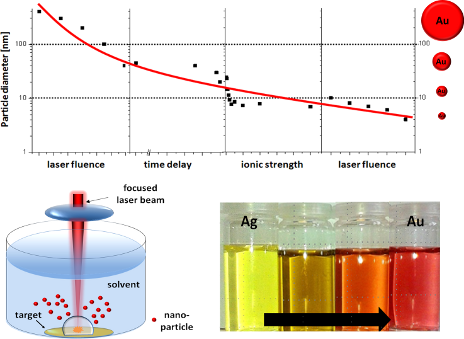
- , mammalian cells and bacteria are considered. Keywords: albumin; gold-silver; implant alloy; laser ablation; nickel-titanium; size control; wear debris; Introduction The widespread use of medical implants consisting of metals (e.g., gold coatings [1]) and alloys (e.g., NiTi, CoCr, stainless steel) [2][3][4
- nanoparticles in toxicity assays with bacteria as well as mammalian fibroblasts and gametes reveal distinctive correlations between particle composition and toxic effects. Due to the high purity of the material the influence of additional surface ligands could be systematically studied. High purity of these


Synthesis of hydrophobic photoluminescent carbon nanodots by using L-tyrosine and citric acid through a thermal oxidation route
Beilstein J. Nanotechnol. 2014, 5, 1513–1522, doi:10.3762/bjnano.5.164

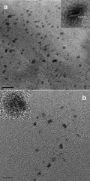
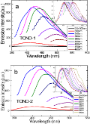
- ], photocatalytic applications [28][29]. Very few reports about hydrophobic CNDs are known [30][31]. Hydrophobic fluorescent probes (e.g., Nile red) were found to be useful for labeling hydrophobic environments in bacteria [32], but the problem associated with organic dyes is photobleaching. CNDs are promising






Hydrophobic interaction governs unspecific adhesion of staphylococci: a single cell force spectroscopy study
Beilstein J. Nanotechnol. 2014, 5, 1501–1512, doi:10.3762/bjnano.5.163

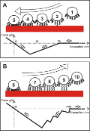
- ), University of California at Berkeley, Berkeley, California 94720, USA Institute of Medical Microbiology and Hygiene, Saarland University, D-66421 Homburg/Saar, Germany 10.3762/bjnano.5.163 Abstract Unspecific adhesion of bacteria is usually the first step in the formation of biofilms on abiotic surfaces
- ]), the strain TM300 is an ideal tool to study the properties of a single virulence factor and its impact on infectivity in this otherwise apathogenic species. Besides this, it has been shown that the survival of bacteria in a food industry environment is strongly related to their efficiency to adhere on
- abiotic surfaces [8][9][10]. Therefore, and because adhesion is the first step of the formation of biofilms, the characterization of bacterial adhesion forces has gained increasing importance in recent years [11]. In general, the adhesion of bacteria to a surface is determined by the nature of the


Molecular biology approaches in bioadhesion research
Beilstein J. Nanotechnol. 2014, 5, 983–993, doi:10.3762/bjnano.5.112

- containing dsRNA. Another strategy is ingestion, by inducing target organisms to feed on other organisms like bacteria expressing the desirable dsRNA [69][82][83][84], or transgenic plants for feeding insects [85]. Also the combination of methods like the enrichment of natural diets, for example, liver paste
- and Artemia enriched with engineered bacteria to feed planarians and Hydra [72][86]. Lastly, microinjection has been applied in several species, like the harvestmen Opiliones [87] and tardigrades [88]. The suitability of each delivery method depends on the organism being studied. Experimental animals
Antimicrobial nanospheres thin coatings prepared by advanced pulsed laser technique
Beilstein J. Nanotechnol. 2014, 5, 872–880, doi:10.3762/bjnano.5.99

- ) bacteria strains. Moreover, the obtained nano-coatings showed a good biocompatibility and facilitated the normal development of human endothelial cells. These nanosystems may be used as efficient alternatives in treating and preventing bacterial infections. Keywords: antimicrobial; chitosan; magnetite
- driven by the Axio-Vision 4.6 (Carl Zeiss, Germany) software. In vitro microbial biofilm development Staphylococcus aureus ATCC 25923 and Pseudomonas aeruginosa ATCC 27853 strains were purchased from American Type Cell Collection (ATCC, USA). For the biofilm assays, fresh bacteria cultures were obtained
- in Luria Broth. Bacteria cultures were subsequently diluted as mentioned below. The biofilm formation was assessed by using 6 multi-well plates (Nunc) in a static model for monospecific biofilm development. Coated and uncoated glass substrates were distributed in the plates containing 2 mL of




Antimicrobial properties of CuO nanorods and multi-armed nanoparticles against B. anthracis vegetative cells and endospores
Beilstein J. Nanotechnol. 2014, 5, 789–800, doi:10.3762/bjnano.5.91
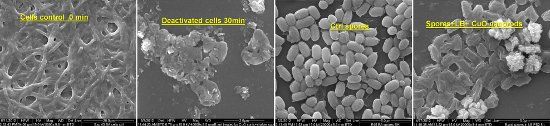
- a large number of gram-positive and gram-negative bacteria [16]. CuO nanostructures were reported as potential antibacterial agents by other groups as well [17][18][19][20]. Trapalis et al. [17] and Akhavan et al. [18] reported CuO–SiO2 composite thin film and CuO/Cu(OH)2 nanostructure, respectively
- , generated on copper foil as effective antibacterial against E. coli bacteria when the bacterial suspension drop was tested on these surfaces. Perelshtein et al. [19] have reported antibacterial CuO-cotton textile against E. coli and S. aureus. Gao et al. [20] reported strong antibacterial activity of CuO
- nanoparticle against B. anthracis. As B. anthracis bacteria can exist in vegetative cell state or in dormant spore state, killing both forms is important for an effective decontamination. In this study we have synthesized nanometer-scaled CuO in two different morphologies, one rod shaped and the other multi


Artificial sunlight and ultraviolet light induced photo-epoxidation of propylene over V-Ti/MCM-41 photocatalyst
Beilstein J. Nanotechnol. 2014, 5, 566–576, doi:10.3762/bjnano.5.67

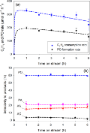
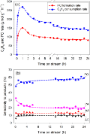
- photocatalysis process is under debate, and both the intensity and the exposure time to light irradiation need to be considered [4][10]. In the photo-decomposition of organic species and the inactivation of bacteria under ultraviolet sources (UV-A and UV-C), low-intensity light with long exposure times resulted




An ultrasonic technology for production of antibacterial nanomaterials and their coating on textiles
Beilstein J. Nanotechnol. 2014, 5, 532–536, doi:10.3762/bjnano.5.62

- ]. We have calculated the antibacterial activity according to the following formula: where F is the growth rate of bacteria in the control sample (log10 CFU/mL after incubation − log10 CFU/mL before incubation), G is the growth rate of bacteria on the coated samples. Results and Discussion In order to
- result of the small ZnO NPS obtained by the sonoplasma synthesis. We have repeatedly shown that the biocidal effect is size dependent and particles with smaller size kill bacteria better. It is also advantageous that the suspension is continuously exposed to an ultrasonic field, which prevents the


Oriented attachment explains cobalt ferrite nanoparticle growth in bioinspired syntheses
Beilstein J. Nanotechnol. 2014, 5, 210–218, doi:10.3762/bjnano.5.23

- protein MMS6, involved in nanoparticle formation within magnetotactic bacteria, was used to alter the growth of cobalt ferrite. We demonstrate that the bioinspired nanoparticle growth can be described by the oriented attachment model. The intermediate stages proposed in the theoretical model, including
- found in magnetotactic bacteria, can be used to obtain stoichiometric and shape specific cobalt ferrite nanoparticles [20][22]. The growth process, however, has remained elusive. Here, the composition, morphology and microstructure of the bioinspired synthesized nanoparticles were studied at different


Exploring the retention properties of CaF2 nanoparticles as possible additives for dental care application with tapping-mode atomic force microscope in liquid
Beilstein J. Nanotechnol. 2014, 5, 36–43, doi:10.3762/bjnano.5.4
- the pH value in the vicinity of teeth while bacteria in the dental plaque metabolize sugars and lower the pH value on the tooth surface. If the pH drops below a certain threshold value the tooth enamel starts to dissolve. This demineralization process of the enamel is better known as enamel erosion


Atomic force microscopy recognition of protein A on Staphylococcus aureus cell surfaces by labelling with IgG–Au conjugates
Beilstein J. Nanotechnol. 2013, 4, 743–749, doi:10.3762/bjnano.4.84
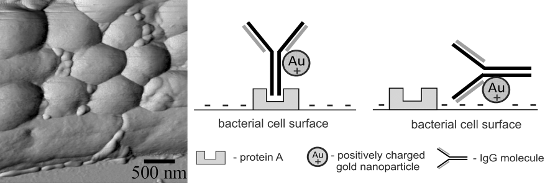
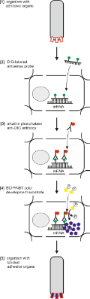
- /bjnano.4.84 Abstract The labelling of functional molecules on the surface of bacterial cells is one way to recognize the bacteria. In this work, we have developed a method for the selective labelling of protein A on the cell surfaces of Staphylococcus aureus by using nanosized immunogold conjugates as
- bacteria, which is useful for AFM indication of pathogenic microorganisms in poly-component associations. Keywords: atomic force microscopy; IgG–gold nanoparticle conjugates; protein A; Staphylococcus aureus; Introduction The development of fast and sensitive methods for bacterial recognition remains an
- distinguish the cells that carry immunoglobulin-binding receptors on their surface: protein A produced by Staphylococcus aureus [8] and protein G expressed in group C and G Streptococcus bacteria [9]. These protein–protein interactions also lead to the formation of specific complexes on the cell surface, in


New hybrid materials based on poly(ethyleneoxide)-grafted polysilazane by hydrosilylation and their anti-fouling activities
Beilstein J. Nanotechnol. 2013, 4, 671–677, doi:10.3762/bjnano.4.75

- the adhesion of marine bacteria on surfaces, were applied by moisture curing at room temperature. The anti-adhesion performance, and thus the anti-fouling activity, of the coatings against three marine bacteria species, Clostridium sp. SR1, Neisseria sp. LC1 and Neisseria sp. SC1, was examined. The
- reducing bio-adhesion, i.e., protein adsorption, or the adhesion of bacteria and cells. The environmentally friendly coatings obtained by the grafting of PEO onto PSZ are a promising way to prevent the deposition of marine fouling materials onto the hulls of ships [6]. Several factors have been
- ]. Kingshott et al. have demonstrated that the grafting of PEO onto the substrates by covalent bonding is necessary for an anti-fouling activity [23]. Herein, we propose a new synthetic strategy to prepare hybrid materials based on polysilazane (PSZ), which have an enhanced resistance against bacteria adhesion





3D nano-structures for laser nano-manipulation
Beilstein J. Nanotechnol. 2013, 4, 534–541, doi:10.3762/bjnano.4.62
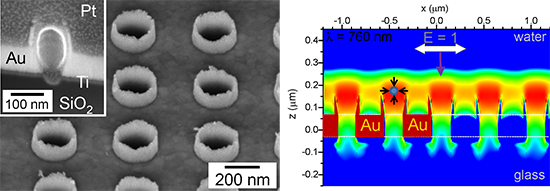
- ; Introduction Optical trapping is a fundamental experimental technique for physics and biology, which allows to precisely control and position micrometer-sized objects such as dielectric parts for nano-assembly, and biomaterials such as cells and bacteria, through the use of gradient forces, which originate


Photocatalytic antibacterial performance of TiO2 and Ag-doped TiO2 against S. aureus. P. aeruginosa and E. coli
Beilstein J. Nanotechnol. 2013, 4, 345–351, doi:10.3762/bjnano.4.40

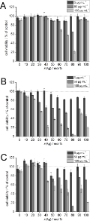
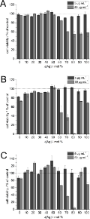
- aeruginosa, Escherichia coli) bacteria. As a result, the viability of all three microorganisms was reduced to zero at 60 mg/30 mL culture in the case of both (3% and 7% doping) concentrations of Ag-doped TiO2 nanoparticles. Annealed TiO2 showed zero viability at 80 mg/30 mL whereas doped Ag-TiO2 7% showed
- microorganisms including bacteria, fungi and viruses, because it has high photoreactivity, broad-spectrum antibiosis and chemical stability [1][2][3][4][5][6]. The photocatalytic activity of annealed TiO2 sturdily depends upon its existing phase, i.e., anatase, rutile, brokite. The anatase phase shows an
- blocking of respiration and cell death of the bacteria [10]. Another remarkable mechanism of the antimicrobial activity of Ag nanoparticles is related to the formation of free radicals and consequent free-radical-induced oxidative damage of the cell membranes of bacteria [11][12]. But the same result was


Mechanical and thermal properties of bacterial-cellulose-fibre-reinforced Mater-Bi® bionanocomposite
Beilstein J. Nanotechnol. 2013, 4, 325–329, doi:10.3762/bjnano.4.37

- /matrix interface [6]. Cellulose is the main component of plant cell walls. Some bacteria produce cellulose (celled biocellulose or bacterial cellulose). Plant cellulose and bacterial cellulose (BC) have the same chemical structure, but different physical and chemical properties. BC is produced by
- culturing a strain of Acetobacter xylinum, reclassified as the genus Gluconacetobacter, which is typically found on decaying fruits, vegetables, vinegar, fruit juices, and alcoholic beverages. The bacteria of this family convert ethanol to acetic acid. BC has recently received extensive attention from
- temperature, vitamins B1, B2, and B5 were added. The acidity of the medium was adjusted to pH = 4 by using glacial acetic acid. The medium was inoculated by sowing the bacteria with a handle-loop on the surface of the agar and putting it into the bottle. In order to ensure a good distribution of the bacteria


Electrospinning preparation and electrical and biological properties of ferrocene/poly(vinylpyrrolidone) composite nanofibers
Beilstein J. Nanotechnol. 2013, 4, 189–197, doi:10.3762/bjnano.4.19

- chosen for the experimental strains. Meanwhile we selected blank PVP nanofibers as the control experiment. The blank PVP nanofiber and composite Fc/PVP nanofiber webs were cut into discs with about 1 cm diameter and placed in the centre of the bacteria-inoculated agar plates. When in contact with the
- moist medium, the discs were dissolved due to the water-soluble PVP polymer. As can be seen from Figure 6a, the bacteria spread on agar plates where the blank PVP nanofiber disc was placed in the centre of the agar plate. Compared with blank PVP nanofibers, the composite Fc/PVP nanofibers placed in the
- centre of the agar plate killed the bacteria over and around them (Figure 6b), which showed that the composite Fc/PVP nanofibers obviously inhibited growth of the E. coil. It can be explained that Fc is lipophilic in nature and able to pass through the cell membrane. When E. coli is in contact with Fc





