Search results
Search for "chemical vapor deposition" in Full Text gives 238 result(s) in Beilstein Journal of Nanotechnology. Showing first 200.
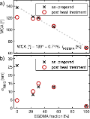
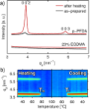
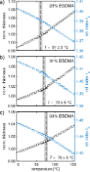
Vapor-phase-synthesized fluoroacrylate polymer thin films: thermal stability and structural properties
Beilstein J. Nanotechnol. 2017, 8, 933–942, doi:10.3762/bjnano.8.95

- chemical vapor deposition (iCVD) were investigated. PFDA polymers are known for their interesting crystalline aggregation into a lamellar structure that induces super-hydrophobicity and oleophobicity. Nevertheless, when considering applications which involve chemical, mechanical and thermal stresses, it is
- surfaces based on perfluoroacrylates were previously prepared by initiated chemical vapor deposition (iCVD) [8]. The iCVD technique allows polymerization of the fluorinated monomers, while the chemical structure of the precursor(s) remains intact. Therefore, ultrathin (<100 nm) perfluoropolymers can be
- used without further purification. p-PFDA films with different degrees of cross-linking were prepared by initiated chemical vapor deposition (iCVD). The average thickness of the as-deposited polymer films was 350 ± 50 nm. Detailed information on the actual processing conditions are provided in




High photocatalytic activity of Fe2O3/TiO2 nanocomposites prepared by photodeposition for degradation of 2,4-dichlorophenoxyacetic acid
Beilstein J. Nanotechnol. 2017, 8, 915–926, doi:10.3762/bjnano.8.93
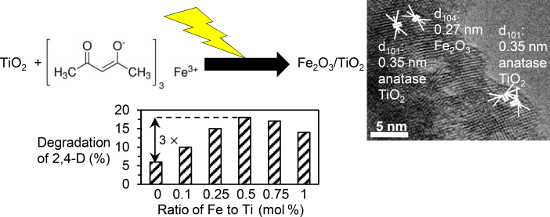
- ], plasma enhanced-chemical vapor deposition (PE-CVD) and radio frequency (RF) sputtering approach [12], and plasma enhanced-chemical vapor deposition and atomic layer deposition (ALD) followed by thermal treatment [13]. Among these preparation methods, impregnation is a commonly used approach for the
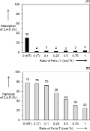
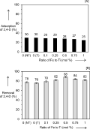


Synthesis of coaxial nanotubes of polyaniline and poly(hydroxyethyl methacrylate) by oxidative/initiated chemical vapor deposition
Beilstein J. Nanotechnol. 2017, 8, 872–882, doi:10.3762/bjnano.8.89

- .8.89 Abstract Vapor-phase synthesis techniques of polymeric nanostructures offer unique advantages over conventional, solution-based techniques because of their solventless nature. In this work, we report the fabrication of coaxial polymer nanotubes using two different chemical vapor deposition methods
- . The fabrication process involves the deposition of an outer layer of the conductive polyaniline (PANI) by oxidative chemical vapor deposition, followed by the deposition of the inner layer of poly(2-hydroxyethyl methacrylate) (pHEMA) hydrogel by initiated chemical vapor deposition. The vapor-phase
- continuously increase with relative humidity. Keywords: coaxial nanotubes; humidity sensors; initiated chemical vapor deposition; oxidative chemical vapor deposition; polyaniline; Introduction In recent years, with the advances in nanotechnology, the use of nanostructured materials has become widespread in


Relationships between chemical structure, mechanical properties and materials processing in nanopatterned organosilicate fins
Beilstein J. Nanotechnol. 2017, 8, 863–871, doi:10.3762/bjnano.8.88

- science [9][10][11][12]. Experimental Fabrication of nanoporous fins The nanoporous organosilicate fin structures examined in this study were fabricated using a previously described subtractive pitch quartering process [34][35]. Briefly, plasma-enhanced chemical vapor deposition (PECVD) was used to

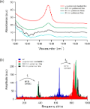


Investigation of growth dynamics of carbon nanotubes
Beilstein J. Nanotechnol. 2017, 8, 826–856, doi:10.3762/bjnano.8.85
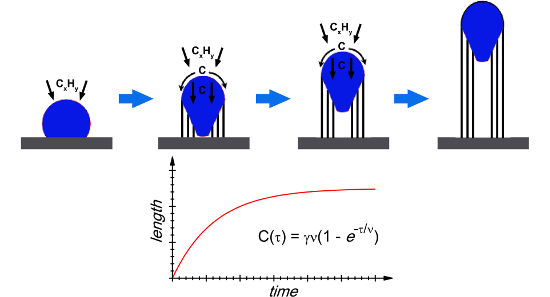
- developing the methods of their efficient synthesis. During last years, significant progress was made in this field. The arc-discharge, laser ablation and chemical vapor deposition (CVD) methods were optimized for the synthesis of SWCNTs in a high yield [5][6]. Synthesis parameters can be varied in a broad






3D Nanoprinting via laser-assisted electron beam induced deposition: growth kinetics, enhanced purity, and electrical resistivity
Beilstein J. Nanotechnol. 2017, 8, 801–812, doi:10.3762/bjnano.8.83
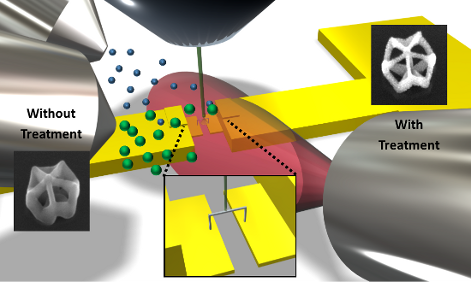
- sufficient to initiate carbon removal without inducing significant thermal drift and/or laser chemical vapor deposition (CVD). Laser pulses are delivered to the sample with an optical working distance of 9 mm using a multi-mode 100 µm diameter fiber optic cable housed within a stainless steel shaft with
- situation at elevated temperatures. MeCpPt(IV)Me3 was originally developed for use as a thermal chemical vapor deposition (CVD) precursor [75]; the thermal decomposition temperature on the order of 120 °C in the presence of H2 results in pure Pt films. Thus, with LAEBID we leverage the pulsed thermal energy


Vapor deposition routes to conformal polymer thin films
Beilstein J. Nanotechnol. 2017, 8, 723–735, doi:10.3762/bjnano.8.76

- , USA 10.3762/bjnano.8.76 Abstract Vapor phase syntheses, including parylene chemical vapor deposition (CVD) and initiated CVD, enable the deposition of conformal polymer thin films to benefit a diverse array of applications. This short review for nanotechnologists, including those new to vapor
- coats the substrate geometry (Figure 1c) [1]. Several chemical vapor deposition (CVD) techniques result in highly conformal polymer films. For instance, emerging techniques such as molecular layer deposition (MLD) and oxidative CVD (oCVD) form conformal metalucone and step-growth polymer films [10][11




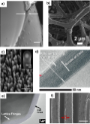
Ion beam profiling from the interaction with a freestanding 2D layer
Beilstein J. Nanotechnol. 2017, 8, 682–687, doi:10.3762/bjnano.8.73

- vapor deposition (CVD) according to a previously developed method [19]. This method is optimized for maximal grain connectivity resulting in uniform graphene films. Then, graphene was transferred to silicon/silicon-nitride frames with openings of a few micrometers in diameter. A PMMA-based graphene
- critical steps towards ion beam profiling using this method. Results and Discussion One of the most crucial aspects of ion beam profiling via the direct interaction with suspended graphene is the preparation of the ultraclean graphene membranes. First, graphene was grown on a copper foil using chemical
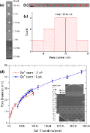


Gas sensing properties of MWCNT layers electrochemically decorated with Au and Pd nanoparticles
Beilstein J. Nanotechnol. 2017, 8, 592–603, doi:10.3762/bjnano.8.64

- MWCNTs, for gas sensing applications. Experimental Preparation of metal-decorated MWCNT-based chemiresistors MWCNT networked films were grown by chemical vapor deposition (CVD) directly onto the surface of an alumina substrate that was previously coated with a cobalt (Co) sputtered catalytic layer (≈6 nm


Thin SnOx films for surface plasmon resonance enhanced ellipsometric gas sensing (SPREE)
Beilstein J. Nanotechnol. 2017, 8, 522–529, doi:10.3762/bjnano.8.56

- , several different coating methods were developed which include chemical vapor deposition [11], sol–gel [12], spray pyrolysis [13], sputtering [14][15][16] and electron beam evaporation [17]. In our approach, we aim to develop a new sensing concept which combines the adsorption concept of MOS sensors with


Advances in the fabrication of graphene transistors on flexible substrates
Beilstein J. Nanotechnol. 2017, 8, 467–474, doi:10.3762/bjnano.8.50
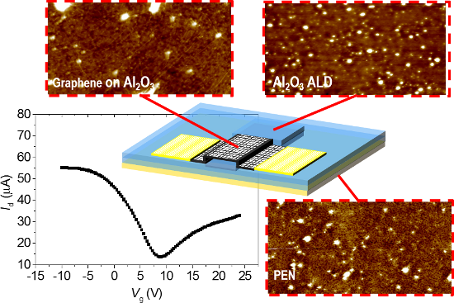
- transferred to the target substrate. In this sense, the use of graphene grown by chemical vapor deposition (CVD) on various metals (Ni [7], Cu [13]) and using various precursors [14] represents the most suitable choice. Among the various device architectures, Gr-FET-based sensors can represent a great


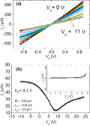

The longstanding challenge of the nanocrystallization of 1,3,5-trinitroperhydro-1,3,5-triazine (RDX)
Beilstein J. Nanotechnol. 2017, 8, 452–466, doi:10.3762/bjnano.8.49
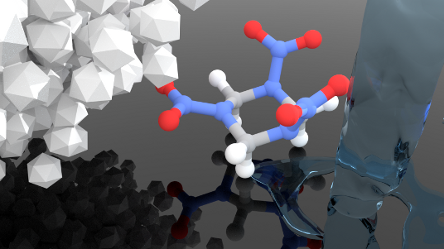
- rate of a continuous hydrothermal process from 1–10 tons/year to 100 tons/year for inorganic nanomaterials [123]. Tsuzuki et al. [124] statistically studied which methods for inorganic nanosynthesis are mostly employed in industry: vapor (39% mainly chemical vapor deposition (CVD)) and liquid (45


Study of the surface properties of ZnO nanocolumns used for thin-film solar cells
Beilstein J. Nanotechnol. 2017, 8, 446–451, doi:10.3762/bjnano.8.48
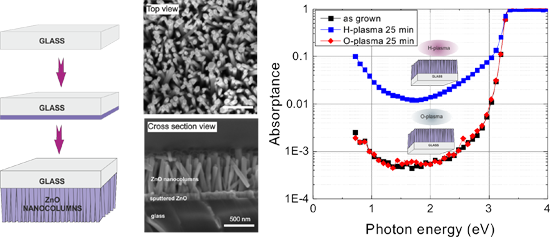
- advantageously used for all other thin-film solar cells. So far, a wide diversity of methods have been used for the preparation of ZnO nanocolumns such as metal organic chemical vapor deposition (MOCVD) [11], electrochemical deposition [12], sputtering [13], reactive ion etching [5] and the hydrothermal method



Role of oxygen in wetting of copper nanoparticles on silicon surfaces at elevated temperature
Beilstein J. Nanotechnol. 2017, 8, 425–433, doi:10.3762/bjnano.8.45

- of CuO nanostructures on Si surfaces. There are several techniques such as physical vapor deposition (PVD), chemical vapor deposition (CVD), electroplating, etc., that can be used to create Cu films. For the PVD and CVD techniques, high vacuum is required, which takes enormous effort and also


In-situ monitoring by Raman spectroscopy of the thermal doping of graphene and MoS2 in O2-controlled atmosphere
Beilstein J. Nanotechnol. 2017, 8, 418–424, doi:10.3762/bjnano.8.44
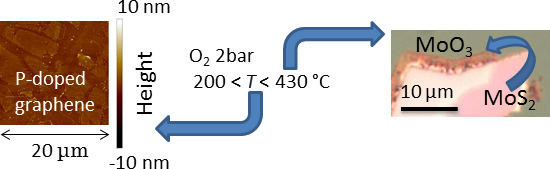
- ] and chemical vapor deposition (CVD) on catalytic metals [9][10] followed by the poly(methyl methacrylate) (PMMA) assisted transfer [11][12], enlarged the interest and perspectives for applications. In particular in view of the realization of electronic devices and to obtain Gr-based field effect
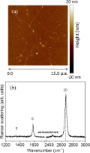
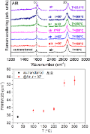
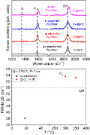
- monolayer Gr and mechanically exfoliated MoS2 deposited on SiO2. The Gr samples were produced by chemical vapor deposition process on a Cu foil [11][19]. After Gr growth the foils were covered by PMMA and Cu was removed in a FeCl3 bath. Successively, a transfer process on a 300 nm thick SiO2 layer on Si


Impact of contact resistance on the electrical properties of MoS2 transistors at practical operating temperatures
Beilstein J. Nanotechnol. 2017, 8, 254–263, doi:10.3762/bjnano.8.28
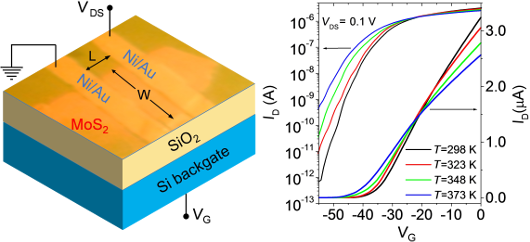
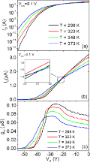
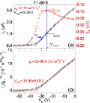
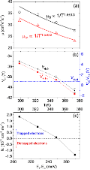
- demonstrated using single [3] and multilayers of MoS2 [4]. MoS2 thin films, obtained either by cleavage from the bulk material or by chemical vapor deposition, are typically unintentionally n-type doped. Since well-assessed methods for doping enrichment of MoS2 under source/drain contacts are still lacking




Phosphorus-doped silicon nanorod anodes for high power lithium-ion batteries
Beilstein J. Nanotechnol. 2017, 8, 222–228, doi:10.3762/bjnano.8.24

- applied at room temperature. After 12 min, the Cu foil was taken out and washed with deionized water thoroughly. The Si anode was fabricated through deposition of a heavy-phosphorus-doped Si layer directly onto the CuO nanorods via a radio frequency, capacitively coupled, plasma-enhanced chemical vapor
- deposition (PECVD) device. Typically, the source gas for PECVD was silane (10%, diluted with hydrogen) with a flow rate of 50 sccm mixed with phosphine (5%, diluted with hydrogen) with a flow rate of 5 sccm. The deposition pressure and substrate temperature were 80 Pa and 150 °C, respectively. The structural


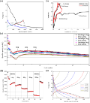

Nitrogen-doped twisted graphene grown on copper by atmospheric pressure CVD from a decane precursor
Beilstein J. Nanotechnol. 2017, 8, 145–158, doi:10.3762/bjnano.8.15

- from both fundamental and applied aspects. TG can be obtained by different methods, e.g., by means of graphene folding, graphene layer stacking, thermal decomposition of SiC [9] or chemical vapor deposition (CVD) on metal catalysts [10][11]. Generally speaking, CVD is one of the most common methods to


Nanostructured SnO2–ZnO composite gas sensors for selective detection of carbon monoxide
Beilstein J. Nanotechnol. 2016, 7, 2045–2056, doi:10.3762/bjnano.7.195
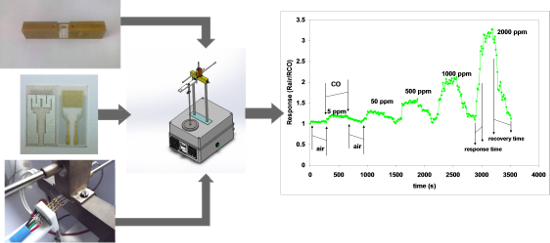
- ]. However, the addition of another oxide component described in these papers involves complicated and expensive vapor preparation techniques (e.g., chemical vapor deposition (CVD) or physical vapor deposition (PVD), ion-beam or laser-assisted techniques, spray pyrolysis), expensive dedicated equipment (e.g




Analysis of self-heating of thermally assisted spin-transfer torque magnetic random access memory
Beilstein J. Nanotechnol. 2016, 7, 1676–1683, doi:10.3762/bjnano.7.160

- derived using the behavior of similar alloys [10] transposed onto point data [15]. The material properties of the various common passivation materials considered [16] (Table 1) are from the element library of COMSOL for SiO2 and Si3N4, and from literature for low-temperature plasma-enhanced chemical vapor
- deposition SiO2 [2][17] and Si3N4 [18]. The “ON” and “OFF” states of the device are represented via interchangeable sets of materials properties for the CoFeB layers [4][13] (Figure 2, Figure 3) that are chosen based on the desired switching operation to be simulated (anti-parallel properties to simulate an




Nano- and microstructured materials for in vitro studies of the physiology of vascular cells
Beilstein J. Nanotechnol. 2016, 7, 1620–1641, doi:10.3762/bjnano.7.155
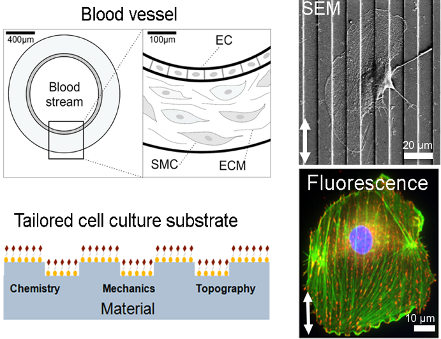
- . The pattern of the photomask will determine the later dimensions of a surface structure [49]. This method can be combined with other procedures such as physical or chemical vapor deposition where the height of the pattern can be further controlled by depositing a nanometrically controlled layer, often



Nanostructured germanium deposited on heated substrates with enhanced photoelectric properties
Beilstein J. Nanotechnol. 2016, 7, 1492–1500, doi:10.3762/bjnano.7.142
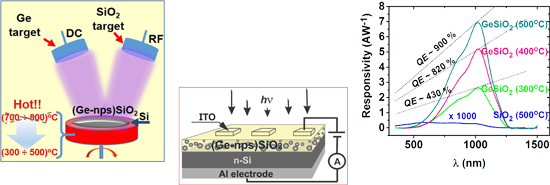
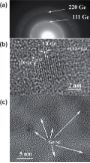
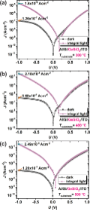
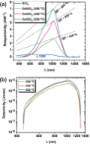
- [18] and biosensors [19]. To produce high-quality Ge particles packed into different matrices, various approaches are reported in scientific papers such as pulsed laser deposition [20][21], sol–gel [22], evaporation under vacuum [23], chemical vapor deposition [24], microwave-assisted heating [25




Surface roughness rather than surface chemistry essentially affects insect adhesion
Beilstein J. Nanotechnol. 2016, 7, 1471–1479, doi:10.3762/bjnano.7.139

- , hydrophobic monolayer-covered surfaces, terminated with octadecylsilyl (CH3(CH2)17-) or perfluoroalkyl (CF3(CF2)7CH2CH2-) groups, were prepared using chemical vapor deposition (CVD) of ODS or FAS17 [36], respectively. UV–ozone treated Si substrates (2 × 2 cm2 and 5 × 5 cm2) were placed on a heat-resistant



Dealloying of gold–copper alloy nanowires: From hillocks to ring-shaped nanopores
Beilstein J. Nanotechnol. 2016, 7, 1361–1367, doi:10.3762/bjnano.7.127

- [6][7]. The formation of hillocks has been encountered in case of various processes such as evaporation and sputtering [7][8][9], ion beam assisted deposition (IBAD) [10][11], chemical vapor deposition (CVD) [12][13] and electroplating [14]. Hillocks are the outcome of a nodular growth taking place



Reasons and remedies for the agglomeration of multilayered graphene and carbon nanotubes in polymers
Beilstein J. Nanotechnol. 2016, 7, 1174–1196, doi:10.3762/bjnano.7.109
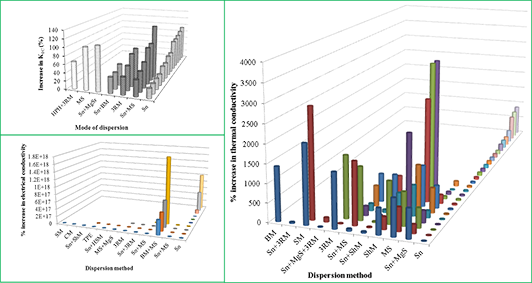
- SWNT, i.e., the area of a parallelogram OACB, and δ is the distance between nearest-neighbor C–C atoms in adjacent SWNTs (0.34 nm for the ideal case) [42]. The value obtained for close-packed SWNTs produced by catalytic chemical vapor deposition (CVD) is about one order of magnitude lesser than that of
- surface defects introduced during grafting the CNT on fibers through CVD. The deleterious effect of CNT grafting depends upon the nature of fiber, the surface treatments and growth conditions [129]]. Chemical vapor deposition: The most commonly used synthesis of CNTs is the reaction of a gaseous carbon
- feedstock on catalyst particles, i.e., chemical vapor deposition (CVD) [2][36]. CNT can be produced by using organo-metallic compounds as precursor (e.g., ferrocene), a carbon feedstock (e.g., toluene) and a carrier gas (e.g., hydrogen) [130]. It is difficult to control the diameter of the nanotubes