


Search results
Search for "coatings" in Full Text gives 329 result(s) in Beilstein Journal of Nanotechnology. Showing first 200.
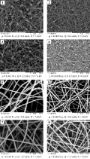
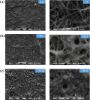
Effect of electrospinning process variables on the size of polymer fibers and bead-on-string structures established with a 23 factorial design
Beilstein J. Nanotechnol. 2018, 9, 2466–2478, doi:10.3762/bjnano.9.231

- among others as: coatings with hydrophobic properties [19], membranes for fog harvesting [20], drug delivery systems with encapsulated therapeutic substances [21]. Therefore, it is fully justified to dedicate a study to the analysis of conditions in which the beads can be optimally obtained. Although a




ZnO-nanostructure-based electrochemical sensor: Effect of nanostructure morphology on the sensing of heavy metal ions
Beilstein J. Nanotechnol. 2018, 9, 2421–2431, doi:10.3762/bjnano.9.227

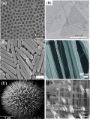
- , nanostructures of ZnO were synthesized in four different morphologies: nanorods, nanoneedles, nanotubes and nanoplates. To determine the peculiarities of adsorption for each morphology, a series of electrochemical measurements were carried out using these nanostructured ZnO coatings on the working electrodes
- were carried out using these nanostructured ZnO coatings on the working electrodes using aqueous solutions of Pb(NO3)2 and Cd(NO3)2 as analytes with different concentrations. Experimental Design and fabrication of the ZnO nanostructure-based electrochemical sensor Three morphologies of well-aligned one
- that the resulting nanostructured coatings of all three morphologies were dense, homogeneous and of well-controlled shapes (see Figure 2). The X-ray diffraction results revealed that the samples are crystalline with a hexagonal wurtzite structure. All XRD spectra show one dominant diffraction peak


Block copolymers for designing nanostructured porous coatings
Beilstein J. Nanotechnol. 2018, 9, 2332–2344, doi:10.3762/bjnano.9.218
- Roberto Nistico Department of Applied Science and Technology DISAT, Polytechnic of Torino, C.so Duca degli Abruzzi 24, 10129 Torino, Italy 10.3762/bjnano.9.218 Abstract Highly ordered porous coatings find applications in many fields, such as nanotechnology, microfluidics and nanofluidics
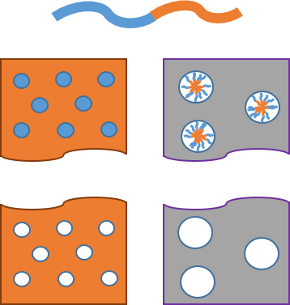
- , membrane separation, and sensing. In recent years, there has been great interest regarding the synthesis of isoporous and well-ordered (in)organic coatings for the production of highly selective functional membranes. Among the different strategies that have been proposed to date for preparing these porous
- thin coatings, one simple route involves the use of self-assembled amphiphilic block copolymers either as the porogen (acting as sacrificial templating agents for the production of inorganic architectures) or as a source of the porogen (by self-assembly for the production of polymeric substrates


Performance analysis of rigorous coupled-wave analysis and its integration in a coupled modeling approach for optical simulation of complete heterojunction silicon solar cells
Beilstein J. Nanotechnol. 2018, 9, 2315–2329, doi:10.3762/bjnano.9.216

- conversion efficiency of solar cells. Such techniques aim to improve the coupling of light into the structure (e.g., antireflective coatings and nanostructures at the front side of solar cells) and the light trapping ability of the structure (e.g., nano- and micrometer size textures for light scattering and
- management coatings. Conclusion In the paper, we have analyzed the RCWA performance in terms of reliability and accuracy of the optical simulation of solar cell structures, in particular for HJ Si solar cells with textures for light management. For efficient simulation of whole HJ Si solar cells, including




Intrinsic ultrasmall nanoscale silicon turns n-/p-type with SiO2/Si3N4-coating
Beilstein J. Nanotechnol. 2018, 9, 2255–2264, doi:10.3762/bjnano.9.210

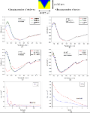
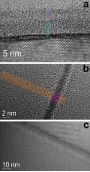
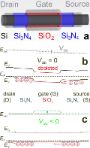
- ) in particular at the gate-channel/gate-underlap interface and at the Ni–contact–Si interfaces, both depending on lcon (see Supporting Information File 1). Without the energy shift caused by Si3N4-coatings in source/drain, we obtain substantially higher Schottky-barriers for device II, resulting in
- yield p- (n-) type behaviour by shifting the electronic DOS towards (away from) Evac using ultrathin Si3N4- (SiO2-) coatings. The key parameters for this phenomenon are the electron affinities X of N and O together with their IOB and bond length to Si. Using NEGF device simulations we compared two





Fabrication of photothermally active poly(vinyl alcohol) films with gold nanostars for antibacterial applications
Beilstein J. Nanotechnol. 2018, 9, 2040–2048, doi:10.3762/bjnano.9.193
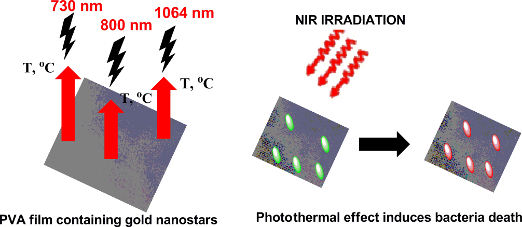
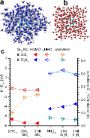
- antibacterial films and coatings. Keywords: antibacterial properties; gold nanostars; photothermal effect; poly(vinyl alcohol) films; Introduction The photothermal properties of non-spherical gold nanoparticles possessing localized surface plasmon resonance (LSPR) located in NIR range has already been
- (GNSs coated with SH-PEG-OCH3 and SH-PEG-COOH) and on the PVA film without GNSs, as a comparison. The two different GNS coatings were selected to study the possible modification of the mechanical properties of the films induced by the presence of PEGylated GNSs, in particular when coated with PEG


Recent highlights in nanoscale and mesoscale friction
Beilstein J. Nanotechnol. 2018, 9, 1995–2014, doi:10.3762/bjnano.9.190
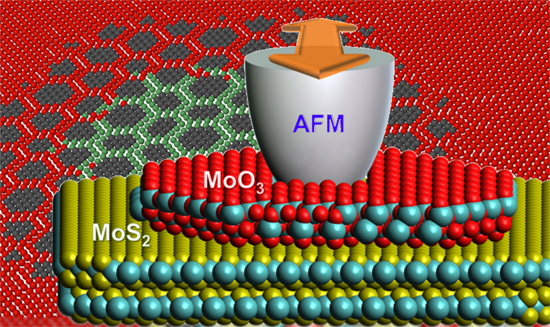
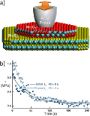
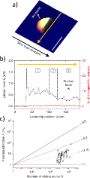
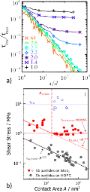
- technological impact. For example, the treatment of surfaces with molecular layers can have beneficial effects as it is well known from PTFE-coated surfaces. There is a need of alternative coatings for modern touch screens to prevent fingerprints and other contaminants. Surfaces for medical applications are


Biomimetic and biodegradable cellulose acetate scaffolds loaded with dexamethasone for bone implants
Beilstein J. Nanotechnol. 2018, 9, 1986–1994, doi:10.3762/bjnano.9.189

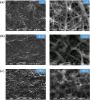
- are placed as coatings in medical devices in order to enhance the biocompatibility [2][3][4]. One technique to produce such coatings is electrospinning, which yields long micro- and nanofibers [5]. More specifically, physical and synthetic polymeric fibers of 30–20000 nm in length are produced by
- is created [23]. Grounded aluminum foils, glass substrates and also coatings for orthopaedic pins were used as collectors to carry out the necessary studies. Drug-release kinetics and degradation study of scaffolds Degradation study was carried out in order to evaluate the mass loss of polymer and






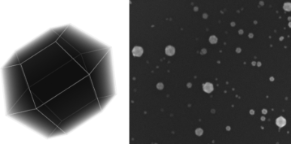
Synthesis of hafnium nanoparticles and hafnium nanoparticle films by gas condensation and energetic deposition
Beilstein J. Nanotechnol. 2018, 9, 1868–1880, doi:10.3762/bjnano.9.179
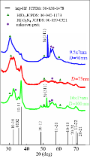
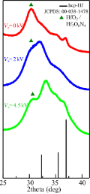
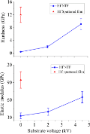
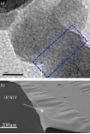
- fragile coatings that tend to fracture under small loads, making them in many cases unsuitable for industrial use. Mechanical reinforcement is necessary to improve mechanical stability. Some proposed methods in this direction are calcination [28], atomic layer deposition [29], hydrothermal treatment [30
- undergone mechanical reinforcement with other techniques [29][30]. We believe it is porosity and strength of the bonding between the grains that affect the mechanical properties of the films. In the case of Vs = 0 kV, fragile NP coatings with poor mechanical properties are formed due to the weak adhesive






Friction force microscopy of tribochemistry and interfacial ageing for the SiOx/Si/Au system
Beilstein J. Nanotechnol. 2018, 9, 1647–1658, doi:10.3762/bjnano.9.157
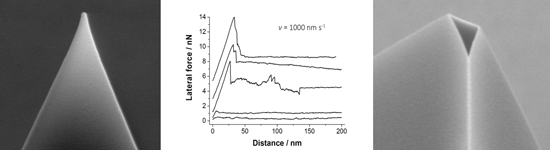
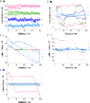
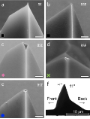
- wear rate was found for the tips that had been in contact with reactive Si(100). Material transfer was found in one case, for the activated SiOx/Si tip after sliding on Au(111) (Figure 6d). The coatings of the Au/Si tips that were slid against reactive or oxidized Si(100) had a sharp border (Figure 6b




Surface characterization of nanoparticles using near-field light scattering
Beilstein J. Nanotechnol. 2018, 9, 1228–1238, doi:10.3762/bjnano.9.114
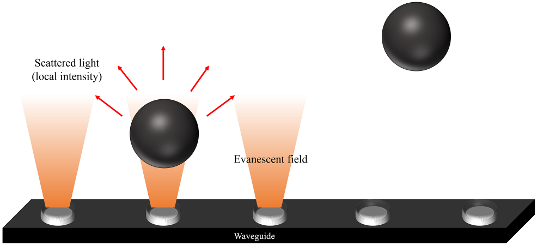
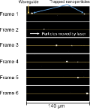
- microscope is efficient in characterization of polymer-coated nanoparticles. However, due to the fact that the nanoparticle scattering intensity depends on the dielectric constant of the material, multicomponent particle coatings, especially those on metallic or metal oxide materials such as those studied
- moderately spherical, with an average diameter of 18 ± 2 nm (n = 20) for uncoated SPIOs, 30 ± 6 nm (n = 20) for PEG-SPIOs, and 39 ± 5 nm (n = 20) for IPC-SPIOs. There was a gradual increase in size with the addition of the polymer coatings on the SPIOs. Hydrodynamic diameter and zeta potential of




Electrodeposition of reduced graphene oxide with chitosan based on the coordination deposition method
Beilstein J. Nanotechnol. 2018, 9, 1200–1210, doi:10.3762/bjnano.9.111
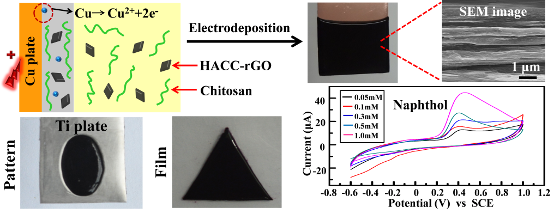
- controlled creation of rGO/chitosan nanocomposite coatings and films of different shapes and thickness. It also introduces a new method of creating films, as they can be peeled completely from the electrodes. Moreover, this method allows for a rGO/chitosan film to be deposited directly onto an electrode
- promising for uses in surface coatings, sensors and metallic biomaterials, however, to date little attention has been paid to this coordination electrodeposition method. A feature of the chitosan electrodeposition method is that it enables a controllable means to assemble nanoparticles (e.g., silver
- nanoparticles, carbon nanotubes, manganese oxides nanoparticles, and carbon dots) on electrodes through codeposition with chitosan, which offers attractive applications in antimicrobial coatings, biosensors, microbial fuel cells, and energy storage materials [14][15][16][17][18]. Among the studies on the


Review on nanoparticles and nanostructured materials: history, sources, toxicity and regulations
Beilstein J. Nanotechnol. 2018, 9, 1050–1074, doi:10.3762/bjnano.9.98

- . Animals and small insects utilize nanostructures for their protection from predatory organisms as well as in their lightweight wings via nanowax coatings. Similarly, humans also possess organs that are primarily contructed by nanostructures, such as bones. Antibodies, enzymes and other secretions that are
- ][201]. These superhydrophobic materials were useful in applications such as water treatment [202][203], wettability switchers [204][205], smart actuators [206], transparent coatings and electrodes [207][208][209]. Nanoparticles and nanostructures in insects Insect wing membranes are comprised of



Single-crystalline FeCo nanoparticle-filled carbon nanotubes: synthesis, structural characterization and magnetic properties
Beilstein J. Nanotechnol. 2018, 9, 1024–1034, doi:10.3762/bjnano.9.95

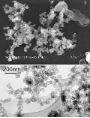
- coatings, carbon nanotubes (CNTs) have been introduced as a protective shell due to their high stability in different chemical and physical environments such as acidic, basic, high temperature and pressurized conditions [33][34][35][36]. CNTs can also act as a template to control the size and morphology of


Cyclodextrin inhibits zinc corrosion by destabilizing point defect formation in the oxide layer
Beilstein J. Nanotechnol. 2018, 9, 936–944, doi:10.3762/bjnano.9.86

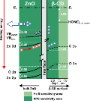
- ) compounds, and environmentally friendly alternatives are needed [2][7]. Control experiments in a recent work on encapsulating poorly water soluble organic corrosion inhibitors in the cyclic oligosaccharide β-cyclodextrin (β-CD) for incorporation into model polymer coatings on zinc led to the surprising


Bioinspired self-healing materials: lessons from nature
Beilstein J. Nanotechnol. 2018, 9, 907–935, doi:10.3762/bjnano.9.85

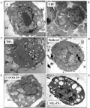
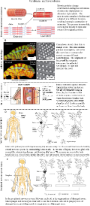
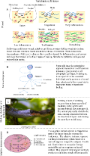
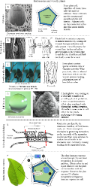
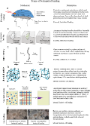
- were identified: reversible muscle control, clotting, cellular response, layering, protective surfaces, vascular networks or capsules, exposure, and replenishable functional coatings. Then the relationship between these mechanisms, nature’s best (evolutionary) methods of mitigating and healing damage
- avenues of insight and research into self-healing materials. Keywords: animals; biomimetics, bioinspired; capsules; functional coatings; healing mechanisms; plants; protective surfaces; self-healing; vascular systems; Review Introduction The ability to heal is intrinsic to all multicellular organisms
- functionality to their surfaces to accomplish complex tasks without the need for movement. These replenishable surface layers consist of combinations of hierarchical morphology and/or chemistry to create different wetting behaviors and are referred to as functional coatings. In the well-known case of the lotus








Comparative study of antibacterial properties of polystyrene films with TiOx and Cu nanoparticles fabricated using cluster beam technique
Beilstein J. Nanotechnol. 2018, 9, 861–869, doi:10.3762/bjnano.9.80

- Antibacterial coatings were prepared by deposition of Ti and Cu nanoparticles from cluster beams on polystyrene films followed by thermal annealing above the glass transition temperature. Ti clusters are oxidized in three different ways: by long-term exposure to ambient atmosphere, by plasma-enhanced oxidation
- agents does not require UV light but the use leads to gradual decrease of efficiency. On the other hand, these coatings would be cheaper and easier to apply. Comparison of bactericidal efficiency is found to be lower for our supported NPs compared to standard tests using NPs in solutions. Thus, more


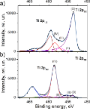


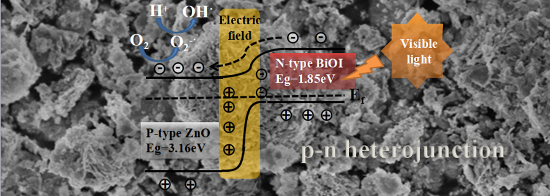
Facile synthesis of a ZnO–BiOI p–n nano-heterojunction with excellent visible-light photocatalytic activity
Beilstein J. Nanotechnol. 2018, 9, 789–800, doi:10.3762/bjnano.9.72
- (grant E2016203376). JQ would like to acknowledge the support from the Thai Government Budget (2017), Chulalongkorn University (GB_B_60_114_62_03), Ratchadapisek Sompoch Endowment Fund, Chulalongkorn University, granted to the Surface Coatings Technology for Metals and Materials Research Unit (GRU 60-001

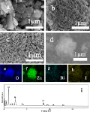


Cyclodextrin-assisted synthesis of tailored mesoporous silica nanoparticles
Beilstein J. Nanotechnol. 2018, 9, 693–703, doi:10.3762/bjnano.9.64

- /bjnano.9.64 Abstract Mesoporous silica nanoparticles (MSNs) have sparked considerable interest in drug/gene delivery, catalysis, adsorption, separation, sensing, antireflection coatings and bioimaging because of their tunable structural properties. The shape, size and pore structure of MSNs are greatly

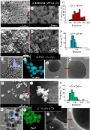


Tuning adhesion forces between functionalized gold colloidal nanoparticles and silicon AFM tips: role of ligands and capillary forces
Beilstein J. Nanotechnol. 2018, 9, 660–670, doi:10.3762/bjnano.9.61
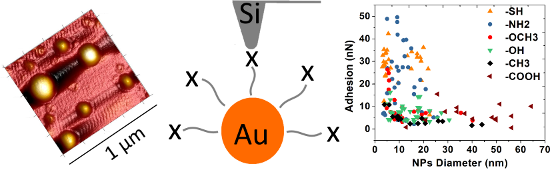
- might hinder formation of water meniscus and prevent capillary forces or H-bonding. Contrary to NPs with a hydrophilic coating, hydrophobic (–CH3) and partially hydrophobic (–OCH3) coatings display a different behavior. Figure 3 indicates that the presence of a hydrophobic interface significantly
- close packing of the molecules ensured by vdW interactions between chains plays an essential role in stabilizing thin molecular films or coatings. It is well known that molecules with short alkyl chains (n < 8, where n represents the number of carbon atoms groups along the chain skeleton of the molecules
- at 4 °C in a dark bottle. HAuCl4 was dispersed in water, reduced by NaBH4 and stabilized by C2H7NS (electrosteric stabilization) due to the thiol–Au bond. For a hydrophobic and partially hydrophobic coatings, a two-step functionalization method [49] based on a modified version of two common syntheses


Sensing behavior of flower-shaped MoS2 nanoflakes: case study with methanol and xylene
Beilstein J. Nanotechnol. 2018, 9, 608–615, doi:10.3762/bjnano.9.57

- . The substrates were immersed in acetone and isopropyl alcohol and sonicated for 15 min to remove any undesired surface ions. A 200 nm Pt film as a snake-shaped heater was sputtered on the back of the substrate using a sputter coater from Nanostructured Coatings Co. To fabricate the sensor device


Periodic structures on liquid-phase smectic A, nematic and isotropic free surfaces
Beilstein J. Nanotechnol. 2018, 9, 342–352, doi:10.3762/bjnano.9.34

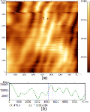
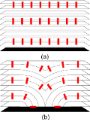
- applications, such as display quality technology and production enhancement. The free surface of liquid crystals is interesting by itself because many applications use one single boundary (e.g., coatings, paints, make-up) [3][4]. Appreciable progress in the development of tools for surface characterization










Nanoparticle delivery to metastatic breast cancer cells by nanoengineered mesenchymal stem cells
Beilstein J. Nanotechnol. 2018, 9, 321–332, doi:10.3762/bjnano.9.32
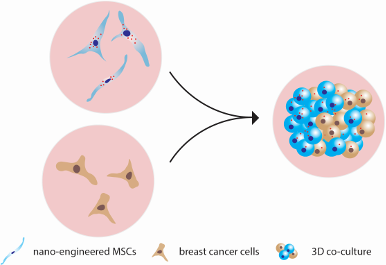
- ]. However, after 48 h, 72 h and 96 h propagation on polyHEMA coatings, CD90 expression was reduced to 92%, 81% and 88%, respectively (Figure 2C). Therefore, we chose 24 h as the optimal incubation time for 3D cell co-culture experiments to ensure the selectivity of the CD90 marker towards MSCs. Quantum dot
- signal stability in mesenchymal stem cell spheroids Next, we sought to determine the stability of the QD label in MSC spheroids. QD release was estimated in MSCs that were labelled with QDs in complete or serum-free medium in 2D culture and seeded on polyHEMA coatings to form spheroids. After 24 h, only
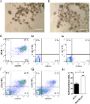
- fluorescence intensity. *p-value < 0.05, ***p-value < 0.001. The viability of mesenchymal stem cells (MSCs), MCF7 and MDA-MB-231 cells in spheroids. The viability of cells was analysed in 3D monocultures (A) and 3D co-cultures (B) after 24 h and 48 h of cultivation on polyHEMA coatings. *p-value < 0.05



Review: Electrostatically actuated nanobeam-based nanoelectromechanical switches – materials solutions and operational conditions
Beilstein J. Nanotechnol. 2018, 9, 271–300, doi:10.3762/bjnano.9.29
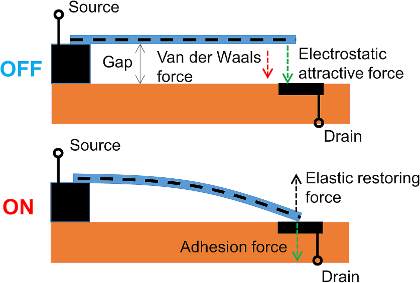
- tungsten target at room temperature has a Young’s modulus as high as 300 GPa, which is comparable to the widely used WNx protective coatings (300–390 GPa) [143]. 3T NEM switches were fabricated by a top-down approach using reactive ion sputtering over a SiO2 sacrificial layer, employing electron beam


Dopant-stimulated growth of GaN nanotube-like nanostructures on Si(111) by molecular beam epitaxy
Beilstein J. Nanotechnol. 2018, 9, 146–154, doi:10.3762/bjnano.9.17

- the field of photovoltaics. In case of silicon-based solar cells (SCs), reflection can be reduced from 30% (pure Si) down to 3% without deposition of multilayer antireflection coatings or involvement of complicated postgrowth techniques generally used for modification of the SC surface roughness [9





