Search results
Search for "evolution" in Full Text gives 705 result(s) in Beilstein Journal of Nanotechnology. Showing first 200.
Density of states in the presence of spin-dependent scattering in SF bilayers: a numerical and analytical approach
Beilstein J. Nanotechnol. 2022, 13, 1418–1431, doi:10.3762/bjnano.13.117

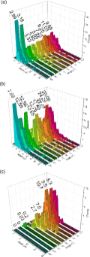
- discussed (see below) and finally, we present the analytical result and compare it with the numerically calculated DOS. Evolution of the DOS in SF bilayer It is instructive to discuss the key features of the DOS in an SF bilayer first. That is why, in this section, we briefly discuss the evolution of the
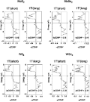
- particular, we can see the evolution of the DOS peaks. For h = 0, that is, for the case of an SN bilayer, we see the well-known DOS structure with the characteristic mini-gap at energies E < Δ (Figure 2a, black dotted line) [79]. This proximity-induced mini-gap originates from the effective backscattering of
- exceeds the superconducting gap h > Δ. Apparently, this peak arises from the evolution of the second spin-split peak due to a non-zero exchange field. The existence of such an effect offers a method of determining relatively small exchange field values in the F layer via DOS measurements [48][51][104]. In


Double-layer symmetric gratings with bound states in the continuum for dual-band high-Q optical sensing
Beilstein J. Nanotechnol. 2022, 13, 1408–1417, doi:10.3762/bjnano.13.116
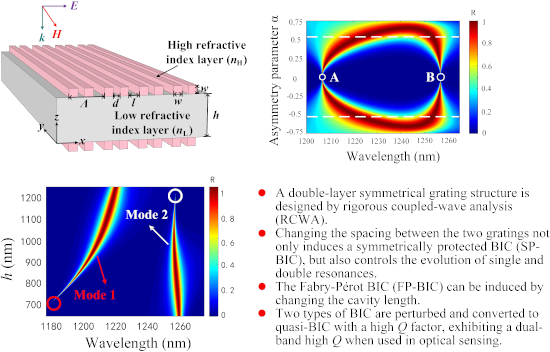
- mode. It can be seen from Figure 2 that the linewidth of the spectrum completely disappears when α = 0, which means that the Q-factor is infinite and the ideal BIC appears (points A and B). Furthermore, it is noticed that the evolution of the two modes is symmetric with respect to α = 0. Here, we take
- the Q-factor is lower at this time. Therefore, the evolution of single and double resonances can be controlled by changing the spacing of RDGs. Moreover, changing the grating spacing allows the emergence of BIC. The reflection spectra calculated using RCWA when α = 0.1, 0.35, 0.55, 0.75 are given in
- , the trend of mode 2 is exactly the opposite. Moreover, the ω values of the two modes are symmetrical at α = 0. An increase of α from 0 to 0.75 implies the evolution of the two resonances, and the ω values of the two modes overlap when α = 0.75, realizing the simple state of the mode. When α = 0, the


Dry under water: air retaining properties of large-scale elastomer foils covered with mushroom-shaped surface microstructures
Beilstein J. Nanotechnol. 2022, 13, 1370–1379, doi:10.3762/bjnano.13.113

- air lubrication; Salvinia effect; superhydrophobicity; Introduction Superhydrophobicity is one of the key innovations in the biological evolution of organisms for the conquest of land [1]. Recently it was shown that this fascinating surface property evolved already in the cyanobacterium Hassallia [2


Straight roads into nowhere – obvious and not-so-obvious biological models for ferrophobic surfaces
Beilstein J. Nanotechnol. 2022, 13, 1345–1360, doi:10.3762/bjnano.13.111
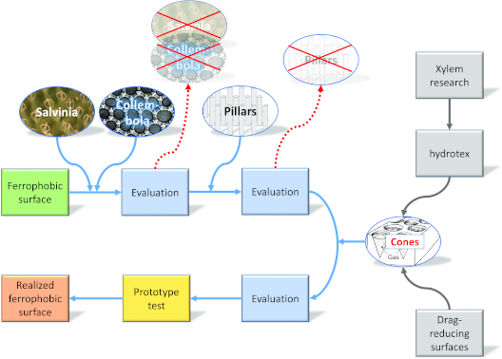
- biological models. The expectation to find technically useful functional systems in living nature is commonly explained with evolution, because selection would lead to “smart” and “efficient” structures [1]. A huge pool of high-performance structures, practically “ready to harvest” would, therefore, be


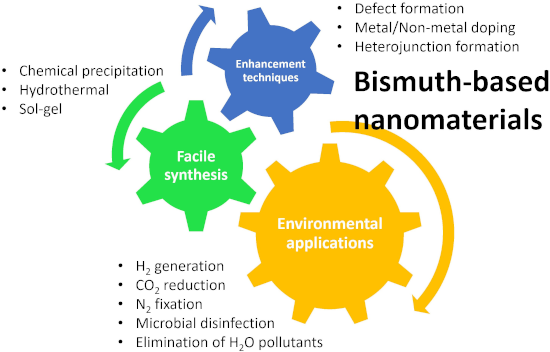
Recent trends in Bi-based nanomaterials: challenges, fabrication, enhancement techniques, and environmental applications
Beilstein J. Nanotechnol. 2022, 13, 1316–1336, doi:10.3762/bjnano.13.109
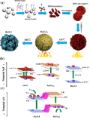
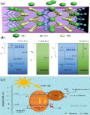
- expediting the detachment and mobility of photoinduced charges. This, in turn, increases the ability of holes and electrons to undergo oxidation and reduction, respectively. As a consequence of this, the ZnIn2S4/BiVO4 heterojunction has unusual photocatalytic activity. It has an H2 evolution rate much higher




Growing up in a rough world: scaling of frictional adhesion and morphology of the Tokay gecko (Gekko gecko)
Beilstein J. Nanotechnol. 2022, 13, 1292–1302, doi:10.3762/bjnano.13.107
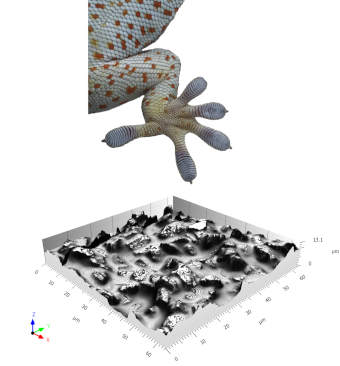
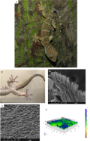
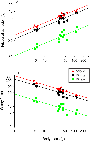
- Anthony J. Cobos Timothy E. Higham Department of Evolution, Ecology, and Organismal Biology, University of California, Riverside, CA 92521, USA 10.3762/bjnano.13.107 Abstract Many geckos have the remarkable ability to reversibly adhere to surfaces using a hierarchical system that includes both


Studies of probe tip materials by atomic force microscopy: a review
Beilstein J. Nanotechnol. 2022, 13, 1256–1267, doi:10.3762/bjnano.13.104
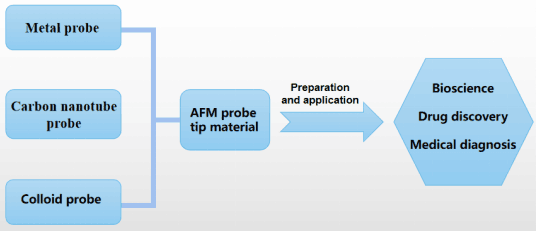
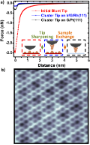
- shown to be removed one by one from the sample surface by tip indentation of the scanning tunneling microscope (STM). The probing of the interaction forces by AFM and thus the analysis of van der Waals (vdW) forces can provide valuable information on the evolution of the tip size. Carbon nanotube probes
Microneedle-based ocular drug delivery systems – recent advances and challenges
Beilstein J. Nanotechnol. 2022, 13, 1167–1184, doi:10.3762/bjnano.13.98

- ]. Due to the impressive evolution of new manufacturing techniques, it offers completely new opportunities to develop very sophisticated and precise drug delivery tools [5][6]. A large number of concepts and implemented projects, which is reflected in a large number of scientific papers, consistently


Influence of water contamination on the sputtering of silicon with low-energy argon ions investigated by molecular dynamics simulations
Beilstein J. Nanotechnol. 2022, 13, 986–1003, doi:10.3762/bjnano.13.86

- distribution. Both distributions are depicted in Figure 5, showing the evolution of the counts with respect to the number of bombardments (i.e., with increasing fluence). Furthermore, Figure 5 shows how 500 impacts modified bond length distributions: the counts related to amorphous bonds (between 2.6 and 3.2 Å
- . Description of the amorphization The two samples at several stages of the sputtering process are shown in Figure 6 to illustrate the evolution of the amorphization process. The penetration depth of argon atoms is limited to the first few lattices inside the silicon, for both the contaminated and clean samples
- through the channelling of some atoms can cause a few slabs to be in the semi-amorphous regime. Figure 7 shows the three regions in the sample, and Figure 8 represents the evolution of µ in the sample with respect to the depth of the slab as well as with respect to the angle, describing how the incidence




Interaction between honeybee mandibles and propolis
Beilstein J. Nanotechnol. 2022, 13, 958–974, doi:10.3762/bjnano.13.84

- Nature has solutions for many of the problems and challenges humans face, since different creatures have adapted to similar challenges during their evolution. A common problem category in technology is unwanted adhesion; whether it is cake sticking to the cake tray, smeared glasses, or industrial


Bioselectivity of silk protein-based materials and their bio-inspired applications
Beilstein J. Nanotechnol. 2022, 13, 902–921, doi:10.3762/bjnano.13.81

- stored as highly concentrated silk dope solutions in specialized glands and solidify in a spinning process often associated with shear forces accompanied by their folding into a single dominant secondary structure [112]. Due to both convergent evolution (i.e., silks have been “invented” independently


DNA aptamer selection and construction of an aptasensor based on graphene FETs for Zika virus NS1 protein detection
Beilstein J. Nanotechnol. 2022, 13, 873–881, doi:10.3762/bjnano.13.78
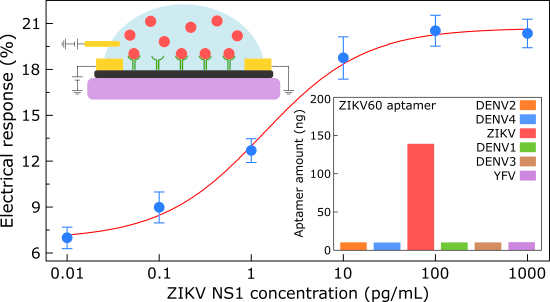
- mandatory. Acid nucleic aptamers are oligonucleotides that bind to a specific target molecule with high affinity and specificity. Because of their unique characteristics, aptamers are promising tools for biosensor development. Aptamers are usually obtained through a procedure called “systematic evolution of
- , high-affinity nucleic acid aptamers have been developed for a wide variety of targets, such as proteins, peptides, viruses, and bacteria [11][12]. Generally, nucleic acid aptamers are developed in vitro by a molecular evolution process based on iterative selection–amplification steps known as
- “systematic evolution of ligands by exponential enrichment” (SELEX), first introduced in 1990 [13]. This methodology includes the exposure of the target molecule to a chemically synthesized random-sequence library (1014–1015 sequences) to allow for the interaction of all binding oligonucleotides to the target



Self-assembly of C60 on a ZnTPP/Fe(001)–p(1 × 1)O substrate: observation of a quasi-freestanding C60 monolayer
Beilstein J. Nanotechnol. 2022, 13, 857–864, doi:10.3762/bjnano.13.76
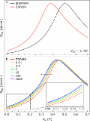
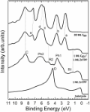
- been accounted for. In Figure 5b, the evolution of the work function for the different samples is presented. Starting from the bare substrate, the work function is reduced by about 0.3 eV after the deposition of 1 ML of ZnTPP, in agreement with previous measurements [42]. Such a decrease has been
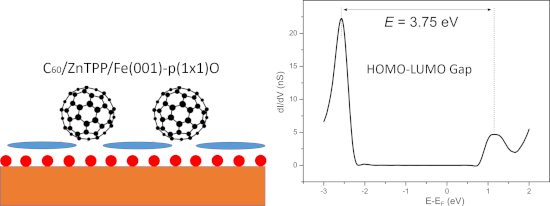
- “Ph2”) and from C60 (“a”–“e”) are labeled and their evolution is indicated with dotted lines. Scanning tunneling spectrum acquired at constant tip–surface separation (open feedback loop) on the C60/ZnTPP/Fe(001)–p(1 × 1)O system (black) and on the ZnTPP/Fe(001)–p(1 × 1)O surface (red). The black curves




Ultrafast signatures of magnetic inhomogeneity in Pd1−xFex (x ≤ 0.08) epitaxial thin films
Beilstein J. Nanotechnol. 2022, 13, 836–844, doi:10.3762/bjnano.13.74
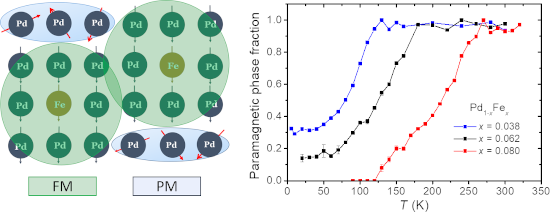
- magnetic inhomogeneities in thin films. Individual constituents can be characterized by specific relaxation components that can be used to detect magnetic inhomogeneities and track their evolution. In addition, the peculiarities of the magnetization dynamics in magnetically inhomogeneous systems themselves
- their dependences at T = TC for the films with x = 0.038 and 0.062. The evolution of this component is not so obvious for the film with x = 0.080: The kink in its temperature dependence and the onset of its suppression take place at a temperature slightly above TC. Below TC, all three samples reveal a
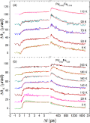
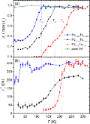
- links in magnetic Josephson junctions and superconducting memory elements based on spin valves. Temperature evolutions of the reflectivity transients of Pd1−xFex alloy thin epitaxial films for compositions with x = 0 (a), 0.038 (b), 0.062 (c), and 0.080 (d). Temperature evolution of the time-resolved


Hierachical epicuticular wax coverage on leaves of Deschampsia antarctica as a possible adaptation to severe environmental conditions
Beilstein J. Nanotechnol. 2022, 13, 807–816, doi:10.3762/bjnano.13.71
- reduction, or holding air layers at a surface, have been described and their biomimetic applications have been discussed. Phylogenetic trees indicate that superhydrophobicity evolved as a consequence of the conquest of land about 450 million years ago and may be a key innovation in the evolution of




Nanoarchitectonics of the cathode to improve the reversibility of Li–O2 batteries
Beilstein J. Nanotechnol. 2022, 13, 689–698, doi:10.3762/bjnano.13.61
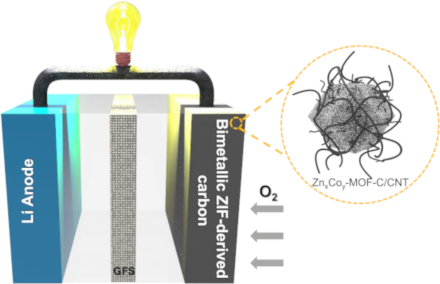
- from the metallic Li anode, leading to the formation of Li2O2 as the final discharge product. During the subsequent charge, Li2O2 can be reversibly decomposed to Li+ and O2 by the oxygen evolution reaction (OER) [3][4][5][6]. Considering these reaction mechanisms of LOBs, the cathode should have a


A superconducting adiabatic neuron in a quantum regime
Beilstein J. Nanotechnol. 2022, 13, 653–665, doi:10.3762/bjnano.13.57

- with extremely small energy dissipation [42][43][44][45]. We especially note the demonstrated possibility of the adiabatic evolution of the state for a neuron in a multilayer perceptron with Josephson junctions without resistive shunting [46]. It is precisely such a heterostructure without resistive
- the rest of the level structure. This resembles the formation of the flux qubit spectrum [47]. Results and Discussion Dynamics of the quantum neuron without dissipation The dynamics (evolution of the states of the system, Ψ(t)) of the quantum neuron (Equation 5) is associated with the nonlinear
- transformation of the input magnetic flux (Equation 2). We describe it using the time-dependent Schrödinger equation: Eigenvectors of the system are found by numerical solution of Equation 7 (see details in Appendix 2). Thereafter, from the evolution of average values of the phase and current operators we found


Sodium doping in brookite TiO2 enhances its photocatalytic activity
Beilstein J. Nanotechnol. 2022, 13, 599–609, doi:10.3762/bjnano.13.52
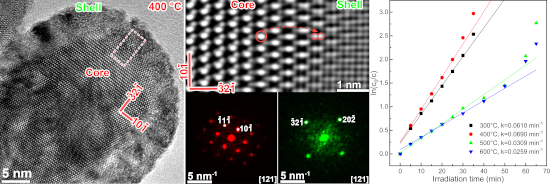
- characterization To inspect the structure evolution of the titanium dioxide with the calcinating temperature, the as-prepared products were examined by an X-ray diffractometer (Bruker D8 Advance) using Cu Kα radiation (λ = 1.5406 Å). The Rietveld refinement of patterns was performed in the GSAS-II software [35


Revealing local structural properties of an atomically thin MoSe2 surface using optical microscopy
Beilstein J. Nanotechnol. 2022, 13, 572–581, doi:10.3762/bjnano.13.49

- of face-on lying CuPc and the MoSe2 flake is the most efficient. With increasing film thickness, we assume that the CuPc molecular orientation varies, such as adopting a tilt angle with respect to the sample surface. The evolution of molecular orientation was observed in a FePc thin film that was


Investigation of electron-induced cross-linking of self-assembled monolayers by scanning tunneling microscopy
Beilstein J. Nanotechnol. 2022, 13, 462–471, doi:10.3762/bjnano.13.39
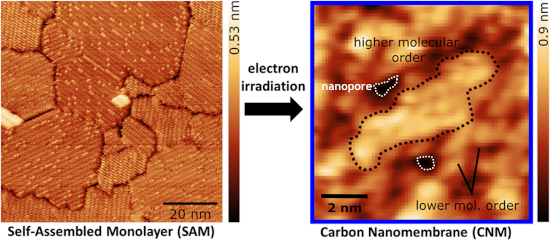
- Abstract Ultrathin membranes with subnanometer pores enabling molecular size-selective separation were generated on surfaces via electron-induced cross-linking of self-assembled monolayers (SAMs). The evolution of p-terphenylthiol (TPT) SAMs on Au(111) surfaces into cross-linked monolayers was observed
- the effective cross-sections of a complete cross-linking of 4'-nitro-1,1'-biphenyl-4-thiol SAMs [56]. These studies provided valuable insights into the chemical transformations associated with cross-linking. However, direct imaging on the atomic scale to visualize the evolution of irradiation-induced
- values determined by STM are smaller than the areal density of ≈7 × 10¹⁷ m−2 and the pore diameter of 0.7 ± 0.1 nm determined using AFM [36]. This is mainly due to different imaging mechanisms and different threshold definitions used for pore determination. Finally, the evolution of electron-induced


Controllable two- and three-state magnetization switching in single-layer epitaxial Pd1−xFex films and an epitaxial Pd0.92Fe0.08/Ag/Pd0.96Fe0.04 heterostructure
Beilstein J. Nanotechnol. 2022, 13, 334–343, doi:10.3762/bjnano.13.28

- . Figure 7b shows the time evolution of the reduced moment depending on the history of the evolution of the applied magnetic field (inset to Figure 7b). The system was brought to point B (OG state) by sweeping the magnetic field in the following order: 50 Oe → −5 Oe → 0 Oe; to point C (mixed AP+OG state


Effects of drug concentration and PLGA addition on the properties of electrospun ampicillin trihydrate-loaded PLA nanofibers
Beilstein J. Nanotechnol. 2022, 13, 245–254, doi:10.3762/bjnano.13.19

- ). After evaporation of DCM, the volume of each solution was completed to 10 mL with buffer and the amount of ampicillin trihydrate was analyzed using a UV spectrophotometer (Thermo Scientific Evolution 201). The encapsulation efficiency of the nanofibers was calculated using the following equation



Relationship between corrosion and nanoscale friction on a metallic glass
Beilstein J. Nanotechnol. 2022, 13, 236–244, doi:10.3762/bjnano.13.18

- corrosion on nanoscale friction. The evolution of friction upon repeated scanning cycles on the corroded surfaces reveals a bilayer surface oxide film, of which the outer layer is removed by the scanning tip. The measurement of friction and adhesion allows one to compare the physicochemical processes of
- processes on a metallic glass upon immersion in corrosive solutions. Friction coefficients indicate the development of the passivated inner layer of the surface and the growth of a precipitated and displaceable outer layer. Adhesion indicates the accumulation of charge at their interface. The evolution of


Impact of device design on the electronic and optoelectronic properties of integrated Ru-terpyridine complexes
Beilstein J. Nanotechnol. 2022, 13, 219–229, doi:10.3762/bjnano.13.16

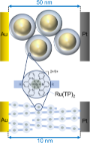
- time evolution of the current measured for Ru(TP)2 nanowire devices shows very short pulses corresponding to the light switching event. The time constant of these spike-like features could not be resolved in our measurement apparatus. However, they appear also in empty nanogap devices and are


Theoretical understanding of electronic and mechanical properties of 1T′ transition metal dichalcogenide crystals
Beilstein J. Nanotechnol. 2022, 13, 160–171, doi:10.3762/bjnano.13.11

- . For instance, the 1T′ WSe2 nanosheets exhibit metallic nature demonstrated by an enhanced electrostatic activity for hydrogen evolution reaction (HER) as compared to other nanosheets [9]. In addition, 1T′ WSe2 nanosheets can be produced in high yield and in a reproducible and controlled manner, which
- Figure 2. Because of the low symmetry, the atoms may have slightly different pDOS images. To this end, the sum of the d states and p states of all TM and X atoms are shown, respectively, to illustrate the overall properties. It can be found that all 1T′ TMDs are metallic while the evolution at Fermi