
Search results
Search for "CVD" in Full Text gives 215 result(s) in Beilstein Journal of Nanotechnology. Showing first 200.
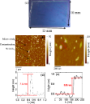
Photodetectors based on carbon nanotubes deposited by using a spray technique on semi-insulating gallium arsenide
Beilstein J. Nanotechnol. 2014, 5, 1999–2006, doi:10.3762/bjnano.5.208
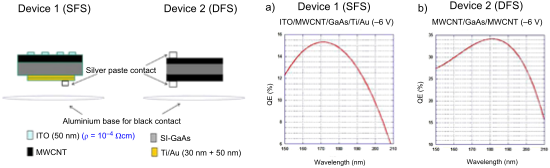
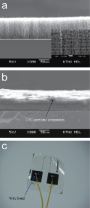
- the chemical, mechanical and electrical properties make CNTs also suitable to fabricate a wide range of radiation detectors for space applications, high energy physics and medical instrumentation [7][8][9]. The common technique obtain CNT films is chemical vapour deposition (CVD), but some deposition
- comparable with those obtained for similar detectors with CNTs deposited by CVD [7][13][14][15]. In this work results from a photodetector based on CNTs spray-deposited on semi-insulating gallium arsenide (SI GaAs) are reported. In order to perform the morphological characterization of the resulting films


Cathode lens spectromicroscopy: methodology and applications
Beilstein J. Nanotechnol. 2014, 5, 1873–1886, doi:10.3762/bjnano.5.198

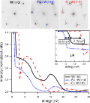
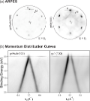
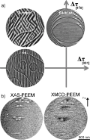
- vapor deposition (CVD) technique. CVD utilizes transition metal catalysts as a means to promote the dissociative adsorption of gases such as ethylene or methane, which can readily deliver the carbon atoms required for island nucleation and growth. LEEM is widely employed to image the growth process; the



Carbon-based smart nanomaterials in biomedicine and neuroengineering
Beilstein J. Nanotechnol. 2014, 5, 1849–1863, doi:10.3762/bjnano.5.196
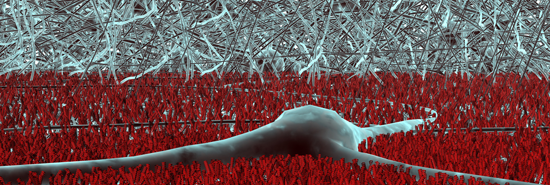
- made of one (i.e., single-walled CNTs, SWCNTs) or several (i.e., multi-walled CNTs, MWCNTs) layers of graphene. They are obtained by a variety of methods, including chemical vapour deposition (CVD) and arc-discharge, and their electronic properties depend solely on geometric parameters, such as
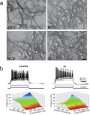
- tested it to record the extracellular activity of ganglion cells in rabbit retinas as a potentially important step for retinal prostheses. Shein et al. [113] cultured neurons on specifically designed microelectrode arrays in which CNTs had been deposited by CVD on TiN leads, and reported a direct


Silicon and germanium nanocrystals: properties and characterization
Beilstein J. Nanotechnol. 2014, 5, 1787–1794, doi:10.3762/bjnano.5.189
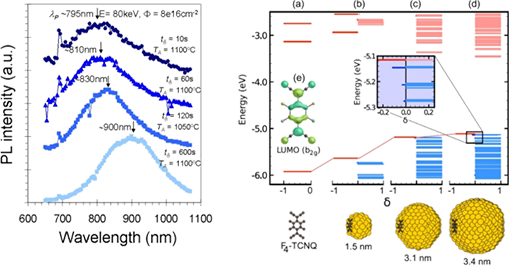
- possible to produce and to control the space-/size-distribution and ordering of NCs. Both benefits and shortcomes of these techniques will be pointed out along the text. It should be noted that other important and wide-spread techniques are also used for the growth of Si and Ge NCs, namely PECVD (CVD) and


Growth and structural discrimination of cortical neurons on randomly oriented and vertically aligned dense carbon nanotube networks
Beilstein J. Nanotechnol. 2014, 5, 1575–1579, doi:10.3762/bjnano.5.169
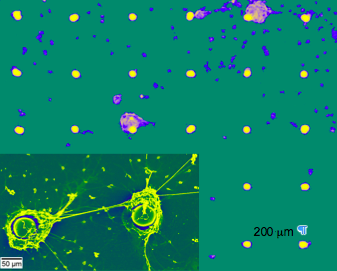
- islands of vertically aligned up to 500 µm in length CNT structures. For the fabrication of both types of CNTs a water-assisted catalytically driven chemical vapour deposition (CVD) growth process was employed [23]. Two different morphologies of CNT arrays were grown depending on the CVD conditions
- ) together with a controlled amount of water vapour was introduced into the CVD reactor by streaming a small amount of carrier gas through a water bubbler (150–200 ppm by dew point sensor measurement). Randomly oriented CNT islands were synthesised on silicon substrates covered with a thin (100 nm) layer of
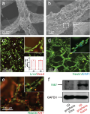
- parallel experiments by modifying size and shape of the CVD grown micro-structured vertically aligned CNT. Neurons are indeed strongly attracted by the micro-shape and especially by the sidewalls of the aligned nanotubes arrangements (see Supporting Information File 1 for details). With the very recently


Review of nanostructured devices for thermoelectric applications
Beilstein J. Nanotechnol. 2014, 5, 1268–1284, doi:10.3762/bjnano.5.141
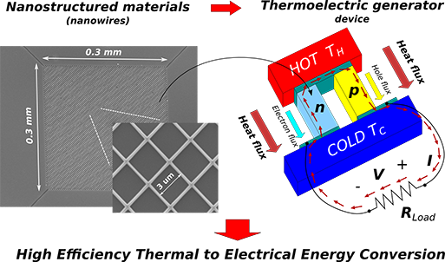
- approaches are based on the crystalline growth of nanowires by means of chemical vapour deposition (CVD) techniques. The most common CVD technique for the fabrication of silicon nanowires is the vapor–liquid–solid (VLS) growth [74][75], developed in particular by the group of Lieber at Harvard [76][77][78
- nanowhiskers grow perpendicularly to the substrate. Exploiting the VLS-CVD technique, silicon nanowires have been grown between small suspended silicon masses, fabricated by micromachining techniques applied to silicon-on-insulator (SOI) substrates [86][87]. The silicon masses are maintained at different


Sublattice asymmetry of impurity doping in graphene: A review
Beilstein J. Nanotechnol. 2014, 5, 1210–1217, doi:10.3762/bjnano.5.133

- methods and techniques to achieve this have been developed to include chemical vapour deposition (CVD), using NH3 as a precursor, arc discharge [23], embedded nitrogen and carbon sources within a metal substrate [24], ion implantation [25][26], ammonia [27] or nitrogen plasma [28][29] treatments, and
- capable of achieving nitrogen dopant concentrations of up to around 10% [30] and with direct applicablity to GFET technology and bio-sensing [28]. Although CVD is one of the more challenging methods, it seems the most reliable option and yields the best quality nitrogen doped graphene sheets [31] and
- single continuous sheets can be synthesised on the centimeter scale [32]. Using nitrogen dopants alone through CVD can yield bandgaps up to 200 meV [33] and by inclusion of boron co-dopants, through a tailored growth process, this can be expanded to around 600 meV with 6% total dopant concentration [12


Fringe structures and tunable bandgap width of 2D boron nitride nanosheets
Beilstein J. Nanotechnol. 2014, 5, 1186–1192, doi:10.3762/bjnano.5.130

- either chemical-solution-derived method or a chemical vapor deposition (CVD) process. Many excellent results have been reported [6][7][8][9]. Systematic and comprehensive reviews of two-dimensional (2D) boron nitride nanostructures: nanosheets, nanoribbons, nanomeshes, and hybrids with graphene have been


Electron-beam induced deposition and autocatalytic decomposition of Co(CO)3NO
Beilstein J. Nanotechnol. 2014, 5, 1175–1185, doi:10.3762/bjnano.5.129
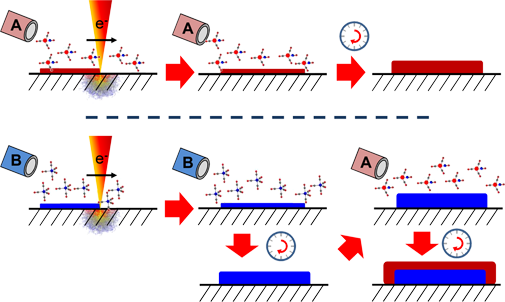
- and film growth, i.e., chemical vapor deposition (CVD) [24]. For Co(CO)3NO, EBID was found up to about 393 K, followed by seeded growth up to about 403 K and spontaneous decomposition at higher temperatures. In the EBID regime, increasing the temperature from 293 to 323 K lowered the carbon content by




Organic and inorganic–organic thin film structures by molecular layer deposition: A review
Beilstein J. Nanotechnol. 2014, 5, 1104–1136, doi:10.3762/bjnano.5.123
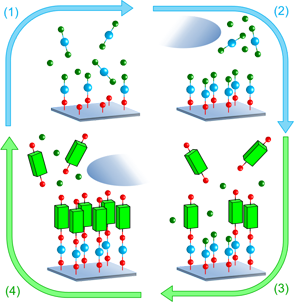
- somewhat higher than what the predicted unit-chain length, 17.4 Å, would suggest: This higher than predicted growth rate was attributed to a CVD-type growth. Kubono et al. [6] deposited nylon 79 from heptane-1,7-diamine and nonanedioyl dichloride at room temperature. The GPC value achieved, 18 Å per cycle
- speculated that the difference in their GPC values when compared to those reported by Gong et al. [38] could be due to CVD-type growth regime at lower deposition temperatures and with short purging times. Gong et al. [38] observed that the TMA+GLY films were relatively stable in ambient air: A 168 hour




Growth and characterization of CNT–TiO2 heterostructures
Beilstein J. Nanotechnol. 2014, 5, 946–955, doi:10.3762/bjnano.5.108
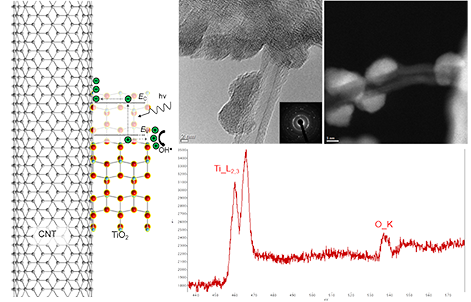
- photocatalytic performance than the chemical bond between CNTs and TiO2, since the arc-discharge-synthesized CNTs show a dramatically higher photocatalytic dye degradation rate than the CVD-synthesized CNTs, which is attributed to the smaller number of defects in the multi-wall (MW) tubes of the former. In
- can be found in the review by Leary [19]. Recently, we have adopted the atomic layer deposition (ALD) technique to deposit TiO2 on CVD-grown MW-CNTs. ALD relies on self-limiting surface reactions (dissociative chemisorption) of gases which are alternately introduced into and purged out of the reaction


Gas sensing with gold-decorated vertically aligned carbon nanotubes
Beilstein J. Nanotechnol. 2014, 5, 910–918, doi:10.3762/bjnano.5.104
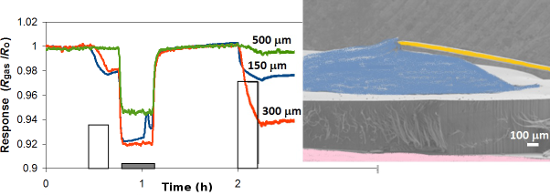
- , regardless of the nanotube length. Keywords: alignment; carbon nanotubes; decoration; gas sensors; metal nanoparticles; thermal CVD; Introduction The interest in gas sensing for reaching a widespread, continuous pollution detection and control has been growing steadily in the last decades due to the
- 10 ppb of nitrogen dioxide is possible at room temperature, the sensor does not recover its baseline resistance when cleaning in dry air at such low temperature [8]. Ueda et al. using VA-CNTs synthesized by thermal CVD as sensing active layer showed that variation in the conductivity was proportional
- CVD reactor using C2H4 as carbon source. Si wafers with native SiO2 were used as substrates. Al2O3 (30 nm) were used as buffer layer on wafer pieces and Fe (6 nm) used as active catalyst. The multilayer system composed of Si/native SiO2/Al2O3/Fe will be called from now the catalyst. The Al2O3 and Fe


A catechol biosensor based on electrospun carbon nanofibers
Beilstein J. Nanotechnol. 2014, 5, 346–354, doi:10.3762/bjnano.5.39
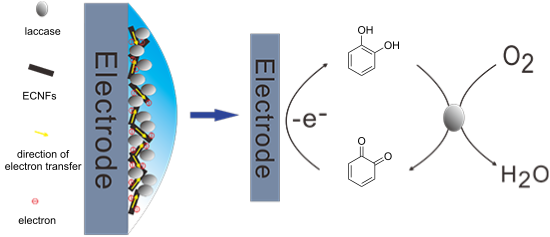
- development, various methods used for CNFs preparation are established, such as arc-discharge [21], laser ablation [22], chemical vapor deposition (CVD) methods [23]. Electrospinning, which is known as a facile and convenient process, can produce nanofibers or microfibers with different diameters while using


Tensile properties of a boron/nitrogen-doped carbon nanotube–graphene hybrid structure
Beilstein J. Nanotechnol. 2014, 5, 329–336, doi:10.3762/bjnano.5.37
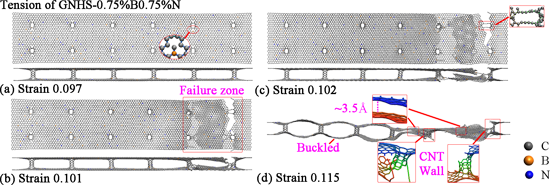
- in the fields of mechanics, photology, electronics and bio-sensing [1][2]. Through the chemical vapor deposition (CVD) method, a graphene–nanotube hybrid structure (GNHS) has been synthesized recently [3][4][5], which evidently demonstrates an improved performance for the application as field


Effect of contaminations and surface preparation on the work function of single layer MoS2
Beilstein J. Nanotechnol. 2014, 5, 291–297, doi:10.3762/bjnano.5.32

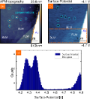
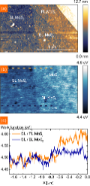
- properties like a mechanical stiffness of 180 ± 60 N·m−1, which is comparable to steel [10][11], charge carrier mobilities that are comparable to Si [12][13], and it is possible to grow these ultrathin layers using CVD [14][15][16]. The main advantage SLM has to offer compared to the model 2D-material



Modeling and optimization of atomic layer deposition processes on vertically aligned carbon nanotubes
Beilstein J. Nanotechnol. 2014, 5, 234–244, doi:10.3762/bjnano.5.25

- functionalization [19][20][21][22][23][24]. In practice, however, chemical vapor deposition (CVD) grown CNTs are prone to a sufficient density of surface defect sites to allow for the nucleation of the ceramic at discrete points along the surface of the CNT. The ceramic then grows from these nucleation sites until
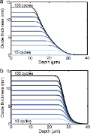
- conformal coating of CVD-grown CNTs. Second, the vertically aligned nature of the CNT arrays presents a challenge for conformal coatings of uniform thickness. The penetration of the deposited oxide into the VACNTs is often limited as illustrated in Figure 1. Under the pressure and temperature conditions of
- dioxide and aluminum oxide. To synthesize our VACNTs, a 3-nm-thick catalyst layer of iron on top of a 20-nm-thick layer of aluminum is deposited through electron beam evaporation onto a silicon wafer. The VACNTs are then grown by chemical vapor deposition in a cold-wall CVD system. The catalyst-covered



En route to controlled catalytic CVD synthesis of densely packed and vertically aligned nitrogen-doped carbon nanotube arrays
Beilstein J. Nanotechnol. 2014, 5, 219–233, doi:10.3762/bjnano.5.24

- Cambridge, 27 Charles Babbage Road, Cambridge CB3 0FS, United Kingdom Imperial College London, Department of Chemistry, London SW7 2AZ, United Kingdom 10.3762/bjnano.5.24 Abstract The catalytic chemical vapour deposition (c-CVD) technique was applied in the synthesis of vertically aligned arrays of
- fuel cells [23] or paracetamol sensors [24]. Nitrogen atoms can be incorporated into the CNT lattice trough either in situ or post-treatment strategies [25]. The former techniques are dominant and comprise primarily catalytic chemical vapour deposition (c-CVD) and its variations, which include bias or
- of the nanotubes growth in c-CVD process [48][49][50][51]. Here, we track how the parameters of a c-CVD synthesis, which employs pyrazine (Pz) as the precursor of nitrogen-based compounds, affect growth and properties of N-CNTs on the macro-, nano- and atomic scales. The growth kinetics, the


Cyclic photochemical re-growth of gold nanoparticles: Overcoming the mask-erosion limit during reactive ion etching on the nanoscale
Beilstein J. Nanotechnol. 2013, 4, 886–894, doi:10.3762/bjnano.4.100

- were prepared on top of the previously fabricated Au NP by chemical vapor deposition (CVD) rather than immersion of the silica substrates into OTMS solutions. Like immersion the much faster CVD method results in selective reactions of the methoxysilane functional groups with the silanol groups of the
- , the Au NP prepared by BCML on silica are stabilized by CVD-coating the substrate with OMTS. The success of this coating can be easily tested by contact angle measurements: The hydrophilic silica substrate changes its starting angle from almost zero to 104° due to the hydrophobic OTMS coating. The
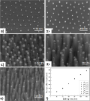
- , an OTMS layer is deposited by CVD first. This layer selectively forms chemical bonds to the silica substrate while leaving the Au NP uncovered. HRSEM images of (a) as prepared Au NP on silica (average diameter 12 nm), (b) Au NP after the second electroless size-enhancement cycle (average diameter 40


Synthesis of boron nitride nanotubes from unprocessed colemanite
Beilstein J. Nanotechnol. 2013, 4, 843–851, doi:10.3762/bjnano.4.95

- BNNTs are more toxic than CNTs [13]. The first BNNTs were synthesized by Chopra et al. with the arc-discharge method [14]. Later, the use of chemical vapor deposition (CVD), laser ablation, ball milling, a template-assisted process, and displacement reactions were reported for the synthesis [15][16][17
- is applied to remove the remaining C atoms from the tube structure [18]. However, removal of C atoms from the structure is not easy and the obtained product is mostly carbon doped BNNTs. CVD is another commonly used method to synthesize BNNTs [19][20][21][22]. The CVD method can be used with or
- without ball milling technique [19][20]. For instance, Yu et al. first milled amorphous boron with NH3, then completed the synthesis by using the CVD method at 1200 °C for 8 hours without the utilization of a catalyst. Zhong et al. obtained BNNTs by using ammonium boron powders and ferrocene with the CVD


Ellipsometry and XPS comparative studies of thermal and plasma enhanced atomic layer deposited Al2O3-films
Beilstein J. Nanotechnol. 2013, 4, 732–742, doi:10.3762/bjnano.4.83

- vapour deposition (CVD) like reactions due to remaining TMA precursor within the reactor caused by not optimal purge times as well as a radial non-uniformity of the plasma species are believed to be responsible for the thickness non-uniformity in the PE-ALD process [1]. Growth rate and refractive index
- incorporation of aluminum atoms into the layers due to a higher surface density of hydroxyl groups as the dominant adsorption sites for TMA [18]. At higher temperatures thermally activated dehydroxylation reactions occur and the GPC decreases [1]. In addition the CVD parasitic reactions mentioned above may lead


A nano-graphite cold cathode for an energy-efficient cathodoluminescent light source
Beilstein J. Nanotechnol. 2013, 4, 493–500, doi:10.3762/bjnano.4.58
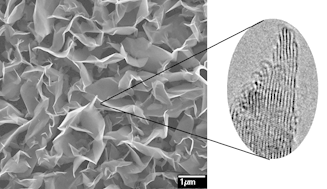
- (CVD) [13][14]. Scanning electron microscopy (SEM) demonstrates that this type of film material consists of tiny graphite flakes (see Figure 3). Transparency of these flakes for secondary electrons in the SEM observations indicates that their thickness is just a few nanometers (see Figure 3B). High
- lamps were manufactured by using cold nano-graphite cathodes. NGF films produced by plasma enhanced CVD consist of a mesoporous graphite flaky material. Each flake is a well ordered graphite crystallite of nanometer thickness, composed of graphene atomic layers, oriented predominantly in the direction
- obtained by chemical vapor deposition (CVD) from a hydrogen/methane gas mixture activated by a direct current discharge. The details of the used home-made CVD system and the corresponding process are described in [13][14]. For the cathode production pieces of Ni wire with 1 mm diameter were placed in a CVD


Ferromagnetic behaviour of Fe-doped ZnO nanograined films
Beilstein J. Nanotechnol. 2013, 4, 361–369, doi:10.3762/bjnano.4.42

- between one finds the third group of the data, namely obtained for the samples produced by chemical vapour deposition (CVD), solution combustion or wet chemistry methods. They have intermediate properties and can be either paramagnetic or FM [56][57][58][59][60][61][62][63][64][65][66]. We used different
- ][52][54][55][58][64] or nanopowders [24][29][32][41][42][46][53][56][59][65][66], or for films obtained by sol–gel method, pyrolysis, CVD or PLD [22][23][25][27][28][45]. If the samples mentioned in the analysed papers were not poreless, such as in the partly sintered powders (open and filled diamonds


Grating-assisted coupling to nanophotonic circuits in microcrystalline diamond thin films
Beilstein J. Nanotechnol. 2013, 4, 300–305, doi:10.3762/bjnano.4.33

- Materials, Tullastr. 72, 79108 Freiburg, Germany 10.3762/bjnano.4.33 Abstract Synthetic diamond films can be prepared on a waferscale by using chemical vapour deposition (CVD) on suitable substrates such as silicon or silicon dioxide. While such films find a wealth of applications in thermal management, in
- X-ray and terahertz window design, and in gyrotron tubes and microwave transmission lines, their use for nanoscale optical components remains largely unexplored. Here we demonstrate that CVD diamond provides a high-quality template for realizing nanophotonic integrated optical circuits. Using
- suffer from free-carrier-based absorption effects or instabilities. While waveguiding at visible wavelengths is of importance for applications in biological sensing and spectroscopy, materials that also provide transparency in the long-wavelength range are equally sought after. In this respect CVD


Micro- and nanoscale electrical characterization of large-area graphene transferred to functional substrates
Beilstein J. Nanotechnol. 2013, 4, 234–242, doi:10.3762/bjnano.4.24
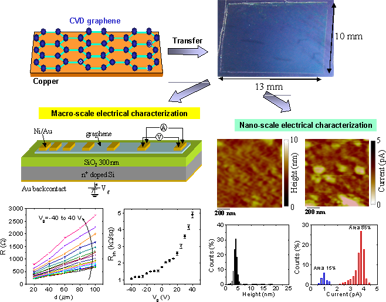
- Department of Electronic Engineering, University of Catania, Viale A. Doria 6, 95125 Catania, Italy Department of Chemistry, University of Catania, Catania, Italy STMicroelectronics, Stradale Primosole, 50, 95121, Catania, Italy 10.3762/bjnano.4.24 Abstract Chemical vapour deposition (CVD) on catalytic
- properties of the graphene membrane. In this paper, we investigated the morphological and electrical properties of CVD graphene transferred onto SiO2 and on a polymeric substrate (poly(ethylene-2,6-naphthalene dicarboxylate), briefly PEN), suitable for microelectronics and flexible electronics applications
- chemical vapour deposition (CVD) on catalytic metals [9], are more suitable for large-area applications, as has been demonstrated in the past few years. Considering the case of CVD, the two main catalytic metals used for graphene growth are nickel and copper [16]. In the case of CVD growth on copper foils



Functionalization of vertically aligned carbon nanotubes
Beilstein J. Nanotechnol. 2013, 4, 129–152, doi:10.3762/bjnano.4.14
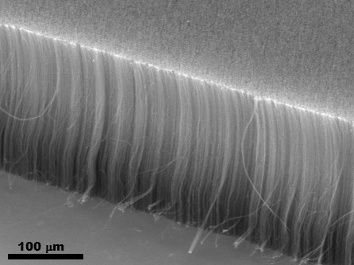
- aligned CNTs from acetylene chemical vapor deposition (CVD) catalyzed by iron nanoparticles embedded in mesoporous silica. In that work, the growth direction of not very straight, entangled-CNTs was related to the direction of the pores in the silica substrate, being perpendicular to the substrate surface
- if the pores were vertical. Later, in 1998, the synthesis of very straight, aligned multiwalled CNTs on nickel-coated glass at temperatures as low as 666 °C was obtained by Ren et al. [24] using plasma-enhanced hot-filament chemical vapor deposition (PE-HF-CVD). Reported in 1999 by Fan et al. [25], a
- key achievement was the engineering of vertically oriented CNT-arrays by using CVD of ethylene, size-controlled Fe catalytic particles, and nanotube positioning by substrate patterning. The mechanism of the alignment of the CNTs was proposed to be due to the van der Waals forces where the outer wall