Search results
Search for "dynamics" in Full Text gives 567 result(s) in Beilstein Journal of Nanotechnology. Showing first 200.
Nanomechanics of few-layer materials: do individual layers slide upon folding?
Beilstein J. Nanotechnol. 2020, 11, 1801–1808, doi:10.3762/bjnano.11.162

- methods; atomic force microscopy (AFM); molecular dynamics (MD); Raman spectroscopy; nanostructured materials; Introduction Layered materials such as graphite, talc, and transition metal dichalcogenides (TMDs), held together by strong covalent bonds within layers and relatively weak van der Waals
- been obtained through radial deformations [32], lattice dynamics studies [33], deformations of suspended layers [2][6], and bubble profiles [12]. The values reported for the bending stiffness of a graphene monolayer vary from 0.8 to 10,000 eV [34]. Also, there is no consensus on how κ varies with the
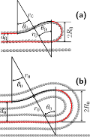
- folded 2D material. In principle, the model describes any 2D material, and its predictions are corroborated by comparison with classical molecular dynamics simulations and to results of previous investigations on graphene and talc. Because folds naturally occur in flakes of varying thickness

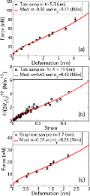
![[Graphic 5]](/bjnano/content/inline/2190-4286-11-162-i8.svg?max-width=637&scale=1.18182) =
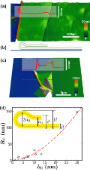
= ![[Graphic 6]](/bjnano/content/inline/2190-4286-11-162-i9.svg?max-width=637&scale=1.18182) as a function of 1/h for the nine measured talc samples. h is a directly measured ...
as a function of 1/h for the nine measured talc samples. h is a directly measured ...
Molecular dynamics modeling of the influence forming process parameters on the structure and morphology of a superconducting spin valve
Beilstein J. Nanotechnol. 2020, 11, 1776–1788, doi:10.3762/bjnano.11.160
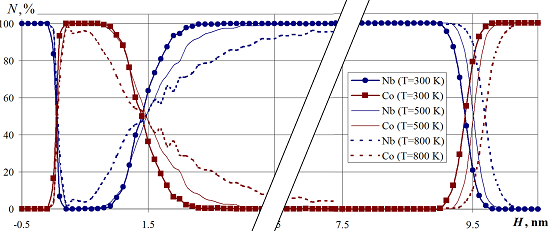
- molecular dynamics method using the many-particle potential of the modified embedded-atom method. In the calculation process the temperature was controlled using the Nose–Hoover thermostat. The simulation of the atomic nanolayer formation was performed by alternating the directional deposition of different
- atomic structures depending on the main parameters of the deposition process. Keywords: hybrid nanostructure; mathematical modeling; modified embedded-atom method; molecular dynamics; spintronics; spin valve; vacuum deposition; Introduction Multilayer superconductor/ferromagnetic (S/F) hybrid
- spintronics applications were studied by the molecular dynamics method [33][34]. Molecular dynamics describes the motion of each nanosystem atom at a certain point in time, therefore, it is possible to reproduce the detailed evolution of nanoelements and their properties. The basis of the method is the


Selective detection of complex gas mixtures using point contacts: concept, method and tools
Beilstein J. Nanotechnol. 2020, 11, 1631–1643, doi:10.3762/bjnano.11.146
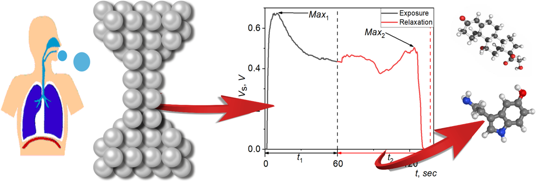
- finding the complete composition of the breath, the concentration of its components, and the temporal dynamics of the changes in breath composition. In the case of a medium with more than 2000 components, this is a difficult task even for the most modern sensor devices. This problem is solved by using
- the sensing element. A condensate film formed on the gas-sensing surface switches on the autonomous power supply of the sensing element, enabling the observation and measurement of the dynamics of resistance variation during the exposure and relaxation periods. This is due to the fact that, in the
- prospects are opening for more detailed studies regarding the dynamics of the emotional states when various factors simultaneously affect the state of the organism, and our preliminary investigation confirms that. Due to the instability of the hormonal molecules, the validity of the conclusions and medical


![[Graphic 4]](/bjnano/content/inline/2190-4286-11-146-i8.svg?max-width=637&scale=1.18182) in th...
in th...

![[Graphic 7]](/bjnano/content/inline/2190-4286-11-146-i11.svg?max-width=637&scale=1.18182) in the...
in the...
Design of V-shaped cantilevers for enhanced multifrequency AFM measurements
Beilstein J. Nanotechnol. 2020, 11, 1525–1541, doi:10.3762/bjnano.11.135
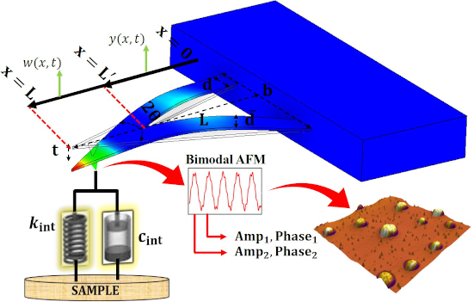
- dynamics of the cantilever compared to other parameters. This work shows that in order to maximize the phase contrast, the ratio of second to first eigenmode frequencies should be minimized and be close to a whole number. Additionally, since V-shaped cantilevers are mostly used for soft matter imaging
- dynamics of the cantilever more accurately. Wang et al. have used the finite element method (FEM) as an alternative approach to obtain the stiffness and the natural frequencies of for both rectangular and V-shaped cantilevers [9]. Additionally, other studies were done by Cleveland et al. [10] to measure
- bimodal AFM [43]. Additionally, in order to have a better understanding of the dynamics of the AFM cantilever in this study, tip–sample force interactions on Au and PS samples are simulated and presented in Supporting Information File 1, Figure S1. In order to study the effect of the length of the


![[Graphic 4]](/bjnano/content/inline/2190-4286-11-135-i26.svg?max-width=637&scale=1.18182) = 15 µm, bref = 8...
= 15 µm, bref = 8...


![[Graphic 17]](/bjnano/content/inline/2190-4286-11-135-i39.svg?max-width=637&scale=1.18182) ) of V-shaped cantilevers for...
) of V-shaped cantilevers for...


Controlling the electronic and physical coupling on dielectric thin films
Beilstein J. Nanotechnol. 2020, 11, 1492–1503, doi:10.3762/bjnano.11.132
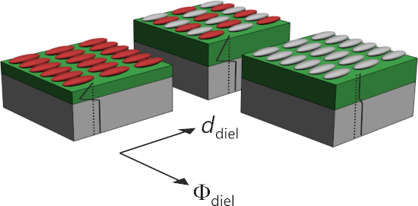
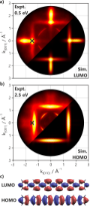
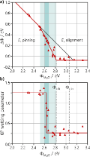
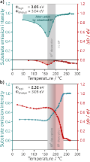
- physical coupling to the substrate induced by the charge transfer. Finally, the charging effect on the thermal dynamics and the stability of the 6P monolayer are considered. Results and Discussion Ambivalent behavior of 6P on regularly prepared MgO(100)/Ag(100) thin films Figure 2 shows STM images of four
- emission) where the emission of the 6P sigma-orbitals is found, as To assess the desorption dynamics, the samples were heated manually by a filament behind the crystal at a very low heating rate of approximately 0.1 °C/s (on average). STM measurements were performed at −193 °C with a Createc low




Transient coating of γ-Fe2O3 nanoparticles with glutamate for its delivery to and removal from brain nerve terminals
Beilstein J. Nanotechnol. 2020, 11, 1381–1393, doi:10.3762/bjnano.11.122

- nanoparticles. Also, its dynamics and stability in a standard salt solution, physiological fluids, and in the presence of certain compounds were measured. This approach allows for the evaluation of glutamate delivery to and removal from nerve terminals and blood plasma for modulation of extracellular glutamate


Atomic defect classification of the H–Si(100) surface through multi-mode scanning probe microscopy
Beilstein J. Nanotechnol. 2020, 11, 1346–1360, doi:10.3762/bjnano.11.119

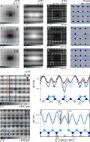
- -terminated tips In Figure 3, we compare AFM line profiles taken across the defect of interest (blue) and a corresponding defect-free region (grey) with a simple theoretical structure optimized by molecular dynamics calculations (see Methods for parameters). A preliminary comparison of Figure 3 with the
- above the defect in 4t show a reduced minimum, as well as a horizontal shift in position towards the defect centre due to a polaronic distortion induced by the vacancy’s localized negative charge. Molecular dynamics relaxation was unable to capture this effect as part of the modelling, so the ball and
- terminations. The defect free H–Si ball and stick model was the same as used in [43], with defects manually inserted using Avogadro [94][95]. The geometry of the defect atoms within the lattice were optimized using molecular dynamics relaxation with a Merck molecular force field (MMFF94) [96]. Images of the



Magnetohydrodynamic stagnation point on a Casson nanofluid flow over a radially stretching sheet
Beilstein J. Nanotechnol. 2020, 11, 1303–1315, doi:10.3762/bjnano.11.114

- manufacturing [3], food industry [4], and in many other fields. In this regard, fluid dynamics is essential for regulating thermal energy through the usage of different fluids with good thermophysical properties. Research efforts have been focused on developing strategies to enhance thermal processes. For
- dynamics. Over the past few decades, these studies have become even more important due to its applicability in manufacturing industries. The refrigeration of electronic instruments with a fan, cooling of atomic receptacles during an emergency power outage, and solar receivers for storage of thermal energy


Growth of a self-assembled monolayer decoupled from the substrate: nucleation on-command using buffer layers
Beilstein J. Nanotechnol. 2020, 11, 1291–1302, doi:10.3762/bjnano.11.113

- polymorph A was observed at the bare HOPG–1-phenyloctane interface. For n-C50, the chosen optimal concentration was 0.01 mM, because at this concentration we observed reasonably high-average domain size and relatively low dynamics within the n-C50 monolayer. Figure 4a–c shows a representative large scale
- not always aligned as is the case in Figure 5a–c. For n-C50, the chosen optimal concentration was 1.0 × 10⁻⁴ M, because at this concentration we observed reasonably high average domain size and relatively low dynamics within the n-C50 monolayer. Lowering the concentration of BA-OC14 further (range


Structure and electrochemical performance of electrospun-ordered porous carbon/graphene composite nanofibers
Beilstein J. Nanotechnol. 2020, 11, 1280–1290, doi:10.3762/bjnano.11.112

- that OPCGCNFs can be used as electrodes due to their advantages, such as fast ion dynamics, high electron conductivity and low electron transport impedance. This may be due to the following two factors: (i) The ordered fiber structure of the OPCGCNF electrode allows for the ions to move in an orderly


Role of redox-active axial ligands of metal porphyrins adsorbed at solid–liquid interfaces in a liquid-STM setup
Beilstein J. Nanotechnol. 2020, 11, 1264–1271, doi:10.3762/bjnano.11.110

- , such dynamics are likely. In the proposed redox reactions, the chloride ligands, which are axially coordinated to the manganese centers, play an essential role in generating the observed currents. First, they dissociate when the manganese center is reduced. We propose that the ions are subsequently


Influence of the magnetic nanoparticle coating on the magnetic relaxation time
Beilstein J. Nanotechnol. 2020, 11, 1207–1216, doi:10.3762/bjnano.11.105
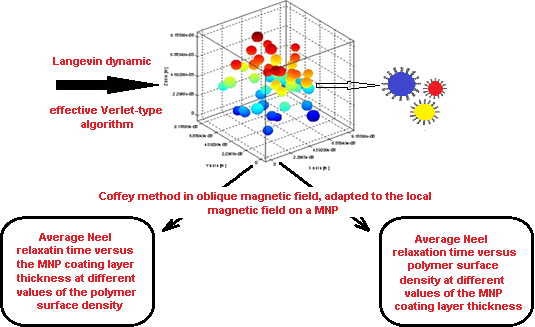
- Langevin dynamics method was applied based on the effective Verlet-type algorithm. The Néel magnetic relaxation time was obtained via the Coffey method in an oblique magnetic field, adapted to the local magnetic field on a nanoparticle. Keywords: colloidal system; effective Verlet-type algorithm; magnetic
- relaxation time; nanoparticle coating; numerical simulation; stochastic Langevin dynamics method; superparamagnetic nanoparticles; Introduction One of the most important biomedical applications of colloidal magnetic nanoparticle systems is magnetic hyperthermia applied as an alternative for cancer treatment
- distribution of the grain size. Each nanoparticle is composed of a magnetic core and a nonmagnetic surface layer of stabilizing surfactant. The system temperature is considered to be constant. To simulate the self-organization of the colloidal magnetic nanoparticles we used the Langevin dynamics stochastic


Thermophoretic tweezers for single nanoparticle manipulation
Beilstein J. Nanotechnol. 2020, 11, 1126–1133, doi:10.3762/bjnano.11.97
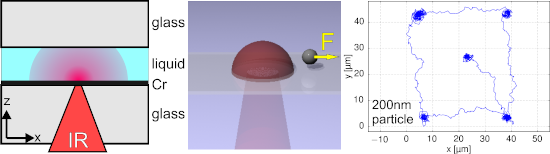
- with sizes of 1 μm and 200 nm in an aqueous medium. We model the effect with an overdamped Langevin dynamics simulation to obtain quantitative predictions. Since the feedback control algorithm can be easily modified, the resulting particle trapping potential can be thus arbitrarily shaped. We show this
- dynamics simulation of a spherical particle in water. The laser heating was modeled as an instantly imposed Gaussian-shaped temperature field, which changes its center position according to the feedback rule. To keep the model as simple as possible, the heat capacities of the substrate and the liquid, as


Vibration analysis and pull-in instability behavior in a multiwalled piezoelectric nanosensor with fluid flow conveyance
Beilstein J. Nanotechnol. 2020, 11, 1072–1081, doi:10.3762/bjnano.11.92

- and the study of vibration behavior are essential. Additionally, it is important that the size-dependent parameters for the dynamics analysis and mathematical modeling of these nanostructures be contained in the theoretical models. For this reason, surface/interface elasticity, which was addressed by


![[Graphic 46]](/bjnano/content/inline/2190-4286-11-92-i46.svg?max-width=637&scale=1.18182) on DNF of FC-MWPENS.
on DNF of FC-MWPENS.


![[Graphic 50]](/bjnano/content/inline/2190-4286-11-92-i50.svg?max-width=637&scale=1.18182) on DNF of SS FC-MWPENS.
on DNF of SS FC-MWPENS.


![[Graphic 54]](/bjnano/content/inline/2190-4286-11-92-i54.svg?max-width=637&scale=1.18182) on DNF of SS FC-MWPENS.
on DNF of SS FC-MWPENS.


![[Graphic 59]](/bjnano/content/inline/2190-4286-11-92-i59.svg?max-width=637&scale=1.18182) for fluid velocity
for fluid velocity ![[Graphic 60]](/bjnano/content/inline/2190-4286-11-92-i60.svg?max-width=637&scale=1.18182) on DNF of SS FC-MWPENS.
on DNF of SS FC-MWPENS.

![[Graphic 61]](/bjnano/content/inline/2190-4286-11-92-i61.svg?max-width=637&scale=1.18182) for pull-in voltage on DNF of SS FC-MWPENS.
for pull-in voltage on DNF of SS FC-MWPENS.

![[Graphic 67]](/bjnano/content/inline/2190-4286-11-92-i67.svg?max-width=637&scale=1.18182) for fluid velocity
for fluid velocity ![[Graphic 68]](/bjnano/content/inline/2190-4286-11-92-i68.svg?max-width=637&scale=1.18182) on DNF of SS FC-MWPENS.
on DNF of SS FC-MWPENS.

![[Graphic 69]](/bjnano/content/inline/2190-4286-11-92-i69.svg?max-width=637&scale=1.18182) for pull-in voltage on DNF of SS FC-MWPENS.
for pull-in voltage on DNF of SS FC-MWPENS.

![[Graphic 73]](/bjnano/content/inline/2190-4286-11-92-i73.svg?max-width=637&scale=1.18182) on DNF of SS FC-MWPENS.
on DNF of SS FC-MWPENS.


![[Graphic 75]](/bjnano/content/inline/2190-4286-11-92-i75.svg?max-width=637&scale=1.18182) on DNF of SS FC-MWPENS.
on DNF of SS FC-MWPENS.

Microwave photon detection by an Al Josephson junction
Beilstein J. Nanotechnol. 2020, 11, 960–965, doi:10.3762/bjnano.11.80
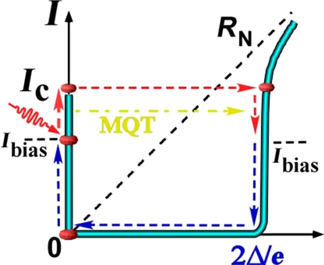
- ]. For the lower-frequency range, a new class of single-microwave-photon detectors is needed. With regard to this, a current-biased Josephson junction (JJ) is of particular interest for applications as a threshold detector since its phase dynamics is altered even by a weak probe field. Rich dynamics of
- washboard potential in the framework of the resistively and capacitively shunted junction (RCSJ) model for the dynamics of the Josephson phase [29][30]. The tilt of the washboard potential is controlled by the bias current I and is defined as EJ(I/IC), where IC is the critical current and EJ = ℏIC/2e. The
- current distribution [21][31]. For underdamped junctions (α ≪ 1), the width of the switching current distributions monotonically decreases with decreasing temperature. In the case of moderately damped junctions (α > 0.2), the switching dynamics changes due to phase diffusion, i.e., the width of the


Measurement of electrostatic tip–sample interactions by time-domain Kelvin probe force microscopy
Beilstein J. Nanotechnol. 2020, 11, 911–921, doi:10.3762/bjnano.11.76

- simplicity, this publication focusses on the implementation of the most basic case with three states, where only the quadratic influence on the Kelvin parabola is considered. The model of the measurement system, which is used by the state observer, has to include the dynamics of the detection system. If a
- spectral density (PSD) of the thermal noise can be calculated as For detection-noise-limited measurements, an additional state has to be introduced to keep track of the dynamics of the apparent noise. The approximation in Equation 17 contains the system output matrix . It depends on the current tip–sample
- measurement and by recording the frequency-shift signal and the applied bias voltage, the surface potential image can be reconstructed by the state observer. This is a very convenient way of performing KFM measurements by postprocessing. Furthermore, the dynamics of the controller can be studied and tested


Three-dimensional solvation structure of ethanol on carbonate minerals
Beilstein J. Nanotechnol. 2020, 11, 891–898, doi:10.3762/bjnano.11.74

- molecular dynamics (MD) simulations. Within a single AFM data set we are able to resolve both the first laterally ordered solvation layer of ethanol on the calcite surface as well as the following solvation layers that show no lateral order. Our experimental results are in excellent agreement with MD
- has been investigated theoretically by using both density functional theory (DFT) [12][13] and molecular dynamics (MD) simulations [14][15][16][17]. It has been found that ethanol molecules strongly bind towards calcite (10.4) terraces – even stronger than water [12][14][16][17]. Ethanol molecules
- Information File 1, where we also discuss the robustness and reproducibility of the AFM results. Molecular dynamics simulations We employed molecular dynamics simulations to model both calcite and magnesite with their (10.4) surface exposed as a nine layer crystal with three surface unit cells in the

Simulations of the 2D self-assembly of tripod-shaped building blocks
Beilstein J. Nanotechnol. 2020, 11, 884–890, doi:10.3762/bjnano.11.73

- Lukasz Baran Wojciech Rzysko Edyta Slyk Department for Theoretical Chemistry, Institute of Chemical Sciences, Faculty of Chemistry, Maria Curie-Sklodowska University in Lublin, Poland. 10.3762/bjnano.11.73 Abstract We introduce a molecular dynamics (MD) coarse-grained model for the description of
- can lead to valuable conclusions, which can be further explored and proved by experimental studies. To date, there are two main approaches that can complement the results obtained in experiments. The first one involves the use of all-atom simulations by molecular dynamics (MD) [27][28][29][30]. Even
- ” active sites, respectively. In a) we can see that the arms are marked as A, B, and C. e) Parameters of the molecular dynamics model. Part of the configurations for a) NT111 at T* = 0.58, b) NL111 at T* = 0.54, and c) WT111 at T* = 0.58, all with ρ* = 0.2. d) Corresponding Monte Carlo simulation on a


Light–matter interactions in two-dimensional layered WSe2 for gauging evolution of phonon dynamics
Beilstein J. Nanotechnol. 2020, 11, 782–797, doi:10.3762/bjnano.11.63

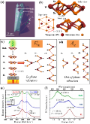
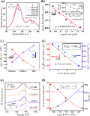
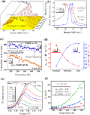
- of Electrical and Computer Engineering, University of Texas, El Paso, TX 79968, United States 10.3762/bjnano.11.63 Abstract Phonon dynamics is explored in mechanically exfoliated two-dimensional WSe2 using temperature-dependent and laser-power-dependent Raman and photoluminescence (PL) spectroscopy
- oscillator model to explain the damping mechanism in WSe2. From this it was determined that the damping coefficient increases with the number of layers. The work reported here sheds fundamental insights into the evolution of phonon dynamics in WSe2 and should help pave the way for designing high-performance
- , grown from bottom-up processes akin to graphene. While graphene is comprised of a single element on the periodic table, i.e., carbon, TMDCs are binary compounds which makes their lattice dynamics more complex compared to multilayer (ML) graphene [6]. The symmetry, force constants, and frequency
Hexagonal boron nitride: a review of the emerging material platform for single-photon sources and the spin–photon interface
Beilstein J. Nanotechnol. 2020, 11, 740–769, doi:10.3762/bjnano.11.61
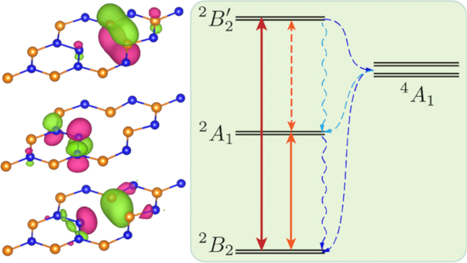
- energy in each group (±20 meV) was attributed to variations of the strain in the h-BN matrix, as well as photo-conversion to a dark state that may be responsible for the blinking. Only 5% of the emitters were photostable. The photo-dynamics indicates the presence of a metastable state (3-level system
- at 675 nm, and emitters with ZPLs of 760 nm were found with a much shorter lifetime and a saturation count rate in the 200 kcts/s. The photo-dynamics of these emitters indicate the presence of a multilevel system with three metastable states with long decay rates of 480 ns, 5 µs and 31 ms. Blinking
- were studied. Here the correlations between material structural features and the location of SPEs from bulk down to the monolayer was studied at room temperature. Chemical etching and ion irradiation are used to generate the SPEs in h-BN various materials. Their photo-dynamics analysis reveals




Quantitative determination of the interaction potential between two surfaces using frequency-modulated atomic force microscopy
Beilstein J. Nanotechnol. 2020, 11, 729–739, doi:10.3762/bjnano.11.60
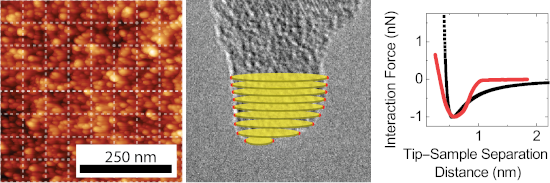
- mechanics models [22][23][24][25] to allow better visualization of surface interactions. While useful insights can be obtained using fully atomistic simulations, such as molecular dynamics simulations or density functional theory, these techniques are impractical for describing larger contacts with a large


Stochastic excitation for high-resolution atomic force acoustic microscopy imaging: a system theory approach
Beilstein J. Nanotechnol. 2020, 11, 703–716, doi:10.3762/bjnano.11.58

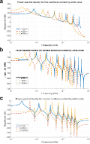
- spring constant of 0.2 N/m were used. All experiments were carried out in dry air at a temperature of 21.0 ± 0.1 °C and a relative humidity of (2 ± 1)%. It is very important to define the appropriate signal to perturb the system. This allows for gathering sufficient information about the system dynamics
- . For this work, a stochastic signal is used for the tip–sample excitation because it can extract all the system dynamics, i.e., persistent excitation in the system theory field [23][24]. A FFT of the deflection signal from the photodiodes is computed by the NI PXIe-1073 device. One FFT is carried out
- frequency resolution. Theoretically, a white-noise signal features an infinitely flat bandwidth, which is impossible to generate [35][49]. Fortunately, it can be generated in approximation using a waveform function generator. This makes the white-noise signal an ideal tool to extract all system dynamics



A novel dry-blending method to reduce the coefficient of thermal expansion of polymer templates for OTFT electrodes
Beilstein J. Nanotechnol. 2020, 11, 671–677, doi:10.3762/bjnano.11.53

- the influence of fullerene (C60) on the CTE of Araldite LY 5052/Aradur HY 5052 cross-linked epoxy resin by molecular dynamics simulations. The CTE was minimized by adding a maximum of 15.9 wt % fullerene to the LY/HY/C60 epoxy system. Liu et al. [14] selected MCM-41 mesoporous silica nanoparticles


Comparison of fresh and aged lithium iron phosphate cathodes using a tailored electrochemical strain microscopy technique
Beilstein J. Nanotechnol. 2020, 11, 583–596, doi:10.3762/bjnano.11.46
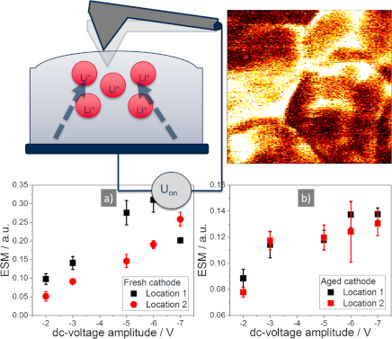
- , Institute of Building Energetics, Thermal Engineering and Energy Storage (IGTE), Pfaffenwaldring 31, 70569 Stuttgart, Germany 10.3762/bjnano.11.46 Abstract Electrochemical strain microscopy (ESM) is a powerful atomic force microscopy (AFM) mode for the investigation of ion dynamics and activities in energy
- storage materials. Here we compare the changes in commercial LiFePO4 cathodes due to ageing and its influence on the measured ESM signal. Additionally, the ESM signal dynamics are analysed to generate characteristic time constants of the diffusion process, induced by a dc-voltage pulse, which changes the
- iron dissolution the lower ESM signal is a direct consequence. It is noted that this is probable, as Fe-dissolution has been reported as the prominent degradation mechanism of LFP [9][72][73]. The dynamics of the relaxation process after the dc-voltage pulse are further analysed in Figure 7 and Figure



Interfacial charge transfer processes in 2D and 3D semiconducting hybrid perovskites: azobenzene as photoswitchable ligand
Beilstein J. Nanotechnol. 2020, 11, 466–479, doi:10.3762/bjnano.11.38

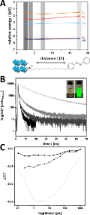
- . Therefore, decreased radiative recombination can be observed and increased photoswitching occurs. Time-dependent fluorescence measurements reveal the distance-dependent energy transfer dynamics. We observe much shorter lifetimes for small insulating spacers (AzoC1 and AzoC2) than for longer spacers (AzoOC4
- and AzoOC12), which can be seen in Figure 6B. As many other charge-carrier dynamics beside the radiative recombination, such as photorecycling and surface defects, affect the PL no (bi)exponential fit could be found [53][54]. Thus, the recorded measurements are discussed qualitatively. A small spacing
- perovskite surface (AzoC1, AzoC2) leads to a rapid injection of excited electrons into the chromophore. A larger spacing (AzoOC12) suppresses the transfer and extended lifetimes are observed. Conclusion We have investigated the interfacial dynamics between 2D and 3D hybrid perovskite phases and novel