

Search results
Search for "electronics" in Full Text gives 545 result(s) in Beilstein Journal of Nanotechnology. Showing first 200.
Epitaxial growth and superconducting properties of thin-film PdFe/VN and VN/PdFe bilayers on MgO(001) substrates
Beilstein J. Nanotechnol. 2020, 11, 807–813, doi:10.3762/bjnano.11.65

- ; epitaxial superconductor–ferromagnet heterostructure; palladium–iron alloy (PdFe); vanadium nitride (VN); superconducting spintronics; Introduction Since its invention, rapid single-flux quantum (RSFQ) logic [1][2] based on superconducting digital electronics has been seriously considered as an alternative
- to semiconductor electronics for supercomputing applications [3][4][5]. Merging it with magnetism [6][7][8] has given a birth to superconducting spintronics [9][10]. The latter concept was implemented in the US Cryogenic Computing Complexity (C3) Program [11][12][13] with the goal “to demonstrate a
- argued that the use of magnetic Josephson junctions in single-flux quantum electronics significantly reduces the number of junctions and interconnects in the circuits [26] and also has other important advantages such as wide operation margins and low bit-error rate [27]. The magnetic material has to be


Light–matter interactions in two-dimensional layered WSe2 for gauging evolution of phonon dynamics
Beilstein J. Nanotechnol. 2020, 11, 782–797, doi:10.3762/bjnano.11.63

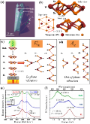
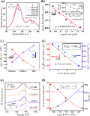
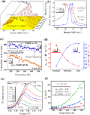
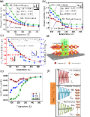
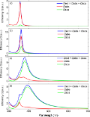
- interaction while the intra-layer bonding is via the strong covalent interaction. This makes them inherently flexible and good candidates for flexible electronics [9], optoelectronics [10], and other related applications [11][12]. Amongst the TMDCs, WSe2 offers unique advantages for device applications, which
Exfoliation in a low boiling point solvent and electrochemical applications of MoO3
Beilstein J. Nanotechnol. 2020, 11, 662–670, doi:10.3762/bjnano.11.52
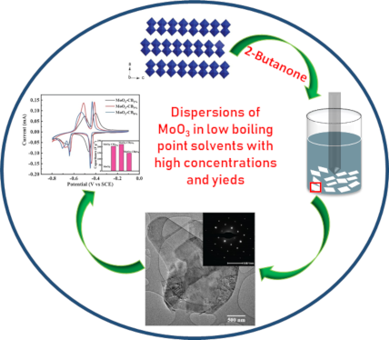
- layered materials, molybdenum oxide (MoO3) has gained special attention because of its numerous applications in electronics, catalysis, electrochemistry, solar cells and gas sensors [6]. Monolayered and few-layered MoO3 has been reported to have better properties than the bulk material [7]. Thus, it is
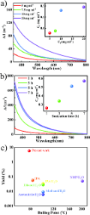
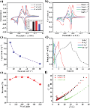
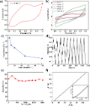
- for the fabrication of flexible supercapacitors for wearable electronics. (a) UV–vis spectra of MoO3 dispersions obtained from different initial concentrations (Ci). The inset shows the final concentration as a function of the initial concentration; (b) UV–vis spectra of MoO3 dispersions obtained from

Evolution of Ag nanostructures created from thin films: UV–vis absorption and its theoretical predictions
Beilstein J. Nanotechnol. 2020, 11, 494–507, doi:10.3762/bjnano.11.40

- Physics and Mathematics, Department of Theoretical Physics and Quantum Information, Gdansk University of Technology, Gabriela Narutowicza 11/12, 80-233 Gdansk, Poland Faculty of Electronics, Telecommunication and Informatics, Department of Biomedical Engineering, Gdansk University of Technology, Gabriela




Electrochemically derived functionalized graphene for bulk production of hydrogen peroxide
Beilstein J. Nanotechnol. 2020, 11, 432–442, doi:10.3762/bjnano.11.34

- electrolyte (KF) from 1 to 4 M. In this process, two graphite rods were used as electrodes in KF aqueous electrolyte having different concentrations. A regulated DC power supply (Physitech electronics, model: PHY8230) in galvanostatic mode (0.2 A/cm2) was employed to carry out the electrochemical exfoliation


High dynamic resistance elements based on a Josephson junction array
Beilstein J. Nanotechnol. 2020, 11, 417–420, doi:10.3762/bjnano.11.32

- particular “cost-no-object” applications. Currently, the field of superconducting electronics is developing much faster mainly due to the understanding that (even taking into consideration the necessity of refrigeration) the energy consumption of next generation supercomputers can be as low as ≈10 MW, which

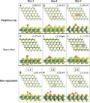
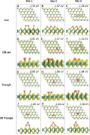
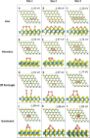
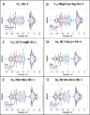
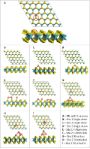
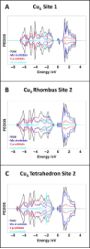
DFT calculations of the structure and stability of copper clusters on MoS2
Beilstein J. Nanotechnol. 2020, 11, 391–406, doi:10.3762/bjnano.11.30
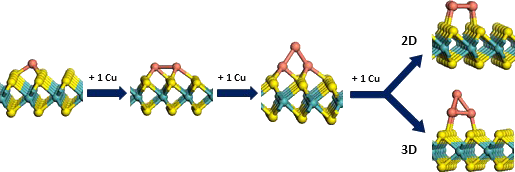
- applications. These materials are also interesting as supports for low-dimensional metals for catalysis, while recent work has shown increased interest in using 2D materials in the electronics industry as a Cu diffusion barrier in semiconductor device interconnects. The interaction between different metal
- variety of research areas [1]. These include catalysis [2][3], photonics [4][5], batteries [6], sensors [7][8] and semiconductors and electronics [9][10][11]. More recently, 2D materials have been explored as copper diffusion barriers in CMOS interconnect structures [12][13][14][15]. Furthermore, to
- semiconductors, unlike graphene, and have thus garnered significant interest in the electronics industry [4]. Often, the properties of the monolayer are different from those of the bulk materials. For example, MoS2 has an indirect bandgap in its bulk structure, while it exhibits a direct bandgap as a monolayer
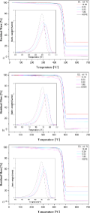
Anomalous current–voltage characteristics of SFIFS Josephson junctions with weak ferromagnetic interlayers
Beilstein J. Nanotechnol. 2020, 11, 252–262, doi:10.3762/bjnano.11.19

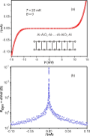
- . acknowledges the hospitality of the Quantum nanoelectronics laboratory of the Moscow Institute of Electronics and Mathematics in the National Research University Higher School of Economics during his stay in Moscow.


Size effects of graphene nanoplatelets on the properties of high-density polyethylene nanocomposites: morphological, thermal, electrical, and mechanical characterization
Beilstein J. Nanotechnol. 2020, 11, 167–179, doi:10.3762/bjnano.11.14

- composites (PMCs); thermal properties; Introduction In recent years, electrically and thermally conductive polymer nanocomposites have attracted considerable attention because of their potential use in many industrial applications, such as aerospace, electronics, packaging, automotives, sensors, batteries



Molecular architectonics of DNA for functional nanoarchitectures
Beilstein J. Nanotechnol. 2020, 11, 124–140, doi:10.3762/bjnano.11.11
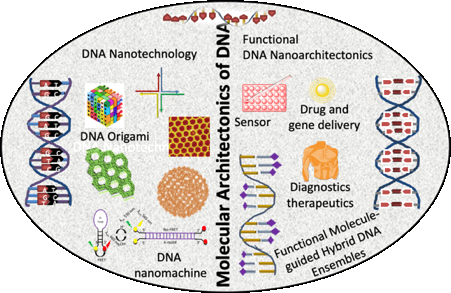
- template for nanowire synthesis. The miniaturization of devices is of central importance in electronics and has galvanized significant research in materials science. The need for the miniaturization of devices at the nanoscale interface has led to the exploration of new material systems and building blocks


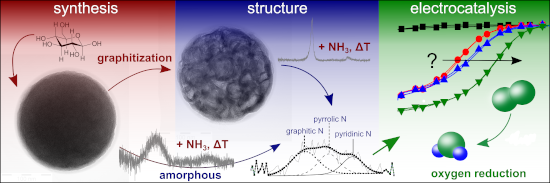
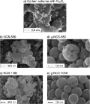
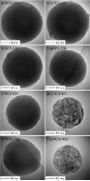
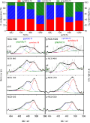
Synthesis of amorphous and graphitized porous nitrogen-doped carbon spheres as oxygen reduction reaction catalysts
Beilstein J. Nanotechnol. 2020, 11, 1–15, doi:10.3762/bjnano.11.1
- temperature was 1000 °C in air. XPS measurements were performed in a Physical Electronics PHI 5800 Multi ESCA system at an emission angle of 45° and a pass energy of 29.35 eV (detail spectra), applying monochromatic Al Kα radiation (250 W, 13 kV). The thin-layer samples used for these measurements were




Advanced hybrid nanomaterials
Beilstein J. Nanotechnol. 2019, 10, 2563–2567, doi:10.3762/bjnano.10.247
- devices, catalysis and environment, smart coatings, energy, and electronics [10][11][12][13][14][15][16][17]. By essence, the hybrid approach consists of building new materials and devices by assembling elementary functional organic/inorganic, molecular or extended bricks to obtain materials with greatly
Formation of metal/semiconductor Cu–Si composite nanostructures
Beilstein J. Nanotechnol. 2019, 10, 2497–2504, doi:10.3762/bjnano.10.240
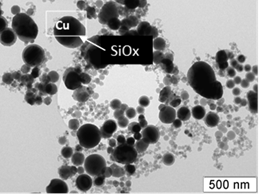
- microwave electronics and radiophotonics due to their large dipole moment and the appearance of a Schottky barrier in the contact region [14]. The structure of these nanoparticles is primarily determined by the methods and conditions of synthesis, which should allow us to combine the two materials even if


Abrupt elastic-to-plastic transition in pentagonal nanowires under bending
Beilstein J. Nanotechnol. 2019, 10, 2468–2476, doi:10.3762/bjnano.10.237
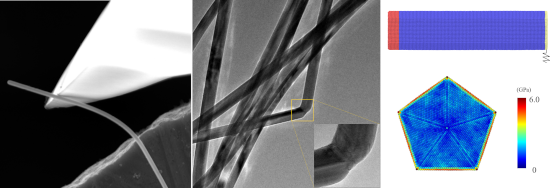
- electronics [10][11]. In the last case NWs are used as a conductive network in composition with flexible polymer materials such as polydimethylsiloxane (PDMS) [12][13]. The reliability of flexible devices in high-strain conditions will be governed by the mechanical reliability of the individual NWs inside the



Multiple Fano resonances with flexible tunablity based on symmetry-breaking resonators
Beilstein J. Nanotechnol. 2019, 10, 2459–2467, doi:10.3762/bjnano.10.236
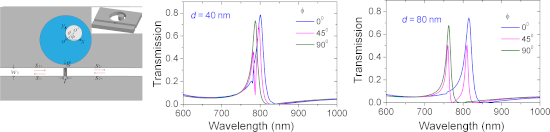
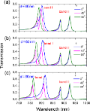
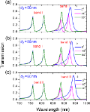
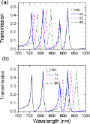
- Xiao bin Ren Kun Ren Ying Zhang Cheng guo Ming Qun Han School of Science, Tianjin University of Science and Technology, Tianjin 300222, China College of Precision Instrument and Opto-electronics Engineering; Key Laboratory of Opto-electronics Information Technology, Ministry of Education, Tianjin




Mobility of charge carriers in self-assembled monolayers
Beilstein J. Nanotechnol. 2019, 10, 2449–2458, doi:10.3762/bjnano.10.235
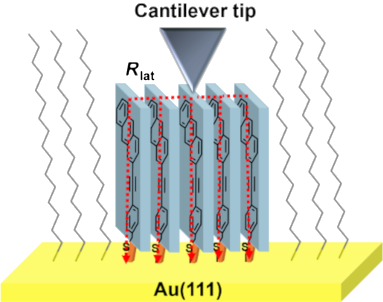
- electronics [1]. In addition to hopping transport of charge carriers, electrons or holes, within molecular solids [2], for some materials also a band-like transport has been proposed [3]. Previous work showed that the charge carrier mobilities are highly dependent on the structural quality of the material [4


Ultrathin Ni1−xCoxS2 nanoflakes as high energy density electrode materials for asymmetric supercapacitors
Beilstein J. Nanotechnol. 2019, 10, 2207–2216, doi:10.3762/bjnano.10.213

- ) at room temperature of 24 °C. Electrochemical impedance spectroscopy (EIS) of the electrode material was carried out in the frequency range from 100 kHz to 0.01 Hz at AC voltage under open-circuit conditions. The cycling stability was tested by using a LAND system (Wuhan LAND electronics). The


Liquid crystal tunable claddings for polymer integrated optical waveguides
Beilstein J. Nanotechnol. 2019, 10, 2163–2170, doi:10.3762/bjnano.10.209

- circuits (EICs), where signals are carried out by visible and near-infrared (NIR) photons rather than electrons. EICs have irreversibly modified our way of life through computers, communications and consumer electronics. Since their origin in 1954, EICs have been exponentially increasing the number of


Porous silver-coated pNIPAM-co-AAc hydrogel nanocapsules
Beilstein J. Nanotechnol. 2019, 10, 1973–1982, doi:10.3762/bjnano.10.194

- Interest in the preparation and utilization of uniquely structured nanocomposites continues to expand due to their potential use in electronics, optics, magnetism, medicine, catalysis, and energy applications [1][2][3][4][5][6]. The physical and chemical properties of these materials provide significant


First principles modeling of pure black phosphorus devices under pressure
Beilstein J. Nanotechnol. 2019, 10, 1943–1951, doi:10.3762/bjnano.10.190
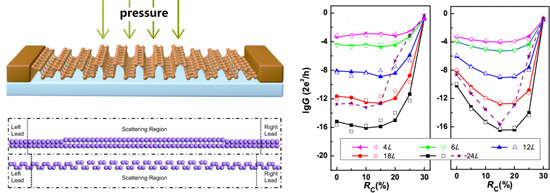
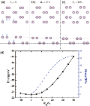
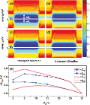
- transition under axial strain [5][32]. The sensitivity to and the resilience against strain make BP an ideal material for strain-sensing electronics and flexible electronic devices. Xiao et al. fabricated few-layer BP nanosheets by chemical vapor transport [25], and observed a phase transition from an




Correction: Remarkable electronic and optical anisotropy of layered 1T’-WTe2 2D materials
Beilstein J. Nanotechnol. 2019, 10, 1922–1922, doi:10.3762/bjnano.10.187
- Qiankun Zhang Rongjie Zhang Jiancui Chen Wanfu Shen Chunhua An Xiaodong Hu Mingli Dong Jing Liu Lianqing Zhu School of Instrument Science and Opto-Electronics Engineering, Beijing Information Science and Technology University, No.12 Xiaoying East Road, Beijing, China School of Precision Instrument
- and Opto-Electronics Engineering, Tianjin University, 92 Weijin road, Tianjin 300072, China 10.3762/bjnano.10.187 Keywords: 1T'-WTe2; 2D material; anisotropic; light polarization; optoelectrical; The authors wish to add the following sentence to the Acknowledgement section: The optical anisotropic
Oblique angle deposition of nickel thin films by high-power impulse magnetron sputtering
Beilstein J. Nanotechnol. 2019, 10, 1914–1921, doi:10.3762/bjnano.10.186

- sputtering; magnetic anisotropy; nickel; Introduction The realization of electronics based on utilizing the electron spin degree of freedom, commonly referred to as spintronics, requires the integration of ferromagnetic films with semiconductors [1]. Nickel is a ferromagnetic heavy 3d transition metal that


Charge-transfer interactions between fullerenes and a mesoporous tetrathiafulvalene-based metal–organic framework
Beilstein J. Nanotechnol. 2019, 10, 1883–1893, doi:10.3762/bjnano.10.183
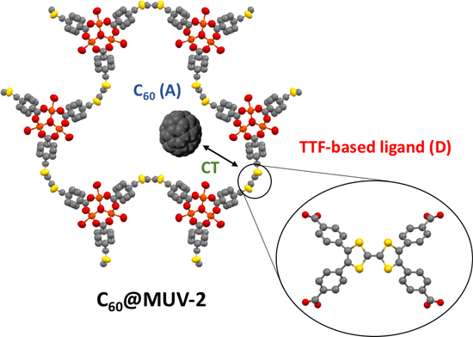
- electrical conductivity and porosity at the same time. Fullerenes (C60) [25] have found numerous applications in different fields, ranging from molecular electronics and nanotechnology to biomedical applications, due to their exceptional electrochemical and photophysical properties [26][27]. In particular
- electronics as conductors, switches, sensors or rectifiers [37][38]. Several studies have also been devoted to the development of TTF-based macrocyclic systems for their use as molecular machines or for supramolecular host–guest recognition [39][40][41]. In this context, donor–acceptor interactions between




Processing nanoporous organic polymers in liquid amines
Beilstein J. Nanotechnol. 2019, 10, 1844–1850, doi:10.3762/bjnano.10.179

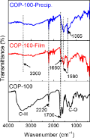
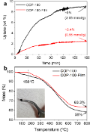
- high porosity, which is beneficial for applications such as gas sorption, gas separation, heterogeneous (photo)catalysis, sensing, and (opto)electronics. However, the network structures are practically insoluble. Thus, the processing of nanoporous polymers into nanoparticles or films remains



Remarkable electronic and optical anisotropy of layered 1T’-WTe2 2D materials
Beilstein J. Nanotechnol. 2019, 10, 1745–1753, doi:10.3762/bjnano.10.170

- Qiankun Zhang Rongjie Zhang Jiancui Chen Wanfu Shen Chunhua An Xiaodong Hu Mingli Dong Jing Liu Lianqing Zhu School of Instrument Science and Opto-Electronics Engineering, Beijing Information Science and Technology University, No.12 Xiaoying East Road, Beijing, China School of Precision Instrument
- and Opto-Electronics Engineering, Tianjin University, 92 Weijin road, Tianjin 300072, China 10.3762/bjnano.10.170 Abstract Anisotropic 2D materials exhibit novel optical, electrical and thermoelectric properties that open possibilities for a great variety of angle-dependent devices. Recently
- phenomena and for applications ranging from electronics [11] and photonics [12][13] to sensing [14][15] and actuation [16] at the nanoscale. Recently, tungsten telluride (WTe2), as a member of the TMDC family, has drawn tremendous research interest since the discovery of its large non-saturating positive