Search results
Search for "evolution" in Full Text gives 705 result(s) in Beilstein Journal of Nanotechnology. Showing first 200.
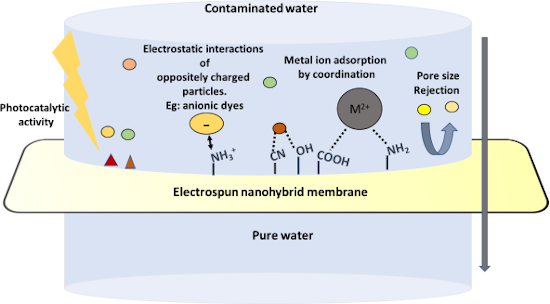
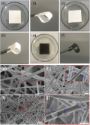
A comprehensive review on electrospun nanohybrid membranes for wastewater treatment
Beilstein J. Nanotechnol. 2022, 13, 137–159, doi:10.3762/bjnano.13.10




Sputtering onto liquids: a critical review
Beilstein J. Nanotechnol. 2022, 13, 10–53, doi:10.3762/bjnano.13.2
- gas phase and subsequent film growth can be computed using, for example, SIMTRA [37] and NASCAM [38] codes, respectively. The evolution of the sputtering yield calculated by SRIM for carbon (C), titanium (Ti), and Au targets as a function of the kinetic energy of the bombarding argon ions is presented


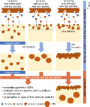


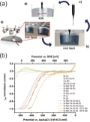


Topographic signatures and manipulations of Fe atoms, CO molecules and NaCl islands on superconducting Pb(111)
Beilstein J. Nanotechnol. 2022, 13, 1–9, doi:10.3762/bjnano.13.1
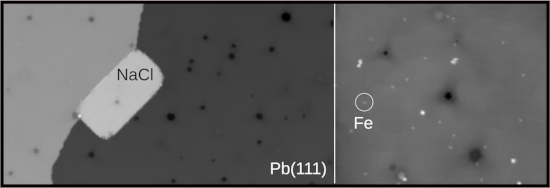
- trimer (Fe3). Compared to the heights of Fe1 and Fe2, the height of Fe3 is about h3 = 1.7 Å. This evolution of STM apparent heights as a function of number of atoms in small Fe clusters is in good agreement with a similar study of Fe clusters on Cu(111) [72]. Conclusion Our results report on the


Heating ability of elongated magnetic nanoparticles
Beilstein J. Nanotechnol. 2021, 12, 1404–1412, doi:10.3762/bjnano.12.104

- density of magnetite nanoparticles, which is assumed to be ρ = 5 g/cm3. Figure 2 shows the evolution of low-frequency hysteresis loops of non-interacting randomly oriented assemblies of magnetite nanoparticles with aspect ratios a/b = 1.5 and 3.0 depending on the transverse particle diameter D = 2b. One
- frequency f = 300 kHz and at different amplitudes of the ac magnetic field: (а) H0 = 100 Oe; (b) H0 = 200 Oe. Evolution of the low-frequency hysteresis loops of dilute randomly oriented assemblies of magnetite nanoparticles as a function of the transverse particle diameter D for different aspect ratios of


Plasmon-enhanced photoluminescence from TiO2 and TeO2 thin films doped by Eu3+ for optoelectronic applications
Beilstein J. Nanotechnol. 2021, 12, 1271–1278, doi:10.3762/bjnano.12.94
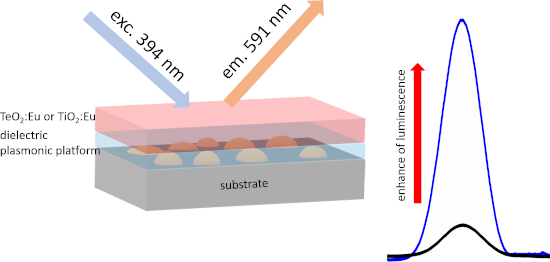
- composition, layers were etched for 2, 6, and 8 min. Optical transmittance spectra of all prepared structures were measured using an Evolution 220 UV–visible spectrophotometer in the range of 200–1000 nm. Luminescence excitation and emission spectra were recorded using a Scinco FluoroMate FS-2 fluorescence


Impact of electron–phonon coupling on electron transport through T-shaped arrangements of quantum dots in the Kondo regime
Beilstein J. Nanotechnol. 2021, 12, 1209–1225, doi:10.3762/bjnano.12.89

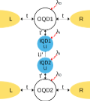
- for which the DTQD in the absence of phonons is already doubly occupied, the interaction with phonons leads with increasing coupling parameter to the evolution from SU(4) symmetry with six degenerate states to broken SU(4), where the degenerate pair (2,0) and (0,2) of charge pseudospin separate from


Morphology-driven gas sensing by fabricated fractals: A review
Beilstein J. Nanotechnol. 2021, 12, 1187–1208, doi:10.3762/bjnano.12.88
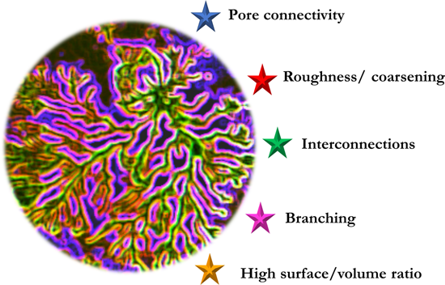
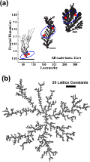
- . Gracheva and co-workers prepared gas-sensitive fractal structures based on SnO2 and silicon dioxide (SiO2) by a sol–gel technique [57][69][70]. The evolution of fractal aggregates of tin and silicon dioxides resulted in the formation of spherical, labyrinth, and percolation network structures. The










The effect of cobalt on morphology, structure, and ORR activity of electrospun carbon fibre mats in aqueous alkaline environments
Beilstein J. Nanotechnol. 2021, 12, 1173–1186, doi:10.3762/bjnano.12.87

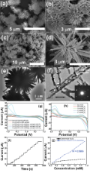
- cobalt salt to the spinning solution [19][20][21][22]. Li et al. [19] investigated the activity of the material using a rotating ring disc and dilute 0.1 M KOH electrolyte. They found that the cobalt species were active in both oxygen evolution reaction (OER) and ORR. They also found that increasing


Irradiation-driven molecular dynamics simulation of the FEBID process for Pt(PF3)4
Beilstein J. Nanotechnol. 2021, 12, 1151–1172, doi:10.3762/bjnano.12.86
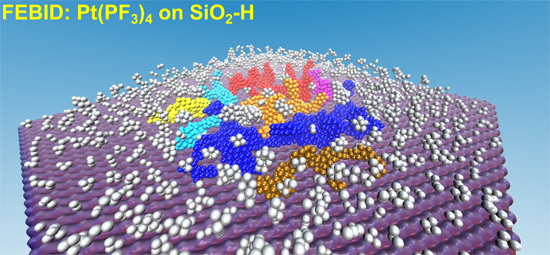
- atomistic level although it governs many physical properties such as electrical and thermal conductivity, and magnetic properties [27][28]. Atomistic simulations provide insights into the internal structure of the deposits and its evolution depending on the regimes of the FEBID process. In this study
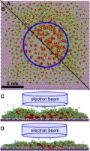
- the evolution of the system during irradiation. This means that only the final state of the molecular system, created before the irradiation, is essential for the IDMD simulations. The outcome of atomistic simulations of precursor adsorption and desorption, that is, the once defined regime, can be
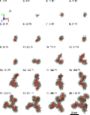
- accumulation of Pt atoms enabling the formation of larger metal clusters. The growth of the deposits can be quantified by the total number of atoms and the number of metal atoms in the largest cluster. Figure 5 shows the evolution of maximal cluster size for Edep = 205 and 300 kcal/mol as a function of








Revealing the formation mechanism and band gap tuning of Sb2S3 nanoparticles
Beilstein J. Nanotechnol. 2021, 12, 1021–1033, doi:10.3762/bjnano.12.76
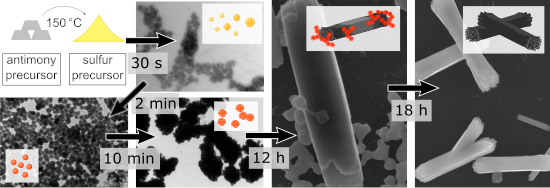
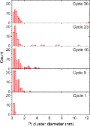
- product contained nanoparticles with a diameter of 33 ± 5 nm (a summary of the evolution of the particle size throughout the synthesis can be found in Table 1). The nanoparticles were irregularly formed but, in general, spherically shaped. With increasing reaction time, the dispersion turned darker and
- at 150 °C was revealed. In this way, we could gain a more in-depth insight into the kinetics of particle formation, while earlier studies by Abulikemu et al. and Li et al. were focusing on the temperature-dependent evolution of Sb2S3 particles. The suggested mechanism assumes that seeds (type 0


A Au/CuNiCoS4/p-Si photodiode: electrical and morphological characterization
Beilstein J. Nanotechnol. 2021, 12, 984–994, doi:10.3762/bjnano.12.74
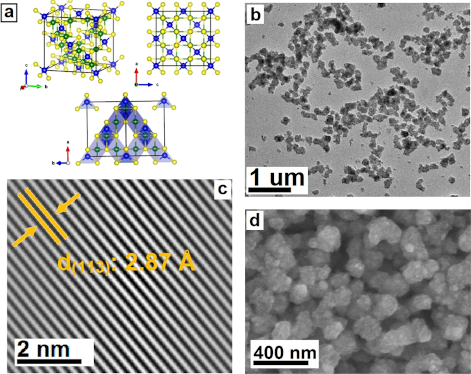
- quaternary CuNiCoS4 nanocrystals. The first study by Thompson is on the synthesis of CuNiCoS4 thiospinels [13]. The second is a study on the synthesis and photocatalytic hydrogen evolution, which was performed by our group [8]. In this study, the optical characterization results of the CuNiCoS4 nanocrystals



Uniform arrays of gold nanoelectrodes with tuneable recess depth
Beilstein J. Nanotechnol. 2021, 12, 957–964, doi:10.3762/bjnano.12.72

- hydrogen evolution manifests itself by the decrease in the current efficiency (η). It ranged from 98% to 100% for Ed values from −0.1 to −0.3 V, whereas, the η value at Ed = −0.4 V decreased below 97% (Table 1). The electrodeposition at potentials above −0.1 V leads to a significant decrease in the Cu


Self-assembly of Eucalyptus gunnii wax tubules and pure ß-diketone on HOPG and glass
Beilstein J. Nanotechnol. 2021, 12, 939–949, doi:10.3762/bjnano.12.70

- interface, covers all aerial non-lignified parts of higher plants [1]. It is an extracellular membrane of epidermal cells, consisting of a matrix of the polymer cutin and a mixture of hydrophobic compounds, the cuticular waxes [2][3]. This interface is a multifunctional surface optimized by evolution to




The role of deep eutectic solvents and carrageenan in synthesizing biocompatible anisotropic metal nanoparticles
Beilstein J. Nanotechnol. 2021, 12, 924–938, doi:10.3762/bjnano.12.69
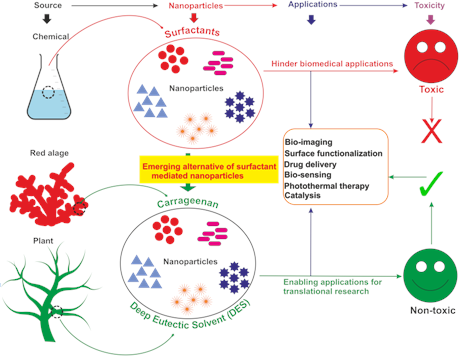
- . Anisotropic nanoparticles: cytotoxicity of structure-directing agents The evolution of anisotropy through wet chemical methods (seed-mediated synthesis) using a surfactant (CTAB) has been discussed already. The function of surfactants as templates or matrices makes them an irreplaceable candidate for


In situ transport characterization of magnetic states in Nb/Co superconductor/ferromagnet heterostructures
Beilstein J. Nanotechnol. 2021, 12, 913–923, doi:10.3762/bjnano.12.68

- -based SF1NF2S spin valves [34]. Discussion As we have seen, information about the evolution of magnetic states in S/F MLs is encoded in the shapes of MR curves. The most remarkable feature of those is the three-state remagnetization with an unusual maximum in addition to well-understood P and AP states
- devices. In [34] this was demonstrated using out-of-plane measurements. Here we show that similar information can be obtained using in-plain transport measurements. From FORC analysis in Figure 3 we can characterize the evolution of micromagnetic states in our structures upon remagnetization. We observe
- evolution of micromagnetic states. FORC is the key technique that we advertise for such in situ characterization. Using it we identified the parallel state, the antiparallel state, the monodomain scissor state, and polydomain states. Polydomain states are manifested by a profound enhancement of resistance


The role of convolutional neural networks in scanning probe microscopy: a review
Beilstein J. Nanotechnol. 2021, 12, 878–901, doi:10.3762/bjnano.12.66







Effects of temperature and repeat layer spacing on mechanical properties of graphene/polycrystalline copper nanolaminated composites under shear loading
Beilstein J. Nanotechnol. 2021, 12, 863–877, doi:10.3762/bjnano.12.65

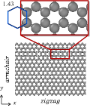
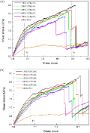
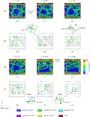
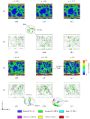
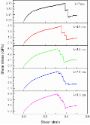
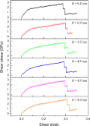
- the mechanical properties of carbon materials [31]. In this study, graphene with zigzag and armchair chirality is considered while simulating different properties of graphene monolayers and copper layers, including stress–strain curve variations, the distribution of von Mises stress, the evolution of
- applying a consistent velocity to the composites along the x-direction. The grain size D of the simulation model ranges from 4.24 to 9.43 nm. Deformation and dislocation evolution of the model are analyzed and visualized using the Open Visualization Tool (OVITO). Results and Discussion Effect of
- algorithm (DXA) analysis are used to evaluate the behavior of dislocations and stacking faults of the GPCuNL composites under shear loading. Figure 5a,c provides a cross-sectional view of the CSP analysis, and Figure 5b,d presents the DXA analysis of the dislocation evolution along the zigzag direction at










Physical constraints lead to parallel evolution of micro- and nanostructures of animal adhesive pads: a review
Beilstein J. Nanotechnol. 2021, 12, 725–743, doi:10.3762/bjnano.12.57
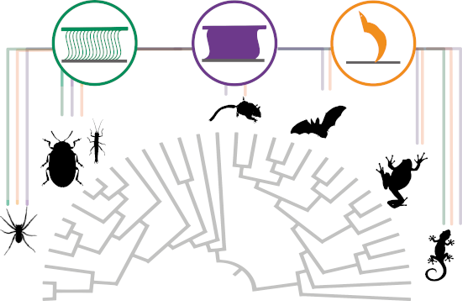
- principles of attachment pads with a special focus on insects, describe micro- and nanostructures, surface patterns, origin of different pads and their evolution, discuss the material properties (elasticity, viscoelasticity, adhesion, friction) and basic physical forces contributing to adhesion, show the
- influence of different factors, such as substrate roughness and pad stiffness, on contact forces, and review the chemical composition of pad fluids, which is an important component of an adhesive function. Attachment systems are omnipresent in animals. We show parallel evolution of attachment structures on
- micro- and nanoscales at different phylogenetic levels, focus on insects as the largest animal group on earth, and subsequently zoom into the attachment pads of the stick and leaf insects (Phasmatodea) to explore convergent evolution of attachment pads at even smaller scales. Since convergent events


Prediction of Co and Ru nanocluster morphology on 2D MoS2 from interaction energies
Beilstein J. Nanotechnol. 2021, 12, 704–724, doi:10.3762/bjnano.12.56
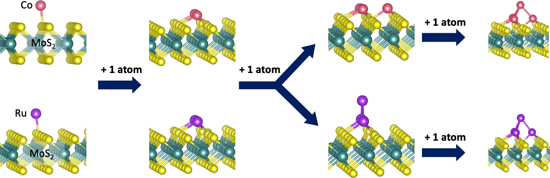
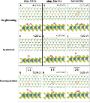
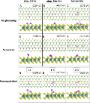
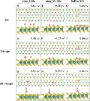
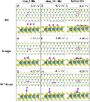
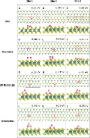
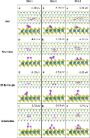
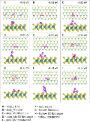
- MoS2 ML, where n = 1–4. Co and Ru are of great interest in conjunction with MoS2 for application in advanced interconnects as alternatives to Cu [30][31][32][33][34][35] and TaN. Applications in catalysis include Pt-free hydrogen evolution catalysts [36][37][38][39][40][41]. Interconnects require high



Electromigration-induced formation of percolating adsorbate islands during condensation from the gaseous phase: a computational study
Beilstein J. Nanotechnol. 2021, 12, 694–703, doi:10.3762/bjnano.12.55

- observed on silicon substrates [12][13]. Strong effects of EM were manifested in the processes of evolution of vanadium surface morphology [14], and in the epitaxial growth of semiconductor heterostructures [15]. It was found that at low deposition temperatures the growth of surface structures occurs
- include the formation of surface steps [28][29][30][31], faceting of the surface [32][33][34][35][36][37], elimination of instability of surface morphology caused by stress and wetting of the substrate [38][39][40][41], the evolution of contact irregularities in switches of microelectromechanical systems
- dynamics of the evolution of surface morphology at elevated temperatures. This effect can lead to a change in the morphology of the surface compared to the isotropic case of deposition without the presence of an external field. Mathematical and numerical modeling of nanostructured thin film growth


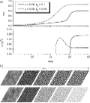


![[Graphic 29]](/bjnano/content/inline/2190-4286-12-55-i36.svg?max-width=637&scale=1.18182) on the adsorption coefficient α ...
on the adsorption coefficient α ...

Fate and transformation of silver nanoparticles in different biological conditions
Beilstein J. Nanotechnol. 2021, 12, 665–679, doi:10.3762/bjnano.12.53

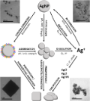
- pathways have not yet been systematically investigated and remain unclear. Here we aimed to examine the biotransformation of differently coated AgNPs [39] simulating real body conditions after oral uptake. The systematic work presented here addresses not only the evolution of various types of AgNPs in




A review of defect engineering, ion implantation, and nanofabrication using the helium ion microscope
Beilstein J. Nanotechnol. 2021, 12, 633–664, doi:10.3762/bjnano.12.52
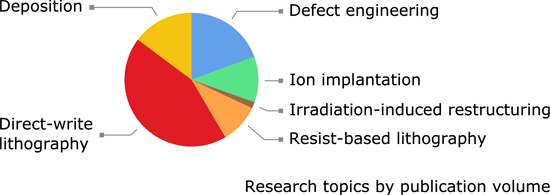
- irradiation in the HIM, this time using a defocused beam to irradiate larger areas, has also been used to generate defects in exfoliated flakes of molybdenum dichalcogenides (MoS2 and MoSe2) to activate the catalytic activity of the basal planes of the crystal for hydrogen evolution reactions [69]. Thermal
- overall damage evolution process was also noted. 2 Ion implantation Helium ion implantation and the associated structural changes to a material are often unwanted, with measures taken to avoid these effects. However, the HIM also offers a unique opportunity for fundamental studies of helium ion


Nanoporous and nonporous conjugated donor–acceptor polymer semiconductors for photocatalytic hydrogen production
Beilstein J. Nanotechnol. 2021, 12, 607–623, doi:10.3762/bjnano.12.50

- tunable bandgaps, high charge carrier mobility, and efficient intramolecular charge transfer. In this minireview, recent advances of D–A polymers in photocatalytic hydrogen evolution are summarized with a particular focus on modulating the optical and electronic properties of CPs by varying the acceptor
- photocatalyst (i.e., poly(p-phenylene)) for PHP was reported, but did not attract much attention due to the low hydrogen evolution rate (HER) [11]. In 2009, Wang et al. reported a novel metal-free polymeric photocatalyst (i.e., graphitic carbon nitride (g-C3N4)), which could efficiently reduce protons to
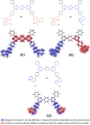
- :3) (Figure 2) were obtained. P5 exhibited a smaller bandgap of 1.99 eV. Moreover, the photoluminescence spectra indicated an improved separation efficiency of photogenerated charges of P5. A stable H2 evolution rate of 32 μmol·h−1 (20 mg) was achieved for HMP-3_2:3, which was several times higher




Boosting of photocatalytic hydrogen evolution via chlorine doping of polymeric carbon nitride
Beilstein J. Nanotechnol. 2021, 12, 473–484, doi:10.3762/bjnano.12.38
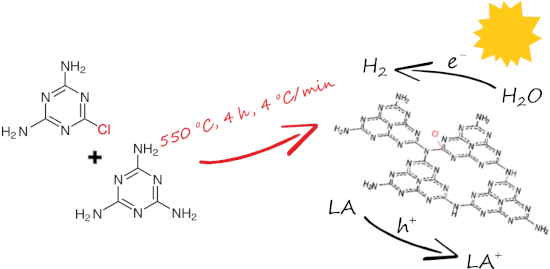
- the hydrogen evolution reaction. The following aspects were found to enhance the photocatalytic efficiency of Cl-PCN: (i) unique location of Cl atoms at the interlayers of PCN instead of on its π-conjugated planes, (ii) slight bandgap narrowing, (iii) lower recombination rate of the electron–hole
- pairs, (iv) improved photogenerated charge transport and separation, and (v) higher reducing ability of the photogenerated electrons. The above factors affected the 4.4-fold enhancement of the photocatalytic efficiency in hydrogen evolution in comparison to the pristine catalyst. Keywords: chlorine
- ; doping; hydrogen evolution reaction; photocatalysis; polymeric carbon nitride; Introduction Currently, the biggest problems of civilization seem to be the global energy crisis and environmental pollution. Both of these problems are directly related to each other. The pollution of our planet is mainly


Colloidal particle aggregation: mechanism of assembly studied via constructal theory modeling
Beilstein J. Nanotechnol. 2021, 12, 413–423, doi:10.3762/bjnano.12.33
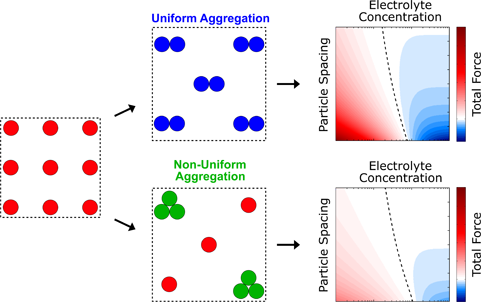
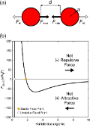
- properties, determines the preferred interparticle separation distance. Ultimately, this DLVO framework is used to describe the structural evolution of colloidal particle assemblies. Aggregation in one dimension Similar to the analysis by Bejan and Wagstaff [11], we begin by examining the one-dimensional (1D