Search results
Search for "dielectric" in Full Text gives 460 result(s) in Beilstein Journal of Nanotechnology. Showing first 200.
Tuning the electronic properties of defect-rich MoS2
Beilstein J. Nanotechnol. 2026, 17, 796–805, doi:10.3762/bjnano.17.56
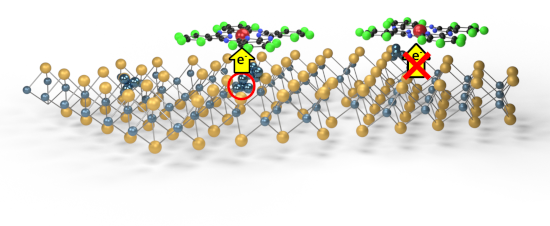
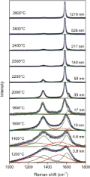
- on the dielectric constant, and the distance would cause a lowering of the binding energy. The magnitude might be estimated to maximal 0.1–0.2 eV for an atom directly at the interface to an organic molecule [29]. Since the observed energetic shifts are similar for different substrate-related core


Tailoring Ag–Pt nanoalloys through solid-state dewetting: structural and optical insights
Beilstein J. Nanotechnol. 2026, 17, 748–759, doi:10.3762/bjnano.17.52

- by a few experimental studies [40][41]. However, in this work, we address the question of the threshold Pt content at which its influence on the resonance position remains observable. Upon addition of Pt to the Ag nanostructures, intense d-electron excitations of Pt increase the dielectric function
- in both the real and imaginary components of the dielectric function (ε1 and ε2), leading to the quenching of the plasmon resonance [66]. Moreover, Pt d-electrons do not participate in the collective charge density oscillations in Ag–Pt alloys [37][67][68]. To further confirm the formation of




Recent progress in enhancing built-in electric fields of perovskite solar cells via junction engineering
Beilstein J. Nanotechnol. 2026, 17, 602–621, doi:10.3762/bjnano.17.42



Probing internal continua and atomic ultrafast charge transfer within size-controlled nanoparticles by post-collision interaction in core-hole clock spectroscopy
Beilstein J. Nanotechnol. 2026, 17, 505–514, doi:10.3762/bjnano.17.33
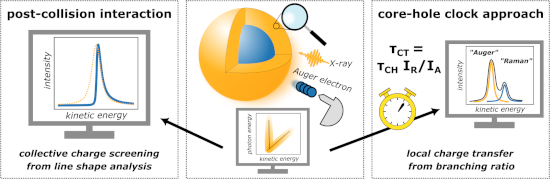
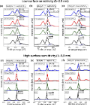
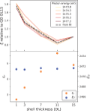
- additionally included the effective masses and the dielectric constant εr into our model [39], resulting in the following model for the asymmetry parameter ξ (details are given in Supporting Information File 1, section 6): As shown in Figure 4 (top panel, black dashed line) and Figure 5 (bottom panel, dashed
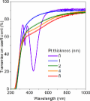
- the dielectric constant εr are displayed in Figure 4 (bottom panel), exhibiting a trend matching the evolution of the relative asymmetry parameters. As expected, increasing shell thickness enhances electron density, leading to a higher dielectric constant and improved screening ability. These findings
- introduction of the dielectric constant to account for the screening within the solid. For the quantum dot system, we observe a significant increase of the dielectric constant with growing shell thickness, attributed to an increased electronic density. Thus, in contrast to the size-dependence of the atomically



Upcycling agroindustrial waste into graphene oxide supports for gold nanoparticles: toward sustainable nanomaterials
Beilstein J. Nanotechnol. 2026, 17, 489–504, doi:10.3762/bjnano.17.32
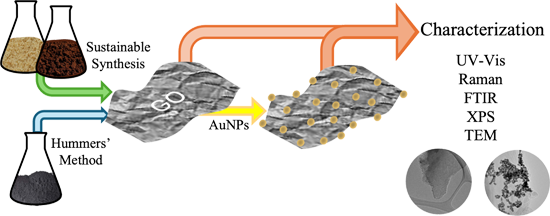
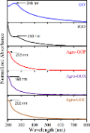
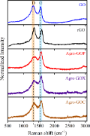
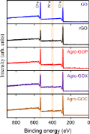
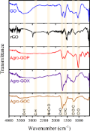
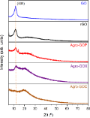
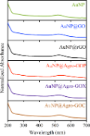
- oxygen-containing functional groups on the GO surface, which influence the local dielectric environment and stabilize the AuNPs. The most pronounced redshifts and spectral broadening were observed for the AuNP@Agro-GOX and AuNP@Agro-GOC hybrids, suggesting stronger interfacial interactions and higher



Defects and defect-mediated engineering of two-dimensional materials: challenges and open questions
Beilstein J. Nanotechnol. 2026, 17, 454–488, doi:10.3762/bjnano.17.31
- energies, linewidths, and photon correlations, underscoring the importance of local strain, dielectric fluctuations, moiré potentials, and defect proximity. However, the mismatch between atomic-scale lattice-resolving techniques and micrometer-scale far-field optical spectroscopy has long obstructed
- shallow dopants. These can be modelled by the effective-mass hydrogenic model (essentially the Schrödinger equation for the hydrogen atom, but using the effective mass of the band edges and screening of Coulomb interaction by the dielectric constant), which yields not only a small ionization energy, but
- -mass equation from 3D to 2D shows that the ionization energy in the 2D case is expected to increase to four times that of 3D case [132]. However, the dielectric constant is still that of the bulk, which in case of TMDs is rather high. The large screening reduces the binding energy to the 0.1–0.2 eV





Nanocarrier-integrated multilayer films produced by 3D printing for improved skin adhesion and curcumin photostability
Beilstein J. Nanotechnol. 2026, 17, 440–453, doi:10.3762/bjnano.17.30
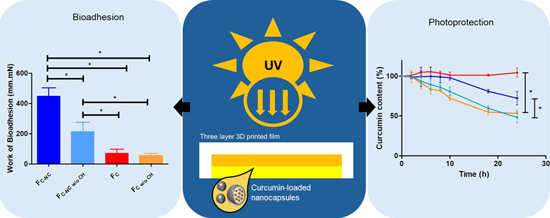
- solubilisation of curcumin in these formulations. Ethanol acts as a co-solvent and can significantly influence hydrogel rheology. Specifically, the reduction in the dielectric constant of the medium promotes intermolecular interactions between polymer chains, leading to a more compact and cohesive polymer


Ferroelectric nanodot reservoir for neuromorphic computing
Beilstein J. Nanotechnol. 2026, 17, 352–364, doi:10.3762/bjnano.17.24
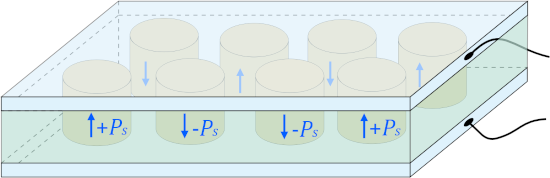
- “down” state. Termination of polarization at the top and bottom surfaces results in bound charges of magnitude mQb = mSPs, where S is the cross-sectional area of the nanodot. These surface-bound charges produce an internal depolarization field, Ed = −mPs/ε0εf, where ε0 is the vacuum dielectric
- permittivity and εf is the dielectric constant of the ferroelectric material. An external charge ±Qe applied to the electrodes generates an additional electric field inside the nanodot, Ee = −Qe/ε0εfS. Therefore, the total electric field inside the nanodot is the sum of the depolarization field, Ed, and the
- two continuous conductive plates, with a dielectric filler possibly present between adjacent units. Both configurations presented in Figure 1 can be described as an array of capacitors connected in parallel, where each nanodot represents an individual binary unit i with a specific polarization


Beam shaping techniques for pulsed laser ablation in liquids: Unlocking tunable control of nanoparticle synthesis in liquids
Beilstein J. Nanotechnol. 2026, 17, 309–342, doi:10.3762/bjnano.17.22
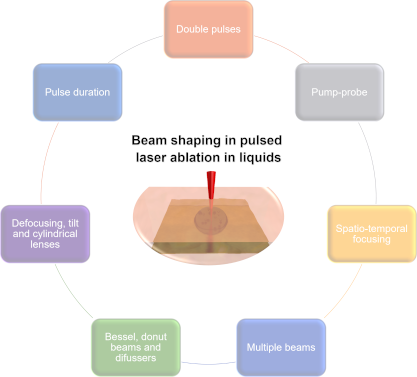
- ], including pure metals [40][41][42][43], semiconductors [44][45][46][47], or dielectric materials [48][49], in organic [41][50] or inorganic solvents [41][50][51][52]. Although initial NP production rates via PLAL were limited to a few milligram per hour, recent advancements in high-power, high-repetition







Advancing nanolithography: a comprehensive review of materials for local anodic oxidation with AFM
Beilstein J. Nanotechnol. 2026, 17, 275–291, doi:10.3762/bjnano.17.19
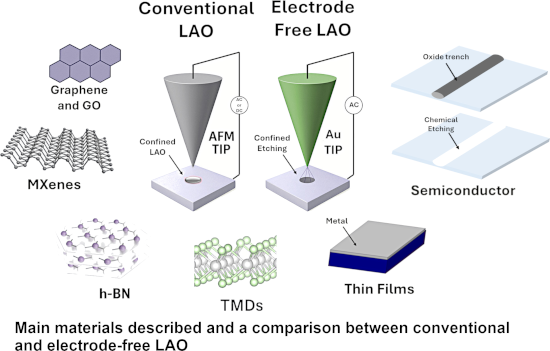
- build ultranarrow dielectric barriers in a 2D fashion has been also exploited to fabricate quantum devices on semiconductors [71][78]. 2.5 Materials used in LAO A diverse range of materials has been utilized in LAO, leveraging their distinct oxidation behaviors, structural characteristics, and
- reaction pathways under LAO, leading to markedly different feature geometries and device possibilities. LAO can define ultranarrow dielectric barriers, constrictions, and etched channels directly on the active material with nanometer precision and without resist contamination. In 2D materials, this allows
- uniform etching and demonstrating that heterostructures consisting of two different materials can also be tailored by EFLAO. The approach relies on capacitive coupling through dielectric substrates to generate localized electric fields and supports patterning at varying frequencies, with optimal


Multilayered hyperbolic Au/TiO2 nanostructures for enhancing the nonlinear response around the epsilon-near-zero point
Beilstein J. Nanotechnol. 2026, 17, 251–261, doi:10.3762/bjnano.17.17
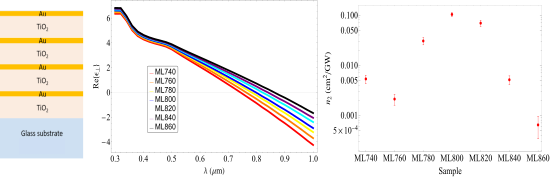
- –dielectric Au/TiO2 structures. The samples were fabricated using Joule effect evaporation for gold and electron beam evaporation for titanium dioxide. Their structure was designed to have an epsilon-near-zero (ENZ) point at different wavelengths around 800 nm, in order to study their nonlinear response as a
- , negative refractive index, and near-zero permittivity. The main benefit of HMMs is that, with the correct manipulation of the design, we are able to choose the wavelength in which we would like these phenomena to appear. Hyperbolic dispersion can be achieved by combining a dielectric, which has a
- layered Ag/TiO2 and determined via spectroscopy that its ENZ point laid within the visible spectrum [7]. Since then, a wide array of layered metal–dielectric configurations have been demonstrated, including silver-based combinations such as Ag/SiO2 [1], Ag/Al2O3 [6], Ag/LiF [8], Ag/TiO2 [9], Ag/Ge [10


Structure-dependent thermochromism of PAZO thin films: theory and experiment
Beilstein J. Nanotechnol. 2026, 17, 186–199, doi:10.3762/bjnano.17.12
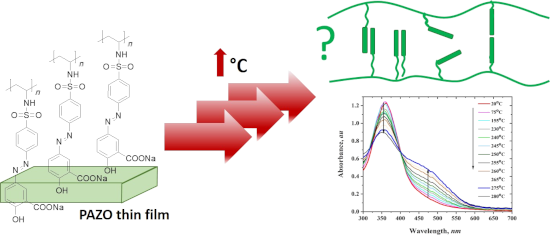
- = 1). This finding highlights the influence of solvent polarity, as the diminished dielectric screening characteristic of nonpolar media enhances monomer–monomer association, whereas polar environments preferentially stabilize the monomeric state. Conclusion Understanding the aggregation states and


Influence of surface characteristics on the in vitro stability and cell uptake of nanoliposomes for brain delivery
Beilstein J. Nanotechnol. 2026, 17, 139–158, doi:10.3762/bjnano.17.9
- following conditions: 25 °C, thermostating time of 120 s, viscosity of the medium 0.8894 cP, dielectric constant of 78.5, and an angle of 173°. At least three separate preparations (batches) from each sample were measured in triplicate. The results of each analysis were the average of 12 consecutive




Capabilities of the 3D-MLSI software tool in superconducting neuron design
Beilstein J. Nanotechnol. 2026, 17, 122–138, doi:10.3762/bjnano.17.8
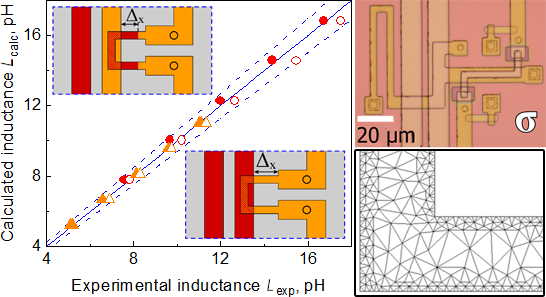
- dielectric layers are planarized, as is done, for example, in the process described in [6]. One more important feature of the program is non-uniform meshing related to the Triangle meshing engine [52]. It allows for a reduction of allocated memory and solution time, and provides better accuracy as well



Internal 3D temperature mapping in biological systems using ratiometric light-sheet imaging and lipid-coated upconversion nanothermometers
Beilstein J. Nanotechnol. 2025, 16, 2306–2316, doi:10.3762/bjnano.16.159
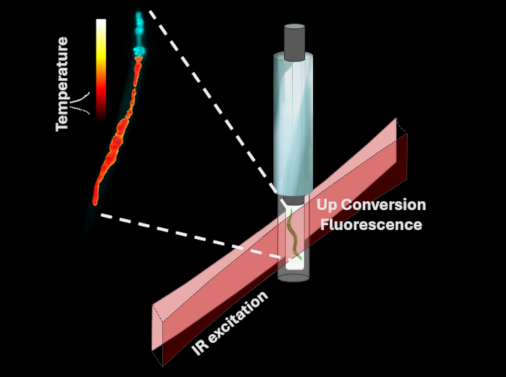
- insensitive to minor dielectric or chemical variations in the surrounding medium [61]. Therefore, the overall influence of fixation on the recorded fluorescence and thermal response is negligible [62]. Extending this method to live imaging presents additional challenges related to the simultaneous acquisition


Terahertz-range on-chip local oscillator based on Josephson junction arrays for superconducting quantum-limited receivers
Beilstein J. Nanotechnol. 2025, 16, 2296–2305, doi:10.3762/bjnano.16.158
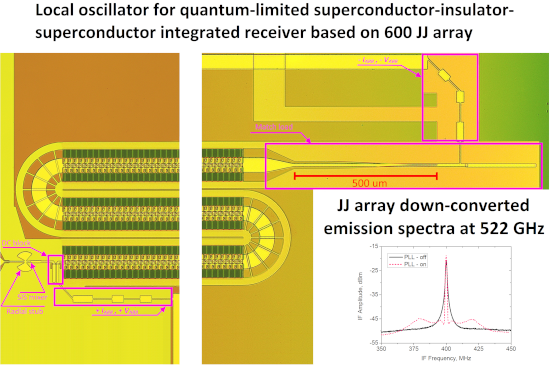
- attenuation in the CPW becomes smaller. This approach will be used in the topology of new designs. The width of the central electrode Wc is also changed in order to keep the characteristic impedance close to 50 Ω and the effective dielectric constant close to the ones in this study. However, the width of the


Chiral plasmonic nanostructures fabricated with circularly polarized light
Beilstein J. Nanotechnol. 2025, 16, 2245–2264, doi:10.3762/bjnano.16.154
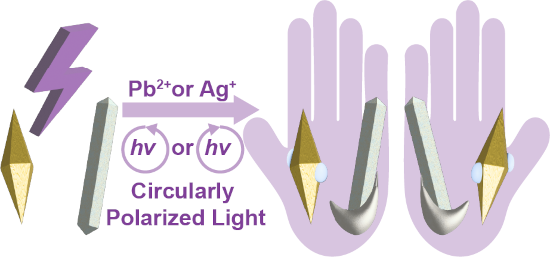
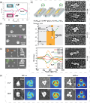
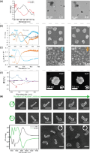
- structural chirality and optical activity of Au/PbO2 heterostructures. Similar wavelength-dependent chiroptic properties were obtained with chiral Au triangle prism/PbO2 nanostructures [92] (Figure 3e). The CD of the chiral Au/PbO2 nanostructures arises from PbO2 modifying the dielectric constant in the
- physics. The different shapes, sizes, and dielectric environments of the achiral PNSs were more accurately accounted for using numerical simulations. Govorov et al. described the inhomogeneous distribution of hot electrons in PNSs under CPL [75][76]. The map of the differential hot electron excitation
- ]. In addition, when molecules are attached near the cPNSs, their CD spectra shift due to modifications in the dielectric constant. All these factors contribute to the spectral changes observed when cPNSs detect chiral molecules. Still, it is important to point out that cPNSs are very useful for





Optical bio/chemical sensors for vitamin B12 analysis in food and pharmaceuticals: state of the art, challenges, and future outlooks
Beilstein J. Nanotechnol. 2025, 16, 2207–2244, doi:10.3762/bjnano.16.153
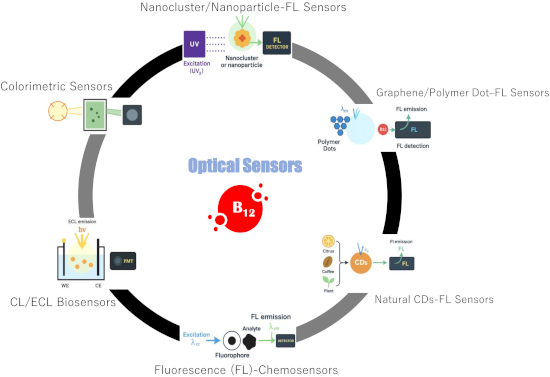
- plasmon resonance (SPR) sensors operate through a simple and effective mechanism in five key steps: (i) An electromagnetic field at the metal–dielectric interface excites coherent electron oscillations in the metal; (ii) this leads to the generation of surface plasmon polaritons (SPPs; i.e., oscillating


Electron transport through nanoscale multilayer graphene and hexagonal boron nitride junctions
Beilstein J. Nanotechnol. 2025, 16, 2132–2143, doi:10.3762/bjnano.16.147
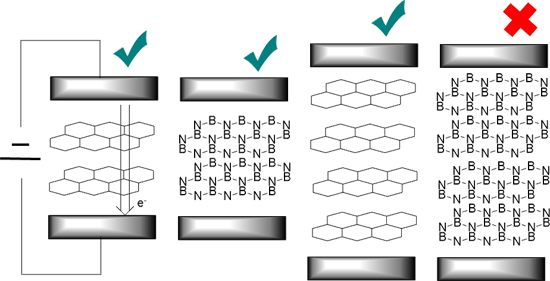
- graphene-based electronics and as a dielectric material in nanoelectronics devices. It finds application regarding corrosion resistance and antioxidation protective coatings [19]. Due to its high thermal conductivity and electrical insulation, h-BN is used in thermal management applications. h-BN is used
- findings establish h-BN as a high-quality, atomically thin dielectric suitable for next-generation tunneling devices and graphene-based heterostructures. From the results in Figure 4, Figure 5, Table 1, and Table 2 we can conclude that, at thicknesses of one to three layers, the transport is dominated by


Stereodiscrimination of guests in chiral organosilica aerogels studied by ESR spectroscopy
Beilstein J. Nanotechnol. 2025, 16, 2034–2054, doi:10.3762/bjnano.16.140
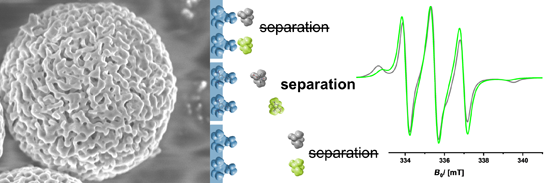
- first as this, according to [42][44], alters the difference in the interaction profiles. Isopropanol (ε = 18.3, μ = 1.66 D) has a lower dielectric constant ε and lower dipole moment μ than ethanol (ε = 24.2, μ = 1.69 D). Because of the carboxyl group in 3CP (see Figure 3), together with the dipole




Laser ablation in liquids for shape-tailored synthesis of nanomaterials: status and challenges
Beilstein J. Nanotechnol. 2025, 16, 1963–1997, doi:10.3762/bjnano.16.137
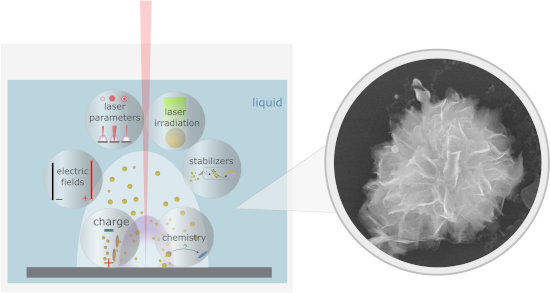
- process with the formation of dendritic structures. The authors discussed the evolution of NP shape based on the electrostatic attraction between species released from the plasma plume and liquid molecules, so that the resulting shape of the forming NPs would depend on the dielectric constant and dipole


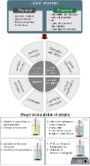


Quantum circuits with SINIS structures
Beilstein J. Nanotechnol. 2025, 16, 1931–1941, doi:10.3762/bjnano.16.134
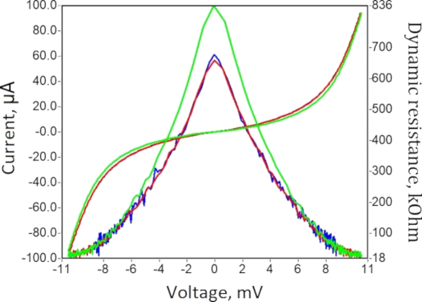
- tunnel junction In tunnel structures, the barrier is a dielectric layer between two metal films (often the oxide layer on the surface of the first metal layer is used as a dielectric). The first experimental study of a tunnel junction was carried out in 1960 [21] for an aluminum–aluminum oxide–lead


Low-temperature AFM with a microwave cavity optomechanical transducer
Beilstein J. Nanotechnol. 2025, 16, 1873–1882, doi:10.3762/bjnano.16.130
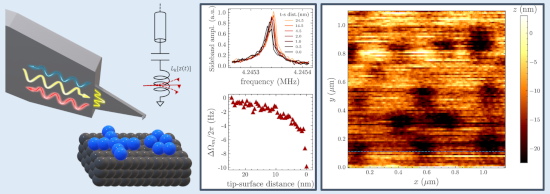
- in the literature [28][29][30]. The main limitation to the internal quality factor of our microwave resonators is the highly disordered low-stress Si–N layer, which causes significant dielectric losses [31]. As discussed above, the figure of merit of a displacement detector should be evaluated with


Electrical, photocatalytic, and sensory properties of graphene oxide and polyimide implanted with low- and medium-energy silver ions
Beilstein J. Nanotechnol. 2025, 16, 1794–1811, doi:10.3762/bjnano.16.123
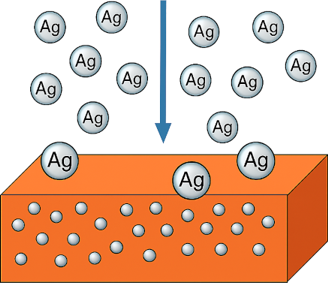
- controlled modification of the electrical properties of dielectric and semiconducting materials [7]. When Ag ions are implanted into polymer substrates, such as polyimide (PI) or graphene oxide (GO), fundamental changes occur at the molecular and electronic levels, leading to a significant decrease in the


Ambient pressure XPS at MAX IV
Beilstein J. Nanotechnol. 2025, 16, 1677–1694, doi:10.3762/bjnano.16.118

- , even on topologically complex surfaces, making it essential for the fabrication of next-generation devices [46][47][48]. In the semiconductor industry, ALD enables the creation of nanoscale transistors and high-k dielectric materials, essential for shrinking transistor dimensions and enhancing