

Search results
Search for "electronics" in Full Text gives 545 result(s) in Beilstein Journal of Nanotechnology. Showing first 200.
Decontamination from water pollutants and pathogens by electrospun nanofibers doped with heavy-atom-free borafluorene-BODIPY photosensitizers
Beilstein J. Nanotechnol. 2026, 17, 668–682, doi:10.3762/bjnano.17.46

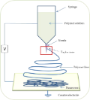
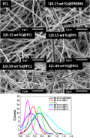
- University of Technology, Strzody 9, 44-100 Gliwice, Poland Centre for Organic and Nanohybrid Electronics, Silesian University of Technology, Konarskiego 22B, 44-100 Gliwice, Poland 10.3762/bjnano.17.46 Abstract A heavy-atom-free and non-toxic spirocyclic C-BODIPY singlet oxygen photosensitizer was



Cellulose as a photocatalyst support material: extraction, structural features, and environmental applications
Beilstein J. Nanotechnol. 2026, 17, 635–652, doi:10.3762/bjnano.17.44
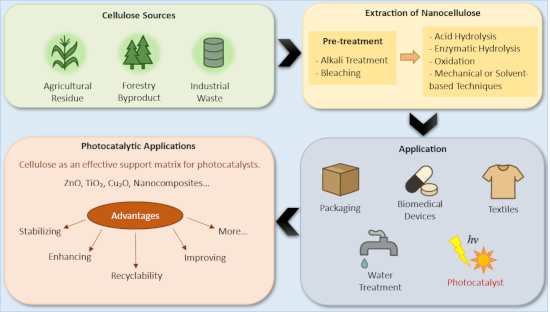
- are already being used across diverse sectors including packaging, construction, and electronics [63][64]. Research continues to focus on extracting cellulose primarily from plants such as wood, cotton, and agricultural residues and processing it through various nanotechnology-based methods to enhance
- temperature directly influence whether a substrate is suitable for applications. Traditionally, glass and plastic substrates have dominated the optoelectronic industry, especially in the development of flexible electronics, yet recent research has highlighted transparent nano-paper derived from renewable


Impacts of annealing on structural and photophysical properties of zinc phthalocyanine adsorbed on graphene
Beilstein J. Nanotechnol. 2026, 17, 576–585, doi:10.3762/bjnano.17.39
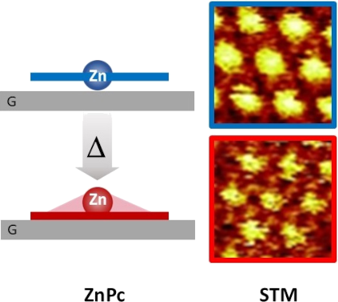
- molecular architectures. These results could also open important outlooks in the context of future organic electronics, since numerous electronic processes take place at the interface between substrate and molecule, and a proper control of its molecular-scale structure may be determinant [13]. Experimental


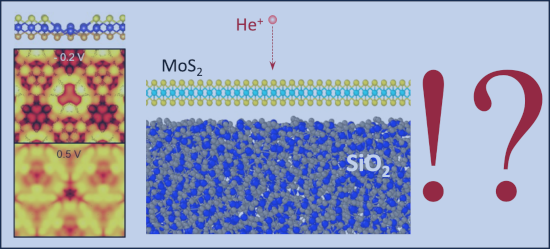
Defects and defect-mediated engineering of two-dimensional materials: challenges and open questions
Beilstein J. Nanotechnol. 2026, 17, 454–488, doi:10.3762/bjnano.17.31





Ferroelectric nanodot reservoir for neuromorphic computing
Beilstein J. Nanotechnol. 2026, 17, 352–364, doi:10.3762/bjnano.17.24
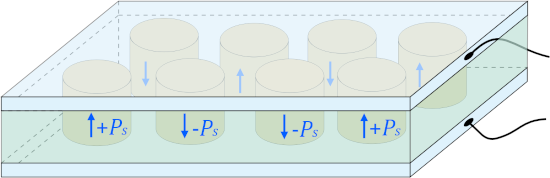
- interaction with the ferroelectric reservoir without physical wiring, expanding integration possibilities with optical platforms, scanning probe tools, and flexible electronics. In the implementations illustrated in Figure 7, the ferroelectric reservoir is operated using contactless methods for data input and


Interconnection morphology effects on the radio frequency response of carbon nanotube sponges
Beilstein J. Nanotechnol. 2026, 17, 343–351, doi:10.3762/bjnano.17.23
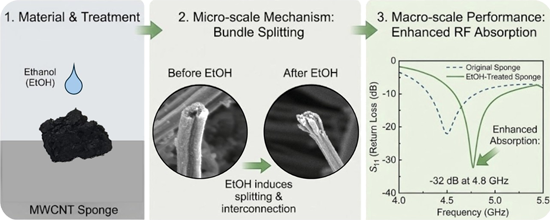
- being lighter and more resistant to a broad range of environmental and harsh operating conditions, while maintaining sufficient electrical conductivity. Among them, CNTs [10][11] proved to be well-performing materials in electronics and optoelectronic applications. CNT-based antennas have been realized


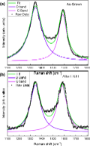


Fast vortex dynamics and relaxation times in NbRe-based heterostructures
Beilstein J. Nanotechnol. 2026, 17, 292–302, doi:10.3762/bjnano.17.20
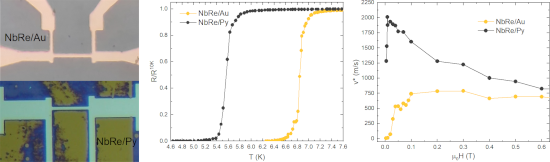
- optimization of superconducting quantum technologies, including superconducting detectors [10][11][12], superconducting qubits [13][14], and superconducting nano- and microstrips used in high-speed electronics [15], as well as for the development of hybrid architectures enabling magnon–fluxon interactions [16
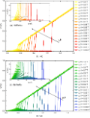


Advancing nanolithography: a comprehensive review of materials for local anodic oxidation with AFM
Beilstein J. Nanotechnol. 2026, 17, 275–291, doi:10.3762/bjnano.17.19
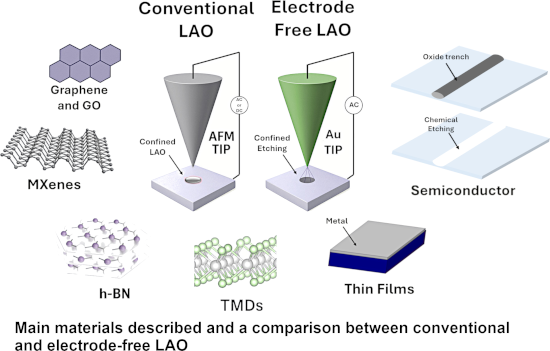
- dichalcogenides, demonstrate unique oxidation behaviors, enabling high-resolution applications in electronics and quantum devices. Recent advancements, such as electrode-free LAO, have expanded the range of applicable materials and improved the precision and scalability of the process. This paper also aims to


Comparative study on 3D morphologies of delignified, single tracheids and fibers of five wood species
Beilstein J. Nanotechnol. 2026, 17, 239–250, doi:10.3762/bjnano.17.16
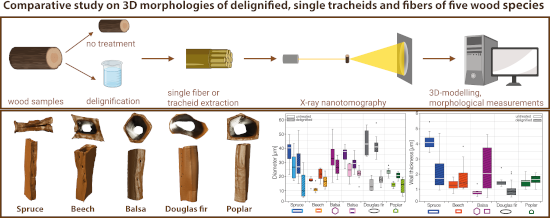
- biological approaches [11][15][16]. The applications of delignified wood are diverse and expanding; they include, for example, the production of high-quality paper or of nanocellulose with applications in electronics, biomedical devices, and advanced composites [11][14]. Recent research has focused on


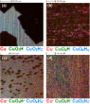
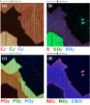
Time of flight secondary ion mass spectrometry imaging of contaminant species in chemical vapour deposited graphene on copper
Beilstein J. Nanotechnol. 2026, 17, 200–213, doi:10.3762/bjnano.17.13
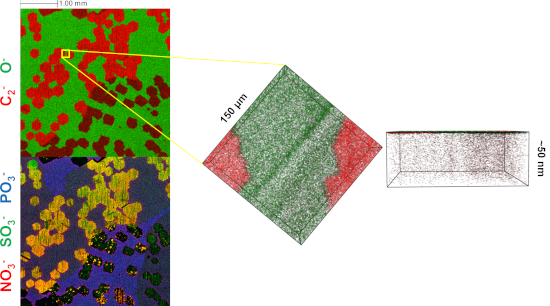
- contaminants in as-grown graphene [29] or contamination associated with processing [30][31][32][33]. Trace contaminants can significantly influence the catalytic growth process, as well as the post-growth processing required for electronics, and can be deleterious for many applications. There is a need for







Structure-dependent thermochromism of PAZO thin films: theory and experiment
Beilstein J. Nanotechnol. 2026, 17, 186–199, doi:10.3762/bjnano.17.12
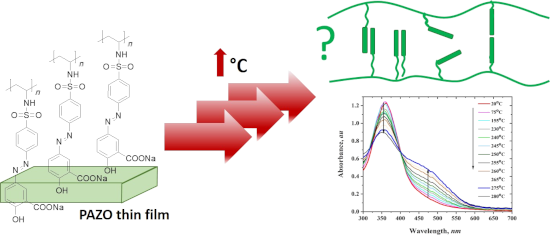
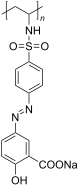
- Faculty of Chemistry and Pharmacy, Sofia University “St. Kliment Ohridski”, 1164 Sofia, Bulgaria Electronics and Telecommunications Research Institute, 218 Gajeong-ro, Yuseong-gu, Daejeon 34129, Republic of Korea 10.3762/bjnano.17.12 Abstract Poly[1-[4-(3-carboxy-4-hydroxyphenylazo)benzenesulfonamido
- a wide range of applications. This knowledge is particularly important in fields such as organic electronics and drug delivery, where thin films play a pivotal role. Our study focuses on these aspects to deepen the understanding of how to optimize PAZO thin films for photonic and optoelectronic


Capabilities of the 3D-MLSI software tool in superconducting neuron design
Beilstein J. Nanotechnol. 2026, 17, 122–138, doi:10.3762/bjnano.17.8
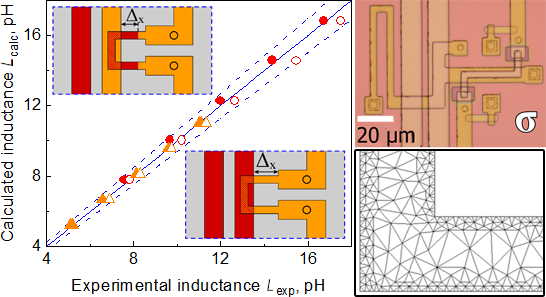
- design of superconducting electronics components. Keywords: adiabatic superconductor cells; inductance extraction; Josephson interferometers; multilayer niobium technology; superconductivity; Introduction This article is devoted to one of the issues related to the design of adiabatic superconducting
- types of superconducting electronics (SCE) circuits. Indeed, taking advantage of the high performance of SCE devices implies their operation in the gigahertz frequency range, in which incorrect circuit operation may be caused by small fluctuations in inductance. Digital and quantum SCE circuits are
- fitted on the basis of calculated inductances, which reveals the high potential of the 3D-MLSI software tool for the design of superconducting neurons as well as superconducting electronics devices in general. Appendix A To measure inductance and coupling of a two-junction SQUID loop, we connect the



Functional surface engineering for cultural heritage protection: the role of superhydrophobic and superoleophobic coatings – a comprehensive review
Beilstein J. Nanotechnol. 2026, 17, 63–96, doi:10.3762/bjnano.17.6

- ) has expanded significantly in recent years, especially in high-tech sectors such as electronics, telecommunications, medical devices, automotive, aerospace, and defense [40][41][42]. This growing interest reflects the critical need to address specific surface-level threats, including icing, fogging





Competitive helical bands and highly efficient diode effect in F/S/TI/S/F hybrid structures
Beilstein J. Nanotechnol. 2026, 17, 15–23, doi:10.3762/bjnano.17.2
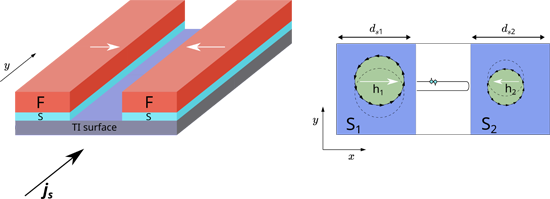
- superconducting electronics [2][3][4]. So far, the superconducting diode effect has been reported in many different systems, including Josephson junctions [5][6][7][8][9][10][11], junction-free devices [12][13][14][15][16][17], superconducting microbridges [18][19], and other systems [20][21]. There have been


![[Graphic 16]](/bjnano/content/inline/2190-4286-17-2-i31.svg?max-width=637&scale=1.18182)
![[Graphic 17]](/bjnano/content/inline/2190-4286-17-2-i32.svg?max-width=637&scale=1.18182)


Quantitative estimation of nanoparticle/substrate adhesion by atomic force microscopy
Beilstein J. Nanotechnol. 2026, 17, 1–14, doi:10.3762/bjnano.17.1

- various fields such as energy storage [1], electronics [2], and catalysis [3]. These tiny particles, with sizes typically ranging from 1 to 100 nm, have fundamentally different properties compared to their bulk counterparts because of their large surface-to-volume ratio [4], as well as unique electronic



Terahertz-range on-chip local oscillator based on Josephson junction arrays for superconducting quantum-limited receivers
Beilstein J. Nanotechnol. 2025, 16, 2296–2305, doi:10.3762/bjnano.16.158
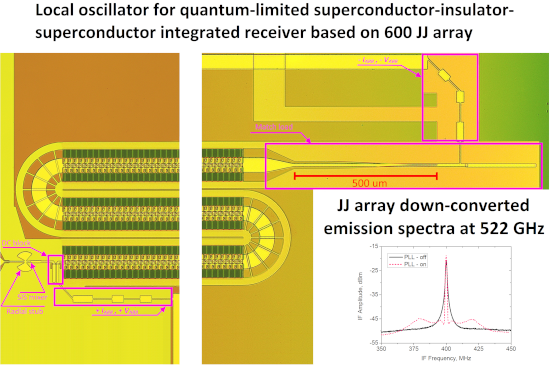
- Fedor V. Khan Lyudmila V. Filippenko Andrey B. Ermakov Mikhail Yu. Fominsky Valery P. Koshelets Kotel’nikov Institute of Radio Engineering and Electronics of RAS, 11/7 Mokhovaya st., Moscow, 125009, Russian Federation Moscow Institute of Physics and Technology, 9 Institutskiy per., Dolgoprudny


Missing links in nanomaterials research impacting productivity and perceptions
Beilstein J. Nanotechnol. 2025, 16, 2168–2176, doi:10.3762/bjnano.16.149
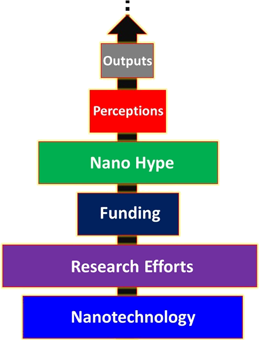
- working extensively in various aspects of nanotechnology, we find that the majority come from chemistry, physics, materials science, and metallurgy. Very few come from other fields such as mechanical, energy, electronics, biomedical engineering, and mathematics. The experts belonging to chemistry, physics
- , agriculture, and electronics. Innovation in these fields has far outpaced the development of adequate safety, ethical, and trade-related regulations. Consequently, many companies either evade pursuing nanomaterial-based products or underreport their use to bypass complex regulatory hurdles and ensure smoother
Electron transport through nanoscale multilayer graphene and hexagonal boron nitride junctions
Beilstein J. Nanotechnol. 2025, 16, 2132–2143, doi:10.3762/bjnano.16.147
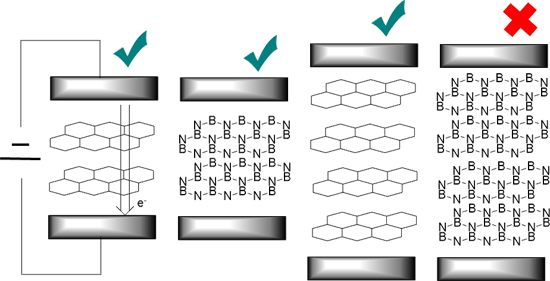
- [2], nanoscale electronics and electronic components [3], thermoelectric devices [4], and transparent films [5]. Graphene is a two-dimensional zero-bandgap semiconductor with excellent bulk conductivity. Its in-plane electron transport strongly depends on lattice order, lattice defects, and three
- graphene-based electronics and as a dielectric material in nanoelectronics devices. It finds application regarding corrosion resistance and antioxidation protective coatings [19]. Due to its high thermal conductivity and electrical insulation, h-BN is used in thermal management applications. h-BN is used


Toward clinical translation of carbon nanomaterials in anticancer drug delivery: the need for standardisation
Beilstein J. Nanotechnol. 2025, 16, 2092–2104, doi:10.3762/bjnano.16.144
- properties that make them attractive for a wide range of applications, including drug delivery, electronics, and energy storage [29]. However, the lack of standardised methods for their synthesis and characterisation can complicate their regulatory approval and limit their practical applications. One of the




Calibration of piezo actuators and systems by dynamic interferometry
Beilstein J. Nanotechnol. 2025, 16, 2086–2091, doi:10.3762/bjnano.16.143
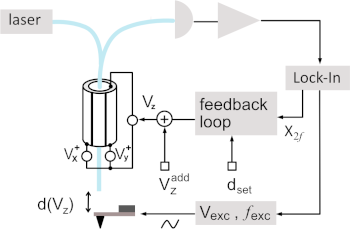
- of the system electronics and relevant voltages is detailed in Figure 3 of [16]. We investigate the dynamics of the free cantilever excited to oscillation at constant amplitude A and frequency fexc, which is always kept at the fundamental cantilever eigenfrequency f0. Initially, the interferometer is
- -step fit method based on Equation 1 as detailed in [13]. Here, VDC represents the DC part of the interferometer signal voltage, V0 is the voltage amplitude of the modulated signal, and φ is the phase shift introduced by the electronics in the signal path, which may be determined from the fit


Multifrequency AFM integrating PeakForce tapping and higher eigenmodes for heterogeneous surface characterization
Beilstein J. Nanotechnol. 2025, 16, 2077–2085, doi:10.3762/bjnano.16.142
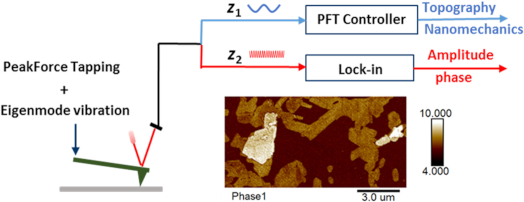
- channels after the pre-amplifier for dedicated, parallel processing of PFT feedback path and high-eigenmode detection path. The channel of the PFT feedback path is processed by the system’s built-in PeakForce electronics. A low-pass filter (200 kHz cut-off) and synchronization algorithms suppress high


Quantum circuits with SINIS structures
Beilstein J. Nanotechnol. 2025, 16, 1931–1941, doi:10.3762/bjnano.16.134
- Electronics RAS, Moscow, Russia Institute of Applied Physics RAS, Nizhny Novgorod, Russia Special Astrophysical Observatory RAS, Nizhnii Arkhyz, Russia ITMO University, Saint Petersburg, Russia P.N. Lebedev Physical Institute of the Russian Academy of Sciences, 119991 Moscow National Research University
- junction; superconducting tunnel junctions; Introduction Modern superconducting electronics is moving towards lower temperatures, lower noise levels, and higher sensitivity, which can be achieved at sub-Kelvin temperatures using aluminum-based tunnel junctions. One group of devices, such as
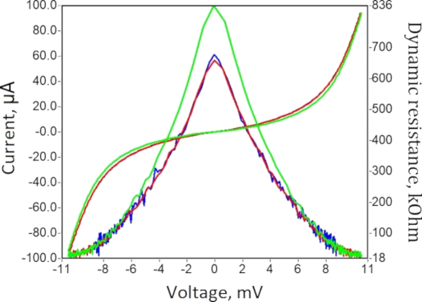
- measurements with a room-temperature JFET readout system and can be improved by upgrading the readout electronics). As an example, some measured characteristics of the SINIS detectors are given in Figure 7. The amplifier voltage noise is 20 nV·Hz−1/2, the optimal input impedance for this amplifier is 500 kΩ


Programmable soliton dynamics in all-Josephson-junction logic cells and networks
Beilstein J. Nanotechnol. 2025, 16, 1883–1893, doi:10.3762/bjnano.16.131
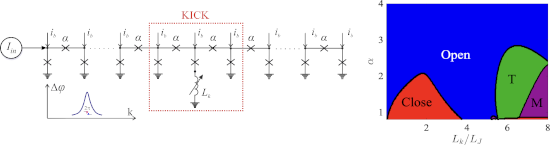
- functionality. By engineering artificial inhomogeneity into the circuit architecture, we enhance robustness in all-JJ logic circuits, 2D transmission line all-JJ lattices, and neuromorphic computing systems. Keywords: Josephson-based diode; kinetic inductance; soliton dynamics; superconducting electronics


On the road to sustainability – application of metallic nanoparticles obtained by green synthesis in dentistry: a scoping review
Beilstein J. Nanotechnol. 2025, 16, 1851–1862, doi:10.3762/bjnano.16.128
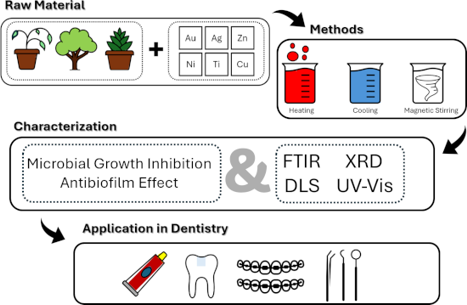
- [4][5][6]. These nanomaterials have been successfully applied in diverse fields, such as medicine, agriculture, cosmetics, electronics, the food industry, and, more recently, dentistry [5][6]. However, conventional chemical and physical synthesis routes often involve toxic organic solvents, high


Piezoelectricity of layered double hydroxides: perspectives regarding piezocatalysis and nanogenerators
Beilstein J. Nanotechnol. 2025, 16, 1812–1817, doi:10.3762/bjnano.16.124
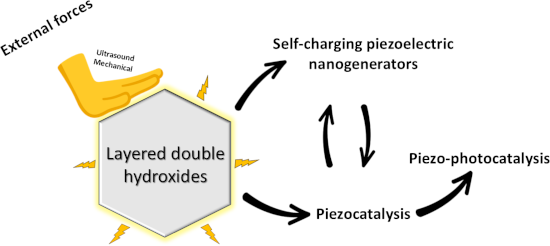
- conversion devices has positioned layered double hydroxides (LDHs) as promising candidates among the other two-dimensional materials. With their unique flexible layered structure, LDHs hold great potential for piezocatalysis and powering smart wearable electronics. Despite their promise, this area of study