Search results
Search for "exciton" in Full Text gives 106 result(s) in Beilstein Journal of Nanotechnology.
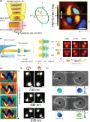
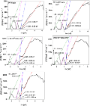
Locally induced Stark shifts of collective excitonic modes in polyradical aggregates
Beilstein J. Nanotechnol. 2026, 17, 1185–1193, doi:10.3762/bjnano.17.81
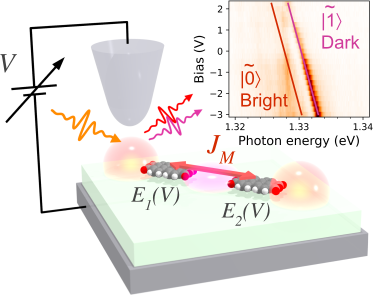
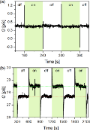
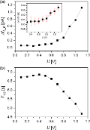
- , nanocavity coupling, and electrostatic charge inhomogeneities in the clusters. This sensitivity to the external parameters demonstrates an effective means of control over radical excitonic aggregates. Keywords: chromophore; dark states; exciton; Stark shift; TEPL; tip-enhanced photoluminescence
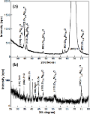
- dominantly anionic PTCDA aggregates confined in an STM plasmonic nanocavity at the submolecular level, focusing on the characteristic behavior of the bright and dark exciton modes. We confirm the controllability of the collective modes by the electric field, by the aggregate geometry, and by the nanocavity
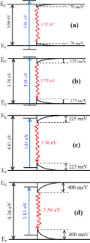
- be reconciled by considering a specific renormalization of the on-site Stark shift coefficients in a simple coupled-exciton model and extrapolating to the more complex aggregates. We also revealed a general sharpening of the excitonic modes with increasing cluster size. Overall, our findings


Light-driven ammonia electrooxidation via carbon nitride–ruthenium molecular interfaces
Beilstein J. Nanotechnol. 2026, 17, 854–862, doi:10.3762/bjnano.17.61
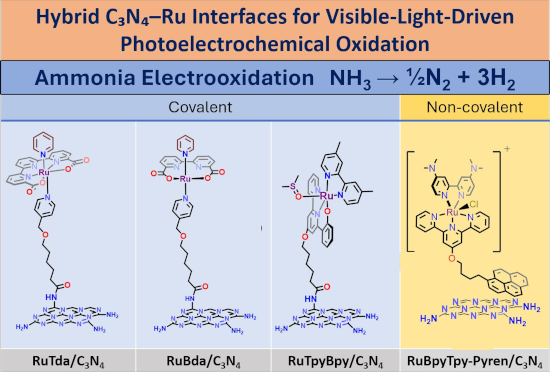
- “holy grail” of artificial photosynthesis. In artificial photoelectrocatalytic systems, light-driven reactions follow five sequential steps (Figure 2a): (1) Photon absorption by the semiconductor generates a bound electron–hole pair, or exciton; (2) the exciton undergoes dissociation into spatially
- surface; and (5) the surface-bound molecular catalyst drives the target redox reaction. Here, either water oxidation or ammonia oxidation at the anchored Ru centre. This distinction matters especially for C3N4. Unlike inorganic semiconductors with high dielectric constants, where exciton formation and
- dissociation are instantaneous, C3N4 has a higher exciton binding energy (0.1–0.4 eV [11]) that makes carrier separation a predominant rate-limiting step. The applied bias in a photoelectrochemical cell assists this dissociation by sweeping free carriers away from the recombination zone, an advantage that goes


Recent progress in enhancing built-in electric fields of perovskite solar cells via junction engineering
Beilstein J. Nanotechnol. 2026, 17, 602–621, doi:10.3762/bjnano.17.42
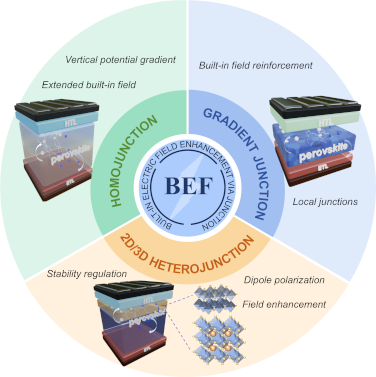
- , which promoted exciton dissociation and carrier transport. This method is compatible with low-temperature processing and maintains stability for over 1000 h. The device retained about 90% of its initial PCE after 1000 h in an unpackaged room-temperature environment with 25% humidity. The Sn/Pb gradient




Defects and defect-mediated engineering of two-dimensional materials: challenges and open questions
Beilstein J. Nanotechnol. 2026, 17, 454–488, doi:10.3762/bjnano.17.31
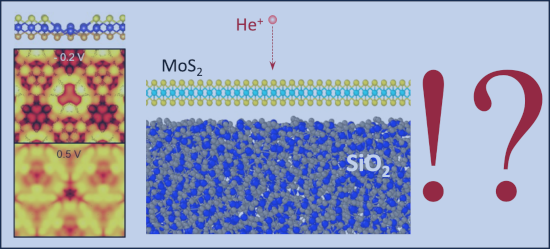
- range, still allowing for a moderate degree of ionization [133]. However, if the 2D material is surrounded by vacuum, the reduced screening is expected to increase the ionization energy to the 0.5–1.0 eV range. This is comparable to the experimentally extracted exciton binding energies, a correspondence





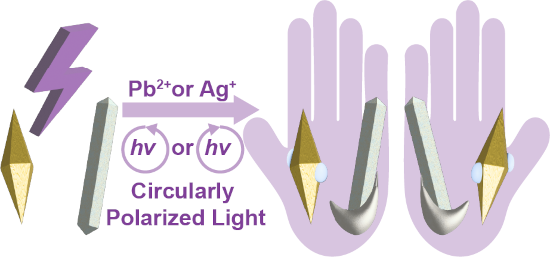
Chiral plasmonic nanostructures fabricated with circularly polarized light
Beilstein J. Nanotechnol. 2025, 16, 2245–2264, doi:10.3762/bjnano.16.154
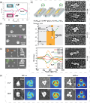
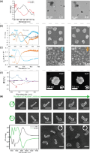
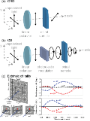
- contribute to the enhancement of the degree of circular polarization by suppressing the intervalley scattering rate and accelerating the valley-polarized exciton decay rate. Though the circular polarization-selective PL of achiral quantum dots has been demonstrated when coupled to cPNSs [161][162][163][164





Piezoelectricity of layered double hydroxides: perspectives regarding piezocatalysis and nanogenerators
Beilstein J. Nanotechnol. 2025, 16, 1812–1817, doi:10.3762/bjnano.16.124
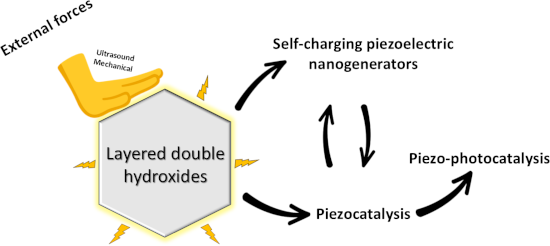
- evidence demonstrated that dual oxygen vacancies in Ni/Fe-LDHs create interfacial bonds that mitigate carrier localization effects and unfavorable influences during piezocatalysis and photocatalysis. These features promote exciton dissociation and charge transfer. Furthermore, the strong electronic

Laser processing in liquids: insights into nanocolloid generation and thin film integration for energy, photonic, and sensing applications
Beilstein J. Nanotechnol. 2025, 16, 1428–1498, doi:10.3762/bjnano.16.104






Ar+ implantation-induced tailoring of RF-sputtered ZnO films: structural, morphological, and optical properties
Beilstein J. Nanotechnol. 2025, 16, 872–886, doi:10.3762/bjnano.16.66
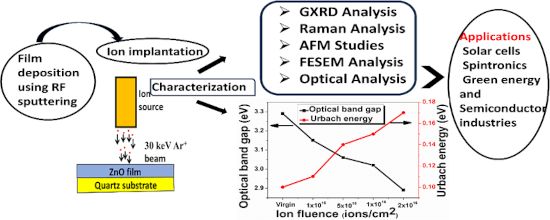
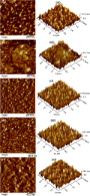
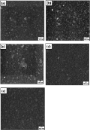
- promising material for device fabrication in different fields, namely, spintronics, nanoelectronics, and photonics [1][2]. It possesses a wide bandgap of 3.37 eV [3] and has a large exciton binding energy of about 60 meV [4], which assures the stability of ZnO film-based devices such as liquid crystal






Comparison of organic and inorganic hole transport layers in double perovskite material-based solar cell
Beilstein J. Nanotechnol. 2025, 16, 119–127, doi:10.3762/bjnano.16.11
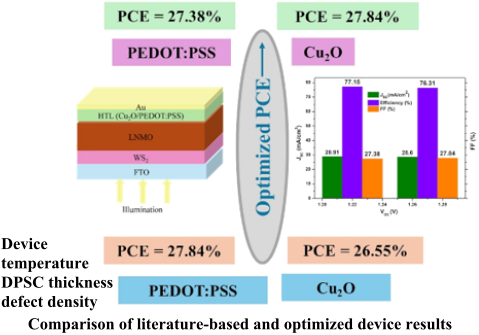
- -based PSCs as a promising photovoltaic material. The double perovskite layer is a remarkable choice as active layer because of intrinsic carrier stability, low exciton binding energy, and low toxicity. Herein, the optimization of a planar DPSC with a multifunctional double perovskite absorber layer


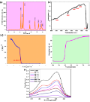
Characterization of ZnO nanoparticles synthesized using probiotic Lactiplantibacillus plantarum GP258
Beilstein J. Nanotechnol. 2025, 16, 78–89, doi:10.3762/bjnano.16.8
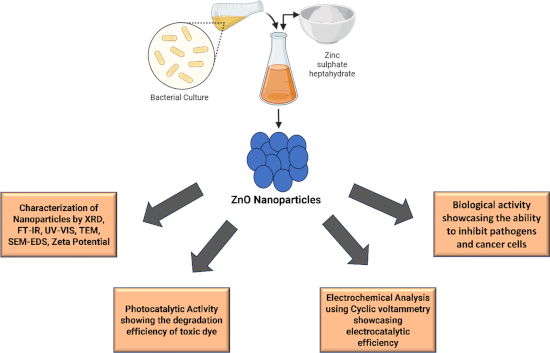
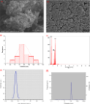
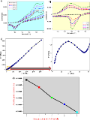
- ambient conditions with a bandgap and high exciton binding energy of 3.37 eV and −60 meV, respectively [10]. Because of this high exciton binding energy even at room temperature, the excitonic transitions have a broad range of applications such as in optics, gas detecting, piezoelectrics, and



Various CVD-grown ZnO nanostructures for nanodevices and interdisciplinary applications
Beilstein J. Nanotechnol. 2024, 15, 1390–1399, doi:10.3762/bjnano.15.112
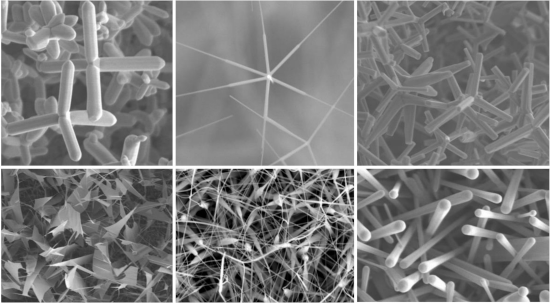
- . Depending on the morphology and crystal quality, their photoluminescence spectra have only a strong UV emission associated with the exciton radiative recombination, or both UV and defect-related visible emissions with their relative intensity ratio varying with the excitation power density. The obtained
- comparison to other compounds [4][5][6]. Specifically, its large bandgap energy Eg ≈ 3.4 eV is comparable to GaN – a typical material for blue-light-emitting diode (LED) technology [7][8]. Also, its exciton binding energy is higher than the thermal energy at 300 K, and it has high-quality optical
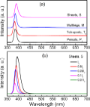
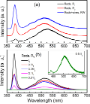
- PL spectra which can be based on to classify the ZnO nanostructures into two sample groups. The first group gives only a UV emission at approx. 384–390 nm, such as P1, T2, M, and S shown in Figure 8a. Here, the UV emission is associated with the exciton radiative recombination [66]. An excitation



Aero-ZnS prepared by physical vapor transport on three-dimensional networks of sacrificial ZnO microtetrapods
Beilstein J. Nanotechnol. 2024, 15, 490–499, doi:10.3762/bjnano.15.44
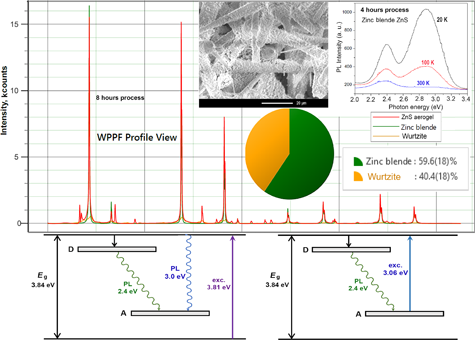
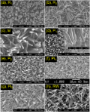
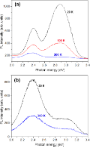
- ) is in resonance with the exciton energy in zinc blende ZnS [35], and the conditions for RRS are satisfied [36], while the difference between the PL excitation laser line of 325 nm (3.814 eV) and the position of the 3.726 eV emission peak is nearly equal to the 2LO phonon energy (88 meV). The
- weak PL band at 3.360 eV, related to the neutral donor D0X bound exciton emission in ZnO [39], and three higher-intensity PL bands at 3.30, 3.23, and 3.16 eV, associated with donor–acceptor (DA) recombination and its 1LO and 2LO phonon replicas, respectively [40][41]. The PL band in the near-bandgap



Determining by Raman spectroscopy the average thickness and N-layer-specific surface coverages of MoS2 thin films with domains much smaller than the laser spot size
Beilstein J. Nanotechnol. 2024, 15, 279–296, doi:10.3762/bjnano.15.26
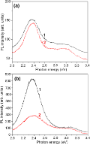
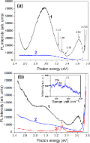
- A1g and E12g modes, occurs when the spectra are excited at an energy close to those of the A and B excitons located around 655 nm (1.89 eV) and 601 nm (2.06 eV), respectively, in MoS2 monolayers [35][36]. When the incident laser energy is in the range of the A and B exciton energies (the so-called
- MoS2 [35]. Some of the second-order bands overlap with the A1g and E12g modes, complicating the exact determination of the parameters of these modes recorded under resonance conditions. Furthermore, since the MoS2 exciton characteristics (energy, width, and spectral weight) can be changed by several
- factors (e.g., stacking, strain, doping, and defects), the Raman intensities measured with a single laser wavelength close to exciton energies can be affected by external factors and differ for samples elaborated by different methods. For these reasons and in the aim to use Raman spectroscopy to count the


CdSe/ZnS quantum dots as a booster in the active layer of distributed ternary organic photovoltaics
Beilstein J. Nanotechnol. 2024, 15, 144–156, doi:10.3762/bjnano.15.14
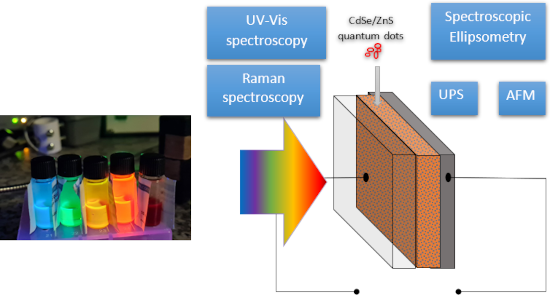
- combinations as part of the donor:acceptor blend is prompted by singlet excitons. This increases the electron transfer current, leading to higher efficiency. By incorporating quantum dots into active layers, the following effects were observed: boosted exciton formation, minimized interface charge




Dual-heterodyne Kelvin probe force microscopy
Beilstein J. Nanotechnol. 2023, 14, 1068–1084, doi:10.3762/bjnano.14.88

- organic blends, charge photogeneration can be understood, in a first approach, as the result of exciton dissociation into Coulomb bound charge transfer (CT) states at the donor–acceptor interfaces. This event is finally followed by the dissociation of the CT states into delocalized carriers of opposite
- confinement in the vertical direction and their smooth surfaces with atomic thickness control, very precise control over the optical gap and exciton energy of NSs can be achieved through chemical synthesis, making them very interesting




A visible-light photodetector based on heterojunctions between CuO nanoparticles and ZnO nanorods
Beilstein J. Nanotechnol. 2023, 14, 1018–1027, doi:10.3762/bjnano.14.84
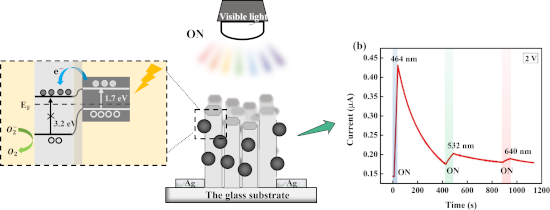
- because of its large exciton binding energy of 60 meV at room temperature [20], excellent chemical and thermal stability, high electron mobility, non-toxicity, low cost, and simple synthesis [21][22]. Various shapes of ZnO nanomaterials can be easily obtained by controlling synthesis conditions (e.g


Plasmonic nanotechnology for photothermal applications – an evaluation
Beilstein J. Nanotechnol. 2023, 14, 380–419, doi:10.3762/bjnano.14.33
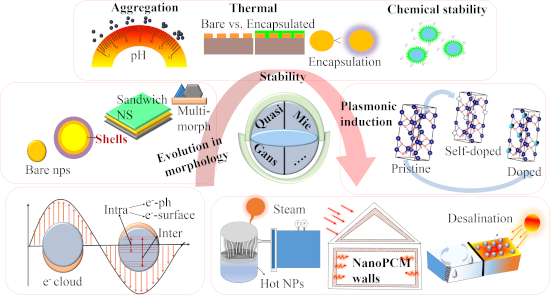
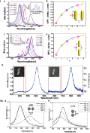
- exciton radius. In such cases, the confined electron wave functions have discrete energies and undergo considerably higher scattering with the surface because of the “shrunken” wave functions, contributing significantly to the reduction in absorption due to significantly increased linewidth broadening [68




LED-light-activated photocatalytic performance of metal-free carbon-modified hexagonal boron nitride towards degradation of methylene blue and phenol
Beilstein J. Nanotechnol. 2022, 13, 1380–1392, doi:10.3762/bjnano.13.114
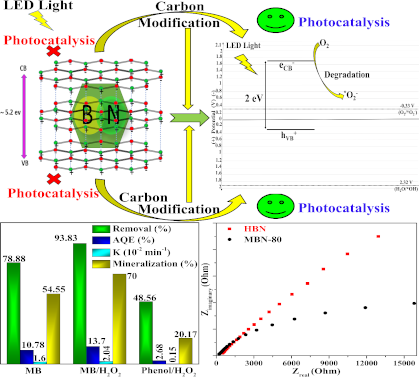
- the obtained experimental outcomes substantiates MBN as a superior photoactive material with enhanced LHE, charge carrier generation, and reduced exciton recombination in comparison to HBN. The introduction of carbon into the HBN lattice sites boosted the overall photocatalytic performance through



Revealing local structural properties of an atomically thin MoSe2 surface using optical microscopy
Beilstein J. Nanotechnol. 2022, 13, 572–581, doi:10.3762/bjnano.13.49

- addition, point defect-induced trions in monolayer WS2 on a nonconducting substrate can be visualized via photoluminescence in order to precisely explore the exciton binding energy [15]. The optical properties of edges and grain boundaries in 2D-TMDC materials have also been characterized by
- further discuss the charge-transfer direction between CuPc and MoSe2. The central wavelength of the photoluminescence peak is roughly at 790 nm, which is in good agreement with the exciton emission of monolayer MoSe2 [27]. The photoluminescence intensity of CuPc on bilayer MoSe2 is significantly lower


Zinc oxide nanostructures for fluorescence and Raman signal enhancement: a review
Beilstein J. Nanotechnol. 2022, 13, 472–490, doi:10.3762/bjnano.13.40
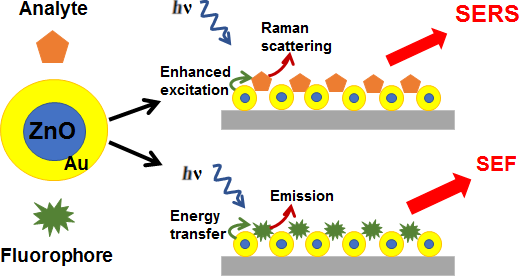
- SERS effect can be attributed to the EM enhancement due to clustering of Ag NPs and the CT mechanism [72]. [73] studied the SERS enhancement by using ZnO NRs decorated with Au NPs. Deposition of gold NPs onto ZnO nanorods resulted in decreasing the green emission band and enhancing the exciton emission
- assigned to exciton recombination [76] with a maximum around 370 nm (3.35 eV), called band-edge luminescence and a broad emission band situated in the green spectral region at about 550 nm (2.25 eV) in undoped ZnO [77]. The nature of the long-wavelength band in the visible region has been controversial for




Impact of device design on the electronic and optoelectronic properties of integrated Ru-terpyridine complexes
Beilstein J. Nanotechnol. 2022, 13, 219–229, doi:10.3762/bjnano.13.16

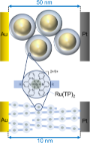
- -complex, that is, a metal-to-ligand charge transfer is induced. The Ru2+ cation creates an exciton consisting of a threefold positive Ru3+ and a negative charge located on the MPTP ligand. Subsequently, these charge carriers are separated in the applied electrical field. Therefore, the electrical field


Self-assembly of amino acids toward functional biomaterials
Beilstein J. Nanotechnol. 2021, 12, 1140–1150, doi:10.3762/bjnano.12.85
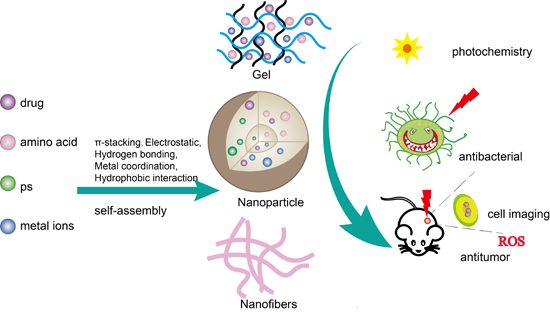
- that the nanofibers were assembled into sea-urchin-like microspheres. Fmoc-ʟ-Lys nanofibers act as templates to regulate the self-assembly of pigments. Sea-urchin-like structures facilitate light collection due to enhanced absorption cross sections and exciton energy transfer. In addition, Liu et al

Nanoporous and nonporous conjugated donor–acceptor polymer semiconductors for photocatalytic hydrogen production
Beilstein J. Nanotechnol. 2021, 12, 607–623, doi:10.3762/bjnano.12.50

- Conjugated polymers (CPs) as photocatalysts have evoked substantial interest. Their geometries and physical (e.g., chemical and thermal stability and solubility), optical (e.g., light absorption range), and electronic properties (e.g., charge carrier mobility, redox potential, and exciton binding energy) can
- ), optical (e.g., light absorption range), and electronic properties (e.g., charge carrier mobility, redox potential and exciton binding energy) can be easily tuned via structural design. In addition, they are of light weight (i.e., mainly composed of C, N, O, and S) [8][9][10]. In 1985, the first CP-based




Excitonic and electronic transitions in Me–Sb2Se3 structures
Beilstein J. Nanotechnol. 2020, 11, 1045–1053, doi:10.3762/bjnano.11.89

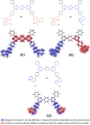
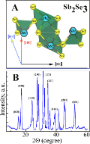
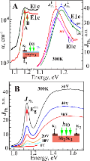
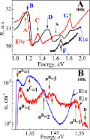
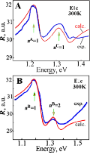
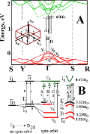
- (A, B, C, and D) were observed in the optical spectra of the Sb2Se3 single crystals and in the photoelectric spectra of the Me–Sb2Se3 structures. The exciton parameters, such as the ground (n = 1) and excited (n = 2) state positions and the binding energy (Ry), were determined. The effective mass of
- single crystals was carried out by our group [24]. Since Sb2S3 and Sb2Se3 have a similar band structure, the four excitonic states (A, B, C and D) were also obtained for the Sb2S3 single crystals. Based in our previous work [24], the exciton binding energies, valence band parameters, valence band
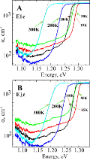
- performed at low temperatures (Figure 5B). For the Е||c case, when the temperature decreases to 10 K, a maximum is detected at 1.299 eV which is caused by the exciton ground states nA = 1, conventionally designated as the A series. For the same polarization case, another maximum nС = 1 is detected at 1.347


Band tail state related photoluminescence and photoresponse of ZnMgO solid solution nanostructured films
Beilstein J. Nanotechnol. 2020, 11, 899–910, doi:10.3762/bjnano.11.75
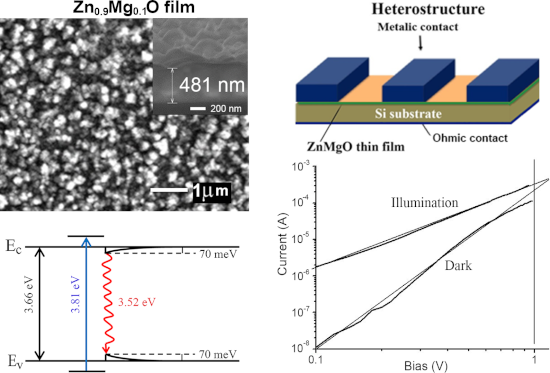
- dependence of the maximum PL emissions was explained in terms of exciton localization in potential traps induced by Mg compositional fluctuations. The fluctuations in the local arrangement of Mg and Zn atoms have been also recently investigated by means of cathodoluminescence (CL) and OA spectroscopy in c