


Search results
Search for "mitomycin C" in Full Text gives 2 result(s) in Beilstein Journal of Nanotechnology.
Development and in vitro evaluation of liposomes and immunoliposomes containing 5-fluorouracil and R-phycoerythrin as a potential phototheranostic system for colorectal cancer
Beilstein J. Nanotechnol. 2026, 17, 97–121, doi:10.3762/bjnano.17.7
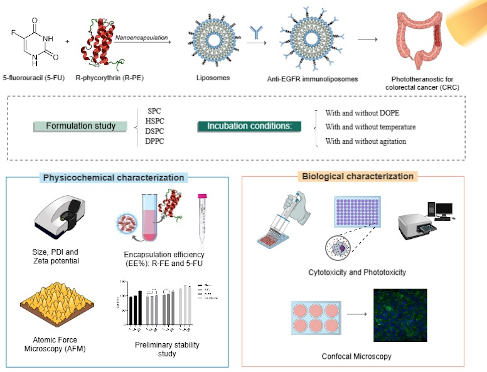
- [2][3]. Among the treatment options for CRC, there are oxaliplatin, irinotecan, mitomycin C and fluoropyrimidines, such as 5-fluSousa et al.orouracil (5-FU), in addition to radiotherapy and anti-EGFR monoclonal antibodies, such as cetuximab [2]. Even though these options are classic treatments for
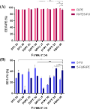

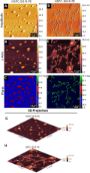
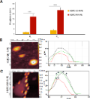


Carbon nanomaterials sensitize prostate cancer cells to docetaxel and mitomycin C via induction of apoptosis and inhibition of proliferation
Beilstein J. Nanotechnol. 2017, 8, 1307–1317, doi:10.3762/bjnano.8.132
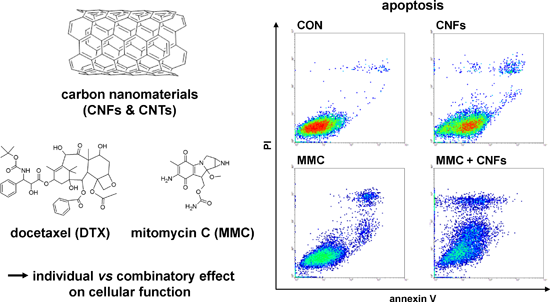
- investigates the chemosensitizing potential of CNFs and CNTs to the conventional chemotherapeutics docetaxel (DTX) and mitomycin C (MMC), which have different molecular structures and mechanisms of action than platinum-based chemotherapeutics. DU-145 PCa cells were treated with DTX and MMC alone or in
- . Co-administration of chemotherapeutics with carbon nanomaterials could result in a reduction of the chemotherapeutic dosage and thus limit systemic side effects. Keywords: carbon nanomaterials; chemosensitization; docetaxel; mitomycin C; prostate cancer cells; Introduction According to the global
- mitomycin C (MMC), regarding their cytotoxic effects when applied in combination with carbon nanomaterials. DTX is a cytostatic taxane approved for the palliative treatment of castration-resistant PCa [29]. It promotes microtubule stabilization, acts anti-mitotic and initiates apoptosis resulting in cell


Other Beilstein-Institut Open Science Activities



