

Search results
Search for "nanogenerators" in Full Text gives 15 result(s) in Beilstein Journal of Nanotechnology.
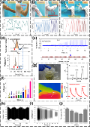
Piezoelectricity of layered double hydroxides: perspectives regarding piezocatalysis and nanogenerators
Beilstein J. Nanotechnol. 2025, 16, 1812–1817, doi:10.3762/bjnano.16.124
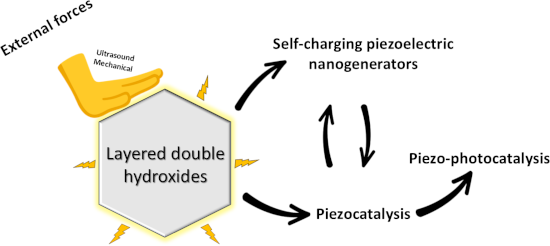
- is still in its infancy and this review explores its recent advances. The discussion encompasses LDH-based piezoelectric nanogenerators, piezocatalytic and piezo-photocatalytic properties of LDHs, and composite material synergies that enhance the overall electroactive performance. Looking to the
- to the development of next-generation high-performance piezoelectric devices. Keywords: layered double hydroxides; nanogenerators; piezocatalysis; piezoelectricity; Introduction Given the ever-increasing global need to reduce dependence on fossil fuels, finding other ways to generate energy from
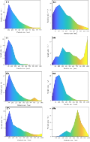
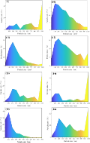
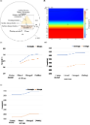
- findings and interpretations Piezoelectric nanogenerators A general idea of the piezoelectric properties of LDHs in the described studies is given in Table 1. A visual summary of the described works is presented in Figure 1. Works where we assume the absence of a crystalline structure of LDHs despite the

Various CVD-grown ZnO nanostructures for nanodevices and interdisciplinary applications
Beilstein J. Nanotechnol. 2024, 15, 1390–1399, doi:10.3762/bjnano.15.112
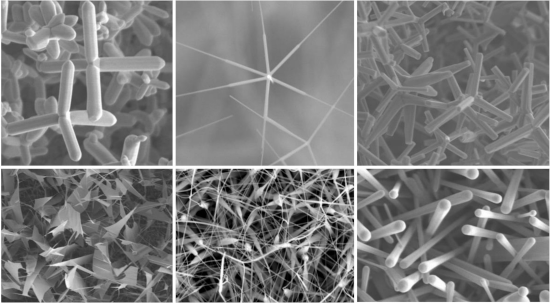
- microcavities [9]. Additionally, it is a transparent semiconductor with significant piezoelectricity [10]. These noble characteristics suggest ZnO to be a potential material in the fabrication of UV/blue/green LEDs, solid-state random lasers, UV-absorption devices, and nanogenerators [9][11][12][13]. Magnetic



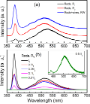
A wearable nanoscale heart sound sensor based on P(VDF-TrFE)/ZnO/GR and its application in cardiac disease detection
Beilstein J. Nanotechnol. 2023, 14, 819–833, doi:10.3762/bjnano.14.67

- improved the film-making process by adding fillers to P(VDF-TrFE), using secondary polarization, and applying other methods to enhance its piezoelectric performance. Kumar et al. prepared P(VDF-TrFE)/ZnO matrix composite nanogenerators using electrospinning. Voltage and current of these nanogenerators were
- , respectively, 2.4 times and 1.6 times greater than those of pure P(VDF-TrFE) nanogenerators [14]. Subash et al. added ZnO nanoparticles and exfoliated graphene oxide to P(VDF-TrFE) to prepare a composite nanofilm with excellent touch sensitivity and high output energy. They also used the piezoelectric film for


The effect of metal surface nanomorphology on the output performance of a TENG
Beilstein J. Nanotechnol. 2022, 13, 298–312, doi:10.3762/bjnano.13.25
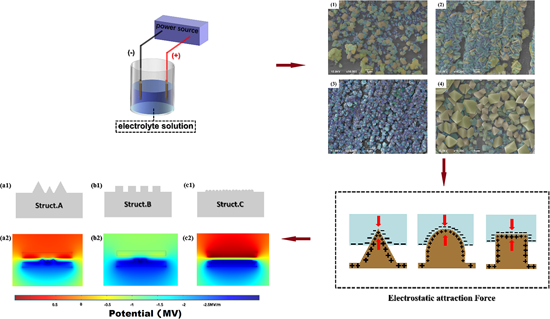
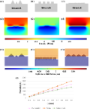
- widely exists in nature and is not fully utilized has raised great interest of researchers [1][2]. Triboelectric nanogenerators (TENGs) are environmentally friendly energy collectors that improve energy utilization. They can use forms of renewable energy that are widely available in the environment and




Enhancement of the piezoelectric coefficient in PVDF-TrFe/CoFe2O4 nanocomposites through DC magnetic poling
Beilstein J. Nanotechnol. 2021, 12, 1262–1270, doi:10.3762/bjnano.12.93

- constant and good piezoelectric properties suitable for the fabrication of flexible piezoelectric nanogenerators [1][2][3][4][5][6][7]. One of the most extensively investigated piezoelectric polymers is poly(vinylidene fluoride) (PVDF). This polymer has attracted a lot of interest due to its excellent


Nanogenerator-based self-powered sensors for data collection
Beilstein J. Nanotechnol. 2021, 12, 680–693, doi:10.3762/bjnano.12.54
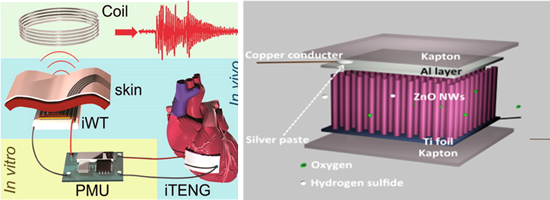
- , Swansea University, Swansea, SA1 8EN, UK 10.3762/bjnano.12.54 Abstract Self-powered sensors can provide energy and environmental data for applications regarding the Internet of Things, big data, and artificial intelligence. Nanogenerators provide excellent material compatibility, which also leads to a
- . Keywords: data collection; Internet of Things; nanogenerator; self-powered sensor; wearable device; Introduction Self-powered sensor systems can harvest and convert environmental energy to electricity, which enables sensor operation without external power source [1][2]. Nanogenerators (NGs) can
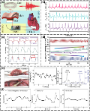
- energy supplies. Triboelectric nanogenerators (TENGs) were used as electronic skin for pressure detection and material identification [50][51]. Pressure sensors based on piezoelectric nanogenerators (PENGs) were used to detect tiny pressure deviations from water droplets [52][53], wind flow [53][54][55



Simulation of gas sensing with a triboelectric nanogenerator
Beilstein J. Nanotechnol. 2021, 12, 507–516, doi:10.3762/bjnano.12.41
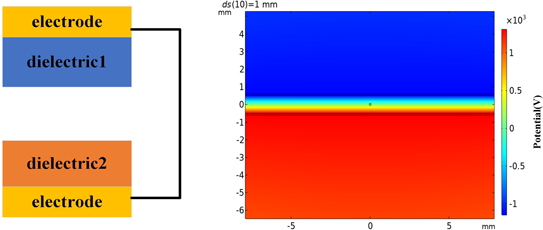
- 610036, China Ocean College, Zhejiang University, Zhejiang 316021, China 10.3762/bjnano.12.41 Abstract Safety concerns require the frequently check for leaks in gas pipelines. Also, in coal mines the type gases permeating from the ground need to be monitored. Triboelectric nanogenerators (TENGs) can be
- . Triboelectric nanogenerators (TENGs) can collect and convert different forms of energy (e.g., human motion [8][9][10], vibration [11], rotation [12], wind [13], and water [14]) into electric energy [15][16][17], thus expanding the range of energy production to a more microscopic scale [18] and improving the
- rate of utilization [19]. Characterized by low cost, light weight, environmental safety, and high conversion efficiency under low frequency, TENGs can provide continuous power supply for wearable devices [20], medical devices, and microelectronic systems [21]. In addition, triboelectric nanogenerators



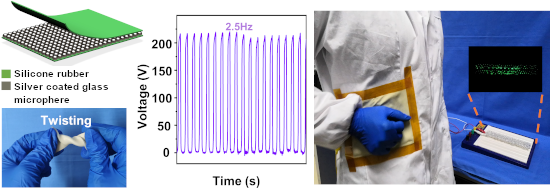
A stretchable triboelectric nanogenerator made of silver-coated glass microspheres for human motion energy harvesting and self-powered sensing applications
Beilstein J. Nanotechnol. 2021, 12, 402–412, doi:10.3762/bjnano.12.32
- Defense Key Disciplines Lab of Novel Micro-nano Devices and System Technology, Chongqing University, Chongqing, 400044, China 10.3762/bjnano.12.32 Abstract Wearable triboelectric nanogenerators (TENGs) have recently attracted great interest because they can convert human biomechanical energy into
- acquisition. Regarding this, it is desirable to develop wearable devices that convert mechanical energy from human body motion into electricity [12]. Triboelectric nanogenerators (TENGs), with a wide range of material choices and simple device structures, capture the energy of human motion in real time [13

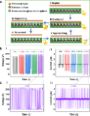
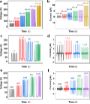
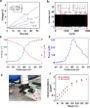


Paper-based triboelectric nanogenerators and their applications: a review
Beilstein J. Nanotechnol. 2021, 12, 151–171, doi:10.3762/bjnano.12.12
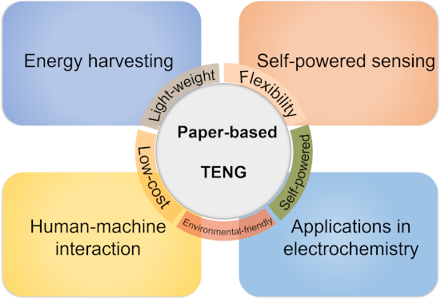
- of triboelectric nanogenerators (TENGs) has attracted wide attention due to their advantages, such as self-powering, lightweight, and facile fabrication. Similarly to paper and other fiber-based materials, which are biocompatible, biodegradable, environmentally friendly, and are everywhere in daily
- very complex and energy consuming. Assisted with a self-powered system, an ideal cathodic protection system is expected to be sustainably powered by using nanogenerators. This can effectively decrease the usage of traditional methods which are energy consuming and introduce serious environmental






Piezotronic effect in AlGaN/AlN/GaN heterojunction nanowires used as a flexible strain sensor
Beilstein J. Nanotechnol. 2020, 11, 1847–1853, doi:10.3762/bjnano.11.166

- based on the 1D quantum confinement effect. Hence, the unique electrical and optical properties of 1D semiconductor NWs have attracted research interest from the field of nanogenerators [11][12][13][14] and NW-based strain sensors [15][16][17][18][19]. Strain sensors can convert mechanical deformation


A self-powered, flexible ultra-thin Si/ZnO nanowire photodetector as full-spectrum optical sensor and pyroelectric nanogenerator
Beilstein J. Nanotechnol. 2020, 11, 1623–1630, doi:10.3762/bjnano.11.145

- -circuit current output that can be used as a power generator [13][14]. Pyroelectric nanogenerators (PENGs) based on a pyroelectric material have been demonstrated as an effective approach that could avoid the waste of energy by converting temperature fluctuations induced by photoabsorption into electric
- harvesting energy from the working environment instead of a battery. Comparing with another emerging nanogenerators (triboelectric nanogenerators) [19][20], the PENGs benefit from not requiring external mechanical energy and can make full use of the energy in their own environment. This self-powered system


Walking energy harvesting and self-powered tracking system based on triboelectric nanogenerators
Beilstein J. Nanotechnol. 2020, 11, 1590–1595, doi:10.3762/bjnano.11.141
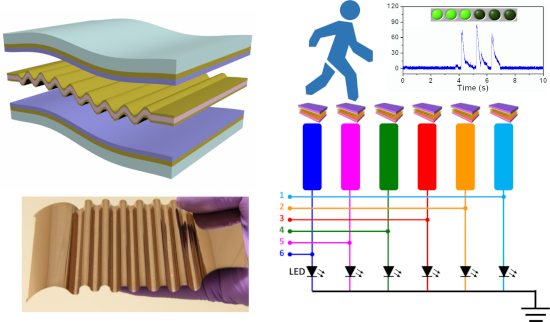
- . Recently, triboelectric nanogenerators (TENGs) have been invented, which offer an innovative combination between electrostatic induction and contact electrification. These devices are able to harvest mechanical energy from a vast array of sources, such as body motion [16][17][18][19], vibration [20][21][22




Triboelectric nanogenerator based on Teflon/vitamin B1 powder for self-powered humidity sensing
Beilstein J. Nanotechnol. 2020, 11, 1394–1401, doi:10.3762/bjnano.11.123
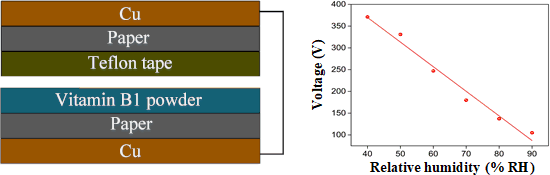
- Universities in Chongqing, College of Electronic and Information Engineering, Southwest University, Chongqing, China Ocean College, Zhejiang University, Zhejiang, China 10.3762/bjnano.11.123 Abstract Recently, there has been growing interest in triboelectric nanogenerators (TENGs) that can effectively convert
- -emitting diodes (LEDs) integrated in the TVB-TENG system. The TVB-TENG proposed in this study illustrates a cost-effective method for portable power supply and sensing devices. Keywords: humidity sensor; self-powered system; triboelectric nanogenerators (TENGs); triboelectrification; vitamin B1
- systems can be mitigated [17][18][19][20][21]. Hence, the investigation of self-powered sensors which harvest energy from the surrounding environment is highly sustainable. Triboelectric nanogenerators (TENGs) have been growing in popularity for use as a novel technology to harvest energy. TENGs have a




Review of advanced sensor devices employing nanoarchitectonics concepts
Beilstein J. Nanotechnol. 2019, 10, 2014–2030, doi:10.3762/bjnano.10.198

- could be applicable for demands requiring the evaluation of small normal pressures even on dynamic surfaces such as natural tissues and is expected to be useful for in situ biomedical digital monitoring, such as palpation for breast cancer. Triboelectric nanogenerators to convert mechanical energy to





Nonlinear effect of carrier drift on the performance of an n-type ZnO nanowire nanogenerator by coupling piezoelectric effect and semiconduction
Beilstein J. Nanotechnol. 2018, 9, 1917–1925, doi:10.3762/bjnano.9.183

- piezoelectric semiconductors can be used to develop many new microelectronic devices with modern functions, for example piezoelectric field-effect transistors [6][7][8][9][10][11], piezoelectric charge-coupled devices [12][13][14][15], piezoelectric chemical sensors [16][17], and nanogenerators made of
- vertically aligned ZnO nanowires [18][19][20][21][22][23][24][25][26][27]. The principle of nanogenerators is that the piezoelectric potential produced by the piezoelectric effect can produce a current in an external circuit when the ZNW is deformed. Specifically, a transversely applied force makes the
- deformation, a very low output of ZNW nanogenerators occurs under that situation. The force necessarily to obtain a good performance of the nanogenerator will certainly result in large variations of carrier concentration [30]. Thus, we abandon the assumption of small carrier-concentration fluctuations and


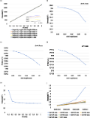
![[Graphic 46]](/bjnano/content/inline/2190-4286-9-183-i59.svg?max-width=637&scale=1.18182) and (b) boundary electric displacement Dr at Ω for different end f...
and (b) boundary electric displacement Dr at Ω for different end f...