


Search results
Search for "reptiles" in Full Text gives 6 result(s) in Beilstein Journal of Nanotechnology.
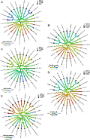
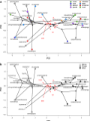
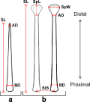
Subdigital integumentary microstructure in Cyrtodactylus (Squamata: Gekkota): do those lineages with incipiently expressed toepads exclusively exhibit adhesive setae?
Beilstein J. Nanotechnol. 2026, 17, 38–56, doi:10.3762/bjnano.17.4
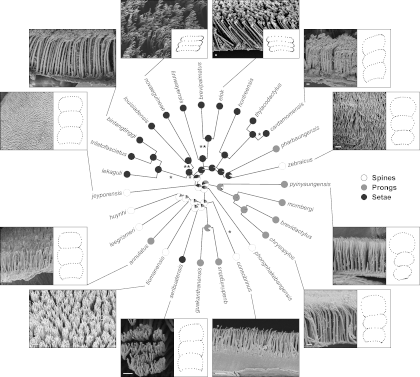
- significantly among both microstructure types and ecotypes. Keywords: ecomorphology; evolution; habitat-specific adaptations; microfibrils; microornamentation; reptiles; toepad evolution; Introduction How a species’ habitat influences its mode of locomotion and how species adapt to effectively traverse and


Growing up in a rough world: scaling of frictional adhesion and morphology of the Tokay gecko (Gekko gecko)
Beilstein J. Nanotechnol. 2022, 13, 1292–1302, doi:10.3762/bjnano.13.107
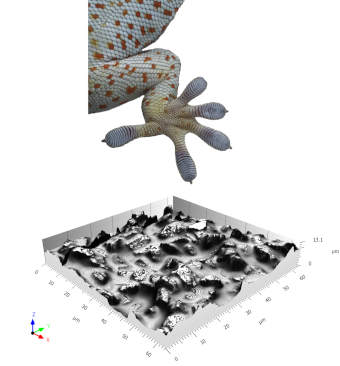
- reptiles, and has been a focus of both engineering and biological studies [3]. Models are frequently used to describe adhesion, such as the Johnson–Kendall–Roberts (JKR) model [4]. In this case, the force required to pull an elastic sphere from a flat surface is determined using the radius of the sphere
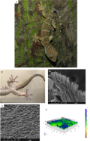

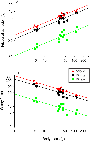

Biomimetic surface structures in steel fabricated with femtosecond laser pulses: influence of laser rescanning on morphology and wettability
Beilstein J. Nanotechnol. 2018, 9, 2802–2812, doi:10.3762/bjnano.9.262

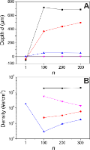
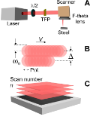
- structures show similarities to the skin of certain reptiles and integument of insects. Different irradiation parameters are investigated to produce the desired structures, including laser repetition rate and laser fluence, paying special attention to the influence of the number of times the same area is
- surface morphology. We present experimental results of complex self-organized structures produced in commercial steel that resemble the morphology of the skin of certain reptiles and insects, which are of great interest due to their exceptional fluid transport and friction reduction properties. Surface
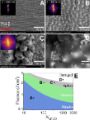


Characterization of the microscopic tribological properties of sandfish (Scincus scincus) scales by atomic force microscopy
Beilstein J. Nanotechnol. 2018, 9, 2618–2627, doi:10.3762/bjnano.9.243

- ; Introduction Areas with loose, aeolian sand in the deserts of North Africa and the Arabian Peninsula are the habitat of the lizard Scincus scincus [1] (see Figure 1a). It hides from predators by burying in sand within seconds. This defence strategy is also known from other reptiles [1]. S. scincus, however, is
- , he assumed that these are the origin of the favourable frictional properties of reptiles living in a sandy environment. Klein et al. [14] speculated that a material gradient in the snake integument minimizes damage during locomotion. However, as pointed out by Baumgartner et al. [6][10] the comb-like
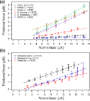
- nanostructure of the sandfish is found only on dorsal scales and is missing on ventral scales. Moreover, both types feature a similar friction coefficient. Finally, such a comb-like structure can be found on many reptiles even on those that do not sand-swim or live in a different environment [15]. Consequently




Equilibrium states and stability of pre-tensioned adhesive tapes
Beilstein J. Nanotechnol. 2014, 5, 1725–1731, doi:10.3762/bjnano.5.182
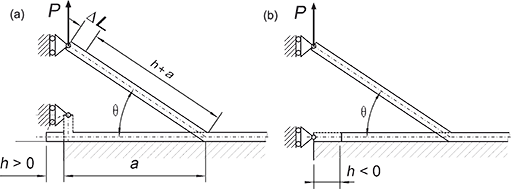
- understanding of adhesion of thin films is of prominent importance in a huge number of biological and biomechanical applications. As an example, the extraordinary adhesive abilities characterizing the hairy attachment systems of insects, reptiles and spiders have drawn significant research efforts aimed at
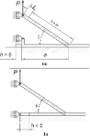

![[Graphic 5]](/bjnano/content/inline/2190-4286-5-182-i14.png?max-width=637&scale=1.18182) as a function of the peeling angle θeq at equilibrium (a); the tot...
as a function of the peeling angle θeq at equilibrium (a); the tot...


![[Graphic 11]](/bjnano/content/inline/2190-4286-5-182-i20.png?max-width=637&scale=1.18182) as a function of the peeling angle θeq at equilibrium, for differen...
as a function of the peeling angle θeq at equilibrium, for differen...
Moisture harvesting and water transport through specialized micro-structures on the integument of lizards
Beilstein J. Nanotechnol. 2011, 2, 204–214, doi:10.3762/bjnano.2.24
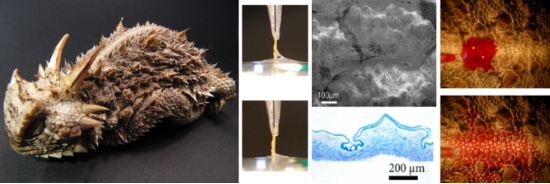
- - or moisture-harvesting. The water can originate from air humidity, fog, dew, rain or even from humid soil. The integument (i.e., the skin plus skin derivatives such as scales) has developed features so that the water spreads and is soaked into a capillary system in between the reptiles' scales
- replicas of the reptiles' integuments, we found that the honeycomb like structures render the surface superhydrophilic, most likely by holding a water film physically stable. Furthermore, the condensation of air humidity is improved on this surface by about 100% in comparison to unstructured surfaces. This
- ", appears more appropriate to us as it describes the different kinds of water acquisition more comprehensively. It is important to note that, for the reptiles concerned, no significant water uptake is done through the integument itself. Rather, the water is transported on the integumental surface towards


Other Beilstein-Institut Open Science Activities



