Search results
Search for "therapeutic delivery" in Full Text gives 14 result(s) in Beilstein Journal of Nanotechnology.
Biomimetic nanoparticles in cancer photodynamic therapy: a review of targeted delivery systems and therapeutic outcomes
Beilstein J. Nanotechnol. 2026, 17, 396–422, doi:10.3762/bjnano.17.27
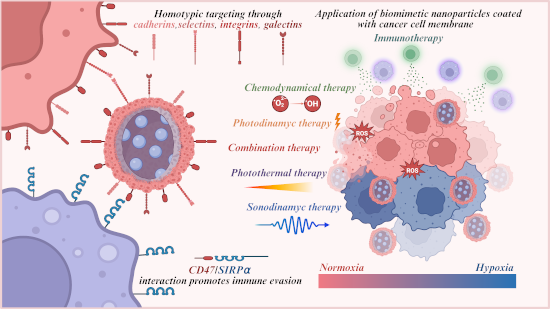
- , promoting efficient therapeutic delivery (Figure 3). Relevant proteins enabling homotypic targeting via BNPs are listed in Table 1. Early studies on BNPs often employed simple coatings derived from CCMs. This approach effectively camouflaged the nanoparticles by conferring the properties of “self” cells


From shield to spear: Charge-reversible nanocarriers in overcoming cancer therapy barriers
Beilstein J. Nanotechnol. 2026, 17, 159–175, doi:10.3762/bjnano.17.10
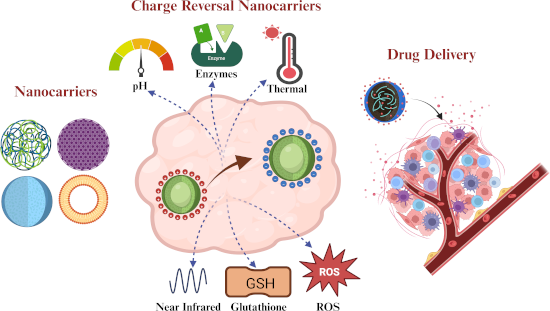
- microenvironment while maintaining stability in physiological conditions, resulting in significantly enhanced anti-tumour activity and reduced systemic toxicity. The dual pH-responsiveness enables precise control over therapeutic delivery, optimizing treatment outcomes [84]. Another straightforward approach to
- stimuli such as light, ultrasound, or magnetic fields offer the advantage of precise spatiotemporal control over therapeutic delivery. These approaches have shown promising outcomes in preclinical studies, supporting the development of combination treatments and co-delivery systems applications that


Toward clinical translation of carbon nanomaterials in anticancer drug delivery: the need for standardisation
Beilstein J. Nanotechnol. 2025, 16, 2092–2104, doi:10.3762/bjnano.16.144
- enhancing therapeutic delivery, particularly in areas such as cancer treatment. This perspective highlights critical considerations in the development of CNM-based nanocarriers, spanning from initial design to clinical implementation. Keywords: carbon nanomaterials (CNMs); carbon nanoparticles (CNPs); drug
- -consuming production, and a lack of standardised methods for their characterisation. Nevertheless, growing research into CNM-based nanoformulations continues to address key challenges, underscoring their promise in enhancing therapeutic delivery; particularly in cancer treatment, where the global burden
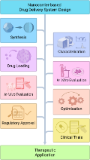
- treated. Perspective The development of a novel CNM-based drug delivery system for targeted anticancer therapeutic delivery is a complex and multistep process that involves several key milestones (Figure 3), each of which requires distinct expertise in materials science, chemistry, biology, and regulatory



PEGylated lipids in lipid nanoparticle delivery dynamics and therapeutic innovation
Beilstein J. Nanotechnol. 2025, 16, 1914–1930, doi:10.3762/bjnano.16.133
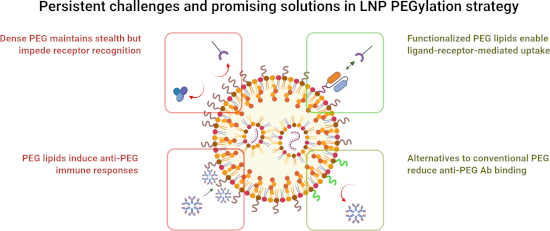
- PEG; immunogenicity; lipid nanoparticles; PEG alternatives; PEG lipids; therapeutic delivery; Review Introduction Lipid nanoparticles (LNPs) have become a promising platform in modern nanomedicine, especially for delivering genetic payloads such as mRNA and siRNA. These nanoscale particles can


Enhancing the therapeutical potential of metalloantibiotics using nano-based delivery systems
Beilstein J. Nanotechnol. 2025, 16, 1350–1366, doi:10.3762/bjnano.16.98
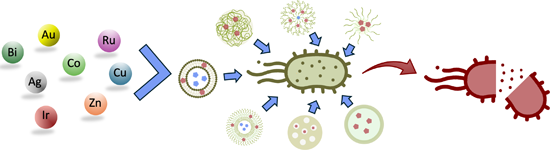
- the drug accumulation. Optimization of these parameters helps to maximize efficacy and mitigate toxicity of the payload [39]. Infection sites often present unique microenvironmental features, a factor that nanoparticles exploit to achieve precise therapeutic delivery. For example, polymeric


Synthetic-polymer-assisted antisense oligonucleotide delivery: targeted approaches for precision disease treatment
Beilstein J. Nanotechnol. 2025, 16, 435–463, doi:10.3762/bjnano.16.34
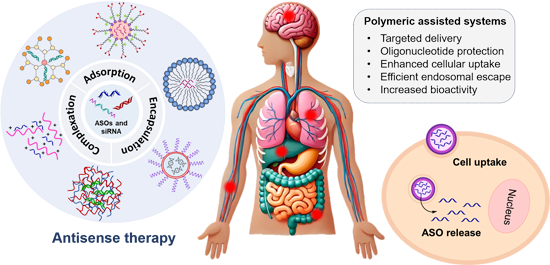
- endocytosis enables cellular entry, achieving efficient release and nuclear delivery of ASOs remains a challenge as a consequence of potential sequestration and degradation within endocytic vesicles [79][80]. This issue is prevalent in the majority of therapeutic delivery systems that enter via endocytosis


Development of a mucoadhesive drug delivery system and its interaction with gastric cells
Beilstein J. Nanotechnol. 2025, 16, 371–384, doi:10.3762/bjnano.16.28
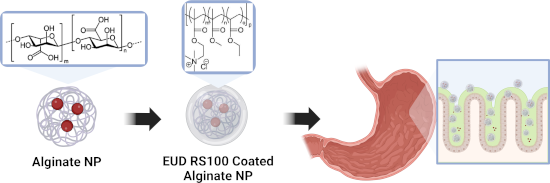
- protein-digesting enzyme pepsin [44]. Despite the challenges, remarkable developments are unfolding. Recently a peptide-based therapeutic delivery system that is absorbed in the stomach was approved by the FDA as oral formulation to be used in type-II diabetic patients [45]. This inspired us to develop


Nanocarriers and macrophage interaction: from a potential hurdle to an alternative therapeutic strategy
Beilstein J. Nanotechnol. 2025, 16, 97–118, doi:10.3762/bjnano.16.10
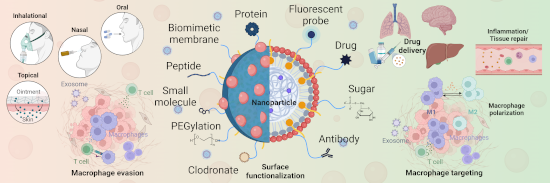
- shapes like ellipsoids, discoids, and nanorods with higher aspect ratios are more effectively localized close to blood vessel walls, enhancing their internalization into endothelial cells and potentially improving their therapeutic delivery [1]. After systemic administration, NCs tend to accumulate in


Polymer lipid hybrid nanoparticles for phytochemical delivery: challenges, progress, and future prospects
Beilstein J. Nanotechnol. 2024, 15, 1473–1497, doi:10.3762/bjnano.15.118
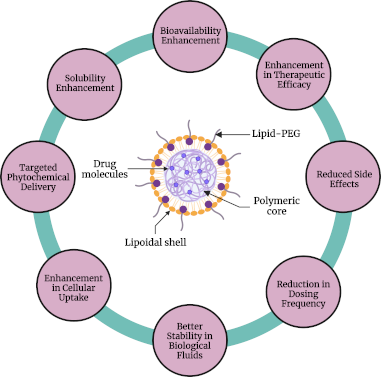
- advantageous for chronic conditions requiring long-term treatment, such as cancer, cardiovascular diseases, and neurodegenerative disorders [22][23]. This review aims to discuss the ability of PLHNPs to improve the therapeutic delivery of phytochemicals for biomedical applications. In this review, we discuss
- improved therapeutic delivery [108]. The developed RVT-PLHNPs were stable for a month and showed a controlled drug release. Biocompatibility and cytotoxicity of RVT-PLHNPs were examined by using Vero cells and MCF-7 cells. The results indicate excellent biocompatibility and a higher cytotoxicity of RVT


Nanocarrier systems loaded with IR780, iron oxide nanoparticles and chlorambucil for cancer theragnostics
Beilstein J. Nanotechnol. 2024, 15, 180–189, doi:10.3762/bjnano.15.17
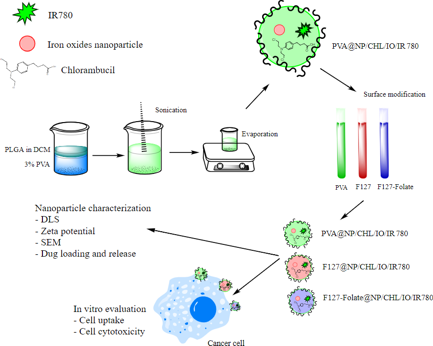
- of these systems to serve as medication and imaging agent carriers for cancer treatment and diagnostics, respectively. Keywords: cancer; chlorambucil; F127-folate; IR780; iron oxide nanoparticles; PLGA; theragnostics; Introduction Theragnostic nanoparticles (NPs) are a diagnostic and therapeutic
- delivery system. The delivery system is comprised of three components: the carrier, the imaging agent, and the therapeutic drug, all of which need clinical approval before being used in humans. Poly(lactic-co-glycolic acid) (PLGA) is an approved biodegradable and biocompatible material for clinical use [1


Self-assembly of amino acids toward functional biomaterials
Beilstein J. Nanotechnol. 2021, 12, 1140–1150, doi:10.3762/bjnano.12.85
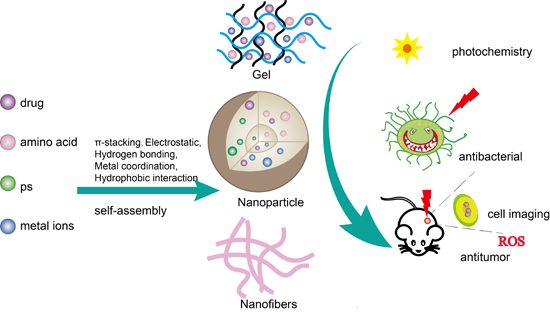
- biomedical science. The nanostructure of amino acids can be a good substitute for therapeutic delivery due to its good biocompatibility, functionalization, and ease of design/synthesis. Self-assembled nanostructures have become smart tools in the biomedical field, as demonstrated by the ability of self

A review on the green and sustainable synthesis of silver nanoparticles and one-dimensional silver nanostructures
Beilstein J. Nanotechnol. 2021, 12, 102–136, doi:10.3762/bjnano.12.9
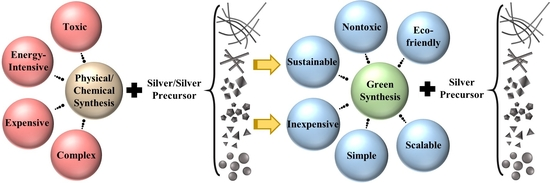
- groups [263]. Although viral templates have not been investigated as much as other approaches, viral template-mediated Ag nanostructures have been demonstrating promising potential in targeted imaging and therapeutic delivery systems [272]. In addition, they can be used to synthesize 1D Ag nanostructures


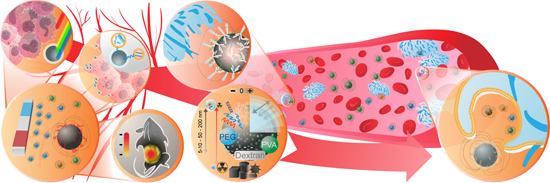
Applications of superparamagnetic iron oxide nanoparticles in drug and therapeutic delivery, and biotechnological advancements
Beilstein J. Nanotechnol. 2020, 11, 1092–1109, doi:10.3762/bjnano.11.94


Enhanced inhibition of influenza virus infection by peptide–noble-metal nanoparticle conjugates
Beilstein J. Nanotechnol. 2019, 10, 1038–1047, doi:10.3762/bjnano.10.104
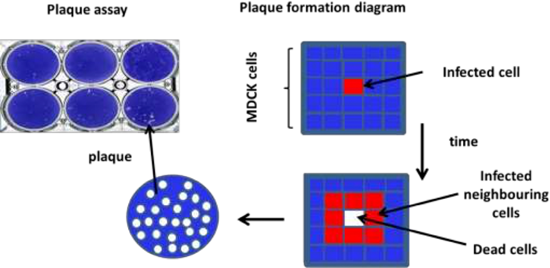
- biological activity of the peptide, for example, due to multivalent functionalisation of the nanoparticles. In addition, silver possesses innate antimicrobial activities [25]. Thus, noble-metal nanoparticles are potentially useful as both functional probes for antiviral peptides and as therapeutic delivery