


Search results
Search for "transcriptome" in Full Text gives 5 result(s) in Beilstein Journal of Nanotechnology.
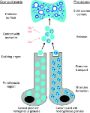
The cement of the tube-dwelling polychaete Sabellaria alveolata: a complex composite adhesive material
Beilstein J. Nanotechnol. 2025, 16, 1998–2014, doi:10.3762/bjnano.16.138
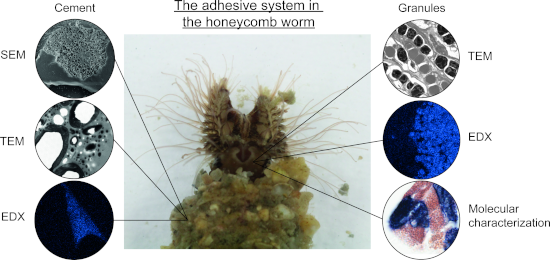
- transmission electron microscope. Identification and characterization of new adhesive protein and kinase candidates Local basic local alignment search tool (BLAST) searches were performed in the transcriptome of the anterior part of S. alveolata [26] using the adhesive protein sequences of P. californica from
- sequences from P. californica proteins were used as queries for BLAST searches in the transcriptome of S. alveolata to identify new adhesive proteins. However, as previous studies have shown, limited percentages of identity in the alignment of these proteins made it difficult to find homologues [7][31
- protein. This protein is polybasic, with 8.6% of its amino acid composition corresponding to histidine (Supporting Information File 1, Table S5). Its corresponding mRNA is highly expressed in the transcriptome (Table 1). Another adhesive protein was also identified, encoded by transcript



Poly(1-vinylimidazole) polyplexes as novel therapeutic gene carriers for lung cancer therapy
Beilstein J. Nanotechnol. 2020, 11, 354–369, doi:10.3762/bjnano.11.26
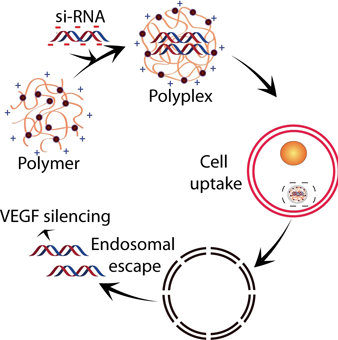
- cells treated with free siRNA was performed using Transcriptome Analysis Console v3.0 (Affymetrix, USA.) Fold values above 2.0 were considered as up-regulated and fold values below −2.0 were considered down-regulated. Statistical Analysis The statistical significance of the data obtained for the cell


False positives and false negatives measure less than 0.001% in labeling ssDNA with osmium tetroxide 2,2’-bipyridine
Beilstein J. Nanotechnol. 2016, 7, 1434–1446, doi:10.3762/bjnano.7.135

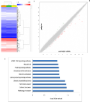
- ; osmylation; ssDNA; Introduction At the time the human genome was completed in 2001 [1][2], it was becoming clear that the relationships between genes, noncoding regions, epigenetic modifications, and the transcriptome were intertwined and led to health vs disease in complex patterns. A large effort in


Application of biclustering of gene expression data and gene set enrichment analysis methods to identify potentially disease causing nanomaterials
Beilstein J. Nanotechnol. 2015, 6, 2438–2448, doi:10.3762/bjnano.6.252

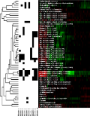
- enrichment analysis methods to derive essential features of altered lung transcriptome following exposure to NMs that are associated with lung-specific diseases. Several datasets from public microarray repositories describing pulmonary diseases in mouse models following exposure to a variety of substances
Molecular biology approaches in bioadhesion research
Beilstein J. Nanotechnol. 2014, 5, 983–993, doi:10.3762/bjnano.5.112

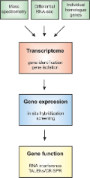
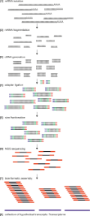
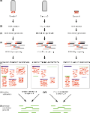
- diverse organisms. We show how to gradually narrow down the number of candidate transcripts that are involved in adhesion by (1) generating a transcriptome and a differentially expressed cDNA list enriched for adhesion-related transcripts, (2) setting up a BLAST search facility, (3) perform an in situ
- expression; in situ hybridization; RNA interference; transcriptome; Introduction The capability of an organism to attach to a surface, either temporarily or permanently, is referred to as “bioadhesion”. Bioadhesion occurs in many living organisms that have designed ways to adhere to a range of surfaces [1
- from gene identification to gene function in bioadhesion. The article is divided into three main sections: firstly, we describe the generation of a transcriptome and the use of the differential transcriptome in order to attain the full complement of transcripts (we refer to as bioinformatically
Other Beilstein-Institut Open Science Activities



