Search results
Search for "dynamics" in Full Text gives 247 result(s) in Beilstein Journal of Organic Chemistry. Showing first 200.
Amino acid-based surfactants: sustainable synthesis and antimicrobial mechanisms
Beilstein J. Org. Chem. 2026, 22, 1067–1085, doi:10.3762/bjoc.22.85
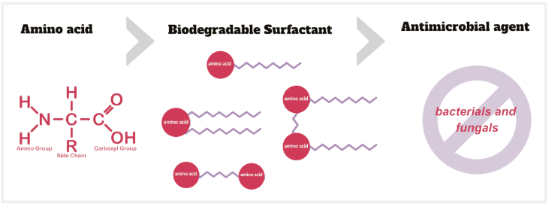
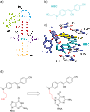
- showing complete antimicrobial activation below pH 6.5 [62]. Molecular dynamics simulations have demonstrated that phenylalanine-modified variants exhibit enhanced penetration into lipid bilayers, which has been attributed to the favorable partitioning of the aromatic side chain within the hydrophobic
- –π stacking with membrane components, with molecular dynamics simulations confirming 2–3-fold increases in membrane residence time for aromatic variants compared to aliphatic analogs as demonstrated by molecular dynamics simulations, the non-polar side chain of phenylalanine partitions favorably


A practical CO2-mediated synthesis of 5,6-carboxylated silicon-rhodamines for targeted probe development
Beilstein J. Org. Chem. 2026, 22, 915–924, doi:10.3762/bjoc.22.72
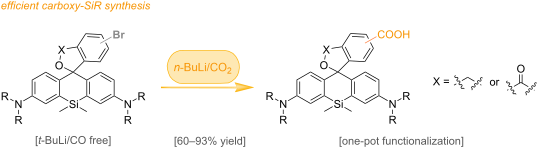
- Dongjie Hou Shaowei Wu Ning Xu Pengjun Bao Wenhao Jia Qinglong Qiao Zhaochao Xu State Key Laboratory of Chemical Reaction Dynamics, Dalian Institute of Chemical Physics, Chinese Academy of Sciences, Dalian 116023, China University of Chinese Academy of Sciences, Beijing 100049, China 10.3762/bjoc
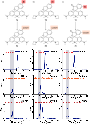
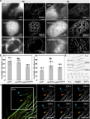
- one-pot access to HaloTag-targeted SiR probes. The resulting probes were successfully applied to long-term live-cell super-resolution imaging, allowing visualization of filopodial dynamics and mitochondrial remodeling. This work establishes a concise and efficient route to functionalized SiR dyes and
- 348.8 nm (Figure S4 in Supporting Information File 1), further demonstrating the excellent performance of these probes in super-resolution imaging. On the basis of its superior localization precision, compound 4b was further used to investigate microfilament dynamics by long-term live-cell SMLM imaging



Harnessing light energy with molecules
Beilstein J. Org. Chem. 2026, 22, 680–682, doi:10.3762/bjoc.22.52
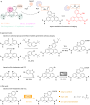
- . Photoinduced charge separation is a key process in the development of systems for artificial photosynthesis, photovoltaics, and photocatalysis. Kobayashi and co-workers [19] studied in detail the excited-state dynamics of donor–acceptor dyads based on perylene and phenothiazine, in which triphenylamine units
Using generative AI to transform peptide hits into small molecule leads
Beilstein J. Org. Chem. 2026, 22, 672–679, doi:10.3762/bjoc.22.51
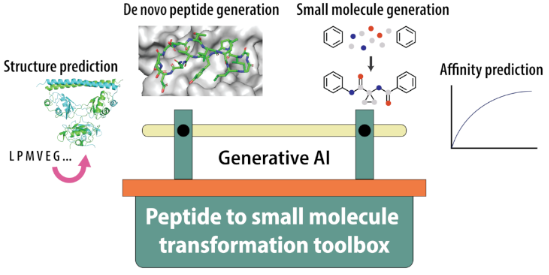
- dynamics (MD) and docking (Figure 1). As an illustrative example, Yoshida and co-workers at Shionogi reported the design of small molecule inhibitors of nicotinamide N-methyltransferase [14] and β-herpesvirus proteases [15], starting from cyclic peptide hits obtained by mRNA display with flexible in vitro


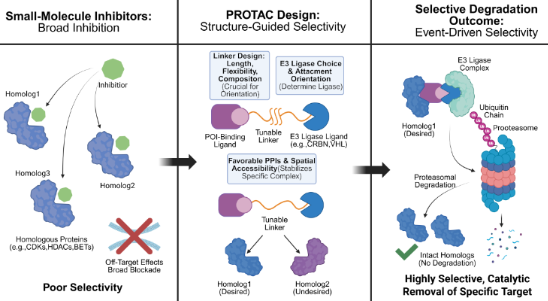
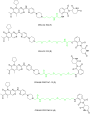
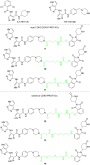
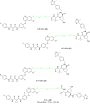
Advantages of PROTACs in achieving selective degradation of homologous protein families
Beilstein J. Org. Chem. 2026, 22, 628–661, doi:10.3762/bjoc.22.49





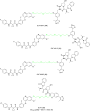


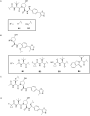


Modern synthetic pathways towards eribulin and its subunits
Beilstein J. Org. Chem. 2026, 22, 495–526, doi:10.3762/bjoc.22.37
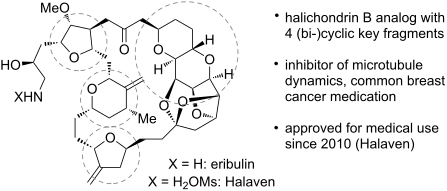
- , Halaven) due to its unique mechanism of action as a microtubule dynamics inhibitor. It is primarily used in the treatment of metastatic breast cancer and liposarcoma, offering a new therapeutic option for patients with advanced disease. To meet the increasing clinical demand, the research on new synthetic


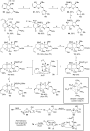






Electrosynthetic access to unsymmetrical oxaza[8]helicenes with high chiral stability and strong circularly polarized luminescence (CPL)
Beilstein J. Org. Chem. 2026, 22, 372–382, doi:10.3762/bjoc.22.25
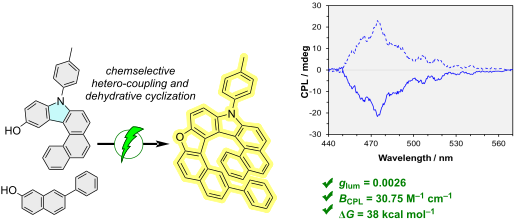
- frontier orbitals, intermolecular interactions, and excited-state dynamics, frequently enhancing fluorescence efficiency and circularly polarized luminescence (CPL) [16][17][18][19][20][21][22]. Consequently, heterohelicenes have emerged as attractive platforms for optoelectronic devices, 3D displays




Non-central chirality in organic chemistry
Beilstein J. Org. Chem. 2026, 22, 370–371, doi:10.3762/bjoc.22.24
- . Collectively, the articles in this Thematic Issue should not be viewed as an exhaustive account of non-central chirality but rather as representative snapshots of an evolving landscape. They capture the current state of the field, where structure, reactivity, dynamics, and function increasingly intersect under
Configuration–packing synergy enabling integrated crystalline-state RTP and amorphous-state TADF
Beilstein J. Org. Chem. 2026, 22, 224–236, doi:10.3762/bjoc.22.16
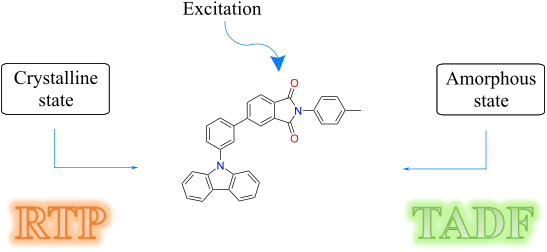
- , lifetime, and efficiency, make them highly versatile for integration into advanced optoelectronic devices [9][10][11]. The performance limits of these devices, particularly in terms of their brightness, longevity, and efficiency, are largely dependent on the ability to precisely control the dynamics of the
- influencing the electronic properties and excited-state dynamics of 1. Building on the crystallographic data, quantum-chemical calculations were performed using the Gaussian 09 software at the B3LYP level of theory. The calculations revealed that the highest occupied molecular orbital (HOMO) is primarily
- and RTP. This result provides valuable insights into the excited-state dynamics of 1 and its potential for optoelectronic applications. In order to fully characterize the solid-state emission properties of 1, a comprehensive set of measurements was performed, including steady-state and post-excitation


Design and synthesis of an axially chiral platinum(II) complex and its CPL properties in PMMA matrix
Beilstein J. Org. Chem. 2026, 22, 143–150, doi:10.3762/bjoc.22.7
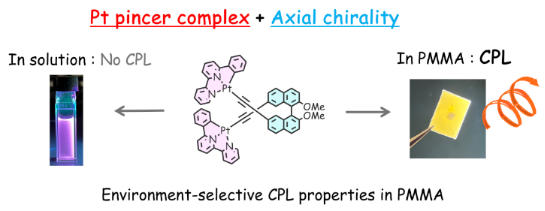
- phosphorescence components of 0.25 μs (76%), 0.024 μs (11%), and 2.8 ns (10%) at 558 nm, consistent with similar excited-state dynamics in both environments. To investigate the chiroptical properties of the complex, CD spectra were recorded in 1.0 × 10⁻⁵ M dichloromethane solution (Figure 4a). The CD spectra of


Isoorotamide-based peptide nucleic acid nucleobases with extended linkers aimed at distal base recognition of adenosine in double helical RNA
Beilstein J. Org. Chem. 2025, 21, 2513–2523, doi:10.3762/bjoc.21.193
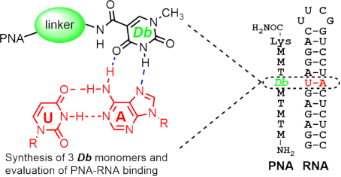
- UV melting and ITC, Db2 showed especially poor affinity for the U–A base pair in HRP1. To help explain experimental binding results, we turned to computational molecular dynamics modeling using HRP1 and PNA1–3 as a model based on the PNA–dhRNA triplex provided by previous NMR studies [41] (for
- details see Supporting Information File 1). The Db nucleobases were individually incorporated into the PNA model oligonucleotide and subjected to 50 ns unrestricted Desmond molecular dynamics. Pictures from the molecular dynamics simulations shown in Figure 7 represent the conformation of the PNA bases
- from glutaric anhydride [30]. In fact, molecular dynamics simulations did confirm that the amide carbonyl of the linker forms a stable H-bond to the amino group of C (Figure 7C). Since the distal guanosine in the C–G base pair is a mismatch with the isoorotic acid binding moiety, the isoorotamide


Effect of a photoswitchable rotaxane on membrane permeabilization across lipid compositions
Beilstein J. Org. Chem. 2025, 21, 2498–2512, doi:10.3762/bjoc.21.192
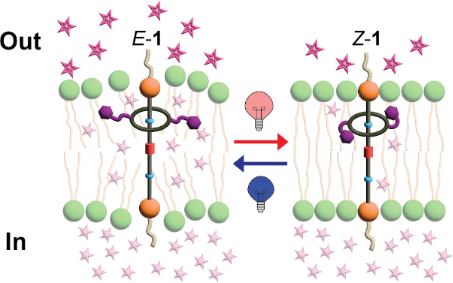
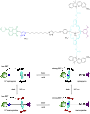
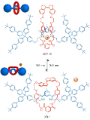
- ; membrane fluidity; membrane permeability; photoswitchable rotaxane; Introduction Lipid membranes play a vital role in biology by acting as protective barriers for cells and organelles while regulating the passage of substances. Additionally, their structure and dynamics influence the activity of membrane
- more membrane perturbation compared to the axle alone, in agreement with our previous molecular dynamics simulations, which highlight the importance of the macrocycle to modulate lipid packing [15]. As cholesterol content increased, sulforhodamine B release progressively decreased, consistent with the
- previous molecular dynamics simulations of rotaxane 1 in POPC bilayers, a major component of EYPC [16], showed that rotaxane 1 disrupts lipid packing and promotes water accumulation within the bilayer [15]. These effects enhance membrane permeability to hydrophilic molecules such as sulforhodamine B. The




Conformational effects on iodide binding: a comparative study of flexible and rigid carbazole macrocyclic analogs
Beilstein J. Org. Chem. 2025, 21, 2369–2375, doi:10.3762/bjoc.21.181
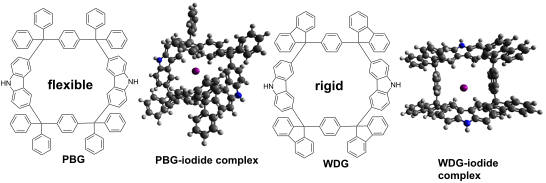
- interplay between conformational dynamics and localized structural adaptations governing anion recognition. The findings advance the rational design of tunable, high-affinity anion receptors and deepen the understanding of conformational regulation in supramolecular systems. Keywords: anion recognition
- ]. Notably, the anion-binding performance of these macrocycles is inherently governed by their conformational dynamics [9][10]. Flexible hosts adaptively adjust their cavities via induced-fit mechanisms to accommodate diverse guests, while rigid hosts rely on preorganized spatial complementarity for
- conformational dynamics, prompting a paradigm shift from static binding models to mechanistic insights into induced fit [17] and conformational selection [18]. This cognitive shift marks the transition of molecular recognition research from a simple description of binding phenomena to a deep understanding at the



Rotaxanes with integrated photoswitches: design principles, functional behavior, and emerging applications
Beilstein J. Org. Chem. 2025, 21, 2345–2366, doi:10.3762/bjoc.21.179
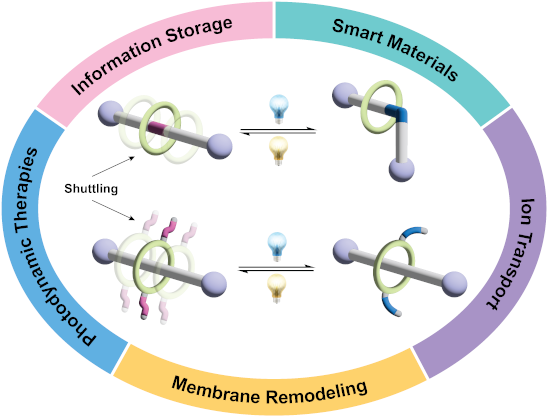
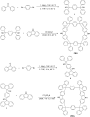
- shuttling dynamics. In this review, we discuss key examples of photoswitchable rotaxanes, organized according to the position of the photoswitch, either embedded in the axle or incorporated into the macrocycle. We examine the major classes of photoswitches used, including their switching mechanisms and the
- intermolecular interactions is a powerful strategy for designing sophisticated molecular systems that operate across multiple length scales, from nanoscale dynamics to macroscopic functions [1][2][3]. Light is particularly attractive compared to other stimuli due to its non-invasive nature, high spatial and
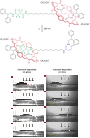
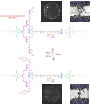
- lipid membrane, leading to reversible changes in giant lipid vesicles. In the trans isomer, the membrane tension decreased, resulting in deformation and pronounced membrane undulations. Isomerization to the cis form increased membrane tension, causing vesicle contraction. Molecular dynamics simulations





Understanding the origin of stereoselectivity in the photochemical denitrogenation of 2,3-diazabicyclo[2.2.1]heptene and its derivatives with non-adiabatic molecular dynamics
Beilstein J. Org. Chem. 2025, 21, 2007–2020, doi:10.3762/bjoc.21.156
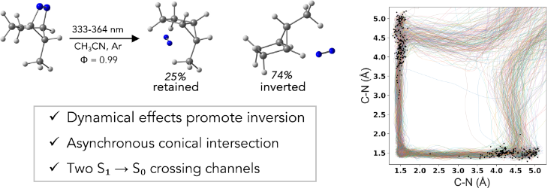
- synthetic organic chemists. We report a computational study on the mechanism of diazabicyclo[2.2.1]heptenes to address long standing mechanistic questions. Indeed, the mechanism of these reactions has been disputed for over six decades. We employed non-adiabatic molecular dynamics (NAMD) simulations
- two possible S1/S0-MECIs. Our dynamics simulations illustrate that inversion begins in the excited state immediately after the first σCN bond breaks. This inversion is driven by the atomic momenta acquired after the bond breaks. These dynamical effects promote the formation of the inverted housane
- , thereby explaining the observed selectivities. A minority of trajectories undergo thermal conversion in the ground state, producing the minor retained housane product from inverted housane/diradical. Keywords: non-adiabatic molecular dynamics; photochemistry; quantum mechanical calculations


Synthesis of N-doped chiral macrocycles by regioselective palladium-catalyzed arylation
Beilstein J. Org. Chem. 2025, 21, 1917–1923, doi:10.3762/bjoc.21.149
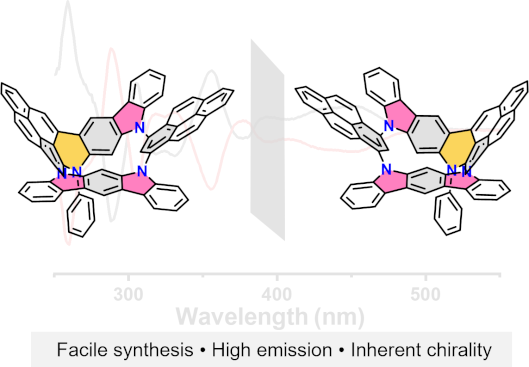
- -bridged structural analogs of [1n]metacyclophanes. In comparison to all-carbon [1n]metacyclophanes, the incorporation of N atoms endows them with unique features, such as enhanced molecular dynamics and tunable redox property, positioning them as key precursors to construct organic high-spin materials [20




Continuous-flow-enabled intensification in nitration processes: a review of technological developments and practical applications over the past decade
Beilstein J. Org. Chem. 2025, 21, 1678–1699, doi:10.3762/bjoc.21.132
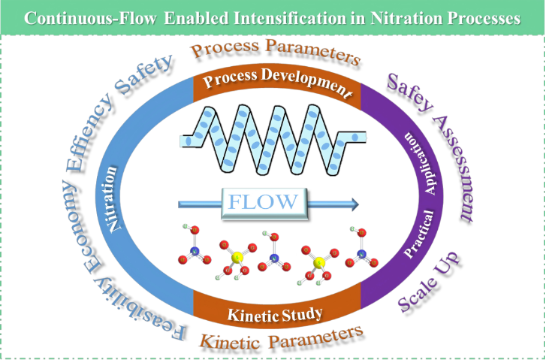
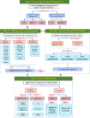
- in storage vessels. In mixed acid nitration systems, the typical liquid–liquid biphasic nature critically governs reaction efficiency through interfacial mass transfer dynamics. Continuous-flow configurations provide diverse mixing solutions ranging from passive geometries (T-junction, Y-junction



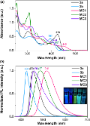
Thermodynamic equilibrium between locally excited and charge transfer states in perylene–phenothiazine dyads
Beilstein J. Org. Chem. 2025, 21, 1577–1586, doi:10.3762/bjoc.21.121
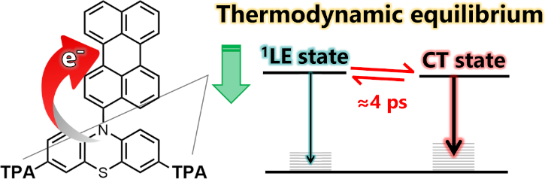
- Issei Fukunaga Shunsuke Kobashi Yuki Nagai Hiroki Horita Hiromitsu Maeda Yoichi Kobayashi Department of Applied Chemistry, College of Life Sciences, Ritsumeikan University, 1-1-1 Nojihigashi, Kusatsu, Shiga, Japan 10.3762/bjoc.21.121 Abstract We report the excited-state dynamics of π-orthogonal
- featuring high photostability and strong visible absorption. Perylene–phenothiazine (Pe–PTZ) derivatives have been previously investigated for their excited-state dynamics [15]. Incorporating additional electron-donating groups such as triphenylamine (TPA) onto the PTZ core is expected not only to enhance
- dynamics of these molecules, transient absorption spectroscopy measurements spanning the femtosecond to microsecond timescales were conducted. When electron transfer occurs between the donor and acceptor, the spin–spin interaction becomes weaker, facilitating the formation of triplet excited states upon


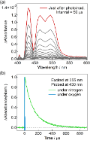

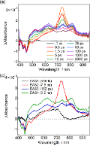

Synthesis of an aza[5]helicene-incorporated macrocyclic heteroarene via oxidation of an o-phenylene-pyrrole-thiophene icosamer
Beilstein J. Org. Chem. 2025, 21, 1561–1567, doi:10.3762/bjoc.21.119
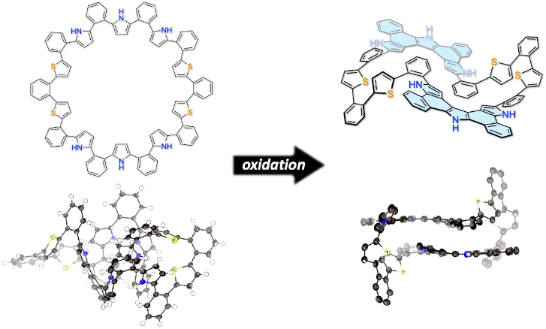
- study illuminated that a partially fused macrocyclic molecule is an intriguing structural motif which comprises a rigid backbone, yet showing somewhat flexible structural dynamics under ambient temperature conditions. (a) Increased ring-strain from macrocyclic oligoarene to partially fused oligoarene


Wittig reaction of cyclobisbiphenylenecarbonyl
Beilstein J. Org. Chem. 2025, 21, 1454–1461, doi:10.3762/bjoc.21.107
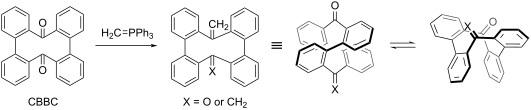
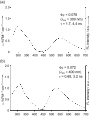
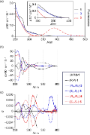
- low racemization barrier as with structurally similar methylenedioxy-substituted DBC derivative [22]. Racemization dynamics The racemization barriers of CBBC 1, mono-olefin 3, and bis-olefin 5 were evaluated by monitoring the decrease of circular dichroism (CD) signals in 1,2-dichlorobenzene at 170 °C
- . The racemization dynamics of 5 was investigated by DFT calculations at the B3LYP/6-31G(d) level of theory, employing the Gaussian 16 software package and the global reaction route mapping (GRRM17) [23] program (Figure 4). The interconversion between figure-eight conformation (M,M)-B and bathtub
- circle and red triangle mean selected signals due to figure-eight and bathtub conformations, respectively. Simulated dynamics of bis-olefin 5 at the B3LYP/6-31G(d) level of theory. The description for the configuration of A and B are based on the helical chirality of the 1,1-diphenylethylene units and



Advances in nitrogen-containing helicenes: synthesis, chiroptical properties, and optoelectronic applications
Beilstein J. Org. Chem. 2025, 21, 1422–1453, doi:10.3762/bjoc.21.106
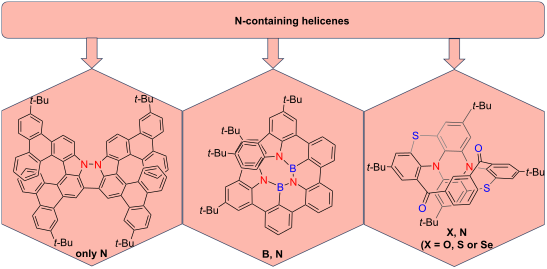
- and high BCPL of 66.5 M−1 cm−1 underscore its potential for advanced chiral photonic applications. Heteroatom engineering in double helicenes has emerged as a powerful strategy for tuning chiroptical properties and excited-state dynamics. In 2021, Sakamaki’s group synthesized a novel double N,O-hetero

On the photoluminescence in triarylmethyl-centered mono-, di-, and multiradicals
Beilstein J. Org. Chem. 2025, 21, 964–998, doi:10.3762/bjoc.21.80
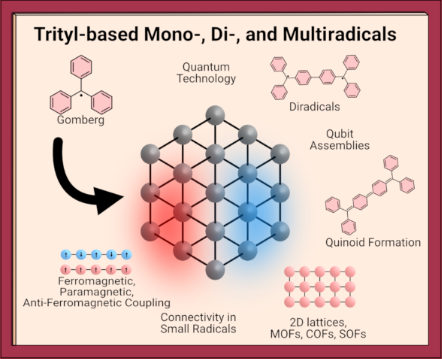
- of reviews covering the different molecular structures of mono-, di-, and multiradicals, synthetic approaches [22][23][24][25], state dynamics in luminescent radicals [26], and their application in light-emitting devices [27][28][29]. Instead, we aim to provide insight and understanding into the
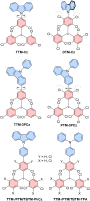
- the excited state dynamics, there is evidence for this fast relaxation in donor-functionalized TTM radicals [26]. Moreover, transient absorption has been employed to elucidate the formation of a non-luminescent side-product in trityl radicals. During photodegradation, two halogens are lost and two









Substituent effects in N-acetylated phenylazopyrazole photoswitches
Beilstein J. Org. Chem. 2025, 21, 830–838, doi:10.3762/bjoc.21.66
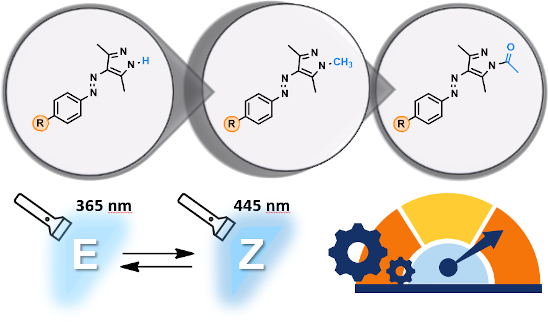
- NAc-PAP-H and -Me), even surpassing the effects of methylation. Hammett analysis showed that the thermal population of the triplet state seem to be preferred as the thermal relaxation mechanisms of the back isomerization. EWGs and EDGs accelerated the relaxation dynamics compared to NAc-PAP-H


Orthogonal photoswitching of heterobivalent azobenzene glycoclusters: the effect of glycoligand orientation in bacterial adhesion
Beilstein J. Org. Chem. 2025, 21, 736–748, doi:10.3762/bjoc.21.57
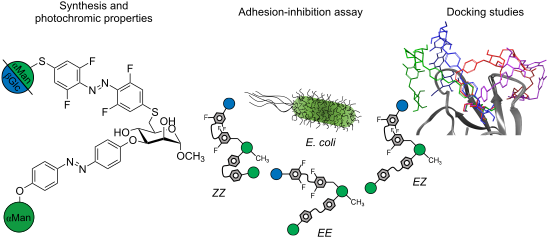
- every case, a terminal α-ᴅ-mannopyranoside unit is complexed within the FimH CRD. However, controlling the exact relative orientation of glycoligands in three-dimensional space is difficult in case of 1 and 2 as the degrees of freedom connected to the conformational dynamics are too large. Nevertheless


Synthesis of HBC fluorophores with an electrophilic handle for covalent attachment to Pepper RNA
Beilstein J. Org. Chem. 2025, 21, 727–735, doi:10.3762/bjoc.21.56
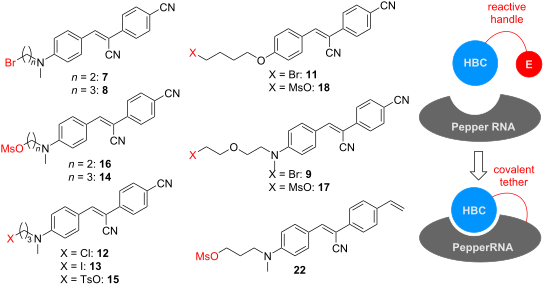
- aptamer (FLAP) in the family of “RNA mimics of GFP”, called Spinach [3]. This aptamer was used to study intracellular RNA dynamics in living cells and was the starting point for a series of in vitro selected FLAPs, e.g., Corn [4], Chili [5], Mango [6], Pepper [7], Clivia [8], and Okra [9]. All known FLAPs