


Search results
Search for "glycosyl donor" in Full Text gives 56 result(s) in Beilstein Journal of Organic Chemistry.
Ex-situ generation of gaseous nitriles in two-chamber glassware for facile haloacetimidate synthesis
Beilstein J. Org. Chem. 2025, 21, 2465–2469, doi:10.3762/bjoc.21.188
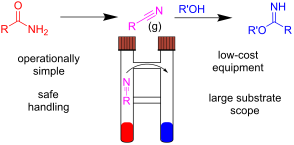
- trifluoroacetonitrile [24]. Schmidt published the first synthesis of glycosyl trifluoroacetimidates and concluded that their glycosyl-donor properties were similar to the trichloroacetimidates, but more difficult to prepare and purify [24]. In contrast to these observations, Nakajima et al. reported the
- their subsequent reaction with O-nucleophiles in the second chamber. The method is easy to setup, control and gives access to new haloacetimidates under mild conditions, similar to the ones used for the synthesis of the more commonly used trichloroacetimidates. Keywords: gaseous reagents; glycosyl
- donor; haloacetimidates; haloacetonitrile; two-chamber reactor; Introduction Trifluoroacetonitrile is an electrophilic reagent that has seen a variety of uses, mostly for incorporating trifluoromethyl groups into organic compounds [1]. As an example it has been successfully utilized for the synthesis


Approaches to stereoselective 1,1'-glycosylation
Beilstein J. Org. Chem. 2025, 21, 1700–1718, doi:10.3762/bjoc.21.133
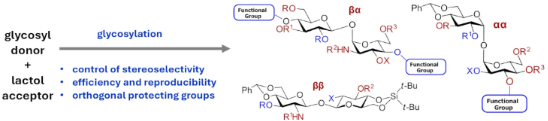
- precursors [38][39][40][41][42]. This emphasizes the importance of reliable and reproducible approaches for the stereoselective synthesis of unsymmetrically orthogonally protected nonreducing disaccharides. While the desired anomeric selectivity on the side of the glycosyl donor can often be achieved by
- were readily prepared by self-condensation of the corresponding acetylated methyl 1,2-orthoacetates using BF3·OEt2 as a promoter [55]. While the 1,2-orthoester functionality in the glycosyl donor 17 directed the 1,2-trans selectivity towards the formation of an α-mannosidic linkage, the anomeric β
- coordination of the boron center with the remaining C2-OH group increases its acidity, thereby generating in situ an acidic catalyst for the activation of the glycosyl donor [62][63]. In this approach, the use of glycosyl phosphites of gluco- (35) and galacto- (38) configuration as donors, in combination with


The effect of neighbouring group participation and possible long range remote group participation in O-glycosylation
Beilstein J. Org. Chem. 2025, 21, 369–406, doi:10.3762/bjoc.21.27
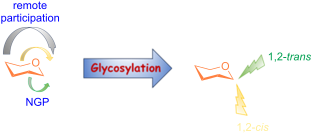
- group participation (NGP)’ [70], while involvement of protecting groups in the far, distal or remote position in the glycosyl donor is often termed as ‘remote group participation’ or ‘long distance participation’ [71]. While neighbouring group participation is a much established reaction pathway, there
- as the participating group facilitating the formation of a 1,2-trans glycoside (Scheme 2). In general, the cleavage of the activated anomeric leaving group of the glycosyl donor 9 leads to the formation of an electron-deficient oxocarbenium ion 10. The participating vicinal acyl group interacts with
- the cases (exception depicted for perbenzoylated SBox glycosides exhibiting superarmament [79] proving to be more reactive than the analogous perbenzylated donors) thereby reducing the reactivity of the glycosyl donors. The challenge is to activate the ester-protected glycosyl donor and to implement




Synthesis of cyclic β-1,6-oligosaccharides from glucosamine monomers by electrochemical polyglycosylation
Beilstein J. Org. Chem. 2024, 20, 1421–1427, doi:10.3762/bjoc.20.124
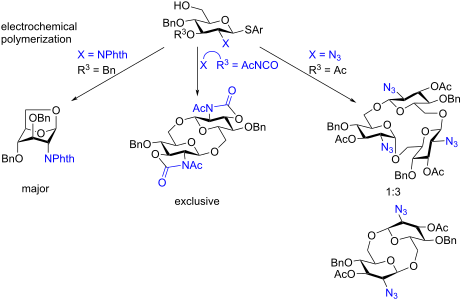
- effect. Although glycosyl donors with an N3 group in position C-2 have been used for α-selective glycosylation [20][21], we have already found that β-selective glycosylation proceeds using a glycosyl donor with an N3 group under electrochemical conditions [22]. The results of the electrochemical


Optimizations of lipid II synthesis: an essential glycolipid precursor in bacterial cell wall synthesis and a validated antibiotic target
Beilstein J. Org. Chem. 2024, 20, 220–227, doi:10.3762/bjoc.20.22
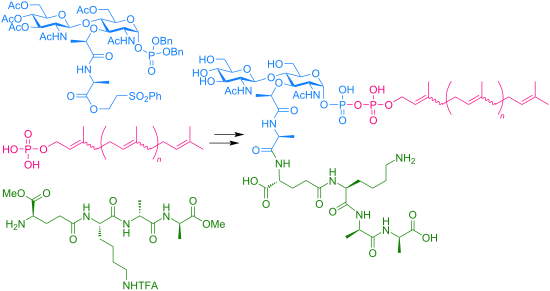
- observations, we initially noted that at room temperature, the degradation rate of glycosyl donor 1a exceeded the rate of product formation. This led to a complex mixture consisting of the target product 3a, acceptor 2a, and various degraded products of donor 1a. This situation posed challenges, as even
- prolonged reaction times did not enhance the product yield, and the subsequent purification of the target product became a difficult task. However, when we conducted the reaction at lower temperatures, the degradation of glycosyl donor 1a slowed down, and the reaction proceeded at a moderate rate


Comparison of glycosyl donors: a supramer approach
Beilstein J. Org. Chem. 2024, 20, 181–192, doi:10.3762/bjoc.20.18
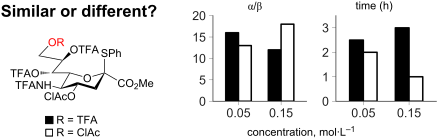
- sialylation of the primary hydroxy group of the same galactose derivative 3 [54] (see Scheme 1), which eventually led to unprecedented conclusions concerning the very possibility of comparison of chemical properties of different glycosyl donors. Results Synthesis of glycosyl donor 2 Sialyl donor 2 was
- section and Supporting Information File 1 for the details). Diol 7 was converted into glycosyl donor 2 by O-trifluoroacetylation with trifluoroacetic anhydride and sodium trifluoroacetate under previously developed [36][55] conditions. Supramer analysis As we know that the concentrations of reactants can
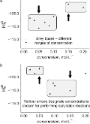
- present in the high and low concentration ranges shown in Figure 1. Based on previous experience [33][37][46][57], we may expect different reactivity patterns of sialyl donors 1 and 2 in these concentration ranges. We do understand that any model study of a structure of solution of pure glycosyl donor in



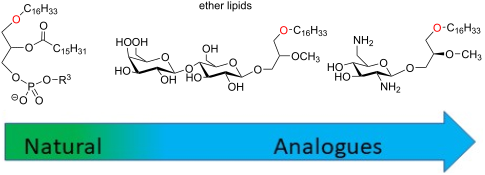
Synthesis of ether lipids: natural compounds and analogues
Beilstein J. Org. Chem. 2023, 19, 1299–1369, doi:10.3762/bjoc.19.96






Progress and challenges in the synthesis of sequence controlled polysaccharides
Beilstein J. Org. Chem. 2021, 17, 1981–2025, doi:10.3762/bjoc.17.129
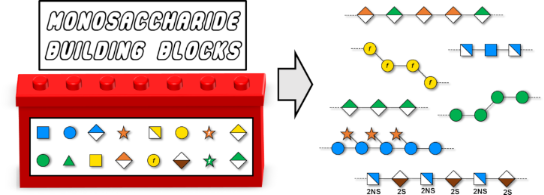
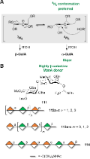
- group on the glycosyl donor and the acceptor for the stereoselective formation of the β(1–3) linkage (Figure 4) [132]. Interestingly, oligomers bearing several 4,6-O-benzylidene groups show anomalously small coupling constants for some of the C-1 hydrogens. NMR [133] and X-ray [134] studies revealed
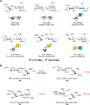
- reported, the construction of multiple α-linkages remains challenging, in particular with the increasing size of the acceptor. The nucleophilic additive glycosylation-based approach (Scheme 5A) offers the opportunity to install multiple 1,2-cis glycosidic bonds by converting the glycosyl donor 30 into a
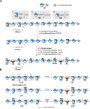
- donors to synthesize fully deacetylated COS up to 12mer. After each glycosylation step, the 4-methoxyphenyl group at the anomeric position was oxidatively removed and the resulting hemiacetal was transformed into the trichloroacetimidate glycosyl donor for the next glycosylation step [252]. An orthogonal












Chemical synthesis of C6-tetrazole ᴅ-mannose building blocks and access to a bioisostere of mannuronic acid 1-phosphate
Beilstein J. Org. Chem. 2021, 17, 1527–1532, doi:10.3762/bjoc.17.110
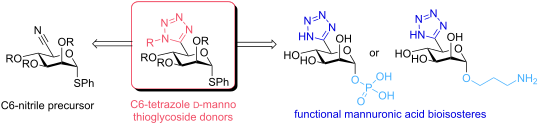
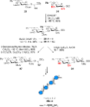
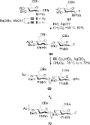
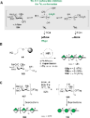
- . Repeated attempts were unable to indicate progress beyond mixtures of 8 and 9 in 35% and 14% yields and the procedure was abandoned, instead reverting to the successful route developed in Scheme 2. The final step towards the synthesis of a fully protected C6-tetrazole glycosyl donor required tetrazole


Metal-free glycosylation with glycosyl fluorides in liquid SO2
Beilstein J. Org. Chem. 2021, 17, 964–976, doi:10.3762/bjoc.17.78

- glycoconjugates [1][2][3][4]. Due to the large diversity of glycosyl donors and acceptors there is no general glycosylation method developed so far. To ensure high yielding, as well as regio- and stereoselective glycosidic bond formation, a proper combination of glycosyl donor and acceptor, protecting and leaving
- We started our study by short screening of the glycosylation conditions in liquid SO2 (Table 1). To avoid a potential cleavage of acid-labile protecting groups and to obtain an easily analyzable reaction mixture, pivaloyl-protected mannosyl fluoride α-1a as a relatively stable disarmed glycosyl donor
- mannosyl fluoride α-1a was achieved and the desired O-mannoside 3a was isolated in a high yield and α-selectivity. Hemiacetal α-4 was isolated as the only side-product formed via glycosyl donor hydrolysis with the water present in commercial SO2 [62]. To note, at lower temperatures (Table 1, entry 1) no


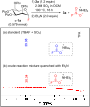

Synthesis of monophosphorylated lipid A precursors using 2-naphthylmethyl ether as a protecting group
Beilstein J. Org. Chem. 2020, 16, 1955–1962, doi:10.3762/bjoc.16.162

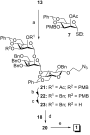
- -phenyltrifluoroacetimidate glycosyl donor 20 by reaction with 2,2,2-trifluoro-N-phenylacetimidoyl chloride in the presence of base DBU [14]. The monoacylated derivative 15 is also the key building block for the synthesis of lipid X monosaccharide 1 (Scheme 3). After the N-Troc protecting group was removed as described above
- catalytic hydrogenolysis over Pd/C under 15 kg/cm2 of H2 to give the target lipid X monosaccharide 1 (as triethylammonium salt) in good yield. Having the glycosyl donor 20 and acceptor 18 at hand (Scheme 2), in order to prepare the disaccharide precursor, the glycosylation reaction was performed first


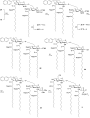
Synthesis of the tetrasaccharide repeating unit of the O-specific polysaccharide of Azospirillum doebereinerae type strain GSF71T using linear and one-pot iterative glycosylations
Beilstein J. Org. Chem. 2020, 16, 1700–1705, doi:10.3762/bjoc.16.141
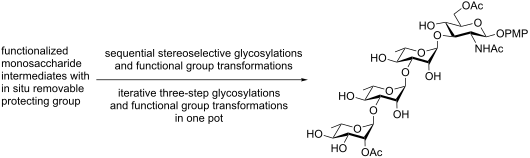
- common glycosyl donor provided the desired compound in a minimum number of reaction steps. HClO4-SiO2 was used as a solid acid activator in the glycosylation reactions as well as for functional group transformation. Experimental General methods: All reactions were monitored by thin-layer chromatography


Regioselectivity of glycosylation reactions of galactose acceptors: an experimental and theoretical study
Beilstein J. Org. Chem. 2019, 15, 2982–2989, doi:10.3762/bjoc.15.294

- . Regioselectivity responds to multiple steric and electronic factors present in both the glycosyl donor and acceptor, and they are characteristic for each particular sugar. Although relative reactivity values have been established for glycosyl donors, it has not been possible to do the same for glycosyl acceptors


Low-budget 3D-printed equipment for continuous flow reactions
Beilstein J. Org. Chem. 2019, 15, 558–566, doi:10.3762/bjoc.15.50
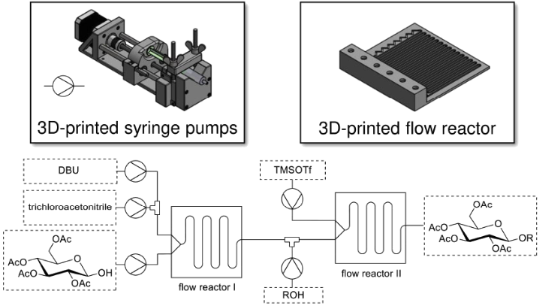
- reactions as a proof of concept for our hardware and for reactor setup. We first started with the optimization of the synthesis of the commonly used glycosyl donor acetobromo-α-D-glucose 2 under flow conditions. To the best of our knowledge, the preparation of glycosyl bromides under continuous flow
- reagent (Ag2CO3 on Celite) [36][37]. The bromination and glycosylation reaction steps had to be performed in separate reactions. Therefore, we also investigated glycosylations with the respective imidate glycosyl donor 5. First, the cleavage of the anomeric acetyl group with hydrazine acetate was
- longer residence time resulted in a lower yield (10.5 min = 37%). Similar observations were previously made for glycosylation reaction under continuous flow conditions [23][24][25][26]. A larger amount of DBU did not increase the yield. For the glycosylation reactions with glycosyl donor 5 a multiple


Convergent synthesis of the pentasaccharide repeating unit of the biofilms produced by Klebsiella pneumoniae
Beilstein J. Org. Chem. 2019, 15, 431–436, doi:10.3762/bjoc.15.37
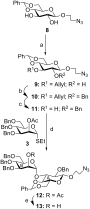
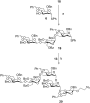
- trisaccharide thioglycoside 19 can now act as a glycosyl donor fulfilling the orthogonal glycosylation principle [36]. Stereoselective glycosylation of disaccharide acceptor 13 with the trisaccharide donor 19 in the presence of a combination of NIS and TMSOTf [22][23] resulted in the formation of


Unexpected loss of stereoselectivity in glycosylation reactions during the synthesis of chondroitin sulfate oligosaccharides
Beilstein J. Org. Chem. 2019, 15, 137–144, doi:10.3762/bjoc.15.14
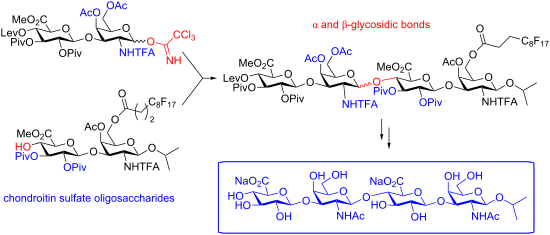
- selective formation of the β(1→4) linkage in the [2 + 2] coupling. Cleavage of the anomeric 4-methoxyphenyl group followed by treatment with trichloroacetonitrile and DBU gave glycosyl donor 1 in high yield. For the synthesis of acceptor 2, diol 6 was selectively acylated at position 6 using 1.1 equiv of
- revealed that the pivaloyl functions in the glycosyl acceptor favored the formation of the 1,2-cis glycosidic bond even in the presence of the N-TFA participating group in the glycosyl donor. In contrast, 2,3-di-O-benzoyl/benzyl GlcA derivatives exclusively gave the β-anomer. Overall, our results highlight


6’-Fluoro[4.3.0]bicyclo nucleic acid: synthesis, biophysical properties and molecular dynamics simulations
Beilstein J. Org. Chem. 2018, 14, 3088–3097, doi:10.3762/bjoc.14.288
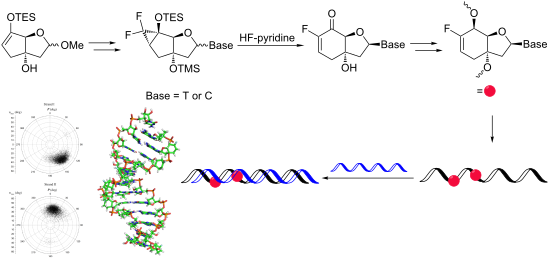
- a standard glycosyl donor for nucleoside synthesis. The nucleosidation was carried out by applying classical Vorbrüggen conditions [57] on the sugars 11α/β, yielding the β-nucleoside 12β as major anomer. The α/β-ratio of 1:1.5 was acceptable and the configuration at the C(1’) was assigned by 1H,1H


Synthetic avenues towards a tetrasaccharide related to Streptococcus pneumonia of serotype 6A
Beilstein J. Org. Chem. 2018, 14, 1095–1102, doi:10.3762/bjoc.14.95

- order to construct the central disaccharide fragment 3 in high yield with 1,2-cis selectivity, several glycosylation reactions using glucosyl donors 6a/6b/6c/12a and rhamnosyl acceptor 5 were contemplated. None of the conditions, based on the use of thioglycoside 6a as the glycosyl donor and separately


Aminosugar-based immunomodulator lipid A: synthetic approaches
Beilstein J. Org. Chem. 2018, 14, 25–53, doi:10.3762/bjoc.14.3
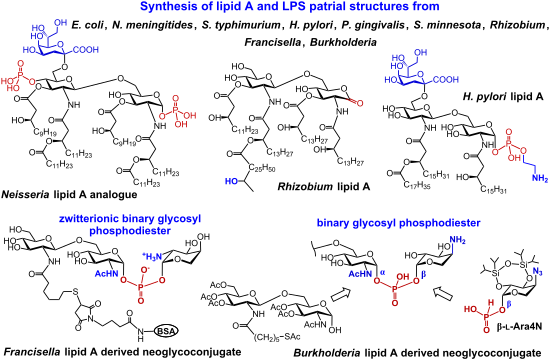
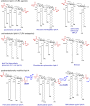
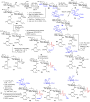
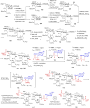
- developed approaches which employed donor and acceptor monosaccharide molecules that were already functionalized with the lipid chains and phosphate groups [75][76], the new synthetic route used orthogonally protected monosaccharide precursors 3 and 4 (Scheme 1). The glycosyl donor 3 was synthesised
- reductive opening of the benzylidene acetal to give the acceptor monosaccharide 63. NIS/TMSOTf-promoted glycosylation of 63 with glycosyl donor 64 furnished desired β(1→6) disaccharide which was subjected to treatment with hydrazine hydrate to remove the phthalimido group. Subsequent acylation of the






A semisynthesis of 3'-O-ethyl-5,6-dihydrospinosyn J based on the spinosyn A aglycone
Beilstein J. Org. Chem. 2017, 13, 2603–2609, doi:10.3762/bjoc.13.257
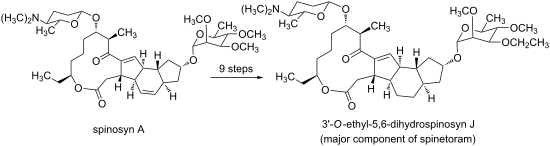
- the C9–OH and C17–OH of the aglycone, the protecting groups of two hydroxy groups can be successively removed under different conditions. Compound 6 was hydrolyzed in the presence of HOAc to afford 7, and then the subsequent glycosidation of compound 7 with glycosyl donor 8 yielded compound 9


Electron-deficient pyridinium salts/thiourea cooperative catalyzed O-glycosylation via activation of O-glycosyl trichloroacetimidate donors
Beilstein J. Org. Chem. 2017, 13, 2385–2395, doi:10.3762/bjoc.13.236

- our own research interest in developing stereoselective glycosylation methods, we decided to focus our attention on the synthesis of glycosides via cooperative catalysis. A highly reactive glycosyl donor for instance, O-glycosyl trichloroacetimidate, generally requires a pKa value less than 5 for
- series of 1H NMR spectroscopic studies were conducted by selecting commonly used O-glucopyranosyl trichloroacetimidate 1α [39][40][41] as glycosyl donor and 3,5-di(methoxycarbonyl)-N-(cyanomethyl)pyridinium bromide (3a) as a catalyst. For example, when glycosyl donor 1α was treated with catalyst 3a (10
- possible formation of 1,2-adduct X, on the reaction of 3a with 2a which is eventually responsible for the loss of aromaticity of the pyridinium ring. Based on the outcomes of 1H NMR spectroscopic studies, we started optimizing the reaction conditions. Upon treatment of glycosyl donor 1α and glycosyl


Diosgenyl 2-amino-2-deoxy-β-D-galactopyranoside: synthesis, derivatives and antimicrobial activity
Beilstein J. Org. Chem. 2017, 13, 2310–2315, doi:10.3762/bjoc.13.227

- -β-D-galactopyranoside (4) (Scheme 1). This glycosyl donor was N-protected with the tetrachlorophthaloyl (TCP) group. The synthesis of 4 started from commercially available D-galactosamine hydrochloride which was first converted to the 2-N-tetrachlorophthaloyl derivative followed by peracetylation
- the β anomer). Glycosylation of diosgenin with 2 was performed in dichloromethane by a “reverse” procedure: The glycosyl donor was added to the solution of diosgenin and the promoter (silver triflate) [31]. This procedure afforded the expected β glycoside 3 in 80% yield. The structure of 3 was


Preactivation-based chemoselective glycosylations: A powerful strategy for oligosaccharide assembly
Beilstein J. Org. Chem. 2017, 13, 2094–2114, doi:10.3762/bjoc.13.207
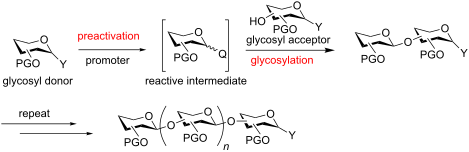
- University, East Lansing, MI 48824, USA 10.3762/bjoc.13.207 Abstract Most glycosylation reactions are performed by mixing the glycosyl donor and acceptor together followed by the addition of a promoter. While many oligosaccharides have been synthesized successfully using this premixed strategy, extensive
- protective group manipulation and aglycon adjustment often need to be performed on oligosaccharide intermediates, which lower the overall synthetic efficiency. Preactivation-based glycosylation refers to strategies where the glycosyl donor is activated by a promoter in the absence of an acceptor. The
- -reducing end with a glycosyl donor premixed with an acceptor. Upon the addition of a promoter to the reaction mixture, the donor is activated to glycosylate the acceptor yielding a disaccharide, which is subsequently deprotected to expose a free hydroxy group (Scheme 1a). The newly generated acceptor can







Enzymatic separation of epimeric 4-C-hydroxymethylated furanosugars: Synthesis of bicyclic nucleosides
Beilstein J. Org. Chem. 2017, 13, 2078–2086, doi:10.3762/bjoc.13.205
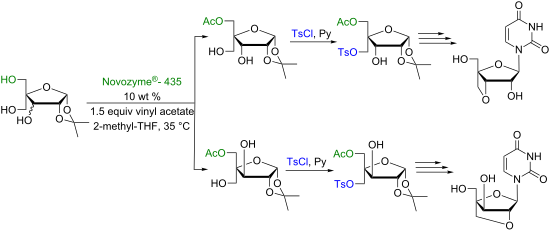
- ) in 98% yield. The glycosyl donor 7a,b was prepared from acetolysis of compound 6 with acetic acid/acetic anhydride/sulfuric acid (100:10:0.1) in 93% yield. The Vorbrüggen coupling [17] of 7a,b with uracil in the presence of N,O-bis(trimethylsilyl)acetamide (BSA) and trimethylsilyltrifluoromethane
- product 4b in 95% yield. Thus, the acetylation of the lone hydroxy group of 10 using acetic anhydride and DMAP in dichloromethane afforded 3,5-di-O-acetyl-1,2-O-isopropylidene-4-C-p-toluenesulfonyloxymethyl-α-D-xylofuranose (11) in 98% yield. Acetolysis of compound 11 yielded the glycosyl donor 12a,b in


Intramolecular glycosylation
Beilstein J. Org. Chem. 2017, 13, 2028–2048, doi:10.3762/bjoc.13.201
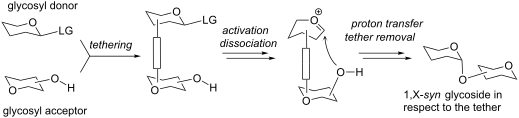
- glycosylation reactions wherein the facial stereoselectivity is achieved by tethering of the glycosyl donor and acceptor counterparts. Keywords: carbohydrates; glycosylation; intramolecular reactions; oligosaccharides; Introduction With recent advances in glycomics [1][2], we now know that half of the
- despite of significant advances. Common intermolecular glycosylation reactions in the absence of a participating auxiliary typically proceed with poor stereoselectivity. In these systems, there are no forces that are able to direct the glycosyl acceptor attack on the activated glycosyl donor that exists
- developed to achieve higher efficiency and/or better stereoselection by tethering the donor and acceptor counterparts, reactions that are commonly referred to as intramolecular glycosylations. A number of approaches for connecting the reaction counterparts, glycosyl donor and acceptor together, have been





