


Search results
Search for "polycondensation" in Full Text gives 31 result(s) in Beilstein Journal of Organic Chemistry.
C2 to C6 biobased carbonyl platforms for fine chemistry
- Jingjing Jiang,
- Muhammad Noman Haider Tariq,
- Florence Popowycz,
- Yanlong Gu and
- Yves Queneau
Beilstein J. Org. Chem. 2025, 21, 2103–2172, doi:10.3762/bjoc.21.165

Graphical Abstract

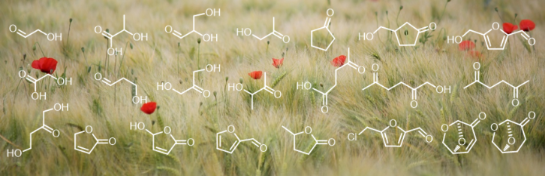
Figure 1: C2–C6 biobased carbonyl building blocks.

Scheme 1: Proposed (2 + 2) route to glycolaldehyde and glycolic acid from erythritol by Cu/AC catalyst (AC = ...

Scheme 2: Reductive amination of GCA.

Scheme 3: N-Formylation of secondary amines by reaction with GCA.

Scheme 4: Synthesis and conversion of hydroxy acetals to cyclic acetals.

Scheme 5: Synthesis of 3-(indol-3-yl)-2,3-dihydrofurans via three-component reaction of glycolaldehyde, indol...

Scheme 6: BiCl3-catalyzed synthesis of benzo[a]carbazoles from 2-arylindoles and α-bromoacetaldehyde ethylene...

Scheme 7: Cu/NCNSs-based conversion of glycerol to glycolic acid and other short biobased acids.

Scheme 8: E. coli-based biotransformation of C1 source molecules (CH4, CO2 and CO) towards C2 glycolic acid.

Scheme 9: N-Formylation of amines with C2 (a) or C3 (b) biomass-based feedstocks.

Scheme 10: Methods for the formation of propanoic acid (PA) from lactic acid (LA).

Scheme 11: Co-polymerization of biobased lactic acid and glycolic acid via a bicatalytic process.

Scheme 12: Oxidation of α-hydroxy acids by tetrachloroaurate(III) in acetic acid–sodium acetate buffer medium.

Figure 2: Selective catalytic pathways for the conversion of lactic acid (LA).

Scheme 13: Synthesis of 1,3-PDO via cross-aldol reaction between formaldehyde and acetaldehyde to 3-hydroxypro...

Scheme 14: Hydrothermal conversion of 1,3-dihydroxy-2-propane and 2,3-dihydroxypropanal to methylglyoxal.

Scheme 15: FLS-catalyzed formose reaction to synthesize GA and DHA.

Scheme 16: GCA and DHA oxidation products of glycerol and isomerization of GCA to DHA under flow conditions us...

Scheme 17: Acid-catalyzed reactions of DHA with alcohols.

Scheme 18: Synthesis of dihydroxyacetone phosphate from dihydroxyacetone.

Scheme 19: Bifunctional acid–base catalyst DHA conversion into lactic acid via pyruvaldehyde or fructose forma...

Scheme 20: Catalytic one-pot synthesis of GA and co-synthesis of formamides and formates from DHA.

Scheme 21: (a) Synthesis of furan derivatives and (b) synthesis of thiophene derivative by cascade [3 + 2] ann...

Scheme 22: Brønsted acidic ionic liquid catalyzed synthesis of benzo[a]carbazole from renewable acetol and 2-p...

Scheme 23: Asymmetric hydrogenation of α-hydroxy ketones to 1,2-diols.

Scheme 24: Synthesis of novel 6-(substituted benzylidene)-2-methylthiazolo [2,3-b]oxazol-5(6H)-one from 1-hydr...

Scheme 25: ʟ-Proline-catalyzed synthesis of anti-diols from hydroxyacetone and aldehydes.

Scheme 26: C–C-bond-formation reactions of a biomass-based feedstock aromatic aldehyde (C5) and hydroxyacetone...

Scheme 27: Ethanol upgrading to C4 bulk chemicals via the thiamine (VB1)-catalyzed acetoin condensation.

Scheme 28: One-pot sequential chemoenzymatic synthesis of 2-aminobutane-1,4-diol and 1,2,4-butanetriol via 1,4...

Scheme 29: Synthesis of 1,4-dihydroxybutan-2-one by microbial transformation.

Scheme 30: Conversion of polyols by [neocuproine)Pd(OAc)]2(OTf)2] to α-hydroxy ketones.

Scheme 31: Chemoselective oxidation of alcohols with chiral palladium-based catalyst 2.

Scheme 32: Electrochemical transformation of furfural to 5-hydroxy-2(5H)-furanone (HFO).

Scheme 33: Selective hydrodeoxygenation of HFO and oxidation to γ-butyrolactone (GBL).

Scheme 34: Photosensitized oxygenation of furan towards HFO via ozonide intermediates.

Scheme 35: Conversion of furfural to HFO and MAN by using mesoporous carbon nitride (SGCN) as photocatalyst.

Scheme 36: Synthesis of HFO from furan derivatives.

Scheme 37: Photooxidation of furfural to 5-hydroxy-2(5H)-furanone (HFO).

Scheme 38: Synthesis of Friedel–Crafts indole adduct from HFO.

Scheme 39: Conversion of HFO to α,γ-substituted chiral γ-lactones.

Scheme 40: Tautomeric transformation of HFO to formylacrylic acid.

Scheme 41: Hydrolysis of HFO to succinic acid in aqueous solution.

Scheme 42: Substitution and condensation reactions of 5-hydroxy-2(5H)-furanone (HFO).

Scheme 43: (a) Conversion of HFO towards valuable C4 chemicals and (b) anodic oxidation of 5-hydroxy-2(5H)-fur...

Figure 3: Conversion of HFO towards other natural and synthetic substances.

Scheme 44: Conversion of furfural to maleic anhydride (reaction a: VOx/Al2O3; reaction b: VPO).

Scheme 45: Conversion of furfural into succinic acid.

Scheme 46: Electro‑, photo‑, and biocatalysis for one-pot selective conversions of furfural into C4 chemicals.

Scheme 47: Production route of furfural from hemicellulose.

Scheme 48: Mechanism for xylose dehydration to furfural through a choline xyloside intermediate.

Scheme 49: Conversion of furfural to furfuryl alcohol and its derivatives.

Scheme 50: Conversion of furfural to furfuryl alcohol and 3-(2-furyl)acrolein.

Scheme 51: The aerobic oxidative condensation of biomass-derived furfural and linear alcohols.

Scheme 52: The single-step synthesis of 2-pentanone from furfural.

Scheme 53: Electrocatalytic coupling reaction of furfural and levulinic acid.

Scheme 54: Conversion of furfural to m-xylylenediamine.

Scheme 55: Conversion of furfural to tetrahydrofuran-derived amines.

Scheme 56: Formation of trans-4,5-diamino-cyclopent-2-enones from furfural.

Scheme 57: Production of pyrrole and proline from furfural.

Scheme 58: Synthesis of 1‑(trifluoromethyl)-8-oxabicyclo[3.2.1]oct-3-en-2-ones from furfural.

Scheme 59: Conversion of furfural to furfural-derived diacids.

Scheme 60: A telescope protocol derived from furfural and glycerol.

Scheme 61: A tandem cyclization of furfural and 5,5-dimethyl-1,3-cyclohexanedione.

Scheme 62: A Ugi four-component reaction to construct furfural-based polyamides.

Scheme 63: One-pot synthesis of γ-acyloxy-Cy7 from furfural.

Scheme 64: Dimerization–Piancatelli sequence toward humins precursors from furfural.

Scheme 65: Conversion of furfural to CPN.

Scheme 66: Synthesis of jet fuels range cycloalkanes from CPN and lignin-derived vanillin.

Scheme 67: Solar-energy-driven synthesis of high-density biofuels from CPN.

Scheme 68: Reductive amination of CPN to cyclopentylamine.

Scheme 69: Asymmetric hydrogenation of C=O bonds of exocyclic α,β-unsaturated cyclopentanones.

Scheme 70: Preparation of levulinic acid via the C5 route (route a) or C6 route (routes b1 and b2).

Scheme 71: Mechanism of the rehydration of HMF to levulinic acid and formic acid.

Scheme 72: Important levulinic acid-derived chemicals.

Scheme 73: Direct conversion of levulinic acid to pentanoic acid.

Scheme 74: Catalytic aerobic oxidation of levulinic acid to citramalic acid.

Scheme 75: Conversion of levulinic acid to 1,4-pentanediol (a) see ref. [236]; b) see ref. [237]; c) see ref. [238]; d) see r...

Scheme 76: Selective production of 2-butanol through hydrogenolysis of levulinic acid.

Scheme 77: General reaction pathways proposed for the formation of 5MPs from levulinic acid.

Scheme 78: Selective reductive amination of levulinic acid to N-substituted pyrroles.

Scheme 79: Reductive amination of levulinic acid to chiral pyrrolidinone.

Scheme 80: Reductive amination of levulinic acid to non-natural chiral γ-amino acid.

Scheme 81: Nitrogen-containing chemicals derived from levulinic acid.

Scheme 82: Preparation of GVL from levulinic acid by dehydration and hydrogenation.

Scheme 83: Ruthenium-catalyzed levulinic acid to chiral γ-valerolactone.

Scheme 84: Catalytic asymmetric hydrogenation of levulinic acid to chiral GVL.

Scheme 85: Three steps synthesis of ε-caprolactam from GVL.

Scheme 86: Multistep synthesis of nylon 6,6 from GVL.

Scheme 87: Preparation of MeGVL by α-alkylation of GVL.

Scheme 88: Ring-opening polymerization of five-membered lactones.

Scheme 89: Synthesis of GVL-based ionic liquids.

Scheme 90: Preparation of butene isomers from GVL under Lewis acid conditions.

Scheme 91: Construction of C5–C12 fuels from GVL over nano-HZSM-5 catalysts.

Scheme 92: Preparation of alkyl valerate from GVL via ring opening/reduction/esterification sequence.

Scheme 93: Construction of 4-acyloxypentanoic acids from GVL.

Scheme 94: Synthesis of 1,4-pentanediol (PDO) from GVL.

Scheme 95: Construction of novel cyclic hemiketal platforms via self-Claisen condensation of GVL.

Scheme 96: Copper-catalyzed lactamization of GVL.

Figure 4: Main scaffolds obtained from HMF.

Scheme 97: Biginelli reactions towards HMF-containing dihydropyrimidinones.

Scheme 98: Hantzsch dihydropyridine synthesis involving HMF.

Scheme 99: The Kabachnik–Fields reaction involving HMF.

Scheme 100: Construction of oxazolidinone from HMF.

Scheme 101: Construction of rhodamine-furan hybrids from HMF.

Scheme 102: A Groebke–Blackburn–Bienaymé reaction involving HMF.

Scheme 103: HMF-containing benzodiazepines by [4 + 2 + 1] cycloadditions.

Scheme 104: Synthesis of fluorinated analogues of α-aryl ketones.

Scheme 105: Synthesis of HMF derived disubstituted γ-butyrolactone.

Scheme 106: Functionalized aromatics from furfural and HMF.

Scheme 107: Diels–Alder adducts from HMF or furfural with N-methylmaleimide.

Scheme 108: Pathway of the one-pot conversion of HMF into phthalic anhydride.

Scheme 109: Photocatalyzed preparation of humins (L-H) from HMF mixed with spoiled HMF residues (LMW-H) and fur...

Scheme 110: Asymmetric dipolar cycloadditions on HMF.

Scheme 111: Dipolar cycloadditions of HMF based nitrones to 3,4- and 3,5-substituted isoxazolidines.

Scheme 112: Production of δ-lactone-fused cyclopenten-2-ones from HMF.

Scheme 113: Aza-Piancatelli access to aza-spirocycles from HMF-derived intermediates.

Scheme 114: Cross-condensation of furfural, acetone and HMF into C13, C14 and C15 products.

Scheme 115: Base-catalyzed aldol condensation/dehydration sequences from HMF.

Scheme 116: Condensation of HMF and active methylene nitrile.

Scheme 117: MBH reactions involving HMF.

Scheme 118: Synthesis of HMF-derived ionic liquids.

Scheme 119: Reductive amination/enzymatic acylation sequence towards HMF-based surfactants.

Scheme 120: The formation of 5-chloromethylfurfural (CMF).

Scheme 121: Conversion of CMF to HMF, levulinic acid, and alkyl levulinates.

Scheme 122: Conversion of CMF to CMFCC and FDCC.

Scheme 123: Conversion of CMF to BHMF.

Scheme 124: Conversion of CMF to DMF.

Scheme 125: CMF chlorine atom substitutions toward HMF ethers and esters.

Scheme 126: Introduction of carbon nucleophiles in CMF.

Scheme 127: NHC-catalyzed remote enantioselective Mannich-type reactions of CMF.

Scheme 128: Conversion of CMF to promising biomass-derived dyes.

Scheme 129: Radical transformation of CMF with styrenes.

Scheme 130: Synthesis of natural herbicide δ-aminolevulinic acid from CMF.

Scheme 131: Four step synthesis of the drug ranitidine from CMF.

Scheme 132: Pd/CO2 cooperative catalysis for the production of HHD and HXD.

Scheme 133: Different ruthenium (Ru) catalysts for the ring-opening of 5-HMF to HHD.

Scheme 134: Proposed pathways for preparing HXD from HMF.

Scheme 135: MCP formation and uses.

Scheme 136: Cu(I)-catalyzed highly selective oxidation of HHD to 2,5-dioxohexanal.

Scheme 137: Synthesis of N‑substituted 3‑hydroxypyridinium salts from 2,5-dioxohexanal.

Scheme 138: Ru catalyzed hydrogenations of HHD to 1,2,5-hexanetriol (a) see ref. [396]; b) see ref. [397]).

Scheme 139: Aviation fuel range quadricyclanes produced by HXD.

Scheme 140: Synthesis of HDGK from HXD and glycerol as a chain extender.

Scheme 141: Synthesis of serinol pyrrole from HXD and serinol.

Scheme 142: Synthesis of pyrroles from HXD and nitroarenes.

Scheme 143: Two-step production of PX from cellulose via HXD.

Scheme 144: Preparation of HCPN from HMF via hydrogenation and ring rearrangement.

Scheme 145: Suggested pathways from HMF to HCPN.

Scheme 146: α-Alkylation of HCPN with ethylene gas.

Scheme 147: Synthesis of 3-(hydroxymethyl)cyclopentylamine from HMF via reductive amination of HCPN.

Scheme 148: Production of LGO and Cyrene® from biomass.

Scheme 149: Synthesis of HBO from LGO and other applications.

Scheme 150: Construction of m-Cyrene® homopolymer.

Scheme 151: Conversion of Cyrene® to THFDM and 1,6-hexanediol.

Scheme 152: RAFT co-polymerization of LGO and butadienes.

Scheme 153: Polycondensation of HO-LGOL and diols with dimethyl adipate.

Scheme 154: Self-condensation of Cyrene® and Claisen–Schmidt reactions.

Scheme 155: Synthesis of 5-amino-2-(hydroxymethyl)tetrahydropyran from Cyrene®.
Three-component reactions of conjugated dienes, CH acids and formaldehyde under diffusion mixing conditions
- Dmitry E. Shybanov,
- Maxim E. Kukushkin,
- Eugene V. Babaev,
- Nikolai V. Zyk and
- Elena K. Beloglazkina
Beilstein J. Org. Chem. 2025, 21, 262–269, doi:10.3762/bjoc.21.18
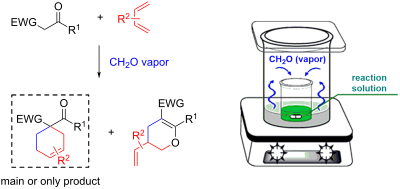
- adducts of formaldehyde condensation are formed under milder conditions and are highly reactive, which is important for further synthetic transformations. However, due to the high carbonyl reactivity of formaldehyde, its interaction with active methylene compounds is often complicated by polycondensation

Graphical Abstract

Scheme 1: Knoevenagel and Diels–Alder reactions in the multicomponent synthesis of substituted cyclohexadiene...

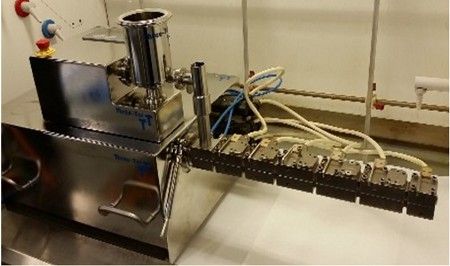
Figure 1: Equipment for carrying out reactions by the diffusion mixing method.

Scheme 2: Interaction of diketone 1 with formaldehyde under the diffusion mixing conditions.

Scheme 3: Products of three-component reactions of methylene derivatives, formaldehyde and various dienes.

Scheme 4: Proposed mechanism for the formation of compounds 8 and 9 in the presence of ʟ-proline.

Scheme 5: Interconversion of derivatives 8 and 9.

Scheme 6: Interaction of 4a/4b and 5a/5b mixtures with bromine.
Cyclodextrin-based rotaxanes for polymer materials: challenge on simultaneous realization of inexpensive production and defined structures
- Yosuke Akae
Beilstein J. Org. Chem. 2024, 20, 3026–3049, doi:10.3762/bjoc.20.252

Graphical Abstract

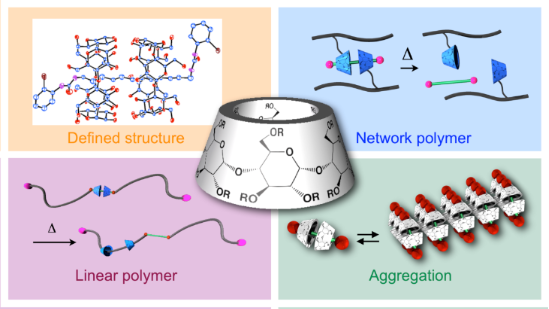
Figure 1: Overview of the CD-based rotaxane as a polymer material covered in this review.

Figure 2: CD structure.

Figure 3: Typical pathway for synthesizing CD-based rotaxanes.

Scheme 1: (A) Synthesis of α-CD-based [2]rotaxane via a metal–ligand complex. (B) Chemical structures of meth...

Scheme 2: Synthesis of α-CD-based polyrotaxane.

Scheme 3: Facile [3]rotaxane synthesis by the urea end-capping method.

Figure 4: (A) Single-crystal structure of α-CD-based [3]rotaxane 3 and PMα-CD-based [3]rotaxane 4. (B) Schema...
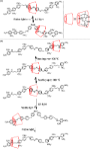
Figure 5: Structural control of CD-based [2]rotaxane via (A) light irradiation and (B) light irradiation and ...

Figure 6: Relationship among the plus–minus signs of ICD, the position of the guest molecule, and the axis of...

Figure 7: Structural control of CD-based rotaxane via (A) redox reaction and (B) in a solvent.
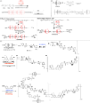
Scheme 4: (A) Synthesis of pseudopolyrotaxane bearing an ABA triblock copolymer as an axle. (B) Two synthetic...

Scheme 5: Slippage of size-complementary rotaxanes.

Figure 8: (A) Reversible formation of the CD-based [2]rotaxane. (B) Deslipping reaction of the CD-based size-...

Figure 9: (A) Chemical structures of [3]rotaxanes 2 and 3. (B) Schematic of the deslipping reaction of [3]rot...

Figure 10: (A) Modification of the axle ends of [3]rotaxane by (1) bromination and (2) the Suzuki coupling rea...

Figure 11: (A) ICD spectra of [3]rotaxanes bearing acylated (top) and conventional (bottom) CDs. (B) Schematic...

Figure 12: Synthesis of macromolecular[3]rotaxane via a size-complementary protocol.

Figure 13: Conjugated polymer insulated by (A) β-CD. (B) Triphenylamine-substituted β-CD.

Figure 14: Synthesis of the VSC and successive rotaxane-crosslinked polymer (RCP) preparation.

Figure 15: (A) Chemical structure of the [3]rotaxane crosslinker (RC). (B) Schematic of the synthesis and de-c...

Figure 16: (A) Random vinylation of the CD-based [3]rotaxane; (B) Schematic of the reaction between α-CD and m...

Figure 17: (A) Aggregation of CD-based [3]rotaxane. (B) Schematic of the plausible mechanism of the aggregatio...
In-depth characterization of self-healing polymers based on π–π interactions
- Josefine Meurer,
- Julian Hniopek,
- Johannes Ahner,
- Michael Schmitt,
- Jürgen Popp,
- Stefan Zechel,
- Kalina Peneva and
- Martin D. Hager
Beilstein J. Org. Chem. 2021, 17, 2496–2504, doi:10.3762/bjoc.17.166
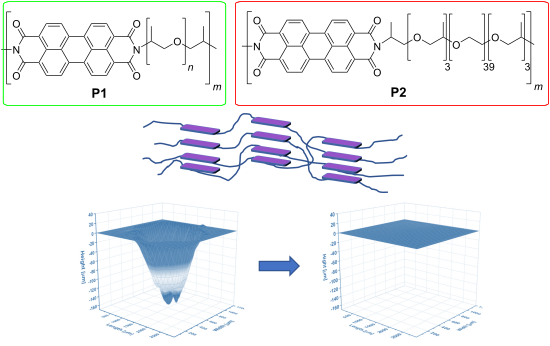
- synthesized utilizing a polycondensation of a perylene tetracarboxylic dianhydride with polyether-based diamines and the resulting materials were investigated using various analytical techniques. Thus, the molecular structure of the polymers could be correlated with the ability for self-healing. Moreover, the

Graphical Abstract

Scheme 1: Schematic representation of the polymer synthesis of P1 and P2.

Figure 1: DSC-analysis of the polymers P1 and P2 (second heating and cooling cycle; 20 K/min for heating and ...

Figure 2: DMTA analysis of P1 and P2 showing the transition at around 130 °C due to the reversible π–π intera...

Figure 3: Frequency sweeps of polymers P1 (left) and P2 (right).

Figure 4: Temperature dependent IR spectra of P1 drop casted on KBr in the C=C (1570–1605 cm−1) and C=O stret...

Figure 5: Schematic representation of the first healing of P1 at 150 °C.
Chemical syntheses and salient features of azulene-containing homo- and copolymers
- Vijayendra S. Shetti
Beilstein J. Org. Chem. 2021, 17, 2164–2185, doi:10.3762/bjoc.17.139
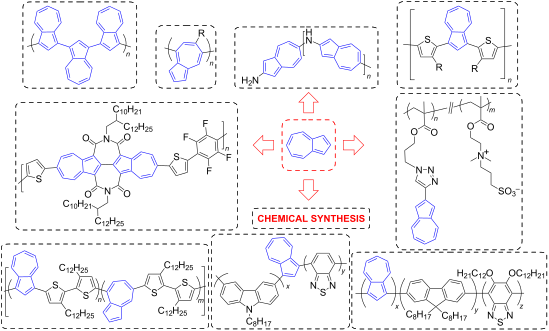
- dehalogenative polycondensation reaction of 1,3-dibromoazulene (4) by an organonickel catalyst (Yamamoto protocol) yielded 1,3-polyazulene 5. The polymer was partially soluble in many organic solvents such as chloroform, THF, xylenes, DMF, N-methylpyrrolidone (NMP), and also in Brønsted acids like TFA and conc

Graphical Abstract

Figure 1: Chemical structure, numbering scheme, and resonance form of azulene.

Scheme 1: Synthesis of polyazulene-iodine (PAz-I2) and polyazulene-bromine (PAz-Br2) complexes.

Scheme 2: Synthesis of ‘true polyazulene’ 3 or 3’ by cationic polymerization.

Scheme 3: Synthesis of 1,3-polyazulene 5 by Yamamoto protocol.

Scheme 4: Synthesis of 4,7-dibromo-6-(n-alkyl)azulenes 12–14.

Scheme 5: Synthesis of (A) 4,7-diethynyl-6-(n-dodecyl)azulene (16) and (B) 4,7-polyazulene 17 containing an e...

Scheme 6: Synthesis of directly connected 4,7-polyazulenes 18–20.

Scheme 7: Synthesis of (A) tert-butyl N-(6-bromoazulen-2-yl)carbamate (27), (B) dimeric aminoazulene 29, and ...

Figure 2: Iminium zwitterionic resonance forms of poly[2(6)-aminoazulene] 31.

Scheme 8: Synthesis of poly{1,3-bis[2-(3-alkylthienyl)]azulene} 33–38.

Scheme 9: Synthesis of polymer ruthenium complexes 40–43.

Scheme 10: Synthesis of 4,7-polyazulenes 45 containing a thienyl linker.

Scheme 11: Synthesis of azulene-bithiophene 48 and azulene-benzothiadiazole 52 copolymers. Conditions: (a): (i...

Scheme 12: Synthesis of azulene-benzodithiophene copolymer 54 and azulene-bithiophene copolymer 56.

Scheme 13: Synthesis of (A) 5,5’-bis(trimethylstannyl)-3,3’-didodecyl-2,2’-bithiophene (60) and (B) azulene-bi...

Scheme 14: Synthesis of 1,3-bisborylated azulene 67.

Scheme 15: Synthesis of D–A-type azulene-DPP copolymers 69, 71, and 72. Conditions: (a) Pd(PPh3)4, K2CO3, Aliq...

Scheme 16: Synthesis of the key precursor TBAzDI 79.

Scheme 17: Synthesis of TBAzDI-based polymers 81 and 83. Conditions: (a) P(o-tol)3, Pd2(dba)3, PivOH, Cs2CO3, ...

Scheme 18: Synthesis of (A) 1,3-dibromo-2-arylazulene 92–98 and (B) 2-arylazulene-thiophene copolymers 99–101.
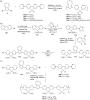
Scheme 19: Synthesis of (A) poly[2,7-(9,9-dialkylfluorenyl)-alt-(1’,3’-azulenyl)] 106–109, (B) 1,3-bis(7-bromo...

Scheme 20: Synthesis of azulene-fluorene copolymers 117–121 containing varying ratios of 1,3- and 4,7-connecte...
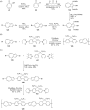
Scheme 21: Synthesis of (A) 2,6-dibromoazulene (125), (B) azulene-fluorene copolymer 126, and (C) azulene-fluo...

Scheme 22: Synthesis of 2-arylazulene-fluorene copolymers 131–134.

Scheme 23: Synthesis of azulene-fluorene-benzothiadiazole terpolymers 136–138.

Scheme 24: Synthesis of azulene-carbazole-benzothiadiazole-conjugated polymers 140–144.

Scheme 25: Synthesis of (A) azulene-2-yl methacrylate (146) and (B) the triazole-containing azulene methacryla...

Scheme 26: Synthesis of (A) azulene methacrylate polymer 151 and (B) triazole-containing azulene methacrylate ...

Scheme 27: Synthesis of azulene methyl methacrylate polymers 154, 155 (A and B) and azulene-sulfobetaine metha...
Progress and challenges in the synthesis of sequence controlled polysaccharides
- Giulio Fittolani,
- Theodore Tyrikos-Ergas,
- Denisa Vargová,
- Manishkumar A. Chaube and
- Martina Delbianco
Beilstein J. Org. Chem. 2021, 17, 1981–2025, doi:10.3762/bjoc.17.129
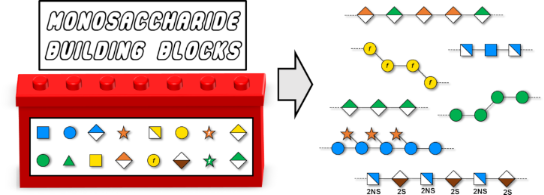
- enzymes cannot distinguish between acceptors with different lengths in the reaction mixture. Chemical polymerization is often performed by ring-opening of the respective anhydrosugar (Figure 1B) or polycondensation reactions. This approach is highly valuable to generate long chains in short time, allowing

Graphical Abstract

Figure 1: Overview of the methods available for the synthesis of polysaccharides. For each method, advantages...

Figure 2: Overview of the classes of polysaccharides discussed in this review. Each section deals with polysa...

Scheme 1: Enzymatic and chemical polymerization approaches provide cellulose oligomers with a non-uniform dis...

Scheme 2: AGA of a collection of cellulose analogues obtained using BBs 6–9. Specifically placed modification...

Figure 3: Chemical structure of the different branches G, X, L, F commonly found in XGs. Names are given foll...

Scheme 3: AGA of XG analogues with defined side chains. The AGA cycle includes coupling (TMSOTf), Fmoc deprot...

Figure 4: Synthetic strategies and issues associated to the formation of the β(1–3) linkage.
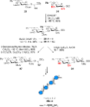
Scheme 4: Convergent synthesis of β(1–3)-glucans using a regioselective glycosylation strategy.

Scheme 5: DMF-mediated 1,2-cis glycosylation. A) General mechanism and B) examples of α-glucans prepared usin...

Scheme 6: Synergistic glycosylation strategy employing a nucleophilic modulation strategy (TMSI and Ph3PO) in...

Scheme 7: Different approaches to produce xylans. A) Polymerization techniques including ROP, and B) enzymati...

Scheme 8: A) Synthesis of arabinofuranosyl-decorated xylan oligosaccharides using AGA. Representative compoun...

Scheme 9: Chemoenzymatic synthesis of COS utilizing a lysozyme-catalyzed transglycosylation reaction followed...
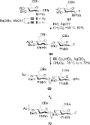
Scheme 10: Synthesis of COS using an orthogonal glycosylation strategy based on the use of two different LGs.
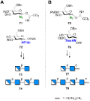
Scheme 11: Orthogonal N-PGs permitted the synthesis of COS with different PA.

Scheme 12: AGA of well-defined COS with different PA using two orthogonally protected BBs. The AGA cycle inclu...

Scheme 13: A) AGA of β(1–6)-N-acetylglucosamine hexasaccharide and dodecasaccharide. AGA includes cycles of co...

Figure 5: ‘Double-faced’ chemistry exemplified for ᴅ-Man and ʟ-Rha. Constructing β-Man linkages is considerab...

Figure 6: Implementation of a capping step after each glycosylation cycle for the AGA of a 50mer oligomannosi...

Scheme 14: AGA enabled the synthesis of a linear α(1–6)-mannoside 100mer 93 within 188 h and with an average s...

Scheme 15: The 151mer branched polymannoside was synthesized by a [30 + 30 + 30 + 30 + 31] fragment coupling. ...

Figure 7: PG stereocontrol strategy to obtain β-mannosides. A) The mechanism of the β-mannosylation reaction ...
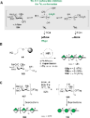
Scheme 16: A) Mechanism of 1,2-cis stereoselective glycosylation using ManA donors. Once the ManA donor is act...
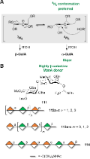
Figure 8: A) The preferred 4H3 conformation of the gulosyl oxocarbenium ion favors the attack of the alcohol ...

Scheme 17: AGA of type I rhamnans up to 16mer using disaccharide BB 115 and CNPiv PG. The AGA cycle includes c...

Figure 9: Key BBs for the synthesis of the O-antigen of Bacteroides vulgatus up to a 128mer (A) and the CPS o...

Figure 10: Examples of type I and type II galactans synthesized to date.

Figure 11: A) The DTBS PG stabilizes the 3H4 conformation of the Gal oxocarbenium ion favoring the attack of t...

Figure 12: Homogalacturonan oligosaccharides synthesized to date. Access to different patterns of methyl-ester...

Figure 13: GlfT2 from Mycobacterium tuberculosis catalyzes the sequential addition of UPD-Galf donor to a grow...

Figure 14: The poor reactivity of acceptor 137 hindered a stepwise synthesis of the linear galactan backbone a...

Scheme 18: AGA of a linear β(1–5) and β(1–6)-linked galactan 20mer. The AGA cycle includes coupling (NIS/TfOH)...

Figure 15: The 92mer arabinogalactan was synthesized using a [31 + 31 + 30] fragment coupling between a 31mer ...

Scheme 19: Synthesis of the branched arabinofuranose fragment using a six component one-pot synthesis. i) TTBP...
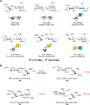
Figure 16: A) Chemical structure and SNFG of the representative disaccharide units forming the GAG backbones, ...

Figure 17: Synthetic challenges associated to the H/HS synthesis.

Scheme 20: Degradation of natural heparin and heparosan generated valuable disaccharides 150 and 151 that can ...

Scheme 21: A) The one-step conversion of cyanohydrin 156 to ʟ-iduronamide 157 represent the key step for the s...
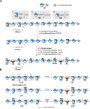
Scheme 22: A) Chemoenzymatic synthesis of heparin structures, using different types of UDP activated natural a...

Scheme 23: Synthesis of the longest synthetic CS chain 181 (24mer) using donor 179 and acceptor 180 in an iter...

Scheme 24: AGA of a collection of HA with different lengths. The AGA cycle includes coupling (TfOH) and Lev de...
Recent advances in the application of isoindigo derivatives in materials chemistry
- Andrei V. Bogdanov and
- Vladimir F. Mironov
Beilstein J. Org. Chem. 2021, 17, 1533–1564, doi:10.3762/bjoc.17.111
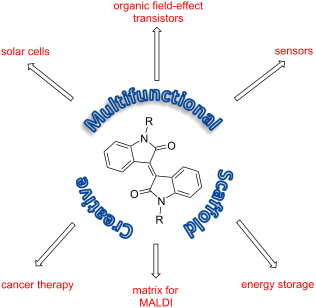
- polymers in which aromatic fragments are linked by a single bond, a number of homopolymers 53 was obtained by the aldol polycondensation reaction [97]. These compounds have rigid and almost planar structures with a wide absorption range, high electron affinity, good solubility, and ambient stability

Graphical Abstract

Scheme 1: Representatives of isomeric bisoxindoles.

Scheme 2: Isoindigo-based OSCs with the best efficiency.

Scheme 3: Monoisoindigos with preferred 6,6'-substitution.

Scheme 4: Possibility of aromatic–quinoid structural transition.

Scheme 5: Isoindigo structures with incorporated acceptor nitrogen heterocycles.

Scheme 6: Monoisoindigos bearing pyrenyl substituents.
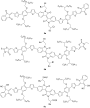
Scheme 7: p-Alkoxyphenylene-embedded thienylisoindigo with different acceptor anchor units.

Scheme 8: Nonfullerene OSC based on perylene diimide-derived isoindigo.

Scheme 9: Isoindigo as an additive in all-polymer OSCs.

Scheme 10: Bisisoindigos with different linker structures.

Scheme 11: Nonthiophene oligomeric monoisoindigos for OSCs.

Scheme 12: The simplest examples of polymers with a monothienylisoindigo monomeric unit.
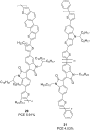
Scheme 13: Monothienylisoindigos bearing π-extended electron-donor backbones.

Scheme 14: Role of fluorination and the molecular weight on OSC efficiency on the base of the bithiopheneisoin...

Scheme 15: Trithiopheneisoindigo polymers with variation in the substituent structure.
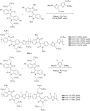
Scheme 16: Polymeric thienyl-linked bisisoindigos for OSCs.

Scheme 17: Isoindigo bearing the thieno[3,2-b]thiophene structural motif as donor component of OSCs.

Scheme 18: Thienylisoindigos with incorporated aromatic unit.
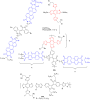
Scheme 19: One-component nonfullerene OSCs on the base of isoindigo.

Scheme 20: Isoindigo-based nonthiophene aza aromatic polymers as acceptor components of OSCs.

Scheme 21: Polymers with isoindigo substituent as side-chain photon trap.
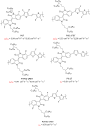
Scheme 22: Isoindigo derivatives for OFET technology with the best mobility.

Scheme 23: Monoisoindigos as low-molecular-weight semiconductors.

Scheme 24: Polymeric bithiopheneisoindigos for OFET creation.

Scheme 25: Fluorination as a tool to improve isoindigo-based OFET devices.

Scheme 26: Diversely DPP–isoindigo-conjugated polymers for OFETs.

Scheme 27: Isoindigoid homopolymers with differing rigidity.

Scheme 28: Isoindigo-based materials with extended π-conjugation.
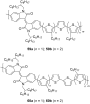
Scheme 29: Poly(isoindigothiophene) compounds as sensors for ammonia.
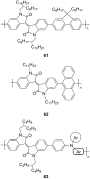
Scheme 30: Sensor devices based on poly(isoindigoaryl) compounds.

Scheme 31: Isoindigo polymers for miscellaneous applications.

Scheme 32: Mono-, rod-like, and polymeric isoindigos as agents for photoacoustic and photothermal cancer thera...
Valorisation of plastic waste via metal-catalysed depolymerisation
- Francesca Liguori,
- Carmen Moreno-Marrodán and
- Pierluigi Barbaro
Beilstein J. Org. Chem. 2021, 17, 589–621, doi:10.3762/bjoc.17.53
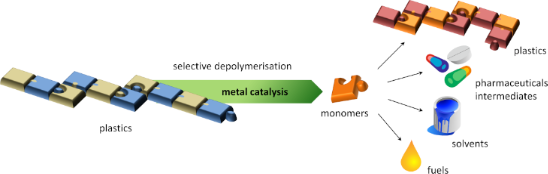
- chloride) compounds [243]. One-pot depolymerisation–polycondensation reactions were developed to produce random copolyesters poly(ethylene terephthalate-co-adipate) from PET in the presence of EG and adipic acid [244]. The depolymerisation step was carried out using a zinc acetate catalyst (1 wt %), with

Graphical Abstract

Figure 1: Potential classification of plastic recycling processes. The area covered by the present review is ...

Figure 2: EG produced during glycolytic depolymerisation of PET using DEG + DPG as solvent and titanium(IV) n...

Scheme 1: Simplified representation of the conversion of 1,4-PBD to C16–C44 macrocycles using Ru metathesis c...
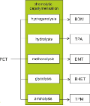
Figure 3: Main added-value monomers obtainable by catalytic depolymerisation of PET via chemolytic methods.

Scheme 2: Hydrogenolytic depolymerisation of PET by ruthenium complexes.

Scheme 3: Depolymerisation of PET via catalytic hydrosilylation by Ir(III) pincer complex.

Scheme 4: Catalytic hydrolysis (top) and methanolysis (bottom) reactions of PET.

Scheme 5: Depolymerisation of PET by glycolysis with ethylene glycol.

Figure 4: Glycolysis of PET: evolution of BHET yield over time, with and without zinc acetate catalyst (196 °...

Scheme 6: Potential activated complex for the glycolysis reaction of PET catalysed by metallated ILs and evol...

Scheme 7: One-pot, two-step process for PET repurposing via chemical recycling.
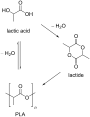
Scheme 8: Synthetic routes to PLA.

Scheme 9: Structures of the zinc molecular catalysts used for PLA-methanolysis in various works. a) See [265], b) ...

Scheme 10: Depolymerisation of PLLA by Zn–N-heterocyclic carbene complex.

Scheme 11: Salalen ligands.

Scheme 12: Catalytic hydrogenolysis of PLA.

Scheme 13: Catalytic hydrosilylation of PLA.

Scheme 14: Hydrogenative depolymerisation of PBT and PCL by molecular Ru catalysts.

Scheme 15: Glycolysis reaction of PCT by diethylene glycol.

Scheme 16: Polymerisation–depolymerisation cycle of 3,4-T6GBL.
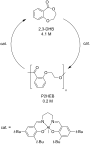
Scheme 17: Polymerisation–depolymerisation cycle of 2,3-HDB.

Scheme 18: Hydrogenative depolymerisation of PBPAC by molecular Ru catalysts.

Scheme 19: Catalytic hydrolysis (top), alcoholysis (middle) and aminolysis (bottom) reactions of PBPAC.

Scheme 20: Hydrogenative depolymerisation of PPC (top) and PEC (bottom) by molecular Ru catalysts.
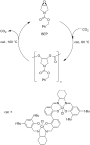
Scheme 21: Polymerisation-depolymerisation cycle of BEP.

Scheme 22: Hydrogenolysis of polyamides using soluble Ru catalysts.

Scheme 23: Catalytic depolymerisation of epoxy resin/carbon fibres composite.

Scheme 24: Depolymerisation of polyethers with metal salt catalysts and acyl chlorides.
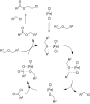
Scheme 25: Proposed mechanism for the iron-catalysed depolymerisation reaction of polyethers. Adapted with per...
Ugi reaction-derived prolyl peptide catalysts grafted on the renewable polymer polyfurfuryl alcohol for applications in heterogeneous enamine catalysis
- Alexander F. de la Torre,
- Gabriel S. Scatena,
- Oscar Valdés,
- Daniel G. Rivera and
- Márcio W. Paixão
Beilstein J. Org. Chem. 2019, 15, 1210–1216, doi:10.3762/bjoc.15.118
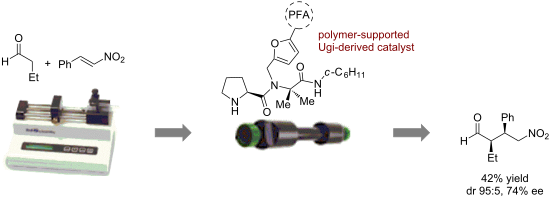
- -supported catalysts amenable for continuous-flow asymmetric enamine catalysis [9][10]. The acid-catalyzed polymerization of furfuryl alcohol renders a dark polymer featuring a complex cross-linked polyunsaturated scaffold derived from polycondensation and Diels–Alder reactions [11][12]. Worldwide, there is

Graphical Abstract

Scheme 1: Schematic synthesis of polyfurfulyl alcohol (PFA) incorporating a prolyl peptide catalyst. AA: Amin...

Scheme 2: Utilization of the Ugi four-component reaction (Ugi-4CR) for the synthesis of prolyl pseudo-peptide...
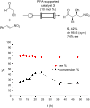
Figure 1: Analysis of the continuous-flow catalytic system producing γ-nitroaldehyde 5 with PFA-supported cat...
Mechanochemistry of supramolecules
- Anima Bose and
- Prasenjit Mal
Beilstein J. Org. Chem. 2019, 15, 881–900, doi:10.3762/bjoc.15.86
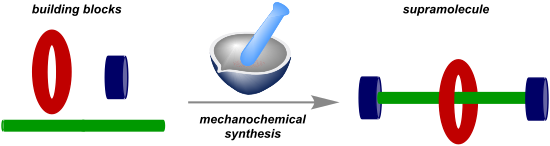
- stabilities by exhibiting a decomposition temperature up to 320 °C. In 2013, Severin and co-workers reported the mechanochemical synthesis of large macrocycles with borasiloxane and imine links using a ball mill (Figure 12). In a polycondensation reaction using diamines, 4-formylbenzeneboronic acid and t

Graphical Abstract

Figure 1: A generalized overview of coordination-driven self-assembly.

Figure 2: Examples of self-assembly or self-sorting and subsequent substitution.

Figure 3: Synthesis of salen-type ligand followed by metal-complex formation in the same pot [55].

Figure 4: Otera’s solvent-free approach by which the formation of self-assembled supramolecules could be acce...

Figure 5: Synthesis of a Pd-based metalla-supramolecular assembly through mechanochemical activation for C–H-...

Figure 6: a) Schematic representation for the construction of a [2]rotaxane. b) Chiu’s ball-milling approach ...

Figure 7: Mechanochemical synthesis of the smallest [2]rotaxane.

Figure 8: Solvent-free mechanochemical synthesis of pillar[5]arene-containing [2]rotaxanes [61].

Figure 9: Mechanochemical liquid-assisted one-pot two-step synthesis of [2]rotaxanes under high-speed vibrati...

Figure 10: Mechanochemical (ball-milling) synthesis of molecular sphere-like nanostructures [63].

Figure 11: High-speed vibration milling (HSVM) synthesis of boronic ester cages of type 22 [64].

Figure 12: Mechanochemical synthesis of borasiloxane-based macrocycles.

Figure 13: Mechanochemical synthesis of 2-dimensional aromatic polyamides.

Figure 14: Nitschke’s tetrahedral Fe(II) cage 25.

Figure 15: Mechanochemical one-pot synthesis of the 22-component [Fe4(AD2)6]4− 26, 11-component [Fe2(BD2)3]2− ...

Figure 16: a) Subcomponent synthesis of catalyst and reagent and b) followed by multicomponent reaction for sy...

Figure 17: A dynamic combinatorial library (DCL) could be self-sorted to two distinct products.

Figure 18: Mechanochemical synthesis of dynamic covalent systems via thermodynamic control.

Figure 19: Preferential formation of hexamer 33 under mechanochemical shaking via non-covalent interactions of...

Figure 20: Anion templated mechanochemical synthesis of macrocycles cycHC[n] by validating the concept of dyna...

Figure 21: Hydrogen-bond-assisted [2 + 2]-cycloaddition reaction through solid-state grinding. Hydrogen-bond d...

Figure 22: Formation of the cage and encapsulation of [2.2]paracyclophane guest molecule in the cage was done ...

Figure 23: Formation of the 1:1 complex C60–tert-butylcalix[4]azulene through mortar and pestle grinding of th...

Figure 24: Formation of a 2:2 complex between the supramolecular catalyst and the reagent in the transition st...

Figure 25: Halogen-bonded co-crystals via a) I···P, b) I···As, and c) I···Sb bonds [112].

Figure 26: Transformation of contact-explosive primary amines and iodine(III) into a successful chemical react...

Figure 27: Undirected C–H functionalization by using the acidic hydrogen to control basicity of the amines [114]. a...
Olefin metathesis in multiblock copolymer synthesis
- Maria L. Gringolts,
- Yulia I. Denisova,
- Eugene Sh. Finkelshtein and
- Yaroslav V. Kudryavtsev
Beilstein J. Org. Chem. 2019, 15, 218–235, doi:10.3762/bjoc.15.21

- multiblock copolymers with respect to self-assembly. In recent years, it was demonstrated that such polymers can be prepared with many of the available techniques, including polycondensation [28], chain-shuttling polymerization [29], copper-mediated radical polymerization [30][31][32], reversible addition

Graphical Abstract

Scheme 1: Multiblock copolymer synthesis by sequential ROMP, replotted from [51].

Figure 1: The most known commercially available catalysts for olefin metathesis.

Scheme 2: Multiblock copolymer synthesis by combining ROMP and NMP, replotted from [56].

Figure 2: A highly fluorescent multiblock copolymer for bioimaging and in vivo tumor targeting [60].

Scheme 3: Multiblock copolymer synthesis by combining ROMP and click reactions replotted from [61].
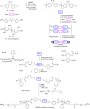
Scheme 4: Multiblock copolymer synthesis by combining ADMET and other reactions, replotted from [63,64].

Scheme 5: Synthesis of multiblock bottle-brush copolymers by ROMP, replotted from [68].

Scheme 6: Sacrificial synthesis of multiblock copolymers, replotted from [70].

Scheme 7: Synthesis of supramolecular multiblock copolymers, replotted from [74].

Figure 3: The multiblock copolymer capable of post-functionalization [76].
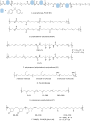
Figure 4: Multiblock copolymers synthesized by macromolecular cross metathesis.

Scheme 8: Macromolecular cross metathesis.

Figure 5: Changes in the DSC thermograms during MCM of PBD and polyesters (left) [84] and PNB–PCOE (right) mediat...

Figure 6: The 13C NMR spectrum recorded after 8 h of the reaction between PCOE, PNB, and Gr1; the homo- and h...

Scheme 9: Elementary reactions of MCM between PNB and PCOE, replotted from [90].

Figure 7: The 1H NMR spectrum recorded after 24 h of the reaction between PCOE, PNB, and Gr1 in CDCl3. The ca...

Scheme 10: Post-modification of multiblock copolymers by hydrogenation (A) [85] and epoxidation (B) [101] of C=C double...

Figure 8: Integral distribution functions for the lamella thickness of crystallites in thermally fractionated...
Synthesis and supramolecular properties of regioisomers of mononaphthylallyl derivatives of γ-cyclodextrin
- Markéta Bláhová,
- Sergey K. Filippov,
- Lubomír Kováčik,
- Jiří Horský,
- Simona Hybelbauerová,
- Zdenka Syrová,
- Tomáš Křížek and
- Jindřich Jindřich
Beilstein J. Org. Chem. 2017, 13, 2509–2520, doi:10.3762/bjoc.13.248
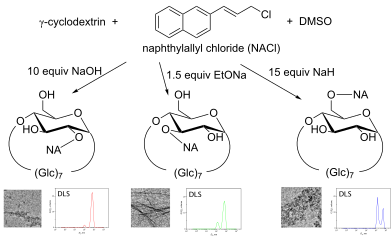
- binding constant and NA-γ-CD concentration (see Supporting Information, File 1). Number average and weight average degrees of polymerization (nn and nw) are given by standard relations derived for polycondensation [40] The values of nn and nw calculated from ITC results for 10 mM solutions of NA-γ-CD are

Graphical Abstract

Scheme 1: Preparation of 2I-O-, 3I-O- and 6I-O-naphthylallyl derivatives of γ-CD by cross-metathesis.

Scheme 2: Preparation of 2-O-, 3-O- and 6-O-NA derivatives of γ-CD by direct alkylation (see Table 1 for the yields ...

Figure 1: Volume-weighted distribution functions for water solutions of 2-O- (2a), 3-O- (2b), and 6-O- (2c) N...

Figure 2: Distribution functions for 2-O- (2a), 3-O- (2b), and 6-O- (2c) NA-γ-CD regioisomers in 50% MeOH (v/...

Figure 3: Volume-weighted distribution functions for the 3-O- (2b) and 6-O- (2c) NA-γ-CD regioisomer at diffe...

Figure 4: Effect of increasing concentration and sonication on the morphology of the 3-O-derivative 2b. A to ...

Figure 5: Effect of increasing concentration and sonication on the morphology of the 2-O-derivative 2a. A: 2 ...

Figure 6: Effect of increasing concentration and sonication on the morphology of the 6-O-derivative 2c. A: 0....

Figure 7: Heat change for injection per mole of NA-γ-CD added as a function of the total concentration of NA-...

Figure 8: 1H NMR spectra of 2-O-derivative 2a in D2O at concentrations of 100, 10, and 1 mM.

Figure 9: 1H NMR spectra of 3-O-derivative 2b in D2O at concentrations of 100, 10, and 1 mM.

Figure 10: Putative objects and interactions in naphthylallyl-γ-CD solution, depicted schematically for 6I-O-n...
Sugar-based micro/mesoporous hypercross-linked polymers with in situ embedded silver nanoparticles for catalytic reduction
- Qing Yin,
- Qi Chen,
- Li-Can Lu and
- Bao-Hang Han
Beilstein J. Org. Chem. 2017, 13, 1212–1221, doi:10.3762/bjoc.13.120
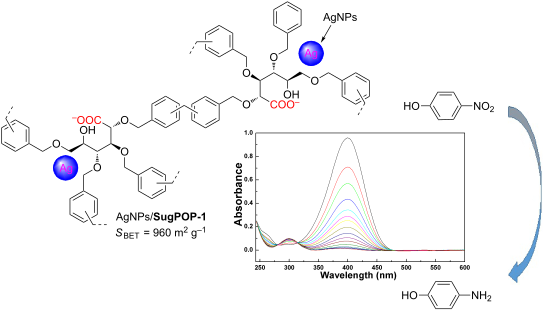
- -linkers [4], and self-polycondensation of small molecular monomers [5]. Since the Tan group proposed the new synthetic strategy that "knits" low functionality rigid aromatic compounds with formaldehyde dimethyl acetal (FDA) as an external cross-linking agent through a Friedel–Crafts reaction to synthesize

Graphical Abstract
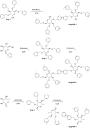
Scheme 1: Preparation of polymers SugPOP-1–3 (FDA: formaldehyde dimethyl acetal).

Figure 1: 13C CP/MAS NMR spectrum of SugPOP-3.
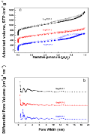
Figure 2: (a) Nitrogen adsorption–desorption isotherms of SugPOP-1–3 measured at 77 K. For clarity, the isoth...

Scheme 2: The preparation of AgNPs/SugPOP-1 composite by the in situ production of AgNPs.
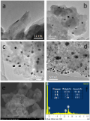
Figure 3: TEM images of the AgNPs/SugPOP-1 composite taken at different reaction times: (a) 0 h, (b) 8 h; (c)...

Figure 4: Nitrogen sorption isotherm at 77 K and the pore size distribution profile calculated by NLDFT analy...
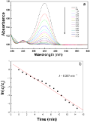
Figure 5: Catalytic performance of the AgNPs/SugPOP-1 composite. Time-dependent UV–vis spectral changes (a) a...
Dynamics and interactions of ibuprofen in cyclodextrin nanosponges by solid-state NMR spectroscopy
- Monica Ferro,
- Franca Castiglione,
- Nadia Pastori,
- Carlo Punta,
- Lucio Melone,
- Walter Panzeri,
- Barbara Rossi,
- Francesco Trotta and
- Andrea Mele
Beilstein J. Org. Chem. 2017, 13, 182–194, doi:10.3762/bjoc.13.21
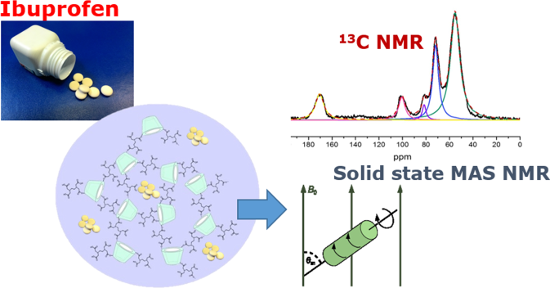
- of Chemistry, University of Torino, Via Pietro Giuria 7, 10125 Torino, Italy 10.3762/bjoc.13.21 Abstract Two different formulations of cyclodextrin nanosponges (CDNS), obtained by polycondensation of β-cyclodextrin with ethylenediaminetetraacetic acid dianhydride (EDTAn), were treated with aqueous
- chiral selectors for the enantioseparation of racemic ibuprofen [32]. In our case, the primary OH groups of CD units react with EDTA dianhydride to form a cross-linked polyester. As a matter of fact, this type of polycondensation makes the CD cavity less available compared to the former case. The overall
- result is that the guest molecules are mainly confined in the pores formed by the polycondensation process rather than forming a genuine inclusion complex with the single CD units. From a practical point of view, our class of polymerized cyclodextrins can be conveniently exploited as sorbent or scaffold

Graphical Abstract

Figure 1: Schematic thermodynamic description of the CP process and time constants. The I-S model (left), the ...

Figure 2: 1H MAS NMR spectra of a) CDNS(1:8)-IbuNa and b) CDNS(1:8). The inset (top right) shows the expansio...

Figure 3: The effect of the spinning speed on the spectral features. 1H MAS NMR spectra of a) CDNS(1:4)-IbuNa...

Figure 4: 13C CP-MAS NMR spectra for samples of β-CD (top), CDNS(1:4) (middle) and CDNS(1:8) polymers (bottom...

Figure 5: 13C CP-MAS NMR spectrum of: a) CDNS(1:4) polymer; b) CDNS(1:4)-IbuNa system; c) CDNS(1:8)-IbuNa sys...

Figure 6: 13C CP-MAS NMR spectra of CDNS(1:4) acquired with CP variable contact time in the range 50 μs–7 ms.

Figure 7: Time dependence of 13C magnetization for CDNS(1:4) (left) and CDNS(1:8) (right) polymers.

Figure 8: 1H-13C CP oscillatory kinetics for the carbon C(1) and C(4) of CDNS(1:4)-IbuNa sample (left) and CD...

Figure 9: 1H-13C CP oscillatory kinetics for the ibuprofen aromatic carbon atoms C(6,8) in samples CDNS(1:4)-...
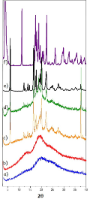
Figure 10: PXRD patterns of: a) CDNS(1:8), b) CDNS(1:4), c) CDNS(1:8)-IbuNa loaded, d) CDNS(1:4)-IbuNa loaded,...
Extrusion – back to the future: Using an established technique to reform automated chemical synthesis
- Deborah E. Crawford
Beilstein J. Org. Chem. 2017, 13, 65–75, doi:10.3762/bjoc.13.9
- the extrusion of two or more compatible polymer blends, leading to the formation of a polymer–polymer complex [13]. Bulk polymerisation involves several common organic transformations, including living polymerisation, polyaddition, radical and polycondensation polymerisation. Living polymerisation
- molecular weight at moderate temperatures of 60 °C [25]. Polycondensation polymerisation Finally, another important example of organic synthesis in the production of polymers is the polycondensation reaction to produce polymers such as polyamides. There are numerous patents on this application of polymer
- depicts the screw configuration employed and each reaction. Adapted from [16]. Proposed mechanism for the branching of polylactide. Adapted from [23]. Chemical reaction between isocyanate and an alcohol to form polyurethane. Generic polycondensation reaction to produce polyamides. Synthesis of HKUST-1

Graphical Abstract

Figure 1: Typical pilot scale single screw extruder (left) and a laboratory scale twin screw extruder (right)....

Figure 2: PTFE screw employed in single screw extrusion, with increasing root diameter (RD) from 45 mm to 95 ...

Figure 3: Modulated stainless steel intermeshing co-rotating screws employed typically in twin screw extrusio...

Scheme 1: Polymerisation of styrene using s-BuLi as an initiator.

Scheme 2: Telescoping process of the formation of polystyrene, followed by post polymerisation functionalisat...

Scheme 3: Proposed mechanism for the branching of polylactide. Adapted from [23].

Scheme 4: Chemical reaction between isocyanate and an alcohol to form polyurethane.

Figure 4: Representative diagram explaining the process involved in step growth polymerisation, which involve...

Scheme 5: Generic polycondensation reaction to produce polyamides.

Figure 5: Comparison of choline chloride/D-fructose DES prepared via twin screw extrusion (left) and conventi...

Scheme 6: Synthesis of HKUST-1, ZIF-8 and Al(fumarate)OH by twin screw extrusion. Adapted from [2].

Figure 6: Synthesis of Ni(NCS)2(PPh3)2 and [Ni(salen)] by twin screw extrusion. Adapted from [2].
Isosorbide and dimethyl carbonate: a green match
- Fabio Aricò and
- Pietro Tundo
Beilstein J. Org. Chem. 2016, 12, 2256–2266, doi:10.3762/bjoc.12.218
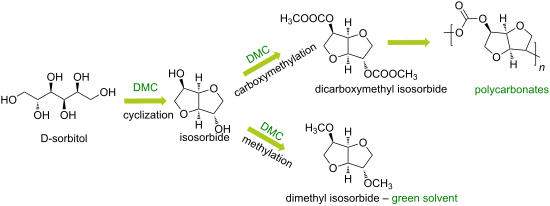
- derivatives [82][83]. On another hand, a greener synthetic methodology to bio-based polymers is to first synthesize a more reactive derivative of isosorbide and then perform the polycondensation reaction (Scheme 4). In this prospect a good candidate is the dicarboxymethyl isosorbide (DCI). In fact
- homopolymer preparation, DCI was synthesised by reacting isosorbide, DMC and Li(acac) at 98 °C. The polycondensation was then achieved employing an high vacuum and increasing the temperature to 240 °C. The so-formed poly(isosorbide carbonate) had a molecular weight (Mn) of 28,800 g/mol. The conversion of
- isosorbide was almost quantitative (95.2%). Similarly poly(aliphaticdiol-co-isosorbide carbonate)s were prepared via melt polycondensation of DMC with isosorbide and several aliphatic diols employing Li(acac) and the TiO2/SiO2-based catalyst (Scheme 4) [85]. High-molecular-weight (Mw = 32,600) and optically

Graphical Abstract

Figure 1: The DOE “Top 10” report [2].

Figure 2: Chemical structure of isosorbide and its epimers isomannide and isoidide.

Scheme 1: Conversion of D-sorbitol to isosorbide via twofold dehydration reaction.

Scheme 2: Possible reaction mechanism for the conversion of D-sorbitol to isosorbide.

Scheme 3: Methoxycarbonylation of isosorbide via DMC chemistry.

Scheme 4: Isosorbide homo- and co-polycarbonate via melt polycondensation.

Scheme 5: Synthesis of DMI via DMC chemistry.

Scheme 6: Comparison of the reactivity of isosorbide with other secondary alcohols in methylation reaction. R...

Figure 3: Chemical structure of isosorbide and its epimers isomannide and isoidide.
3,6-Carbazole vs 2,7-carbazole: A comparative study of hole-transporting polymeric materials for inorganic–organic hybrid perovskite solar cells
- Wei Li,
- Munechika Otsuka,
- Takehito Kato,
- Yang Wang,
- Takehiko Mori and
- Tsuyoshi Michinobu
Beilstein J. Org. Chem. 2016, 12, 1401–1409, doi:10.3762/bjoc.12.134
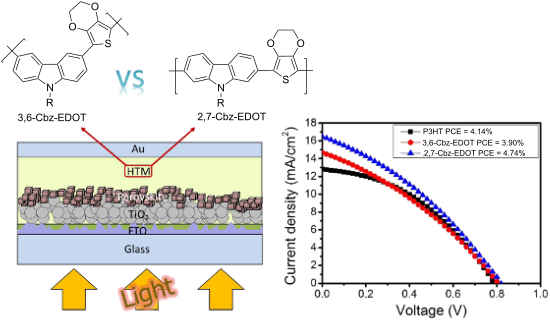
- -Cbz-EDOT, by Stille polycondensation. Despite the same chemical composition, 3,6-Cbz-EDOT and 2,7-Cbz-EDOT displayed different optical and electrochemical properties due to the different connectivity mode of the carbazole unit. Therefore, their performances as hole-transporting polymeric materials in
- ; hole transport; perovskite solar cell; polycondensation; Introduction Inorganic–organic hybrid perovskite solar cells (PSCs) have recently received significant attention due to their remarkably high power convention efficiencies (PCEs). After the seminal study reported by Miyasaka et al. in 2009 with
- the electron-donating properties, the carbazole monomers were copolymerized with the electron-rich 3,4-ethylenedioxythiophene (EDOT) unit by Stille polycondensation. The energy levels and hole mobilities of the resulting carbazole copolymers, namely 3,6-Cbz-EDOT and 2,7-Cbz-EDOT, were estimated from

Graphical Abstract

Scheme 1: Synthesis of 3,6-Cbz-EDOT and 2,7-Cbz-EDOT by Stille polycondensation.

Figure 1: (a) Normalized UV–vis absorption of Cbz-EDOT polymers in CH2Cl2 measured at 10−5 M repeat unit−1 an...

Figure 2: Energy level diagram of PSC components including P3HT, 3,6-Cbz-EDOT, and 2,7-Cbz-EDOT.

Figure 3: (a) Current density–voltage curves and (b) incident photon to current conversion efficiency (IPCE) ...

Figure 4: Impedance spectroscopy characterization of the PSCs with different HTMs over the frequency range fr...
Convenient preparation of high molecular weight poly(dimethylsiloxane) using thermally latent NHC-catalysis: a structure-activity correlation
- Stefan Naumann,
- Johannes Klein,
- Dongren Wang and
- Michael R. Buchmeiser
Beilstein J. Org. Chem. 2015, 11, 2261–2266, doi:10.3762/bjoc.11.246
- found that steric hindrance of the NHC shut down polymerization activity. Finally, a report on the polycondensation of α,ω-disilanols describes the efficient polycondensation via NHCs in spite of the generation of water during the reaction, finding that the most basic NHC in the small study delivered

Graphical Abstract

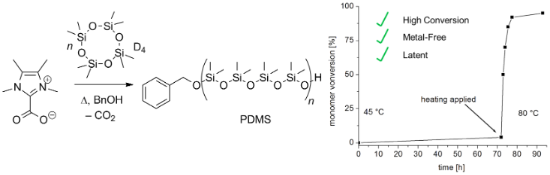
Scheme 1: NHC-carboxylates part of this study (top) and polymerization scheme with initial thermal decarboxyl...

Figure 1: Comparison of conversion over time for D4 polymerization (80 °C, bulk) using 5Me-Me-CO2. Note that ...

Scheme 2: Discussed mechanisms proposed to operate in NHC-mediated polymerization of D4 in presence/absence o...

Figure 2: Thermal activation of a 5Me-Me-CO2/BnOH/D4 (1:5:500) composition after a latency period of 72 h.
Dicarboxylic esters: Useful tools for the biocatalyzed synthesis of hybrid compounds and polymers
- Ivan Bassanini,
- Karl Hult and
- Sergio Riva
Beilstein J. Org. Chem. 2015, 11, 1583–1595, doi:10.3762/bjoc.11.174

- for example Zang et al. [49], Kobayashi and Makino [50], Gross et al. [51]). Nowadays lipases are not only used to achieve simple polycondensation reactions, but are exploited due to their chemo-, stereo- and enantioselectivity. In addition, they are seen as environmentally friendly alternative to
- traditional polymerization methods [52]. Binns et al. summarized the attempts to scale up synthesis of polyesters by enzyme catalyzed polycondensation of adipic acid and hexane-1,6-diol in a very well-worth reading article [53]. They discussed the very slow progress in achieving high molecular weight polymers
- telechelics in a one-pot polycondensation. The backbone of the telechelics was built from ethylene glycol and divinyl adipate. Specific degrees of polymerisation (4, 8 and 13) were reached by terminating the process with the addition of 2-hydroxyethyl methacrylate. Well-defined telechelics with more than 90

Graphical Abstract

Scheme 1: Activated derivatives of dicarboxylic acids.

Figure 1: Example of natural compounds selectively acylated with dicarboxylic esters.

Figure 2: C6-dicarboxylic acid diesters derivatives of NAG-thiazoline.

Figure 3: Sylibin dimers obtained by CAL-B catalyzed trans-acylation reactions.

Scheme 2: Biocatalyzed synthesis of paclitaxel derivatives.

Figure 4: 5-Fluorouridine derivatives obtained by CAL-B catalysis.

Scheme 3: Biocatalyzed synthesis of hybrid diesters 17 and 18.

Scheme 4: Hybrid derivatives of sylibin.

Figure 5: Bolaamphiphilic molecules containing (L)- and/or (D)-isoascorbic acid moieties.

Figure 6: Doxorubicin (29) trapped in a polyester made of glycolate, sebacate and 1,4-butandiol units.

Figure 7: Polyesters containing functionalized pentofuranose derivatives.

Figure 8: Polyesters containing disulfide moieties.

Figure 9: Polyesters containing epoxy moieties.

Figure 10: Biocatalyzed synthesis of polyesters containing glycerol.

Figure 11: Iataconic (34) and malic (35) acid.

Figure 12: Oxidized poly(hexanediol-2-mercaptosuccinate) polymer.

Figure 13: C-5-substituted isophthalates.

Figure 14: Curcumin-based polyesters.

Figure 15: Silylated polyesters.

Figure 16: Polyesters containing reactive ether moieties.

Figure 17: Polyesters obtained by CAL-B-catalyzed condensation of dicarboxylic esters and N-substituted dietha...

Figure 18: Polyesters comprising mexiletine (38) moieties.

Figure 19: Poly(amide-co-ester)s comprising a terminal hydroxy moiety.

Figure 20: Polymer comprising α-oxydiacid moieties.

Figure 21: Telechelics with methacrylate ends.

Figure 22: Telechelics with allyl-ether ends.

Figure 23: Telechelics with ends functionalized as epoxides.
Synthesis and chemosensing properties of cinnoline-containing poly(arylene ethynylene)s
- Natalia A. Danilkina,
- Petr S. Vlasov,
- Semen M. Vodianik,
- Andrey A. Kruchinin,
- Yuri G. Vlasov and
- Irina A. Balova
Beilstein J. Org. Chem. 2015, 11, 373–384, doi:10.3762/bjoc.11.43

- and a sila-Sonogashira coupling as the polycondensation technique. The fluorescence of the cinnoline-containing polymers in THF was highly sensitive to quenching by Pd2+ ions. Keywords: cinnolines; fluorescence quenching; Pd2+ detection; poly(arylene ethynylene)s; Sonogashira coupling; Introduction
- ). These experiments revealed that both bromine atoms at pyridazine and benzene rings are highly reactive in the Sonogashira coupling due to the strong activation of the electron deficient nature of the heterocycle. Having starting compounds 5a,b in hand, we were ready to carry out the polycondensation
- with 1,4-diiodo-2,5-bis(octyloxy)benzene (9). There are two main reactions of polycondensation that have been reported as synthetic approaches towards PAEs: the acyclic diyne metathesis polymerization (ADIMET) [55] and the Sonogashira coupling [56]. Both of them have their own advantages and drawbacks

Graphical Abstract

Figure 1: Recent examples of PAEs and their application for the detection of Hg2+ (a) [11], Ni2+ (b) [12], explosives...

Figure 2: Target structures of PAEs.

Scheme 1: Synthesis of cinnoline-containing PAEs 10a,b.

Figure 3: 1H NMR spectra of PAEs 10a,b solutions in CDCl3.

Figure 4: 13C NMR spectra of PAEs 10a,b solutions in CDCl3.

Figure 5: Irregular chain structure (nonequivalent structural units are marked in different colors).

Figure 6: Optical absorption spectra of PAEs 10a,b in THF solutions.

Figure 7: Emission spectra of PAEs 10a,b in THF solutions.

Figure 8: Optical absorption spectra of PAE 10a in THF before and after the addition of metal analytes.

Figure 9: Optical absorption spectra of PAE 10b in THF before and after the addition of metal analytes.

Figure 10: Emission spectra of PAE 10a in THF before and after the addition of metal ions.

Figure 11: Emission spectra of PAE 10b in THF before and after the addition of metal ions.

Figure 12: Optical absorption spectra of PAE 10a in THF before and after the addition of HCl (10 equiv).

Figure 13: Emission spectra of PAE 10a in THF before and after the addition of HCl (10 equiv).

Figure 14: Optical absorption spectra of PAE 10b in THF before after the addition of methanol solution of PdCl2...

Figure 15: Emission spectra of PAE 10b in THF before and after the addition of methanol solution of PdCl2.

Figure 16: Optical absorption spectra of cinnoline 4a in THF before and after the addition of aqueous solution...

Figure 17: Emission spectra of cinnoline 4a in THF before and after the addition of aqueous solution of PdCl2.
Synthetic strategies for the fluorescent labeling of epichlorohydrin-branched cyclodextrin polymers
- Milo Malanga,
- Mihály Bálint,
- István Puskás,
- Kata Tuza,
- Tamás Sohajda,
- László Jicsinszky,
- Lajos Szente and
- Éva Fenyvesi
Beilstein J. Org. Chem. 2014, 10, 3007–3018, doi:10.3762/bjoc.10.319
- review has been recently published [11]. Cationic and anionic cyclodextrin polymers were synthesized by simultaneous modification and branching from β-CD, epichlorohydrin and choline chloride (for cationic polymer) or chloroacetic acid (for anionic polymer) in an one-step polycondensation process and

Graphical Abstract

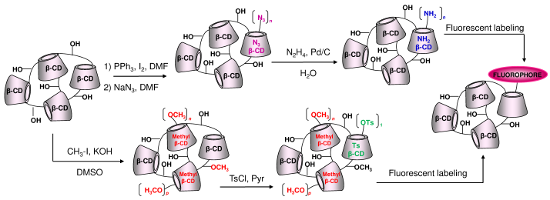
Scheme 1: Schematic representation of the various synthetic routes for the introduction of an anchoring group...

Scheme 2: Synthetic strategy for the rhodaminylation of β-CD polymer.

Figure 1: TLC study of β-CD iodination showing the proceeding of 6-monoiodination with increasing reaction ti...

Figure 2: HSQC-DEPT spectrum of compound 1 with partial assignment.

Figure 3: IR spectra of compound 1 (black line) and compound 2 (red line) showing the disappearance of the az...

Scheme 3: Schematic representation for the coumarinylation of methylated β-CD-polymer, n, m, p and q mean the...

Figure 4: HSQC-DEPT spectra of compound 4 with partial assignment; in the upper part the full spectrum is sho...

Scheme 4: Schematic representation for the introduction of NBF in a cationic β-CD-polymer.

Scheme 5: Schematic representation for the introduction of fluorescein into a β-CD-polymer.
Anomalous diffusion of Ibuprofen in cyclodextrin nanosponge hydrogels: an HRMAS NMR study
- Monica Ferro,
- Franca Castiglione,
- Carlo Punta,
- Lucio Melone,
- Walter Panzeri,
- Barbara Rossi,
- Francesco Trotta and
- Andrea Mele
Beilstein J. Org. Chem. 2014, 10, 2715–2723, doi:10.3762/bjoc.10.286
- growth of the polycondensation products leads to a statistic three-dimensional network characterized by different types of cavities, namely the apolar cavity of the CD units and the pores of the growing polymer. As previously stressed, CDNS are, in the majority of cases, completely – or almost completely

Graphical Abstract

Figure 1: a) 1H high resolution NMR spectrum of IP dissolved in D2O, b) 1H HRMAS NMR spectrum of IP-CDNSEDTA ...

Figure 2: Normalized NMR signal decay I(q,td) as function of q2 for a) IP in D2O solution, b) IP in CDNSEDTA ...

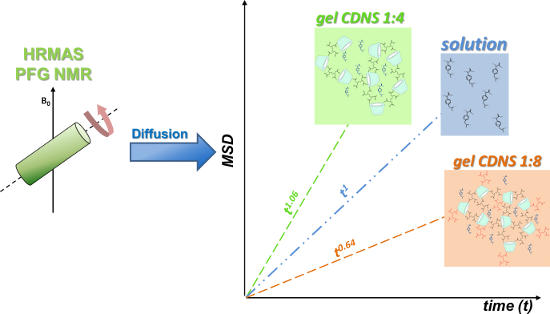
Figure 3: log–log plot of MSD vs diffusion time td for: a) D2O solution, b) CDNSEDTA (1:4) and CDNSEDTA (1:8)....

Figure 4: TEM images of: a) CDNSEDTA (1:4) and b) CDNSEDTA (1:8).

Figure 5: Effect of the increasing amount of crosslinker with respect to CD (expressed here as mol of crossli...

Scheme 1: Schematic representation of the nanosponge synthesis. Acronyms: β-CD: β-cyclodextrin; EDTAn: anhydr...
Synthesis and characterization of a hyper-branched water-soluble β-cyclodextrin polymer
- Francesco Trotta,
- Fabrizio Caldera,
- Roberta Cavalli,
- Andrea Mele,
- Carlo Punta,
- Lucio Melone,
- Franca Castiglione,
- Barbara Rossi,
- Monica Ferro,
- Vincenza Crupi,
- Domenico Majolino,
- Valentina Venuti and
- Dominique Scalarone
Beilstein J. Org. Chem. 2014, 10, 2586–2593, doi:10.3762/bjoc.10.271
- demanding task considering the high number of functional groups per CD unit. To synthesize soluble CD polymers different routes can be followed: 1) grafting of CDs on pre-synthesized polymers [8] 2) polycondensation of difunctionalized CD monomers obtained by selective modification of the CD secondary

Graphical Abstract

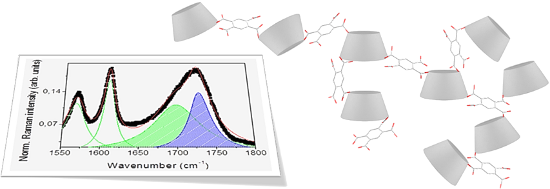
Figure 1: FTIR spectra of branched β-CD polymer (a), cross-linked β-CD nanosponge (b) and pyromellitic dianhy...

Figure 2: SEC curves of the β-CD-based polymer before (solid line) and after ultrafiltration with cut-off siz...

Figure 3: Thermogravimetric curves of the β-CD-based polymer after ultrafiltration with cut-off size of 3000 ...
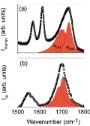
Figure 4: Raman (a) and FTIR–ATR (b) spectra of the branched β-CD-based polymer in the wavenumber range of 15...

Figure 5: Ratio between the intensity of the bands assigned to ester groups (ICO1) and to the free carboxylic...

Figure 6: NMR spectra of fluorescein in D2O solution (a) and in the presence of the hyper-branched β-CD polym...

Figure 7: UV–vis spectrum of fluorescein with increasing amounts of hyper-branched β-CD polymer. pH range: 8....
Atherton–Todd reaction: mechanism, scope and applications
- Stéphanie S. Le Corre,
- Mathieu Berchel,
- Hélène Couthon-Gourvès,
- Jean-Pierre Haelters and
- Paul-Alain Jaffrès
Beilstein J. Org. Chem. 2014, 10, 1166–1196, doi:10.3762/bjoc.10.117


Graphical Abstract

Scheme 1: Pioneer works of Atherton, Openshaw and Todd reporting on the synthesis of phosphoramidate starting...

Scheme 2: Mechanisms 1 (i) and 2 (ii) suggested by Atherton and Todd in 1945; adapted from [1].

Scheme 3: Two reaction pathways (i and ii) to produce chlorophosphate 2. Charge-transfer complex observed whe...

Scheme 4: Mechanism of the Atherton–Todd reaction with dimethylphosphite according to Roundhill et al. (adapt...

Scheme 5: Synthesis of dialkyl phosphate from dialkyl phosphite (i) and identification of chloro- and bromoph...

Scheme 6: Synthesis of chiral phosphoramidate with trichloromethylphosphonate as the suggested intermediate (...
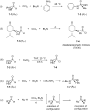
Scheme 7: Selection of results that address the question of the stereochemistry of the AT reaction (adapted f...

Scheme 8: Synthesis of phenoxy spirophosphorane by the AT reaction (adapted from [34]).

Scheme 9: Suggested mechanism of the Atherton–Todd reaction, (i) and (ii) formation of chlorophosphate with a...

Scheme 10: AT reaction in biphasic conditions (adapted from [38]).

Scheme 11: AT reaction with iodoform as halide source (adapted from [37]).

Scheme 12: AT reaction with phenol at low temperature in the presence of DMAP (adapted from [40]).

Scheme 13: Synthesis of a triphosphate by the AT reaction starting with the preparation of chlorophosphate (ad...

Scheme 14: AT reaction with sulfonamide (adapted from [42]).

Scheme 15: Synthesis of a styrylphosphoramidate starting from the corresponding aniline (adapted from [43]).

Scheme 16: Use of hydrazine as nucleophile in AT reactions (adapted from [48]).

Scheme 17: AT reaction with phenol as a nucleophilic species; synthesis of dioleyl phosphate-substituted couma...

Scheme 18: Synthesis of β-alkynyl-enolphosphate from allenylketone with AT reaction (adapted from [58]).

Scheme 19: Synthesis of pseudohalide phosphate by using AT reaction (adapted from [67]).

Scheme 20: AT reaction with hydrospirophosphorane with insertion of CO2 in the product (adapted from [69]).

Scheme 21: AT reaction with diaryl phosphite (adapted from [70]).

Scheme 22: AT reaction with O-alkyl phosphonite (adapted from [71]).

Scheme 23: Use of phosphinous acid in AT reactions (adapted from [72]).

Scheme 24: AT reaction with secondary phosphinethiooxide (adapted from [76]).

Scheme 25: Use of H-phosphonothioate in the AT reaction (adapted from [78]).

Scheme 26: AT-like reaction with CuI as catalyst and without halide source (adapted from [80]).

Scheme 27: Reduction of phenols after activation as phosphate derivatives (adapted from [81] i ; [82], ii; and [83], iii).

Scheme 28: Synthesis of medium and large-sized nitrogen-containing heterocycles (adapted from [85]).

Scheme 29: Synthesis of arylstannane from aryl phosphate prepared by an AT reaction (adapted from [86]).

Scheme 30: Synthesis and use of aryl dialkyl phosphate for the synthesis of biaryl derivatives (adapted from [89])....

Scheme 31: Synthesis of aryl dialkyl phosphate by an AT reaction from phenol and subsequent rearrangement yiel...

Scheme 32: Selected chiral phosphoramidates used as organocatalyst; i) chiral phosphoramidate used in the pion...

Scheme 33: Determination of ee of H-phosphinate by the application of the AT reaction with a chiral amine (ada...

Scheme 34: Chemical structure of selected flame retardants synthesized by AT reactions; (BDE: polybrominated d...

Scheme 35: Transformation of DOPO (i) and synthesis of polyphosphonate (ii) by the AT reaction (adapted from [117] ...

Scheme 36: Synthesis of lipophosphite (bisoleyl phosphite) and cationic lipophosphoramidate with an AT reactio...

Scheme 37: Use of AT reactions to produce cationic lipids characterized by a trimethylphosphonium, trimethylar...

Scheme 38: Cationic lipid synthesized by the AT reaction illustrating the variation of the structure of the li...

Scheme 39: Helper lipids for nucleic acid delivery synthesized with the AT reaction (adapted from [130]).

Scheme 40: AT reaction used to produce red/ox-sensitive cationic lipids (adapted from [135]).

Scheme 41: Alkyne and azide-functionalized phosphoramidate synthesized by AT reactions,(i); illustration of so...

Scheme 42: Cationic lipids exhibiting bactericidal action – arrows indicate the bond formed by the AT reaction...

Scheme 43: β-Cyclodextrin-based lipophosphoramidates (adapted from [138]).

Scheme 44: Polyphosphate functionalized by an AT reaction (adapted from [139]).

Scheme 45: Synthesis of zwitterionic phosphocholine-bound chitosan (adapted from [142]).

Scheme 46: Synthesis of AZT-based prodrug via an AT reaction (adapted from [143]).
Controlled synthesis of poly(3-hexylthiophene) in continuous flow
- Helga Seyler,
- Jegadesan Subbiah,
- David J. Jones,
- Andrew B. Holmes and
- Wallace W. H. Wong
Beilstein J. Org. Chem. 2013, 9, 1492–1500, doi:10.3762/bjoc.9.170
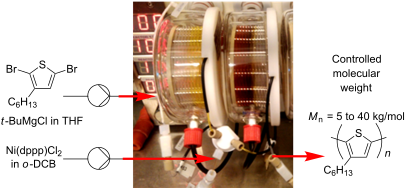
- P3HT gave comparable performance. Results and Discussion The most widely used synthetic route to regioregular P3HT is the Kumada catalyst transfer polycondensation (KCTP) developed by the McCullough group [6] and the Yokozawa group [7]. In a representative experiment for the preparation of P3HT, the

Graphical Abstract
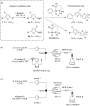
Scheme 1: (a) Preparation of thiophene Grignard monomer and synthesis of P3HT by Kumada catalyst transfer pol...

Figure 1: Plot of number-average molecular weight, Mn, versus monomer–catalyst ratio [M]0/[I]0 for batch and ...

Figure 2: MALDI mass spectrum of low-molecular-weight preparation (GPC, Mn = 6.2 kg/mol) of P3HT in continuou...

Figure 3: Plot of number-average molecular weight, Mn, versus monomer–catalyst ratio [M]0/[I]0 for batch and ...

Scheme 2: Schematic representation of the telescoped preparation of P3HT in a flow reactor.

Figure 4: 1H NMR (CDCl3, 500 MHz) spectra of P3HT samples prepared in (a) flow and (b) batch show comparable ...
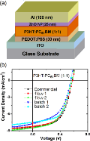
Figure 5: (a) Schematic diagram of the photovoltaic device geometry and (b) J–V curves of BHJ solar cells wit...



