Search results
Search for "spectroscopy" in Full Text gives 1420 result(s) in Beilstein Journal of Organic Chemistry. Showing first 200.
A cascade synthesis of 2-aminothiochromones from 2-fluorophenyl ketone and thiocarbonyldiimidazole
Beilstein J. Org. Chem. 2026, 22, 1151–1159, doi:10.3762/bjoc.22.92
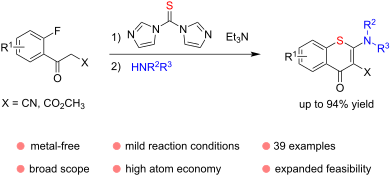
- characterizations of the prepared compounds were performed by 1H NMR and 13C NMR spectroscopy and high-resolution mass spectrometry (HRMS). 1H NMR spectra were obtained on an ECZ-400 spectrometer (JEOL, Tokyo, Japan) at 400 MHz and a Bruker AVANCE 500 (Bruker, Rheinstetten, Germany) at 500 MHz. 13C NMR spectra were

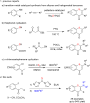


Controlled supramolecular assemblies of luminescent tridentate cyclometalated alkynylgold(III) amphiphiles in aqueous media
Beilstein J. Org. Chem. 2026, 22, 1097–1106, doi:10.3762/bjoc.22.88
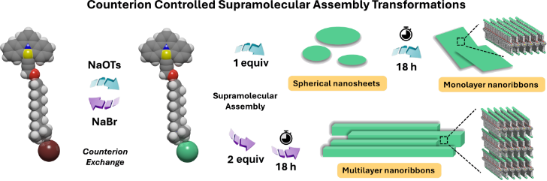
- all newly synthesized compounds and GA were unambiguously characterized by 1H , 13C NMR spectroscopy and high-resolution mass spectrometry (HRMS) (Supporting Information File 1, Figures S8–S13). Photophysical properties and assembly of GA A freshly prepared aqueous solution of GA (13.4 mM, 1.0 wt
- , 665.2801; found, 665.2846. Preparation of aqueous sample: GA (13.4 mM, 1.0 wt %) was dissolved in fresh Milli-Q water (MQ water). The solution was heated at 50.0 °C for 5 min, then slowly cooled to 20.0 °C at a rate of 1.0 °C/min to form assembled structures. UV–vis spectroscopy: UV–vis measurements were
- specified. Fluorescence spectroscopy: Fluorescence measurements were performed on an Agilent G9800A Cary Eclipse fluorescence spectrophotometer with a 1 cm path length quartz cuvette. A Luma 40/8453 temperature-controlled cuvette holder with four optical ports was mounted in the sample compartment of the


Synthesis of functionalized, 13-alkyl-substituted coralyne derivatives and investigation of their interactions with duplex and abasic site-containing DNA
Beilstein J. Org. Chem. 2026, 22, 1057–1066, doi:10.3762/bjoc.22.84
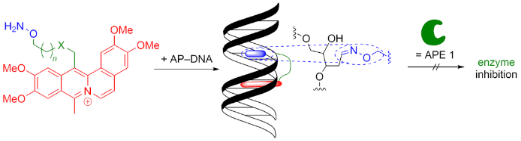
- the hydroxyalkyl-substituted product 3f in 45% yield (over the two reaction steps). All novel compounds were identified and characterized by 1H and 13C NMR spectroscopy (2D, COSY, HSQC, HMBC), mass spectrometry, and elemental analysis (if necessary as hydrochloride salts). Additionally, IR
- ). Under these conditions, the azide 3e decomposed, as indicated by 1H NMR-spectroscopic analysis of the reaction mixture, whereas the bromoalkyl-substituted papaverine 3b gave the coralyne derivative 2b, albeit in a very low yield of 1%. The product 2b was identified by NMR spectroscopy, mass spectrometry
- , and absorption spectroscopy. The papaverine 3c was directly made to react with acetic anhydride and conc. H2SO4 to give the corresponding coralyne 2c as sulfoacetate salt in 37% yield. After ion metathesis by treatment with HBF4 the resulting tetrafluoroborate salt 2c was submitted to acid-catalyzed


Semisynthesis, characterisation, and antibacterial evaluation of a novel lecanoric acid-derived amide library
Beilstein J. Org. Chem. 2026, 22, 1023–1032, doi:10.3762/bjoc.22.81
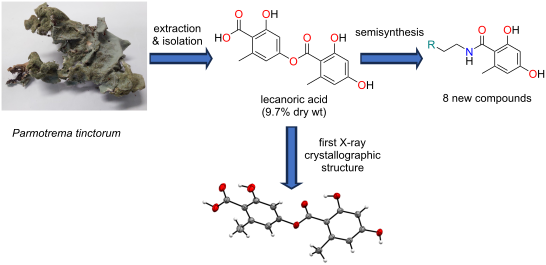
- investigations. Initial assessment (1H NMR spectroscopy and UHPLC–MS) of the crude CH2Cl2/MeOH extracts of P. tinctorum revealed the presence of a highly abundant natural product previously described as the depside, lecanoric acid (1, Figure 1). Several publications have outlined the antibiotic [3], anticancer
- using semipreparative C18 RP-HPLC (MeOH/H2O/0.1% TFA) with yields ranging from 12% to 53% and purities exceeding 95% (determined by 1D/2D NMR and UHPLC–MS analysis). All structures were fully confirmed and characterised using 1D/2D NMR, UV and IR spectroscopy, LRESIMS, and HRESIMS. An overview of the


The role of spacer length and flexibility in peptide self-assembly
Beilstein J. Org. Chem. 2026, 22, 986–996, doi:10.3762/bjoc.22.77
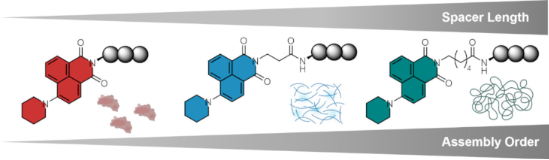
- -assembly. The peptides have been analyzed with respect to their assembly properties using assembly conversion determinations, fluorescence microscopy, transmission electron microscopy (TEM), atomic force microscopy (AFM), circular dichroism (CD) spectroscopy, and nuclear magnetic resonance (NMR
- ) spectroscopy. The results of this work emphasize the importance of π-block flexibility on supramolecular assembly as improved assembly characteristics are observed with increasing spacer length. Therefore, we hypothesize that the spacer length influences assembling properties of amphiphilic peptides directly
- spectrometry (LC–MS) and NMR spectroscopy (Supporting Information File 1, Figures S7–S24). The target tripeptide (ICA) was synthesized in a microwave-assisted peptide synthesizer using the fluorenylmethyloxycarbonyl (Fmoc) solid-phase peptide synthesis strategy [37], synthesizing the peptide from the C- to N


Electrochemical reduction of unsaturated carbon–carbon bonds via 3d transition-metal catalysis
Beilstein J. Org. Chem. 2026, 22, 955–981, doi:10.3762/bjoc.22.75
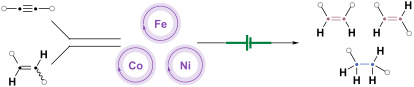
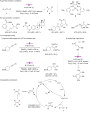
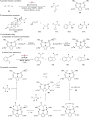
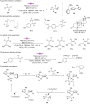
- tandem electrocatalysis essential for productive reactivity. During controlled-potential electrolysis, a characteristic color change of the solution was observed, and formation of an electrogenerated Fe(I) species was unambiguously confirmed by X-ray diffraction analysis and UV–vis spectroscopy in the
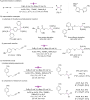
- substrates were subjected to the electroreductive conditions in the absence of the nickel complex. Under these conditions, both a ring-opening product and a hydrogenation product were detected by NMR spectroscopy. These observations provide compelling experimental evidence that Fe–H species, formed in situ








Synthesis of sterically shielded piperidine nitroxides via acid-catalyzed heterocyclization of β-aminoketone derivatives with ketones
Beilstein J. Org. Chem. 2026, 22, 948–954, doi:10.3762/bjoc.22.74
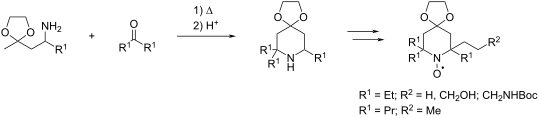
- nitroxides 7a–d in 50–80% overall yield from piperidines 5a,b (Scheme 3). The structures of nitroxides 7a–d were confirmed by 1H NMR spectroscopy of their amine derivatives, obtained via Zn/CF3COOH reduction in CD3OD, following a reported procedure [37]. The full line-shape analysis of the 1H NMR spectra for


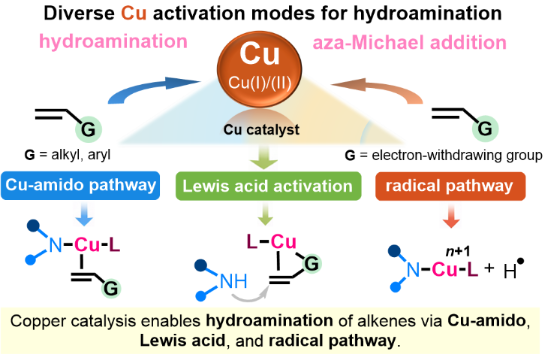
Recent advances in copper-catalyzed direct hydroamination of alkenes with (hetero)aromatic amines
Beilstein J. Org. Chem. 2026, 22, 925–947, doi:10.3762/bjoc.22.73
- CuCo2O4 catalyst was prepared via an oxalate decomposition method and extensively characterized using powder X-ray diffraction, field-emission scanning electron microscopy, and energy dispersive X-ray spectroscopy. Structural analysis revealed the formation of microsheet-like architectures with high







Palladium-catalyzed benzocyclization reactions of quinoline-2-carboxamides via sequential C–H/N–H functionalization
Beilstein J. Org. Chem. 2026, 22, 905–914, doi:10.3762/bjoc.22.71
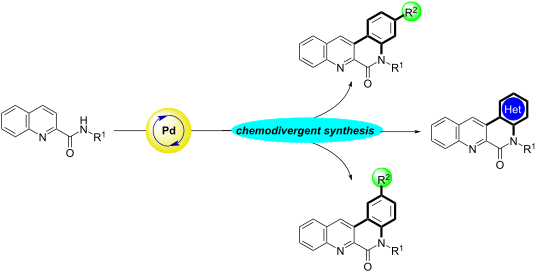
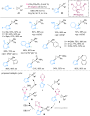
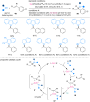
- moderate yields with high regioselectivity (Table 3, entries 9 and 10). The structures of the isomeric products were confirmed by nuclear Overhauser effect spectroscopy (NOESY, see Supporting Information File 1). First, the structures of lactams 3ab, 3ac, and 3ad were determined (Figure 1a–c, respectively




The trans-influence in gold chemistry from a catalytic perspective
Beilstein J. Org. Chem. 2026, 22, 838–856, doi:10.3762/bjoc.22.66
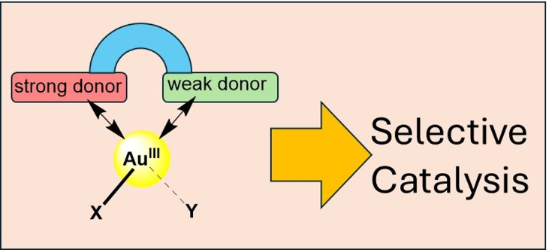
- -planar geometries there is always also the influence of two cis-ligands. Melpolder and Burmeister used solution infrared spectroscopy to determine the ratio of N-bonded and S-bonded thiocyanate ligands in LAuSCN/NCS as a function of L. As expected, ligands L with a strong trans-influence, such as
- ligands is to consider the structure of the recently described π-allyl complexes 26–28 (Scheme 14) [80][81][82][83]. Compounds 26 and 27 were characterised by X-ray diffraction and NMR spectroscopy, which showed that 26 is fluxional. The dication 28 was spectroscopically identified and the structure


Unsymmetrical sulfoxides with sterically hindered catechol fragment: synthesis, structure, electrochemical properties, and antiradical activity
Beilstein J. Org. Chem. 2026, 22, 828–837, doi:10.3762/bjoc.22.65
- {1H} NMR spectroscopy (Figures S1–S20), HRMS (Figures S21–S26) in Supporting Information File 1, and elemental analysis. X-ray data The X-ray suitable crystals of 1a, 4a–7a were grown by slow recrystallization of the compounds from acetonitrile or chloroform (for 7a) solutions at room temperature. The
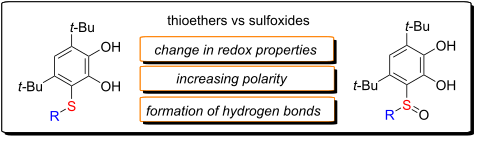
- hydrogen atom to the oxygen of the sulfinyl group. This weakens the O–H bond in the catechol, making it more polar and less strong, thereby facilitating the electrooxidation process. These findings are confirmed by IR spectroscopy: for the corresponding thioether, the O–H stretching vibrations are observed
- thioethers. Single-crystal X-ray diffraction analysis of catechol sulfoxides containing isopropyl, cyclopentyl, adamantyl, benzyl, and 1-naphthyl groups, combined with NMR and IR spectroscopy, revealed a consistent tendency of these sulfoxides to form intra- and intermolecular O–H···O=S hydrogen bonds both


Knoevenagel condensation of 4,5- and 1,8-diazafluorenes
Beilstein J. Org. Chem. 2026, 22, 803–812, doi:10.3762/bjoc.22.62
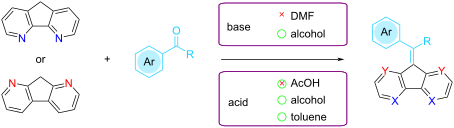
- diazafluorenylidenes were characterized by NMR, HRMS, elemental analysis, cyclic voltammetry (CV), UV–vis spectroscopy (Figure 1) and X-ray data (Figure 2 and Figure S4 in Supporting Information File 1). Figure 1a demonstrates the cyclic voltammograms of DPDAFs in CH2Cl2 solution. Both compounds demonstrated




Halogenated azobenzene acrylates: from efficient solution photoswitching to stable solid-state photochromic materials
Beilstein J. Org. Chem. 2026, 22, 782–794, doi:10.3762/bjoc.22.60
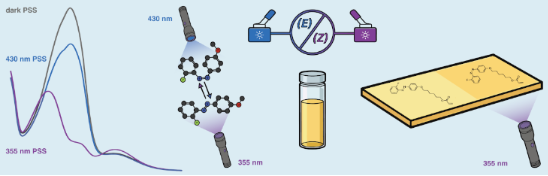
- calorimetry (DSC), thermogravimetric analysis (TGA), cyclic voltammetry (CV), UV–vis absorption spectroscopy, 1H and 13C NMR, and theoretical DFT calculations were employed. Furthermore, the target compounds are designed for incorporation as photoactive copolymers into the structure of functionalized
- analogous comparison using UV–vis absorption spectra along with a fatigue resistance verification. Representative thermal kinetic curves obtained by both UV–vis absorption and 1H NMR spectroscopy are shown in Figure 9. Thermal kinetics were optimized using the OPstat 6.10 software [33]. See Supporting
- Information File 1); the disubstituted E-isomers always possess lower μE values. These trends are not obeyed for Z-isomers where μZ > μE. The E → Z photoconversion induced by 355 nm light monitored by UV–vis spectroscopy revealed monohalogenated compounds 1a, c and e (E/Z = 8:92–7:93, Table 4) as the most


Synthesis and biological evaluation of new brassinosteroid analogs with C-22 benzoate function
Beilstein J. Org. Chem. 2026, 22, 753–762, doi:10.3762/bjoc.22.57
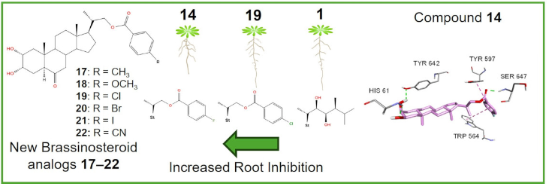
- %). All compounds have been characterized by IR, NMR (1D and 2D) and HRMS spectroscopy techniques (see Supporting Information File 1, Figures S1–S30). Thus, in the 1H NMR spectrum of compound 23, the presence of signals at δ = 7.91 ppm (2H, d, J = 8.1 Hz) and 7.21 ppm (2H, d, J = 8.1 Hz) are assigned to


Rongalite addition to dienones: diastereoselectivity in cyclic sulfone synthesis; stereochemical rationalization and prospects as a general conjugate nucleophile
Beilstein J. Org. Chem. 2026, 22, 742–752, doi:10.3762/bjoc.22.56

- regarding the conformational preferences of sulfur-containing 6-membered rings – spectroscopy of structurally related 5,6-dihydro-2H-thiopyrans suggests a preference for a half-chair in the unsubstituted ring but there is some evidence for boat-like major conformers in substituted systems [23][34][35][36




Anti-invasive and cytotoxic evaluation of a (+)-pinoresinol-based semisynthetic library against glioblastoma
Beilstein J. Org. Chem. 2026, 22, 691–704, doi:10.3762/bjoc.22.54
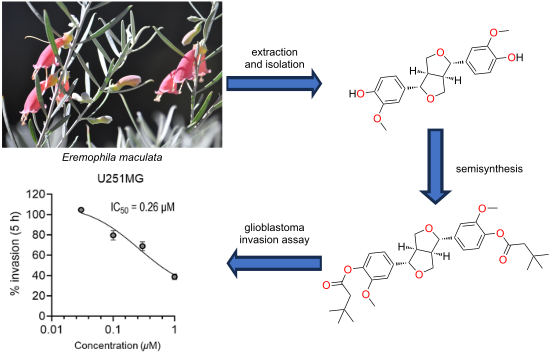
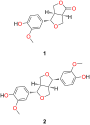
- and MeOH. Subsequent purifications of these two extracts afforded the two known natural products (+)-salicifoliol (1) [15][16] and (+)-pinoresinol (2, Figure 1) [17]. Their structures were determined by 1D (1H and 13C) and 2D (COSY, HMBC, HSQC, and ROESY) NMR spectroscopy together with MS data
- , which resulted in 12 final fractions (FA−FL). All 12 samples were analyzed by UHPLC–MS and 1H NMR spectroscopy. Fraction H (22.2 mg) was preadsorbed to C18-bonded silica (≈1 g), packed into a guard cartridge, and attached to a semipreparative Luna C18 HPLC column. A linear gradient from 40% MeOH (0.1



Harnessing light energy with molecules
Beilstein J. Org. Chem. 2026, 22, 680–682, doi:10.3762/bjoc.22.52

- -workers [4], the π-system of monoaryl-substituted NBDs was synthetically extended by acetylenic bridges. In addition, Hebborn, Ihmels, and co-workers [5] show that 19F NMR spectroscopy enables unambiguous identification of mono- and bisQC intermediates in the sequential photoreactions of a fluorinated
Photoorganocatalytic trifluoromethylation of (het)arenes in green conditions
Beilstein J. Org. Chem. 2026, 22, 662–671, doi:10.3762/bjoc.22.50
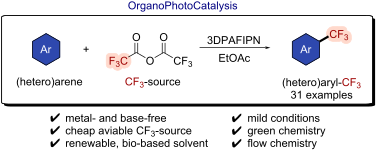
- analyzed by q19F NMR spectroscopy. Only trace amounts of the trifluoromethylated product were detected, whereas the TEMPO adducts of the trifluoromethyl and trifluoroacetyl radicals were observed in 16% and 22% yield, respectively (Scheme 3). Stern–Volmer studies of the quenching of the photocatalyst




Hydrogen production from formic acid catalyzed by NHC–Cu complexes
Beilstein J. Org. Chem. 2026, 22, 620–627, doi:10.3762/bjoc.22.48
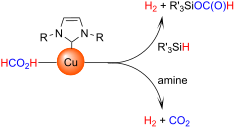
- (Scheme 1). To support these working hypotheses, the reaction of 1 equiv [Cu(OH)(IPr)] with 2 equiv of formic acid in a sealed tube was followed by 1H NMR spectroscopy in deuterated toluene (C7D8). After 16 h at 110 °C, the formation of 1b was observed while no excess of formic acid was detected
- . Interestingly, by adding to the reaction mixture a further equivalent of FA, evolution of gas was observed and H2 was detected by NMR spectroscopy (see Supporting Information File 1, Figure S1). This highlighted the formation in situ of the Cu–H species by decarboxylation of 1b. To quantify the amount of gas


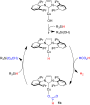

Experimental and DFT studies on the regioselective methanolysis of 5-azido-9-oxabicyclo[6.1.0]nonan-4-yl 4-nitrobenzoate isomers
Beilstein J. Org. Chem. 2026, 22, 547–556, doi:10.3762/bjoc.22.40
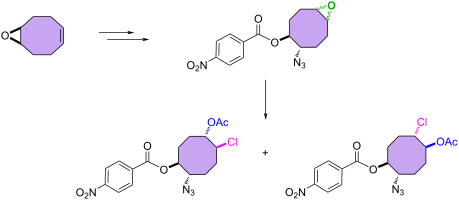
- epoxide ring and acetylation resulted in the formation of two corresponding chloro-acetate isomers. The structure of one of the chloro-acetate isomers was determined via crystallographic analysis and the other by 1D and 2D NMR spectroscopy. DFT computations confirm the regioselectivity of the methanolysis
- ) in pyridine and 4-(dimethylamino)pyridine (DMAP) in 95% yield. Treatment of azido nitrobenzoate 8 with m-CPBA gave a mixture of isomeric epoxides 9a and 9b with a combined yield of 97%. The formation and ratio of these isomers were determined by NMR spectroscopy, showing a 63:37 ratio (1H NMR) of 9a
- combined organic extracts were washed with saturated aqueous NaCl (20 mL) and then dried (Na2SO4). Evaporation of solvent gave the mixture of azidobenzoate epoxides 9a and 9b (1.02 g, 3.07 mmol, 97%), as light brown solid. The formation and ratio of these isomers was determined by NMR spectroscopy, in a 63


Get a better glimpse on sequential photoreactions of trisnorbornadienes with 19F NMR spectroscopy
Beilstein J. Org. Chem. 2026, 22, 527–534, doi:10.3762/bjoc.22.38
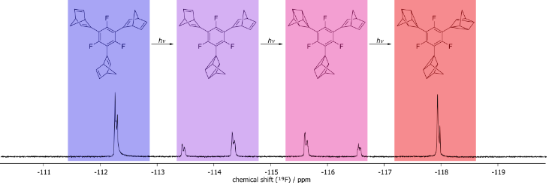
- exemplarily with a trifluorinated trisnorbornadienylbenzene that 19F NMR spectroscopy may be applied as a useful complementary method for the investigation of sequential photoreactions. The trisnorbornadiene core structure was used as it figures as promising scaffold for molecular solar thermal (MOST) energy
- trisquadricyclane. Even though the reaction can be monitored by photometry or by in situ 1H NMR spectroscopy, unambiguous assignment of the distinct intermediate mono- and bisquadricyclanes was not possible because of signal overlap. In contrast, this shortcoming is circumvented with in situ 19F NMR-spectroscopic
- lines, 1H NMR spectroscopy is a very useful method to follow the photoreaction, ideally upon direct irradiation in the NMR probehead (in situ NMR), because it potentially enables accurate structure elucidation. But even though this method may enable the accurate monitoring of a stepwise photochromic


Synthesis and uranyl(VI) extraction performance of a calix[4]pyrrole–tetrahydroxamic acid receptor
Beilstein J. Org. Chem. 2026, 22, 486–494, doi:10.3762/bjoc.22.36
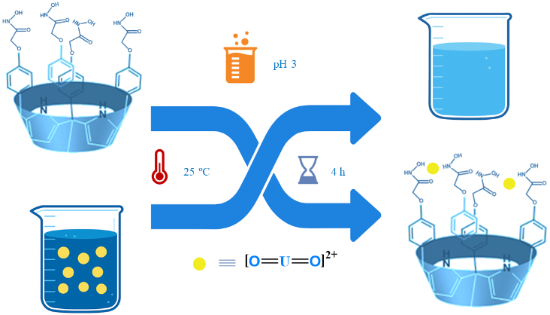
- % yield. Its structure was confirmed by 1H NMR, 13C NMR, and HRMS. The uranium(VI) extraction efficiency of PCP HA was evaluated by solid–liquid extraction experiments, using uranyl acetate as the uranium source, with measurements performed by gamma spectroscopy. PCP HA demonstrated good performance
- supramolecular material for the removal of uranyl from aqueous media. Keywords: gamma spectroscopy; hydroxamic acid; phenoxycalix[4]pyrrole; solid–liquid extraction; uranyl(VI) extraction; Introduction Over the past few decades, supramolecular chemistry has advanced intensively establishing itself as a central
- spectroscopy. The extraction performance was systematically evaluated as a function of pH and ligand-to-metal molar ratio to study the effect of these two key parameters on the extraction process. In doing so, this work aligns with current research dedicated to the design of functional supramolecular materials


Synthesis of a HDAC inhibitor–nanogold probe for cryo-EM visualization in class I HDAC co-repressor complexes
Beilstein J. Org. Chem. 2026, 22, 480–485, doi:10.3762/bjoc.22.35
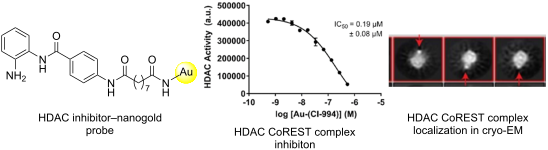
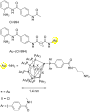
- to its corresponding NHS ester 8 and residual starting material was removed by column chromatography. The Boc-protecting group was removed under anhydrous conditions in good yield and the structure of 9 was confirmed by NMR spectroscopy. Compound 9 was maintained as the TFA salt for the final step
- , followed by centrifugation (see Supporting Information File 1 for full details). The resulting Au–(CI-994) conjugate was concentrated to a final volume of 1 mL. The concentration of Au–(CI-994) was determined by UV–vis spectroscopy, using absorbance at 420 nm – a characteristic wavelength for nanogold [19



Structural reassignment of compound 968, an allosteric glutaminase inhibitor
Beilstein J. Org. Chem. 2026, 22, 455–460, doi:10.3762/bjoc.22.33
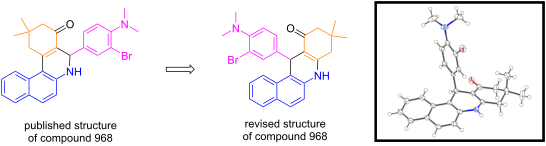
- anticancer drug target. Compound 968 is a glutaminase inhibitor that is widely used to probe cancer cells’ dependence on glutaminase activity. Here, we show by NMR spectroscopy and X-ray crystallography that the reported benzo[c]phenanthridine structure of compound 968 is incorrect; its true structure is the


Synthesis and anti-cancer activity of naphthalimide–organylselanyl conjugates
Beilstein J. Org. Chem. 2026, 22, 416–435, doi:10.3762/bjoc.22.29
- compounds, making it a viable alternative for introducing long alkyl chains into selenium-containing systems towards lysosomal membrane permeability (vide supra) [42][43][44]. After synthesis, compounds 7 and 8 were thoroughly characterised using multinuclear NMR spectroscopy ¹H, ¹³C, and ⁷⁷Se NMR
- and 8 have similar electronic structure and stability. The computed HOMO–LUMO gaps for the compounds are in good agreement with the experimentally measured HOMO–LUMO gaps measured using UV–visible spectroscopy. The UV–visible absorption spectra of compounds 7 and 8 were recorded in chloroform at a