


Search results
Search for "α,β-unsaturated carbonyl" in Full Text gives 75 result(s) in Beilstein Journal of Organic Chemistry.
A new and efficient methodology for olefin epoxidation catalyzed by supported cobalt nanoparticles
- Lucía Rossi-Fernández,
- Viviana Dorn and
- Gabriel Radivoy
Beilstein J. Org. Chem. 2021, 17, 519–526, doi:10.3762/bjoc.17.46

- and industrial applications [1]. Among them, allylic oxidation and olefin epoxidation constitute fundamental tools for the synthesis of homoallylic alcohols or α,β-unsaturated carbonyl compounds, and epoxides, respectively. In particular, epoxides are pivotal building blocks for the synthetic chemists

Graphical Abstract

Figure 1: TEM micrograph and size distribution graphic for CoNPs@MgO catalyst (scale bar = 20 nm).

Scheme 1: Plausible mechanistic pathway for olefin epoxidation catalyzed by CoNPs/MgO in the presence of t-Bu...
Changed reactivity of secondary hydroxy groups in C8-modified adenosine – lessons learned from silylation
- Jennifer Frommer and
- Sabine Müller
Beilstein J. Org. Chem. 2020, 16, 2854–2861, doi:10.3762/bjoc.16.234

- RNA in a highly selective and efficient way. The more traditional strategies rely on reaction of isothiocyanates or NHS esters with aliphatic amines [13][14], or on addition of thiols to the α,β-unsaturated carbonyl face of maleimides [15]. Over the past years, the copper catalyzed alkyne–azide

Graphical Abstract

Scheme 1: Synthesis of a C8-linker-modified adenosine derivative. (a) 4 equiv TBDMS-Cl, 5 equiv imidazole, DM...

Figure 1: Characterization and assignment of the TBDMS isomers via HSQC (red) and HMBC (blue) NMR measurement...

Scheme 2: New synthetic route to the C8-linker modified adenosine building block. (a) i) 1.2 equiv di-tert-bu...
Selective preparation of tetrasubstituted fluoroalkenes by fluorine-directed oxetane ring-opening reactions
- Clément Q. Fontenelle,
- Thibault Thierry,
- Romain Laporte,
- Emmanuel Pfund and
- Thierry Lequeux
Beilstein J. Org. Chem. 2020, 16, 1936–1946, doi:10.3762/bjoc.16.160
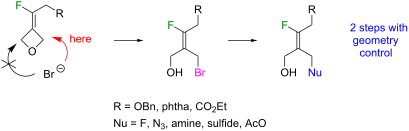
- already reported in the literature from oxetane-containing α,β-unsaturated carbonyl derivatives through a Lewis acid-catalyzed rearrangement [31]. When the previous conditions (HBr/AcOH) were tried (3.5 h, 0 °C to 20 °C), hydroxymethyllactone 14 (87%, Table 4, entry 1) was the main product with traces of

Graphical Abstract

Figure 1: Representative fluorinated nucleos(t)ides and acyclonucleotides.

Figure 2: Acyclonucleotides as nucleotide surrogates.

Figure 3: Olefination approaches and ring-opening of oxetane derivatives.

Scheme 1: Preparation of fluoroakylidene-oxetanes and their ring-opening reactions.

Scheme 2: Synthesis of benzyloxy-substituted fluoroethylidene-oxetane derivative 8.

Scheme 3: Effect of the medium on the selective formation of derivative 10.

Scheme 4: Mechanism for the formation of dihydrofuran 10.

Scheme 5: Mechanism for the formation of unsaturated lactones 14 and 15.

Scheme 6: Opening reaction of ethyl 2-(oxetanyl-3-idene)acetate (16).

Scheme 7: Functionalization of bromomethyllactone 15 and its analogues.

Scheme 8: Functionalization by substitution reaction of the bromide E-1d vs ring-opening reaction of the oxet...

Scheme 9: Preparation of tetrasubstituted fluoroalkenes.
A cyclopeptide and three oligomycin-class polyketides produced by an underexplored actinomycete of the genus Pseudosporangium
- Shun Saito,
- Kota Atsumi,
- Tao Zhou,
- Keisuke Fukaya,
- Daisuke Urabe,
- Naoya Oku,
- Md. Rokon Ul Karim,
- Hisayuki Komaki and
- Yasuhiro Igarashi
Beilstein J. Org. Chem. 2020, 16, 1100–1110, doi:10.3762/bjoc.16.97
- -2 which was correlated with another olefinic proton H-3 and a carbonyl carbon C-1 (δC 164.6) (Figure 6). This α,β-unsaturated carbonyl unit was extended to H-12 by sequential COSY correlations, providing a twelve-carbon chain from C-1 to C-12 with hydroxylation at the odd-numbered carbons (C-5, C-7

Graphical Abstract

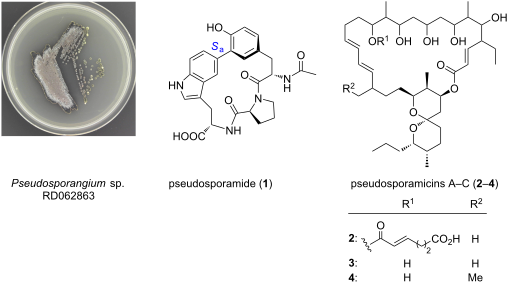
Figure 1: Structures of pseudosporamide (1) and pseudosporamicins A–C (2–4).

Figure 2: COSY, key HMBC and ROESY correlations of pseudosporamide (1).

Figure 3: 1H NMR ΔδS−R values for PGME amides 5a and 5b obtained from compound 1.

Figure 4: The opposite axial chirality around the biaryl C-6–C-7'' bond influenced by the C-2 configuration i...

Figure 5: The experimental and calculated ECD spectra in MeCN.

Figure 6: COSY, key HMBC and NOESY correlations of compound 2.

Figure 7: NOESY correlations for the spiroacetal moiety of compound 2.

Figure 8: Selected examples of oligomycin-class metabolites from actinomycetes.
Aldehydes as powerful initiators for photochemical transformations
- Maria A. Theodoropoulou,
- Nikolaos F. Nikitas and
- Christoforos G. Kokotos
Beilstein J. Org. Chem. 2020, 16, 833–857, doi:10.3762/bjoc.16.76
- with this methodology, affording the products 162l and 162m in moderate to good yield, while the products deriving from α,β-unsaturated carbonyl compounds, the products 163a–c were obtained in moderate yield (Scheme 38). Next, the authors conducted various mechanistic experiments, including

Graphical Abstract

Scheme 1: Norrish type I and II dissociations.

Scheme 2: Proposed radical pair formation after the photolysis of benzaldehyde (8).

Scheme 3: Aldehydes in the Paterno–Büchi reaction.

Scheme 4: 2,3-Diazabicyclo[2.2.1]hept-2-ene (DBH).

Scheme 5: Dissociation pathways of benzaldehyde.

Scheme 6: Reactions that lead to polarized products detectable by CIDNP.

Scheme 7: MMA (26), DEABP (27), and Michler’s ketone (28).

Scheme 8: Radical intermediates of DEABP.

Scheme 9: Photoinitiated polymerization of monomeric MMA (26) using the quinoxalines 32 and benzaldehyde (8).

Scheme 10: Acetone (4) and formaldehyde (35) as photografting initiators.

Scheme 11: Photografting by employing acetaldehyde (36) as the photoinitiator.

Scheme 12: Proposed photolysis mechanism for aliphatic ketones 44 and formaldehyde (35).

Scheme 13: Initiator 50, reductant 51, and benzaldehyde derivatives 52–54 for the polymerization of the methac...

Scheme 14: Proposed mechanism of the photomediated atom transfer radical polymerization employing the benzalde...

Scheme 15: cis/trans isomerization employing triplet states of photosensitizers.

Scheme 16: Salicylaldehyde (68) forms an internal hydrogen bond.

Scheme 17: Olefin isomerization via energy transfer from a carbonyl compound.

Scheme 18: Mechanistic pathways for the Paterno–Büchi reaction.

Scheme 19: Isomeric oxetanes formed after photochemical addition of aryl aldehydes to 2-butenes.

Scheme 20: Rotation of the C3–C4 bond of the biradical intermediate may lead to all four conformations.

Scheme 21: Photolysis products of benzaldehyde (8) in different solvents. a) In benzene or ethanol. b) In hex-...

Scheme 22: N-tert-Butylbenzamide formation proceeds via a benzoyl radical.

Scheme 23: Photochemical pinacol coupling.

Scheme 24: Photochemical ATRA catalyzed by 4-anisaldehyde (52).

Scheme 25: Proposed triplet sensitization mechanism of the ATRA reaction in the presence of 4-anisaldehyde (52...
Scheme 26: Benzaldehyde-mediated photoredox CDC reaction: compatible amides and ethers.

Scheme 27: Photoredox cross-dehydrogenative coupling (CDC) conditions and proposed reaction mechanism.

Scheme 28: Optimized conditions for the photoredox merger reaction.

Scheme 29: Proposed mechanism for the C(sp3)–H alkylation/arylation of ethers.

Scheme 30: Substrate scope for the photochemical alkylation of ethers.

Scheme 31: C(sp3)–H Functionalization of N-containing molecules.

Scheme 32: Substrate scope for the photochemical alkylation of N-containing molecules.

Scheme 33: Additional products yielded by the photochemical alkylation reaction of N-containing molecules.

Scheme 34: C(sp3)–H functionalization of thioethers.

Scheme 35: Proposed mechanism for the C(sp3)–H alkylation/arylation of N-containing molecules and thioethers.

Scheme 36: Hydroacylation using 4-cyanobenzaldehyde (53) as the photoinitiator.

Scheme 37: Selectivity for the formation of the α,α-disubstituted aldehydes.
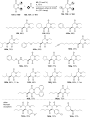
Scheme 38: Substrate scope for the photochemical addition of aldehydes to Michael acceptors.

Scheme 39: Proposed mechanism for the hydroacylation of Michael acceptors using 4-cyanobenzaldehyde (53) as th...

Scheme 40: Catalytic arylation of aromatic aldehydes by aryl bromides in which the reaction product acts as th...

Scheme 41: Proposed mechanism for the catalytic arylation of benzaldehydes by aryl bromides in which the react...

Scheme 42: Functionalization of the chiral cyclobutanes 180.

Scheme 43: Optimized reaction conditions and proposed mechanism for the sulfonylcyanation of cyclobutenes.
Recent advances in Cu-catalyzed C(sp3)–Si and C(sp3)–B bond formation
- Balaram S. Takale,
- Ruchita R. Thakore,
- Elham Etemadi-Davan and
- Bruce H. Lipshutz
Beilstein J. Org. Chem. 2020, 16, 691–737, doi:10.3762/bjoc.16.67
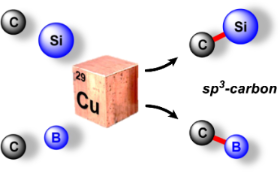
- could be isolated (Scheme 34). Another class of heterocycles, α-silylated N-alkylated indoles 201–205 recently reported by Xu and co-workers, were formed using a nonracemic Cu–NHC catalyst through the enantioselective addition of the PhMe2Si group to α,β-unsaturated carbonyl indoles 200 (Scheme 35). The
- B2pin2 in moderate to excellent yields [127]. 2.3 β-Borylation of α,β-unsaturated compounds The use of an inexpensive transition metal like copper as catalyst is attractive for β-borylations of α,β-unsaturated carbonyl compounds, that can then be further functionalized. In 2000, an initial report
- difficulties typically associated with conversions of pinacol esters to trifluoroborates. An asymmetric 1,4-borylation of α,β-unsaturated carbonyl derivatives, e.g., 428 and 429, was reported using a combination of Cu(MeCN)2PF6/L47 with either bisboronic acid (BBA, 430) or tetrakis(dimethylamino)diboron (431

Graphical Abstract

Scheme 1: Pharmaceuticals possessing a silicon or boron atom.

Scheme 2: The first Cu-catalyzed C(sp3)–Si bond formation.

Scheme 3: Conversion of benzylic phosphate 6 to the corresponding silane.

Scheme 4: Conversion of alkyl triflates to alkylsilanes.

Scheme 5: Conversion of secondary alkyl triflates to alkylsilanes.

Scheme 6: Conversion of alkyl iodides to alkylsilanes.

Scheme 7: Trapping of intermediate radical through cascade reaction.

Scheme 8: Radical pathway for conversion of alkyl iodides to alkylsilanes.

Scheme 9: Conversion of alkyl ester of N-hydroxyphthalimide to alkylsilanes.

Scheme 10: Conversion of gem-dibromides to bis-silylalkanes.

Scheme 11: Conversion of imines to α-silylated amines (A) and the reaction pathway (B).

Scheme 12: Conversion of N-tosylimines to α-silylated amines.

Scheme 13: Screening of diamine ligands.

Scheme 14: Conversion of N-tert-butylsulfonylimines to α-silylated amines.

Scheme 15: Conversion of aldimines to nonracemic α-silylated amines.

Scheme 16: Conversion of N-tosylimines to α-silylated amines.

Scheme 17: Reaction pathway [A] and conversion of aldehydes to α-silylated alcohols [B].

Scheme 18: Conversion of aldehydes to benzhydryl silyl ethers.

Scheme 19: Conversion of ketones to 1,2-diols (A) and conversion of imines to 1,2-amino alcohols (B).

Scheme 20: Ligand screening (A) and conversion of aldehydes to α-silylated alcohols (B).

Scheme 21: Conversion of aldehydes to α-silylated alcohols.

Scheme 22: 1,4-Additions to α,β-unsaturated ketones.

Scheme 23: 1,4-Additions to unsaturated ketones to give β-silylated derivatives.

Scheme 24: Additions onto α,β-unsaturated lactones to give β-silylated lactones.

Scheme 25: Conversion of α,β-unsaturated to β-silylated lactams.

Scheme 26: Conversion of N-arylacrylamides to silylated oxindoles.

Scheme 27: Conversion of α,β-unsaturated carbonyl compounds to silylated tert-butylperoxides.

Scheme 28: Catalytic cycle for Cu(I) catalyzed α,β-unsaturated compounds.

Scheme 29: Conversion of p-quinone methides to benzylic silanes.

Scheme 30: Conversion of α,β-unsaturated ketimines to regio- and stereocontrolled allylic silanes.

Scheme 31: Conversion of α,β-unsaturated ketimines to enantioenriched allylic silanes.

Scheme 32: Regioselective conversion of dienedioates to allylic silanes.

Scheme 33: Conversion of alkenyl-substituted azaarenes to β-silylated adducts.

Scheme 34: Conversion of conjugated benzoxazoles to enantioenriched β-silylated adducts.

Scheme 35: Conversion of α,β-unsaturated carbonyl indoles to α-silylated N-alkylated indoles.

Scheme 36: Conversion of β-amidoacrylates to α-aminosilanes.

Scheme 37: Conversion of α,β-unsaturated ketones to enantioenriched β-silylated ketones, nitriles, and nitro d...

Scheme 38: Regio-divergent silacarboxylation of allenes.

Scheme 39: Silylation of diazocarbonyl compounds, (A) asymmetric and (B) racemic.

Scheme 40: Enantioselective hydrosilylation of alkenes.

Scheme 41: Conversion of 3-acylindoles to indolino-silanes.

Scheme 42: Proposed mechanism for the silylation of 3-acylindoles.

Scheme 43: Silyation of N-chlorosulfonamides.

Scheme 44: Conversion of acyl silanes to α-silyl alcohols.

Scheme 45: Conversion of N-tosylaziridines to β-silylated N-tosylamines.

Scheme 46: Conversion of N-tosylaziridines to silylated N-tosylamines.

Scheme 47: Conversion of 3,3-disubstituted cyclopropenes to silylated cyclopropanes.

Scheme 48: Conversion of conjugated enynes to 1,3-bis(silyl)propenes.

Scheme 49: Proposed sequence for the Cu-catalyzed borylation of substituted alkenes.

Scheme 50: Cu-catalyzed synthesis of nonracemic allylic boronates.

Scheme 51: Cu–NHC catalyzed synthesis of α-substituted allylboronates.
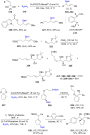
Scheme 52: Synthesis of α-chiral (γ-alkoxyallyl)boronates.

Scheme 53: Cu-mediated formation of nonracemic cis- or trans- 2-substituted cyclopropylboronates.

Scheme 54: Cu-catalyzed synthesis of γ,γ-gem-difluoroallylboronates.

Scheme 55: Cu-catalyzed hydrofunctionalization of internal alkenes and vinylarenes.

Scheme 56: Cu-catalyzed Markovnikov and anti-Markovnikov borylation of alkenes.

Scheme 57: Cu-catalyzed borylation/ortho-cyanation/Cope rearrangement.
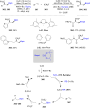
Scheme 58: Borylfluoromethylation of alkenes.

Scheme 59: Cu-catalyzed synthesis of tertiary nonracemic alcohols.

Scheme 60: Synthesis of densely functionalized and synthetically versatile 1,2- or 4,3-borocyanated 1,3-butadi...

Scheme 61: Cu-catalyzed trifunctionalization of allenes.

Scheme 62: Cu-catalyzed selective arylborylation of arenes.

Scheme 63: Asymmetric borylative coupling between styrenes and imines.

Scheme 64: Regio-divergent aminoboration of unactivated terminal alkenes.

Scheme 65: Cu-catalyzed 1,4-borylation of α,β-unsaturated ketones.

Scheme 66: Cu-catalyzed protodeboronation of α,β-unsaturated ketones.

Scheme 67: Cu-catalyzed β-borylation of α,β-unsaturated imines.

Scheme 68: Cu-catalyzed synthesis of β-trifluoroborato carbonyl compounds.

Scheme 69: Asymmetric 1,4-borylation of α,β-unsaturated carbonyl compounds.

Scheme 70: Cu-catalyzed ACB and ACA reactions of α,β-unsaturated 2-acyl-N-methylimidazoles.

Scheme 71: Cu-catalyzed diborylation of aldehydes.

Scheme 72: Umpolung pathway for chiral, nonracemic tertiary alcohol synthesis (top) and proposed mechanism for...

Scheme 73: Cu-catalyzed synthesis of α-hydroxyboronates.

Scheme 74: Cu-catalyzed borylation of ketones.

Scheme 75: Cu-catalyzed borylation of unactivated alkyl halides.

Scheme 76: Cu-catalyzed borylation of allylic difluorides.

Scheme 77: Cu-catalyzed borylation of cyclic and acyclic alkyl halides.

Scheme 78: Cu-catalyzed borylation of unactivated alkyl chlorides and bromides.

Scheme 79: Cu-catalyzed decarboxylative borylation of carboxylic acids.
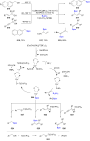
Scheme 80: Cu-catalyzed borylation of benzylic, allylic, and propargylic alcohols.
Copper-catalyzed enantioselective conjugate reduction of α,β-unsaturated esters with chiral phenol–carbene ligands
- Shohei Mimura,
- Sho Mizushima,
- Yohei Shimizu and
- Masaya Sawamura
Beilstein J. Org. Chem. 2020, 16, 537–543, doi:10.3762/bjoc.16.50
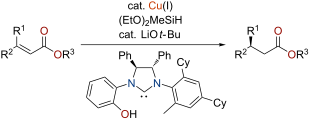
- work of Stryker and co-workers on triphenylphosphine-stabilized copper hydride complexes [1][2], copper hydrides have been widely used for conjugate reductions of α,β-unsaturated carbonyl compounds [3]. Especially a chiral copper catalyst combined with a stoichiometric amount of a silane reagent, which
- generated copper hydride in situ, has successfully been utilized for enantioselective reactions with β,β-disubstituted α,β-unsaturated carbonyl compounds [4][5][6][7][8][9][10][11]. The pioneering work of Buchwald and co-workers on the enantioselective conjugate reduction of α,β-unsaturated esters using a
- chiral p-tol-BINAP/copper catalyst established the excellent utility of chiral bisphosphine ligands for this type of reaction [4]. Surprisingly, however, chiral ligands based on N-heterocyclic carbenes (NHCs) [12] have not been applied to the conjugate reduction of α,β-unsaturated carbonyl compounds


Copper-promoted/copper-catalyzed trifluoromethylselenolation reactions
- Clément Ghiazza and
- Anis Tlili
Beilstein J. Org. Chem. 2020, 16, 305–316, doi:10.3762/bjoc.16.30

- in the reaction, resulting from an oxidative addition of the trifluoromethylselenolated copper(I) complex to the α-brominated unsaturated carbonyl compound. Afterwards, a reductive elimination would take place to afford the α-trifluoromethylselenylated α,β-unsaturated carbonyl compound and copper(I

Graphical Abstract

Scheme 1: Process for the formation of C(sp3)–SeCF3 bonds with [(bpy)CuSeCF3]2 developed by the group of Weng....

Scheme 2: Trifluoromethylselenolation of vinyl and (hetero)aryl halides with [(bpy)CuSeCF3]2 by the group of ...

Scheme 3: Trifluoromethylselenolation of terminal alkynes using [(bpy)CuSeCF3]2 by the group of You and Weng.

Scheme 4: Trifluoromethylselenolation of carbonyl compounds with [(bpy)CuSeCF3]2 by the group of Weng.

Scheme 5: Trifluoromethylselenolation of α,β-unsaturated ketones with [(bpy)CuSeCF3]2 by the group of Weng.

Scheme 6: Trifluoromethylselenolation of acid chlorides with [(bpy)CuSeCF3]2 by the group of Weng.

Scheme 7: Synthesis of 2-trifluoromethylselenylated benzofused heterocycles with [(bpy)CuSeCF3]2 by the group...

Scheme 8: Difunctionalization of terminal alkenes and alkynes with [(bpy)CuSeCF3]2 by the group of Liang.

Scheme 9: Synthesis of Me4NSeCF3.

Scheme 10: Oxidative trifluoromethylselenolation of terminal alkynes and boronic acid derivatives with Me4NSeCF...

Scheme 11: Trifluoromethylselenolation of diazoacetates and diazonium salts with Me4NSeCF3 by the group of Goo...

Scheme 12: Trifluoromethylselenolation with ClSeCF3 by the group of Tlili and Billard.
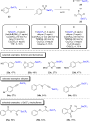
Scheme 13: Trifluoromethylselenolation with TsSeCF3 by the group of Tlili and Billard.

Scheme 14: Copper-catalyzed synthesis of a selenylated analog 30 of Pretomanid developed by the group of Tlili...
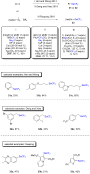
Scheme 15: One-pot procedures for C–SeCF3 bond formations developed by Hor and Weng, Deng and Xiao, and Ruepin...
A review of asymmetric synthetic organic electrochemistry and electrocatalysis: concepts, applications, recent developments and future directions
- Munmun Ghosh,
- Valmik S. Shinde and
- Magnus Rueping
Beilstein J. Org. Chem. 2019, 15, 2710–2746, doi:10.3762/bjoc.15.264
- method for the enantioselective synthesis of 4,5,5-trisubstituted γ-butyrolactones 193 using an electroreductive coupling of diaryl ketones 191 with α,β-unsaturated carbonyl compounds 190 bearing chiral auxiliaries derived from imidazolidin-2-one and oxazolidine-2-ones (Scheme 60). Compound 191 underwent

Graphical Abstract

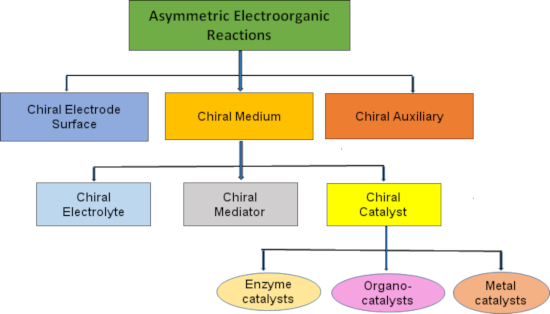
Figure 1: General classification of asymmetric electroorganic reactions.

Scheme 1: Asymmetric reduction of 4-acetylpyridine using a modified graphite cathode.

Scheme 2: Asymmetric hydrogenation of ketones using Raney nickel powder electrodes modified with optically ac...

Scheme 3: Asymmetric reduction of prochiral activated olefins with a poly-ʟ-valine-coated graphite cathode.

Scheme 4: Asymmetric reduction of prochiral carbonyl compounds, oximes and gem-dibromides on a poly-ʟ-valine-...

Scheme 5: Asymmetric hydrogenation of prochiral ketones with poly[RuIII(L)2Cl2]+-modified carbon felt cathode...

Scheme 6: Asymmetric hydrogenation of α-keto esters using chiral polypyrrole film-coated cathode incorporated...

Scheme 7: Quinidine and cinchonidine alkaloid-induced asymmetric electroreduction of acetophenone.

Scheme 8: Asymmetric electroreduction of 4- and 2-acetylpyridines at a mercury cathode in the presence of a c...

Scheme 9: Enantioselective reduction of 4-methylcoumarin in the presence of catalytic yohimbine.

Scheme 10: Cinchonine-induced asymmetric electrocarboxylation of 4-methylpropiophenone.

Scheme 11: Enantioselective hydrogenation of methyl benzoylformate using an alkaloid entrapped silver cathode.

Scheme 12: Alkaloid-induced enantioselective hydrogenation using a Cu nanoparticle cathode.

Scheme 13: Alkaloid-induced enantioselective hydrogenation of aromatic ketones using a bimetallic Pt@Cu cathod...

Scheme 14: Enantioselective reduction of ketones at mercury cathode using N,N'-dimethylquininium tetrafluorobo...

Scheme 15: Asymmetric synthesis of an amino acid using an electrode modified with amino acid oxidase and elect...

Scheme 16: Asymmetric oxidation of p-tolyl methyl sulfide using chemically modified graphite anode.

Scheme 17: Asymmetric oxidation of unsymmetric sulfides using poly(amino acid)-coated electrodes.

Scheme 18: Enantioselective, electocatalytic oxidative coupling on TEMPO-modified graphite felt electrode in t...

Scheme 19: Asymmetric electrocatalytic oxidation of racemic alcohols on a TEMPO-modified graphite felt electro...

Scheme 20: Asymmetric electrocatalytic lactonization of diols on TEMPO-modified graphite felt electrodes.

Scheme 21: Asymmetric electrochemical pinacolization in a chiral solvent.

Scheme 22: Asymmetric electroreduction using a chiral supporting electrolyte.

Scheme 23: Asymmetric anodic oxidation of enol acetates using chiral supporting electrolytes.

Scheme 24: Kinetic resolution of primary amines using a chiral N-oxyl radical mediator.

Scheme 25: Chiral N-oxyl-radical-mediated kinetic resolution of secondary alcohols via electrochemical oxidati...

Scheme 26: Chiral iodoarene-mediated asymmetric electrochemical lactonization.

Scheme 27: Os-catalyzed electrochemical asymmetric dihydroxylation of olefins using the Sharpless ligand and i...

Scheme 28: Asymmetric electrochemical epoxidation of olefins catalyzed by a chiral Mn-salen complex.

Scheme 29: Asymmetric electrooxidation of 1,2-diols, and amino alcohols using a chiral copper catalyst.

Scheme 30: Mechanism of asymmetric electrooxidation of 1,2-diols, and amino alcohols using a chiral copper cat...

Scheme 31: Enantioselective electrocarboxylation catalyzed by an electrogenerated chiral [CoI(salen)]− complex....

Scheme 32: Asymmetric oxidative cross coupling of 2-acylimidazoles with silyl enol ethers.

Scheme 33: Ni-catalyzed asymmetric electroreductive cleavage of allylic β-keto ester 89.

Scheme 34: Asymmetric alkylation using a combination of electrosynthesis and a chiral Ni catalyst.

Scheme 35: Mechanism of asymmetric alkylation using a combination of electrosynthesis and a chiral Ni catalyst....

Scheme 36: Asymmetric epoxidation by electrogenerated percarbonate and persulfate ions in the presence of chir...

Scheme 37: α-Oxyamination of aldehydes via anodic oxidation catalyzed by chiral secondary amines.

Scheme 38: The α-alkylation of aldehydes via anodic oxidation catalyzed by chiral secondary amines.
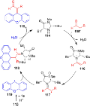
Scheme 39: Mechanism of α-alkylation of aldehydes via anodic oxidation catalyzed by chiral secondary amines.

Scheme 40: Electrochemical chiral secondary amine-catalyzed intermolecular α-arylation of aldehydes.

Scheme 41: Mechanism of electrochemical chiral secondary amine-catalyzed intermolecular α-arylation of aldehyd...

Scheme 42: Asymmetric cross-dehydrogenative coupling of tertiary amines with simple ketones via an electrochem...

Scheme 43: Electroenzymatic asymmetric reduction using enoate reductase.

Scheme 44: Assymetric reduction using alcohol dehydrogenase as the electrocatalyst.

Scheme 45: Asymmetric electroreduction catalyzed by thermophilic NAD-dependent alcohol dehydrogenase.

Scheme 46: Asymmetric epoxidation of styrene by electrochemical regeneration of flavin-dependent monooxygenase....

Scheme 47: Asymmetric electroreduction using a chloroperoxidase catalyst.

Scheme 48: Asymmetric electrochemical transformation mediated by hydrophobic vitamin B12.

Scheme 49: Diastereoselective cathodic reduction of phenylglyoxalic acids substituted with amines as chiral au...

Scheme 50: Ni-catalyzed asymmetric electroreductive cross coupling of aryl halides with α-chloropropanoic acid...

Scheme 51: Electrochemical Mannich addition of silyloxyfuran to in situ-generated N-acyliminium ions.

Scheme 52: Stereoselective electroreductive homodimerization of cinnamates attached to a camphor-derived chira...
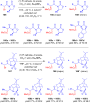
Scheme 53: Diastereoselective electrochemical carboxylation of chiral α-bromocarboxylic acid derivatives.

Scheme 54: Electrocatalytic stereoselective conjugate addition of chiral β-dicarbonyl compounds to methyl viny...

Scheme 55: Stereoselective electrochemical carboxylation of chiral cinnamic acid derivatives under a CO2 atmos...

Scheme 56: Electrochemical diastereoselective α-alkylation of pyrrolidines attached with phosphorus-derived ch...

Scheme 57: Electrogenerated cyanomethyl anion-induced synthesis of chiral cis-β-lactams from amides bearing ch...

Scheme 58: Diastereoselective anodic oxidation followed by intramolecular cyclization of ω-hydroxyl amides bea...

Scheme 59: Electrochemical deprotonation of Ni(II) glycinate containing (S)-BPB as a chiral auxiliary: diaster...

Scheme 60: Enantioselective electroreductive coupling of diaryl ketones with α,β-unsaturated carbonyl compound...

Scheme 61: Asymmetric total synthesis of ropivacaine and its analogues using a electroorganic reaction as a ke...

Scheme 62: Asymmetric total synthesis of (−)-crispine A and its natural enantiomer via anodic cyanation of tet...

Scheme 63: Asymmetric oxidative electrodimerization of cinnamic acid derivatives as key step for the synthesis...
In water multicomponent synthesis of low-molecular-mass 4,7-dihydrotetrazolo[1,5-a]pyrimidines
- Irina G. Tkachenko,
- Sergey A. Komykhov,
- Vladimir I. Musatov,
- Svitlana V. Shishkina,
- Viktoriya V. Dyakonenko,
- Vladimir N. Shvets,
- Mikhail V. Diachkov,
- Valentyn A. Chebanov and
- Sergey M. Desenko
Beilstein J. Org. Chem. 2019, 15, 2390–2397, doi:10.3762/bjoc.15.231
- starting material and subsequent dihydropyrimidine ring formation. The first approach [6][7] represents a two-component cyclocondensation of 5-aminotetrazole (1) as binucleophilic component and bielectrophilic α,β-unsaturated carbonyl compounds 2 (Scheme 1, reaction 1). The second method [8][9][10][11][12

Graphical Abstract

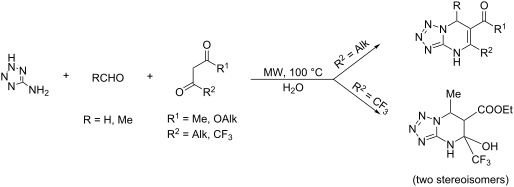
Scheme 1: Three synthetic approaches to dihydrotetrazolo[1,5-a]pyrimidines.

Scheme 2: Three-component reaction of 1, 7a,b and 8a–d in water.

Figure 1: Molecular structure of 9a according to X-ray data. Displacement ellipsoids are shown at the 50% pro...

Scheme 3: Three-component reaction of 5-aminotetrazole (1) with formaldehyde (7a) and acetylacetone (10).

Scheme 4: a) Three-component reaction of 5-aminotetrazole (1) with acetaldehyde (7b) and ethyl 4,4,4-trifluor...
Recent advances in transition-metal-catalyzed incorporation of fluorine-containing groups
- Xiaowei Li,
- Xiaolin Shi,
- Xiangqian Li and
- Dayong Shi
Beilstein J. Org. Chem. 2019, 15, 2213–2270, doi:10.3762/bjoc.15.218
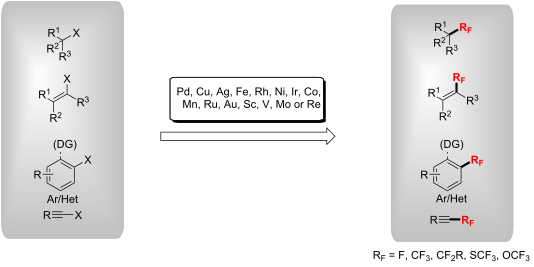
- acids. In 2014, a Cu(I/II)-catalyzed α-trifluoromethylation of α,β-unsaturated carbonyl compounds were unfolded by the Bi group (Scheme 77) [140]. The reaction was applied to a broad range of carbonyl compounds, including enones, α,β-unsaturated esters, thioesters, and amides. Notably, the authors

Graphical Abstract
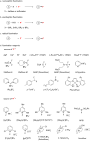
Scheme 1: The main three strategies of fluorination: nucleophilic, electrophilic and radical fluorination.

Scheme 2: Doyle’s Pd-catalyzed fluorination of allylic chlorides.

Scheme 3: Allylic fluorination of 2- and 3-substituted propenyl esters.

Scheme 4: Regioselective allylic fluorination of cinnamyl phosphorothioate esters.

Scheme 5: Palladium-catalyzed aliphatic C–H fluorination reported by Doyle.

Scheme 6: Pd-catalyzed enantioselective fluorination of α-ketoesters followed by stereoselective reduction to...

Scheme 7: Pd-catalyzed C(sp3)–H fluorination of oxindoles.

Scheme 8: C–H fluorination of 8-methylquinoline derivatives with F− reagents.

Scheme 9: Fluorination of α-cyano acetates reported by van Leeuwen.

Scheme 10: The catalytic enantioselective electrophilic C–H fluorination of α-chloro-β-keto phosphonates.

Scheme 11: Fluorination of unactivated C(sp3)–H bonds directed by the bidentate PIP auxiliary.

Scheme 12: Fluorination of C(sp3)–H bonds at the β-position of carboxylic acids.

Scheme 13: Enantioselective benzylic C–H fluorination with a chiral transient directing group.

Scheme 14: Microwave-heated Pd-catalyzed fluorination of aryl alcohols.

Scheme 15: Fluorination of aryl potassium trifluoroborates.

Scheme 16: C(sp2)–F bond formation using precatalyst [L·Pd]2(cod).

Scheme 17: Pd-catalyzed fluorination of (hetero)aryl triflates and bromides.

Scheme 18: The Pd-catalyzed C–H fluorination of arenes with Selectfluor/NFSI.

Scheme 19: Pd(II)-catalyzed ortho-monofluorination protocol for benzoic acids.

Scheme 20: Pd-catalyzed C(sp2)–H bond fluorination of 2-arylbenzothiazoles.

Scheme 21: Nitrate-promoted fluorination of aromatic and olefinic C(sp2)–H bonds and proposed mechanism.

Scheme 22: Fluorination of oxalyl amide-protected benzylamine derivatives.

Scheme 23: C–H fluorination of benzaldehydes with orthanilic acids as transient directing group.

Scheme 24: Pd(II)-catalyzed aryl C–H fluorination with various directing groups.

Scheme 25: Cu-catalyzed aliphatic, allylic, and benzylic fluorination.

Scheme 26: Cu-catalyzed SN2 fluorination of primary and secondary alkyl bromides.

Scheme 27: Copper-catalyzed fluorination of alkyl triflates.

Scheme 28: Cu-catalyzed fluorination of allylic bromides and chlorides.

Scheme 29: Synthetic strategy for the fluorination of active methylene compounds.

Scheme 30: Fluorination of β-ketoesters using a tartrate-derived bidentate bisoxazoline-Cu(II) complex.

Scheme 31: Highly enantioselective fluorination of β-ketoesters and N-Boc-oxindoles.

Scheme 32: Amide group-assisted site-selective fluorination of α-bromocarbonyl compounds.

Scheme 33: Cu-mediated aryl fluorination reported by Sanford [77].

Scheme 34: Mono- or difluorination reactions of benzoic acid derivatives.

Scheme 35: Cu-catalyzed fluorination of diaryliodonium salts with KF.
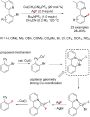
Scheme 36: Copper(I)-catalyzed cross-coupling of 2-pyridylaryl bromides.

Scheme 37: AgNO3-catalyzed decarboxylative fluorination of aliphatic carboxylic acids.

Scheme 38: The Mn-catalyzed aliphatic and benzylic C–H fluorination.

Scheme 39: Iron(II)-promoted C–H fluorination of benzylic substrates.

Scheme 40: Ag-catalyzed fluorodecarboxylation of carboxylic acids.

Scheme 41: Vanadium-catalyzed C(sp3)–H fluorination.

Scheme 42: AgNO3-catalyzed radical deboronofluorination of alkylboronates and boronic acids.
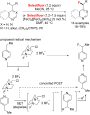
Scheme 43: Selective heterobenzylic C–H fluorination with Selectfluor reported by Van Humbeck.

Scheme 44: Fe(II)-catalyzed site-selective fluorination guided by an alkoxyl radical.

Scheme 45: Fluorination of allylic trichloroacetimidates reported by Nguyen et al.

Scheme 46: Iridium-catalyzed fluorination of allylic carbonates with TBAF(t-BuOH)4.

Scheme 47: Iridium-catalyzed asymmetric fluorination of allylic trichloroacetimidates.

Scheme 48: Cobalt-catalyzed α-fluorination of β-ketoesters.

Scheme 49: Nickel-catalyzed α-fluorination of various α-chloro-β-ketoesters.

Scheme 50: Ni(II)-catalyzed enantioselective fluorination of oxindoles and β-ketoesters.

Scheme 51: Scandium(III)-catalyzed asymmetric C–H fluorination of unprotected 3-substituted oxindoles.

Scheme 52: Iron-catalyzed directed C–H fluorination.

Scheme 53: Electrophilic silver-catalyzed Ar–F bond-forming reaction from arylstannanes.

Figure 1: Nucleophilic, electrophilic and radical CF3 sources.

Scheme 54: Cu(I)-catalyzed allylic trifluoromethylation of unactivated terminal olefins.

Scheme 55: Direct copper-catalyzed trifluoromethylation of allylsilanes.

Scheme 56: Cupper-catalyzed enantioselective trifluoromethylation of five and six-membered ring β-ketoesters.

Scheme 57: Cu-catalyzed highly stereoselective trifluoromethylation of secondary propargyl sulfonates.

Scheme 58: Remote C(sp3)–H trifluoromethylation of carboxamides and sulfonamides.

Scheme 59: Trifluoromethylation of allylsilanes with photoredox catalysis.

Scheme 60: Ag-catalyzed decarboxylative trifluoromethylation of aliphatic carboxylic acids in aqueous CH3CN.
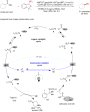
Scheme 61: Decarboxylative trifluoromethylation of aliphatic carboxylic acids via combined photoredox and copp...

Scheme 62: Palladium-catalyzed Ar–CF3 bond-forming reaction.

Scheme 63: Palladium-catalyzed trifluoromethylation of arenes with diverse heterocyclic directing groups.

Scheme 64: Pd-catalyzed trifluoromethylation of indoles as reported by Liu.

Scheme 65: Pd-catalyzed trifluoromethylation of vinyl triflates and vinyl nonaflates.

Scheme 66: Pd(II)-catalyzed ortho-trifluoromethylation of aromatic C–H bonds.

Scheme 67: Visible-light-induced Pd(OAc)2-catalyzed ortho-trifluoromethylation of acetanilides with CF3SO2Na.

Scheme 68: CuI-catalyzed trifluoromethylation of aryl- and alkenylboronic acids.

Scheme 69: Cu-catalyzed trifluoromethylation of aryl- and vinylboronic acids.

Scheme 70: Copper-catalyzed trifluoromethylation of α,β-unsaturated carboxylic acids.

Scheme 71: Formation of C(sp2)–CF3 bond catalyzed by copper(I) complex.

Scheme 72: Loh’s Cu(I)-catalyzed trifluoromethylation of enamides and electron-deficient alkenes.

Scheme 73: Copper and iron-catalyzed decarboxylative tri- and difluoromethylation.

Scheme 74: Cu-catalyzed trifluoromethylation of hydrazones developed by Bouyssi.

Scheme 75: Cu(I)-catalyzed trifluoromethylation of terminal alkenes.

Scheme 76: Cu/Ag-catalyzed decarboxylative trifluoromethylation of cinnamic acids.

Scheme 77: Copper-catalyzed direct alkenyl C–H trifluoromethylation.

Scheme 78: Copper(I/II)-catalyzed direct trifluoromethylation of styrene derivatives.

Scheme 79: Regioselective trifluoromethylation of pivalamido arenes and heteroarenes.

Scheme 80: Synthesis of trifluoromethylquinones in the presence of copper(I).
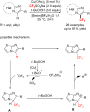
Scheme 81: Oxidative trifluoromethylation of imidazoheterocycles in ionic liquid/water.

Scheme 82: A mild and fast continuous-flow trifluoromethylation of coumarins using a CuI/CF3SO2Na/TBHP system.

Scheme 83: Copper-catalyzed oxidative trifluoromethylation of various 8-aminoquinolines.

Scheme 84: PA-directed copper-catalyzed trifluoromethylation of anilines.

Scheme 85: Trifluoromethylation of potassium vinyltrifluoroborates catalyzed by Fe(II).

Scheme 86: Alkenyl trifluoromethylation catalyzed by Ru(phen)3Cl2 as photocatalyst.

Scheme 87: Ru-catalyzed trifluoromethylation of alkenes by Akita’s group.

Scheme 88: Ir-catalyzed Cvinyl–CF3 bond formation of α,β-unsaturated carboxylic acids.

Scheme 89: Ag(I)-catalyzed denitrative trifluoromethylation of β-nitrostyrenes.

Scheme 90: Photocatalyzed direct trifluoromethylation of aryl and heteroaryl C–H bonds.

Scheme 91: Rhenium (MTO)-catalyzed direct trifluoromethylation of aromatic substrates.

Scheme 92: Trifluoromethylation of unprotected anilines under [Ir(ppy)3] catalyst.

Scheme 93: Oxidative trifluoromethylation of imidazopyridines and imidazoheterocycles.

Scheme 94: Ruthenium-catalyzed trifluoromethylation of (hetero)arenes with trifluoroacetic anhydride.

Scheme 95: Phosphovanadomolybdic acid-catalyzed direct C–H trifluoromethylation.

Scheme 96: Picolinamide-assisted ortho-trifluoromethylation of arylamines.

Scheme 97: A nickel-catalyzed C–H trifluoromethylation of free anilines.

Scheme 98: Cu-mediated trifluoromethylation of terminal alkynes reported by Qing.

Scheme 99: Huang’s C(sp)–H trifluoromethylation using Togni’s reagent.

Scheme 100: Cu-catalyzed methods for trifluoromethylation with Umemoto’s reagent.

Scheme 101: The synthesis of alkynyl-CF3 compounds in the presence of fac-[Ir(ppy)3] under visible-light irradi...

Scheme 102: Pd-catalyzed Heck reaction reported by Reutrakul.

Scheme 103: Difluoromethylation of enamides and ene-carbamates.

Scheme 104: Difluoromethylation of α,β-unsaturated carboxylic acids.

Scheme 105: Copper-catalyzed direct C(sp2)–H difluoroacetylation reported by Pannecoucke and co-workers.

Scheme 106: Difluoroalkylation of aldehyde-derived hydrazones with functionalized difluoromethyl bromides.

Scheme 107: Photoredox-catalyzed C–H difluoroalkylation of aldehyde-derived hydrazones.

Scheme 108: Synergistic ruthenium(II)-catalyzed C–H difluoromethylation reported by Ackermann.

Scheme 109: Visible-light photocatalytic decarboxylation of α,β-unsaturated carboxylic acids.

Scheme 110: Synthesis of difluorinated ketones via S-alkyl dithiocarbamates obtained from acyl chlorides and po...

Scheme 111: Synthesis of aryl and heteroaryl difluoromethylated phosphonates.

Scheme 112: Difluoroalkylation of secondary propargyl sulfonates using Cu as the catalyst.

Scheme 113: Ru(II)-mediated para-selective difluoromethylation of anilides and their derivatives.

Scheme 114: Bulky diamine ligand promoted cross-coupling of difluoroalkyl bromides.

Scheme 115: Copper-catalyzed C3–H difluoroacetylation of quinoxalinones.

Scheme 116: Copper(I) chloride-catalyzed trifluoromethylthiolation of enamines, indoles and β-ketoesters.

Scheme 117: Copper-boxmi-catalyzed asymmetric trifluoromethylthiolation of β-ketoesters.

Scheme 118: Direct Cu-catalyzed trifluoromethylthiolation of boronic acids and alkynes.

Scheme 119: Cu-catalyzed synthesis of α-trifluoromethylthio-substituted ketones.

Scheme 120: Trifluoromethylthiolation reactions promoted by diazotriflone and copper.

Scheme 121: Halide activation of N-(trifluoromethylthio)phthalimide.

Scheme 122: The visible light-promoted trifluoromethylthiolation reported by Glorius.

Scheme 123: Synthesis of α-trifluoromethylthioesters via Goossen’s approach.

Scheme 124: Photoinduced trifluoromethylthiolation of diazonium salts.

Scheme 125: Ag-mediated trifluoromethoxylation of aryl stannanes and arylboronic acids.

Scheme 126: Catalytic (hetero)aryl C–H trifluoromethoxylation under visible light.

Scheme 127: Photoinduced C–H-bond trifluromethoxylation of (hetero)arenes.
Isolation of fungi using the diffusion chamber device FIND technology
- Benjamin Libor,
- Henrik Harms,
- Stefan Kehraus,
- Ekaterina Egereva,
- Max Crüsemann and
- Gabriele M. König
Beilstein J. Org. Chem. 2019, 15, 2191–2203, doi:10.3762/bjoc.15.216
- IR spectrum displayed an absorption band at 1670 cm−1 indicating the presence of an α,β-unsaturated carbonyl moiety [19]. The 1H NMR spectrum (Table S4, Supporting Information File 1) exhibited characteristic singlets for three methyl groups, as well as two olefinic protons, together with the MS data

Graphical Abstract

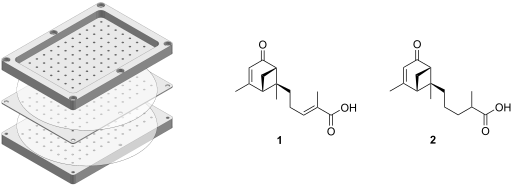
Scheme 1: Design and functional parts of the FIND technology.

Scheme 2: Isolation of fungal strains with the FIND technology. 1. Collection of terrestrial or marine sample...

Figure 1: Secondary metabolites isolated from H. cf. alpina.
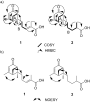
Figure 2: a) Significant 1H,1H-COSY and 1H,13C-HMBC correlations for compounds 1 and 2. b) Key NOESY correlat...
The LANCA three-component reaction to highly substituted β-ketoenamides – versatile intermediates for the synthesis of functionalized pyridine, pyrimidine, oxazole and quinoxaline derivatives
- Tilman Lechel,
- Roopender Kumar,
- Mrinal K. Bera,
- Reinhold Zimmer and
- Hans-Ulrich Reissig
Beilstein J. Org. Chem. 2019, 15, 655–678, doi:10.3762/bjoc.15.61
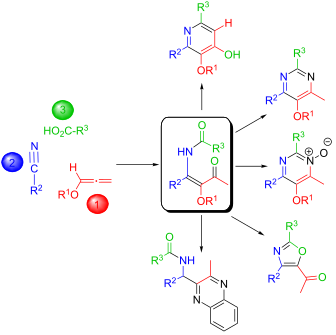
- obtained β-ketoenamides are alkenes with a remarkable assembly of functional groups: they are enamides, enol ethers and α,β-unsaturated carbonyl compounds at the same time. In addition, their methyl ketone subunit is required for some of the subsequent transformations, e.g., the synthesis of pyridin-4-ols

Graphical Abstract

Scheme 1: Discovery of the LANCA three-component reaction. The reaction of pivalonitrile (1) with lithiated m...

Scheme 2: Proposed mechanism of the LANCA three-component reaction to β-ketoenamides KE and pyridin-4-ol deri...

Scheme 3: One-pot preparation of pyridin-4-ols PY and their subsequent transformations to highly substituted ...

Scheme 4: Synthesis of β-ketoenamides KE by the LANCA three-component reaction of alkoxyallenes, nitriles and...

Scheme 5: β-Ketoenamides KE36–43 derived from enantiopure components.

Scheme 6: Bis-β-ketoenamides KE44–46 derived from aromatic dicarboxylic acids.

Scheme 7: Conversion of alkyl propargyl ethers E into aryl-substituted β-ketoenamides KEAr and selected produ...

Scheme 8: Condensation of LANCA-derived β-ketoenamides KE with ammonium salts to give 5-alkoxy-substituted py...

Scheme 9: Synthesis of PM31–35 from β-ketoenamides KE37, KE38, KE40, KE41 and KE78 obtained by method A (NH4O...
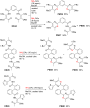
Scheme 10: Synthesis of bis-pyrimidine derivatives PM36, PM39 and PM40 from β-ketoenamides KE44–46 by method A...
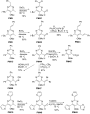
Scheme 11: Functionalization of pyrimidine derivatives PM through selenium dioxide oxidations of PM5, PM9, PM15...

Scheme 12: Conversion of 2-vinyl-substituted pyrimidine PM7 into aldehyde PM50; (NMO = N-methylmorpholine N-ox...

Scheme 13: Deprotection of 5-alkoxy-substituted pyrimidines PM2, PM20 and PM29 and conversion into nonaflates ...

Scheme 14: Palladium-catalyzed coupling reactions of PM54 and PM12 giving rise to new pyrimidine derivatives P...

Scheme 15: Synthesis of pyrimidyl-substituted pyridyl nonaflate PM60.

Scheme 16: Condensation of LANCA-derived β-ketoenamides KE with hydroxylamine hydrochloride leading to pyrimid...

Scheme 17: Reactions of β-ketoenamides KE15 and KE7 with hydroxylamine hydrochloride leading to pyrimidine N-o...

Scheme 18: Structures of pyrimidine N-oxides PO30–33 derived from β-ketoenamides KE43, KE45, KE78 and KE80.
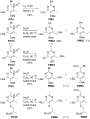
Scheme 19: Reduction of PO4 to PM5 and Boekelheide rearrangements of PO13, PO14, PO4 and PO30 to 4-acetoxymeth...

Scheme 20: Deprotection of 4-acetoxymethyl-substituted pyrimidine derivatives PM61 and PM63, oxidations to for...

Scheme 21: Synthesis of pyrimidinyl-substituted alkyne PM74 and conversion into furopyrimidine PM75 and Sonoga...

Scheme 22: Trifluoroacetic acid-promoted conversion of LANCA-derived β-ketoenamides KE into oxazoles OX and 1,...

Scheme 23: Conversion of β-ketoenamide KE79 into oxazole OX16 and transformation into 5-styryl-substituted oxa...

Scheme 24: Mechanisms of the formation of 1,2-diketones DK and of acetyl-substituted oxazole derivatives OX.

Scheme 25: Hydrogenolyses of benzyloxy-substituted β-ketoenamides KE52 and KE54 to 1,2-diketone DK14 and to di...

Scheme 26: Conversions of 2,4-dicyclopropyl-substituted oxazole OX7 into oxazole derivatives OX18–20 (PPA = po...

Scheme 27: Syntheses of vinyl and ethynyl-substituted oxazole derivatives OX21 and OX23 and their palladium-ca...

Scheme 28: Synthesis of C3-symmetric oxazole derivative OX28 and the STM current image of its 1-phenyloctane s...

Scheme 29: Condensation of 1,2-diketones DK with o-phenylenediamine to quinoxalines QU1–7 (CAN = cerium ammoni...
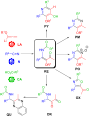
Scheme 30: The LANCA three-component reaction leading to β-ketoenamides KE and the structure of functionalized...
Synthesis and SAR of the antistaphylococcal natural product nematophin from Xenorhabdus nematophila
- Frank Wesche,
- Hélène Adihou,
- Thomas A. Wichelhaus and
- Helge B. Bode
Beilstein J. Org. Chem. 2019, 15, 535–541, doi:10.3762/bjoc.15.47
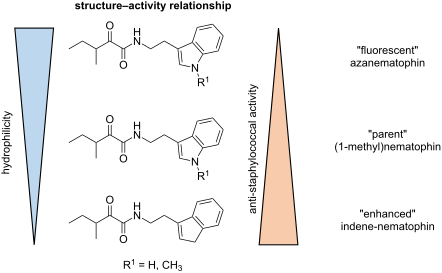
- . Compounds 11 and 12 were separated during the isolation process and initially constructed to enable target identification. Compounds 11 and 12 might act as Michael acceptor (α,β-unsaturated carbonyl) and attach irreversibly and covalently to a potential target [23]. After purification and characterization
- -methylvaleric moiety (1–7) were active against S. aureus. Substitution of the side chain in the α-keto amide significantly affects the bioactivity, as seen for compounds 8, 9 and 10. Furthermore, attempts to identify a possible target by the incorporation of an α,β-unsaturated carbonyl moiety, as it should bind

Graphical Abstract

Scheme 1: General procedure for the synthesis of nematophin and related derivatives. i) 1.5 equiv α-keto carb...

Scheme 2: Synthesis of azatryptamines (4-azatryptamine (4ATRA) and 1-methyl-4-azatryptamine (1M4ATRA)). i) 5....

Scheme 3: Synthesis of azatryptamines (7-azatryptamine (7ATRA) and 1-methyl-7-azatryptamine (1M7ATRA)). i) 5....
Cobalt- and rhodium-catalyzed carboxylation using carbon dioxide as the C1 source
- Tetsuaki Fujihara and
- Yasushi Tsuji
Beilstein J. Org. Chem. 2018, 14, 2435–2460, doi:10.3762/bjoc.14.221
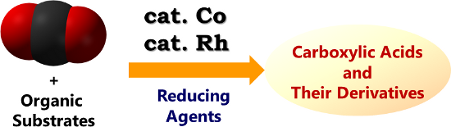
- carboxylation of mesityl triflate (5) at 40 °C proceeded successfully, affording 6 in 77% yield (Scheme 6) Carboxylation of α,β-unsaturated nitriles and esters α,β-Unsaturated carbonyl compounds are good substrates for conjugate additions that use a catalytic amount of a metal complex and a stoichiometric

Graphical Abstract

Scheme 1: Optimization of the Co-catalyzed carboxylation of 1a.

Scheme 2: Co-catalyzed carboxylation of propargyl acetates 1.

Scheme 3: Plausible reaction mechanism for the Co-catalyzed carboxylation of propargyl acetates 1.

Scheme 4: Optimization of the Co-catalyzed carboxylation of 3a.

Scheme 5: Co-catalyzed carboxylation of vinyl triflates 3.

Scheme 6: Co-catalyzed carboxylation of a sterically hindered aryl triflate 5.

Scheme 7: Optimization of the Co-catalyzed carboxylation of 7a.

Scheme 8: Scope of the reductive carboxylation of α,β-unsaturated nitriles 7.

Scheme 9: Scope of the carboxylation of α,β-unsaturated carboxamides 9.

Scheme 10: Optimization of the Co-catalyzed carboxylation of 11a.

Scheme 11: Scope of the carboxylation of allylarenes 11.

Scheme 12: Scope of the carboxylation of 1,4-diene derivatives 14.

Scheme 13: Plausible reaction mechanism for the Co-catalyzed C(sp3)–H carboxylation of allylarenes.

Scheme 14: Optimization of the Co-catalyzed carboxyzincation of 16a.

Scheme 15: Derivatization of the carboxyzincated product.

Scheme 16: Co-catalyzed carboxyzincation of alkynes 16.

Scheme 17: Plausible reaction mechanism for the Co-catalyzed carboxyzincation of alkynes 16.

Scheme 18: Co-catalyzed four-component coupling of alkynes 16, acrylates 18, CO2, and zinc.

Scheme 19: Proposed reaction mechanism for the Co-catalyzed four-component coupling.

Scheme 20: Visible-light-driven hydrocarboxylation of alkynes.

Scheme 21: Visible-light-driven synthesis of γ-hydroxybutenolides from ortho-ester-substituted aryl alkynes.

Scheme 22: One-pot synthesis of coumarines and 2-quinolones via hydrocarboxylation/alkyne isomerization/cycliz...

Scheme 23: Proposed reaction mechanism for the Co-catalyzed carboxylative cyclization of ortho-substituted aro...

Scheme 24: Rh-catalyzed carboxylation of arylboronic esters 25.

Scheme 25: Rh-catalyzed carboxylation of alkenylboronic esters 27.

Scheme 26: Plausible reaction mechanism for the Rh-catalyzed carboxylation of arylboronic esters 25.

Scheme 27: Ligand effect on the Rh-catalyzed carboxylation of 2-phenylpyridine 29a.

Scheme 28: Rh-catalyzed chelation-assisted C(sp2)–H bond carboxylation with CO2.

Scheme 29: Reaction mechanism for the Rh-catalyzed C(sp2)–H carboxylation of 2-pyridylarenes 29.

Scheme 30: Carboxylation of C(sp2)–H bond with CO2.
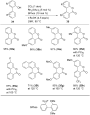
Scheme 31: Carboxylation of C(sp2)–H bond with CO2.

Scheme 32: Reaction mechanism for the Rh-catalyzed C(sp2)–H carboxylation of 2-arylphenols 34.

Scheme 33: Hydrocarboxylation of styrene derivatives with CO2.

Scheme 34: Hydrocarboxylation of α,β-unsaturated esters with CO2.

Scheme 35: Asymmetric hydrocarboxylation of α,β-unsaturated esters with CO2.

Scheme 36: Proposed reaction mechanism for the Rh-catalyzed hydrocarboxylation of C–C double bonds with CO2.

Scheme 37: Visible-light-driven hydrocarboxylation with CO2.

Scheme 38: Visible-light-driven Rh-catalyzed hydrocarboxylation of C–C double bonds with CO2.

Scheme 39: Optimization of reaction conditions on the Rh-catalyzed [2 + 2 + 2] cycloaddition of diyne 42a and ...
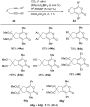
Scheme 40: [2 + 2 + 2] Cycloaddition of diyne and CO2.

Scheme 41: Proposed reaction pathways for the Rh-catalyzed [2 + 2 + 2] cycloaddition of diyne and CO2.
Addition of dithi(ol)anylium tetrafluoroborates to α,β-unsaturated ketones
- Yu-Chieh Huang,
- An Nguyen,
- Simone Gräßle,
- Sylvia Vanderheiden,
- Nicole Jung and
- Stefan Bräse
Beilstein J. Org. Chem. 2018, 14, 515–522, doi:10.3762/bjoc.14.37

- examples for additions of activated (EWG-substituted) ketene 1,3-dithioacetals to α,β-unsaturated carbonyl compounds are literature known [31][32] but concepts for a versatile (metal-free) application of this reaction to starting materials lacking the EWG in α-position are still missing. Results and
- HBF4. The scope of the dithi(ol)anylium TFB addition to α,β-unsaturated carbonyl compounds In order to determine the scope of the herein presented reaction, we used compound 1c for further conversions indicating the possible challenges and aims of forthcoming projects (Scheme 5). With two selected

Graphical Abstract

Scheme 1: Previously reported procedure for the addition of ketene dithioacetals to α,β-unsaturated ketones [33] ...

Scheme 2: Addition of dithi(ol)anylium TFBs to α,β-unsaturated non-cyclic ketones.

Scheme 3: Addition of dithi(ol)anylium TFBs to α,β-unsaturated cyclic ketones.

Scheme 4: Single versus double addition of ketones to dithiolanylium TFB 1e. adr was calculated from the 1H N...

Scheme 5: The scope of the presented protocol demonstrated by examples including the use of additional electr...

Scheme 6: Synthesis of diene dithioacetals 18a and 18b by addition of ynone 17 to α-alkyl or aryl-substitued ...
Gram-scale preparation of negative-type liquid crystals with a CF2CF2-carbocycle unit via an improved short-step synthetic protocol
- Tatsuya Kumon,
- Shohei Hashishita,
- Takumi Kida,
- Shigeyuki Yamada,
- Takashi Ishihara and
- Tsutomu Konno
Beilstein J. Org. Chem. 2018, 14, 148–154, doi:10.3762/bjoc.14.10
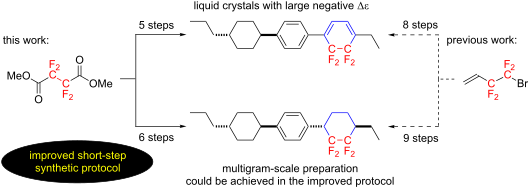
- the other hand, the β-carbon at the α,β-unsaturated carbonyl moiety of Int-I may be susceptible to attack by the vinylic Grignard reagent, as shown by the purple arrow in Scheme 3, because of the high electrophilicity and lack of steric hindrance. As a consequence, Int-I also undergoes conjugate

Graphical Abstract

Figure 1: Typical examples of previously reported negative-type liquid crystals containing a CF2CF2-carbocycl...

Scheme 1: Improved short-step synthetic protocol for multicyclic mesogens 1 and 2.

Scheme 2: Short-step approach to CF2CF2-containing carbocycles.

Figure 2: (a) Expected products of over-reaction in the Grignard reaction of dimethyl tetrafluorosuccinate (7...

Scheme 3: Mechanism for the reaction of γ-keto ester 6 with vinyl Grignard reagents.

Scheme 4: First multigram-scale preparation of CF2CF2-containing multicyclic mesogens.
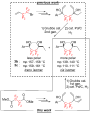
Scheme 5: Stereochemical assignment of the ring-closing metathesis products.
Recent progress in the racemic and enantioselective synthesis of monofluoroalkene-based dipeptide isosteres
- Myriam Drouin and
- Jean-François Paquin
Beilstein J. Org. Chem. 2017, 13, 2637–2658, doi:10.3762/bjoc.13.262
- -fluoro-2-phosphonoacetate (1) was converted into the α-fluoro-α,β-unsaturated carbonyl 3 using the HWE olefination. The (Z)-isomer was obtained with complete selectivity. Then, reduction of the ester into the corresponding alcohol followed by a Mitsunobu reaction allowed the insertion of the NH

Graphical Abstract

Figure 1: Selected amide bond isosteres.

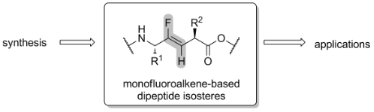
Figure 2: Monofluoroalkene as an amide bond isostere.

Scheme 1: Synthesis of Cbz-Gly-ψ[(Z)-CF=CH]-Gly using a HWE olefination by Sano and co-workers.

Scheme 2: Synthesis of Phth-Gly-ψ[CF=CH]-Gly using the Julia–Kocienski olefination by Lequeux and co-workers.

Scheme 3: Synthesis of Boc-Nva-ψ[(Z)-CF=CH]-Gly by Taguchi and co-workers.

Figure 3: Mutant tripeptide containing two different peptide bond isosteres.

Scheme 4: Chromium-mediated synthesis of Boc-Ser(PMB)-ψ[(Z)-CF=CH]-Gly-OMe by Konno and co-workers.

Scheme 5: Synthesis of Cbz-Gly-ψ[(E)-CF=C]-Pro by Sano and co-workers.

Scheme 6: Synthesis of Cbz-Gly-ψ[(Z)-CF=C]-Pro by Sano and co-workers.

Scheme 7: Stereoselective synthesis of Fmoc-Gly-ψ[(Z)-CF=CH]-Phe by Pannecoucke and co-workers.

Scheme 8: Ring-closure metathesis to prepare Gly-ψ[(E)-CF=CH]-Phg by Couve-Bonnaire and co-workers.

Scheme 9: Stereoselective synthesis of Fmoc-Gly-ψ[(Z)-CF=CH]-Phe by Dory and co-workers.

Scheme 10: Diastereoselective addition of Grignard reagents to sulfinylamines derived from α-fluoroenals by Pa...

Scheme 11: NHC-mediated synthesis of monofluoroalkenes by Otaka and co-workers.

Scheme 12: Stereoselective synthesis of Boc-Tyr-ψ[(Z)-CF=CH]-Gly by Altman and co-workers.

Scheme 13: Synthesis of the tripeptide Boc-Asp(OBn)-Pro-ψ[(Z)-CF=CH)-Val-CH2OH by Miller and co-workers.

Scheme 14: Copper-catalyzed synthesis of monofluoralkenes by Taguchi and co-workers.

Scheme 15: One-pot intramolecular redox reaction to access amide-type isosteres by Otaka and co-workers.

Scheme 16: Copper-mediated reduction, transmetalation and asymmetric alkylation by Fujii and co-workers.

Scheme 17: Synthesis of (E)-monofluoroalkene-based dipeptide isostere by Fujii and co-workers.

Scheme 18: Diastereoselective synthesis of MeOCO-Val-ψ[(Z)-CF=C]-Pro isostere by Chang and co-workers.

Scheme 19: Asymmetric synthesis of Fmoc-Ala-ψ[(Z)-CF=C]-Pro by Pannecoucke and co-workers.

Scheme 20: Synthesis of Fmoc-Val-ψ[(E)-CF=C]-Pro by Pannecoucke and co-workers.

Figure 4: BMS-790052 and its fluorinated analogue.

Figure 5: Bioactivities of pentapeptide analogues based on the relative maximum agonistic activity at 10 nM o...

Figure 6: Structures and affinities of the Leu-enkephalin and its fluorinated analogue. The affinity towards ...

Figure 7: Activation of the opioid receptor DOPr by Leu-enkephaline and a fluorinated analogue.
Rh(II)-mediated domino [4 + 1]-annulation of α-cyanothioacetamides using diazoesters: A new entry for the synthesis of multisubstituted thiophenes
- Jury J. Medvedev,
- Ilya V. Efimov,
- Yuri M. Shafran,
- Vitaliy V. Suslonov,
- Vasiliy A. Bakulev and
- Valerij A. Nikolaev
Beilstein J. Org. Chem. 2017, 13, 2569–2576, doi:10.3762/bjoc.13.253

- domino reactions of diazo compounds with intermediate formation of ylides [7][8][9][10][11][12][13][14][15][16][17][18][19][20][21]. Thus, it was for example shown that ammonium or oxonium ylides generated in the course of intermolecular processes can be easily trapped by ketones, imines, α,β-unsaturated
- carbonyl compounds, activated multiple bonds, or other nucleophiles to furnish heterocyclic cores [22][23][24][25][26][27][28][29][30][31][32]. Similar intramolecular transformations of intermediate ylides with several nucleophilic reaction centers in the initial substrate, are also possible. The known

Graphical Abstract

Scheme 1: General scheme for intramolecular heterocylization of intermediate X-ylides.

Figure 1: Thioamides 1a–e, diazoesters 2a–d and Rh(II)-catalysts used in the project.

Figure 2: The structures of compounds 4a and 3b according to the data of X-ray analysis (Olex2 plot with 50% ...

Scheme 2: Rh(II)-Catalyzed reactions of α-diazocyanoacetic ester 2d with α-cyanothioacetamides 1a–e.

Figure 3: The structure of thiophene 5c according to the data of X-ray analysis (Olex2 plot with 50% probabil...

Scheme 3: Interaction of thioacetamide 1e with dirhodium pivalate to produce complex 6e.

Figure 4: The structure of the complex 6e according to the data of X-ray analysis (Olex2 plot with 50% probab...

Scheme 4: The assumed mechanism for the formation of thiophenes 3, 5.

Scheme 5: The plausible mechanism for the formation of thiophenes 4.
A novel synthetic approach to hydroimidazo[1,5-b]pyridazines by the recyclization of itaconimides and HPLC–HRMS monitoring of the reaction pathway
- Dmitry Yu. Vandyshev,
- Khidmet S. Shikhaliev,
- Andrey Yu. Potapov,
- Michael Yu. Krysin,
- Fedor I. Zubkov and
- Lyudmila V. Sapronova
Beilstein J. Org. Chem. 2017, 13, 2561–2568, doi:10.3762/bjoc.13.252
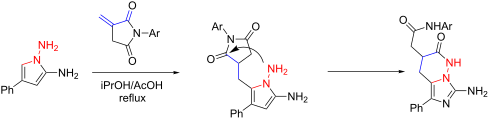
- itaconimides, four primary adducts 5–8 could result (Scheme 5) based on the well-known fact that the heterocyclization reactions of α,β-unsaturated carbonyl compounds with dinucleophilic reagents typically begin with addition like Michael’s reaction, including heterocyclic dinucleophiles [39][40][41][42
- equivalent of C1-electrophile: R2COOH/T3P® [15], BrCN (R2 = NH2) [16], ArNCS/DCC (R2 = NHAr) [20]. Heterocyclization of 1-aminoimidazoles with 1,3-dicarbonyl or α,β-unsaturated carbonyl compounds (route B). Conditions: i) R1 = NH2, NHAlk, R2 = Ph, R3,4 = Alk, Ar, solvent-free [24], AcOH [25][26], R3 = Ph, R4

Graphical Abstract

Scheme 1: Intramolecular cyclization of 3-(aminomethyl)pyridazines and related compounds (route A). Condition...

Scheme 2: Heterocyclization of 1-aminoimidazoles with 1,3-dicarbonyl or α,β-unsaturated carbonyl compounds (r...

Scheme 3: Heterocyclization of 1-aminoimidazoles with structural transformation of dielectrophilic reagents (...

Scheme 4: Recyclization of N-arylitaconimides 1 with 1,2-diaminobenzimidazole (2).

Scheme 5: Possible synthetic routes of the interaction of itaconimides 1 with diaminoimidazole 4.

Scheme 6: 1H,13C-HMBC correlations: the most significant correlations for imidazopyridazine 9d and possible f...
Regiodivergent condensation of 5-alkoxycarbonyl-1H-pyrrol-2,3-diones with cyclic ketazinones en route to spirocyclic scaffolds
- Alexey Yu. Dubovtsev,
- Maksim V. Dmitriev,
- Аndrey N. Maslivets and
- Michael Rubin
Beilstein J. Org. Chem. 2017, 13, 2179–2185, doi:10.3762/bjoc.13.218
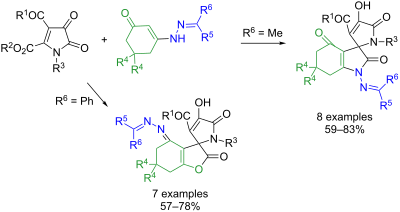
- cyclocondensation of six-membered cyclic enamines 1 (vinylogous secondary amides) with 5-methoxycarbonyl-1H-pyrrolediones 2 [39][40][41]. This transformation involved the Michael addition of an enamine to the α,β-unsaturated carbonyl fragment of a pyrroledione and subsequent 5-exo-trig intramolecular nucleophilic

Graphical Abstract
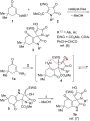
Scheme 1: Spirocyclization of enamines with 5-methoxycarbonyl-1H-pyrrolediones.

Scheme 2: Non-catalyzed spirocyclization of enoles (vinylogous carbonates and carbamates) with 5-methoxycarbo...

Scheme 3: Acid-catalyzed spirocyclization of enoles (vinylogous carboxylates) with 5-alkoxycarbonyl-1H-pyrrol...

Figure 1: ORTEP drawing of compound 12ab (CCDC 1546062) showing 50% probability amplitude displacement ellips...

Scheme 4: Formation of mono-imines and mono-hydrazones of 1,3-cyclohexanediones and tautomeric equilibrium be...
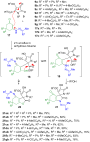
Scheme 5: Spirocyclizations involving non-bulky ketazinones 17 and 5-alkoxycarbonyl-1H-pyrrolediones 9.

Figure 2: ORTEP drawing of compound 21ab (CCDC 1546063) showing 50% probability amplitude displacement ellips...

Figure 3: ORTEP drawing of compound 22a (CCDC 1546065) showing 50% probability amplitude displacement ellipso...

Scheme 6: Spirocyclizations involving bulky ketazinones 22 and 5-alkoxycarbonyl-1H-pyrrolediones 9.

Figure 4: ORTEP drawing of compound 23aa (CCDC 1546064) showing 50% probability amplitude displacement ellips...
Mechanochemical synthesis of small organic molecules
- Tapas Kumar Achar,
- Anima Bose and
- Prasenjit Mal
Beilstein J. Org. Chem. 2017, 13, 1907–1931, doi:10.3762/bjoc.13.186
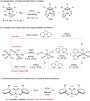
- (Scheme 23). α,β-Unsaturated carbonyl compounds could also undergo a trans-bromination reaction efficiently within 40 min. Following to Wang’s report, Stolle and co-workers also reported a similar method of aryl bromination and chlorination using NaBr and NaCl, respectively, in the presence of oxidizing

Graphical Abstract

Scheme 1: Mechanochemical aldol condensation reactions [48].

Scheme 2: Enantioselective organocatalyzed aldol reactions under mechanomilling. a) Based on binam-(S)-prolin...

Scheme 3: Mechanochemical Michael reaction [51].

Scheme 4: Mechanochemical organocatalytic asymmetric Michael reaction [52].

Scheme 5: Mechanochemical Morita–Baylis–Hillman (MBH) reaction [53].

Scheme 6: Mechanochemical Wittig reactions [55].

Scheme 7: Mechanochemical Suzuki reaction [56].

Scheme 8: Mechanochemical Suzuki–Miyaura coupling by LAG [57].

Scheme 9: Mechanochemical Heck reaction [59].

Scheme 10: a) Sonogashira coupling under milling conditions. b) The representative example of a double Sonogas...

Scheme 11: Copper-catalyzed CDC reaction under mechanomilling [67].

Scheme 12: Asymmetric alkynylation of prochiral sp3 C–H bonds via CDC [68].

Scheme 13: Fe(III)-catalyzed CDC coupling of 3-benzylindoles [69].

Scheme 14: Mechanochemical synthesis of 3-vinylindoles and β,β-diindolylpropionates [70].

Scheme 15: Mechanochemical C–N bond construction using anilines and arylboronic acids [78].

Scheme 16: Mechanochemical amidation reaction from aromatic aldehydes and N-chloramine [79].

Scheme 17: Mechanochemical CDC between benzaldehydes and benzyl amines [81].

Scheme 18: Mechanochemical protection of -NH2 and -COOH group of amino acids [85].

Scheme 19: Mechanochemical Ritter reaction [87].

Scheme 20: Mechanochemical synthesis of dialkyl carbonates [90].

Scheme 21: Mechanochemical transesterification reaction using basic Al2O3 [91].

Scheme 22: Mechanochemical carbamate synthesis [92].

Scheme 23: Mechanochemical bromination reaction using NaBr and oxone [96].

Scheme 24: Mechanochemical aryl halogenation reactions using NaX and oxone [97].

Scheme 25: Mechanochemical halogenation reaction of electron-rich arenes [88,98].

Scheme 26: Mechanochemical aryl halogenation reaction using trihaloisocyanuric acids [100].

Scheme 27: Mechanochemical fluorination reaction by LAG method [102].

Scheme 28: Mechanochemical Ugi reaction [116].

Scheme 29: Mechanochemical Passerine reaction [116].

Scheme 30: Mechanochemical synthesis of α-aminonitriles [120].

Scheme 31: Mechanochemical Hantzsch pyrrole synthesis [121].

Scheme 32: Mechanochemical Biginelli reaction by subcomponent synthesis approach [133].

Scheme 33: Mechanochemical asymmetric multicomponent reaction[134].

Scheme 34: Mechanochemical Paal–Knorr pyrrole synthesis [142].

Scheme 35: Mechanochemical synthesis of benzothiazole using ZnO nano particles [146].

Scheme 36: Mechanochemical synthesis of 1,2-di-substituted benzimidazoles [149].

Scheme 37: Mechanochemical click reaction using an alumina-supported Cu-catalyst [152].

Scheme 38: Mechanochemical click reaction using copper vial [155].

Scheme 39: Mechanochemical indole synthesis [157].

Scheme 40: Mechanochemical synthesis of chromene [158].

Scheme 41: Mechanochemical synthesis of azacenes [169].

Scheme 42: Mechanochemical oxidative C-P bond formation [170].

Scheme 43: Mechanochemical C–chalcogen bond formation [171].

Scheme 44: Solvent-free synthesis of an organometallic complex.
Scheme 45: Selective examples of mechano-synthesis of organometallic complexes. a) Halogenation reaction of Re...

Scheme 46: Mechanochemical activation of C–H bond of unsymmetrical azobenzene [178].

Scheme 47: Mechanochemical synthesis of organometallic pincer complex [179].

Scheme 48: Mechanochemical synthesis of tris(allyl)aluminum complex [180].

Scheme 49: Mechanochemical Ru-catalyzed olefin metathesis reaction [181].

Scheme 50: Rhodium(III)-catalyzed C–H bond functionalization under mechanochemical conditions [182].

Scheme 51: Mechanochemical Csp2–H bond amidation using Ir(III) catalyst [183].

Scheme 52: Mechanochemical Rh-catalyzed Csp2–X bond formation [184].

Scheme 53: Mechanochemical Pd-catalyzed C–H activation [185].

Scheme 54: Mechanochemical Csp2–H bond amidation using Rh catalyst.

Scheme 55: Mechanochemical synthesis of indoles using Rh catalyst [187].

Scheme 56: Mizoroki–Heck reaction of aminoacrylates with aryl halide in a ball-mill [58].

Scheme 57: IBX under mechanomilling conditions [8].

Scheme 58: Thiocarbamoylation of anilines; trapping of reactive aryl-N-thiocarbamoylbenzotriazole intermediate...
Chiral phase-transfer catalysis in the asymmetric α-heterofunctionalization of prochiral nucleophiles
- Johannes Schörgenhumer,
- Maximilian Tiffner and
- Mario Waser
Beilstein J. Org. Chem. 2017, 13, 1753–1769, doi:10.3762/bjoc.13.170
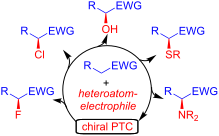
- -oxygenation reactions above, also the introduction of a nitrogen-based functionality alpha to a carbonyl group can be achieved by several complementary strategies. One powerful option is to carry out Michael addition-initiated aziridination reactions of α,β-unsaturated carbonyl acceptors [18][138][139][140

Graphical Abstract

Scheme 1: Generally accepted ion-pairing mechanism between the chiral cation Q+ of a PTC and an enolate and s...

Scheme 2: Reported asymmetric α-fluorination of β-ketoesters 1 using different chiral PTCs.

Scheme 3: Asymmetric α-fluorination of benzofuranones 4 with phosphonium salt PTC F1.

Scheme 4: Asymmetric α-fluorination of 1 with chiral phosphate-based catalysts.

Scheme 5: Anionic PTC-catalysed α-fluorination of enamines 7 and ketones 10.

Scheme 6: PTC-catalysed α-chlorination reactions of β-ketoesters 1.

Scheme 7: Shioiri’s seminal report of the asymmetric α-hydroxylation of 15 with chiral ammonium salt PTCs.

Scheme 8: Asymmetric ammonium salt-catalysed α-hydroxylation using oxygen together with a P(III)-based reduct...

Scheme 9: Asymmetric ammonium salt-catalysed α-photooxygenations.

Scheme 10: Asymmetric ammonium salt-catalysed α-hydroxylations using organic oxygen-transfer reagents.

Scheme 11: Asymmetric triazolium salt-catalysed α-hydroxylation with in situ generated peroxy imidic acid 24.

Scheme 12: Phase-transfer-catalysed dearomatization of phenols and naphthols.

Scheme 13: Ishihara’s ammonium salt-catalysed oxidative cycloetherification.

Scheme 14: Chiral phase-transfer-catalysed α-sulfanylation reactions.

Scheme 15: Chiral phase-transfer-catalysed α-trifluoromethylthiolation of β-ketoesters 1.

Scheme 16: Chiral phase-transfer-catalysed α-amination of β-ketoesters 1 using diazocarboxylates 38.

Scheme 17: Asymmetric α-fluorination of benzofuranones 4 using diazocarboxylates 38 in the presence of phospho...

Scheme 18: Anionic phase-transfer-catalysed α-amination of β-ketoesters 1 with aryldiazonium salts 41.

Scheme 19: Triazolium salt L-catalysed α-amination of different prochiral nucleophiles with in situ activated ...

Scheme 20: Phase-transfer-catalysed Neber rearrangement.
Development of a method for the synthesis of 2,4,5-trisubstituted oxazoles composed of carboxylic acid, amino acid, and boronic acid
- Kohei Yamada,
- Naoto Kamimura and
- Munetaka Kunishima
Beilstein J. Org. Chem. 2017, 13, 1478–1485, doi:10.3762/bjoc.13.146

- materials, such as α-haloketones and primary amides [8], alkynes and nitriles [9], amines and α,β-unsaturated carbonyl compounds [10], etc. [11] have been reported. However, these reactions are often conducted under harsh reaction conditions and multistep syntheses of the starting materials are needed. ii

Graphical Abstract

Scheme 1: Our strategy for the concise synthesis of 2,4,5-trisubstituted oxazoles.

Scheme 2: Synthesis of DMPOPOP.
Synthesis of tetrasubstituted pyrazoles containing pyridinyl substituents
- Josef Jansa,
- Ramona Schmidt,
- Ashenafi Damtew Mamuye,
- Laura Castoldi,
- Alexander Roller,
- Vittorio Pace and
- Wolfgang Holzer
Beilstein J. Org. Chem. 2017, 13, 895–902, doi:10.3762/bjoc.13.90

- most common strategies employ reactions of 1,3-dicarbonyl compounds or α,β-unsaturated carbonyl compounds with substituted hydrazines [4][6][19]. To overcome the drawbacks of this method, namely insufficient regioselectivity [20], other accesses such as, for instance, regioselective metalations of N

Graphical Abstract

Scheme 1: Envisaged general approach for the synthesis of the title compounds.

Scheme 2: Synthesis of 4-iodopyrazoles of type 3.

Scheme 3: Lithium–halogen exchange and subsequent carboxylation with iodopyrazoles 3a–d.

Scheme 4: Attempted cross-coupling reactions with 4-halopyrazoles 5 and 3a.

Scheme 5: Negishi couplings with 4-iodopyrazoles 3a,b.

Scheme 6: Formation of pyrazoloquinolizin-6-ium iodide 12 upon reaction of 3a with (phenylethynyl)zinc bromid...

Scheme 7: Prototropic tautomerism of compound 1a.

Figure 1: 1H NMR (in italics), 13C NMR and 15N NMR (in bold) chemical shifts of compound 9a (in CDCl3).



